Initiate Consciousness
True and False Paths of Spiritual Research
GA 243
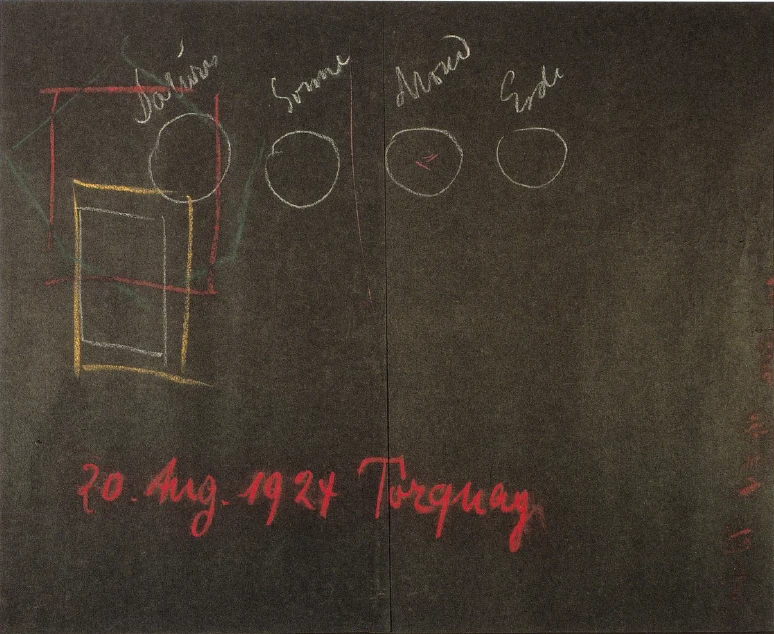
20 August 1924, Torquay
Translated by Steiner Online Library
9. Unconventional Paths into the Spiritual World and Their Transformation
The Use of Scientific Concepts in the Process of Knowledge Acquisition
[ 1 ] You have seen how these reflections began with an exploration of a state in ordinary modern life—an exploration of the life of dreams—and how, from there, we were able to proceed to an examination of other states of consciousness in the human soul that are capable of penetrating into worlds other than the one we experience between birth and death. You have seen that we have arrived at mediumistic consciousness—that consciousness which leads a person, I might also say, into a somnambulistic state, for the mediumistic state is always a somnambulistic one. Now, both types of experience—the dream experience and the somnambulistic experience—are, after all, inner states of the soul that, in their proper form, are certainly present in normal life as well, and which only, when intensified, lead one either onto the right or the wrong course.
[ 2 ] Let us take another look at the life of dreams today. We have seen that a person in the ordinary state of consciousness experiences dreams when they transition from the waking state to the sleeping state, and in their astral body re-enacts what they go through in their etheric body and physical body during the waking state. This gives rise to chaotic—albeit wondrous—dream experiences, the interpretation of which, however, is truly possible only for the initiate, because in their usual chaotic state they confuse those who do not penetrate more deeply into the nature of the spiritual world. But we have also seen how, through meditative and concentrative exercises, this web of dream life is interwoven with a genuine higher consciousness. So you must imagine a person transported into the wondrous, chaotic world of dreams, yet with this dream life permeated by consciousness, so that one remains as level-headed about it and as grounded in reality within it as one is in ordinary life. Then one looks into another world—precisely the world I have described to you—where one can still accompany the dead after their passing. And one feels as if one were spread out in a world far more real than the one in which one is currently present. Now the question is this: Into which world does one actually enter? I have already spoken about this as well; I now wish only to touch on the matter once more from a different perspective.
[ 3 ] As I said, great teachers of humanity once lived among the people of Earth; they did not exist in physical bodies but only in subtle etheric bodies—which, however, could materialize in the air—and they instructed people through inspiration and established the primordial culture on Earth. Looking back to ancient times with the appropriate state of consciousness, one finds these great spiritual primordial teachers of humanity walking among people. These great teachers of humanity have withdrawn to the Moon; today they can be found only in the lunar sphere, where they have enlisted the service of all manner of beings who have never come to Earth; they live among such elemental beings, and they work upon human beings—particularly when a person has passed through the gate of death—helping them understand how they must conduct themselves in accordance with their karma. It is indeed with these beings that one comes into contact when first seeking to enter the spiritual world. Just as one can only live one’s earthly life among people, in society, and in social interaction with others, so too can one only live a life of higher knowledge together with other beings. And together with these beings—these lunar beings who, I might say, have evolved from earthly beings, from these primordial teachers of humanity—and together with those entities whom they have enlisted to serve them, one explores the spiritual world that first adjoins our own.
[ 4 ] In this world, one can always find clues that lead to learning about people’s past incarnations, going back to earlier times on Earth to discover individuals who lived in the past—people with whom one may or may not have had a karmic connection. As an example, I have described how one gradually comes into contact with such earthly beings who are not currently incarnated on Earth—Brunetto Latini, Dante, Alanus ab Insulis, and other figures—by proceeding further in this state of consciousness. This state of consciousness is thus an illumination, a penetration of the dream state. The dream state is, so to speak, the rudiment of ordinary life for this state. What, then, is the difference between a person in ordinary consciousness and an initiate? You can grasp this difference very easily.
[ 5 ] When a person is asleep in the ordinary sense, their physical body and etheric body remain in bed; their astral body and their “I” are outside the physical and etheric bodies. In a dream, however, only the “I” experiences. Although the events experienced in a dream take place in the astral body, which is still outside the physical and etheric bodies, for ordinary consciousness, only the “I” can experience them in a dream. In the case of the initiate, both the “I” and, above all, the astral body experience the dream. Thus, the difference between the ordinary dreamer and the initiate is that the ordinary dreamer, when outside his physical and etheric bodies, experiences only through his “I”; the initiate also experiences through the astral body.
[ 6 ] Well, this way of perceiving things was, above all, already highly developed in the ancient mysteries for the exploration of the supersensible worlds. It was then carried on in a rudimentary, decadent form through the Middle Ages and modern times, until it has more or less been lost in the very recent past. Individuals have always had the opportunity—because they received instruction in some way, whether spiritually or through tradition, from the ancient teachers of the mysteries on how to shed conscious light on ordinary dream life—to penetrate the worlds that can be accessed in this very way. There is always a danger for a person who wishes to enter these worlds. For in these worlds, the initiate, for example, immediately has the feeling—when he dives in with imaginative insight into what is otherwise filled by dreams—that he is losing the world, that his consciousness is, so to speak, lost in a void. He always has the feeling that solid ground is slipping away from him, that weight and heaviness are leaving him. He feels how he becomes light within, how he is carried away against his will into distant spiritual realms, how he can easily lose control of himself because all heaviness, all weight is lost.
[ 7 ] To ensure that this is not the case, that is precisely why the exercises described in my book How Does One Gain Insight into the Higher Worlds? exist. Anyone who devotes themselves to these exercises in the proper manner will find that they become a spiritually inspired being who, once the heaviness and weight have ceased, can, so to speak, make use of spiritual wings. But this is precisely the precarious state in which an initiate, so to speak, loses their feet and does not yet have wings—when they lose their physical and etheric feet but do not yet possess their astral and I-wings. You understand, when I express this figuratively, what is meant by this. But that is how it is. If one carefully grows into the world one is entering through the exercises, every danger is naturally eliminated; no danger can arise. A person can gradually grow into this world, just as they grow into the ordinary physical world through their physical and etheric bodies.
[ 8 ] However, this is also a state in which early humanity existed, more or less, due to natural circumstances. We must attain this state through practice. Primitive humanity did not need to do this. Primitive humanity possessed natural dispositions through which a state was always present—one that is not our waking state, but rather a spiritual vision, as I have described in connection with the Chaldeans, and a state that is also not our dreaming, but rather a perception through imagination. One person encountered another. He did not merely see him in terms of his physical contours, but he dreamed the aura around him. But that was the real aura, not one merely subjectively dreamed up.
[ 9 ] Then again, if he possessed this gift of seeing the aura of an earthly human being who is in a physical body, he also possessed the other ability—for the two are interconnected—to see the aura of a spiritual being who is not incarnated in a physical body. And then he dreamed of the form of this spiritual being. Note the difference: In ancient times, when one encountered a human being—an earthly human—one saw the earthly human and imagined the aura around them in a real dream. When one encountered a spiritual being—an angel or an elemental being—one saw the aura spiritually from the outset and dreamed of the form along with it.
[ 10 ] That is how the ancient painters painted as well. Only, we do not yet know this. The primordial painters saw the spiritual beings, dreamed up their forms, painted the beings from the hierarchy of the Angeloi in a manner quite human-like, painted the Archangeloi with blurred bodies but distinct wings and still with heads, and painted only the head—the winged head—of the Archai, because that is what they dreamed. All these things were, so to speak, entirely natural to the ancient human, the primordial human, just as it is natural for us today to see the nose and eyes in another person. Today, because these perceptions have gradually been lost to humanity, they must be regained through practice. But precisely because this was inherent to primordial humanity, and because it could be regained relatively easily through practice time and again, this field has been the subject of much research over the course of time. People have always explored the world—which is, so to speak, ruled by the lunar beings—with great zeal, and the initiates of the ancient mysteries, who were the true researchers in this field, speak at length precisely about this world, about their encounters with the dead after death, and about their exploration of the lunar sphere. And then they offer perspectives on how the world appears from the lunar sphere.
[ 11 ] Copernicus, after all, based his Copernican system solely on the Earth’s sphere. The old Ptolemaic system is not wrong; rather, it is viewed from the perspective of the lunar sphere, and from that perspective it is correct. Now there is something peculiar about these researchers that one always finds. That is, they do not go any further than this lunar sphere.
[ 12 ] You see, as you are all well aware, what is known as the Anthroposophical Society was originally part of the Theosophical Society. The Theosophical Society—which is a society similar to many others of its kind that have existed over the years—has a rich body of literature. If you read through this literature, ladies and gentlemen, you will find that—whether correctly or incorrectly, that is not the point now—it describes the world I am just speaking of, the world explored through the lunar beings, the world of the lunar sphere. And there was something significant for me there, I would say—something that initially caused me some confusion—when I received the invitation to become active in the Theosophical Society. It consisted in the fact that, among all those who were members of the Theosophical Society, I actually found only research and literature relating to this lunar sphere. There is certainly much that is incorrect there, but there is also much that is extraordinarily significant, magnificent, and powerful, particularly in Blavatsky’s writings. But everything found in Blavatsky’s writings is as it is for the very reason that she was, in fact, within the sphere I have just described, and because she had her connection with initiates who modestly remained within this lunar sphere. Well, I can say that I have come to know many such initiates, learned how such spirits enter the lunar sphere, and how they lose interest when one wishes to go further.
[ 13 ] So when I—as I described in my book Outline of Esoteric Science, which was written between 1906 and 1909—discussed the Earth in its earlier incarnation as the Moon, in its earlier incarnation as the Sun, and in its earlier incarnation as Saturn, you will find that I did not stop at the Moon’s incorporation, but went further back, all the way to Saturn; whereas all the initiates who spoke of these things stopped between the Moon and the Sun, actually going back only as far as the lunar sphere. They lost interest, and at times even became restless, when asked to go back any further. “That’s impossible,” they said, “because you reach a boundary where there is a veil that cannot be crossed.”
[ 14 ] It was, of course, extremely important—and also interesting—to see why that was the case. You see, this is because such initiates—once you got to know them well, you soon noticed—had a reluctance, an antipathy toward becoming acquainted with those forms of thought that relate to modern natural science. One could even observe that when one presented to these initiates ideas such as those found in Darwinism, Haeckelism, and so on, they became quite unwilling, regarding them as childish and clumsy on the part of modern people, and did not want to engage with them. If one presented Goethean ideas to them, they were not quite as resistant at first, but they still felt that he, too, expressed himself in the same way as a modern natural scientist. And then they dismissed the whole thing as well.
[ 15 ] In short, it was impossible to reach these initiates with such ideas. And it was only when, during the years 1906 through 1909, I simply imbued the soul with modern scientific concepts in order to bring them into the realm where the imaginations normally reside that I was able to penetrate as far as the Sun and Saturn. So I did not use these scientific concepts to gain knowledge in the same way that Haeckel or Huxley did, but rather I used them as an inner activity to transcend the limitations to which the initiates were subject at a time when a newer scientific way of thinking did not yet exist, and one therefore could only enter into higher consciousness inwardly by imbuing the dream world with imaginations. Thus, in writing my Occult Science, an attempt was made to take the fully conscious world of ideas—which otherwise relates only to external natural objects—and use it to imbue the imaginative world. This then opened up the possibility of penetrating this entire chain: Saturn, Sun, Moon. It was then realized that one could explore on Earth what the ancient initiates had also experienced.
[ 16 ] I am recounting this path to insight so that you can see how such things unfold. You might say: “That is something personal.” — But in this case, the personal aspect is actually quite objective. And if anything has been criticized about my Occult Science, it is that it is written like a mathematics textbook—that I did not attempt to introduce anything subjective into it, but rather wrote this entire process, as I have just described it, with mathematical detachment. But that is how it is. It came about by carrying the way of thinking—which has existed since Copernicus, Galileo, and so on, and which was so deeply explored by Goethe—into the same state of mind that one otherwise has in the realm of imagination. Through this, it became possible to carry this realm, which had always been accessible to the initiates, forward in time, all the way to Saturn. So perhaps you can see from this example how important it is to proceed in these matters not in a nebulous way, but quite clearly and with composure—to bring composure precisely where a loss of composure would otherwise easily set in. So here we have an example where the dream life, which otherwise affects only the ego, affects the astral body.
[ 17 ] And I would like to answer the question: What, then, is the difference between modern natural science and what I have presented in my book Occult Science: The difference lies in the fact that the modern natural scientist can turn only to the “I”; as soon as he steps outside the “I,” he immediately falls into a dreamlike state, whereas I was able to convey to the astral body the concepts held by natural scientists; through this, the astral body was able to penetrate the worlds I had to describe. This is a path that can be described to you in great detail and that, as an example, will perhaps show you much more precisely than anything else how the right paths differ from the wrong ones.
[ 18 ] Overcoming the Caricature of Scientific Methods Used to Study Mediumship and Somnambulism
[ 19 ] Now, the state that is the polar opposite of the dream state is the state of somnambulism or mediumship. The dreamer lives entirely within his ego and astral body; even if he has no conscious perceptions while in the astral body, he still lives within it. The dreamer lives entirely within his “I” and his astral body, outside of his physical and etheric bodies. He is thus immersed, deeply absorbed in his own being, and—since his own being is connected to the worlds—from his own being into the worlds [and thus, to a certain degree, also into the physical organism]. Thus, the dreamer, so to speak, dives into his own being and thereby into the world. The exact opposite is the case with the medium and the somnambulist. One is also only in a somnambulistic or mediumistic state when one has stepped outside the physical and etheric bodies with one’s ego and astral body; but then, as I explained to you yesterday, the ego and astral body are permeated by a foreign entity.
[ 20 ] So here we have the medium or the somnambulist with her physical body; but outside the physical and etheric bodies lie the “I” and the astral body. There, the “I” is suppressed and subjugated, as is the astral body, for another being—as I described yesterday—resides within it. Consequently, the medium is also unable to exert the proper influence on the physical and etheric bodies. For even when we are asleep, for example—in dreamless sleep—we exert an influence on the physical and etheric bodies. In a sense, when we are awake, we permeate the physical and etheric bodies from within; when asleep, we protect them from without. This does not occur in the case of somnambulists. The medium, the somnambulist, cannot take care of her physical and etheric bodies. They are, so to speak, abandoned territory. This is the distinctive feature of the medium, of the somnambulist: that the physical and etheric bodies are abandoned territory.
[ 21 ] When we consider a human being whose state of soul is normal for our present-day human existence, only the forces of minerals and plants influence his physical and etheric bodies; nothing else—only the forces of minerals and plants. If the forces of minerals—and thus also of the mineral earth—did not act upon our physical body, we could not walk or move, for these are the physical forces we make use of. We are allowed to enter into them; that is the normal state. But they must not enter the etheric body.
[ 22 ] The same is true of plants. In a certain sense, they may still act upon the etheric body, but not too strongly. However, neither the forces that give rise to sensation in animals nor the forces of other human beings may act upon the human physical body—and especially not upon the etheric body. Because the physical body and the etheric body are abandoned in the medium and the somnambulist, the animal and earthly-human forces act upon the somnambulist and the medium. They are influenced suggestively.
[ 23 ] Just as thought sinks down from the dream, so now the will sinks out of the human being and into the surroundings. And we can suggest to the somnambulist or the medium that they should walk. We can suggest to them, when we give them a potato, that it is a tasty pear, and so on. As human beings, we can directly influence mediums and somnambulists through suggestion with regard to the physical body and, through it, the etheric body. And the somnambulist and the medium carry their physical surroundings within their etheric bodies—surroundings that they should normally carry only within their physical bodies, as is the case with ordinary human beings. Thus, the normal person is dreamlike in their devotion to the inner spiritual world. And so the somnambulist and the medium are devoted to the outer natural world.
[ 24 ] Again, this—that is, being mediumistic, being somnambulistic—is a normal state, if it is indeed normal; for the fact that we walk, that we grasp, that we can do anything at all in space—that is, after all, a magical-somnambulistic act in every human being. It just must not rise into the etheric body; it must remain within the physical body. The normal does indeed merge into the abnormal. You see, the dreamer is actually completely absorbed within themselves, while the medium and the somnambulist are completely outside of themselves; and we have, as it were, the physical body and the etheric body of the human being before us in the medium and the somnambulist—like automatons—and can act upon them because they are not sustained by their own “I” or their own astral body. And through this, just as a connection to the inner spiritual world is established in the dreamer, a connection to the outer natural world is established in the somnambulist and the medium—to the world of form, to the world of image formation, to everything that is visual, spatial, and temporal.
[ 25 ] When one plunges into the world of dreams, one plunges into the formless, into that which is eternally transforming. When one enters the world in which the somnambulist exercises her will under suggestive influence—that is, when the physical body and the etheric body enter this world—everything is predetermined and defined; in fact, everything that occurs through external influence is carried out with tremendous precision. This is the world that is entirely opposed to that of the dreamer; it is, so to speak, a realized, external, naturally produced form of dreaming, where one dreams through action rather than, as is usually the case, through inner experience alone. This contrast is also significant and of the utmost interest when viewed from the initiate’s standpoint. As I told you, the initiate faces difficulties when he immerses himself in the dream world to flow through it imaginatively; he faces these difficulties because he has the sensation that heaviness is lost, weight is lost, and all the things of the external world that provide solid ground are lost.
[ 26 ] When the initiate immerses himself in this state—and he must now do so consciously; he must develop an awareness of stepping out in the same way that the somnambulist unconsciously steps out into the world—then he has the feeling that at any moment he could lose consciousness, could slip into unconsciousness. That is indeed the case—this constant state of being on the verge of losing consciousness. One always feels the need to remain inwardly alert and focused so that consciousness is not lost.
[ 27 ] I would like to say that when one moves through this world, one must, as an initiate, conduct oneself as sensibly in this world as reasonably sensible, decent people otherwise do in our world. I would like to say that one must not be able to tell by looking at the initiate that, while he walks among people, animals, and stones, he is at the same time in a spiritual world, where he stands with full consciousness. For if he were to think for even a moment that he no longer has feet but is flying through this world, he would very, very easily fall into all sorts of affectations, causing his fellow human beings to regard him with suspicion. They would say: “What kind of madman is that!” — This can happen if he does not keep himself inwardly firm and steady in order to maintain full consciousness while passing through the spiritual world, which is everywhere, just as the physical-sensory world is.
[ 28 ] You see, this opens up a field that has not become the domain of the Theosophical Society, but rather a field that such “higher-order” natural scientists have taken up—what is called the field of psychical research, and so on. It is a field where people who are otherwise trained in the natural sciences but are less capable in that area make systematic observations of such phenomena and conduct experiments with mediums in order to discover what the spiritual world is like. In all sorts of societies and from all sorts of perspectives, a field is being created where one now seeks to investigate from the outside how things unfold when a person moves their limbs or behaves not with their ordinary consciousness, but with a consciousness that is subdued or completely extinguished—a state in which other beings have taken possession of their soul. They then record what other people do when their consciousness is so subdued.
[ 29 ] We have even seen cases where people enthusiastic about this kind of research have demanded that I, with everything I have to say to the world, make myself available in their laboratories so that they, too, can study from the outside what is going on there—what is happening in that inner world. That’s about as sensible as if someone were to come along and say: I don’t understand anything about mathematics, so I can’t say whether what the mathematician claims is right or wrong; but he should come to my psychological laboratory, where I’ll conduct experiments on him to see if he’s a great mathematician.
[ 30 ] That’s roughly how it is. I am thus pointing to a realm in the present where people seek to explore the world of somnambulism and mediumship from the outside through a caricature of the scientific method, rather than actually delving into its inner nature. For if one were to delve into the inner realm, one would see that what one has before one in the medium and the somnambulist is an outer form—an automaton of the physical and etheric bodies—and that one is therefore not actually investigating the spiritual, but rather that which one seeks to investigate has departed from what one has before one. But people simply do not want to look into these finer characteristics of the spiritual world. Very often, they want to have the spiritual before them not only through inner experiences but also through external observation. They want to have the spiritual before them in the external, visible, sensory activity.
[ 31 ] This sometimes manifests itself in other ways as well. It manifests itself through occurrences such as those that later took place—precisely during the time when I was going through this process, or rather, describing it—within the Theosophical Society, where people sought the spiritual form of Christ in a physical personality. People wanted to have something spiritual that was directly accessible in the outer, physical world.
[ 32 ] Art as a Bridge from Matter to Spirit
[ 33 ] One must let the physical world be the physical world and seek the spiritual where it is—admittedly, also where the physical world is, but precisely in the spheres that permeate the physical world and are spiritual. But there is yet another realm here. And human beings, in their healthy state, already feel called upon to build a bridge between these two realms—between the realm of inner experience and that of outer perception, between the world in which the dreamer is in an abnormal state and the world in which the medium or somnambulist is in an abnormal state. When these two worlds are brought together and mutually enrich one another, art emerges. For in art, that which is outwardly perceptible to the senses is spiritualized, interwoven with the impulses of the spiritual world; that which is inwardly perceptible to the soul is represented in an outward embodiment.
[ 34 ] While the Theosophical Society was therefore concerned with presenting an external, physical entity as a spiritual being, we in the Anthroposophical Society were impelled to allow the occult current to flow into art. The Mysteries emerged. Eurythmy emerged. Eulogic Speech was developed. Everything that arose within the anthroposophical movement sprang from this impulse to build a bridge from the spiritual to the physical, so that consciousness moves from the world into which the dreamer enters chaotically to the world into which the somnambulist or medium enters chaotically. In art, the two are consciously woven together.
[ 35 ] And one day people will come to understand this. They will come to understand what is meant by the idea that, for example, through these special efforts, speech formation—as practiced by Marie Steiner—is to be restored to the level it once had, when people were still instinctively spiritual. Back then, rhythm and cadence in speech were more important than the external, abstract expression of words. That must be reclaimed. And in eurythmy, the moving human being—who unfolds before us as a spiritual-soul being—is reclaimed. That is what you see in eurythmy.
[ 36 ] And so, in art, we first had to build this bridge from the world the dreamer drifts toward to the world in which the somnambulist and the medium hop about, stumble around, and move about clumsily. In our present materialistic age, the dreamer stands there alone, lost in thought, knowing nothing of forms—of material shapes that express and reveal the spiritual. And the somnambulists go about indifferently, whether they are revered as mediums or whether, under Bolshevism, they formulate pure state theories and—just like the mediums in the world—bring all manner of things into being—they go about in the present world, suspecting nothing of the spiritual. This is the essential point: that the bridge from spirit to matter, and from matter to spirit, be rediscovered. In the arts, the first task is to build this bridge—no longer merely stumbling and hopping about in the outer world, but rather gaining a sense of it through spiritual movements that are not the ordinary ones.
[ 37 ] Thus you see the true, inner origin of eurythmy as an initiatory impulse, and everything that is practiced among us as art in speech formation also springs from this impulse. And when the course on dramatic art is held in Dornach in the near future, an attempt will be made to trace the art of acting back to the idea that the spiritual must be present on stage. For a long time, people thought only about how to present the actor on stage in a way that resembled ordinary life as much as possible. It was quite comical, the discussions in the 1890s, when people debated this and ultimately opted for naturalism—whether Schiller’s characters, with their hands in their pockets (since that had once become fashionable), should also deliver their heroic lines in this manner on stage!
[ 38 ] As you can see, there are many reasons to seek a path toward a genuine exploration of the spiritual world. And for those who open themselves up to the realm of art, this is truly not an entirely wrong path.
[ 39 ] If it was of such special significance for the ancient science of the Initiates—which had immersed itself in the mysteries of the Moon and all that pertains to it—to advance toward that which can only be penetrated when the achievements—and here I mean the spiritual achievements of natural science—are imbued into the state of the soul capable of occult perception, was of immense significance; on the other hand, it is of no less significance that the vague, amateurish attempts made to address what, following a loss of spiritual connection—as is the case with somnambulists and mediums—nevertheless moves under spiritual influence in the forms of the spiritual— it was no less important to make this a specific field of research. For these two paths must actually be regarded as one: the breaking through from within the now-sobered-up world of dreams, and the conscious grasping of the external world, which natural science grasps only through its mineral properties—properties that are to be investigated in an amateurish manner through so-called “psychical research.” It is important, precisely because we live in the age of natural science, to also follow this path of spiritual research, to also explore spiritually the other realm—the realm that is polar opposites to the realm of dreams.
[ 40 ] When we are in the presence of a somnambulist or a medium, what happens through them is not something we are accustomed to in ordinary life. The somnambulist does not write as an ordinary person writes, does not move as an ordinary person moves, does not speak as an ordinary person speaks, does not taste as an ordinary person tastes—because the astral body and the “I” have withdrawn from the physical and etheric bodies, and we are dealing with a physical and etheric body that have been left behind, and which are now under the influence of the cosmos, surrendered to the influence of the cosmos. We are thus dealing with manifestations of the physical and the etheric that are not the ordinary natural phenomena, but rather those arising from the spiritual, from the spiritual world. For, after all, in principle it makes no difference whether I stand before a medium and suggest something to them, or whether the medium is subject to some stellar influence and absorbs it into the etheric body, or to a climatic influence, or the influence of a metal, and so on.
[ 41 ] We are dealing with an organization within the medium that is, in a magical sense, devoted to the spiritual. We must take this into account. One cannot study these phenomena—without already possessing a spiritual perspective—as the societies for external psychic research would like to do, since they seek to experiment with them in a purely external manner. One must look into the spiritual context. One must focus on what takes place through the medium, the somnambulist, or any other human being, and see in the background what is present as the spiritual.
[ 42 ] But all these effects that occur in the medium, in the somnambulist, are related to other mediumistic phenomena. If you have a medium sitting here who, in a certain state—whether under human influence or cosmic influence—performs this or that, that is to say, if a physical body and an etheric body perform this or that, then this is, for the time being, exactly the same as what is brought about by something else in poisonous plants, through which a person becomes ill in a certain way. It is merely, I would say, the outer, temporary mask of the illness that appears in the somnambulistic or mediumistic state. And from a certain point of view—which will be elaborated upon further in the next lectures—one can see in the phenomena of mediumship and somnambulism—it is not necessary, but one can—once again see what is actually present in the sick person: namely, that in an abnormal way, their ego and astral body have somehow withdrawn from an organ or from the entire organism, and the person thus comes under special spiritual influences.
[ 43 ] You see, because people in ancient times recognized that this connection exists, the mysteries were always linked to medicine; and because people back then were not as curious as they are today, they did not consider it necessary to concern themselves much with mediums and somnambulists, whose workings they understood just as they understood states of illness. These matters were simply approached more from this perspective, which is inherent in medicine. And that is a perspective that must be regained.
[ 44 ] And what is approached in an amateurish way as the other path—the one that leads into the spiritual realm directly through natural phenomena—that other path, which is pursued in an amateurish way, must be pursued in the proper manner. What exists in the world—and what manifests itself in particular through the pathological conditions of humans and animals—must be properly investigated. Only then will it be possible to explore what the Society for Psychical Research wishes to investigate.
[ 45 ] And this path, too, has now been embarked upon within the anthroposophical movement. It has become possible because pathological phenomena can be studied in such a way that they open up access to the spiritual world. This has become possible because, through my collaboration with Dr. Ita Wegman, we are attempting to follow this path—which is overlooked by physical research—in the proper manner. This is possible because this collaboration arose from the fact that Ita Wegman possesses not only the knowledge acquired by today’s physicians, but also those intuitive-therapeutic impulses that arise directly from the clinical picture, enter the spiritual world, and from there lead to therapy.
[ 46 ] But this is the path to exploring the field I am pointing to here. And so, through this work, an attempt is being made to develop true, initiated medicine, which is, in and of itself, an initiated natural science. In this way, the other, correct path will also be presented to the world in contrast to the false paths. And one will already see from the first volume of the book, which is being co-authored by Dr. Wegman and myself, which will be published shortly and is now in press, how this path must be followed.
[ 47 ] You can see that examples are the easiest way to show how the right paths differ from the wrong ones, from the erroneous paths. And perhaps this, too, is worth pointing out here in this context. If I said earlier that a path into art must be opened up—one that, in turn, brings the realm of the spiritual and the realm of the materially formed closer together—then I must say: Given the conditions of today’s civilization, it seems almost self-evident that the right path to this end will only be found once the latter path has been taken with regard to natural phenomena. — For in the artistic realm today, humanity is so far removed from the kind of bridge-building I have spoken of that it may only be convinced of the weaving and life of the spiritual in art once it has been convinced, in that intense way, of the workings of the spiritual—which can be seen particularly in the genesis of pathology; only when it has become vivid through such work as that which will emerge from the collaboration between Ita Wegman and myself, only when it becomes evident how the spirit weaves and lives within matter, how it reveals itself in matter. When this can be observed in the realm of nature, then perhaps the enthusiasm—the full enthusiasm—will also be able to awaken for the idea that this should be presented directly to the world through art.
[ 48 ] I'll talk more about these things tomorrow.