

The Artistic World-Mission
GA 276
1 June 1923, Dornach
Translate the original German text into any language:
Versions Available:
The Artistic World-Mission, tr. SOL
Zweiter Vortrag
Second Lecture
[ 1 ] Es wird eines der Ergebnisse einer richtig verstandenen und richtig in die Zeitzivilisation eingelebten anthroposophischen Geisteswissenschaft sein, daß sie auf alles Künstlerische befruchtend wirken wird. Es muß gerade in unserer heutigen Zeit stark betont werden, daß die menschlichen Neigungen für das Künstlerische in starkem Maße zurückgegangen sind. Ja, es darf vielleicht sogar gesagt werden, daß innerhalb der anthroposophischen Kreise nicht immer ein volles Verständnis dafür vorhanden ist, daß von uns gesucht wird, innerhalb der anthroposophischen Bewegung Künstlerisches möglichst weitgehend einfließen zu lassen. Das hängt natürlich mit der erwähnten allgemeinen Abneigung der heutigen Menschheit gegen das Künstlerische zusammen.
[ 1 ] One of the results of an anthroposophical Spiritual Science that is properly understood and truly integrated into modern civilization will be that it will have a stimulating effect on all artistic endeavors. It must be strongly emphasized, especially in our time, that human inclinations toward the arts have declined significantly. Indeed, it might even be said that within anthroposophical circles there is not always a full understanding of our aim to incorporate artistic elements into the anthroposophical movement to the greatest extent possible. This is, of course, connected to the aforementioned general aversion of modern humanity toward the artistic.
[ 2 ] Man darf sagen, daß in einer starken Art Goethe zuletzt das ganze Geistesleben und die Kunst innerhalb dieses Geisteslebens als eine Einheit empfand, und daß man dann immer mehr und mehr in der Kunst etwas gesehen hat, was eigentlich nicht notwendig in das Leben hineingehört, sondern gewissermaßen zum Leben, man möchte fast sagen wie eine Art Luxus hinzukommt. Kein Wunder, daß unter diesen Voraussetzungen dann auch das Künstlerische vielfach die Gestalt des Luxusmäßigen annimmt.
[ 2 ] It can be said that, in a profound way, Goethe ultimately perceived the entire intellectual life—and art within that intellectual life—as a single unity, and that art came to be seen more and more as something that does not actually belong in life as a necessity, but rather, in a sense, is added to life—one might almost say as a kind of luxury. No wonder, then, that under these circumstances, the artistic often takes on the form of a luxury.
[ 3 ] Nun war gerade älteren Zeiten, die in der Art, wie ich das oftmals dargestellt habe, durch die Reste des alten Hellsehens lebendigen Bezug zur geistigen Welt hatten, das eigen, in dem Künstlerischen etwas zu suchen, ohne das eine allgemeine Zivilisation nicht sein kann. Man mag vom heutigen Gesichtspunkte aus gegen das, sagen wir manchmal Steife orientalischer oder afrikanischer Kunstformen Antipathie haben, aber darum handelt es sich nicht. Es handelt sich uns in diesem Augenblicke nicht darum, wie wir uns zu den einzelnen Kunstformen verhalten, sondern es soll sich uns darum handeln, wie das Künstlerische durch die Gesinnung der Menschen in die allgemeine Zivilisation hineingestellt worden ist. Und darüber wollen wir heute einiges sprechen als Grundlage für Betrachtungen, die wir jetzt und in den folgenden Vorträgen anstellen wollen. Wir müssen einen gewissen Zusammenhang zwischen dem ganzen Charakter des heutigen Geisteslebens und der künstlerischen Gesinnung sehen, die ich gerade mit einigen Worten charakterisierte.
[ 3 ] It was precisely characteristic of earlier times—which, as I have often described, maintained a living connection to the spiritual world through the remnants of ancient clairvoyance—to seek something in the arts without which a general civilization cannot exist. From today’s perspective, one might feel antipathy toward what we sometimes call the rigidity of Oriental or African art forms, but that is not the point. What matters to us at this moment is not how we relate to individual art forms, but rather how the artistic has been integrated into general civilization through the mindset of human beings. And we would like to discuss this today as a foundation for the reflections we intend to make now and in the following lectures. We must recognize a certain connection between the overall character of today’s spiritual life and the artistic mindset that I have just characterized in a few words.
[ 4 ] Wenn man das Bestreben hat, den Menschen, so wie man das heute macht, ganz und gar nur als das höchste Naturprodukt, als das höchste Naturwesen anzusehen, als dasjenige Wesen, das sich in der Entwickelungsreihe der anderen Wesen in einem gewissen Zeitpunkte der Erdenentwickelung ergeben hat, dann fälscht man die ganze Stellung des Menschen gegenüber der Welt, weil in Wahrheit der Mensch nicht jenes zufriedene Verhältnis zur Außenwelt haben kann, wenn er sich den elementaren Impulsen in seiner Seele hingibt, die er haben müßte, wenn das wahr wäre, daß er gewissermaßen nur der Schlußpunkt der Naturschöpfung wäre. Wenn sich die Tierreihe einfach so herauf entwickelt hätte, wie das heute von der Wissenschaft als schulwissenschaftlich angesehen wird, dann müßte eigentlich der Mensch, der nichts anderes sein könnte als eben dieses höchste Naturprodukt, restlos von seiner Lage im Weltenall, im Kosmos befriedigt sein. Er müßte nicht ein besonderes Streben haben, etwas über das Natürliche hinaus zu schaffen. Wenn man in der Kunst zum Beispiel etwas schaffen will, wie es die Griechen getan haben im idealisierten Menschen, dann muß man in einem gewissen Sinne unbefriedigt sein in dem, was die Natur gibt. Denn sonst, wäre man befriedigt, würde man nichts in die Natur hineinstellen, was über die Natur hinausgeht. Wäre man mit Nachtigall- und Lerchengesang musikalisch vollständig befriedigt, würde man nicht Sonaten und Symphonien komponieren, denn man würde das als etwas Unwahres, Verlogenes empfinden. Das Wahre, das Natürliche, würde sich erschöpfen müssen im Nachtigallengesang und Lerchengesang. Eigentlich fordert die gegenwärtige Weltenanschauung, daß man sich mit der Nachahmung des Natürlichen begnüge, wenn man überhaupt etwas schaffen will, denn im Augenblicke, wo man über das Natürliche hinaus schafft, muß man dieses Hinausschaffen als etwas Lügenhaftes empfinden, wenn man nicht eine andere Welt noch annimmt als diejenige, welche die natürliche ist. Das sollte man durchaus einsehen.
[ 4 ] If one strives to view human beings—as is done today—solely and entirely as nature’s supreme product, as nature’s highest being, as the being that emerged at a certain point in Earth’s evolution within the evolutionary sequence of other beings, then one distorts humanity’s entire relationship to the world, because in truth, human beings cannot have that contented relationship with the external world if they surrender to the elemental impulses in their souls—impulses they would have to possess if it were true that they were, so to speak, merely the culmination of nature’s creation. If the animal kingdom had simply evolved in the way that is today regarded by science as the standard scientific view, then humanity—which could be nothing other than this very highest product of nature—would actually have to be completely satisfied with its place in the universe, in the cosmos. It would have no special urge to create anything beyond the natural. If, for example, one wishes to create something in art, as the Greeks did in their idealized representation of humanity, then one must, in a certain sense, be dissatisfied with what nature provides. For otherwise, if one were satisfied, one would not introduce anything into nature that goes beyond nature itself. If one were completely satisfied musically with the song of the nightingale and the lark, one would not compose sonatas and symphonies, for one would perceive that as something untrue, something false. The true, the natural, would have to be exhausted in the song of the nightingale and the lark. In fact, the current worldview demands that one be content with imitating nature if one wishes to create anything at all; for the moment one creates something beyond nature, one must perceive this act of creation as something false—unless one accepts a world other than the natural one. This is something one should certainly recognize.
[ 5 ] Nun ziehen natürlich die Menschen der Gegenwart die künstlerische Konsequenz des Naturalismus nicht. Denn was würde herauskommen, wenn man die künstlerische Konsequenz des Naturalismus zöge? Höchstens könnte man die Forderung aufstellen, man dürfe nur dasjenige, was in der Natur da ist, nachahmen. Ja, ein Grieche oder gar ein Angehöriger einer älteren Zivilisation, sagen wir ein Grieche der Zeit vor dem Äschylos, würde gesagt haben, wenn man ihm irgend etwas hätte darstellen wollen, was die Natur bloß nachahmt: Wozu denn das? Wozu Menschen sprechen lassen auf der Bühne, wie sie im Leben sprechen! Da braucht man ja nur auf die Straße zu gehen. Wozu braucht man es sich auf der Bühne vorstellen zu lassen? Es ist ganz unnötig. Auf der Straße hat man das, was einem die Menschen im gewöhnlichen Erdenleben sagen, viel besser. - Er würde das gar nicht verstanden haben, daß man die Natur einfach nachahmen soll. Denn man hat, wenn man an einem Geistesleben nicht teilnimmt, kaum irgendeinen Impuls für irgendeine Gestaltung, die über das Rein-Natürliche hinausgeht. Wo soll man es auch hernehmen, wenn man sich an einem Geistesleben nicht beteiligt? Dann muß man es einfach von dem hernehmen, was man einzig und allein zugibt, nämlich von der Natur. Alle die Zeiten, die für das Künstlerische wirklich ursprünglich schöpferisch waren, standen von der menschlichen Seele aus in einer ganz bestimmten Beziehung zur geistigen Welt. Und auch aus dieser geistgestimmten Beziehung zur geistigen Welt ist das Künstlerische hervorgegangen. Niemals eigentlich wird aus etwas anderem als aus der Beziehung der Menschen zur geistigen Welt das Künstlerische hervorgehen können. Diejenige Zeit, welche nur naturalistisch sein will, müßte, wenn sie innerlich wahr wäre, durchaus unkünstlerisch, das heißt philiströs werden. Und zum Philister hat unsere Zeit wirklich die allermannigfaltigste Anlage.
[ 5 ] Of course, people today do not draw the artistic conclusion of naturalism. For what would result if one were to draw the artistic conclusion of naturalism? At most, one could assert that one should imitate only what exists in nature. Yes, a Greek—or even a member of an older civilization, say a Greek from the time before Aeschylus—would have said, if someone had tried to present him with something that merely imitates nature: “What’s the point of that? Why make people speak on stage the way they speak in real life? You just need to go out onto the street. Why do you need to have it portrayed on stage?” It’s completely unnecessary. On the street, you have what people say to you in ordinary earthly life—and it’s much better. —He wouldn’t have understood at all that one is simply supposed to imitate nature. For if one does not participate in a spiritual life, one has hardly any impulse for any form of expression that goes beyond the purely natural. Where else would one get it from if one does not participate in a spiritual life? Then one must simply draw it from the only thing one acknowledges, namely, nature. All the eras that were truly original and creative in the arts stood, from the perspective of the human soul, in a very specific relationship to the spiritual world. And it was from this spiritually attuned relationship to the spiritual world that the arts emerged. Art will never truly be able to emerge from anything other than humanity’s relationship to the spiritual world. An era that seeks to be nothing but naturalistic would, if it were inwardly true, inevitably become thoroughly unartistic—that is, philistine. And our era truly possesses the most diverse predispositions toward philistinism.
[ 6 ] Nehmen wir einmal die einzelnen Künste selbst. Es wird vom reinen Naturalismus, vom rein Naturalistisch-Philiströsen eine künstlerische Baukunst, wenn ich mich des Pleonasmus bedienen darf - Baukunst führt heute oft sehr weit von der Kunst ab, wenn sie auch Kunst genannt wird -, überhaupt kaum geschaffen werden können, denn wenn die Menschen nicht das Bedürfnis haben, sich an Stätten zu vereinigen, wo Geistiges getrieben wird, und diesen Stätten Häuser bauen wollen, werden sie keine Häuser für geistige Impulse bauen. Sie werden also reine Nützlichkeitsbauten aufführen. Und was werden sie denn über die Nützlichkeitsbauten sagen? Nun, sie werden sagen: Man baut, um sich zu schützen, um den Menschen zu schützen, damit man nicht im Freien kampieren muß, der Familie oder den einzelnen Menschen eine Umhüllung. —- Man wird immer mehr den Schutzgedanken für das Körperlich-Natürliche in den Vordergrund stellen, wenn man von der Baukunst vom naturalistischen Standpunkt aus spricht. Wenn das im allgemeinen vielleicht nicht immer zugegeben wird, weil sich die Leute genieren, es zuzugeben, in den Einzelheiten wird es schon zugegeben. Es gibt heute unzählige Menschen, die nehmen es einem übel, wenn ein Haus, das zum Bewohnen da sein soll, nur irgend etwas, was man für zweckmäßig hält, einem Prinzip des Schönen, des Künstlerischen aufopfert. Man hört heute sogar oftmals die Redensart, künstlerisch bauen, das kommt zu teuer. So wurde nicht immer gedacht, so konnte vor allen Dingen in denjenigen Zeiten nicht gedacht werden, in denen die Menschen in ihrer Seele eine Beziehung zur geistigen Welt empfanden. Denn in diesen Zeiten empfand man über den Menschen und sein Verhältnis zur Welt etwa so: Ich stehe hier in der Welt, aber wie ich da stehe mit dieser menschlichen Gestalt, die von Seele und Geist bewohnt wird, trage ich etwas in mir, was in der rein natürlichen Umgebung nicht vorhanden ist. - Wenn dasjenige, was Geist und Seele ist, diese physische Leibesgestalt verläßt, dann kommt heraus, wie sich die physische Umgebung zu dieser physischen Leibesgestalt verhält. Dann zehrt die physische Umgebung diese Leibesgestalt als Leichnam auf. Da erst wirken die Naturgesetze, wenn man Leichnam ist. Solange man nicht Leichnam ist, auf der physischen Erde lebt, entzieht man durch das, was man aus der geistigen Welt herangebracht hat, durch Seele und Geist des Menschen, die Stoffe und Kräfte, die dann im Leichnam übrig bleiben, dem Wirken der physischen Welt.
[ 6 ] Let us consider the individual arts themselves. Pure naturalism—or, if I may use the term, purely naturalistic philistinism—can hardly give rise to artistic architecture at all, if I may employ this pleonasm —architecture today often strays very far from art, even though it is called art—can hardly be created at all, because if people do not feel the need to gather in places where intellectual pursuits take place, and do not wish to build houses for these places, they will not build houses designed to inspire intellectual impulses. They will therefore erect purely utilitarian structures. And what will they say about these utilitarian structures? Well, they will say: We build to protect ourselves, to protect people, so that we do not have to camp out in the open—a shelter for the family or the individual. —- The idea of protection for the physical and natural will increasingly take center stage when speaking of architecture from a naturalistic standpoint. While this may not always be openly acknowledged in general—because people are embarrassed to admit it—it is certainly acknowledged in the details. Today there are countless people who take offense when a house intended for living in sacrifices even the slightest aspect deemed practical to a principle of beauty or artistry. One even often hears the saying today that “building artistically is too expensive.” People did not always think this way; above all, they could not have thought this way in those times when people felt a connection to the spiritual world in their souls. For in those times, people viewed human beings and their relationship to the world something like this: I stand here in the world, but as I stand here in this human form, inhabited by soul and spirit, I carry within me something that does not exist in the purely natural environment. — When that which is spirit and soul leaves this physical body, then it becomes apparent how the physical environment relates to this physical body. Then the physical environment consumes this physical form as a corpse. It is only then, when one is a corpse, that the laws of nature take effect. As long as one is not a corpse—as long as one lives on the physical earth—one, through what one has brought from the spiritual world—through the human soul and spirit—withholds the substances and forces that would otherwise remain in the corpse from the influence of the physical world.
[ 7 ] Ich habe es öfter ausgesprochen, das Essen ist nicht etwas so Einfaches, wie man es sich gewöhnlich vorstellt. Wir essen, aber wenn die Speise in unseren Organismus kommt, dann ist sie Naturprodukt, Naturstoff und Naturkräfte. Die sind uns ganz fremd. Wir können sie nicht innerhalb unseres Organismus haben. Wir wandeln sie um in unserem Organismus. Wir machen sie zu etwas ganz anderem. Und diejenigen Kräfte und Gesetze, durch die wir die Speisen zu etwas ganz anderem machen, sind nicht die Gesetze der physischen Erdenumgebung, sind die Gesetze, die wir aus einer anderen Welt in die physische Erdenwelt hereintragen. So hat man gedacht in bezug auf dieses, so hat man gedacht in bezug auf vieles andere, als man ein Verhältnis zur geistigen Welt hatte. Heute denken die Menschen: Nun ja, die Naturgesetze, die wirken im Roastbeef, wenn es auf dem Teller liegt, sie wirken im Roastbeef, wenn es auf der Zunge ist, wenn es im Magen, wenn es in den Gedärmen ist, wenn es im Blute ist, immer Naturgesetze! -— Daß da dem Roastbeef geistig-seelische Gesetze entgegenkommen, die der Mensch aus einer anderen Welt in diese Welt hineingetragen hat und die es zu etwas ganz anderem machen, das liegt gar nicht im Bewußtsein einer bloß naturalistischen Zivilisation, so paradox es klingt, denn so in dieser Groteskheit es auszusprechen, genieren sich selbstverständlich die materialistisch gesinnten Menschen. Aber in Wirklichkeit leben sie so, daß sie diese Gesinnung haben. Das überträgt sich dann auch auf die künstlerische Gesinnung, denn letzten Endes — warum bauen wir uns heute Häuser? Damit man am besten geschützt ist für das Roastbeef-Essen! Nun ja - es ist nur eine Einzelheit herausgegriffen selbstverständlich, aber alles, was man so denkt, tendiert schon nach dieser Richtung hin.
[ 7 ] I have said this many times: food is not as simple as people usually have a mental image of it. We eat, but when food enters our organism, it becomes a natural product, a natural substance, and natural forces. These are completely foreign to us. We cannot possess them within our organism. We transform them within our organism. We turn them into something entirely different. And the forces and laws through which we transform food into something entirely different are not the laws of the physical earthly environment; they are the laws that we bring from another world into the physical world of Earth. This is how people used to think about this, and this is how they used to think about many other things when they had a connection to the spiritual world. Today people think: Well, the laws of nature—they act on the roast beef when it’s on the plate, they act on the roast beef when it’s on the tongue, when it’s in the stomach, when it’s in the intestines, when it’s in the blood—always the laws of nature! —That spiritual and soul-related laws interact with the roast beef—laws that human beings have brought into this world from another world and that transform it into something entirely different—this is not even in the consciousness of a purely naturalistic civilization, as paradoxical as it sounds; for, of course, materialistically minded people are embarrassed to express it in such grotesque terms. But in reality, they live in a way that reflects this mindset. This then carries over into their artistic sensibility as well, for ultimately—why do we build houses today? So that we are best protected while eating roast beef! Well, yes—this is, of course, just one detail singled out, but everything we think along these lines already tends in this direction.
[ 8 ] Dem gegenüber stellten in denjenigen Zeiten, in welchen die Menschen ein lebendiges Bewußtsein von dem Verhältnis des Menschen zum geistigen Weltenall hatten, für ihre wertvollsten Bauten das Prinzip des Schutzes der menschlichen Seele auf der Erde vor der irdischen Umgebung auf. Natürlich, wenn ich das mit heutigen Worten ausspreche, dann klingt es paradox. Man hat nicht in älteren Zeiten in derselben Weise die Dinge ausgesprochen wie heute. Man war nicht in demselben Sinne abstrakt. Man hat die Dinge mehr gefühlt, unbewußt empfunden. Aber diese Gefühle, diese unbewußten Empfindungen waren spirituell. Wir kleiden sie heute in deutliche Worte. Aber deshalb sprechen sie doch ganz richtig dasjenige aus, was man in älteren Zeiten in den Seelen erlebt hat. Da hätte man gesagt: Wenn der Mensch durch sein Erdenleben durchgegangen ist, muß er seinen physischen Leib ablegen. Dann, wenn er diesen physischen Leib abgelegt hat, muß sein SeelischGeistiges von der Erde aus den Weg ins geistige Weltenall hinaus finden. — Sehen Sie, das war eine wichtige Empfindung, die man einstmals unter Menschen hatte: Wie findet die Seele, wenn sie nun nicht mehr durch den Leib in die Erdenumgebung hineingestellt ist, sich zurecht? - Sie ist da im Tode, sie muß den Weg finden von der Erde in geistige Welten zurück.
[ 8 ] In contrast, during those times when people had a vivid awareness of humanity’s relationship to the spiritual universe, they based their most valuable structures on the principle of protecting the human soul on Earth from its earthly surroundings. Of course, when I express this in today’s terms, it sounds paradoxical. In earlier times, people did not express things in the same way as we do today. They were not abstract in the same sense. They felt things more deeply, sensed them unconsciously. But these feelings, these unconscious sensations, were spiritual. Today we clothe them in clear words. But that is precisely why they so accurately express what people experienced in their souls in earlier times. Back then, one would have said: When a person has passed through their earthly life, they must shed their physical body. Then, once they have shed this physical body, their soul-spiritual being must find its way out of the Earth and into the spiritual universe. — You see, this was an important feeling that people once had: How does the soul find its bearings once it is no longer placed within the earthly environment through the body? — It is there in death; it must find the way back from Earth into the spiritual worlds.
[ 9 ] Heute sorgen sich natürlich die Menschen nicht um solche Dinge, aber es gab Zeiten, in denen dies eine wesentliche, eine Hauptsorge des Menschen war, wie die Seele den Weg in die geistigen Welten hinaus zurückfindet. Denn man sagte sich, da draußen sind Steine, da draußen sind Pflanzen, da draußen sind Tiere. Alles, was man von Steinen, von Pflanzen, von Tieren haben kann, wird, wenn der Mensch es aufnimmt, von seinem physischen Leibe verarbeitet. Sein physischer Leib hat die geistigen Kräfte, um das Mineralische zu überwinden, wenn er zum Beispiel Salzartiges aufnimmt. Er hat die geistig-seelischen Kräfte, um das Rein-Pflanzliche zu überwinden, wenn er Pflanzliches genießt. Er hat die geistig-seelischen Kräfte, um das Tierische ins Menschliche zu verwandeln, wenn er Tierisches ißt. Und der physische Leib ist der Vermittler zu dem, was dem eigentlichen Menschen, der aus geistigen Welten herunterkommt, von der Erde ganz fremd ist. Mit dem physischen Leib kann man auf der Erde stehen. Mit dem physischen Leib kann man unter irdischen Mineralien, Pflanzen und Tieren sein. Aber wenn der physische Leib abgelegt ist, dann ist die Seele wie nackt da, ist so da, wie sie nur in der geistigen Welt sein kann. Dann müßte die Seele, weil sie den physischen Leib abgelegt hat, sich sagen: Wie komme ich durch das Unreine der Tiere hindurch, um hinauszukommen aus der irdischen Region? Wie kann ich durch dasjenige, was in den Pflanzen das Licht verarbeitet, das Licht anzieht, das Licht verdichtet, wie kann ich aus diesem Pflanzlichen heraus, da ich doch zu den Weiten des Lichtes muß und ich gewöhnt worden bin, auf der Erde in dem verdichteten Lichte durch die Pflanzen zu leben? Wie komme ich über die Mineralien hinaus, die mich überall als Seele stoßen, wenn ich sie nicht durch meine leiblichen Säfte auflösen kann?
[ 9 ] Of course, people today do not worry about such things, but there were times when this was a fundamental, a primary concern for humanity: how the soul finds its way back out into the spiritual worlds. For people used to say to themselves: out there are stones, out there are plants, out there are animals. Everything that can be derived from stones, plants, and animals is processed by the human physical body when it is ingested. The physical body possesses the spiritual powers to transcend the mineral realm when, for example, it ingests something salt-like. It possesses the spiritual-soul powers to transcend the purely plant realm when it consumes plant matter. It possesses the spiritual-soul forces to transform the animal into the human when one eats animal matter. And the physical body serves as the mediator to that which is entirely foreign to the true human being—who descends from the spiritual worlds—on Earth. With the physical body, one can stand on Earth. With the physical body, one can be among earthly minerals, plants, and animals. But when the physical body is cast off, the soul stands there as if naked, existing as it can only exist in the spiritual world. Then, because it has cast off the physical body, the soul must ask itself: How do I pass through the impurity of the animals to emerge from the earthly realm? How can I pass through that which in plants processes the light, attracts the light, and condenses the light—how can I emerge from this plant realm, since I must go to the expanses of light and have become accustomed to living on Earth in the condensed light through the plants? How do I transcend the minerals that repel me everywhere as a soul, if I cannot dissolve them through my bodily fluids?
[ 10 ] Das waren religiös-kulturelle Sorgen in alten Zeiten der Menschheitsentwickelung. Da haben die Menschen nachgesonnen, was sie für die Seelen, insbesondere für diejenigen Seelen, die ihnen wert waren, zu tun haben, damit diese die Linien, die Flächen, die Formen finden, durch die sie in die geistige Welt kommen können. Die Grabgewölbe, die Grabdenkmäler, die Grabbaukünste wurden entwickelt, die im Wesentlichen zunächst in ihren Formen darstellen sollten, was für die Seele da sein muß damit sie, wenn sie des physischen Leibes entblößt ist, nicht sich an Tieren, Pflanzen, Mineralien stößt, sondern längs der architektonischen Linien den Weg zurück in die geistige Welt findet. Deshalb sehen wir, wie in älteren Kulturen sich das unmittelbar aus dem Totenkult charakteristisch herausentwickelt. Wenn wir verstehen wollen, wie die älteren Architekturformen gebildet worden sind, müssen wir überall Rücksicht darauf nehmen zu verstehen, wie die Seele, wenn sie körperentblößt ist, ihren Weg in die geistige Welt zurückfindet. Durch die Mineralien, durch die Pflanzen, durch die Tiere kann sie ihn nicht finden. Durch die Formen, die sich über ihr architektonisch wölbten, glaubte man, da die Seele in einer gewissen Beziehung zum verlassenen Leib stünde, könne sie diesen Weg hinaus in die geistige Welt finden. In dieser Empfindung liegt einer der Grundimpulse für die Entstehung alter architektonischer Formen. Sie sind aus Totenbauten heraus entstanden, insofern die architektonischen Formen künstlerische waren, nicht bloße Nützlichkeitsformen. Das Künstlerische der Baukunst hängt innig mit dem Totenkultus zusammen oder auch damit, daß man wie in Griechenland der Athene, dem Apollo den Tempel baute. Denn gerade so, wie man der menschlichen Seele zuschrieb, daß sie nicht sich entfalten könne, wenn sie sich entfalten soll gegenüber der äußeren umgebenden Natur in Mineralien, Pflanzen, Tieren, so schrieb man auch dem Göttlich-Geistigen des Apollo, des Zeus, der Athene zu, daß sie sich nicht entfalten können, wenn sie umgeben sind von der bloßen Natur, wenn man ihnen nicht aus dem Geistigen des Menschen heraus die Formen schafft, durch welche sich das Seelische in den geistigen Kosmos hinaus entfalten kann. Wie die Seele zum Kosmos steht, das muß man studieren, dann wird man die Maße in den komplizierten Bauformen des alten Orients verstehen. Zugleich sind diese Bauformen des alten Orients ein lebendiger Beweis dafür, daß die Menschen, deren Phantasie diese Bauformen entsprungen sind, sich gesagt haben: Der Mensch ist in seinem Inneren nicht von der Welt, die ihn auf Erden umgibt. Er ist von einer anderen Welt. Daher braucht er Formen, die zu ihm gehören, insofern er aus einer anderen Welt ist. - Aus dem bloßen naturalistischen Prinzip heraus wird keine wahre historische Kunstform verstanden, so daß man sagen kann: Was liegt in den Bauformen? — Nun, hier meinetwillen ist schematisch der menschliche Körper, hier ist die menschliche Seele. Die menschliche Seele will sich allseits entfalten. Wie sie sich entfalten will, abgesehen vom Leibe, wie sie ihr Wesen hinaustragen will in den Kosmos, das wird architektonische Form.
[ 10 ] These were religious and cultural concerns in the early stages of human development. At that time, people reflected on what they needed to do for the souls—especially those souls that were dear to them—so that these souls might find the lines, the surfaces, and the forms through which they could enter the spiritual world. Tomb vaults, funerary monuments, and the art of tomb construction were developed—forms that were essentially intended, first and foremost, to represent what must be there for the soul so that, once stripped of its physical body, it would not come into conflict with animals, plants, or minerals, but would find its way back to the spiritual world along architectural lines. That is why we see how, in older cultures, this characteristic developed directly out of the cult of the dead. If we want to understand how the older architectural forms came into being, we must always take into account how the soul, once stripped of its body, finds its way back into the spiritual world. It cannot find this path through minerals, plants, or animals. It was believed that through the forms that arched over it architecturally—since the soul stood in a certain relationship to the abandoned body—it could find this path out into the spiritual world. This perception lies at the heart of one of the fundamental impulses behind the emergence of ancient architectural forms. They arose from funerary structures, insofar as these architectural forms were artistic, not merely utilitarian. The artistic aspect of architecture is intimately connected with the cult of the dead, or with the fact that, as in Greece, temples were built for Athena and Apollo. For just as it was believed that the human soul could not unfold—if it was to unfold—in the face of the surrounding external nature in minerals, plants, and animals—so, too, was it attributed to the divine-spiritual essence of Apollo, Zeus, and Athena that they could not unfold if they were surrounded by mere nature, unless forms were created for them out of the human spirit through which the soul could unfold into the spiritual cosmos. One must study the relationship between the soul and the cosmos; then one will understand the proportions in the complex architectural forms of the ancient Orient. At the same time, these architectural forms of the ancient Orient are living proof that the people whose imagination gave rise to them said to themselves: Within, the human being does not belong to the world that surrounds him on earth. He belongs to another world. Therefore, he needs forms that belong to him, insofar as he is from another world. — No true historical art form can be understood from a purely naturalistic principle alone, so that one might ask: What lies in these architectural forms? — Well, for my part, here is the human body schematically, and here is the human soul. The human soul seeks to unfold in every direction. How it seeks to unfold—apart from the body—how it seeks to project its essence out into the cosmos—that becomes architectural form.
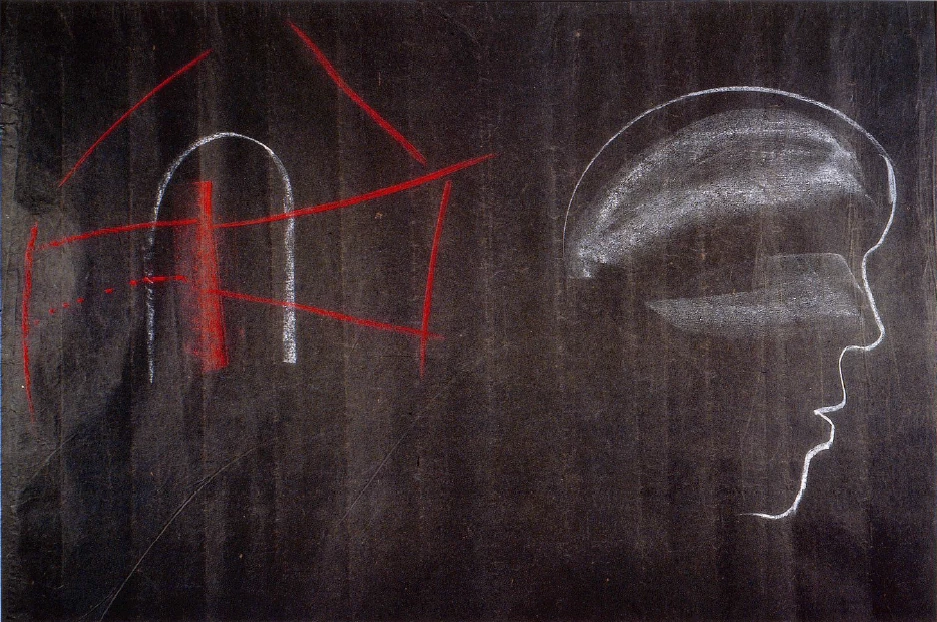
[ 11 ] Seele, wenn du verlassen willst deinen physischen Leib, um ein Verhältnis zum äußeren Kosmos zu bekommen, wie willst du dann ausschauen? — Das war die Frage. Die architektonischen Formen waren die leibhaften Antworten auf diese Frage.
[ 11 ] Soul, if you wish to leave your physical body in order to establish a connection with the outer cosmos, what will you look like? — That was the question. The architectural forms were the tangible answers to that question.
[ 12 ] Oh, man kann schon fühlen innerhalb der Menschheitsentwikkelung, wie diese Empfindung fortwirkte. In der Zeit der Abstraktionen gewinnt alles einen anderen Anstrich. Wir wollen aber nicht alte Zeiten wieder zurückwünschen, sondern sie verstehen. Wir wollen doch verstehen, wenn wir heute noch in Orte hinauskommen, in denen mancher gar nicht so alte Gebrauch sich noch erhalten hat, warum wir zum Beispiel da an die Kirche herantreten und ringsherum die Gräber sehen. Nicht jeder einzelne konnte ein Grabhaus haben, aber die Kirche war das gemeinsame Grabhaus für alle. Und die Kirche ist die Antwort auf die Frage, welche die Seele sich stellte: Wie möchte ich mich zunächst entfalten, um dem Körper, der mich allein mit der physischen Welt, der Erde verbindet, in der richtigen Weise entkommen zu können? - In der Kirchenform ist gewissermaßen die Begierde der Seele nach ihrer Form, wenn sie den Körper verlassen hat, ausgedrückt.
[ 12 ] Oh, one can already sense, within the course of human development, how this feeling continued to exert its influence. In the age of abstractions, everything takes on a different character. But we do not wish to long for the return of old times; rather, we want to understand them. After all, when we visit places today where certain customs—some not even that old—have been preserved, we want to understand why, for example, we approach the church and see the graves all around it. Not everyone could have their own burial chamber, but the church served as the communal burial chamber for all. And the church is the answer to the question the soul asked itself: How might I first unfold myself in order to escape, in the right way, from the body, which alone connects me to the physical world, to the earth?—The form of the church expresses, in a sense, the soul’s longing for its own form once it has left the body.
[ 13 ] Kulturelemente, die noch aus älteren Zeiten stammen, können allein verstanden werden, wenn man sie im Zusammenhange mit den Empfindungen, mit den Gefühlen, mit den Intuitionen, die man von der geistigen Welt hatte, versteht. Man muß wirklich eine Empfindung dafür haben, wie sie einmal bei denen da war, welche ursprünglich die Kirche gebaut haben und den Friedhof ringsherum. Man muß eine Empfindung dafür haben, daß bei denen das Gefühl vorhanden war: Liebe Seelen, die ihr von uns wegsterbet, was wollt ihr, daß wir euch als Formen bauen, damit ihr, wenn ihr noch euren Körper umfliegt, wenn ihr noch nahe eurem Körper seid, die Formen schon habt, die ihr annehmen wollt nach dem Tode? - Und da war die Antwort, die man ein für allemal für die fragenden Seelen hinstellen wollte, die Form der Kirche, die Architektonik der Kirche. So werden wir an das eine Ende des Erdenlebens gewiesen, wenn wir zum Künstlerischen der Architektur kommen. Gewiß, das alles metamorphosiert sich. Dasjenige, was aus dem Totenkultus hervorgegangen ist, kann zur höchsten Ausbildung des Lebens werden, wie es auch geworden ist, wie es am Goetheanum versucht worden ist. Aber man muß die Dinge verstehen, muß verstehen, wie die Architektur überhaupt sich aus dem Prinzip des Verlassens des physischen Körpers durch die Seele entfaltet, aus dem Prinzip des Hinauswachsens der Seele über den Leib, wie es faktisch sich vollzieht im Erdenleben, wenn der Mensch durch die Pforte des Todes schreitet.
[ 13 ] Cultural elements that date back to earlier times can only be understood when viewed in the context of the perceptions, feelings, and intuitions that people had of the spiritual world. One must truly have a sense of what it was like for those who originally built the church and the cemetery surrounding it. One must have a sense that they felt: “Dear souls who are passing away from us, what forms do you want us to build for you, so that when you are still hovering around your body, when you are still near your body, you will already have the forms you wish to assume after death?”—And there was the answer, which they wanted to provide once and for all to the inquiring souls: the form of the church, the architecture of the church. Thus we are directed toward one end of earthly life when we turn to the artistic aspect of architecture. Certainly, all of this undergoes a metamorphosis. That which has emerged from the cult of the dead can become the highest expression of life—as it indeed has become, as has been attempted at the Goetheanum. But one must understand these things; one must understand how architecture unfolds, in general, from the principle of the soul’s departure from the physical body, from the principle of the soul’s transcending the body—as it actually takes place in earthly life when a person passes through the gate of death.
[ 14 ] Blicken wir nach der anderen Seite des Lebens hin, nach der Geburt, nach dem Hereinkommen des Menschen in die physische Welt, da allerdings wird es notwendig sein, daß ich Ihnen etwas sage, worüber Sie vielleicht, oder wenigstens viele unter Ihnen vielleicht — vielleicht auch nicht, dann würde ich sagen: Gott sei Dank — innerlich ein wenig lächeln werden. Aber es ist dennoch eine Wahrheit. Sehen Sie, wenn die Seele auf Erden ankommt, um sich in ihren Körper, wenn ich mich so ausdrücken darf, zu begeben, so kommt sie aus den geistig-seelischen Welten herunter. In diesen geistig-seelischen Welten sind zunächst nicht Raumesformen. Raumesformen kennt die Seele nur, wenn sie ihren Körper verläßt, wo das Räumliche noch nachwirkt. Wenn die Seele herunterkommt, um ihren Körper erst zu beziehen, kommt sie aus einer Welt, in der Raumesformen nicht bekannt sind, in der von unserer physischen Welt Farbenintensitäten, Farbenqualitäten, aber nicht Raumeslinien, nicht Raumesformen bekannt sind. In der Welt, die ich Ihnen in der letzten Zeit öfters beschrieben habe, die der Mensch zwischen dem Tod und einer neuen Geburt durchlebt, lebt er in einer durchseelten, durchgeistigten Licht- und Farben- und Toneswelt, in einer Welt der Qualitäten, der Intensitäten, nicht in einer Welt der Quantitäten, der Ausdehnungen. Und er kommt herunter, taucht in seinen physischen Leib ein, er empfindet - ich schildere jetzt die Empfindung, wie man sie in gewissen, von der Geschichte fast vergessenen, primitiven Zivilisationen hatte —, daß er in seinen physischen Leib untertaucht. Durch den physischen Leib bekommt er sogleich eine Beziehung zur Umgebung: Da wachse ich ja in den Raum hinein. - Dieser physische Leib ist schon ganz auf den Raum gestimmt — das ist mir fremd. Es war nicht so in der geistig-seelischen Welt. Hier werde ich gleich in drei Dimensionen hineingespannt. - Diese drei Dimensionen haben keinen Sinn, bevor man aus der geistig-seelischen Welt in die physische Welt heruntersteigt. Aber Farbiges, Farbenharmonisches, Tonharmonisches, Tonmelodisches, das hat seinen guten Sinn in der geistigen Welt. Da empfand dann der Mensch in jenen alten Zeiten, in denen man solche Dinge eben empfand, ein tiefes Bedürfnis, nicht das an sich zu tragen, was ihm eigentlich fremd ist. Er empfand höchstens sein Haupt als aus der geistigen Welt gegeben. Denn dasjenige, was sein übriger Leib - ich habe das öfter ausgeführt - in früheren Erdenleben war, ist zum Haupte geworden. Der übrige Leib wird erst in dem nächsten Erdenleben zu einem Haupte werden. Diesen übrigen Leib empfindet der Mensch jener alten Zeiten der Schwerkraft angepaßt, den Kräften, die um die Erde herumkreisen. Er empfindet das, wie gesagt, als hineingezwängt in den Raum. Und er empfindet: das, was da in seinen physischen Leib von der Umgebung hereinkommt — mit dem passe ich als Mensch, der etwas aus geistigen Welten herunterträgt, gar nicht zusammen. Ich muß etwas tun, um damit zusammenzupassen.
[ 14 ] Let us turn our gaze to the other side of life—to birth, to a human being’s entry into the physical world. Here, however, I must tell you something that may cause you—or at least many of you—to smile a little inwardly; though perhaps not all of you will, in which case I would say: Thank God. But it is nonetheless a truth. You see, when the soul arrives on Earth to enter its body—if I may put it that way—it descends from the spiritual-soul worlds. In these spiritual-soul worlds, there are initially no spatial forms. The soul only becomes familiar with spatial forms when it leaves its body, where spatial elements still have an aftereffect. When the soul descends to take up residence in its body for the first time, it comes from a world in which spatial forms are unknown—a world in which, compared to our physical world, color intensities and color qualities are known, but not spatial lines or spatial forms. In the world I have often described to you recently—the one that a human being experiences between death and a new birth—he lives in a world of light, color, and sound imbued with soul and spirit, in a world of qualities and intensities, not in a world of quantities and extensions. And the person descends, immerses themselves in their physical body, and feels—I am now describing the sensation as it was experienced in certain primitive civilizations, almost forgotten by history—that they are submerging into their physical body. Through the physical body, they immediately establish a relationship with their surroundings: “Here I am growing into space.” - This physical body is already entirely attuned to space—that is foreign to me. It was not like that in the spiritual-soul world. Here I am immediately drawn into three dimensions. - These three dimensions have no meaning until one descends from the spiritual-soul world into the physical world. But color, color harmony, tone harmony, and melody—these have their own profound meaning in the spiritual world. In those ancient times, when people were still attuned to such things, human beings felt a deep need not to carry within themselves what was actually foreign to them. At most, they perceived their head as having been given from the spiritual world. For what the rest of their body—as I have often explained—was in earlier earthly lives has become the head. The rest of the body will only become a head in the next earthly life. People of those ancient times perceive this remaining part of the body as adapted to gravity, to the forces that circle around the Earth. As I said, they perceive it as being forced into space. And they feel: what enters their physical body from the surroundings—that does not fit at all with me as a human being who brings something down from the spiritual worlds. I must do something to make it fit.
[ 15 ] Sehen Sie, da trägt der Mensch aus den geistigen Welten in die physische Welt die Farbe seiner Bekleidung herein. Führt uns die Architektur an das Todesende des menschlichen Lebens, so führt uns die Bekleidungskunst im Sinne der alten Zeiten, wo man an dem Farbenfrischen, an dem Künstlerischen seiner Kleidung seine Freude, seine Froheit und dafür Verständnis hatte, an das Geburtsende. In den alten Bekleidungen hatte man dasjenige, was die Menschen aus dem vorirdischen Dasein an Vorliebe für Farbiges, für Zusammenstimmendes aus der geistigen Welt hereintrugen. Und es ist gar kein Wunder, daß in der Zeit, in welcher der Ausblick auf das vorirdische Leben abgeschafft wurde, die Bekleidungskünste in den Dilettantismus hineinwuchsen. Denn, nicht wahr, in den heutigen Bekleidungen spüren Sie kaum irgendwie, daß der Mensch das durch die Art und Weise, wie er im vorirdischen Dasein gelebt hat, an sich sehen möchte. Aber studieren Sie wirklich hochgekommene primitive Kulturen in ihrer Farbenfreudigkeit in den Bekleidungen, mit ihrem oftmals charakteristisch Farbigen in den Bekleidungen, dann werden Sie sehen, daß Sie in der Bekleidungskunst eigentlich eine berechtigte große Kunst haben, durch die der Mensch das vorirdische Dasein in das irdische Dasein hereintragen will, wie er durch die architektonische Kunst das nachirdische Dasein aufnehmen möchte, das Dasein, wo er sich dem Raum entringt, ihn noch hat, aber los will vom Raum und das in architektonischen Formen ausdrückt. Sie können heute noch, wenn Sie sich zu Völkerschaften wenden, die ihre Volkstrachten haben, an diesen Volkstrachten die Frage sich beantworten: Wie haben sich eine Anzahl von Seelen zusammengefunden, um das aus der Verwandtschaft, in der sie im vorirdischen Dasein waren und aus der sie sich in einer Volksgemeinschaft gefunden haben, in ihren Bekleidungen zum Ausdruck zu bringen? — Andenken an ihr Aussehen im Himmel wollten die Menschen in ihren Bekleidungen schaffen. Sie werden daher oftmals in ältere Zeiten zurückgehen müssen, wenn Sie sinnvolle Bekleidungen finden wollen.
[ 15 ] You see, this is how human beings bring the color of their clothing from the spiritual worlds into the physical world. Just as architecture leads us to the end of human life—death—so the art of clothing, in the spirit of ancient times when people found joy, cheerfulness, and appreciation in the vivid colors and artistic beauty of their garments, leads us to the beginning of life. In the clothing of old, one found what people had brought with them from their pre-earthly existence: a love for color and for harmony derived from the spiritual world. And it is no wonder at all that, in the era when the perspective on pre-earthly life was abolished, the art of clothing degenerated into dilettantism. For, isn’t it true that in today’s clothing you can hardly sense in any way that a person wishes to reflect in their appearance the way they lived in their pre-earthly existence? But if you truly study highly developed primitive cultures in their joy of color in clothing—with their often characteristically colorful garments— then you will see that the art of clothing is in fact a legitimate and great art through which human beings seek to carry their pre-earthly existence into earthly existence—just as, through the art of architecture, they seek to embrace their post-earthly existence, that existence in which they break free from space, still possess it, yet wish to be liberated from it, and express this in architectural forms. Even today, when you turn to peoples who have their traditional costumes, you can find the answer to this question in those costumes: How did a group of souls come together to express, through their clothing, the kinship they shared in their pre-earthly existence—and through which they found themselves united in a national community? — People wanted to create a memento of their appearance in heaven through their clothing. You will therefore often have to go back to earlier times if you wish to find meaningful clothing.
[ 16 ] Aber auf der anderen Seite können Sie wiederum sehen, wie in der Zeit, wo das ganze Menschliche vom Künstlerischen ergriffen war, ob man nun durch die besonderen Verhältnisse, aus denen heraus man kam oder im Hineinwachsen war, Maler wurde oder was anderes, es seinen tiefen Sinn hatte, wenn Sie da eine Magdalena zum Beispiel bei Raffael anschauen oder eine Maria. Die sind ganz anders bekleidet. Aber Sie werden sehen, die MagdalenenKleidung behält dann Raffael für alle seine Magdalenen bei, im wesentlichen auch die Marien-Kleidung wiederum für alle Marien, weil er noch ein Lebendiges, wenigstens eine lebendige Tradition hatte, daß man das Geistig-Seelische, das man vom Himmel auf die Erde herunterbringt, in der Bekleidung zum Ausdrucke bringt. Dadurch bekommt die Bekleidung Sinn. Der heutige Mensch wird sagen, sie bekäme auch Sinn dadurch, daß sie einen wärme. Nun ja, gewiß, das ist der materielle Sinn, aber dadurch entstehen nicht künstlerische Formen. Künstlerische Formen entstehen immer durch die Beziehung zum Geistigen hin. Diese Beziehung zum Geistigen muß man wieder finden, wenn man bis zum wirklich Künstlerischen wieder vordringen will.
[ 16 ] But on the other hand, you can see how, in an era when everything human was captivated by the artistic—whether one became a painter or something else due to the specific circumstances from which one came or into which one was growing—it had a deep meaning when you look, for example, at a Magdalene in Raphael’s work or a Mary. They are dressed quite differently. But you will see that Raphael then retains the same attire for all his Magdalenes, and essentially the same attire for all his Marys as well, because he still had something alive—or at least a living tradition—in which the spiritual and soulful qualities brought down from heaven to earth are expressed through clothing. This is what gives the clothing its meaning. People today would say that it also gains meaning by keeping one warm. Well, certainly, that is the material meaning, but artistic forms do not arise from that. Artistic forms always arise through a connection to the spiritual. One must rediscover this connection to the spiritual if one wishes to advance once more toward what is truly artistic.
[ 17 ] Indem Anthroposophie das Geistige in seiner Unmittelbarkeit ergreifen will, kann sie zugleich befruchtend für die Kunst wirken. Denn diejenigen Dinge, die man genötigt ist, als die großen Weltund Lebens-Geheimnisse aus dem anthroposophischen Forschen heraus zu enthüllen, laufen zuletzt selber in Künstlerisches aus. Das muß man richtig erschauen. Was nicht Kopf im vorhergehenden Erdenleben war, das formt sich in seinen Kräfteverhältnissen um, wird Kopf, wird Haupt in dem nachfolgenden Erdenleben. Daß es dann mit physischer Erdenmaterie ausgefüllt wird, ist selbstverständlich. Das habe ich schon oftmals erklärt, daß man natürlich nicht den blödsinnigen Einwand machen darf, der physische Leib ist ganz zugrunde gegangen, wie kann daraus ein Kopf werden. Nun, viel gescheiter sind die andern Einwände in der Regel auch nicht, die gegen Anthroposophie gemacht werden. Natürlich ist der Einwand sehr billig. Aber es handelt sich nicht um die physische Ausfüllung, sondern um den Kräftezusammenhang, der durch die geistige Welt hindurchgeht.
[ 17 ] Because anthroposophy seeks to grasp the spiritual in its immediacy, it can at the same time have a stimulating effect on art. For those things that one is compelled to reveal as the great mysteries of the world and of life through anthroposophical research ultimately find their expression in art. One must perceive this correctly. What was not the head in the previous earthly life is transformed in its balance of forces, becomes the head, becomes the central point in the subsequent earthly life. That it is then filled with physical earthly matter goes without saying. I have explained this many times before: one must not, of course, make the absurd objection that the physical body has completely perished—how can a head arise from it? Well, the other objections raised against anthroposophy aren’t generally much smarter either. Of course, the objection is very facile. But the point is not the physical substance, but rather the interplay of forces that permeates the spiritual world.
[ 18 ] Der Kräftezusammenhang, der heute in unserem ganzen physischen Organismus, Beinorganismus und so weiter ist, ob die Kräfte vertikal oder horizontal sind, zusammenhalten oder auseinanderstreben, rundet sich, wird Kräftezusammenhang für unser Haupt im nächsten Erdenleben. Da aber arbeiten alle höheren Hierarchien mit, wenn diese Umwandelung, die Metamorphose von Beinen, Füßen und so weiter in das Haupt des Menschen geschieht. Da arbeiten die ganzen Himmelsgeister mit. Kein Wunder, daß zunächst das Haupt diejenige Form trägt, durch die es als das Abbild des weiten Raumes erscheint, der sich rund über uns wölbt, daß dann das Nächste erscheint als das Abbild der um die Erde herumkreisenden Atmosphäre und atmosphärischen Kräfte. Man möchte sagen, im oberen Teil des Hauptes hat man das getreue Abbild des Himmels, im mittleren Teil des Hauptes hat man schon die Anpassung des Hauptes an die Brust, an dasjenige, was an all das angepaßt ist, was die Erde umkreist. In unserer Brust brauchen wir die die Erde umkreisende Luft, brauchen wir das die Erde umwebende Licht und so weiter. Wie aber unser ganzer Organismus in keinem Formzusammenhang steht — nur in einem Stoffzusammenhang mit der oberen Wölbung des Hauptes, so steht unsere Brust nun schon in einer Beziehung zur Nasenbildung, zu alledem, was der mittlere Teil des Hauptes ist.
[ 18 ] The interplay of forces that exists today throughout our entire physical organism—our leg organism and so on—whether these forces are vertical or horizontal, whether they hold us together or push us apart—comes full circle and becomes the interplay of forces for our head in our next earthly life. But all the higher hierarchies are at work when this transformation—the metamorphosis of the legs, feet, and so on—into the human head takes place. All the heavenly spirits are at work here. No wonder, then, that the head initially takes on the form through which it appears as the image of the vast space that arches round above us, and that the next stage appears as the image of the atmosphere and atmospheric forces circling around the Earth. One might say that in the upper part of the head we have the true image of the heavens, while in the middle part of the head we already see the head’s adaptation to the chest—to that which is adapted to all that circles the Earth. In our chest, we need the air that circles the Earth; we need the light that weaves around the Earth, and so on. But just as our entire organism has no formal connection—only a material connection—with the upper vault of the head, so our chest is already related to the structure of the nose, to everything that constitutes the middle part of the head.
[ 19 ] Und kommen wir zum Mund herunter, so steht der Mund bereits zum dritten Gliede in der menschlichen Dreigliederung in Beziehung, zu dem Verdauungs-, zu dem Ernährungs-, zu dem Bewegungsorganismus. Wir sehen, wie sich dasjenige, was durch die Himmel durchgegangen ist, um auf der Erde aus der früheren hauptlosen Leibesbildung Haupt zu werden, in seiner majestätischen Wölbung oben noch an die Himmel anpaßt, wie es sich aber schon im mittleren Teil an dasjenige anpaßt, was der Mensch ist durch den Erdenumkreis, und wie es an das angepaßt ist, was der Mensch durchaus als Erdenmensch ist durch Schwerkraft, durch die irdischen Stoffe, in der Mundbildung.
[ 19 ] And when we come down to the mouth, we see that the mouth is already related to the third member of the human threefold constitution: the digestive, the nutritive, and the motor organisms. We see how that which has passed through the heavens—in order to become a head on Earth out of the earlier headless bodily formation—still adapts to the heavens in its majestic arch at the top, yet how, in its middle section, it adapts to what the human being is through the Earth’s orbit, and how it is adapted to what the human being is in the fullest sense as an earthly human being—through gravity, through earthly substances, in the formation of the mouth.
[ 20 ] So enthält das Haupt des Menschen, ich möchte sagen, wenn wir mit den alten Ausdrücken der europäischen Mythologie sprechen wollen: Asgard, die Burg der Götter, oben; Midgard, die mittlere Partie, die eigentliche Menschenheimat auf Erden; dasjenige, was zur Erde zugehört, Jotunheim, die Heimat der Riesen, der irdischen Geister.
[ 20 ] Thus, the human head contains—I might say, if we are to speak in the ancient terms of European mythology—Asgard, the castle of the gods, at the top; Midgard, the middle realm, the actual home of humankind on Earth; that which belongs to the Earth, Jotunheim, the home of the giants, the earthly spirits.
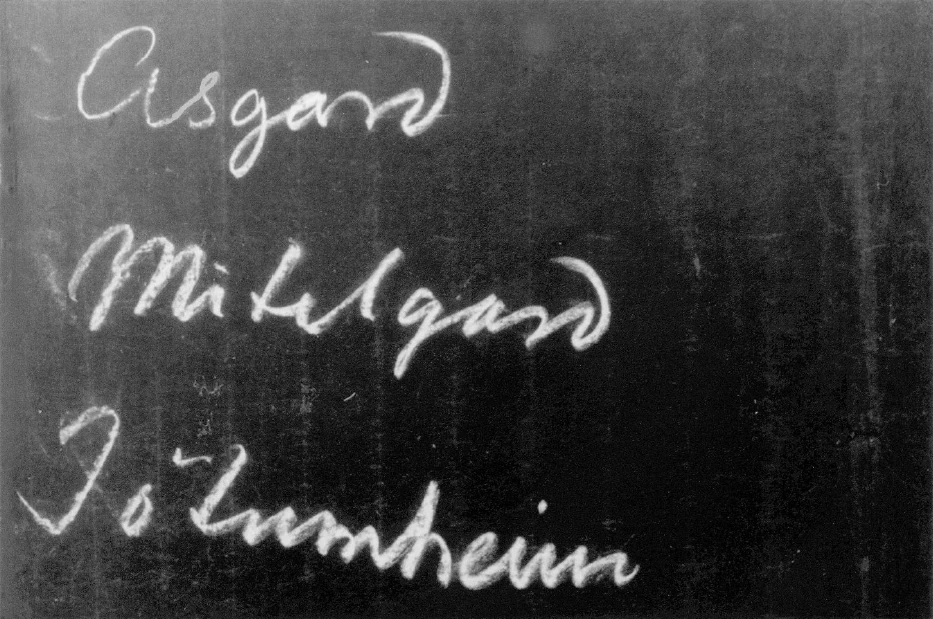
[ 21 ] Das alles wird einem aber nicht klar, wenn man es nur in abstrakten Begriffen überschaut, das alles wird einem klar, wenn man künstlerisch das menschliche Haupt in seiner Beziehung zu seinem geistigen Ursprung durchschaut, wenn man in diesem menschlichen Haupt Himmel, Erde und Hölle in gewissem Sinne sieht, wobei die Hölle natürlich nicht der reine Teufelsort ist, sondern nur das Jotunheim, das Riesenheim. Und wir haben dann durchaus in dem menschlichen Haupte wiederum den ganzen Menschen.
[ 21 ] However, none of this becomes clear if one considers it only in abstract terms; it all becomes clear when one artistically penetrates the human head in its relationship to its spiritual origin, when one sees, in a certain sense, heaven, earth, and hell within this human head—whereby hell, of course, is not merely the realm of the devil, but rather Jotunheim, the home of the giants. And so, in the human head, we indeed find the whole human being once again.
[ 22 ] Man möchte sagen, man sieht recht dieses menschliche Haupt, wenn man in der Wölbung, die das Haupt oben trägt, die reinste Erinnerung sieht an die vorige Erdeninkarnation des Menschen, wenn man in der mittleren Partie, der unteren Augenpartie und in der Nasenpartie, Ohrenpartie, die schon durch die Atmosphäre der Erde getrübte Erinnerung sieht und in der Mundbildung die durch die Erde bezwungene frühere menschliche Bildung, die schon auf die Erde gebannte menschliche Bildung. In seiner Stirnbildung bringt sich der Mensch in einer gewissen Weise dasjenige mit, was ihm karmisch aus seinem früheren Erdenleben überliefert ist. In seiner Kinnbildung ist er schon von dem irdischen Leben der Gegenwart bezwungen, drückt schon Sanftmut oder Eigensinn dieses gegenwärtigen Lebens in seiner besonderen Kinnbildung aus. Er hätte kein Kinn, wenn sich nicht die frühere kopflose oder außerkopfliche Organisation in die gegenwärtige Hauptesorganisation hinein verwandelte. Aber es ist in bezug auf die Mund- und Kinnbildung die Summe der gegenwärtigen Erdenimpulse so stark, daß da schon das Frühere in das Gegenwärtige hereingepreßt, hereingespannt wird. Daher wird niemand sagen, der künstlerisch empfindet, der Mensch ist auffällig durch seine besonders hervorragende Stirne. Das wird man nicht sagen, wenn man künstlerisch empfindet. Man wird immer auf die Wölbung der Stirne, auf die Flächenbildung der Stirne sehen, wird auch in bezug auf das Hervortreten oder Nachhintengehen das Wölbende vorzugsweise ins Auge fassen. Beim Kinn wird man sagen, es ist eigensinnig spitz nach vorne gehend, oder es ist sanft nach rückwärts geformt. Da fängt man an, die Form am Menschen aus dem ganzen Weltenall heraus zu verstehen, und nicht nur aus dem gegenwärtigen Weltenall heraus — da findet man wenig -, sondern aus dem zeitlichen Weltenall heraus, zuletzt auch aus dem außerzeitlichen.
[ 22 ] One might say that one truly sees this human head when, in the curve that supports the head from above, one sees the purest memory of the human being’s previous earthly incarnation; when, in the middle section, the area below the eyes, and the area of the nose, the area around the ears, a memory already clouded by the Earth’s atmosphere; and in the shape of the mouth, the earlier human form subdued by the Earth—the human form already bound to the Earth. In the shape of his forehead, the human being carries with him, in a certain way, what has been karmically handed down to him from his previous earthly life. In the shape of his chin, he is already subdued by his present earthly life, already expressing the gentleness or stubbornness of this present life in the distinctive shape of his chin. He would have no chin if the earlier headless or extra-cranial organization had not been transformed into the present head organization. But with regard to the formation of the mouth and chin, the sum of the present earthly impulses is so strong that the past is already being pressed into and drawn into the present. Therefore, no one with an artistic sensibility will say that a person is striking because of a particularly prominent forehead. One would not say that if one has an artistic sensibility. One will always look at the curvature of the forehead, at the shaping of its surface; one will also, with regard to whether it protrudes or recedes, focus primarily on the curvature. As for the chin, one will say that it is stubbornly pointed forward, or that it is gently shaped backward. There one begins to understand the human form in relation to the entire universe—not merely the present universe (where one finds little), but the temporal universe, and ultimately the timeless one as well.
[ 23 ] Man findet, wie man durch eine anthroposophische Betrachtung zum Künstlerischen einfach hingetrieben wird, wie wirklich das unkünstlerische Philistertum mit einer wahren, lebendigen Erfassung des Anthroposophischen eigentlich gar nicht mehr vereinbar ist. Deshalb ist es, ich möchte sagen eine solche Misere für unkünstlerische Naturen, sich mit dem Ganzen der Anthroposophie in Einklang zu bringen. Sie möchten abstrakt ganz gerne natürlich im gegenwärtigen Leben die Erfüllung früherer Erdenleben sehen, aber sie vermögen nicht, nun auch wirklich auf die Formen einzugehen, die da schaffend als umgestaltete Gestalten unmittelbar künstlerisch für das geistige Anschauen sich offenbaren. Dafür muß man auch einen Sinn bekommen, wenn man ins wirkliche lebendige Anthroposophische hineingeht.
[ 23 ] One finds how an anthroposophical perspective simply draws one toward the artistic, and how, in truth, unartistic philistinism is actually no longer compatible with a genuine, living understanding of anthroposophy. That is why—I would say—it is such a struggle for unartistic souls to bring themselves into harmony with the whole of anthroposophy. They would, of course, very much like to see, in abstract terms, the fulfillment of past earthly lives in their present existence, but they are unable to truly engage with the forms that reveal themselves—as transformed figures—directly and artistically to spiritual contemplation. One must develop a sense for this when entering into the real, living world of anthroposophy.
[ 24 ] Das ist, möchte ich sagen, das erste Kapitel, das ich habe geben wollen, um zu zeigen, wie sich auf allen möglichen Gebieten das Ungeistige unserer Zeit zeigt. Es zeigt sich unter anderem das Ungeistige in der ungeistigen Stellung, die man zur Kunst einnimmt. Und es wird, wenn die Menschheit sich überhaupt aus dem Ungeistigen heraus retten will, einer der Faktoren zu dieser Rettung auch die Hinneigung zum Künstlerischen sein. Wahres Leben wiederum im Künstlerischen — Anthroposophie kann dazu führen.
[ 24 ] This, I would say, is the first chapter I wanted to present to show how the non-spiritual nature of our time manifests itself in all manner of fields. Among other things, this non-spiritual nature is evident in the non-spiritual attitude people take toward art. And if humanity is to save itself from this lack of spirituality at all, one of the factors in this salvation will be a turn toward the artistic. True life, in turn, can be found in the artistic—anthroposophy can lead to this.