

The Art of Education
GA 295
29 August 1919, Stuttgart
Translated by Steiner Online Library
Eighth Seminar Discussion
[ 1 ] Speaking exercises:
In the immeasurably vast expanses,
In the endless ages,
In the depths of the human soul,
In the revelation of the world:
Seek the solution to the great mystery.
[ 2 ] Rudolf Steiner: The lines are arranged such that the first four sound like an anticipation, and the last line is the complete fulfillment of the first four lines.
(The speaking exercise is read aloud.)
[ 3 ] Don't pronounce “ei” like “ai”!
[ 4 ] Now let's go back to the other speaking exercise:
Ostentatiously praising
Bathing with fervor
Noisily charming
Diligently crafting
Applying powder
Mountainously proud
[ 5 ] You can learn a lot from this. Now let's repeat the sentence:
We must not condone the fact that he lied to you
[ 6 ] Now, something similar, but with a nuance leaning toward the affective. There are four lines I’d like to draw your attention to. I’ll dictate them to you later. The affective aspect should be more evident in the first line:
Sweet little songs
Lipplicher Laffe
Shabby and ragged
Laichiger Lurch.
[ 7 ] So in your mental image, you have a green frog in front of you, looking at you with its mouth open, its lips slightly parted, and you address it with the last three lines. But in the first line, you tell it to “babbble sweet songs.” You have to say this first line in a humorous yet emotional way, as if you’re making an unreasonable demand of it.
(The speaking exercise is read aloud.)
[ 8 ] Now a piece of prose, a fable by Lessing:
The Oak
The raging north wind had demonstrated its power during a stormy night against a majestic oak tree. Now it lay sprawled on the ground, and a multitude of low shrubs lay shattered beneath it. A fox, whose den was not far away, saw it the following morning. “What a tree!” he cried. “I never would have thought it was so big!”
[ 9 ] What, then, is the moral of the fable?
Karl Stockmeyer: It is only upon a person's death that one realizes how great they were.
A participant: It is only when a great person has fallen that a lesser person realizes who that great person was.
[ 10 ] Rudolf Steiner: But why is the fox used, of all animals, when it is so cunning?
The same participant: Because the fox’s cunning cannot compare to the tree’s majesty.
[ 11 ] Rudolf Steiner: In which sentence would the moral of the fable—referring to the fox’s cunning—be found? — “I never would have thought he was that big!”
[ 12 ] He had simply never looked up at it. He had always looked at it from below, had only walked around it from below, and from that vantage point the tree had taken up very little space. Despite his cleverness, he had seen only what one sees of its circumference from below. I would like to point out: Fables, which by their very nature take place in their own special world—a fable world—may be read realistically, but poems never may.
[ 13 ] Now, following yesterday’s request to you, we come today to something very important: namely, to discuss the measures we need to take, noting that one group of students is less inclined toward this or that subject or this or that part of the curriculum, while another group is more so. And I will ask you: For the entire period from the age of seven to fifteen, choose what you want to focus your main attention on today—whether it be the group of students who are unable to learn to read or write properly, or to learn natural history, arithmetic, geometry, or singing—and then consider how you intend to conduct yourself in the classroom, in your general treatment of the students, and as time progresses, so that you can balance out what arises as much as possible.
Several seminar participants provide more detailed explanations on this topic.
Johannes Geyer: I believe that in such cases, the teacher must devote particular attention to review. Nor should the teacher resort to punishment or scolding if laziness is the cause of the student’s falling behind. One should make an effort to work with such children in extra lessons, but they must not perceive this as a punishment. One could encourage more gifted students to mentor the less gifted ones. In practice, this involves selecting students who live nearby. For students who are completely unable to keep up, there is no alternative but to place them in a lower grade or in a special education school. Gifted and less gifted students should be paired together so that they can learn to help one another.
Rudolf Treichler focuses particularly on French language instruction: I would try to approach the children according to their temperaments. I would ask the phlegmatic child, as much as possible, about simple nouns: the chair, the table, and so on. With this child, I imagine that he falls behind out of laziness. He learns to write better than he does to express himself, because he has a hard time opening up. I would balance this with the choleric child by calling on him after the phlegmatic child has explained what “chair” means. He would then have to form a sentence using the word “chair.” The Choleric type’s shortcoming is that he charges ahead without seriously engaging with the details—not out of superficiality, like the Sanguine, but because of a one-sided talent. Choleric students are likely to be one-sided in their talents anyway, so it’s a matter of whether they can be of any use in a subject or not. I would always ask the Sanguine student first, letting him speak first and form short sentences, but one must pay close attention to his written work. Sanguine students usually lack a grasp of grammar and are flighty. One must not demand too much from the Melancholic student, who, for well-known reasons, cannot keep up. You have to have them repeat what they’ve already learned as much as possible, and have them find the adjectives that go with the nouns the phlegmatic student has formed. Then I would let the German lesson transition somewhat into French, perhaps introducing short sentences from reading passages, or maybe just words, or—for the more gifted students—having them briefly summarize the content.
Hermann Heisler: I believe the reasons why students fall behind include laziness, inattention [frequent calling on students, catching them off guard], forgetfulness, a genuine lack of ability, home circumstances, and physical illness. Special attention must be given to sick children; it may be necessary to speak with the parents and consult a doctor. Where home circumstances are not good, the teacher should visit the parents and encourage them to allow their children peace and time. A child who lacks talent must be given special consideration by the teacher. To counter forgetfulness—especially in the sanguine child—exercises or assignments that help strengthen the etheric body should be given preferentially. The child should practice repetition frequently, especially in reverse order. Absent-mindedness may be present in the melancholic child, but also in the sanguine child. This can be remedied by calling on the child unexpectedly, so that the child never settles down but must always be on the alert. The phlegmatic child is particularly lazy. Strict admonitions and surprises—especially those that awaken the ego—may be helpful here. Absent-mindedness is usually the teacher’s fault. Lessons must be made interesting.
[ 14 ] Rudolf Steiner: The issues that arise may, in part, be related to a general lack of aptitude. But they may also be related to a particular, specific lack of aptitude. There are students who may be exceptionally gifted in reading and writing, but who, as soon as arithmetic is introduced, prove to be unskilled in it. Then there are students who manage just fine with arithmetic, but the moment you begin to call upon their powers of judgment—when they are supposed to correctly grasp scientific concepts—they come to a standstill. Then there are children who simply won’t engage with history. These specific lack of aptitude—that is what is important; they should be taken into careful consideration.
[ 15 ] In this regard, you might want to keep the following in mind: If you notice that a child generally lacks aptitude for reading and writing right from the start, then under any circumstances it is a good idea to contact the parents and ask them to, for the time being, give the child as few egg dishes and as few pastries as possible. The rest of the diet can essentially remain the same. If the parents agree to continue feeding the child well for a while—even though part of the child’s diet is being restricted—then it may even be possible to put the child on a diet consisting of little meat and a great deal of vegetables and leafy greens for a time. One will then notice that, as a result of this dietary change, the child essentially shows an increase in ability. Take advantage of this. Keep the child very busy, especially in the beginning—that is, when they start changing their diet.
[ 16 ] If you notice that this simple change in diet isn’t helping much, then try—for a very short period of time—I’d say eight days— after consulting with the parents, to have the child eat nothing at all until the end of the morning school session—or at least until the first few hours of the morning school session, when he is to be taught reading and writing—but rather let him learn on an empty stomach, or at least let him eat only a minimal amount. Do not continue this procedure for too long, but alternate it with normal meals. But make good use of the time during which the child will undoubtedly demonstrate his or her latent abilities—with greater aptitude and greater receptivity. If such a dietary regimen is repeated several times over the course of a year, you will see that the aptitude of a more or less young child—that is, during the early school years—will change in some respect. I urge you to take this into serious consideration.
[ 17 ] And I ask you to bear in mind that the nonsensical dietary habits during a child’s early years—which some parents tend to adopt, particularly with phlegmatic and sanguine children—contribute significantly to a decline in cognitive abilities. The constant overfeeding of children—things are a bit different now, of course, but it’s important to be aware of these things—stuffing children full of egg dishes and pastries, and flour-based porridge, is something that makes children quite listless and unable to learn during their first years of school.
The question is: What about cocoa?
[ 18 ] Rudolf Steiner: Why should children drink cocoa at all? It’s not necessary at all if they don’t need cocoa to regulate their digestion. Sometimes you do need such things to regulate digestion. For children whose digestion is too rapid, it is better to use cocoa than other remedies; but if that isn’t necessary, then a child doesn’t need such things at all. Children today are given a lot of things that aren’t good for them.
[ 19 ] You can make some strange observations there. When I was a preschool teacher in the 1980s, there was a young child there; I couldn’t teach that child—I only had the older ones. He was a little cousin. He was actually a nice, sweet child with good ideas. He could have become a gifted schoolchild one day. I was often there and witnessed how witty and talented he was. He was still a little guy, barely two years old, when he once said the following at the dinner table. He had two little dumplings, and was already so clever that when someone said, “Hans, you’ve already had two dumplings,” he replied, “And the third will follow right away.” That’s what the little rascal said.
[ 20 ] He also really enjoyed scolding people. I didn’t think it did any harm for a child that age to vent his frustration. That would pass later. That’s why he’d taken it upon himself to scold me in particular. Once, when I walked in the door—he was a bit older by then—he stood there with his arms spread wide. He couldn’t think of a swear word big enough, so he said, “Here come two donkeys!” He was quite witty, wasn’t he?
[ 21 ] But the boy was pale, had a poor appetite, and was somewhat thin. On the advice of an otherwise excellent doctor, this child was therefore given a small glass of red wine with every meal. I had neither responsibility for nor any influence over this peculiar hygienic upbringing, but I did have my concerns. Then I saw this person again when he was thirty-two or thirty-three years old—a terribly nervous man! When he wasn’t around, I asked what he had been like as a schoolchild. Indeed, this fidgety man, who was already quite nervous in his thirties, demonstrated just how much harm that little glass of red wine at mealtimes had caused. He was a gifted child—for a child is gifted who says, “Here come two donkeys!”
“He was cheeky,” Dr. Steiner interjects.
[ 22 ] Rudolf Steiner: We can, of course, set aside the impudence for now. What lies behind it? It’s astonishing. He can’t find a swear word big enough, so he turns to numbers for help. That is an extraordinarily great gift. Well, he had become a poor student and didn’t want to study properly. So, through this method of upbringing—through the wine—he was already completely spoiled by the age of seven.
[ 23 ] This is something I would like to emphasize at the beginning of our discussion today: when it comes to gifted children, it is quite important to pay attention to how the child’s diet is structured. In particular, however, I ask you to ensure that the child’s digestion does not suffer. Therefore, if you notice anything regarding the child’s abilities, you must, in a tactful manner, ask the parents whether the child has a healthy digestive system. Try to ensure that it is regulated.
Karl Stockmeyer speaks about children who lack a talent for arithmetic: I haven’t yet had the chance to give this issue much thought. When it comes to arithmetic instruction, I would also place the less gifted students under the guidance of the particularly gifted ones. Perhaps a melancholic child who is falling behind should be placed under the wing of a sanguine child, whose entirely different approach to things could be beneficial to him. Especially in math class, the melancholic child creates a mental image of the task as too difficult. It would be good if the child could then see how the sanguine child simply does what is asked of him. The child might imitate him and then understand better as well. This is especially true at a fairly young age, when it is still very important to learn by example, so to speak.
[ 24 ] Rudolf Steiner: If you notice that some children have particularly weak mathematical abilities, you would do well to do the following: The other children will generally have two physical education classes per week—that is, one eurythmy class and one physical education class. Group together the children who are not good at arithmetic, and have them follow up with a eurythmy or physical education class—or half an hour of it. This way, you don’t have to take on any extra burden; simply place them with the other children who are doing those very exercises. Care must be taken to ensure that such children’s abilities are enhanced precisely through physical education and eurythmy.
[ 25 ] They first have these children do staff exercises. Holding the staff in their hand: forward 1, 2, 3; backward 1, 2, 3, 4. So the child must always move the staff forward and backward. They have to make an effort to get the stick to move backward in some way on the count of 3. — Then running must be incorporated: 3 steps forward, 5 steps back; 3 steps forward, 4 steps back; 5 steps forward, 3 steps back, and so on. — Try to incorporate the number into the child’s movements through gymnastics and perhaps eurythmy as well, so that the child is compelled to count while moving. You will see that this is successful. I have done this repeatedly with students.
[ 26 ] And now I ask you: Why is this successful? Based on what you've already learned, you can form your own mental images of it.
Karl Stockmeyer: I mentioned this the other day, after seeing a eurythmy performance, that these eurythmic movements must be a good tool for teaching geometry.
[ 27 ] Rudolf Steiner: But I wasn’t referring to geometry lessons. What I said pertained to arithmetic, because arithmetic is based on voluntary movement—the sense of movement. When you activate this in this way, you stimulate this ability. One draws something out of the subconscious that does not readily come to the surface in such a child. In general, one should stimulate the lacking abilities in arithmetic and also in geometry through movement exercises. For geometry, one will be able to do a great deal through imaginative eurythmy exercises. Also through staff exercises.
Herbert Hahn: I had created two mental images: first, language instruction in a classroom where I would also serve as the homeroom teacher and have the opportunity to influence individual children through my overall teaching. I had thought along similar lines to what Dr. Treichler said about taking temperaments into account. I also wanted to focus primarily on individual words with phlegmatic children; I would focus on word variations with phlegmatic children; with sanguine children, I would use word derivations or ask them to form new words. The choleric temperament could be put to good use in question-and-answer exercises and in incorporating words into sentences. But that is not the main point. I would also enlist the more gifted children to help teach the less gifted ones. I would form small groups. Then I would always keep an eye on supplementary instruction. But above all, I would also incorporate other subjects into the curriculum to reinforce learning. When there are difficulties with pronunciation, one must take into account the connection between language and music. These students should be considered in music classes; perhaps they should have singing lessons.
[ 28 ] Rudolf Steiner: Most cases of poor pronunciation are said to be due to poor hearing.
Herbert Hahn: Poor pronunciation usually stems from the ear. — In that case, I would incorporate recitation exercises, specifically poems with subtle lyrical moods, where attention must be paid to the subtlety of individual sounds. Perhaps one could even draw on painting. If there are difficulties in memorizing and varying the words, one should strive to awaken a vivid sense of form. I could well imagine this being achieved through nature studies, as described to us yesterday. If there are difficulties summarizing sentences, drawing dynamic, strongly structured ornaments might be worth considering. At higher levels, I would expect architectural elements to be very beneficial for sentence structure. For older children, shedding light on certain cultural-historical contexts will awaken a sense of a people’s distinctive character, as the child begins to sense something of the spirit of the language. This also sheds light on sentence structure. For classroom instruction, I had chosen geography as the subject. There, the classroom teacher will have the daily opportunity, with children who are falling behind, to make use of something in every lesson for the particular student who is weak in a subject. One should always start from the student’s strengths and use them as a bridge to the weaker areas. In geography class, the sanguine student will struggle to keep up; his mental images are vague. In such cases, I would advocate drawing lessons based on motifs from the map. Uncertainty and imprecision often stem from a need to sharpen mathematical imagination. In mathematics, rhythm exercises and musical ensemble playing might help—perhaps in an orchestra. If interest is waning, I would look for points of connection in natural history and history lessons to rekindle that interest. Regarding language skills, I had also considered using eurythmy groups to address deficiencies in sentence structure.
[ 29 ] Rudolf Steiner: If geography lessons were made truly vivid—specifically by using graphic representations to show the countries, the distribution of vegetation within them, and the distribution of agricultural products—and if lessons were structured in this way to be truly vivid, one would notice precisely there that there is not easily a general dullness among the students. In this way, one can easily combat a general dullness. If one further enlivens the lesson by, specifically in geography class, first attempting to describe the country, then map it out—having the students draw it on the blackboard, sketching in rivers, mountains, and the distribution of vegetation, forests, and meadows—and then read travelogues with the students, one will see that there are usually very few students who are truly un gifted in geography; indeed, one can use geography to stimulate students’ liveliness and to bring out other abilities. One will clearly notice how, when geography is made interesting in and of itself, other abilities are awakened in the students.
Hannah Lang: I was thinking of first through third grade. If a child were lazy, I would take a strict approach and try to spark their ambition. If a child were mentally sluggish, I would have them tend to flowers. If a child showed no interest, I would try to make the lessons more interesting. I would try to transition from the interesting to the uninteresting. Then I would speak with the parents about the home environment. In my experience, the sanguine child is too dominated by a playful instinct. They are still too immersed in an unconscious, childlike dream world. In such cases, I would encourage the parents to take the child out of school for a while. If that’s not possible, you have to point out to the child that they might have to repeat the grade. That’s when you really need to spark their enthusiasm and ambition.
[ 30 ] Rudolf Steiner: I wouldn’t recommend relying too much on ambition. Ambition shouldn’t be encouraged too much. In the early years of schooling, things like what you suggest can be very useful, but without placing too much emphasis on ambition—otherwise, you’ll have to work to eliminate that very ambition later on, since you’ve instilled it in the first place. However, you’ll have to take into account—and I must say this again and again—diet and nutrition.
[ 31 ] Perhaps the teachers who will now be covering these topics will take into account that there are, after all, many children who, later in life, have no aptitude for properly understanding and remembering natural objects. It can drive a teacher to despair when certain students are simply unable to remember which of the minerals is malachite, which is pitchblende, or even which is an emerald—that is, when they have absolutely no aptitude for understanding and recognizing natural objects. This is also the case with plants and even animals. I ask that you please take this into account as well.
Elfriede Herrmann: I had thought that, with the youngest children, some groups might fall behind in math. In those cases, you can’t rely on the other students; instead, you have to give these children special attention yourself. Perhaps I would work with these children while the others are busy with written assignments. I prefer to make everything concrete—using my fingers, small pieces of paper, marbles, or buttons. Celebrate every correct answer with joy to build their confidence and self-esteem. Organize math competitions. I wouldn’t use recess for work—it’s necessary for rest. We have introduced what is known as “departmental instruction” at our school; without the children knowing it, they are divided into two groups: the gifted and the struggling. We then focus special attention on the struggling students so that the gifted ones are not held back by them.
[ 32 ] Rudolf Steiner: In such a case, Newton, Helmholtz, and Julius Robert Mayer would always have been among the weakest.
Elfriede Herrmann: It doesn't hurt.
[ 33 ] Rudolf Steiner: Certainly, that doesn’t hurt. Even Schiller would have been among the weaker students. According to Robert Hamerling’s teaching certification, he received good grades in almost every subject—except for the German essay. In that subject, his grade was actually below average.
[ 34 ] Miss F. will now tell us—we’ve already heard how eurythmy can help—but she’ll also share her thoughts on how eurythmy might be used to help children who are unruly. Eurythmy should also be taught to unruly children.
Elisabeth Dollfus: I had thought that melancholic children would have little interest in rhythmic exercises, staff exercises, or marching in time—in other words, all exercises that require one to stand with a natural, uninhibited demeanor. They prefer to look inward, and given their physical constitution, they tire easily. Perhaps, while the others are doing the staff exercises, these children could be allowed to sing along or recite poems in time with the beat. That way, they’ll be drawn into the rhythm without physical exertion. — It is also possible, however, that children are averse to these exercises because they tend never to fully immerse themselves in activities, but rather to hold back a part of their being. In that case, one should have them jump to different notes, because that actually engages the whole person. At the same time, these exercises are objective.
The teacher must not feel that the child is incapable of doing something. One must believe that the child possesses the full potential for eurythmy. The teacher’s own confidence would then be passed on to the child.
[ 35 ] Rudolf Steiner: All of these measures are very good. — It would also be advisable, for children who are reluctant to engage with eurythmy, to awaken a special joy in eurythmy by not only having them observe others performing eurythmy from the outside, but also by attempting to take various posed photographs. These should be simplified so that the children form mental images of the eurythmic forms and movements that the human being performs. Such mental images of eurythmy will be imprinted on their minds and will have a stimulating effect on their eurythmic abilities. That is why I asked Miss W. to create such visual images—by which I do not mean mere reproductions of eurythmic poses, but rather these transformed into simple, schematic forms of movement that have an artistic effect. These could then be used to show the children the beauty of the line. You will then find—and this is a psychologically fascinating fact—that the child is able to perceive the beauty of the line that he or she creates in eurythmy without becoming vain or coquettish. Whereas otherwise, when the child becomes attentive to what he or she is doing, he or she easily becomes vain, this is precisely what is avoided in eurythmy. Therefore, a parallel can also be drawn in eurythmy with the perception of the eurythmic line, which can be used to elevate self-esteem without arousing vanity or coquetry.
Rudolf Meyer explains how he would explain the dynamo to children. He would strive to highlight, in every aspect, what gives rise to the fundamental phenomenon.
[ 36 ] Rudolf Steiner: This is a very important principle that can also be applied to other subjects. It is a good teaching principle, but in a sense, it is beneficial for all students in physics class. It doesn’t directly address the question of what to do with struggling students. Because in physics, even struggling students—especially girls—will put up some resistance to such an approach.
Friedrich Oehlschlegel: I have noted five causes that are to blame for children falling behind: the infatuation with the teacher that we discussed yesterday; a pronounced temperament in which the physical body or other bodily aspects dominate to such an extent that the temperament in question borders on mental deficiency or insanity; then physical causes such as enlarged tonsils or inadequate nutrition; then distraction caused by play; and perhaps bad habits that the boys have picked up. - If a child cannot get excited about nature—that is, about the various types of rock—I might perhaps talk to the child about the different types of soil in which apples thrive better or worse, and then tie that in with the various types of rock. Since nutrition plays a very important role, I would ask Dr. [Name] to tell us a little more about the effects of various foods on the body.
[ 37 ] Rudolf Steiner: I’ve already said a few things about this earlier, and you can also find some information on this topic in various parts of my lectures. It might take us too far afield today to go into all the details on this subject. In particular, however, one should avoid offering children things like tea and coffee.
[ 38 ] Tea makes one's thoughts so scattered that they refuse to stay together; they flee from one another. That is why tea is quite good for diplomats, who are always expected to chatter and who do not wish to develop one thought logically from another. One should avoid allowing children to be led into this flight of thought by drinking tea.
[ 39 ] But coffee isn’t good for children either, because it instills in them a tendency to become too pedantic. Coffee is, after all, a common tool of journalists, allowing them to extract one thought from another. This should not be encouraged in children. In their mental development, one thought should always arise naturally from the next. Coffee and tea are among the things that should be avoided.
[ 40 ] Things that can be considered particularly important for children include, in particular, everything green on a plant; milk, too. Perhaps very little dark meat; only light meat should be given. If you really want to know these things related to nutrition.
Paul Baumann: I believe that a lack of interest in physics could perhaps be remedied by directing the child’s attention to music—especially to harmony and the relationships between sounds. Here, then, a remedy could be found in a similar way to what Dr. [Name] mentioned earlier regarding numerical concepts, mathematics, and physical education. Now, to summarize in general terms using a musical expression, I would say that I would try to awaken in children a sense of rhythm or harmony within the overall context of what they know and are. In many cases, I might achieve something by helping a child who lacks natural talent to grasp the proper context or rhythm of what they are supposed to learn. After all, in most cases, children are not entirely ungifted—just as there are no children who are completely blind or completely deaf. One must try to introduce the child to the spirit of the subject that is to be taught. It is good to begin with small things—with small rhythms, so to speak—to show the child how the larger context is structured.
Caroline von Heydebrand: I don’t have much new to add. If the little ones can’t learn to write, it may be because either their hands are clumsy or the child has difficulty understanding what is being demonstrated to them. In the former case, practice a lot with the child and ask the physical education or eurythmy teacher to provide exercises for the hands and fingers. If the child has difficulty understanding, spend a lot of time with them and also see if they’re keeping up in other subjects. Check in other ways as well to see what they do understand. However, if you spend too much time with children who lack aptitude, the problem arises that the other children won’t be engaged during that time. I’ve also thought about small groups where the children teach one another.
[ 41 ] Rudolf Steiner: I would ask that you not overestimate what the other children lose by spending time with those who are somewhat less gifted. As a rule, not all that much is lost if one can simply get the gifted children to pay attention to the areas in which some children are less gifted—provided one presents it in the way one should present it to less gifted children. So really, the more gifted children don’t lose all that much. If you find the right approach to presenting things to the less gifted children, the more gifted children will also benefit from it in one way or another.
Leonie von Mirbach: I’d like to add something regarding individual temperaments. In cases of a lack of interest, I would always turn to artistic impressions for help. In cases where a child has difficulty retaining stones, I know of one instance where this goes hand in hand with a general difficulty in retaining shapes. Such children also have trouble retaining melodies.
Melancholic children simply can’t keep up because they’re too preoccupied with their own thoughts. In that case, I wouldn’t hesitate to take the children aside and try to connect with their unique ways of thinking and interests. I would try to avoid sending them home. Nor would I, at the end of the year, assign gifted students to help the less gifted, because usually those who help benefit more than those who need help. Perhaps we could arrange for gifted and less gifted students to be grouped together according to their temperaments, so that they help each other naturally during class. From time to time, I would assign groups in which students of different temperaments could be organized to work on a task together. And the individual students would be responsible for ensuring that every child is able to complete the assigned task.
[ 42 ] Rudolf Steiner: You have particularly identified the difficulty that exists with regard to children who lack the ability to perceive and retain forms. Now one must distinguish between forms connected with the organic realm and forms connected with the mineral realm, which truly correspond to melodic forms. The point is that we are dealing here with a very, very radical error—a major error in human development—and that we must be determined to thoroughly remedy this error.
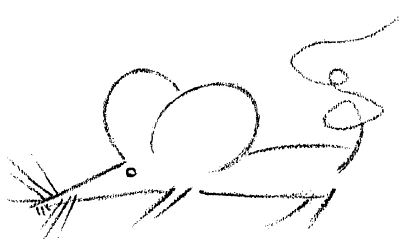
[ ] Now, one can achieve a great deal in preserving organic natural forms—animal and plant forms—by trying to emphasize their characteristic features through caricature in drawings; by allowing children to keep caricatures of animal and plant forms—not in a tasteless way, but tastefully, yet strikingly—so that, through this roundabout way, by drawing caricatures, they also retain the other features. So this is how one could help them remember a mouse. Perhaps even the teeth and the whiskers.
[ 43 ] There is also another way to approach the concept of shape: let the children grasp from the inside what they cannot grasp from the outside. Let’s say, for example, that a child cannot understand a parallelepiped—a solid bounded by six parallelograms—from the outside. The child does not retain that concept. You tell the child: “Imagine for a moment that you’re a tiny little dwarf stepping inside it. Then you’d be standing in there as if in a room.” You let the child grasp from the inside what it cannot grasp from the outside. It can do that. But you have to repeat this with the child an awful lot of times.
[ 44 ] With such shapes, which also occur in minerals, this is relatively easy to achieve. It is more difficult, however, when it comes to grasping the color or other properties of the mineral. Here, one can facilitate understanding simply by having the child create a mental image of the small object as quite large. For example, one often has the child create a mental image of a small yellow crystal as a gigantic crystallized body.
[ 45 ] But when it comes to something temporal, such as music, the matter is not so simple. If you want to intervene in a caricatured way here, you can only achieve something—even if nothing is achieved simply by improving the spatial conception of form—by taking a downright mathematical approach: greatly enlarging the intervals, making the notes seem quite long, and, through the temporal expansion of the relationships between the notes, presenting the melody as something truly grand, with a powerful impact. Then you can achieve something. Otherwise, you won’t be able to have much of a positive impact at all.
[ 46 ] Now I ask you to write down the following questions for tomorrow. First: How can I approach the study of higher plants from a natural history perspective in the same spirit as I demonstrated yesterday for animals—for the octopus, the mouse, and humans?
[ 47 ] Second: How can I incorporate mosses, sponges, and lichens into this lesson? These two questions will likely come up together.
[ 48 ] So, please consider treating plants from the same perspective I mentioned yesterday. This is not about visual instruction, but rather about instruction after the ninth grade, when natural science comes into play.
[Rudolf Treichler is asked to summarize the discussion.]