

Educational Practice from the
Perspective of a Spiritual Scientific Knowledge
GA 306
16 April 1923, Dornach
Translated by Steiner Online Library
Second Lecture
[ 1 ] We will first attempt to gain insight into the nature of the adolescent, taking into account later stages of life, in order to then draw pedagogical and didactic conclusions from this.
[ 2 ] That understanding of human nature to which I alluded yesterday—and which is made possible by anthroposophical research—differs quite significantly from what one can learn about human beings based on today’s scientific and other educational foundations. One might say: This understanding of the human being, which arises from modern civilization, is based for the most part on what is present in the human being when one disregards the spiritual and part of the soul. It is based on the anatomical and physiological aspects that can be gleaned from a human being when one has a corpse. It is further based on what one can know about human beings by consulting the pathological changes that can occur in them due to illness or other causes, and what one can infer from these regarding the nature of the healthy human being. One then incorporates into one’s entire psychological makeup what can be gained in this way, and draws conclusions from it regarding human beings living a full life, in the full flow of life.
[ 3 ] Anthroposophical research is based from the outset on the aim of understanding the human being in his or her entirety—in terms of his or her physical, psychological, and spiritual nature. It seeks, so to speak, not to grasp the human being through an abstract and lifeless approach, but through a living approach that can follow the human being—one that, through living concepts, can grasp the human being in all their vitality as a being formed by spirit, soul, and body. And through this, one is enabled to truly and correctly perceive those metamorphoses of the human being that occur in the course of life. After all, a human being is, so to speak, a completely different being, depending on whether they are undergoing childhood development from birth through the loss of baby teeth, or the development from the loss of baby teeth to sexual maturity—which is the stage we are currently facing when we have children in elementary school—and then the development that follows sexual maturity. In these three stages of development, a human being is actually a completely different being. But the differences run so deep that one simply cannot discern them through an external observation. And above all, one cannot truly and correctly assess that intimate interpenetration of body, soul, and spirit, which is quite different in the three stages of life mentioned.
[ 4 ] The teacher, the educator, must not first learn something theoretically and then say to himself: “What I have learned theoretically, I will now apply to the child in this or that way.” —By doing so, he distances himself from the child; he does not draw closer to the child. The teacher must internalize what he knows about human beings into a kind of higher instinct, so that he can, in a certain way, instinctively respond to every impulse in the life of each individual child. This is precisely what distinguishes anthroposophical understanding of human nature from the understanding that is common today. The understanding of human nature that is common today leads, at best, to a routine in education, but not to a genuine educational attitude or genuine educational practice. For true educational practice must be based on an understanding of human nature that becomes instinctive in relation to the child at every moment, so that, from the full range of what one encounters in the child, one knows what to do in each individual case. If I may use a comparison, I would like to put it this way: Don’t we have all sorts of theories about eating and drinking, yet in life we generally do not base our actions on what can be theoretically devised about when one should eat or when one should drink? One drinks when one is thirsty—this arises from the organism’s entire constitution—and one eats when one is hungry. There are, of course, good reasons why this is integrated into a certain rhythm of life, but people eat and drink when they are hungry and thirsty; life itself dictates this. Now, an understanding of human nature—which underlies genuine educational practice—must, when a person is faced with a child, bring about in that person something similar to the relationship between hunger and eating. It must be as natural as the way hunger establishes a certain relationship between me and food. In the same way, through a genuine understanding of human nature—one that penetrates not only flesh and blood but also soul and spirit—it must become entirely natural that, when a child appears before me, I experience something akin to hunger: “This is what you must do now; that is what you must do now!” Only when this understanding of human nature possesses such inner richness that it can become instinctive can it lead to educational practice; not when one develops a theory based on experiments about how, for example, abilities in memory, attention, and so on relate to one another. This merely mediates between theory and practice in a purely intellectual, conceptual way. But this must by no means take place; doing so externalizes all methodology, all educational practice. What we therefore wish to gain first and foremost as an understanding of human nature should be a grasp of the child in the living impulse of its life.
[ 5 ] Let us first consider the child growing into the world. Let us begin by observing it in a very basic way. We find that the child must master three things shortly after entering life, things that are decisive for the rest of its life. These are the activities the child masters for what we commonly call: walking, speaking, and thinking.
[ 6 ] You see, the German poet Jean Paul—as he called himself—once said: “A person learns more for life in the first three years of life than in three years of academic study.” That is certainly true. It is a fact. For even if the period of academic study were to be extended indefinitely, the practical value for life of what one learns during those three academic years is less than what is acquired for life while the child is engaged in the active process of learning to walk, speak, and think. For what does it really mean when we say that a child learns to walk, speak, and think? You see, walking is, at first glance, something we commonly summarize in everyday life. But there is infinitely more to it than the child simply rising from crawling to the kind of walking it will later master for the rest of its life. In this process of learning to walk lies the human being’s adjustment, the human being’s orientation, such that the entire balance of one’s own organism and all its possibilities of movement align with the balance and the possibilities of movement of the universe, insofar as we are part of it. As we learn to walk, we seek the state of equilibrium with the universe that is appropriate to human beings. As we learn to walk, we seek those unique relationships—found only in human beings—between the activity of the arms and hands and that of the other limbs. This assignment of the arms and hands to the life of the soul, while the legs remain behind and continue to serve physical movement, is something of immense significance for the entirety of later life. For the differentiation between the activities of the legs and feet and those of the arms and hands is the search for spiritual balance in life. — At first, we seek physical balance in standing upright—but in the liberation of the activity of the arms and hands, we seek spiritual balance. And there is infinitely more—which you can now work out for yourselves—in this process of learning to walk; yet when we use the term “learning to walk,” we are focusing only on the very most essential aspect, and not even on that in the strictest sense, but rather on what appears externally to the senses in the child. Now consider this—what I have summarized in layman’s terms as “learning to walk”; one should actually say: learning the statics and dynamics of the inner human being in relation to the universe—that is learning to walk. And indeed: learning the physical and spiritual statics and dynamics of the human being in relation to the universe—that is learning to walk. - But you see, as the arms and hands emancipate themselves from the legs and feet in this way for the sake of the human being, something else occurs: a foundation is thereby laid for the entire human development. This foundation manifests outwardly in that, through learning to walk, the human being, with his inner rhythm and tempo—and also with the whole inner being of his essence—integrates himself into the outwardly visible world.
[ 7 ] And so something very remarkable becomes part of the development of the human being. What is carried out with the legs has, in a certain way, the effect of bringing about, within the entire physical and spiritual life of the human being, a stronger connection with rhythm and with the rhythms of life. Through the unique harmony between the movements of the right and left legs, we learn to relate—one might say—to what lies beneath us. Then we detach what emancipates itself in the arms from the movement generated by the legs; this introduces a musical, melodic element into the rhythmic and metered aspects of life. The themes of life—one might say, the content of life—appear in the movement of the arms. And this, in turn, forms the foundation for what develops in the process of learning to speak; a process that is outwardly characterized by the fact that the greater activity of the right arm in most people corresponds precisely to the development of the left speech organ. From what you can observe in a person moving naturally—the relationships that arise between leg movement and arm movement—the relationship that a person develops with the outside world through learning to speak emerges.
[ 8 ] When you look at this whole context, when you see how, in the process of sentence formation, the legs influence speech from the bottom up, and how, in the process of sound formation—that is, in the inner sensing of sentence structure—the meanings of the words come into play, then you will find in this an imprint of how the metered, rhythmic quality of the leg movements influences the more thematic, inner aspect of the arm and hand movements. Therefore, if a child tends to walk with a firm, steady gait—if the child does not slouch while walking regularly but is able to maintain a firm, steady rhythm in walking—then you have there a physical foundation that, as we shall see later, naturally arises from the spirit but manifests as a physical foundation: the foundation for proper phrasing in speech as well. In this way, the child learns to form proper sentences through the movement of the legs. You will see: if a child walks sloppily, it also fails to establish proper intervals between sentences, but everything blurs together within the sentences. And if a child does not learn to make harmonious movements with its arms, its speech will be hoarse and not melodious. Likewise, if you do not help a child to feel life in its fingers, it will not develop a sense of modulation in speech.
[ 9 ] All of this relates to the time when a child is learning to walk and talk. But you see something quite different in this. You see how many things in life become intertwined, how some things occur later than they actually should according to the inner connection. However, you see from this inner connection that the proper balance in human development emerges when one first focuses on learning to walk and, as far as possible, tries to avoid the child learning to speak before walking. Learning to speak must develop in an orderly manner on the basis of learning to walk and learning to move the arms; otherwise, the child’s speech will not be an activity grounded in the whole person, but rather an activity that merely babbles out. In the case of people who, for example, grumble instead of speaking—which happens very frequently—no attention has been paid to the conditions I have just described.
[ 10 ] The third thing, then, that the child must learn on the basis of walking and speaking is increasingly conscious thinking. But this must actually come last. For, by its very nature, the child cannot learn to think through anything other than speech. Speech is initially an imitation of the sounds heard. As the child takes in the sounds heard—and since the child possesses that unique relationship between the movements of the arms and the movements of the legs—the child comes to understand these sounds and imitates them without initially associating any thoughts with the sounds. At first, the child associates only feelings with the sounds; the thinking that then emerges must first develop out of language. The correct sequence, which we must therefore observe in the growing child, is: learning to walk, learning to speak, learning to think.
[ 11 ] Now, however, we must delve deeper into these three important developmental processes in the child. Thinking—which is learned last, or at least is supposed to be—manifests itself in human beings in such a way that, in thinking, they actually always have only something like mirror images of external natural beings and external natural processes. As you already know, what a person then takes in during their life—for example, as moral impulses—does not come from thinking; it comes from that system of forces, let us say, of the inner human being, which we call conscience. We will have more to say about conscience later. In any case, it rises from the depths of the soul and only then fills thinking from those depths; whereas the thinking we acquire as children clearly shows how it is actually attuned solely to grasping external natural beings and external natural processes, how it merely seeks to provide images of natural beings and natural processes.
[ 12 ] In contrast, something entirely different comes into play when it comes to learning to speak. Modern science is, after all, still on rather shaky ground when it comes to understanding how we learn to speak. Modern science has learned truly remarkable things, for example, regarding animal development, and when it compares animal development to that of humans, it uncovers all sorts of insights that are highly commendable; but when it comes to the process of learning to speak in humans—and even in relation to animals—modern science still does not have a clear understanding. For there is one particular question that must be answered above all else. Humans use their larynx and other speech organs to speak. Higher animals also have these organs, albeit in a more primitive form. If we set aside those animals that are capable of producing certain sounds—which are, however, very primitive and develop into a kind of song only in some animals—if we set these aside, we are still left with the question: What is the actual purpose—I am not asking this in a teleological sense, but in a causal sense—what is the actual purpose of the larynx and its adjacent organs in animals, since it is clear that only humans use these organs for speech? In animals, they are not yet used for speech, yet they are there—and they are even very clearly present. When one studies comparative anatomy, one sees how even in animals that are relatively—relative to humans—silent, organs of this kind can be found. It is certainly true that, in a certain sense, these structures already contain the human element in a predetermined way, and yet the animal does not come to speak. So what is the significance of the larynx and its neighboring organs in animals? A more advanced physiology will eventually conclude that the entire animal form depends on the development of the larynx and its neighboring organs. So when an animal becomes a lion, the cause of this is to be found in its upper chest organs; from there radiate the forces that shape it into a lion. When an animal becomes a cow, the cause of this cow-like form lies precisely in what becomes the speech organ in humans. The animal form radiates from these organs. This must be studied so that one may understand how morphology is actually to be conceived in reality, how the animal form is to be grasped, and how precisely these upper chest organs—including where they merge into the organs of the mouth—are structured. For it is from there that the entire form of the animal radiates.
[ 13 ] Human beings develop these organs into speech organs based on their upright posture and the use of their arms. To stay with the present, they take in the sounds and speech that come from their surroundings. What do human beings take in through them? Consider that these organs have the tendency to shape the entire organism in terms of form. Thus, when a human hears speech that, for example, rumbles along passionately, angrily, or irascibly, they take in something that an animal does not allow to enter. The animal is shaped solely by the larynx and its neighboring organs; human beings, however, take the anger and passion of their surroundings into themselves; it flows into their forms, right down to the outermost tissue structures. If a human being hears only gentleness in their surroundings, it flows down to the structure of their finest tissues; it flows into their forms. It flows precisely into the finer organization. The coarser aspects are shaped by humans in the same way as in animals, but everything that humans take in through language flows into the finer organization. This is also how the finer organizations of peoples come into being: they flow out of language. Human beings are an imprint of language. You will therefore understand what it means that, in the course of evolution, human beings have gradually come to learn different languages: through this, human beings become more universal. These things, after all, have immense significance for human development. Now, we see how, during early childhood, human beings are entirely inwardly oriented—right down to their blood circulation—toward what is happening in their surroundings—and from this flows what they take in as lines of thought. I would particularly urge you to pay close attention to what happens in human beings through the process of learning to speak. I would therefore like to summarize it for you in two sentences that, in a sense, indicate this difference between humans and animals. If an animal could express what concerns its form, its shaping, in relation to the upper chest organs, it would have to say: “I shape myself in accordance with the upper chest and mouth organs to form my figure, and I do not allow anything into my being that modifies this form.” - That is what the animal would have to say if it wanted to express the nature of this relationship. The human being, on the other hand, would say: “I adapt my upper chest and mouth organs to the worldly processes that take place in language, and I align the structure of my innermost organization accordingly.” - Not, that is, the outer organization, which develops in an animal-like manner; but rather, human beings adapt their innermost physical organization precisely to what takes place in their environment through language. This is of immense significance for the entire understanding of the human being. For it is from language that the mode of thinking develops, and through this, the human being becomes a creature that, in these early years of childhood, is devoted to the external world, whereas the animal is convulsively closed off within itself.
[ 14 ] Now you see, this makes the way in which a person first develops statics and dynamics, then language, and then thinking during the early years of childhood immensely important. It really is of immense importance. This must develop in the right way. As you all know, this develops in a wide variety of ways in human beings. And we must ask: What determines whether these things develop in the right way? Yes, it depends on many factors. But for this earliest childhood stage, the most important factor is that the right balance exists between sleep and wakefulness; that is, that we gradually gain an instinctive understanding of how long a child needs to sleep and how long it needs to be awake. For suppose a child sleeps too much for its circumstances. If a child sleeps too much for its circumstances, then—to give some examples—a kind of inner reluctance develops in the use of its legs. The child becomes inwardly reluctant to walk when it sleeps too much. It becomes, so to speak, sluggish with regard to walking, and as a result, it also becomes sluggish with regard to speaking. The child does not develop the proper sequence in speech, in accordance with the flow of time. It speaks more slowly than its development would actually require. When we later encounter a person in life whose speech has not been corrected through schooling, we may sometimes feel exasperated because they always give us the opportunity—well, to take a little walk—between one word and the next. There are indeed such people who find it very difficult to move from one word to the next. When we meet someone like this, we can look back at their childhood and find that their caregivers or parents let them sleep too much during the very period when walking was developing. — But let’s suppose the child doesn’t sleep enough; in other words, proper care is not taken to ensure that the child gets the relatively long sleep necessary for a child. Then something so peculiar develops internally that the child does not have complete control over its legs. Instead of walking, it shuffles. Instead of truly mastering the sequence of words with its soul, they slip his mind; the sentences become disjointed, with the words falling apart. This is somewhat different from being unable to find the right word; in that case, one has too much energy and cannot move on to the next word. In the situation I am describing now, one has too little energy; the next word is, so to speak, not captured by the continuous flow of the soul, but rather one waits and tries to latch onto the next word. And when this reaches a particular extreme, it manifests as stuttering. If one observes a predisposition to stuttering in people—particularly in their twenties and thirties—one can be certain: these children were not encouraged in the proper way to get enough sleep while they were learning to speak.
[ 15 ] From this you can see how an understanding of human nature lays the foundation for what one must do.
[ 16 ] Now look into the entire human organism, how it adapts during the first three years of life, how it, so to speak, allows the statics and dynamics of its own motor abilities to flow into what it produces through the shaping of air in speech—and much else is connected to this, which then results as a consequence for thinking. Look at all of this, and now consider the child in relation to the adult in light of all this, and you will see that in the child there is a much stronger interplay between this inner dynamism—between walking, fidgeting, moving the arms, and forming mental images. All of this flows together much more seamlessly in the child than in the adult. In this respect, the child is essentially still a unified whole. And in other respects as well, the child is essentially more of a unified whole than the adult will later become. For example, when we as adults suck on candy—which we really shouldn’t do—it is essentially just a pleasure for the tongue and the palate; its effect stops there, within the body. A child is in a different situation; there, the taste extends much further. Children simply don’t tell us this, and we don’t pay attention to it, but the taste continues to have an effect. Many of you have surely observed children who are particularly imbued with spirit throughout their entire organism—how this imbued-ness with spirit finds expression in them. It is much more interesting to watch the arms and legs of a lively child—when it is standing a little way away from a table on which something sweet is placed—than, say, the mouth. What the mouth says is, of course, more or less self-evident, but how the child develops a craving, for example, in the toes or in the arms as it reaches out toward the candy—there you can clearly see: a change is taking place not only on the tongue, but throughout the whole person. The taste flows into the whole person. If you approach all these things with a truly open mind, you will come to recognize that the child—though this is less and less the case in later years, most so in the first earthly life, but essentially from birth until the change of teeth—is, in a certain sense, entirely a sensory organ, a sensory organism. What later takes refuge in our senses on the surface of our bodies lives in the child throughout the entire organism. Of course, you need not take these things at face value, but in essence they are already present. And they are present in such a way that they will one day be demonstrable even in the external physiology of the most immediately apparent sense organ—the eye.
[ 17 ] You see, people often come to me and ask: What can one draw from current science—let’s say for a dissertation—since dissertations are, after all, part of the misery of academia—what in particular can one focus on for this purpose? And to those who are, say, physiologists, I’d like to suggest something today that is, so to speak, practically in the air in physiology: they should observe the development of the human eye—how it appears in the embryo and progresses—and then, at the corresponding stage, they should observe the entire embryo as it develops from the germ. They will find a remarkable parallelism precisely between the eye and the entire human germ as it progresses embryonically. However, one will discover that the eye, so to speak, begins later, skips the first stages, and the entire embryo does not reach the same endpoint as the eye, but stops earlier. Thus, something of immense significance for embryonic physiology will emerge. As one follows embryonic development as it proceeds, one will come to regard these initial stages as ideal stages that are present only in embryonic form in the embryo’s germ and eye. The eye continues to develop, becoming a fully formed sense organ; the embryo lags behind and later transitions to the formation of the body.
[ 18 ] But in the case of the child, there is still the fact that, throughout its entire psychological and spiritual development, the sensory realm is spread out over the entire body. In a certain sense, the child is entirely a sensory organ and, as such, faces the world. This must be constantly taken into account in the child’s upbringing and in everything that is done in the child’s environment before the teeth begin to fall out. We will, of course, have to discuss the more pedagogical and didactic elements later. Only when one looks at this in the right way will one be able to properly answer certain questions related to the human being. For you see, there is a question here that is extraordinarily significant for anyone who looks at the development of humanity not merely from the external perspective of well-known history. As you know, in earlier historical epochs of human development, people spoke much more of sin and original sin than they do today. Now, I do not wish to give you a historical treatise, but I would like to point out what—not in popular consciousness, where things have sometimes become somewhat simplified—but what those who have studied these matters as we do today, when we learn to view them from a more scientific perspective, can apply to our present circumstances. For them, original sin in human beings was everything that stemmed from inherited characteristics. So whatever a person inherited from their ancestors was considered original sin. That is the true concept of original sin. This concept was later significantly altered in accordance with mental images that emerged subsequently. But what is directly inherited physically endows a person with predispositions that underlie their sinfulness—so it was said in the past. What do people say today? Today people say: We must pay the closest attention to inherited predispositions, and we must develop human beings in such a way that these predispositions are given priority. Indeed, if an older science were to pass judgment on this, it would say: Well, you have learned something wonderful through human progress; you have learned to pursue the principle of cultivating precisely what is sinful in human beings. - That is what we would actually have to say in the spirit of an older science. We observe historical events only based on what is, unfortunately, recorded quite superficially in history books; that is why we do not come to such conclusions.
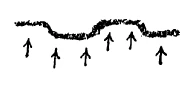
[ 19 ] Anyone who now looks into what I have described today: how human beings adapt to their surroundings through the dynamics and statics of their being, through speech, and through thought—will also gain a true understanding of how much is purely physically inherited and how much depends on what takes place in the human environment, which influences people far more than is generally believed. Today, people say of certain traits that a person inherited them from his father or mother, whereas in reality he acquired them by imitating the particular way of walking in his environment, or the movement of the hands, or the way of speaking—precisely during the first period of life. It is this absorption into the environment that plays the primary role in the first period of life, not heredity. Theories of heredity are certainly correct in their own right, but this must also be viewed in the same light as what I said yesterday. I said: We go out onto the path; it is soft now; we leave our footprints in it. Now someone who knows nothing of earthly human beings comes down from Mars and declares: “Well, these footprints are caused by forces down there in the earth; they press down on the ground a little harder in one place, a little less in another, and so the tracks take shape, creating something exactly like a footprint.” - This is roughly how people explain the nature of the soul, based on inherited predispositions and the workings of the brain. Just as the footprints are imprinted from the outside, so too are the things experienced from the environment through imitative learning—such as learning to walk, speak, and think—imprinted into the body, especially into the brain and the nervous system. Everything that external, physical psychology says is true: the brain is a clear imprint of what a person is in terms of their soul; but one must realize that it is not the producer of the soul, but rather the ground upon which the soul develops. Just as I cannot walk without ground beneath my feet, so too—as an earthly human being—I cannot think without a brain, of course. But the brain is nothing other than the ground into which thinking and speaking shape what you are currently receiving from the world—from the world around you—not from inherited predispositions.
[ 20 ] But you can see from this that, for modern humans, there is a great deal of uncertainty about what actually takes place during these first three “non-academic” years of life. It is during this time, after all, that the whole human being is shaped and internalized to a greater degree. As I have already said: the thinking that emerges later is directed toward the external world; it forms images of nature, of natural objects, and of natural processes. But what develops earlier—speech—already takes in, in a tempered and nuanced way, everything that lies spiritually in the language that acts upon the human being, as well as what acts upon the human being psychologically from the surroundings. Through language, we take in what we assimilate soulfully from our surroundings. The soul of the entire environment penetrates us indirectly through language. And we know that the child is entirely a sensory being, that inner processes truly take place as these things exist as soul impressions. So, for example, let’s say that if a child is in the presence of a short-tempered father who always spits out his words like a hothead, then the child experiences inwardly this entire psychological peculiarity that lies in the way the words are shaped by the short temper; and this leaves its mark on the child not only by becoming a part of its soul, but also because, by being exposed to outbursts of anger in its environment, the child secretes more substance from its fine glands than it would in a non-irritable environment. And its glands become accustomed to a high rate of secretion. This then continues to have an effect throughout the child’s entire life, depending on whether the glands have become accustomed to secreting more or less substance. As a result, if the school does not correct this later on, the person may become predisposed—as we say today—to become “nervous” in response to everything in the environment that involves outbursts of anger. You see, here the psychological directly penetrates the physical. Otherwise, we seek everywhere in the world to understand the relationship between the soul and the physical; but we pay no attention at all to the fact that, in the first period of life, the physical expresses itself directly in soul phenomena.
[ 21 ] As the child now enters into the statics and dynamics of its environment, it unconsciously does something extraordinarily significant. Just think how much effort it takes some people later on in school to learn statics and dynamics and apply them—even just as they are applied to machinery! The child does this unconsciously. It truly integrates statics and dynamics into its entire being. And it is precisely from anthroposophical research that we can see that even what the most learned experts in statics and dynamics devise for the external world is child’s play compared to the highly complex statics and dynamics that the child integrates while learning to walk. The child does this through imitation. That is why you will see how remarkably imitation affects precisely these circumstances. You can see many such examples in life; I would like to give you one. There were two girls, very close in age, walking side by side. The incident took place in a city in central Germany many years ago. When one saw them walking side by side, they both walked in such a way that one leg limped and moved irregularly. Although their movements were identical, there was a peculiar contrast between the livelier movement of the right arm and right fingers and the somewhat sluggish movement of the left arm and left fingers. Both children were exact copies of each other; the younger child was truly a copy of the older one. But only the older child actually had a leg injury on the left side; the younger one was a completely healthy child who had merely adopted all of this by imitating her little sister’s incorrect movement patterns. - You can find such cases everywhere in life; they just don’t present themselves in such extreme and obvious ways that you notice them right away. In more subtle forms, it is present everywhere in life. Where walking is learned, where dynamics and statics are acquired, there the human being absorbs the spirit from their surroundings. So that one can say: In learning to think, we acquire aspects of external nature. In learning to speak, we assimilate the soulful aspects of our environment. And by doing what a human being is actually meant to do first upon entering earthly life, we assimilate the spirit from our surroundings.
[ 22 ] Spirit, soul, body—spirit, soul, nature: this is the order in which the world of earthly life approaches human beings. But when we take in the soul, we simultaneously and essentially assimilate our sympathies and antipathies in life through this soul. They flow in completely unnoticed. The way we learn to speak is at the same time the way we assimilate certain sympathies and antipathies. And the curious thing is: anyone who develops a keen eye for this—a soul’s eye, of course—will find in the way a child walks—whether they walk more on their heels or more on their toes, whether they walk with a firm stride or sneak along—will find in these outward, physical manifestations the entire moral character of the person prepared for later life. So we can say: Along with the spiritual elements we absorb as we learn to walk, moral influences also flow in from our surroundings. And it is good to develop an eye for how a child moves its legs—one who will become a good child—and how a child moves its legs—one who will become a bad one. For what we take in through thinking in childhood is the most naturalistic. What we take in through language is already imbued with the soul. And what we take in through statics and dynamics is imbued with the moral and spiritual. This is not merely statics and dynamics as we learn them in school; it is statics and dynamics born of the spirit.
[ 23 ] It is so incredibly important to look at these things properly so as not to end up with those psychological theories that are based primarily on the physical—where the first 30 pages simply reprint what the physiologist has laid out in detailed physiological treatises, and then psychological phenomena are tacked onto that, thus relating the psychological to the physical. One is no longer allowed to speak of the spirit, ever since a council abolished the concept of the spirit, ever since it was declared: Human beings do not consist of body, soul, and spirit, but only of body and soul; the soul possesses only spiritual qualities. The trichotomy was, after all, dogmatically prohibited in the Middle Ages, but today’s “unbiased” science practices psychology by beginning right away with the premise: Human beings consist of body and soul. It does not realize how little “unbiased” it actually is, since it merely follows medieval dogma! Even the most enlightened university professors follow this dogma without having the slightest inkling of it. To truly understand human beings, one must be able to view them in terms of body, soul, and spirit. The materialist comprehends only thought—and that is precisely his tragedy. Materialism understands matter the least, because it sees the spirit within it the least. It merely dogmatizes: there is only matter and its effects; but it understands nothing of the fact that the spirit is present everywhere within it. It is peculiar that, if one wishes to describe materialism, one must formulate the definition: Materialism is the worldview that understands nothing about matter.
[ 24 ] The point is that one must know precisely where the boundaries lie between physical phenomena, psychological phenomena, and spiritual phenomena, and how one transitions into the other. And this is particularly important in relation to a child’s development during the first period of life.