

The Educational Value
of Understanding Human Nature
GA 310
18 July 1924, Arnheim
Translated by Steiner Online Library
Second Lecture
[ 1 ] In this course, I would like to begin by discussing how the art of education is enriched by an understanding of human nature, and I intend to structure the course—as I already hinted at yesterday in the introductory lecture—in such a way that I first show how anthroposophy can become practical in a genuine understanding of human nature, not merely in an understanding of the child, but in an understanding of the whole human being; how anthroposophy, precisely by coming to know the whole human being—that is, the entire human life from birth to death, insofar as it unfolds on Earth—can thereby also point out in the right way the necessities that exist for the education and instruction of the child.
[ 2 ] It is very easy to think that one can teach and raise a child simply by observing, at first, the life that unfolds during childhood or adolescence. But that is not enough. Just as with a plant—when you introduce a substance into the seed in some way, this manifests itself in the formation of flowers or fruit—so it is in human life. What is instilled in human life in earliest childhood—what is drawn from the child’s life—sometimes only becomes apparent in old age; and often, when a person in their fifties falls ill or becomes frail, one does not realize that this has its root cause in a flawed upbringing or improper instruction during the 7th or 8th year of life. Today, the approach is to study the child—albeit not in such an overt manner as was mentioned yesterday—in order to determine what supportive measures can be taken around the child. That is not enough. And so today I would like to lay the groundwork for pointing out how the whole of human life can be observed from the perspective of Spiritual Science.
[ 3 ] As I said yesterday, human beings should be observed in terms of body, soul, and spirit. And in yesterday’s public lecture, I hinted at how it is the first supersensible aspect within the human being—a higher human being within the human being—that is enduring, extending from birth to death, while the outer physical body is constantly being renewed. Now, the point is precisely to come to know this human life in such a way that we see: what unfolds on Earth is what has developed out of pre-earthly life. For we do not merely have within us that aspect of the soul that began with birth or conception; we carry within us the pre-earthly soul, indeed, we carry within us the results of long-past earthly lives. All of this is active, alive, and weaving within us, and during our earthly life we must prepare what will then pass through the gate of death and live on again after death in the spiritual-soul world. We must therefore understand how the supersensible works in earthly life. For it is indeed present between birth and death; it merely works hidden within the physical body, and one cannot understand the physical unless one understands the spiritual working within it.
[ 4 ] Let us now assume that we will study what I have just alluded to using concrete examples: An understanding of human nature, as it emerges from the perspective set forth in anthroposophical literature, such as in my book *Theosophy*, in *An Outline of Esoteric Science*, or in *How Does One Gain Knowledge of the Higher Worlds?*. Let us start with what one can gain as a genuine, concrete understanding of human nature by taking as a foundation what anthroposophy in general reveals about human beings and the world. — I would like to begin with two examples that will likely be well known to everyone here. I present them for the following reason: the study of these two personalities, from whom I intend to proceed, has been a subject of in-depth engagement for me over many years. I will take two brilliant personalities; we will then move on to less brilliant ones. We will see how anthroposophy does not merely engage in general, abstract discourse, but is capable of engaging with and getting to know specific human beings, so that knowledge of the human being reveals itself as something that is truly embedded in practical life. I have chosen the two examples of Goethe and Schiller, and I would like to use them as a starting point to show how, under the influence of Spiritual Science, an understanding of human nature emerges.
[ 5 ] Let us consider Goethe and Schiller from an external perspective, based on the course of their lives, but let us focus on their entire personalities. Goethe entered life in a remarkable way: he was born completely black—that is, dark blue. So he initially showed that it was extraordinarily difficult for him to immerse his spiritual and soul aspects into the physical and bodily realm. But then again, once Goethe had immersed himself—once he had taken hold of this brittle physical and bodily material—he was fully immersed in it. On the one hand, it’s actually hard to imagine a healthier constitution than that of the young Goethe. Goethe is incredibly healthy. He is so healthy that his teachers already have some difficulties with him. For children with whom one has no difficulties are, as a rule, not the healthiest in later life. Children, on the other hand, who become somewhat of a handful for their teachers—these are the ones who later in life turn out to be the more useful, because they are the more energetic types. That is why the sensible tutor will actually be quite pleased if the children keep a close eye on him. And from his earliest childhood, Goethe was quite inclined to keep a close eye on his tutors, even to the point of taking things literally: while playing the piano, he would watch the player’s fingers and then call one finger “Thumbling,” another “Indexling,” and so on. But he didn’t just watch his tutors’ fingers in this outward sense; he was actually quite “bright” even as a boy, and his tutors therefore sometimes found it difficult. Later, of course, he suffered a serious illness in Leipzig. But in that regard, one must say that it took quite a bit of hardship—one might even say some minor mischief—to transform the health that Goethe possessed into the state of illness that was the case in Leipzig at that time. But then we see again how Goethe remained, throughout his entire life, a healthy yet extraordinarily sensitive person—how he could allow every single thing around him to affect him intensely, yet without it penetrating very deeply into his organism; he does not immediately develop heart disease when he experiences a shattering event, but he feels this shattering event with every conceivable intensity of feeling. And so it is throughout his entire life. He suffers emotionally without this emotional suffering immediately leading to physical illness. That is to say, his physical health is exceptionally robust.
[ 6 ] Goethe, then, must virtually challenge us to adopt a perspective that does not immediately blur into the mystical, because people always say: “Oh, it doesn’t matter to focus on the outward physical form; that is base—one must focus on the spiritual!” — But in a person as sound as Goethe, the spiritual and the physical are one; the spiritual acts through the physical. And only those who are capable of seeing the spiritual through the image of the physical can recognize such a personality.
[ 7 ] Goethe was what is known as a “sitting giant.” When he sat, he appeared tall; when he stood, one could see that he had short legs. This is a peculiar trait that is particularly important for those who are now able to observe people in terms of their overall unity. Why did Goethe have short legs? His short legs dictated a particular gait; he walked with short steps which—because his upper body was heavy (he was heavy and tall)—were planted firmly on the ground. We must observe this so that, as educators, we can study it well in children. — What does it mean for a person to have short legs and an oversized upper body? It means that such a person’s outward appearance allows him to express, in a harmonious karmic way, what he experienced in a previous earthly life within his present earthly life—that is, the one we are discussing.
[ 8 ] Goethe was also extraordinarily harmonious in this respect, in that he was able to fully realize everything that was part of his karma right up to a very advanced age. He lived to be so old precisely because he was truly able to bring forth everything that was karmically inherent in him. In Goethe’s case—who, even after leaving his body, remained so beautiful in that very body that everyone admired him even in death—one gets the impression that everything that was karmically predestined had actually been lived out; nothing really remained, and Goethe must start anew when he reappears in an earthly life, under entirely new conditions. All of this is expressed precisely in a body shaped as Goethe’s was. For what a person has brought with them from a previous earthly life first manifests as a cause in the formation of the head. Now, from his youth onward, Goethe had this beautiful Apollo-like head, which infused the physical body solely with harmonious forces. But he also had this body, marked by the weight of his upper torso and with legs that were too short, so that he had that characteristic gait, which could manifest itself throughout his entire way of life. This entire human being was a karmic prerequisite and karmic fulfillment in a wonderfully harmonious way. Every single aspect of Goethe’s life speaks to this.
[ 9 ] For a person like this, who lives life so harmoniously and lives to such an advanced age, the middle years of his earthly life must surely have been marked by particularly remarkable experiences. Goethe was born in 1749 and died in 1832; he thus lived to be about 83 years old. His middle age, therefore, was around 41, that is, around the year 1790. If you take the period from 1790 to 1800, this is the middle decade of Goethe’s life. It was during this decade, before 1800, that Goethe actually experienced the most significant events of his life. Before that, he had been unable to reach any kind of conclusion regarding his major life and scientific views. *The Metamorphosis of Plants* was not published until 1790; everything that followed on from it took place during this decade, from 1790 to 1800. In 1790, Goethe was so far from finishing his *Faust* that he published it as a fragment; he did not believe at all that he would ever be able to complete it. During this decade, under the influence of Schiller’s friendship, he conceived the bold idea of continuing this *Faust*. The great scenes—the prologue in heaven and so on—find expression here. — Thus, we are dealing with a man whose life is extraordinarily harmonious, a life that unfolds in tranquility, undisturbed by anything from within, and which can freely and meaningfully devote itself to the outside world.
[ 10 ] Let us, on the other hand, consider Schiller’s life. From the very beginning, Schiller is placed within a life context that reveals a constant disharmony between his spiritual-emotional nature and his physical-bodily nature. Schiller by no means has the harmonious facial features of Goethe. He is actually ugly—though an ugly man of spirit—but ugly nonetheless. Yet there is a strong, personally powerful presence even in his physiognomy, which is expressed particularly in the shape of his nose. Schiller is not of average height; rather, he has long legs. In contrast, everything between his head and his limbs—the very parts responsible for circulation and respiration—is truly diseased in him, having been stunted from the very beginning, and he suffers from cramps throughout his entire life, at first with longer intervals, but later almost incessantly. These cramps later become so severe that he cannot accept invitations to any single meal; rather, when he visits Berlin, for example, he insists that he be invited for the entire day so that he can choose a time when he is free of cramps. All of this stems from an underdeveloped circulatory and respiratory system.
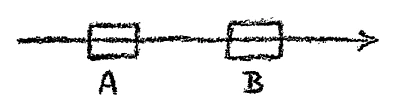
[ 11 ] This raises the question: What karmic legacy from past earthly lives does a person have who must suffer from convulsions in this way? — When convulsions interfere with human life, they are an extremely strong indication of human karma. When one approaches convulsive symptoms from a standpoint of Spiritual Science with serious, responsible scientific investigation, one always finds that a certain karma is present in the person—the results of deeds, thoughts, and feelings from past earthly lives. Now one has the person before one in their present life. Two things can happen. Either things proceed as harmoniously as they did for Goethe, so that one says to oneself: “There is the karma; everything that is a karmic result is coming to light.” — But the opposite can also occur: due to specific conditions arising for the person during their descent from the spiritual world into the physical world, they may find themselves in a situation where they cannot always fully work through what weighs upon them karmically. A person descends from the spiritual world with certain karmic conditions; they carry them within themselves. Let’s suppose that for a person named A, there is a point in their life where they are supposed to realize their karma in some way; but for some reason, it doesn’t work out. Then, so to speak, he puts the fulfillment of his karma on hold, and a short period must elapse during which his karma is suspended; he must then postpone this until his next earthly life. Then the process continues. Again, there comes a point—at B—where he is supposed to fulfill part of his karma; but once more he must put it on hold, must once more postpone part of his karma until his next earthly life. Whenever it becomes necessary to suspend one’s karma in this way, spasmodic phenomena arise in life. One cannot fully manifest in one’s life something that one carries within. — This is precisely the distinctive feature of Spiritual Science: that it does not drift about in the realm of fantasy, merely speaking in general terms about how human beings have the four constitutional elements— physical body, etheric body, astral body, and ego—but rather that it delves into real life and can point to something in physical life where the true spiritual causes of certain external events lie, so that it understands how a person lives out their life in the external world. This is precisely what true Spiritual Science must be able to do.
[ 12 ] This raised a question for me: How does karma function as the shaping force of an entire life—such as Schiller’s—when conditions exist, as they did for him, in which karma cannot manifest itself, and he must constantly strive to achieve what he wishes to achieve? Goethe, essentially, has it easy when it comes to bringing his great works to fruition; for they are the result of his karma. Schiller always has a hard time bringing his great works to fruition; he must struggle against his karma, and the way in which he struggles will only be fully realized in his next earthly life. So one day I had to ask myself the question: How does a life such as Schiller’s relate to the general conditions of life? — If one approaches the answer to such a question lightly, even a serious investigation in the field of Spiritual Science will yield nothing of note; one must not speculate here, but must observe. But if one approaches the very first object of observation head-on, one will somehow miss the mark. Therefore, I framed the question as follows: How does a life unfold when there are obstacles to karma or to other pre-earthly conditions?
[ 13 ] I then studied people to see how something like this comes about, and I would now like to give an example of this. I could cite many such examples, but I will now choose one that I can describe in great detail. I had an acquaintance, a person whom I knew very well based on his current earthly life. I was able to observe that in his life, the obstacles were not related to the working out of karma, but rather to what takes place in the existence between death and rebirth—that is, to what had occurred for this individual in the supersensible realm between his last earthly life and this one, in which I was able to get to know him. So in this case, unlike with Schiller, there were no obstacles to the working out of karma, but rather obstacles to properly bringing into the body what he had experienced between death and rebirth—that is, in the supersensible world. One could see from this person that he had experienced something significant between death and rebirth, but he was unable to bring it forth. He had placed himself within karmic human relationships; he had placed himself in an age in which what he had, so to speak, accumulated between death and conception—in terms of inner soul-boundness—could not emerge. And how did the physical symptoms of this inability to bring forth the supersensible present within the human being manifest themselves? They manifested in the fact that this person stuttered, that he or she had speech disorders. If one goes further and examines the soul-organic causes of speech disorders, one always finds that there is an obstacle preventing the supersensible experiences between death and rebirth from being carried down into the physical world through the physical body. Now one must ask: What is the case with such a person—who has so much within them, albeit due to their past karma, but—stored during the existence between death and rebirth—who cannot bring down what has been stored, and in whom this inability to bring it down manifests as stuttering? What kinds of things are connected to such a person here in life?
[ 14 ] One could say time and again: This man possesses all sorts of greatness within himself, which he acquired in his pre-earthly life, but he is unable to bring it down. — He was quite capable of bringing forth what can be brought forth in the formation of the physical body up to the time of the change of teeth; he was even exceptionally good at bringing forth what is brought forth from the change of teeth until sexual maturity; he then became an outstanding literary and artistic personality by shaping what can be shaped between sexual maturity and the age of 30. But now, for those who can truly gain insight into human nature, a great concern arose: What will become of this personality as it enters its thirties and is then expected to develop the consciousness soul more and more alongside the intellectual and emotional souls? Anyone with insight into this matter feels the greatest concern in such a case, for they cannot imagine that the consciousness soul—for whose development everything that arises in the mind must be completely intact—can fully emerge. For the fact that not everything in this person’s mind was exactly intact was evident in his stuttering. And this man was, outwardly, with the exception of his stuttering, perfectly healthy. But the fact that, apart from the stuttering, not everything in his mind was intact was evident in that, in addition to stuttering, he also had a squint—yet another sign that one cannot bring forth into the present earthly life everything one has absorbed in the super-earthly realm between death and a new birth. One day this man came to me and said, “I’ve decided to have surgery for my squint.” — I was not at liberty to say anything other than, “I wouldn’t do it if I were in your place.” — I did everything I could to talk him out of it. At the time, I didn’t see the situation as clearly as I do today; for what I am now recounting took place more than 20 years ago. But I was very concerned about this operation. Well, he went ahead with the surgery anyway; he simply didn’t heed my advice. And lo and behold, shortly after the operation—which, as is very often the case with surgeries, went exceptionally well—he came to me full of joy and said, “Now I won’t squint anymore!” He was a bit vain, after all, like many prominent figures. But I remained deeply concerned. And just a few days later, the man died, shortly after turning 30. The doctors diagnosed typhoid fever, but there were no signs of typhoid at all; rather, he died of meningitis.
[ 15 ] Anyone who is a spiritual researcher certainly does not need to become heartless when contemplating such a life; on the contrary, human compassion is deepened even further. But at the same time, one also comes to understand life in terms of its broader contexts. One comes to understand how that which, of one’s spiritual experiences between death and rebirth, cannot be carried over into the present life, finds expression in physical impairments. If, then, education does not intervene in the proper way—as indeed it could not in this case—a certain stage of life naturally cannot be transcended. But do not think that I am claiming, for example, that everyone who squints must die at the age of 30—I never mean negative forces; rather, something karmic may occur that allows the person in question to live to a very old age. But in this case, the strain placed on the head caused concern regarding this peculiar constitution, which manifested as squinting and stuttering: How will this constitution survive beyond the age of 35? — And now is the point where one must look back at the person’s karma, and you will immediately see that it is not necessary for someone who squints to die at the age of 30. For if we have a person who, in a pre-earthly life, prepared themselves in such a way that they absorbed a great deal between death and rebirth, but cannot bring what was absorbed down into physical life—and if we consider his karma in its entirety—we find that this particular individual could very well have lived beyond the age of 35, but he would then have had to carry within himself, under all other conditions, the impulse to arrive at a spiritual worldview on life and the world. For this man was, as few others are, predisposed toward the spiritual; yet, because the strong spiritual impulses carried over from earlier earthly lives were, after all, one-sided, he was unable to attain the spiritual.
[ 16 ] You can rest assured that I am capable of discussing such a matter. I was very close friends with this man and therefore knew what a chasm existed between my own worldview and his. One could communicate with him very well intellectually, and one could also communicate with him comfortably; but one could not convey anything to him that was spiritual. And because he should have transitioned to a spiritual life by the age of 35—if what was predestined up to the age of 35 were to have been possible on Earth—but he did not attain a spiritual life, he died there. So one can very well squint and stutter, and yet continue to live, if one is able to continue living as an ordinary earthly human being. One must not be alarmed by the things that must be said, if one wishes to describe realities rather than get lost in platitudes. But from this example, you can see how a spiritually sharpened gaze allows one to look into human life.
[ 17 ] And now let us return to Schiller. When we consider Schiller’s life, two aspects in particular stand out as quite remarkable. There is an unfinished, merely sketched drama by Schiller, *The Maltese*. It is evident from the concept, the draft that exists, that if Schiller had wanted to bring this *Maltese* to fruition, he would have been able to write this drama only as an initiate. It could not have been any other way. He possessed, at least to a certain degree, the conditions for initiation within himself. But what he carried within him could not come forth because of his other karma; it became constricted, constricted even in his soul. For the “Maltese” draft already reveals this constriction: grand, powerful sentences that never quite reach their point. What is within him cannot come forth. — It is interesting to note that we find such drafts in Goethe’s work as well; but wherever Goethe leaves something unfinished, one sees that he is too complacent—he could have gone further. Only in his very old age, when sclerosis had already begun to set in, was he unable to do so. With Schiller, however, we see a different picture: when he was drafting *The Maltese*, he possessed the iron will to press forward; but he cannot. He gets no further than a fleeting outline. For *The Maltese*, viewed in reality, contains what has been preserved from the Crusades—all manner of occult, mystical, and initiatory knowledge. And Schiller sets out to create such a drama, the completion of which would have required him to truly carry within himself the experiences of initiation. Truly, a life destiny that touches those who see through it profoundly and allows them to glimpse into the very essence of this man. And ever since it became known that Schiller had something like *The Maltese* in mind, opposition to him in Germany has grown extraordinarily. People feared him. They feared that he might reveal all manner of occult secrets in his plays.
[ 18 ] The second phenomenon I wish to discuss is the following. He cannot finish *The Maltese*, cannot come to terms with it. He lets time pass, composing all sorts of things that are certainly admirable, but which can also be admired by the philistines. Had he been able to complete *The Maltese*, it would have been something for people of the highest intellectual caliber! He has to set it aside. After some time, what had provided the impetus for his later work resurfaces within him. He can no longer bring himself to think about *The Maltese*. But he begins to write his *Demetrius*: a strange tale of fate centered on the false Demetrius, who has taken the place of another. All the conflicts of fate that arise there, as if from the most hidden causes, along with all human emotions, were bound to find their way into this drama once it was completed. Schiller works on it in an almost feverish manner. Word gets out—and people are even more afraid that things might now come to light in which many had an interest, things that they hoped would remain hidden from humanity for a while longer.
[ 19 ] And now phenomena begin to appear in Schiller’s life that anyone versed in such matters cannot regard as something rooted solely in the pathological-normal. Schiller presents a peculiar clinical picture. Something powerful emerges—powerful not in the sense of grandeur, but in the sense of being deeply unsettling: Schiller falls ill while working on his *Demetrius*; from his sickbed, in the throes of a high fever, he recites almost the entire *Demetrius* without interruption. Something seems to be at work in Schiller like a foreign power expressing itself through his body. Of course, there is no need to accuse anyone. But one cannot help—despite everything that has been written along these lines—from forming a mental image, based on the clinical picture, that Schiller’s rapid death was aided in some way, albeit a completely occult one! And the fact that people might have sensed that outside forces were at work is evident from the way Goethe—who could do nothing but sensed many things—did not dare, in those final days, to acknowledge the deeply personal role—not even after Schiller’s death—that he had truly played in Schiller’s actual passing, as his heart truly felt. He did not dare to come forward with what he carried within him.
[ 20 ] By this I merely wish to suggest that, for those who can see through such things, Schiller was undoubtedly predestined to bring forth something deeply spiritual from within himself; yet, due to both internal and external causes—karmically internal and karmically external—this process was held back. I may well say that for the spiritual researcher, nothing is of greater interest than to pose the following problem: to study what Schiller accomplished in the last 10 years of his life, beginning with the “Aesthetic Letters,” and then to trace how his life unfolded after death. When one delves deeply into Schiller’s soul after his death, there is an abundance of spiritual inspiration emanating from the spiritual world. Therein lies the reason why Schiller had to die in his mid-forties. He simply could not—as was evident in his convulsions and his entire physical stature, but especially in the misshapen structure of his head—integrate his soul-spiritual essence, which lay deep within his spiritual existence, into his physical body.
[ 21 ] When we reflect on such things, we must surely say to ourselves: Our understanding of human life deepens simply by applying what anthroposophy has to offer. — One learns to look deeply into human life. My sole intention in presenting the examples I have given was to show you how, through anthroposophy, one learns to contemplate human life. But now consider the whole matter. Can one not deepen one’s soul’s understanding of all that is human simply by looking at individual human lives in this way? If, at a certain point in one’s life, a person can say to themselves: “This is how it was with Schiller, this is how it was with Goethe, this is how it was with any person who died young, as I have described to you”—well, won’t that have such an effect on the human soul that one learns to look deeply at every child as well? That every human life becomes a sacred mystery? Do we not then learn to look upon every human life and every human being with much greater, much more heartfelt attention? And can we not, precisely because knowledge of humanity is inscribed in the soul in this way, deepen our love for humanity within ourselves? And can one not, with this love for humanity—which is deepened through the contemplation of human beings, through intimate, profound contemplation, through sharing in the innermost sacred mysteries of the human soul—approach the task of education precisely when life has become so sacred to one? Will not the teaching profession, precisely through this, be transformed—not into a clichéd, mystically dreamy vocation, but rather into the entirely genuine priestly vocation that exists when divine grace sends human beings down into earthly life?
[ 22 ] What matters is the development of such feelings! After all, the essence of anthroposophy does not lie in its theoretical teachings: that human beings consist of a physical body, an etheric body, an astral body, and an “I”; that there is karma; that there are repeated earthly lives; and so on. One can be very intelligent and know all of this; yet one is not an anthroposophist in the true sense of the word if one knows these things in the ordinary way, as if they were the contents of a cookbook. What matters is that the human soul life be grasped and deepened through the anthroposophical worldview, and that one then learn to act from such a grasped and deepened soul life.
[ 23 ] Therefore, the first task that can be fulfilled in education based on anthroposophy may be this: to work first toward ensuring that teachers and educators are, in the deepest sense, experts in human nature, and that, once they have internalized this attitude through proper observation of human beings, they approach the child with the love that flows from this attitude. Therefore, the first thing that takes place in a seminar course for educators who are to work in the anthroposophical sense is not to say, “You should do it this way or that way,” or “You should apply this or that pedagogical method,” but rather the first step is to awaken the pedagogical attitude out of an understanding of the human being. Once this pedagogical attitude, rooted in an understanding of the human being, has been developed to the point of genuine pedagogical love—to the point of awakening this love—then one can say that the teacher is ready to educate and to teach. The primary concern of a pedagogy grounded in an understanding of human nature—such as Waldorf pedagogy, for example—is not to lay down rules about how one should educate in this or that way, but rather to conduct teacher training courses in such a way that one reaches the hearts of the teachers, deepening those hearts to the point where love for the child springs forth from within them. Of course, everyone believes they can simply impose this love of humanity upon themselves. But this imposed love of humanity can accomplish nothing; it may be filled with good will, but it can accomplish nothing. Only the love of humanity that arises from deep observation of individual cases can truly accomplish something.
[ 24 ] If one carries within oneself the desire to base the educational system on an understanding of human nature—whether one now understands this through genuine Spiritual Science, or whether it is instinctive, as one might also come to know it—then one will observe the child with the question in mind: What develops most prominently in the child up until the change of teeth? — For up until the change of teeth, the child is a completely different being than later on, when one begins to address the innermost aspects of the human being. The human being undergoes a tremendous inner transformation with the change of teeth, and another tremendous inner transformation with sexual maturity. Just consider what the change of teeth means for the developing human being. The change of teeth as such is merely the outward sign of profound changes taking place throughout the entire human being—changes that occur only once, for one gets a second set of teeth only once; one does not get them every seven years. With the change of teeth, tooth formation is then complete. One must then keep one’s teeth for the rest of one’s life; at most, one can have them filled or replaced with false ones, but they cannot be removed from the organism. Why is that? It is because it is precisely with the change of teeth that the organization of the head reaches a certain point of completion. If one understands this and asks oneself in each individual case: What exactly is it that reaches its completion with the change of teeth? — then, starting precisely from there, one is led to understand the entire human organism in terms of body, soul, and spirit. And if one observes the child up to the time of tooth replacement with that gaze steeped in love—which one gains through such an understanding of human nature as I have described—one sees that up to this point, the child develops the ability to walk, to speak, and, subsequently, to think. These are the three abilities that are developed most prominently up to the time of tooth replacement.
[ 25 ] Walking is not merely walking, which one learns through the act of walking—for that is only a single manifestation—but rather it is the act of positioning oneself in balance within the world; walking is merely the most rudimentary manifestation of this. Before, one is out of this balance; now one learns to position oneself in the world while maintaining balance. Where does this come from? It comes from the fact that a human being is born with a head that requires a very specific position of balance. This mystery of the human head is already very evident in the physical realm. Just consider that an average human brain weighs between 1,200 and 1,500 grams. But if such a weight were to press down on the delicate veins at the base of the brain, it would crush them immediately. The reason they are not crushed is that this heavy brain actually floats in the cerebrospinal fluid that fills our head. Now, you will recall from physics class that when a body floats in a liquid, it loses an amount of weight equal to the weight of the liquid it displaces. Apply this to the brain, and you’ll find that our brain exerts a force of only about 20 grams on the base of the brain; the rest is suspended in cerebrospinal fluid and is not felt. Humans are therefore born in such a way that their brain must be positioned so that it reaches a weight where this exact ratio to the displaced cerebrospinal fluid is achieved. This adjusts itself as we progress from crawling to standing upright. The head must be positioned in the same way as the rest of the body; walking and grasping are what the brain requires of a human being in a specific posture. It is the brain that initiates the process by which a human being achieves balance.
[ 26 ] Let’s move on. The human head is already relatively well-developed at birth, for during the embryonic period the head is formed to a certain degree; it is not fully developed until the teeth have been replaced. But what develops during the period leading up to the replacement of the teeth—what acquires a specific external structure—is the human rhythmic system. If one were to conduct more physical and physiological observations in this regard, one would see how important the development of the circulatory and respiratory systems is during the first seven years—a process that can be particularly disrupted if the child’s physical development is not guided in the proper way. Therefore, one must take into account in the first years of life that there is something in the circulatory and respiratory systems that is only just beginning to find its natural balance. The child unconsciously senses how the life force is at work in the circulatory and respiratory systems. And just as a physical organ—the brain—must find its equilibrium, so too must the soul adjust to this development of the respiratory and circulatory systems during the first years of life. The physical must find its equilibrium starting from the head; the soul, by organizing itself in the proper way, must adapt to the transforming circulation and respiration. And just as upright walking and orientation with the hands and arms emerge in connection with what is expressed in the brain, so too does speech emerge in humans in connection with the development of the circulatory and respiratory systems. As a person learns to speak, they organize their circulatory and respiratory systems in the same way that they organize their walking and grasping when they learn to position their head so that weight is properly shifted away from the brain. If one trains oneself for this, one develops an eye for these connections; and when one then encounters a person who speaks in such a way that, with a high-pitched voice, he appears particularly gifted for reciting hymns or odes—or even for delivering moral lectures—where elevated language is employed, one knows that this is connected to specific conditions in the circulatory system. Or if one observes a person who, even as a child, speaks with a rough voice—a voice like brass clanging against sheet metal—one knows, again, that this is related to the respiratory or circulatory system. But it does not stop there. As one learns to listen to a child—whether they have a harmonious, soft, and pleasant voice or a shrill one—and observes how this correlates with lung movements, heart activity, and blood circulation—vibrating through the entire person internally, right down to the tips of the fingers and toes—one perceives, in what is expressed through their speech, a spiritual dimension as well. There emerges, so to speak, something like a higher human being who expresses himself in this image, which unites speech with the physical processes of circulation and respiration. And from there one then looks up into the human being’s pre-earthly life, which is governed by the conditions we have acquired between death and our new birth. This is where what a person has experienced in their pre-earthly existence comes into play. There one learns to recognize—if one is to grasp the essence of the human being through true knowledge of humanity—how one must spiritually train one’s ear to listen to children’s voices. And one can then know what to do to help a child—who, through a shrill voice, reveals to us that they have stagnant karma—so that this karma can be released.
[ 27 ] From this we can see what is necessary for education: namely, an understanding of human nature. But not merely a knowledge that merely talks about it—saying, “This person is gifted,” “That one is good,” “That one is a bad person”—but rather a knowledge that traces what is spiritually alive in human beings, as expressed, for example, in language, and traces it all the way into physical embodiment, so that one does not perceive an abstract spiritual reality, but rather one that finds expression in the physical form of the human being. Then, as an educator, one can intervene—one can work on both spirit and body—and can support the physical in such a way that it can provide a proper foundation for the spiritual. And when one then looks at a child from behind and sees that the child has short legs, that the upper body is too heavy, that the child walks with a heavy step—if one has developed the right eye for these things, then one knows: That is the previous earthly life speaking; that is karma speaking! — Or if one encounters a person who walks the way, for example, Johann Gottlieb Fichte, the German philosopher, used to walk—who never set foot with anything other than his heels first—and even when he spoke, his words seemed to “step forward with his heels”—then one can see in such a person how karma manifests itself.
[ 28 ] This is how, through observation based on Spiritual Science, one comes to understand a child’s karma. And that is the most important thing one must grasp. This alone helps us to observe human beings, children’s bodies, children’s souls, and children’s spirits. Thus, an understanding of human nature must be integrated into pedagogy—but an understanding that is deeply rooted in the soul and spirit.
[ 29 ] My aim here was to give educators a mental image of what we want, and of what can actually emerge in practical terms for education from what some people consider so impractical that they regard it as mere daydreaming and fantasy.