

Spiritual Science and Medicine
GA 312
27 March 1920, Dornach
Translated by Steiner Online Library
Seventh Lecture
[ 1 ] Yesterday I drew your attention to a few points that we must first take as a basis regarding human adaptation to telluric and cosmic conditions—points that were more of a spatial nature. But what is of a more spatial nature, we must connect with the temporal, for we must never forget that human beings must be regarded as beings in their entirety—that is to say, that the whole human being is, so to speak, a child, a mature adult, and an elderly person, and that he is organized in such a way that these three stages of development of his being are, in fact, contained within each individual. What we will gain in this way today, we will then have to combine with the supersensible; only then will we be able to approach what the specific considerations are. Above all, I would like to draw your attention to the fact that just as pedagogy is compelled to take into account the diversity of life stages—from birth through the loss of baby teeth, from the loss of baby teeth through puberty, and beyond—so too does everything that ultimately falls under the realm of medicine have the necessity to take the whole human being into account, that is, the human being from birth to death. As I have already said, I will first use the terms customary among us as anthroposophists and will then, toward the end, discuss how these terms might be translated for outsiders. This translation will become easier for us once we have progressed a little further in our discussion. Above all, when we consider, for example, childhood, we must be clear that it is only during this childhood stage that what lies functionally within the actual “I” and the astral body—as we call these things—is incorporated into the human being. This functional aspect is only integrated into the organic body during childhood in such a way that it can then truly work with the pliable and elastic organic substance. It is therefore not surprising that disturbances occur precisely during childhood that are connected with this integration of the higher human into the lower human, especially between the ages of 7 and 14, 15, or 16, when the etheric body must establish its position in relation to the physical body so that sexual maturity can set in. In many cases, there is a possibility that the elasticity of the physical body and the etheric body will not align. It is, after all, essentially the task of the astral body to bring about a balance between the elasticities of the physical body and the etheric body. If they do not work together, the astral body is often compelled to strengthen its forces. If it then lacks sufficient strength, symptoms of illness arise that must be addressed through external measures. That is why you will also find that symptoms of illness occur in childhood that manifest, I might say, precisely in physical discharges, as for example in chorea. All illnesses that boil down to this complex of symptoms—that is, in addition to what is taking place within the organic system itself, these complexes of symptoms, or these psychological disturbances—all such illnesses involving psychological disturbances are precisely related to the work that the astral body is not yet fully accustomed to performing, namely, the task of balancing the elasticity of the physical and etheric bodies.
[ 2 ] If you then observe symptoms similar to chorea in pregnant women, this will be all too understandable to you, for pregnancy naturally disrupts this harmonious interplay between the elasticity of the physical and etheric bodies, and you must then once again expect the astral body to perform the same functions that you expect of it during childhood. Therefore, in the case of illnesses that occur during this childhood stage of life—and which are sometimes accompanying symptoms of pregnancy in pregnant women—we must seek remedies that strengthen the astral body—these are the questions that will be presented in the coming days — in all its effectiveness so that its functions also align with the task it must perform in conjunction with the elasticity of the physical and etheric bodies with regard to balancing.
[ 3 ] On the other hand, you will find—and this is why I have emphasized how important it is to take a person’s age into account—that diseases which tend, in one way or another, toward polyarthritis or related conditions generally begin to manifest themselves only from the ages of 14 or 15, 16th years of life through the end of one’s twenties. This is the period when the astral body itself must establish the proper relationship to the physical body and the etheric body; and if it is not sufficiently prepared for this—if, for example, the necessary steps were not taken during childhood to prepare it properly—then it will not be able to establish this proper relationship, and the consequence will be that either symptoms of illness appear as early as this age, or that symptoms of illness arise as a consequence in the subsequent stage of life. And this is the important point: that one must, so to speak, factor time into the study of disease, because—if I may express myself somewhat one-sidedly—one does not assume that nature has designed the human organism to be as convenient as possible, so that one can easily and conveniently determine how to cure it. The human organism is not designed in such a way that one can easily and conveniently determine how to cure it. The assumption that one should be able to easily and conveniently determine how to cure it is taken too much for granted.
[ 4 ] The principle is correct in a certain sense: like should be cured by like. — But it may be the case that the primary complex of symptoms—which is described as similar to the complex of symptoms associated with the cure one is seeking—occurs at a different stage of life than the other; for example, there may be a complex of symptoms before the age of twenty that, in my view, can be brought on by the influence of external agents, and that these agents, which trigger the disease process before the age of twenty, then become, in a certain sense, the remedy after the age of twenty. This, then, is what must be taken into account when considering the oft-emphasized principle: “Like cures like.”
[ 5 ] But above all, if one wishes to consider the overall condition of a human being—whether healthy or sick—it is important to recognize that a person, so to speak, lives through two polar opposites of life stages: that in youth they are exposed to different influences, that in youth they are more exposed to the influences above the Sun—the influences of Saturn, Jupiter, and Mars influences; and that in later life they are more exposed to the sub-solar influences—the influences of Venus, Mercury, and the Moon—if I am to describe them according to what we said yesterday. The influence of the Moon, however, appears relatively earliest and most clearly.
[ 6 ] This reminds us once again that, when considering human beings, we must always combine the spatial with the temporal. Only when we do this can we come to see certain phenomena that occur in human life in their proper light. And as we go into the details, we will also touch briefly on how one should actually proceed in order to view the relationships involved in understanding human beings in the proper light.
[ 7 ] You see, what affects human beings essentially begins even before birth—in fact, even before conception. And I have often asked myself while researching these matters: Why is it, in fact, that so many disease processes are described in conventional medical literature as being of “unknown origin”—as something whose origin cannot really be pinpointed? This stems from the fact that people completely disregard the fact that the complex of forces—which we referred to yesterday as “extraterrestrial”—is already present even as a person approaches conception, not just birth, and that everything that acts upon a human being in this way then produces reverse counteractions—so that certain processes, which are actually already present before conception, generate counteractions after conception, or more specifically after birth. And sometimes, in human life, one can observe only what occurs after birth and is a kind of counteraction to what was already present before conception within the entire context of natural existence.
[ 8 ] What I have just said applies in particular, and to a very high degree, to everything related to ossification and sclerosis. Sclerosis and ossification are, in fact, processes whose counter-processes already exist before conception. As normal organic formative processes, they counteract what acts within the human being before conception as processes of dispersion and expansion. It is extremely important to bear this in mind. One will not be able to master the process of sclerosis unless one can relate it in this way to the extra-terrestrial realm—even insofar as it occurs within the human being from birth or from conception onward—unless one can relate it to an extra-human and extra-terrestrial process that precedes conception.
[ 9 ] However, all of these processes—which must occur—can exceed a certain limit, so to speak, going beyond their center of oscillation. Such processes, such as sclerotization or ossification, are, so to speak, oscillations toward a central position, and they can go too far—that is, they can become too strong. They then manifest in a completely different form. Initially, they appear in the form of predispositions. And it is in these predispositions that we must actually seek much that is essential to the nature of the human being. When that which is normal in ossification and sclerosis—or which only becomes abnormal within its own domain in the course of life—swing toward the opposite side, and thus this process unfolds, so to speak, not within its own domain but in other organ systems of the human being, then something emerges that is the pathological counterpart of a pre-conceptual state, which we see in the various forms of carcinoma formation.
[ 10 ] It is only possible to face these things head-on if one attempts to truly understand the entire process of human becoming and existence, Without this, something like the formation of cancer will always remain a relatively unknown factor in human life, unless one can relate it to something that must be at work within the human being in some way—something that, when it degenerates, simply transfers itself to another realm.
[ 11 ] In a similar way, we must now consider something else. In a similar way, we must consider what confronts you in childhood in the form of hydrocephalus. In fact, we are all predisposed to hydrocephalus, and it must exist. If it did not exist, we would never be able to achieve proper development of our brain and nervous system. For this must, so to speak, be drawn out of the fluid elements present within the human being. Thus, in early childhood, we can always observe a struggle between hydrocephalus and that which combats it—that which enters the human organism to fight hydrocephalus. One should not really speak of hydrocephalus alone, but should also speak of its opposite: an excessive loss of fluid in the brain. This is a condition that is perhaps given too little attention and that is, in fact, simply the necessary counterpart to hydrocephalus that must be taken into account. As small children, we actually always oscillate back and forth between these two extremes: hydrocephalus and, later, its opposite.
[ 12 ] Now, however, it can happen—and we will discuss the therapeutic aspects in greater detail later—that something is overlooked in this regard, namely, that the right moment—which always exists when, so to speak, hydrocephalus may be allowed to cease entirely—is overlooked, and that the tendency toward hydrocephalus is eliminated too early, whether through upbringing, diet, or through treatment in general during childhood, particularly in infancy—that is, I would say, that hydrocephalus is made to disappear too early. This is where the harmfulness of failing to consider the entire course of a person’s life becomes particularly apparent. For I would like to point out once again that a whole host of medical dissertations could be written on this subject if one were to set out to investigate the connection between the course of hydrocephalus in childhood and syphilis, or the predisposition to syphilis that manifests later in life. There is actually no benefit whatsoever in merely monitoring these young children. One truly benefits only when one is able to take into account such factors as I have just outlined. An immense amount could be accomplished in the prevention of syphilis if one were to attempt, at the very earliest stages of childhood, to make people, so to speak, immune to what can then occur in the various syphilitic manifestations—which, as we shall yet hear, are also diverse.
[ 13 ] It is always necessary, at least when making a diagnosis, to remember that these things are as they are; when making a diagnosis, one must always go back to whatever, in the very process of human development, points to the actual cause. The following is of immense significance in this regard: One can say that the entire organic process shifts—both the process in the upper part of the human being toward the heart and the process in the lower part of the human being, from the very bottom, through the abdomen and back toward the heart. The entire human constitution presses toward the heart—the actual organ of accumulation—from both sides. Now, however, this forward movement occurs at different stages of life. If one examines the symptoms—that is, if one develops an eye for the symptoms that arise, particularly in younger age in connection with everything that in some way leads to pneumonia or pleurisy during adolescence—and takes into account all the factors involved in these processes, then one finds that this is a process that has been pushed forward—the very same process that plays itself out at an even earlier age in the form of hydrocephalus. It is simply hydrocephalus that has shifted a bit further down in the human organism, where it creates a predisposition for pneumonia or pleuritic symptoms, but also for those conditions associated with these symptoms specifically in childhood.
[ 14 ] However, even with these phenomena in childhood, their counter-processes occur later in life, since they essentially reappear later, but in their polar opposites. And many people, when considering the entire course of events that take place, for example, in endocarditis—even in acute cases—would be able to reconcile their views if they were to pose the question in the following way, if they were to say to themselves: I want to know how disease symptoms manifested themselves at an earlier age that are somehow related to pneumonia or pleurisy. — This leads to the realization that pneumonia and pleuritic symptoms in children should not be suppressed prematurely or too quickly. Isn’t that right? Of course, parents and caregivers long for these symptoms to subside as quickly as possible, but precisely with these human conditions, it is actually immensely important to, I would say, leave them to their own course and, as a doctor, be there to divert certain factors that might otherwise have a harmful effect—while allowing the disease process to truly run its course. That is why, in no other condition more than in these—though certainly in others as well— but in no other cases more so than with these symptoms in childhood illnesses associated with pleurisy or pneumonia—that it is essential to apply a form of physical therapy or, as it is also called today, naturopathy; that is, to try to allow the disease process to follow as normal a course as possible, without accelerating it or cutting it short too soon. This is important because such a disease process, if cut short too early, leads relatively quickly to a predisposition for heart disease and everything associated with it, notably also to a predisposition for polyarthritis and so on. This, then, must be taken into account very carefully: that in this area, one must not, so to speak, interfere with the disease process. In some people, the predisposition to all sorts of illnesses—which then manifest as cardiac irregularities—would be eliminated if, so to speak, one did not interfere with the natural course of pleurisy and pneumonia.
[ 15 ] In all of this, one can see the connection that exists within the entire process of human development. In this context, one might also recall how necessary it is to consider these more extreme cases—not only those in which a person is truly seriously ill, but also those in which the person is only mildly ill, where healing comes more easily, where one sometimes cannot even tell whether one has healed the patient or not, and where one must say to the patient: “Don’t do anything foolish; if you don’t want to be cured, things will get better on their own.” For this, too, is something that would be extraordinarily important: that we wouldn’t try to cure so terribly much at all. Healing as such is, of course, quite wonderful, but one must take into account that there are, after all, quite a few people in life who, in their own opinion, have already gone through all kinds of illnesses, who have tried every treatment and every remedy, and for whom it is difficult—especially once they’ve reached an advanced age (they’re always sick, after all)—to find anything that will calm them down or the like. It would certainly be better if we could help people become a little more aware that most of them are actually not nearly as sick as they think they are. Of course, this has its downsides. But in this context, it is certainly worth mentioning.
[ 16 ] Now, however, you must view all these things in light of the fact that human beings are complex beings precisely because they first have their physical organization and their etheric organization—which takes a great deal of work from ages 7 to 14 years to integrate itself into the physical organism—which is then driven out again during events such as pregnancy—we must take into account that the proper integration of the astral body occurs only after the age of 14, and the integration of the “I” even later; however, the “I” should not be given a mental image as if it were outside the organism. Of course, it is never outside the organism in the waking state; rather, its integration is an intensification of cooperation. Therefore, one is always confronted with the fact that, whenever there is a disturbance in the organism, the “I” faces certain difficulties in asserting itself properly within the other. It must be said that even today, without realizing it, medicine has long since reached the point where it even produces diagrams of these difficulties the “I” faces in coping with the three other human organizations—diagrams that are extraordinarily instructive regarding this struggle of the “I” with the other three bodies. One simply does not see this struggle within them because, of course, we live in an age of materialistic worldview. But every time you plot a proper fever curve, you have within that fever curve the exact imprint of the struggle just described. There is therefore hardly anything more illustrative for understanding this connection than tracking fever curves in various disease states. Admittedly, it may even be much less important for therapy than for pathology. But one must understand something about these things—at least have a general understanding of them. For you see, you can only gain insight into something like, for example, what pneumonia itself is, or what abdominal typhus is, if you gain an understanding of the course of the fever curve. There you see, when you study the two main types of fever curves in pneumonia—that is, when you compare, for example, the fever curve in the critical course with that in the other course—how the “I,” which is disturbed in its interaction with the organism, acts quite differently when it carries out the relapse in one case compared to the other. Isn’t that right? For example, in the case of pneumonia, the fever curve—I’m only drawing a schematic—first shows you the struggle, then the rebound during the critical drop below normal temperature (see diagram on page 148). Here, the efforts made previously make it possible to carry out the rebound afterward. In the other, the “lyrical” course, it is less possible to incorporate the repercussions into one’s own strength; hence, the other, more irregular descent is also the more dangerous course.
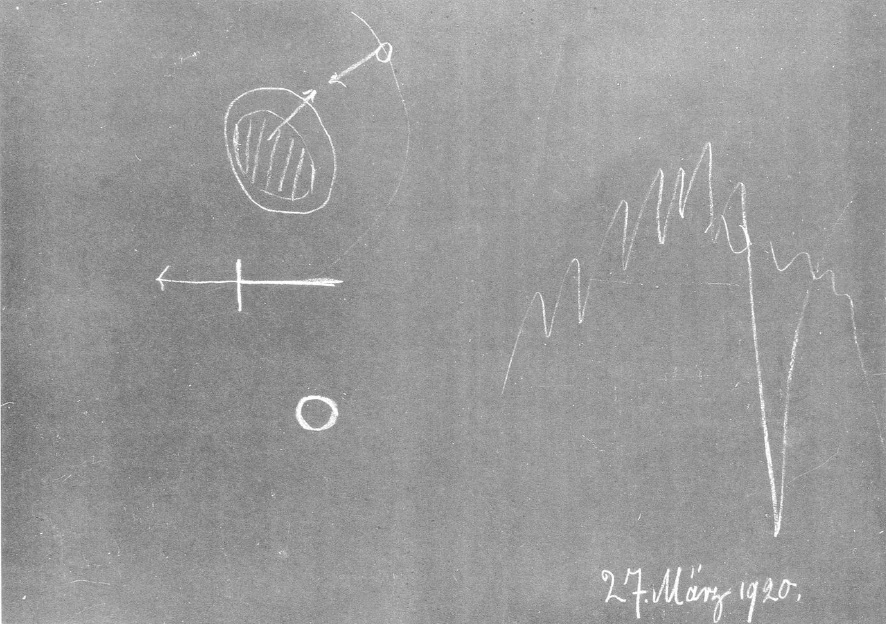
[ 17 ] In particular, however, you will gain insight into the entire workings of the “I” in relation to the other three organizations when you consider the fever curve of typhoid fever. There you have a vivid picture of how the “I” actually struggles. This is precisely what can show you how the very integration of the natural sciences into medicine makes it necessary to take these various human organizations into account. The confusion in medical science has arisen solely because science has become materialistic and has limited itself to observing the processes in the physical body. But these processes in the physical body are never independent, and above all, they are not entirely equivalent in their nature. For you see, in the physical body, certain things may depend specifically on the etheric body working within it, or on the astral body or the “I” working within it. These are always physical processes, but the physical processes are specialized accordingly; they take on a completely different character depending on the higher member that is active within the physical organization.
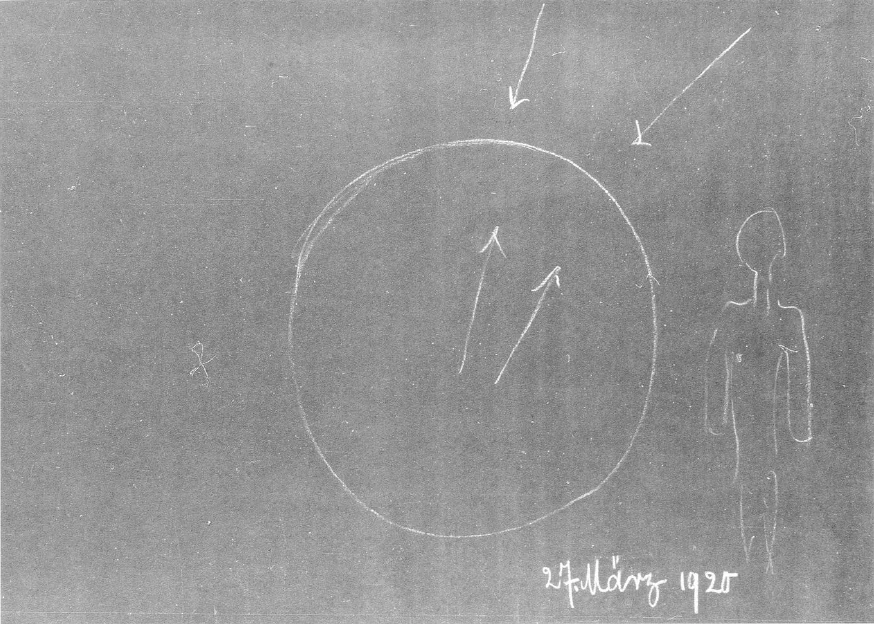
[ 18 ] Now, if you take everything I said yesterday regarding human dependence on the extraterrestrial and terrestrial realms, and what I have added today regarding the human process of development over time, you will be able to say to yourself the following—and this will now help you a little on the path we wish to continue pursuing, namely, how to actually conduct the kinds of investigations I am now speaking of. You will be able to say to yourself: Forces are constantly acting upon human beings. But these forces are, first of all—when we consider the physical and etheric organization of the human being—either extraterrestrial or terrestrial forces that counteract one another; that is, those originating from Saturn, Jupiter, and Mars, and those originating from Venus, Mercury, and the Moon, which (see illustration on page 149) are in fact already transformed into terrestrial influences. You see, the relationship between the Earth and the Moon is such that it is very easy to be misled about what is actually happening. People so easily think: Well, the Moon is up there, so that’s where its influence lies. — But that is not a complete way of thinking. In reality, the Moon is not merely the Earth’s companion, orbiting it; rather, the very same force that resides in the Moon and acts upon the Earth is also contained within the Earth itself. The Earth has its own lunar aspect, which acts outward from it (see illustration on page 150). In the physical realm, all the processes that manifest in the tides and in many other phenomena—for example, in menstruation—are not actually telluric effects, but rather lunar effects; however, they do not stem from the Moon’s influence, as recent theories suggest, but from what is lunar in nature within the Earth itself. Hence, these phenomena correspond to one another externally. But they are not, at least as a rule, in a direct temporal connection. Thus, when we speak of the sub-solar planets, we must also seek their counterpart within the Earth and then conceive of the more physical repercussion—the repercussion on the physical realm emanating from the Earth. That which arises more in the soul-spiritual realm, we must attribute to the extra-terrestrial planets. In the case of the Moon, it is thus: The Moon, so to speak, casts certain formative forces down upon the Earth, which manifests itself in that it stimulates human activity itself, which finds its expression in imaginative creation. The Moon has a great influence on soul-based imaginative creation. Such things must also be studied at some point. Of course, they are given far too little consideration in the age of materialism. But they are certainly present. The Moon exerts a strong influence on human imaginative creation in a more spiritual-psychic sense. Its counterpart—the Moon’s effect on the organic—emanates in the opposite direction from the Moon-like aspect of the Earth and acts from there upon the human organism. This, then, is what must be taken into account. This also applies, for example, to the sub-solar planets that lie beyond the Moon.

[ 19 ] Thus we see that forces localized in the earth—which I will call terrestrial—as well as forces localized outside the earth act upon human beings in a wide variety of ways. Now, we can study these forces only if we observe the result of their interaction in the whole human being—in the whole human being—and never in any part of the human being, least of all in the cell; please bear this in mind: least of all in the cell. For what is the cell? The cell is actually that which stubbornly asserts itself with its own growth, with its own life, in opposition to what the human being is. And if, on the one hand, you view the human being in his or her entirety—formed from telluric and extratelluric influences—and then consider the cell in any way, the cell is that which intrudes into this overall concept, which virtually destroys these external influences because it seeks to unfold its own life. In our organism, we are actually constantly fighting against the life of the cell. And the most glaring absurdity of these views has arisen precisely through cellular pathology and cellular physiology, which take cells as their basis in every respect and regard the human organism everywhere as a structure of cells, whereas the human being is a whole that is connected to the cosmos and must, in fact, always struggle against the obstinacy of the cells. The cell is, in essence, what constantly disrupts our organism rather than building it up. Naturally, when such fundamental views permeate the entire framework of thought, it is no wonder that one arrives at the most distorted perspectives on human beings and everything related to them.
[ 20 ] Thus, in a sense, two opposing complexes of forces confront us in the process of human formation and in the cellular process; the organs lie in the middle, and they are the liver or the heart or the like, depending on whether one or the other predominates. They are a constant balancing act between these two complexes of forces that I have described to you. The organs are sometimes more inclined toward the cellular aspect, which is then counteracted by the cosmic aspect; or there are organs—which we will characterize in detail—in which the cosmic aspect predominates and the cellular aspect recedes. It is particularly interesting to view, from this perspective, all the organ systems located between the actual reproductive and excretory tracts and the heart. In this system, there is the greatest similarity to what cellular life actually strives for. When one examines the entire human being and considers all the components of its organization, the greatest similarity between the characterized parts of the human being and cellular life is found precisely in this part.
[ 21 ] But this leads us to recognize the following. It leads us to ask ourselves: What is actually going on with the cell? The cell, so to speak—to take the matter to an extreme—develops a life of its own; it develops a life of its own. This willful life, which the cell develops, so to speak, in specific instances, is constantly counteracted by something else, an external force. And this external force, which counteracts it, takes life away from the cell—from the cell’s formative powers—leaving it with the drop-like form; it, so to speak, sucks the life out of it and leaves it with the drop-like form. This is something one should actually know: that in everything on our Earth that has the form of a drop—regardless of whether it is in the non-human or the inner human realm—there lies a resultant of two forces: something that strives for life, and something that sucks this life out of it.
[ 22 ] Now it is interesting that, when one examines what mental images ancient medicine actually had regarding the mercurial, one arrives at the conclusion that the mercurial is that which has had its life taken away and been left in droplet form; thus, in the mercurial, one must see something that, through its own will, seeks to become a living droplet, to become a cell, but is prevented from doing so by the planetary influences of Mercury and thereby becomes merely the corpse of the cell—precisely the little droplet of Mercury. There you have the intermediate state between the saline and the phosphoric, and there you also have a glimpse of the admittedly very complicated path one must take to observe how the planetary influences play out in what we encounter on Earth. Every drop of mercury would be a living entity if the planet Mercury were not there. And everything in us that is most inclined to become cellular—that is, the tract in the human being I spoke of just a moment ago—is therefore most dependent on being exposed to the proper influence of the planet Mercury; that is, those parts of the lower abdomen that lie between the actual excretory organs and the heart. They are particularly dependent—if I may put it that way—on not being prevented from following a certain tendency they have to maintain cellularity, while at the same time not allowing it to reach the point where it would be completely overgrown by life; in other words, they must remain exposed to the paralyzing, life-stifling, and deadly state of Mercury. Otherwise, the activities of these organs will become uncontrolled if they are not maintained in this intermediate state.
[ 23 ] If one continues to explore this line of thought further and further, one eventually arrives at the relationship that exists between these organs and Mercury, the metal that represents the Mercury state. You can see that the path taken in this way is entirely rational, and since what can already be discovered through supersensible perception for present or future humanity must be substantiated more and more by external, sensually perceptible facts, it would be beneficial to investigate clinically and in the literature what the actual effects are—whether from minerals, metals, mineral substances, or animal substances, or from the minerals and metals contained in plants—on the human organism.
[ 24 ] One can, after all, begin one’s study with some particularly characteristic examples in this regard. I spoke to you today about how a certain pre-conceptual tendency must be counteracted by ossification, by sclerosis. This ossification and sclerosis, however, has a complete opposite. All you need to make it run rampant is to induce lead poisoning in a person. Of course, the experiments must not go so far as to actually cause lead poisoning in order to study arteriosclerosis, but the important thing is to observe the phenomena that occur when nature experiments on us in this sense, in order thereby to discover the inner relationship between what arises within the human being itself from the same forces that act in lead, and lead itself. It is entirely appropriate for scientific study to examine the process at work in lead and the processes of ossification and sclerosis in human beings.
[ 25 ] Similarly, one could study the interrelationship between the processes occurring in the tin and everything I previously characterized as the interaction between hydrocephalus and its opposite, and one would then find that in this entire complex of childhood, which ultimately aims to I might say, achieving the proper balance of firmness between the head and the soft tissues, the same forces are at work as in tin.
[ 26 ] Now we have seen that this process progresses toward the lungs in later life. This brings us to—and we don’t have to look very far to see this— we need only properly synthesize certain observations that have been recorded in medical literature for centuries—to see the intimate connection between this process, which is related to all the accompanying symptoms of pneumonia and pleurisy, and its relationship to the forces inherent in iron. This connection can then be traced back to the ordinary process that takes place due to the presence of iron in the blood, where it is, so to speak, normal. You can trace the same process that occurs in the interaction between iron and blood a little further up into the pulmonary system and everything associated with it, and you will then gain an understanding of the efficacy of iron—I would say—in the interaction between hydrocephalus and its counterpart as it progresses into the lungs. So, you see, these things interact with one another. Only through this mutual interaction—and, in turn, by relating it to the non-human realm—does one gain the ability to understand the healing effects of remedies.
[ 27 ] However, if one were actually to place value on viewing the human being in this way, it would undoubtedly give rise to a kind of intuition for the observer that would, in fact, be of particular importance in all diagnoses. For what really matters here is the holistic consideration of many factors. In every diagnosis, one should keep in mind how the person relates to the world, how they have lived so far, and how they promise to live in the future. What do I mean when I say “to live in the future”? Well, in the person as they are now, the seeds of what they will experience—namely, in an organic sense—for the rest of their life are already present to a certain extent.
[ 28 ] If one then seeks the connection between everything I have just said—the effects of lead, tin, and iron on the human organism—and the effects that can still emanate from metals, one comes to the conclusion that the effects of copper, mercury, and silver are, in a sense, polar opposites.
[ 29 ] What I have just said does not refer to any kind of endorsement of remedies, but I must mention it in order to point out to you how specific interactions exist between the configuration of the forces in these metals—and, as we have seen, in other substances as well—and the formative forces of the human organism itself. Consequently, certain forces—such as those anchored in copper—will, in a certain way, counteract those anchored in iron. From this counteraction, one can deduce what one needs from the other forces when a certain type of force—let us say, the forces of iron—is present in excess or is acting too strongly. One will find, for example, that in certain specific pathological conditions of the human organism, the iron forces within it are evidently too strong. In such cases, it is a matter of using copper or something similar to copper—which, as you will see, can also be derived from the plant kingdom—to counteract them.
[ 30 ] Well, perhaps I’ve asked quite a lot of you today with this overview covering so many different aspects. Still, I hope that when you reflect on some of what I have presented today, you will recognize how these matters need to be further developed and how this process can yield something very fruitful for the transformation of medical education and the entire field of medicine.