

Spiritual Science and Medicine
GA 312
30 March 1920, Dornach
Translated by Steiner Online Library
Tenth Lecture
[ 1 ] It is, after all, in the nature of things that we are attempting here to discover the method by which the study of medicine can become more fruitful, rather than getting lost in overly fragmented details that, when all is said and done, can only ever have relative significance. But it is precisely the methodical study of the relationship between human beings and the non-human natural world that is likely to equip each individual, so to speak, with the ability to make observations in nature itself. Let us therefore begin today by presenting a few points that, in a sense, can serve as a path in a certain field, along which one can discover many things.
[ 2 ] It is, of course, natural that research in Spiritual Science—by establishing guiding principles—can uncover certain things that can then be verified entirely in line with the lecture given yesterday by Dr. Stein. But on the other hand, once we delve into these very areas, they serve as a guide for many things. And so today I would like to draw your attention to a few examples that may prove significant. You can see, for example—let us remain in the realm of botany for a little while—how anise, *Anisum vulgare*, generally affects the human organism. We will find that its most characteristic effects are that it promotes secretion—that is, it is diuretic, promotes milk secretion, and induces sweating—and we ask ourselves what this might be related to. We will find, specifically with this plant, that its efficacy is related to the finely divided iron components or iron salt components present in it, so that we can clearly perceive how the effect of anise is based on the fact that, so to speak, what normally takes place in the blood due to the iron is removed from the blood and, for a time, is forced into the region below the blood. However, we can study certain plants particularly well because their effects are strongly directed toward the middle—that is, between the outside and the inside, between the surface of the body and the heart—and we can observe how their effects extend to various areas; this allows us to identify guiding principles for what we can rationally investigate in the science of remedies.
[ 3 ] Let us consider, for example, a plant that, in this regard, is—I would say—a veritable teacher of nature itself: Cichorium intybus. It is something from which, I would say, one can study all manner of things about the human organism, if one so desires. For we can see in Cichorium intybus that, on the one hand, it is an antidote to digestive weakness—that is, to what manifests through the organs that lie directly adjacent to the human external world itself—and, on the other hand, that Cichorium intybus also acts on the blood itself, preventing the blood from carrying out the processes necessary for it and preventing the blood from allowing disruptive processes to arise in the blood itself. Finally, what is very significant about Cichorium intybus is that its healing effect extends even to very peripheral processes; under certain circumstances, it exerts an effect on the head organs, but particularly on the throat and chest organs, on the lungs. Precisely because Cichorium intybus has such powerful effects on all possible parts of the human body, it is so interesting to study. One sees these effects spreading out, as it were, in a fan-like pattern. We ask ourselves: What is the basis of its counteractive effect against digestive weakness? We find that it is based on the bitter extractive substances present in Cichorium, which are expressed through its strong-tasting flavor. These bitter extractive substances, which thus still possess a strongly plant-based, substantial character, bear a close resemblance to that which in humans has not yet been processed very thoroughly—that which, in a sense, still resembles its appearance in the external world.
[ 4 ] We must be clear that, in the areas leading up to the stomach, the substances from the external world are initially only minimally processed; that they are then further processed, appear to have been significantly transformed as they enter the bloodstream through the intestines, and appear to be most heavily transformed in the periphery—in the skeletal, nervous, and muscular systems. And extractive substances bear a very strong resemblance to the unprocessed external substances.
[ 5 ] However, Cichorium intybus also contains alkaline salts, specifically potassium. It is precisely in this that we must now seek the substance that acts upon the blood; thus, in Cichorium intybus, we see how the forces separate. The forces contained in the extractive substances are drawn toward the digestive organs due to their affinity with them. The forces contained in the alkaline salts are drawn toward the organs of the blood system—or the blood itself—due to their affinity with them. Then there is, essentially, a very high concentration of silicic acid. Silicic acid acts beyond the blood into the peripheral organs, passing through the nervous and muscular systems and extending into the skeletal system. Thus, Cichorium intybus is something that truly shows us: “I am here, and I allow myself to be divided into three parts, so that I have an effect on all three divisions of the human organism.” These are the experiments that nature itself demonstrates to us, and they are actually always far more significant than the experiments we conduct ourselves, because nature is far richer in its intentions than we ourselves can ever be when we pose questions to nature through our experiments.
[ 6 ] Equisetum arvense is also very interesting in this regard. Here, too, we see strong effects against digestive weakness, but also strong peripheral effects. We need only ask ourselves: What is the basis for these strong peripheral effects in Equisetum arvense? Once again, the answer is: its silica content. So that simply through a comparative study—and what I have outlined here, you can expand upon greatly if you are truly studying medicinal botany—we find everywhere that everything that is still similar to the plant kingdom manifests as an extractive substance, is still related to the digestive tract, and that that which already tends toward the mineral kingdom, silicic acid, so to speak, inevitably flows from the center of the human being toward the periphery and exerts a healing effect there as well.
[ 7 ] But, I would say, a truly magnificent plant—one that is quite simple in its effectiveness yet immensely instructive—is *Fragaria vesca*, the wild strawberry. Its effect is observed very rarely simply because it is eaten by people who, so to speak, mask its effect through their constitution. But in such a case—where the effect is usually masked—one could conduct experiments with people who are, so to speak, still receptive and sensitive, with people who do not normally eat strawberries. Then the truly magnificent significance of this wild strawberry would become apparent. For this wild strawberry is, on the one hand, particularly capable of promoting normalization in blood formation. It does everything that actually promotes blood formation to some extent, so that it can be used for people who do not otherwise build up an immunity to strawberries through their consumption—even in cases of diarrhea—because when diarrhea occurs, forces that are improperly active in the lower abdomen are redirected to their proper place, more into the blood system itself.
[ 8 ] Now, on the one hand, we have a significant hematopoietic power, and on the other hand, in the wild strawberry, we have silicic acid, which tends to direct what is in the organism toward the periphery. Just consider what a magnificent thing this wild strawberry actually is. Through its silica, it tends to generate a certain release of energy in the periphery of the organism. Then, when this release of energy occurs in the periphery of the organism, there is a certain danger that, if too much silica is directed toward this periphery, the energy will, so to speak, get out of hand, and if one does not simultaneously send enough nutrients to this periphery—if the blood is not sufficiently nourished at the same time—to, in a certain way, replenish with nutrients what is, so to speak, being brought about there by the silicic acid. The wild strawberry is this magnificent example that simultaneously produces the very blood that must be supplied there. It is thus the one that expresses, in a truly wonderful way, what must be done to, so to speak, assist the process that is triggered by the silicic acid compounds in the peripheries of the human organism. Nature already provides us, through individual examples—and this, too, could be significantly expanded—with truly wonderful insights, if only we have the intuition to seek out nature in the right places.
[ 9 ] From this perspective, I would like to draw your attention to something else. Study the rather comprehensive effects of a plant such as Lavandula. You will find that, on the one hand, the properties found in Lavandula possess a powerful healing force for everything that, I would call a negative spiritual weakness—fainting spells, nervous weakness, paralysis—so that Lavandula acts on the periphery of the human organism in such a way that it drives the astral body out, causing it to lose its power over the physical body,
[ 10 ] Now, with such plants—and indeed with any substances in which we observe an effect against negative nervous states, if we may call them that—we can always also inquire about the other, opposing negative nervous states, such as whether a state of weakness is present, and you will always find that the substance acts in both directions. One plant that has a particularly strong effect in both of these ways is, for example, lemon balm, which is highly effective against dizziness and fainting, but can also have a highly stimulating effect on menstruation.
[ 11 ] I have mentioned these examples to show you how one can observe the external process of the plant and see its similarity to the process that takes place within human beings themselves. However, one must be clear about the fact that the plant is truly related only to a part of the human being. I would like to ask all those who, perhaps fanatically, wish to rely solely on herbal medicine—which does exist even in our time—to consider this. The human being is truly such that he contains all the kingdoms of nature within himself; and apart from the human kingdom, which he himself still is, he was related in his formative processes and stages of development to all the other kingdoms of nature, and in a certain sense has projected all the other kingdoms of nature out of himself—and in certain cases takes back into himself that which he has projected from these kingdoms. Yes, it is a process of taking back into oneself. It is, in fact, very important that it is a process of taking back into oneself.
[ 12 ] That which we have projected outward relatively last is what we must, in turn, take back into ourselves earliest in the healing process. If we set aside the animal kingdom—we do intend to shed some light on it later, but let us leave it aside for now—we have, later than the plant kingdom, cast the actual mineral kingdom out of ourselves, and we must be clear that, for this reason, a mere search for a connection between human beings and the plant kingdom represents a one-sided view. Yet the plant kingdom remains instructive for this very reason: after all, when a plant heals, it does so not merely through its plant nature, but through the connection to the mineral kingdom that resides within it. That is why it remains instructive. One must simply be aware, however, that the plant, in turn, reprocesses a portion of what is present in the mineral kingdom, and that what has already been reprocessed by the plant is not a remedy to the same high degree as that which has not yet been processed. Thus, the silicic acid that has already been transformed by the plant and incorporated into the plant’s metabolic process is not as potent a remedy as the silicic acid we encounter in the mineral kingdom, where the organism must exert considerably more effort to assimilate it and integrate it into a unified whole than when it is dealing solely with silicic acid in the plant kingdom.
[ 13 ] This is precisely what must always be emphasized: that a person must develop greater strength when faced with a greater opposing force. The opposing force is definitely greater when a person has to assimilate and overcome mineral substances within themselves than when they merely have to assimilate plant substances. You see, that is precisely where the difference lies—please, let me emphasize this; I’m only mentioning it in passing, as I do not wish to promote any particular diet here; I have absolutely no intention of advocating for anything, but merely want to describe things as they are—and that is the basis of the difference between a vegetarian and an animal-based diet. If we nourish ourselves solely with plant-based foods, we as humans must take on the entire process that the animal relieves us of by having already taken the plant matter a step further. We can say, in a sense: The process that the plant has already carried out to a certain point is continued by the animal, so that the animal’s metabolic process stops here (see diagram on page 197), whereas in the plant it stops here (red, white). Anyone who eats meat, however, does not carry out this process here—the process that the animal carries out; rather, they allow the animal to take it over for them. Thus, they do not develop within themselves the forces that must be developed when they consume only plant matter, which they themselves must process further to this extent. This means that, if a person is a herbivore, the organism must draw upon entirely different forces from within itself than if the person were a carnivore. Yet these forces—which are needed to transcend the plant realm and reach the animal realm—are present. In a sense, these forces flow back into the organism through a sort of rebound and then work within it. They work in such a way that they essentially have a very exhausting and disruptive effect on the person. So one must emphasize—and emphasize strongly—that a vegetarian diet does indeed provide a significant relief from fatigue, that it makes a person more capable of work because they are accustomed to drawing forces from within themselves—forces that they do not draw upon, but rather use as disruptive forces within the organism when they eat meat. But as I said, I’m not trying to agitate anyone. I know that even homeopathic doctors have told me time and again: “Yes, but you’re causing people to develop consumption if you wean them off meat,” and so on. Yes, certainly, all that may be true, but what I have just stated as a pure fact simply exists; there is nothing more to say about it—it exists. However, I am quite willing to admit, of course, that there are simply organisms today that cannot tolerate a purely plant-based diet and absolutely must have a meat-based diet. That is then a matter of the individual case.
[ 14 ] Well, precisely when one addresses this need—to emphasize that a relationship with the mineral kingdom and its forces must also be established in the healing process—it is precisely then that one is guided toward something else for this healing process. It is, after all, a question that has been addressed, but one that, I believe, can naturally find a solution only in this way—and I think it can also find a certain understanding when viewed from the perspective of Spiritual Science.
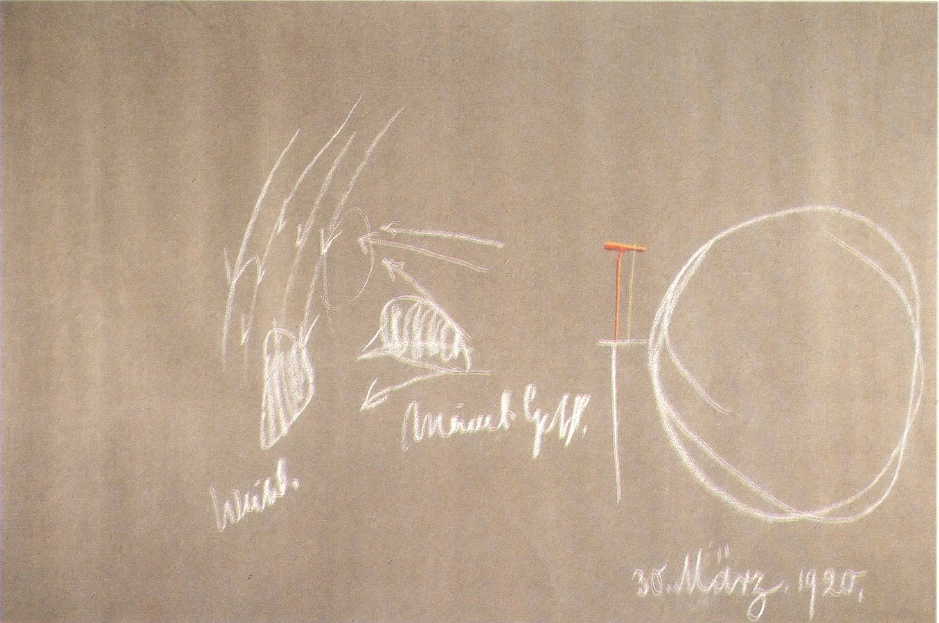
[ 15 ] It seems to me that, in the healing process as well, the question of prepared, cooked food versus raw food is of extraordinary importance. Again, I do not wish to advocate for one or the other—in this area, I ask that you certainly not regard me as an agitator—but we must objectively examine what is actually at stake here. When a person consumes their usual cooked food and assimilates its nutrients, they are, in a sense, performing externally what the organism of someone who eats raw food must do on its own. Through cooking and so on, a person allows others to take over what they would otherwise have to do themselves when eating raw food. Now, the point is that we as human beings are constituted in such a way that, while we are connected to the whole of nature, so to speak, through our periphery, we separate ourselves—we individualize ourselves—from nature at our center, which includes, above all, digestion. If we were to visualize this relationship between human beings and nature, we might say: Through their periphery (see drawing on page 199, green), human beings are integrated into the entire cosmos, and they individualize themselves (red) through digestion all the way to blood formation, so that this would be the tract within the human being where the human undergoes more processes that no longer fully correspond to external processes—where the human asserts its distinctiveness in relation to external processes, at least more so than where the human is fully integrated into those external processes. Perhaps I will make this even clearer by adding the following.

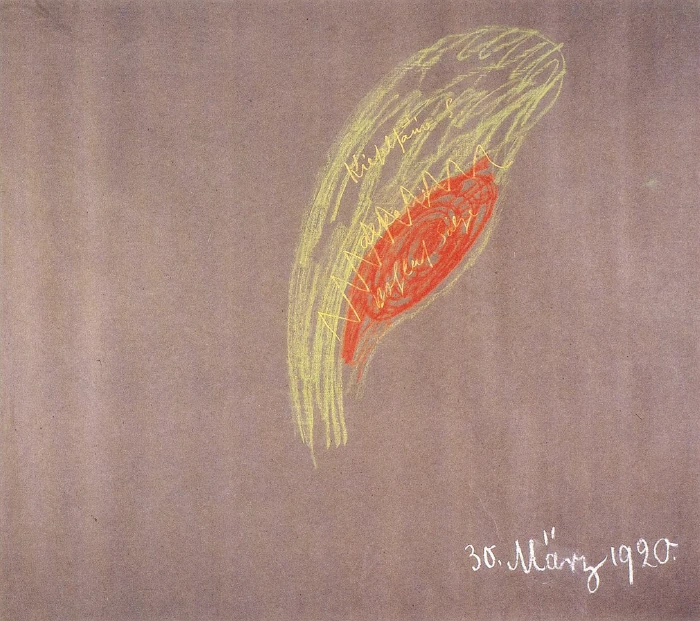
[ 16 ] I have been speaking these past few days about how human beings are indeed integrated into the entire cosmos, and how the formative forces of lead, tin, and iron are at work within them—particularly in the area I have marked here in green. In the area I have marked in red, the formative forces of copper, mercury, and silver are at work (see drawing on page 199). Gold brings about the balance—the forces that are localized particularly in the heart. But when we speak of the human being in this way, we are speaking of him more or less as one might speak of a finger when considering it as a part of the entire organism. To speak of the human being in this way means, in fact, to regard him as a part of the whole world, integrated into the whole world. And here in this tract (see illustration on page 199) lies the contradiction: on the one hand, the human being distinguishes itself precisely through digestion and everything connected with it; and on the other hand, the process of transformation in thinking and seeing is what causes the human being to individualize itself once again from the general process of the world. Hence it is indeed the case that human beings also, in a sense, stubbornly demand everything connected with the digestive process. And this stubbornness was revealed in the instinct for cooking—the act of taking back into oneself that which has been directly set apart from nature. For if it were taken in directly, human beings—at least on average—would be far too weak to process it so directly. It would then have to be—if I may put it paradoxically—a continuous healing process, if we did not cook our food. Thus, due to the stronger polar affinity with the environment, eating would have to be a continuous healing process if we did not cook our food. Therefore, the enjoyment of raw food is much more of a healing process than the enjoyment of cooked food, which is much more of a mere nutritional process. I believe this is an extraordinarily important statement: that the enjoyment of raw food is, in a much stronger sense, a healing process than the enjoyment of cooked food. The raw food diet comes much closer to actual healing than cooked food does. I would also like to mention that everything that is cooked is, so to speak, curtailed in its effect and remains within the area indicated schematically in red (see diagram on page 199), whereas what is introduced into the organism in its raw state—that is, fruit and the like—extends beyond this tract into the peripheral system, manifesting itself rather in the periphery; for example, it causes the blood to send its nourishing power into the periphery.
[ 17 ] You can see this for yourself if you try—and such attempts should be made—to put patients on a raw food diet for a while in cases where you are trying to treat them with Silicea. Then you will see how you will significantly enhance the effect of silicic acid, because you will then be acting in accordance with what silicic acid aims to do peripherally—namely, to have a formative effect and heal deformities—I am, of course, not speaking of gross, block-like deformities, but of what is not immediately apparent anatomically, but only physiologically—and in accordance with what silicic acid aims to do directly, you will then support it by ensuring that the corresponding nutrients are supplied even during the healing process. These are the very things I would like to point out methodologically, because they are so extraordinarily significant in their application and because, as I believe, these matters are studied far too little. They are already being studied, but mostly only empirically; the underlying rationale is not sought, and therefore one finds so little opportunity to look with satisfaction at what can be established in this field.
[ 18 ] Of course, in all these matters, it is essential to take individuality into account. That is why I have said in previous lectures: One can hardly say anything in this field that is not, in some respect, true; but one must know these things as guidelines, even if, for example, in a specific case one must say to oneself: ‘Yes, with this patient, I must not rely on a raw food diet, because given his overall constitution, that would provoke this or that effect’—in some cases I may do it, in others I must not. But what has been characterized here remains true nonetheless. Only through such things can one truly gain insight into the entirety of the human constitution. For you see, we must clearly distinguish between the peripheral aspect—where the human being is truly more deeply embedded in the entire cosmos, and which we can only access by introducing into the human organism the mineral element, which is so distant from the human being—and that which I have referred to here as the red. We can already approach this—albeit through the plant realm—but also by introducing into the organism that which initially acts through its currently salty character, that is, everything that consists of carbonic salts, while everything alkaline relates to the balance between the two (see drawing on page 199, yellow): carbonic salts, alkalis, silicic acid salts, or silicic acid itself.
[ 19 ] So these are the things that point to the kinship between human beings and the natural world around them. You see, we sort of split human beings in two, with a middle element within them that causes a pendulum-like swing back and forth between these two parts. And we must tell ourselves: Looking in this way at the peripheral human being and at the more central, individualized human being actually leads us deep into the very essence of all of nature. For the peripheral human being is, in fact, related to everything extraterrestrial—as demonstrated precisely by the influence of the mineral within him, which, being mineral in nature, is in reality dependent on planets and constellations—and, as an individual, he is centrally related to everything earthly. Through this kinship with all that is earthly—which finds expression in his digestive system—he is, at the same time, precisely this human being who can think, who can develop as a human being at all.
[ 20 ] Now we can view the dualism within the human being as a dualism between the extraterrestrial, the cosmic, and the truly earthly elements within him. To begin with, both the extraterrestrial and the earthly are clearly present as predispositions in the human organism, and I already pointed out yesterday how the peripheral, the extraterrestrial, is reflected in the human being, so to speak, through the fact that he possesses his spiritual organization, but also the digestive organization that is polar-related to it—a point I have repeatedly emphasized. So everything connected with secretion following digestion and with that secretion in the brain which forms the basis of mental activity—all of this actually points us toward the peripheral, the heavenly human being. As strange and paradoxical as that may sound, it is so. But everything in the human being—whether involving liquid or more gaseous processes—that is connected with the formation of urine and sweat points us toward the earthly human being as the individualizing human being. We must indeed see something very significant in these two diverging poles of human nature.
[ 21 ] Well, unfortunately, in recent times—at least to my knowledge—no one has ever taken the opportunity to point out this duality in human nature—which I am specifically referring to—in a way that would have been of any use for therapy. For, as you can see, all these things we are considering here are intended to bring together the therapeutic and the pathological. Pathology and therapy should not be two separate fields. This is also why I orient everything I present here toward therapy, so that what is understood pathologically enables one to think therapeutically. That is why I am stating the matter exactly as I just have, and objections can very easily arise if one pays less attention to this orientation toward the therapeutic.
[ 22 ] So you see, for anyone who wants to understand the external development of, say, syphilis, it is certainly a matter of examining to what extent an infection—or at least something approximating an infection—must be present in every case for syphilis to manifest properly. If one merely states this fact, then the further course of such an observation leads one, so to speak, to emancipate pathology. For—forgive me if I use a somewhat crude comparison—this infection is, after all, no more essential to syphilis than the fact that every time one is to be struck on the head, one must be hit by a stone or by something else that delivers a blow. It is, of course, entirely correct: a bump will not form unless one receives a blow or unless a brick flies into one’s head, but if one emphasizes this point, one does not arrive at a characterization that is fruitful for the healing process. After all, isn’t it true that while it may be socially significant how stones fly at one’s head or the like, this has not the slightest significance for the examination of the organism, which is necessary to achieve healing. One must examine the human organism in such a way as to identify the factors within it that play a role in the therapeutic process. Now, in the treatment of syphilis as well, the factors I have spoken of play a major role. The healing process is precisely elucidated through them. And what is said here is stated not so much to proceed pathologically, but rather to build a bridge between the two.
[ 23 ] I say this because I want to highlight that these debates here are being conducted out of a certain mindset—and this will become more and more apparent with each passing day. And because there is a tendency today to increasingly emancipate pathology rather than steer it toward therapy, thinking is thus diverted from fruitful avenues which, if pursued in the right way, are immensely significant for the search for healing processes. So the question is: What significance does this duality actually have in the human organism—this duality between the human being who is, so to speak, cosmically peripheral, and the human being who is earthly, tellurically central? Both aspects of the human being are, after all, systems of forces that manifest themselves in different ways. Everything peripheral manifests as a formative force. And the ultimate act, I would say, of the peripheral is that which manifests entirely at the periphery of the human being and gives him his human form.
[ 24 ] One might even say: Let us study, through the behavior of hair in relation to silica, how—at the periphery of the human being—the formative forces within the human being itself interact with the formative forces within the pebble. You can literally study the extent to which a person allows themselves to be influenced—or resists this influence—by observing the power that silica does or does not exert on the formation of the human head. Of course, one must always consider the human being in conjunction with the rest of their physique. But when one walks down the street today and observes the bald heads, one sees to what extent people are inclined to accept the silicic acid formative process within themselves or to resist it. This provides the immediate insight that one can acquire even without actual clairvoyance, but which can only be acquired if one is willing to engage with the active forces of nature itself. These are primarily formative forces at work here—not cellular formative forces, but total formative forces that find their ultimate expression in the human form itself, whereby I naturally include the entire skin configuration in this form, whether it is more or less covered with hair and the like. In contrast, what is more centralized—what is more closely connected to carbon and carbon dioxide—contains the force that dissolves form; within it, destruction and dissolution are at work. We live, after all, by the fact that we constantly seek to destroy and dissolve form within ourselves, while form, in turn, constantly seeks to recreate itself from the cosmos. As human beings, we live by the fact that we constantly seek to deform ourselves with regard to form, and these deformations are repeatedly balanced out by forces from the cosmos. This is a duality inherent in human beings—this shaping and this deforming. It works together within the human organism. And now imagine that, on the one hand, you have the peripheral, cosmic formative forces (see diagram on page 206, arrows from above) that act upon the human being. They meet the earthly forces in the heart. I have explained to you how a balance is created there through the heart. But now suppose these peripheral forces, which are at work within the human being—and whose ultimate tendency is actually to move toward the heart—first settle and accumulate within the heart’s own structure before they reach the point of congestion in the heart (see diagram, arrows from the right). Let us assume that they accumulate and become congested before reaching the major congestion in the heart—as a sort of preliminary congestion, so that we would then have something in the human being that, to a small degree, nevertheless shows how the cosmic, the extraterrestrial formative process takes place within the human being. Let us assume that these counteracting forces here—which also act toward the heart through digestion and the transformation of the digestive process—would also bulge out beforehand, before they reach the heart, so that the earthly would bulge out here (see drawing on page 206, right). Then we would have here a condensation of all that which is spiritually and physically formative in the human being—that which is connected with all secretions in the head and the intestines—but which does not directly oppose the activity of the heart; rather, it first creates a kind of secondary cardiac activity. And here you have a kind of secondary digestion, in that what emanates from the earth and its elements—as a deforming force within the human being, as that which dissolves the human form—first settles here. Here we have organically captured this duality in the human being, and in one case we have designated the female sexual organs, the female sexual nature, and here the male sexual nature (see drawing on page 206).

[ 25 ] There is a way to study the feminine principle when we consider it in terms of its dependence on the cosmic-peripheral, formative forces. And there is a way to examine the masculine principle down to its individual forms when we consider it in terms of its dependence on the telluric forces of dissolution.
[ 26 ] Herein lies the path to truly scientifically penetrating the human organism, even down to these very points. Herein also lies the path by which one can discover how, for example, plant matter—which carries formative forces within it—can have a restorative effect even when those formative forces are paralyzed in the womb. If you study the formative forces in the human organism in this way, you will come to truly discover the formative forces in the plant and mineral kingdoms as well. I will examine this in detail, but of course I must first point out the broader context here. You see, once such things are understood, only then will we truly have embryology. We have none today, for the extent to which the cosmic forces influence the very beginning of embryonic development—and how the cosmic forces are just as much the fertilizer of the female organism as the male seed—is completely overlooked. The earliest stages of human embryonic development must absolutely be viewed within the context of the human being’s relationship to the cosmos. What is implanted by the male seed only comes into play over time, as the formative forces that the cosmos seeks to instill in the female organism are so transformed that, through the male seed, what the cosmos intends to develop into a complete form is specialized into the individual organs. The contribution of the female organism lies in the overall organization of the human being; the contribution of the male organism—the contribution of the forces of the male seed—lies in the specialization and differentiation into individual organs, that is, in the carving out of the individual organs and thus in the deformation of the entire unified form. One might say: through the feminine forces, the human organism strives toward spherical formation; through the male seed, the human organism strives to specialize this sphere into the heart, kidneys, stomach, and so on. In the feminine and the masculine, these polarities of the Earth and the cosmos confront us directly. This, in turn, is one of those moments when one begins once again to feel great respect for the primordial wisdom of humanity, when one begins to listen with entirely different feelings when told: “Uranus impregnates Gaia,” or “Cronus impregnates Rhea,” and so on. This really doesn’t have to be merely a vague, mystical sensation when one shows great reverence for these ancient, meaningful intuitions. At first, it’s surprising when people who begin to delve into such matters come to a conclusion like the one I’ve often heard—that mythologies contain more physiology than modern natural science. It’s shocking at first. I can understand that, but there is an immense amount of truth in it.
[ 27 ] The fact is that the further one actually advances, the more and more one comes to this realization—that today’s method, which no longer recognizes such connections, is increasingly unsuitable for truly guiding human organization.
[ 28 ] I would also like to take this opportunity once again not to fail to mention that nothing I am saying here has been derived from the study of ancient texts. What I am saying here is truly drawn solely from the facts themselves. I do, however, sometimes point out the correspondence with ancient wisdom. But what I am presenting to you here is not derived from ancient wisdom. Therefore, when one follows the processes I am describing here, certain insights will emerge that will in turn lead us back to certain aspects of ancient wisdom. I myself, for example, would never present it as my vocation to, let’s say, arrive at anything through the study of Paracelsus; rather, I sometimes feel a strong need to consult Paracelsus to see how something I have discovered myself appears in his work. So I ask that you understand what I am trying to convey in this sense. But it is certainly a fact that, when we look more deeply into the human constitution from the perspective of Spiritual Science, we come to have a great reverence for primordial wisdom. However, this is a question that must, of course, be addressed in a different field of knowledge than the one discussed here.
[ 29 ] We’ll talk about that tomorrow, after I’ve given you time to process what I’ve told you here about the emergence of the feminine and masculine from the two dualities—which, as we’ll see tomorrow, points to deeper connections.