

Spiritual Science and Medicine
GA 312
31 March 1920, Dornach
Translated by Steiner Online Library
Eleventh Lecture
[ 1 ] Just as we ended up yesterday discussing something entirely different from what we had set out to discuss, so too will we today take as our starting point a very specific, concrete, and substantial topic and then attempt to build upon it further. You can see that it is necessary—partly because of the nature of the subject itself, and partly because of the limited time allotted to us—that we approach our task, so to speak, in a circular manner. We cannot take that scientific approach where one begins, so to speak, with the axioms and then moves on to increasingly complex matters.
[ 2 ] My task today is to show you the scope of our consideration that will take us a step further along our path, beginning with Carbo vegetabilis. Just as we studied Cichorium intybus, the wild strawberry, and the like yesterday, so too shall we study today what follows on from this remarkable substance—one that is actually available everywhere, yet is in fact among the most remarkable substances in the world. In doing so, I would say, one sees most clearly how, if one wishes to engage in a genuine observation of nature, one is compelled to immediately direct one’s gaze beyond what current scientific thought tends to focus on.
[ 3 ] It was very interesting how Dr. Kolisko pointed out yesterday in his evening lecture that the chemistry of the future must actually be something entirely different, and how the word “physiology” came up time and again, which shows that a bridge should be built between chemistry and physiology. This kept bringing to mind all sorts of things that, of course, cannot yet be fully articulated in public lectures today, because the prerequisites for understanding are actually completely lacking. After all, we also find carbon in non-human nature—in what I would call here “seemingly non-human” nature. For what, in the grand scheme of nature, is actually non-human? Nothing, really, because everything that is non-human in the non-human realm immediately before us has, in the course of human evolution, been set apart from the human being, removed from the human being. Human beings had to enter stages of development that they could only enter because certain processes were taking place in the external world opposite them, thereby giving them the opportunity to take certain other processes into their inner being. So that, in fact, there is always both a contrast and a kinship between certain external processes and certain internal processes.
[ 4 ] Now I must say that it struck me as strangely consistent with what was said yesterday about—let’s say—perhaps this isn’t expressed quite precisely, but you will understand what I mean, especially if you heard Dr. Kolisko’s lecture yesterday—about the “physiologization” of chemistry, and what Dr. Scheidegger so kindly presented on Sunday in his interesting discussions, where he pointed out how what we seek to achieve in homeopathy must actually be grasped from a perspective of Spiritual Science. But at one point this faded into a curious phrase—a phrase I have, in fact, had to grapple with extensively for, I might say, decades—a phrase that is often uttered: that even homeopathic physicians are somewhat afraid of becoming mystical, that is, afraid of being suspected of mysticism.
[ 5 ] Well, the reason I concerned myself with this lay in very specific views, which, however, are entirely grounded in reality. You see, the essential goal of the homeopathic healing process actually lies—and please do not misunderstand me; one must always speak a little radically if one wants to characterize things properly—in reality, much less in the substances themselves than in the processes involved in their preparation—that is, in the preparation of what we have before us as silicic acid or, let’s say, as Carbo vegetabilis. It lies in the preparation, in what is done there. I have given a great deal of thought to what actually happens when one sets out to prepare homeopathic remedies—among which, for example, in this case, I certainly include Ritter’s preparation, as Dr. Rascher confirms, even if Miss Ritter herself does not admit it. The question arises: what actually happens there when one prepares homeopathic remedies? It actually lies in the preparation. It lies in the entire process of preparing whatever it is you’re doing there. Take silicic acid, for example—if you prepare it up to high potencies, what are you actually doing? You’re working toward a certain point. In nature, everything is fundamentally based on rhythmic processes. You work toward a certain zero point through a process in which the actual effects of the substance in question—those immediately apparent to us—come to light. Just as, you see, if I have wealth and keep spending it, I reach a zero point and then go beyond it, but then I end up with something that is not merely the absence of wealth, but rather something that transcends the nature of wealth and moves into the realm of debt—so it is when I am confronted with the substantial properties of external substances. By remaining, so to speak, within the effect of these substances, I eventually reach the zero point, where the effects of these substances no longer manifest themselves in their ponderable state. But if I go even further, it is not the case that the whole phenomenon simply disappears; rather, the opposite occurs, and the opposite is then incorporated into the surrounding medium. For me, therefore, it has always been the case that I saw the effects opposite to those of the substances in the medium—in the trituration medium and so on—in what is needed to incorporate the homeopathic substance, the triturated substance, into it. This medium takes on a different configuration; just as I become a different person when I transition from having assets to incurring debt in external social life, so the substance transitions into its opposite state and then imparts this opposite state—which it previously possessed within itself—to its surroundings. So if I were to say that a substance, as I reduce it to ever smaller and smaller quantities, possesses certain properties, then—as I approach, so to speak, a certain zero point—it acquires the opposite property: that of radiating its former properties into its surroundings and stimulating the remedy with which I treat it in the corresponding manner. This stimulation may consist in directly inducing the counteraction described here, but it may also occur simply by inducing this counteraction in such a way that the substance in question is brought into a state through which it subsequently—or, for example, under the influence of light—exhibits fluorescence or phosphorescence. In this way, one has elicited the counteraction of radiation into the surroundings. These are the factors that must be taken into account. It is truly not a matter of falling into mysticism, but rather of finally observing nature in its actual action—observing it in such a way that we genuinely engage with its rhythmic course, also in relation to the properties of the substances. This is, I would say, a guiding principle for actually recognizing where the effects lie. If you potentiate, you first arrive at a zero point. Beyond that lie counter-effects. But that is not all; rather, you can now, within the path that lies beyond this zero point, arrive once again at a zero point, which is now a zero point for these opposing effects. Then, by going beyond this point, you can arrive at even higher effects, which, while still lying primarily in the same direction, are of a completely different nature. Therefore, it would indeed be a fascinating task to represent the effects that emerge during potentization in the form of certain curves. However, one would find that these curves would have to be constructed in a peculiar way. One would first have to form such a curve and then, upon reaching the point where certain lower potencies—which are already active—cease to act, and where higher potencies begin to act again—that is, where there is a second zero point—one would have to turn at a right angle and extend the curve out into space. These are matters that we will explore further in these lectures, and they are intimately connected with the entire relationship between human beings and the whole of non-human nature.
[ 6 ] Now, when we consider something like Carbo vegetabilis, anyone who focuses on what is immediately noticeable will naturally say: when taken in large doses, Carbo vegetabilis produces a very specific clinical picture, which, in the opinion of the homeopathic physician, can be treated by potentizing the same substance.
[ 7 ] What does the Spiritual Science scholar actually encounter when he considers Carbo vegetabilis? First and foremost, the Spiritual Science scholar is confronted with what prompts him to venture out into the non-human natural world and investigate the nature of the external world’s coal—which has already advanced further in the process of mineralization—and of the Earth’s coal in general. And there one finds that coal is essentially involved in the entire Earth’s process of oxygen utilization. In the Earth’s processes, the Earth’s carbon content acts as a regulator for the oxygen content of the Earth’s environment. One immediately comes to the realization that the Earth as such—when it is understood, as is indeed necessary, as an organism—is subject to a respiratory process, and that the Earth’s carbon content is related to this respiratory process of the Earth. A chemistry such as the one called for yesterday will only come into being when, if I may put it this way, we consider the nature of carbon in connection with the human or animal respiratory process. For, you see, underlying the process that takes place between the carbonization of the Earth and the oxygen processes in the Earth’s atmosphere—the air—is something that, from a Spiritual Science perspective, reveals itself as the tendency toward becoming animal, the very tendency toward becoming animal. And this tendency toward becoming animal—it can really only be characterized, at its core, in a shocking way. For one must say: In what lies out there—in the process that takes place between the Earth’s carbonization and the processes surrounding oxygen in the Earth’s atmosphere—there is something that gives rise to beings, true beings, etheric beings—but who, in contrast to animality, are constantly moving away from the Earth, constantly drawing back, constantly striving away from the Earth. One understands animality only when one conceives of it as that which is gathered up by the Earth in the counter-process to this de-animalization of the Earth, and which then comes to light in the animal process. Therefore, when we first introduce Carbo vegetabilis into the human organism, nothing less takes place than the introduction of that which strives toward the animal into the human organism. All the symptoms that arise—from belching to flatulence, to putrid diarrhea, and so on, ranging on the one hand to the formation of hemorrhoids and on the other to all manner of burning pains— stem—if one considers this entire picture—from the fact that the animal nature, which has been expelled from the human being in the course of his development so that he might be human, is now being taken back into the human being once again. This, you see, leads us to say quite plainly: when one administers Carbo vegetabilis to a person in large doses, one is prompting them to defend themselves against the intruding process of becoming animal. They defend themselves by bringing to the fore within themselves that which they owe to the fact that they have cast out their animal nature in the course of their development.
[ 8 ] Now, linked to the fact that we have set aside our animal nature in our development is the possibility that we actually develop—you may be surprised, but it is true—original light within our organism. In the higher human being, we are indeed original producers of light, in contrast to the lower human being, where—in order to acquire this ability to produce light—we possess the necessary defense mechanisms for becoming fully animal. This is one of the profound differences between human beings and the animal realm. While the animal realm shares the other higher spiritual processes with human beings, animals do not have the ability to produce sufficient light within themselves.
[ 9 ] Here I come to a truly—I would say—rather painful chapter in our modern natural science, one that cannot, however, be kept from you for the simple reason that, if you wish to understand the connections between human beings and the non-human world, you cannot avoid this chapter. The major obstacle to a proper understanding of the effects of substances in the human organism in general—and above all of healing substances—is the law of the so-called conservation of force or energy, also known as the law of conservation of matter. These laws, which have been established as general laws of nature, are nothing other than something that stands in the most absolute contradiction to the process of human development. The entire process of nutrition and digestion is, after all, not what the materialistic view takes it to be. The materialistic view actually regards the entire process of nutrition and digestion as if the substances were outside of us—let us stick with carbon for now—as if the carbon were outside of us; then it is taken in, processed accordingly, of course, but still transported through the organism and then absorbed, so that, even if only in small parts, one carries within oneself what the external world has given. One continues to carry this around with oneself. From this perspective, there is actually no difference between the carbon that is outside and the carbon one carries around within the organism. And yet this is not the case. For the human organism does in fact possess the capacity to first completely destroy non-human carbon through the lower human, to remove it from space, and then to simply recreate it anew as a counteraction to that process. Yes, that is precisely the case; the human organism is both a source for the production of non-human substances and, at the same time, a means of destroying them. Of course, modern science will not admit this, for it cannot really form a mental image of the effects of these substances in any other way than in the manner of Ahasver—that they merely wander about in their tiniest parts. It knows nothing of the life of substances, of their origin, or of their death, nor does it know anything about how the death and revival of substances take place within the human organism. This revitalization of carbon is connected to what we observe, on the other hand, in the ordinary human being as the formation of light. This inner process of light formation, in turn, occurs in opposition to the influence of external light. With regard to our higher self, we are constituted in such a way that external light and inner light counteract one another and interact with one another; indeed, the very essence of our organization rests on the fact that, where these two—external light and inner light—are meant to interact, we are able not to let them merge into one another, but to keep them separate, so that they merely act upon one another, but do not merge with one another. By resisting external light—whether through the eye or through the skin—a partition is, as it were, erected everywhere between the inner, original light within the human being and the externally acting light. The externally acting light actually serves only as a stimulus for the emergence of the inner light. Thus, by allowing the light from outside to flow into us, we allow ourselves to be stimulated to bring forth the inner light.
[ 10 ] Now the task is to gain a somewhat deeper understanding of this entire process. When we look at that part within us that is involved in the breakdown of the carbon substance, we arrive, in the human being, at the kidneys and urinary organs in general, and at everything that is also connected upwardly with the kidneys. Thus, we approach the kidney processes within the human being when we consider the process associated with carbon in the non-human natural world. And this simultaneously provides a way to apply, so to speak, something like Carbo vegetabilis to the human being. First of all, I would like to say that for minor ailments, a path is provided by the following consideration: With Carbo vegetabilis, one has the possibility of counteracting the animalization of the human being, which leads to disgust. — And everything that constitutes the clinical picture for Carbo vegetabilis is, in fact, disgust and the extension of that disgust into the human interior. The effective counterbalance to what is formed there is that which represents the opposite process in the human being: everything related to the function of the renal system. Therefore, aim to stimulate the renal process; if you have the clinical picture in a patient—which can otherwise be artificially induced by large doses of Carbo vegetabilis—manage to for example, by using a higher potency of Carbo vegetabilis to stimulate the entire renal process—to enhance it in a certain way—then you are counteracting this disease process in the patient, which is similar to the effects of Carbo vegetabilis. Thus, when studying this remedy, it would be essential to determine how the human kidney process as a whole responds to the potentization of Carbo vegetabilis. The renal process can also act in such a way that it asserts its opposite pole in relation to the digestive process—that is, for a disturbed digestive process that occurs as a consequence in the Carbo vegetabilis disease picture, it asserts its opposite pole, the antithesis of the diseased digestion in the intestine, to facilitate this healing process.
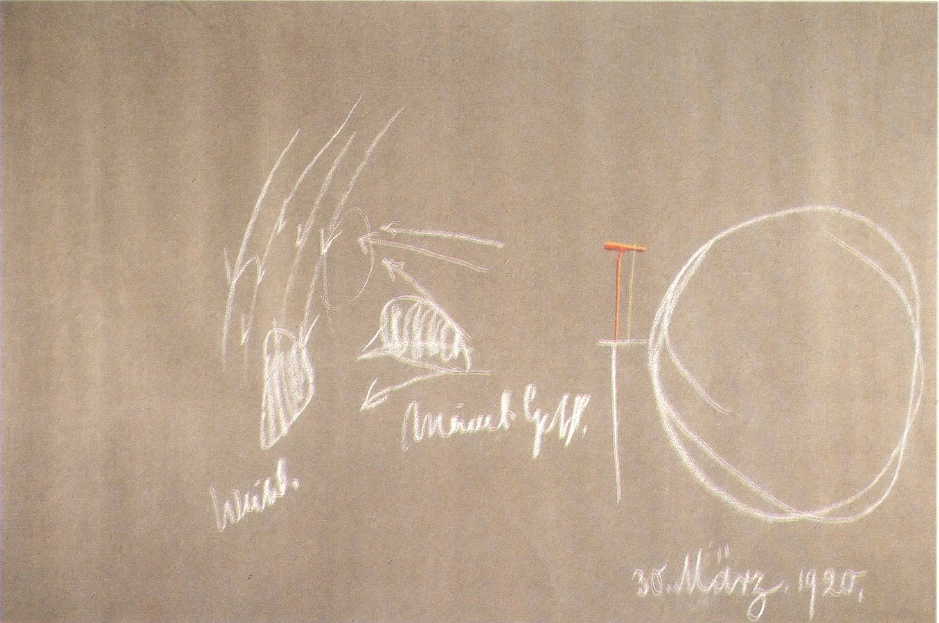
[ 11 ] So, what is happening there with Carbo vegetabilis is countered, on the one hand, by the formation of light. What I have just said—you will, I would say, understand it in summary form if you create a mental image of the following. Imagine: here we have the Earth (see drawing on page 219); the Earth is surrounded by air, and above the air there is something else. What lies above the air is, first of all, what one might describe as a kind of thermal blanket surrounding the Earth. In fact, if one were to travel away from the Earth, it would become apparent that one would encounter entirely different thermal conditions—conditions that would greatly surprise people when compared to those on Earth. At a certain distance from the Earth, the thermal forces play a role similar to that played by the atmosphere itself beneath this heat mantle. Beyond this thermal effect, however—let us here define these thermal effects (see Plate 16), that is, the extraterrestrial thermal zone, so to speak—we have the air zone (see drawing on page 219); and beyond that, we have the antithesis of the air zone, where everything is the opposite of what actually occurs in our air zone. As this zone is—if I may use the expression—“de-aerated,” that is, as its airiness is dissolved, what emerges from it as if shooting forth through this de-aeration is that which is sent to us as light (see drawing on page 219).

[ 12 ] It is utter nonsense to believe that our earthly light comes from the sun. That is merely a rather fatal fantasy of physicists and astronomers. Our earthly light comes from this zone. That is where it bursts forth, where it is generated, where it grows, just as plants grow here on Earth (see illustration on page 219). And so we have what entitles us to say: If a human being generates within himself a youthful, original light, this is because, through his developmental processes, he has reserved the capacity within himself to do what otherwise happens only up there—that is, to carry within himself the source of an extraterrestrial force. However, this source of the extraterrestrial acts upon the entire plant world and upon him in the same way—in that it acts upon the plant world from the outside, but he is, through something within himself, transported upward (see drawing on page 219).
[ 13 ] Well, if we ask ourselves: What happens when we get a little closer to the Earth than we are with the air itself—do we then also penetrate deeper into human beings on the other side? — Yes, you see, as we approach the earthly realm from the airy realm, we come to everything liquid, to the watery realm, and we can safely assume that the liquid zone lies beneath the air zone. It, too, has its counterpart on the outside, just above the light zone. And there, in turn, everything is different—polar opposites to what takes place in the liquid zone. Up there, something grows again, so to speak, just as light grows in the preceding zone. For up there, the chemical forces grow and act upon the Earth (see diagram on page 219). And it is simply absurd to look for the impulses behind the chemical processes on Earth within the substances themselves. They are not there. They come toward the Earth from these regions.
[ 14 ] But human beings, in turn, possess within themselves that which makes something within them just as it is up there. Human beings have within them—if I may put it this way—a “chemist.” They possess something of the heavenly sphere within them, in which the origin of chemical actions lies. And what exerts this influence is quite strongly localized within the human being; namely, it is localized in the liver. And study this entire remarkable activity that the liver carries out in the human organism—all the role it plays, on the one hand, by acting, I might say, as a filter for the composition of the blood, and on the other hand, by acting as a regulator through the secretion of bile in the human organism, for the entire preparation of the blood fluid. Look at this entire range of the liver’s activity, and you will have to recognize in it that which, when fully studied, constitutes chemistry—true chemistry—for our external chemistry, after all, cannot be found in its true form on Earth. We must regard this as a reflection of the non-human chemical sphere. But we can also study this non-human sphere by studying all the marvelous effects of the human liver.
[ 15 ] We can now proceed further from Carbo vegetabilis and its—I would say—inner properties when we relate Carbo vegetabilis to the alkalis, for example to potash itself, Kali carbonicum, and thereby elicit the resulting effects in the human organism. Everything that is alkaline in nature has an effect that is directed deeper into the interior of the organism, toward the processes of the liver, whereas everything associated with Carbo vegetabilis points with its effects toward the renal tract. And we will be able to perceive a quite distinct interaction between everything that is alkaline and the processes of the liver system. If one were to study everything that is alkali-like, one would find that just as everything that is Carbo-like is connected with the process of becoming animal, that which tends toward alkali—that which has the tendency of the alkali—is connected with the process of the human being becoming plant and with the emergence of the plant kingdom.
[ 16 ] I have already referred in previous lectures to a process that is important if one wishes to distinguish human influences from natural phenomena. I have referred to the process that takes place when the oyster forms its shell—let’s simply call it, for brevity’s sake, the oyster shell formation process. Here we move from the resulting compound that arises from the combination of carbon with potassium to the combination with calcium. However, what would arise if only this process of the interaction between carbon and calcium were taking place is moderated in the oyster shell by the fact that strong phosphorus effects—strong phosphorus forces—are also at work there. All of this interacts in the oyster shell with several other factors that are due to the influence of the marine forces.
[ 17 ] But now, in fact, as we observe this process of oyster shell formation, we do indeed take another step forward in our exploration of the relationship between human beings and non-human nature. If we proceed downward from the formation of water (see illustration on page 219), we arrive at the formation of earth, at solidification, at what I might call “becoming solid”—the formation of earth. If the term weren’t frowned upon today—and weren’t used, and weren’t actually viewed as if those old blockheads were just talking about earth, air, and water—then people wouldn’t be so embarrassed to speak of earth, water, air, and fire. Isn’t that right? Among ourselves, we can at least allude to such things sometimes. But even this solid earth-formation has its counterpart out there in the wider world. And this counterpart, you see, is the formation of life; it is in fact the source of vitalization. It is in fact that which lies within the life forces themselves, which thus come from even further back than the chemical forces—forces that, within the Earth in the non-human world, within what is truly earthly, are completely extinguished, brought to an end (see drawing on page 219).
[ 18 ] Now—and I would just like to add this here, because it might be of interest to some of you—our Earth would be overrun by ceaseless life formations, by ceaseless carcinomas, were it not for the fact that this proliferation from the extraterrestrial realm is counteracted by the process exerted upon the Earth from Mercury—the Mercurial process. It is indeed important to have at least once given these things some thought. What generally takes place in the formation of the Earth—which we might also call the formative element in the process of becoming substantial—we see, as it were, held back at an earlier stage in the formation of the oyster shell. The oyster shell is prevented from entering fully into Earth formation only because it still has connections to the sea, to water, and thus, in a sense, holds back the process of Earth formation at an earlier stage, solidifying at an earlier stage of Earth formation. Earthworms cannot do this because they have no shell, but the effects still emanate from them. Therefore, the statement is certainly valid: If there were no earthworms, there would be no formative forces within the Earth. Earthworms play an essential role in ensuring that the process of Earth formation takes place. The entire world of earthworms, so to speak, collectively forms something that goes beyond the formation of oyster shells—something that has just as much connection to the entire Earth as the oyster shell does. This does not result in the formation of oyster shells, but rather in everything found in farmland and the like, and in the related substances that arise from it.
[ 19 ] Now, of course, you will assume that if we are looking for the process that lies even deeper within the human being than the process related to chemical forces—that is, the one connected to the liver—we must once again arrive at another human organ. This other organ in the human body is none other than the lungs, and the lungs must be considered in two ways within the human organism. First, they are, of course, the organ responsible for the process of respiration. But, strange as it may sound, it is—I would say—this organ of respiration only in an external sense. At the same time, it is the organ that regulates, deep within the human being, the process of earth formation. If one traces the process from the outside in—beginning with the processes of nutrition and digestion, through the formation of the kidneys and the liver, all the way up to the formation of the lungs—that is, to what the lungs form internally—setting aside the fact that they functionally underlie respiration— and examines this process as it unfolds, it is the polar opposite of the process that manifests in the oyster as the formation of the oyster shell. In its lung-formation process, the human organism has incorporated that which lies above the chemical zone in the outer universe (see illustration on page 219).
[ 20 ] You need only observe the clinical picture—the true clinical picture—that arises in humans under certain influences of calcium carbonate, and you will find once again that it is very closely related to all the processes that are the intrinsic life processes of the lungs themselves. It is difficult, however, to distinguish these processes from those that are entirely governed by the respiratory process. But precisely with the lungs—because they serve the human organism in two ways—one must take into account that, on the one hand, they have functional tasks directed outward and, on the other hand, these functional tasks directed inward. You must look for the degenerative changes in the lungs in processes similar to those that occur in the formation of oyster shells or, naturally, similar phenomena, including, of course, the formation of snail shells and so on.
[ 21 ] Thus, by approaching today—in a sense—from the other side what we approached yesterday—although in yesterday’s approach we were able to close the circle more completely than we will be able to today, though the circle will be closed in the coming days— we are coming to see in kidney activity, liver activity, and lung activity what takes place within the human being as corresponding to activity in the air, to activity in water, and to activity in the solid earth. Activity in the air corresponds to everything connected to the kidney system in the broader sense, which is related above all to all urinary functions. That which is related to the system we are considering here—when we look at its most internal parts, the kidneys—is precisely what, under certain circumstances, can cause shortness of breath, a need to breathe, which you will indeed observe to a high degree as certain aftereffects of taking Carbo vegetabilis. Thus, we can say: The deeper causes of respiratory disorders, of shortness of breath, must actually be sought in the renal system.
[ 22 ] Now, for everything related to water and fluids, we must seek the deeper causes in the liver system. Just as shortness of breath, respiratory regulation, and the need for breath are related to the kidney system, so too is thirst related to the liver system. All thirst is related to the liver system. It would indeed be an interesting task to study the interrelationships between the various characteristics of human thirst and the functions of the liver. And the manifestations of hunger and everything else in this realm are intimately connected with the internal constitution of the lungs—with, so to speak, the internal metabolism of the lungs.
[ 23 ] Hunger, thirst, and the need to breathe are, in fact, connected—on the one hand, in terms of the ponderable—to air, water, and earth. Many other things are connected to their counterparts out there in the universe. And it will be understandable that, when we need stimulation from light—because that which generates the youthful, original light within us has grown weary—this stimulation is naturally best obtained through light itself, and this brings us to the validity of light-based healing methods. But light baths are not always truly light baths. It is important to bear this in mind. For light baths are, in reality, a greater exposure to the chemical zone than a person experiences in their ordinary life on Earth. That which flows in from the outside with the chemical forces—and naturally accompanies the light—is what is actually effective in most light baths. Behind this, as you can see from the schematic drawing (page 219) that I have placed here before you, lie directly the life forces that, in a sense, also follow in its wake when one allows heightened light—or rather, heightened chemical action—to act upon a person. Thus, if one avoids an excessively strong effect—for, of course, the decisive factor here is always a careful balancing—of what then enters, as it were, carried by the light from the universe, then the chemical actions accompanying the light, as well as the life forces accompanying the light, have an extraordinarily beneficial effect.
[ 24 ] Just as an aside, I would like to note in closing that you need no longer find it surprising that modern science has not succeeded in gaining an understanding of the origin of life itself. For within the very realms where modern science searches, only the opposite of life is present—thanks to the effects of Mercury—namely, death. And life would have to be sought out there, where modern science actually does not want to go. For it wants nothing to do with venturing into the extraterrestrial realm; at most, if it has no other choice—as some have done—when it can do nothing else, well, then it transforms even that into something materialistic. A very elegant translation of this influence of life forces into the materialistic realm has indeed emerged in the beautiful hypothesis that the seeds of life are carried down to our Earth from other celestial bodies. So they are carried in such a beautiful, material way from the other celestial bodies through all the obstacles and then appear on our Earth, with some even having a mental image of meteorites being their “cars,” through which they enter the Earth. You see that in this day and age, people have even managed to use materialistic theory to claim they have explained something. Just as people believe they have explained everything observed on the macroscopic level by reducing it to the microscopic or ultramicroscopic level—to molecules and atomic theories—so too do they believe they have explained life simply by shifting it elsewhere.