

Physiological Therapeutics
based on Spiritual Science
GA 314
9 October 1920, Dornach
Translated by Steiner Online Library
Physiological Therapy Based on the Spiritual Science IV
[ 1 ] This evening, I would like to offer you a few additional remarks on the lectures I have been compelled to give here over the past few days. I would like, in a sort of aphoristic way, to point out a few things that may still serve to shed light on what can function as principles for enriching the study of medicine and therapy through the Spiritual Science. Of course, for the reasons I already indicated this morning, it will not be possible to go into great detail—not so much because of the limited time available—though that is certainly a factor—but above all because detailed knowledge must be reserved for a proper specialized discussion, again for the reasons I already mentioned this morning. However, I would like to contribute a few more thoughts in this direction, which may lead to a general understanding of the nature of medicine, so that a kind of social impact may emerge from this aspect of Spiritual Science medical consideration—namely, the establishment of a certain trust between the public and the medical profession. The better the understanding people can bring to the nature of medicine, the more effectively this nature of medicine will be able to function.
[ 2 ] This morning I drew your attention to how the life of the human organism actually consists of the nervous-sensory system—in short, the head system—and the limb-metabolic system functioning in completely opposite ways, which are then balanced by the rhythmic system. In a sense, all the processes of breakdown—the absolutely necessary processes of breakdown in the nervous-sensory system—are continually brought into harmony and exchange with the processes of building up in the limb-metabolic system. You can imagine—and this can be demonstrated in detail—that the two systems of the human organism therefore function in entirely opposite ways, and that they also interact with one another in such a way that what takes place in one system, for example in the limb-metabolic system, must not be unduly impaired by the fact that—in a sense, by disregarding the rhythmic system—the activity that is actually suited only for the head system influences the limb metabolic system. And once one has sufficiently grasped what is at stake here, one will also find it understandable how such encroachments of one system upon the other can indeed occur—how, in other words, the head system—the nervous-sensory system—in which metabolic processes must also take place, as I have explained to you—can at times become overrun by such metabolic processes, so that, in a sense, these metabolic processes make the head system functionally similar to the limb-metabolic system. And the reverse can occur. This is possible because, since the same functional system is at work in the limb metabolic system—albeit in a subordinate manner in normal life—as in the head, the activity in the limb metabolic system that is supposed to reach only a certain level there and has its true significance primarily in the head can, at times, spill over and, so to speak, gain excessive intensity.
[ 3 ] In other words, the nervous-sensory activity—which is also present in the metabolic system of the limbs—can, due to the strong influence of the activity of the head, become predominant in the lower abdomen, for example, or, to put it better, become one whose intensity is too great. Then what normally occurs as catabolic processes only within the nervous-sensory system will take place in the organs of the lower abdomen. It will, of course, take on a different form in the lower abdominal system, but it will, I might say, wreak havoc there. In fact, when we look into the organization of the human being in this way, we can recognize in what I have just described the development of a serious human disease, namely abdominal typhoid. Typhoid fever can certainly be observed empirically from the outside in terms of its symptoms, but it can only be understood and placed within the context of the entire human organism if one, I would say, from the standpoint of rational medicine—to use this Goethean term—sees through the human being in this way. I also showed you this morning how one can move from the physiological-pathological to the therapeutic by attempting not only to penetrate what is taking place within the human being, but also to penetrate what is taking place in the external natural world. In the external natural world, processes take place which, if understood correctly, can be introduced into the human organism through the administration of the corresponding substances, and which, because in a certain sense external nature—let us say, the nature of plants—acts in the opposite direction through its upward striving compared to the downward striving of the human being, can halt certain processes there that are operating incorrectly between the three systems of the human organism.
[ 4 ] It is interesting to observe how what I described to you in greater detail this morning regarding the plant world and its connection to human beings can also be understood in relation to the mineral world. However, in order to understand this in relation to the mineral world, we must draw upon certain anthroposophical insights about human beings.
[ 5 ] In human beings, the spiritual-soul aspect, the etheric aspect, and the physical aspect are at work. This spiritual-soul aspect functions in such a way—as you have been able to recognize through the analysis in these lectures—that it can be permeated by full ego-consciousness. Then the human being is, so to speak, in his or her normal state. Or the sense of self may also be somehow dulled or recede. When the spiritual-soul aspect then stirs in some way, going its own way without being properly permeated by the sense of self, this gives rise to the various forms of so-called mental illness. But everything that is spiritual-soul in the human being—both, I would say, what is understood in anthroposophical terms as the astral—that is, the more subconscious, dreamlike, or even entirely unconscious life of the soul—as well as what is understood as ego activity—that is, the fully conscious life of the soul—all of this has, in a certain sense, its physical vehicle through which it acts in physical life. So we can say: When we consider the human being, we must not merely turn our gaze to what, for example, constitutes the “I-activity”—which is a purely spiritual activity—but we must also turn our gaze to what, within the organism, is the actual vehicle of this “I-activity.” And there we find that the actual vehicle of this “I” activity is essentially anchored in the blood.
[ 6 ] It would take us too far afield if I were to show you in detail—as I certainly could—how the “I” interacts with the rest of the soul precisely through the special efficacy of the blood, through the interplay of metabolic activity in the blood with its rhythmic activity. But what should interest us more at this very moment is the bridge from the physiological-pathological realm over into the therapeutic realm. And there we find something extraordinarily important. We can, so to speak, influence the physical framework—the physical vehicle of a spiritual-soul aspect, that is, let us say, the fully conscious “I”—through certain processes we induce within it, so that it, as it were, withdraws from “I”-activity, yet performs a function similar to that which it would otherwise perform only under the influence of “I”-activity. I would like to highlight a specific case along these lines. Please imagine—I will now draw a schematic diagram—that what functions as “I-activity” is structured, so to speak, like a framework within the human circulatory system, built up as a framework of forces. I would like to denote the “I-activity” itself by drawing colored stripes along the line of this framework of forces, which then constitute the spiritual-psychic aspect of the “I-activity” (see drawing, red). If one can now, in a certain way, influence the organization of forces underlying the “I-activity,” it may be that this organization of forces takes on a life of its own, so to speak, breaks away, and separates itself from the spiritual-psychic realm as a physical force—as a framework of physical forces—yet still acts, in a sense, as a reflection of what spiritual-psychic activity is, albeit purely in the physical realm. In a certain sense, a kind of doppelgänger then becomes integrated, one that acts deep down in the subconscious, but which acts in a similar way—only in space, that is, only physically—as it otherwise acts when it is merely the devoted instrument of ego activity.
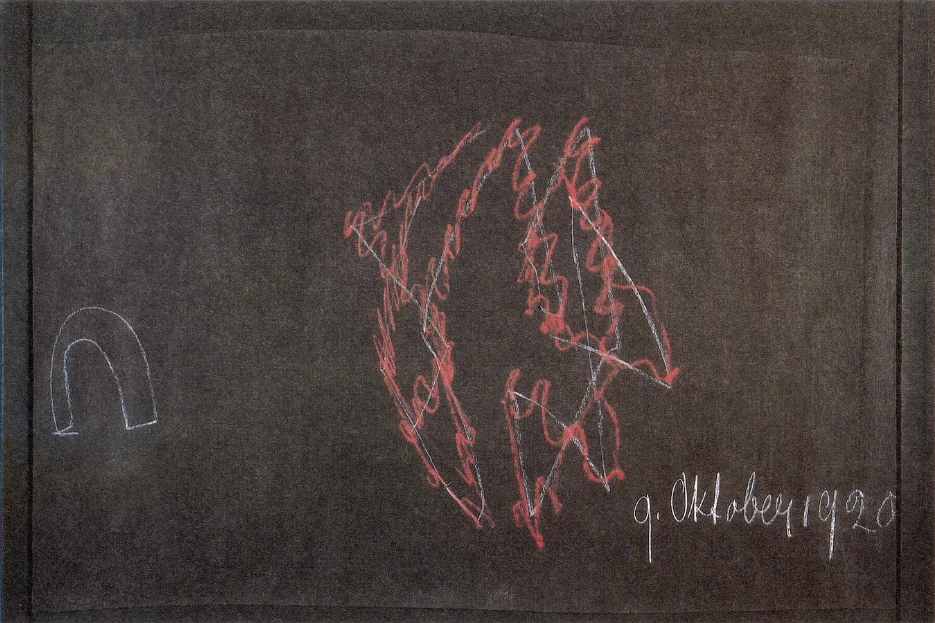
[ 7 ] One can bring this about—one need not do so; in simple cases, one can achieve it on one’s own; one can always find the point that Goethe describes as the one beyond which nature reveals its manifest secret, provided one follows the appropriate paths— one can induce this state by having a person ingest too much phosphorus or by treating them with a strong dose of phosphorus. One can, so to speak, separate from this “I”-activity that which is the very essence of the “I” within the body, so that this “I”-activity would be carried out within the body as if in a mirror image. And what would be the result? The consequence would then be that, precisely under the influence of the forces of phosphorus, blood activity would exceed its normal level, particularly in the skeletal system, and a kind of hyperemia would, so to speak, set in within the skeletal system. In this way, through this hyperemia, the tissue adjacent to the bone cartilage—which is affected by such excessive vascular activity—would proliferate, and the process of bone calcification would be counteracted.
[ 8 ] I have described to you what could happen as a result of a treatment in which a person receives too much phosphorus—that is, in which the function that phosphorus can perform in the human organism is carried out too intensely. But those forces that exist out in the world, which are anchored in the individual minerals, are also present in the human being, so to speak, in another form—let us say, in a supersensible form—and they can indeed be active within the human being. In a certain sense, the human being is a microcosm. When these forces—which are otherwise anchored in phosphorus out in nature—act within the human being, as can be the case especially in early childhood, the disease of rickets develops. And by gaining this insight into the connection between the human being and the surrounding world, we come to realize that the development of rickets in the human organism is a process similar to that which takes place in the formation of phosphorus out in nature. I am presenting this to you here in aphoristic form—and, of course, in a way that does not connect all the links in a chain of evidence—to indicate, in a specific case, the general direction in which Spiritual Science seeks to understand this connection between the human being and the rest of the world.
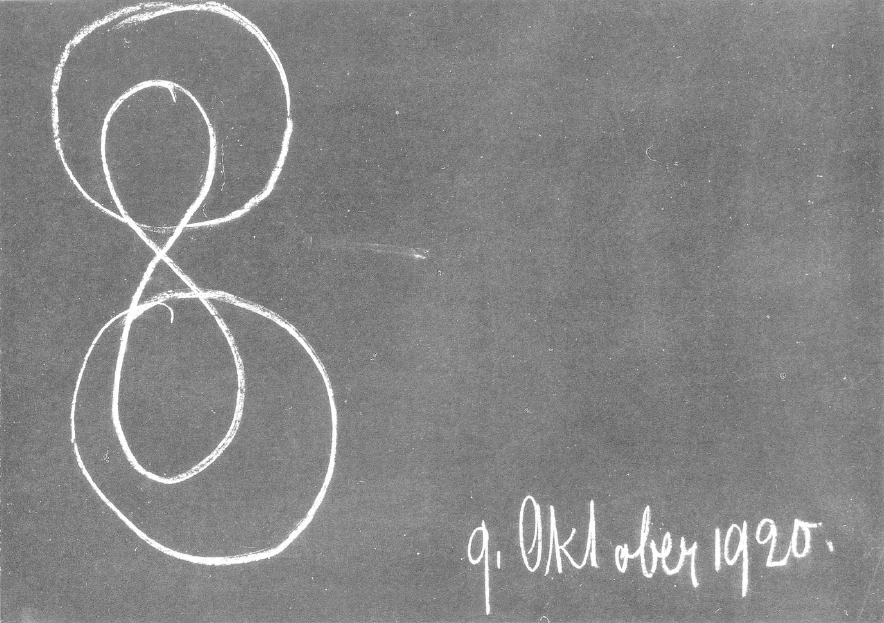
[ 9 ] But we can go further. Earlier today I showed you how these systems interact in a way I described by placing the limb-metabolic system on one side, the nervous-sensory system on the other, and the balancing rhythmic system alongside them, so that these two systems work together (see diagram). You see, it is actually the case that whatever acts irregularly or harmfully in the limb-metabolic system is precisely what promotes health in the head system. That is why we always have certain functions in the human head system that stem from phosphorus—but from a very small amount of phosphorus found in the human brain. This phosphorus activity—as you come to understand it, in the way I have just described—acts in the metabolic limb system to inhibit the proper breakdown processes involved in calcification. But these phosphorus processes must be present in the brain, where this breakdown is to occur, and where, above all, this breakdown must continue to operate continuously. In other words: Because the phosphorus process is present in the brain, we have—I would say—a constantly nascent state in the brain, a kind of incipient rickets. Our brain activity is based precisely on the fact that bone formation is constantly striving to occur, yet this bone formation is constantly prevented once the skull has been properly formed around the human brain. In the human brain—as is evident from the human perspective—there is a constant striving toward bone formation. But this bone formation is completed at a certain age. Then this bone-forming activity is halted. So we really have here a pathogenic factor that is balanced out from the other side, from the other pole of the organism; we have a constant tendency toward rickets.
[ 10 ] Now, what is remarkable is that a rhythm such as the one observed here in human beings is also present throughout the rest of nature—albeit in a certain sense in reverse. When we consider the remarkable significance of phosphorus for the human brain, we must say to ourselves: As phosphorus is absorbed, it is processed all the way up to the head. There, within the human organism itself, it undergoes transformations. It follows the direction of human growth. It integrates itself into this direction of human growth. And this integration, in a sense, reduces its effectiveness to a minimum; it dilutes it, and in this diluted state, it acts in such a way that the rickets of the head, which has been halted, can serve as the very vehicle for those soul-spiritual processes that must be carried out through the mediation of the human head.
[ 11 ] Now, something peculiar becomes apparent: if one introduces very small doses of phosphorus to the human being in the proper way—rather than somewhat larger, ordinarily perceptible doses—then, in a sense, one has already achieved something different in the functions of phosphorus. When these small doses are introduced into the human organism, they act within the person in the same way that phosphorus acts in the human brain. They act there—and throughout the rest of the organism—as small doses that halt the process of rickets once it has begun in children. Therefore, in this case, phosphorus in small quantities—in the smallest of doses—is a remedy for rickets, and in a broader sense, Phosphorus is, in general, a remedy for everything that causes the “I-structure”—the physical “I-structure,” which I have drawn there (see illustration on page 57, in white) beneath the red—which, through illness, has become emancipated from the actual soul activity within the organism, to be brought back to soul activity; that is to say, restores it to its normal state.
[ 12 ] I had to present you with a very complex discussion of human nature so that you could see what actually underlies the dispute between allopaths and homeopaths. In certain areas, one might say, what comes to light in homeopathy is quite striking, as in this case I have outlined for you. With certain small doses of phosphorus or sulfur—in short, of something combustible (I will return to this later)—it is entirely possible to cure rickets, as well as other inflammatory conditions in general, which arise from a blood circulation that is, I would say, emancipated from the “I”-essence.
[ 13 ] You see, if one is willing to view human beings in the way that Spiritual Science guides us to do, then—as in this case—the connection between human beings and the external inorganic natural world also becomes clear. And what I have outlined here can certainly be extended to other inorganic substances. One simply has to go into detail. And it is precisely this approach—bringing together pathology, physiology, and therapy—that requires a dedicated study of both the inner and outer worlds. We can call phosphorus and sulfur combustible substances. These combustible substances—if one truly broadens the scope of consideration—turn out to be those that act in a manner quite similar to what has just been described regarding phosphorus. They act in such a way that they, so to speak, reinsert the emancipated “I”-structures back into “I”-activity.
[ 14 ] Certain salts have the opposite effect—that is, not those that are combustible, but those that dissolve in water and precipitate again when the water cools. These salts—carbonic acid salts and others—act in such a way that they, conversely, cause an excessive binding of the spiritual-soul aspects, namely the activity of the “I,” to the physical body; that is, they do not detach the physical body, but rather, in a sense, press the spiritual-soul aspects too strongly into it. And they can therefore be used as remedies when, for whatever reason, this connection is too loose. Thus we can say: If we understand what actually happens when we introduce a substance into the organism—if we understand how it influences the entire organism—then we understand how we can counteract any process that is proceeding abnormally and must be counteracted.
[ 15 ] Such salt-like substances—that is, soluble substances—are particularly effective for certain processes, such as the one underlying the disease formerly known as pulmonary consumption. For what pulmonary tuberculosis is requires counteracting a process in the human organism that is the opposite of the process that takes place when a salt dissolves in a solution. And so the point is that the expansion of one’s understanding across the entire human being leads one into the context of the human being’s relationship with his or her entire external, worldly environment.
[ 16 ] What I have just explained—I can only ever speak in terms of examples in these supplementary aphoristic reflections—can be further illustrated by other examples. Let us take examples from somewhere—we can, I would say, find such examples everywhere—but let us take examples from a field that can simultaneously introduce us to the entire connection between the spiritual-soul and the physical. What is mediated by the nervous-sensory system manifests itself in human life in such a way that, from waking to falling asleep, it constitutes a person’s conscious life. So we can say quite literally: The head system is the expression of a person’s conscious life. But the metabolic-limb system is not, in the same way, the expression of a person’s conscious life. We go through the world, so to speak, with a conscious head, but with unconscious limbs. These limbs only become conscious when they are touched in some way, when they suffer an injury, and so on. So we can say: The normal state for the head—for the nervous-sensory system—is consciousness while awake, whereas for the opposite system of the human being, it is unconsciousness.
[ 17 ] But in a certain way, it is possible to artificially create a kind of awareness in a person for the other aspect—the metabolic-limb system. And this happens, for example, through massage. What, then, does massage consist of? It consists of using external measures to bring into consciousness what would otherwise remain unconscious. The point is that this massage can help improve a connection that is too weak between the spiritual-soul aspect and the physical aspect. Let us suppose that a person is constitutionally so organized that, from the perspective of their spiritual-soul aspect, they have too little inclination to fully infuse this spiritual-soul aspect into their metabolic-limb system. In that case, one supports the physical aspect of this metabolic-limb system by massaging it—that is, by raising it to a certain degree from the state of the spiritual into the state of consciousness. One supports this system in its effectiveness, and thereby brings about a stronger flow of the spiritual-soul aspect through this system. And once one understands how this metabolic-limb system functions—knowing, for example, that what pulses in the arms and hands, that which pulses there as a spiritual-soul element, continues inwardly and governs the human being’s internal metabolism—one will also understand what it means to induce partial consciousness through massage of the arms and hands. It means promoting the spiritual-soul aspect within the metabolic system—but specifically within that part of the metabolic system that, working inwardly within the human being, builds up the body, facilitates digestion, absorbs nutrients, and carries out digestion in a way that promotes nutrient absorption.
[ 18 ] So one can say: If it is found that a person suffers internally from metabolic disorders—but metabolic disorders that relate, for example, to the fact that their food is not properly assimilated into the body, or that the processing of this food in the body’s building processes is not proceeding properly— in short, that the internal metabolism is not functioning properly, then in certain cases—one must, of course, have detailed knowledge to assess this correctly—massaging the arms and hands can be helpful. This is based on the fact that the spiritual-psychic aspect is supported in its effectiveness through the degree of consciousness brought about by the massage. If one massages the legs and feet, something different will occur. That which permeates the legs and feet as a spiritual-psychic force is, in turn, organically connected to excretory processes and processes of breakdown. Therefore, if digestion is not functioning properly—such that the excretory processes are not proceeding as they should—a massage of the legs and feet may, under certain circumstances, provide some relief.
[ 19 ] But you see, when one examines the nature of medicine in this way through the lens of Spiritual Science, one does not merely accomplish such things by chance through empirical observation—whenever they happen to present themselves to empirical inquiry—but one can consciously work toward understanding the relationship between physiology, pathology, and therapy in a wide variety of fields. As I said, I would like to share these thoughts with you simply to shed light on the directions we must take. And I am well aware of how much such matters may strike one as surprising, since, of course, not all the details can be presented here.
[ 20 ] If we take, for example, a disease that can be a source of great concern even to physicians—let us say, for instance, diabetes mellitus—then we must once again consider the connection between the spiritual-soul aspects—specifically, the conscious spiritual-soul aspects, the “I”-permeated spiritual-soul aspects—and the physical vehicle of this “I”-activity. However, what occurs here is different from the case mentioned earlier today. Let us assume that this “I”-activity becomes excessive within the human organism. It expands beyond its proper measure. Then abnormal excretory processes can take place, such as those observed in a diabetic. So here we are dealing, so to speak, with an exaggerated “I” activity within the organic system itself. We are dealing with the “I” sinking too deeply into the organic system, so that this deep sinking drives out precisely what appears in the case of the diabetic.
[ 21 ] Now we can once again turn our attention away from what is happening within the human being and direct it toward what is happening in the human external world. In the external world, we have plants, which, as we recognized this morning, develop a process from the bottom up in a certain way—a process that humans develop from the top down. In fact, what I would describe as hypertrophic “I”-activity working its way into the organism in the case of diabetes proceeds in the opposite direction of plant growth. If we then identify the precise function in the growing plant, we may be able to establish a relationship between what acts downward in the diabetic and what acts upward in the plant. We need only understand the plant in such a way that we say to ourselves: The plant is a being—it is also physical; it grows, it reproduces, and thus it has an etheric body. It also has an etheric body from the perspective of Spiritual Science. But it does not attain inner soul mobility; thus, it has no astral body, nor does it have any “I” activity. Yet it grows toward “I” activity and astral activity. What the plant unfolds upward, the human being unfolds from above downward.
[ 22 ] If we are now able to observe what is actually taking place within the plant as it grows in the direction opposite to that in which the human being is currently developing his or her “I”—from top to bottom—we find that what arises in the plant can have an inner relationship precisely to this inner “I” activity, in that it also has something to do with combustibility. I have previously drawn attention to combustible substances. Now we see combustible, volatile, and nearly combustible physicality emerging from the plant in the form of essential oils. When we observe the formation of essential oils in certain plants, it becomes clear from the kind of consideration I have just outlined that this is the opposite activity to that which, for example, exerts the “I” activity that has been forced into the human organism—an activity that causes a person to develop diabetes. And if one brings to the human being—in the right way—that which exists in the external world as its opposite, one can counteract diabetes.
[ 23 ] One must proceed in such a way that, in this case, one truly counteracts the condition; that is to say, one adds, for example, essential oils or even the plants themselves—which produce essential oils—to the bathwater, and allows the person to bathe in such waters. In this way, the forces that the plant releases in the essential oils act from the outside in, counteracting the forces that cause dysentery. We can help people in this way precisely through such baths.
[ 24 ] I am simply citing a few examples from the wealth of material that can be presented—many of which I presented to medical specialists this past spring. I mention this here only in terms of principle, but you can see from this how the medical field is gradually being made more rational, so that it is demonstrated that one truly sees the process within the human being and the process in the external natural world, and sees how these two processes either support, sustain, or counteract one another—that is, how a process within the human organism can be halted and how healing can be pursued. If we expand this line of thought, we proceed ever further—I would say—in our understanding of the physical human being and its connections to the spiritual-soul human being. As you know, the problem of heredity plays a major role in the modern, scientifically based view of medicine. Yet this problem of heredity is consistently treated in a very abstract and superficial manner. Through external science, it can be connected only to a limited extent with what actually operates within the human being. For the human being is in fact—and now I would like to present to you something that must be derived from a wealth of anthroposophical research, but which I would like to present as a conclusion—formed out of the entire rest of the world that belongs to him, both as the earthly world and as the extraterrestrial world. And he has been formed in a distinct way.
[ 25 ] We find, for example, that the female organism is shaped—let us say—by nature or by the cosmos in such a way that it possesses more of those forces that are, so to speak, less bound to the forces of the Earth. There is something strongly extraterrestrial present in the female organism. In the male organism, on the other hand, the forces that are connected to earthly life are predominantly developed. This is not usually taken into account to such a great extent in everyday life, but it does come into play in the context of reproduction. Here, the point is that the forces active in the female organism that contribute to reproduction are, in fact, the transmission of that which, as an extraterrestrial element, becomes integrated into the entire human being. But that which draws the human being down into the earthly world is primarily organized within the male organism. And now let us consider that aspect of the human being which is actually present within him through his earthly environment. The most striking feature within him that stems from his earthly environment is, of course, the activity of the “I.” It is precisely this activity of the “I” that gives the human being’s earthly development its full meaning. We must evolve from other worlds into the earthly world in order to be able to fully develop the “I”-activity in our spiritual-soul life. This “I”-activity—I have shown you how it is bound to the framework of forces mediated through the blood. We must therefore say: That which is primarily organized into the blood, that which primarily works toward “I”-activity, is brought about through procreation by the male personality; that which organizes the more “extraterrestrial” aspect of the human being—which must first be permeated by “I”-activity—comes more from the female side.
[ 26 ] Thus, we find the male and female forces interacting in this way in reproduction, and we can only gain a true understanding of heredity once we recognize this. First, the male influence acts upon the female seed, the female germ. And this female germ possesses a certain degree of autonomy within the female organism. We must note that when we are dealing with a fully developed female organism, this “foreign” element acts primarily within the rest of the female organism. In that part of the female organism that initiates germ formation, this external influence does not participate—and in particular, it does not participate after conception. Thus, the female germ that has undergone conception possesses a certain degree of independence; that is, it transmits—in a certain way—its role as a mediator of “I”-activity to the offspring. When one knows these things, one can apply them in such a way that phenomena in the external world appear as if to illustrate what one has first gained through spiritual vision. Through spiritual vision, one gains the insight that something extraterrestrial is indeed anchored in the female organism, that the earthly element—which is specifically bound up with blood activity—is mediated by the male organism, and that through this mediation the female germ acquires a certain independence, and, as it were, separated from the rest of the extraterrestrial female organism, develops through fertilization.
[ 27 ] One has such a process—which is recognized on a mental and emotional level—in the background when attempting to explain a phenomenon as remarkable as that of hemophiliacs, or those who suffer from hemophilia. Here, the remarkable fact comes to light that there are people who suffer from a lack of blood clotting to such an extent that, at the slightest physical injury—often without any such injury being detectable—they bleed profusely and are thus prone to bleeding to death. This hemophilia has something highly peculiar about it: Men descended from families of hemophiliacs do not develop the bleeding disorder if they are born to women who come from families without hemophilia; as men, they do not inherit this condition. However, when women have children who come from families of hemophiliacs, they themselves do not inherit the condition; on the other hand, the men descended from them do develop the condition. This means that hemophilia is transmitted through the woman. This points us to the independence of the germ I just spoke of. And this external manifestation, in a sense, illustrates what we gain through spiritual insight.
[ 28 ] Well, today I have, so to speak, merely presented to you in narrative form a few things that follow this line of thought. I have shown you, on the one hand, how one can use spiritual insight to look into the nature of the human being—into the concrete nature of the human being, into the processes of building up and breaking down, into the processes of healing and illness, which are actually in constant interaction with one another and between which a balance must be sought. I have shown you how, through spiritual insight, one can discern the interrelationship between the human being and their environment, and how this allows one to bridge the gap between physiology and pathology to therapy. And finally, I sought to illustrate to you, using a specific example—I chose an extreme case, that of hemophilia and the patterns of inheritance in hemophilia—that when one observes nature in the right way in those instances where nature reveals its obvious mystery, one finds everywhere an illustration of what has first been recognized through Spiritual Science. So there is no room for the objection that goes something like this: that someone who cannot see into the spiritual world has no way at all of finding any evidence for what the Spiritual Science scientist asserts. No, that is not the case; rather, the point is that one can indeed accept the findings of Spiritual Science, I would say, on the one hand, without dogmatism or blind faith in authority, and on the other hand, without preconceived, prejudiced skepticism. One simply accepts them. At first, one does not say, “I believe them”—nor does one recklessly reject them; rather, one accepts them and tests them against external reality.
[ 29 ] You will see that when you take what at first seems paradoxical—and often even fantastical—to you—that is, when it is brought down from the spiritual world through supersensory perception in spiritual research—and apply it to life, and ask life to confirm it in the points that really matter, You will find that everywhere, empirical evidence provides confirmation for what spiritual research discovers. Those people who today reject the insights of the spiritual world under the pretext that they cannot see into it are like the person who sees a piece of iron shaped in this way (it is drawn) and says: “I’ll use this to shoe my horse; it’s a horseshoe.” — But the other person says to him: “It’s a shame to use that to shoe the horse, because it possesses magnetic forces; it’s a magnet”—and when he is told in reply: “I see no magnetic force; to me, it’s a horseshoe.”
[ 30 ] Yes, the fact is that the spiritual is present in all material things, and that we are now living in an age in which this spiritual must be sought. Anyone who, while investigating matter, seeks to ask questions without seeking the spirit is like someone who uses a horseshoe or a magnet to shoe a horse—someone who therefore does not know how things are actually to be applied in the material world. As fragmentary and aphoristic as what I was able to say to you today—merely as a supplement to the lecture—may have been, it was intended only to point the direction in which medical education in particular must proceed in the future. For medical education is so intimately connected with the social order. Just as the human world can only become socially healthy when spiritual insight is incorporated into social judgment, so too can our medicine only become healthy when spiritual insight is incorporated into it.
[ 31 ] As you can see, we are not dreamers in any field. At the very least, we do not want to be amateurs in any field. This is serious research—only research that has developed the principle which is widely applied today. When a hypothesis is put forward here or there today, people say it provides a convenient tool for understanding phenomena. In mathematics, one even goes so far as to devise such hypotheses or lines of thought. Spiritual Science is founded on the principle that no effort must be spared to achieve everything necessary for the progress of human life, and that no effort must be spared in directing our energies toward this necessity. And today, from the course of human development, we clearly hear the signs of the times telling us: We can no longer move forward with the old guidelines.
[ 32 ] Well then, this Dornach came into being solely because it is no longer possible to make progress within the old guidelines, and the aim here is to seek out what the new guidelines are. We have specialized enough. Now the task at hand is to bring these individual specializations back together again. Perhaps you will see in this very course how spiritual forces are to flow from a single center to bring these individual specializations together. To achieve this, however, we must abandon those comfortable paths that are so often sought today. But the fruits will lie, above all, in the direction of human progress. Precisely for this reason, I would have preferred, above all else, that everything that can be said here from a perspective of Spiritual Science had been said by specialists. And so I was not at all pleased that I myself had to speak here before you specifically on one of the most important fields—the field of medicine. But since things have turned out this way, there was simply no other option, and you will have to make do with it. However, what would have been essential under any circumstances—whether a specialist or a general observer had presented the necessary points here—would have been to show that even in this difficult field of medicine, progress is possible only through the inspiration provided by spiritual research. It would have been demonstrated, I might say, quite vividly, if someone had emerged in this field as well—someone who, drawing from the traditions of the age and from all that the age itself could provide to physicians, yet at the same time possessing an open mind toward Spiritual Science—could have shown: One can stand at the very pinnacle of today’s medical science—official medical science—and yet be such a skilled practitioner of Spiritual Science that one can only believe one can even endure this medicine today if one can examine it through the lens of Spiritual Science. I do not know whether this became sufficiently clear to you through the fact that it had already transpired that I had to replace the specialist physician. But I hope there will be more opportunities to demonstrate—in a way that also makes sense to the times given the external circumstances—that medicine, too, can only be led into the future if the spirit penetrates it as it is intended, as it is at least strived for here at this Goetheanum, when the spirit of Goethe enters into medicine.