

Cooperation Between Doctors and Pastoral Caregivers
Pastoral Medicine Course
GA 318
8 September 1924, Dornach
Translate the original German text into any language:
Versions Available:
Pastoral Medicine Course, tr. SOL
Erster Vortrag
First Lecture
[ 1 ] Meine lieben Freunde! Wir haben in diesem Kurse zum erstenmal vereinigt die Mitglieder zweier geistiger Wirkungskreise, und diese Vereinigung bedeutet etwas ganz Besonderes. Daher wird schon heute notwendig sein, daß wir uns über den Sinn dieser Vereinigung zunächst aus dem, was in diesem Kurs den Inhalt bilden soll, verständigen müssen. Zunächst möchte ich nur darauf aufmerksam machen, daß dieser Kurs vielleicht wie kein anderer ein Beispiel dafür sein wird, wie durch die besondere Gestaltung des Geisteslebens in unserer Zeit alte Überlieferungen, altes Herkommen erneuert werden muß, denn dasjenige, was unter dem Namen Pastoralmedizin gepflegt worden ist, hat eigentlich im Grunde seinen Inhalt verloren. Wir werden das im Laufe der Betrachtungen sehen. Dagegen wird gerade aus den Untergründen unserer Zeit heraus sich ergeben eine ganz besonders bedeutungsvolle Aufgabe, die wiederum, indem sie zusammengefaßt wird, in einer Betrachtung den Namen Pastoralmedizin schon tragen darf. Wir haben strenge darauf gesehen, daß im wesentlichen in diesem Kurs vereinigt seien wirkliche Theologen und solche Persönlichkeiten, welche wirkliche Ärzte sind oder werden, Ärzte in dem Sinn, daß wir bei ihnen diesen Namen nach der Aufgabe der Medizinischen Sektion des Goetheanums verantworten können. Wie dieser Sinn zu gestalten ist, das alles wird gerade in diesem Kurs zur Besprechung kommen. Einzelne Ausnahmen haben wir allerdings zugelassen, aber eben nur wenige, und diese sind gut begründet innerhalb desjenigen, was Überzeugung der medizinischen Sektion des Goetheanums ist. Es wird sich vor allen Dingen darum handeln, daß Sie, liebe Freunde, sowohl von der theologischen wie von der medizinischen Seite her gerade über das in völlig klaren Begriffen leben, was im Sinne einer neuen Pastoralmedizin das Zusammenarbeiten der Theologen mit den Medizinern möglich macht. Es ist ja von einem solchen Zusammenarbeiten öfter gesprochen worden und es ist auch bemerklich gemacht worden, wie gerade die anthroposophische Bewegung auf eine Zusammenarbeit rechnen müsse. Aber dabei sind doch Dinge zutage getreten, die gerade ihre Rektifizierung innerhalb dieses Kurses werden erfahren müssen. Es darf das Zusammenarbeiten, auf das hingewiesen worden ist, durchaus nicht so aufgefaßt werden, meine lieben Freunde, als wenn damit gemeint wäre ein Hineindilettantieren von der einen Seite in die andere Seite. Es kann sich durchaus nicht darum handeln, daß die Theologen Heiler werden, oder daß die Heiler irgendwie Theologen werden. Natürlich beide, insofern sie Heiler oder Theologen sind. Um ein Zusammenarbeiten, um ein In-die-Hand-Arbeiten handelt es sich. Dagegen wird gerade dieser Kurs einen großen Wert darauf legen müssen, daß nun ja nicht etwa alles ins Chaotische dadurch verzerrt werde, daß, ich weiß schon nicht zu was, der Theologe versucht, in alles mögliche Medizinische hinein zu dilettantieren, das doch nicht auf seinem Wege liegen kann. Und umgekehrt soll sich der Arzt in unserem Sinne bewußt werden, welche Stellung er gegenüber den Theologen einzunehmen hat. Daß dies auf beiden Seiten, auf theologischer und medizinischer, völlig durchschaut wird, davon wird außerordentlich viel abhängen. Nun, es ist das zutage getreten, daß zum Beispiel auch gemeint worden ist: Ja, der Theologe muß sich doch medizinische Kenntnisse aneignen. — Kenntnisse auf irgendeinem Gebiet kann man sich immer aneignen, es wird sogar immer gut sein, Kenntnisse sich anzueignen. Aber dasjenige, um was es sich handelt, ist, daß wirklich klar und deutlich eingesehen wird: zum Arzt, zum Heiler gehört nach Denken, Fühlen und Wollen des Menschen die spezifische ärztliche Vorbildung, und es sollte niemand glauben, mit medizinischen Kenntnissen in die Welt eingreifen zu können, der nicht diese spezifische medizinische Vorbildung hat, auch wenn er Theologe ist. Und umgekehrt muß der Arzt einen ganz besonderen Begriff von seinem Beruf entwickeln und wird begreifen lernen müssen durch die Pastoralmedizin, daß ein Wesentliches damit gesagt ist, wenn gesagt wird: dem Priester gehört die Opferflamme, dem Arzt der Merkurstab. Und durch das Zusammenwirken von Opferflamme und Merkurstab ist allein ein gedeihliches Wirken möglich. Man soll nicht mit der Opferflamme heilen und mit dem Merkurstab Kultus zelebrieren wollen. Aber man soll einsehen, daß beides Gottesdienst ist. Und je mehr man einsieht, daß beides Gottesdienst ist, desto besser wird das Zusammenarbeiten, wenn der Arzt Arzt, der Priester Priester bleibt, in entsprechender Weise heilsam in die Welt eingreifen. Es darf unsere anthroposophische Bewegung nicht der Boden werden, auf dem alles chaotisch durcheinandergeworfen wird, denn dadurch würde der Ernst leiden, der Ernst, den wir gerade so stark innerhalb der anthroposophischen Bewegung pflegen sollten. Man kann durchaus allgemein wissen, wenn ich ein drastisches Beispiel gebrauche, was ungefähr geschieht, wenn eine Fußoperation vollzogen wird; aber man sollte nicht glauben, daß man gleich eine Fußoperation vollziehen kann. So aber sollte man es halten mit allem Medizinischen. Anthroposophie darf vor allen Dingen nicht werden in irgendeiner Weise eine Propaganda für Kurpfuscherei. Sie darf es auch nicht werden, indem etwa 'Theologen Kurpfuscher werden. Es muß schon eben dies ganz deutlich klargelegt werden; und so wird dasjenige, was von der Medizinischen Sektion des Goetheanums ausgehen wird, im allerstrengsten Ernste handhaben dasjenige, was den Menschen im anthroposophischen Sinne als Heiler vor die Welt hinstellen kann, aber das muß auch eine reale Einrichtung werden, und es wird notwendig sein, daß die Stellung desjenigen Arztes, der im Sinne der Medizinischen Sektion am Goetheanum wirken will, in eindeutiger Weise zu dieser Sektion bestimmt wird. Es wird auch nicht anders gehen, als daß diese Einrichtung eine ganz reale wird, so daß es schon dahin kommen kann, daß in einem gewissen Sinne künftig Arzt ein solcher sein kann, der eben Arzt in der Richtung der Medizinischen Sektion am Goetheanum ist. Nun, meine lieben Freunde, damit wird auch gerechtfertigt sein, daß wir vermieden haben, Heiler, die nicht Ärzte sind, zu diesem Kurs zuzulassen. So daß diejenigen, die heute als Ärzte hier sitzen, durchaus auch im Sinne der Welt die Ärzteschaft in Anspruch nehmen können - im wesentlichen, geringe Ausnahmen abgerechnet.
[ 1 ] My dear friends! In this course, we have brought together for the first time the members of two spiritual circles, and this union is something quite special. Therefore, even today it will be necessary for us to reach an understanding about the meaning of this union, starting with what is to constitute the content of this course. To begin with, I would simply like to point out that this course will perhaps, more than any other, serve as an example of how, through the unique shaping of spiritual life in our time, old traditions and customs must be renewed; for what has been cultivated under the name of “pastoral medicine” has, in essence, lost its substance. We will see this as our reflections unfold. In contrast, a particularly significant task will emerge precisely from the underlying currents of our time—one that, when synthesized, may already bear the name “pastoral medicine” in a broader context. We have taken great care to ensure that this course essentially brings together genuine theologians and individuals who are, or will become, genuine physicians—physicians in the sense that we can justify this title for them in accordance with the mission of the Medical Section of the Goetheanum. How this concept is to be shaped will be the subject of discussion in this very course. We have, of course, allowed for a few exceptions—but only a few—and these are well-founded within the convictions of the Medical Section of the Goetheanum. Above all, the aim will be for you, dear friends, to gain a clear understanding—from both the theological and the medical perspectives—of precisely what, in the sense of a new pastoral medicine, makes collaboration between theologians and physicians possible. Such collaboration has, of course, been discussed frequently, and it has also been pointed out that the anthroposophical movement, in particular, must count on such collaboration. Yet certain issues have come to light that will need to be clarified within the framework of this course. The collaboration that has been referred to, my dear friends, must by no means be understood as if it meant one side dabbling in the other’s field. It is certainly not a matter of theologians becoming healers, or of healers somehow becoming theologians. Of course, both—insofar as they are healers or theologians. What is at stake is collaboration, working hand in hand. On the other hand, this course in particular will have to place great emphasis on ensuring that everything is not distorted into chaos simply because—I don’t even know what—the theologian tries to dabble in all sorts of medical matters that simply cannot be part of his path. Conversely, the physician, in our view, must become aware of the position he is to take vis-à-vis theologians. An extraordinary amount will depend on this being fully understood on both sides—theological and medical. Well, it has become apparent that, for example, it has also been suggested: Yes, the theologian must, after all, acquire medical knowledge. — One can always acquire knowledge in any field; indeed, it is always good to acquire knowledge. But what is at stake here is that it be clearly and unambiguously understood: according to human thought, feeling, and will, the physician—the healer—requires specific medical training, and no one should believe that they can intervene in the world with medical knowledge if they lack this specific medical training, even if they are a theologian. Conversely, the physician must develop a very special understanding of his profession and will have to learn through pastoral medicine that there is a profound truth in the saying: “To the priest belongs the sacrificial flame; to the physician, the caduceus.” And only through the interplay of the sacrificial flame and the caduceus is fruitful work possible. One should not seek to heal with the sacrificial flame or to celebrate worship with the caduceus. But one must recognize that both are acts of worship. And the more one recognizes that both are acts of worship, the better the collaboration will be—provided the physician remains a physician and the priest remains a priest—as they intervene in the world in a healing manner appropriate to their respective roles. Our anthroposophical movement must not become a breeding ground where everything is thrown into chaotic disarray, for this would undermine the seriousness—the very seriousness that we should be cultivating so strongly within the anthroposophical movement. To use a drastic example, one can certainly have a general understanding of what roughly happens when foot surgery is performed; but one should not believe that one can immediately perform foot surgery oneself. The same principle should apply to all matters of medicine. Above all, anthroposophy must not, in any way, become a form of propaganda for quackery. Nor must it become so by, for example, “theologians becoming quacks.” This very point must be made absolutely clear; and thus what emanates from the Medical Section at the Goetheanum will, with the utmost seriousness, address the question of who can present themselves to the world as healers in the anthroposophical sense—but this must also become a concrete institution, and it will be necessary for the status of any physician who wishes to work in the spirit of the Medical Section at the Goetheanum to be unambiguously defined in relation to this Section. There is no other way but for this institution to become a very real one, so that it may well come to pass that, in a certain sense, a physician in the future will be one who is precisely a physician in the tradition of the Medical Section at the Goetheanum. Well, my dear friends, this will also justify the fact that we have avoided admitting healers who are not physicians to this course. Thus, those sitting here today as physicians can certainly claim to be part of the medical profession in the eyes of the world—essentially, with few exceptions.
[ 2 ] Damit haben wir uns vielleicht über den einen Punkt, meine lieben Freunde, verständigt. Aber der Punkt wird, indem ich ihn zunächst andeutend, mehr verwaltungsmäßig besprochen habe, seiner Rechtfertigung nach, durchaus Gegenstand der Pastoralmedizin selber sein. Als vor einiger Zeit von theologischer Seite die Anregung ausgegangen ist, für die Theologen etwas Medizinisches zu bieten, da konnte ich nicht anders als diese Anregung beantworten damit, daß ich sagte: Nun, ich werde einen Kurs über pastorale Medizin halten, daran können ja die Theologen teilnehmen. Und so ist denn dieser Kurs über Pastoralmedizin von der Medizinischen Sektion des Goetheanums veranstaltet, und die Theologen nehmen daran teil. Wir müssen über die ganze Struktur dieser Einrichtung hier völlig im klaren sein.
[ 2 ] So, my dear friends, we may have reached an understanding on this one point. But since I have discussed it—at first only in passing and in more of an administrative sense—this point, in terms of its justification, will certainly be a subject of pastoral medicine itself. When, some time ago, a suggestion came from the theological side to offer something medical to theologians, I could not help but respond to this suggestion by saying: Well, I will give a course on pastoral medicine, and theologians are welcome to participate. And so this course on pastoral medicine is being organized by the Medical Section of the Goetheanum, and theologians are taking part in it. We must be fully clear about the entire structure of this institution here.
[ 3 ] Nun, meine lieben Freunde, Pastoralmedizin war zuletzt eigentlich nicht ein Fach innerhalb der medizinischen Fakultät, sondern eigentlich innerhalb der theologischen Fakultät; und diese Pastoralmedizin, die auf den theologischen Fakultäten gepflegt worden ist, enthielt eigentlich nichts spezifisch Medizinisches. Oder ich möchte fragen: Hat einer der akademisch gebildeten Ärzte, die hier sind, innerhalb seines Fachstudiums auf der medizinischen Fakultät selbst Pastoralmedizin lernen können? Ich bitte, die Hand zu heben, wer es hat. Es kommt im Lektionskatalog der medizinischen Fakultät nicht vor, dagegen spielt es schon eine Rolle in katholisch-theologischen Fakultäten. Innerhalb evangelischer Fakultäten spielt es kaum mehr eine Rolle, aber innerhalb der katholisch-theologischen Fakultät spielt die Pastoralmedizin eine Rolle, und das aus gutem Grunde. Nur enthält sie nichts Medizinisches. Sie enthält im wesentlichen Folgendes: Erstens dasjenige, was der Seelsorger innerhalb der Seelsorge braucht, um seelsorgerisch wirken zu können, nicht nur bei denjenigen Menschen, die als Gesunde seiner Seelsorge anvertraut sind, sondern auch bei denjenigen, die als Kranke seiner Seelsorge anvertraut sind. Aber für die Seelsorge hat er zu wirken; und da ist schon eine Nuance verschieden, ob man für die Seelsorge eines Kranken, besonders eines Schwerkranken zu wirken hat, oder ob man für die Seelsorge eines Gesunden zu wirken hat. Da handelt es sich darum, wie man die Seelsorge zu gestalten hat bei Kranken, eventuell Schwerkranken, wie man sich da zu verhalten hat. Dagegen habe ich im Grunde genommen noch kein Buch über Pastoralmedizin kennengelernt, in dem nicht ausdrücklich und wiederholt gesagt wird, daß zu den ersten Pflichten des Seelsorgers dies gehört, daß er zunächst mit Rat und Tat beistehe, daß der richtige Arzt gefunden werde, daß er aber ja sich zu enthalten habe jedes ärztlichen Eingriffes. Ich berichte in diesem Falle.
[ 3 ] Well, my dear friends, pastoral medicine was not actually a discipline within the medical school until recently, but rather within the theological school; and this pastoral medicine, which was taught in the theological schools, did not actually contain anything specifically medical. Or let me ask: Has any of the academically trained physicians here been able to study pastoral medicine as part of their degree program in the medical school? Please raise your hand if you have. It does not appear in the medical school’s course catalog, whereas it does play a role in Catholic theological faculties. It hardly plays a role anymore in Protestant faculties, but within the Catholic theological faculty, pastoral medicine does play a role—and for good reason. However, it contains nothing medical. Essentially, it consists of the following: First, what the pastoral caregiver needs in the course of pastoral care to be able to provide pastoral support—not only to those who, as healthy individuals, are entrusted to his care, but also to those who, as the sick, are entrusted to his care. But he must minister; and there is a subtle difference between ministering to a sick person—especially one who is seriously ill—and ministering to a healthy person. The question is how to conduct pastoral care for the sick, possibly those who are seriously ill, and how one should conduct oneself in such situations. In contrast, I have not, in fact, come across a single book on pastoral medicine that does not explicitly and repeatedly state that one of the pastor’s primary duties is to provide advice and assistance in finding the right doctor, but that he must refrain from any medical intervention. I am reporting on this case.
[ 4 ] Ein zweites wesentliches Kapitel der Pastoralmedizin ist dieses, daß die Fragen beantwortet werden, welche zusammenhängen mit dem Hygienischen von religiös-kultusartigen Maßnahmen. Daß also zum Beispiel für den Laien das Gesundheitliche oder das Gesundheitsschädliche des zeremoniell vorgeschriebenen Fastens besprochen wurde, oder auch, daß dasjenige, was zu sagen war durch die ärztliche Wissenschaft, sagen wir über die Einrichtung der Beschneidung, oder ähnliches. Für den Priester selber - wir haben es eben hauptsächlich mit katholischen Fakultäten zu tun — ist auseinandergesetzt worden dasjenige, was in hygienisch-medizinischer Weise über die Askese zu sagen ist. Da ist gar mancherlei und viel zu sagen.
[ 4 ] A second essential aspect of pastoral medicine is that it addresses questions related to the hygienic aspects of religious and ritual practices. For example, the health benefits or harms of ceremonially prescribed fasting have been discussed for the layperson, as well as what medical science has to say—for instance, regarding the practice of circumcision or similar matters. For the priest himself—since we are dealing primarily with Catholic faculties—the hygienic and medical aspects of asceticism have been explained. There is a great deal to be said on this subject.
[ 5 ] Ein weiteres Kapitel sind gewisse Maßnahmen, welche innerhalb, sagen wir, einer Gemeinde, in der Priester und Arzt sind, zu ergreifen sind im Zusammenhang des Heilens und des Sakramentalismus. Wenn eine religiöse Gemeinschaft von der Realität der Sakramentwirkung ausgeht — wir werden gleich weiter darüber zu sprechen haben -, so bedeutet das in der Tat etwas, was sich mit den Eingriffen, die durch die Heilmittel geschehen, begegnet, und wir haben in solchen Einrichtungen, wie es zum Beispiel die heilige Ölung ist, etwas, was der Priester zu bestreiten hat, neben dem Arzt am Krankenbett. Wir haben auf diesem Gebiete die Frage zu beantworten, respektive die bisherige Pastoralmedizin beantwortet sie, welche Bedeutung der Empfang des Sakramentes des Abendmahles hat nach überstandener Krankheit und dergleichen. Wenn Spirituelles in Betracht kommt, dann kommt durchaus das Zusammenwirken des Sakramentes mit dem Heilungsvorgang beim Menschen in Betracht.
[ 5 ] Another topic concerns certain measures that must be taken within, say, a parish where there are both a priest and a doctor, in connection with healing and sacramentalism. If a religious community proceeds from the reality of the sacramental effect—we will discuss this further in a moment—this in fact implies something that intersects with the interventions carried out through medical treatments, and in such contexts—such as the sacrament of the Anointing of the Sick, for example—we have a role for the priest to fulfill alongside the doctor at the patient’s bedside. In this area, we must answer the question—or rather, pastoral medicine has answered it thus far—regarding the significance of receiving the Sacrament of the Lord’s Supper after recovering from an illness and the like. When spiritual matters come into play, the interaction between the sacrament and the healing process in human beings certainly comes into consideration.
[ 6 ] Ein weiteres Kapitel ist dasjenige — und das ist ein sehr ausführliches Kapitel innerhalb der Pastoralmedizin —, welches sich damit beschäftigt, wie sich der Seelsorger zu verhalten hat im Einklang mit dem Arzt beim Psychopathen, bei seelisch minderwertigen oder bei seelisch abnormen Persönlichkeiten. Die Seelsorge wird modifiziert für solche psychopathische Menschen. Das war im wesentlichen die Aufgabe, welche sich die bisherige Pastoralmedizin gestellt hat, und welche in ziemlich ausführlicher Weise unter fortwährender Berufung auf die kirchenväterlichen Stellen darüber durch die Jahrhunderte hindurch abgehandelt wurden.
[ 6 ] Another chapter—and this is a very detailed chapter within pastoral medicine—deals with how the pastor should act in coordination with the physician when dealing with psychopaths, mentally deficient individuals, or those with mental abnormalities. Pastoral care is adapted for such psychopathic individuals. This has essentially been the task that pastoral medicine has set for itself to date, and it has been addressed in considerable detail over the centuries, with constant reference to the relevant passages from the Church Fathers.
[ 7 ] Das ist ein Gebiet, das ja uns, die wir innerhalb einer Erneuerung des Geisteslebens stehen, nicht in demselben Lichte erscheinen kann. Dafür ergeben sich gerade aus den anthroposophischen Grundanschauungen heraus wichtige, sehr wichtige Aufgaben für eine neue Pastoralmedizin. Und inwiefern sich solche Aufgaben ergeben, wir können es, meine lieben Freunde, studieren, wenn wir die Sache von zwei Seiten her betrachten. Betrachten wir sie zunächst von der medizinischen Seite aus.
[ 7 ] This is an area that, for us who are engaged in a renewal of spiritual life, cannot be viewed in the same light. However, it is precisely from the fundamental anthroposophical views that important—very important—tasks for a new pastoral medicine arise. And to what extent such tasks arise, my dear friends, we can explore by considering the matter from two perspectives. Let us first consider it from the medical perspective.
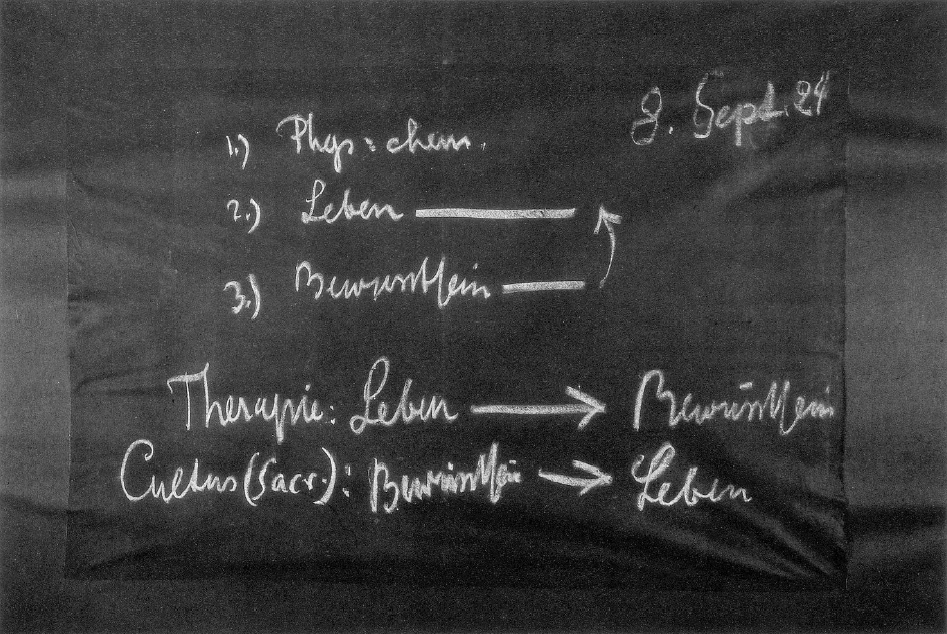
[ 8 ] Womit haben wir es bei der Therapie zu tun? Wir haben, wenn wir das Heilmittel oder den Heilprozeß auf den kranken Menschen einwirken lassen, es immer damit zu tun, daß wir in der zu erzeugenden Wirkung einer Substanz oder eines Prozesses, eines physischen oder geistigen oder seelischen, da überall über dasjenige hinausgehen, was der sogenannte normale Wechselverkehr des Menschen mit der Umwelt ist. Gleichgültig, welche Therapie wir anwenden, überall gehen wir hinaus über dasjenige, was der Mensch im alltäglichen Leben, sei es bei der Nahrungsaufnahme, sei es beim Exponieren gegenüber Licht und Luft oder beim Exponieren seelischen Einflüssen gegenüber tut, überall gehen wir über das hinaus in der Therapie. Selbst schon einen kleinen Schritt gehen wir hinaus, wenn wir die Diät feststellen, über das, was der Mensch in dem alltäglichen Wechselverkehr mit der Umwelt einhält. Wir lassen die Heilmittel einwirken auf den Menschen. Ist das Heilmittel eine physische Substanz, so geht in der Folge der Einwirkung des Heilmittels ein anderer Vorgang vor sich als bei der bloßen Nahrungsaufnahme. So ist es aber auch bei den anderen therapeutischen Einwirkungen. Stets aber greifen wir mit einer therapeutischen Maßnahme in anderer Art auf den Menschen ein, als im Leben zunächst auf ihn eingegriffen wird. Denn wie wird im Leben auf den Menschen eingegriffen oder wie greift er selber ein? Meine lieben Freunde, wir haben mit Bezug auf dasjenige, was im Menschen Prozesse eingeht im Leben, oder eingehen kann, dreierlei zu unterscheiden: Erstens dasjenige, was im Menschen so wirkt, wie in der äußeren Natur das Physikalisch-Chemische; zweitens dasjenige, was wirkt im Menschen nicht auf physikalisch-chemische, sondern auf vitalistische Art. Wir haben zu sehen auf dasjenige, was im Leben wirkt, aber wir haben drittens zu sehen auf dasjenige, was unmittelbar eingreift in die Region des Bewußitseins.
[ 8 ] What are we dealing with in therapy? When we allow the remedy or the healing process to take effect in a sick person, we are always dealing with the fact that the effect to be produced by a substance or a process—whether physical, mental, or emotional—goes beyond what is known as the normal interaction of the human being with the environment. No matter what therapy we use, we always go beyond what a person does in everyday life—whether in eating, in exposure to light and air, or in exposure to psychological influences—we always go beyond that in therapy. We take even a small step beyond what a person adheres to in their everyday interaction with the environment simply by prescribing a diet. We allow the remedies to take effect on the person. If the remedy is a physical substance, then as a result of its action, a different process takes place than occurs with mere food intake. The same is true, however, for the other therapeutic interventions. However, with a therapeutic measure, we always intervene in the human being in a different way than life initially intervenes in him. For how does life intervene in the human being, or how does he intervene himself? My dear friends, with regard to what initiates processes in the human being in life—or can initiate them—we must distinguish three things: First, that which acts within the human being in the same way as the physical-chemical forces do in the external natural world; second, that which acts within the human being not in a physical-chemical way, but in a vitalistic way. We must consider that which acts in life, but third, we must also consider that which intervenes directly in the realm of consciousness.
1. Physikalisch-Chemisches
2. Leben
3. Bewußtsein
1. Physical and Chemical
2. Life
3. Consciousness
[ 9 ] Hier müssen wir einen wichtigen Begriff feststellen. Im gewöhnlichen Leben haben wir die drei Bewußtseinszustände des Wachens, Träumens und Schlafens. In dem Augenblick, wo wir mit einer wirklich therapeutischen Maßnahme herankommen, greifen wir ein in das Bewußtsein. Wir greifen mehr oder weniger ein, je nachdem die therapeutische Maßnahme ist. Aber dieses Eingreifen geschieht niemals in einer so unmittelbaren Weise im sogenannten normalen Verlaufe des Lebens. Ißt der Mensch bloß, gibt er sich bloß der gewöhnlichen Nahrungsmittelaufnahme hin, dann laufen fort, wenn es sich eben um eine gewöhnliche Nahrungsmittelaufnahme handelt, sein Wachen, Träumen, Schlafen in normaler Weise, höchstens daß man irgendwie mit der Diät eingreift — da ist aber schon die Grenze verschiebbar — auf den Organismus, um einen gesünderen Schlaf herbeizuführen, als er vorhanden ist. Aber es beginnt da schon das Therapeutische.
[ 9 ] Here we must define an important concept. In everyday life, we experience the three states of consciousness: waking, dreaming, and sleeping. The moment we apply a truly therapeutic intervention, we intervene in consciousness. We intervene to a greater or lesser extent, depending on the nature of the therapeutic intervention. But this intervention never occurs in such a direct way in the so-called normal course of life. If a person is merely eating—simply engaging in the ordinary act of eating—then, as long as it is merely ordinary eating, their waking, dreaming, and sleeping proceed in the normal way; at most, one might intervene in some way through diet—though the boundary here is already flexible—to influence the organism in order to bring about healthier sleep than currently exists. But that is where the therapeutic aspect begins.
[ 10 ] Ganz etwas anderes ist es, wenn der Mensch zum Beispiel im Fieber ist, durch irgendwelche Umstände, und Sie therapeutisch eingreifen. Würden Sie mit demselben Mittel, mit welchem Sie im Fieber therapeutisch eingreifen, beim gesunden Menschen eingreifen, so würden Sie seinen Bewußtseinszustand ändern. Sie müssen also arbeiten als Arzt mit demjenigen, was im Grunde genommen zu tun hat mit den Bewußtseinszuständen. Während man sonst beim gewöhnlichen Wechselverkehr des Menschen mit der Umwelt es zu tun hat mit dem Leben, hat man es zu tun in der Medizin mit dem Eingreifen in die Bewußtseinszustände. Sie können das überall bei jeder therapeutischen Maßnahme finden, und es ist das Spezifische einer therapeutischen Maßnahme, daß sie in dasjenige eingreift, was irgendwie mit der Variabilität der Bewußtseinszustände zu tun hat. Es gibt auch kein anderes wirksames Heilmittel als dasjenige, das so tief in die menschliche Wesenheit eingreift, daß es die menschliche Wesenheit ergreift bis in diejenigen Quellen hinein, aus denen die Bewußtseinszustände resultieren. Damit aber stellen Sie sich als Arzt, als Therapeut unmittelbar hinein in die geistige Weltordnung. Denn Veränderung der Bewußtseinszustände bedeutet, daß Sie sich hineinstellen in die geistige Weltordnung. Und Sie ziehen immer, wenn Sie eine real wirksame Heilung haben, Sie ziehen immer gerade durch dieses Herandringen an die Bewußtseinszustände, wenn auch im Unterbewußtsein, das Seelische im therapeutischen Prozeß heran. Sie bleiben nicht im Physischen. Die gewöhnliche Nahrungsmittelaufnahme, das gewöhnliche Atmen, die sonstigen Vorgänge bleiben im Physischen, und mittelbar wirken durch das Physische die höheren Glieder des Menschen. Sie wirken auch und sie wirken durch das Physische; dagegen ziehen Sie das Seelische unmittelbar herein, wenn Sie ärztlich wirken, wenn Sie therapeutisch wirken. So können wir sagen: der Arzt tritt heran, wenn er seinen Beruf richtig versteht, unmittelbar ans Spirituelle. Es ist nur scheinbar, daß uns die therapeutischen Maßnahmen als bloß physische oder biologische Prozesse erscheinen. Sind sie wirklich therapeutische Maßnahmen - sonst sind sie das niemals -, so ziehen sie immer das Seelische heran, wenn das auch zunächst für das gewöhnliche Bewußtsein unbewußt bleibt. Aber man sollte nur einmal, meine lieben Freunde, verfolgen, wenn wirklich durch einen therapeutischen Prozeß, sagen wir, unmittelbar das Fieber herabgesetzt ist, was da im Menschen vorgeht in Wirklichkeit. Da wird bis in das Innerste seines Wesens hineingewirkt, wie umgekehrt der Krankheitsprozeß bis ins Innerste des Wesens hineinwirkt, die Prozesse im Menschen über das bloß Physische und Biologische hinausbringt. Das ist von der einen Seite. Wir sehen, wie ganz im wesentlichen das Arztsein, das Heilen aus dem Physischen ins Spirituelle durch seine eigene Wesenheit hineinführt.
[ 10 ] It is quite a different matter when, for example, a person has a fever due to certain circumstances and you intervene therapeutically. If you were to use the same remedy with which you intervene therapeutically in a case of fever on a healthy person, you would alter that person’s state of consciousness. As a doctor, you must therefore work with what essentially has to do with states of consciousness. Whereas in the ordinary interaction between human beings and their environment one deals with life itself, in medicine one deals with intervening in states of consciousness. You can see this in every therapeutic measure, and it is the specific nature of a therapeutic measure that it intervenes in that which has something to do with the variability of states of consciousness. Nor is there any other effective remedy than one that intervenes so deeply into the human being that it reaches down into the very sources from which states of consciousness arise. In doing so, however, you, as a physician or therapist, place yourself directly within the spiritual order of the world. For a change in states of consciousness means that you place yourself within the spiritual world order. And whenever you achieve a truly effective healing, you always draw the soul into the therapeutic process precisely through this penetration into the states of consciousness—even if it is in the subconscious. You do not remain in the physical realm. Ordinary food intake, ordinary breathing, and other processes remain within the physical realm, and the higher aspects of the human being act indirectly through the physical. They, too, are at work and act through the physical; in contrast, you draw in the soul directly when you act as a physician, when you act therapeutically. Thus we can say: when the physician truly understands his profession, he approaches the spiritual realm directly. It is only an illusion that therapeutic measures appear to us as merely physical or biological processes. If they are truly therapeutic measures—otherwise they never are—they always draw upon the soul, even if this remains unconscious to ordinary consciousness at first. But just once, my dear friends, consider what is actually happening within a person when, for example, a fever is directly reduced through a therapeutic process. The process works its way into the very depths of the person’s being, just as, conversely, the disease process works its way into the very depths of the being, taking the processes within the person beyond the merely physical and biological. That is one aspect. We see how, in an essential sense, the practice of medicine—healing—leads from the physical into the spiritual through one’s own being.
[ 11 ] Nehmen wir ebenso ernst den Priesterberuf. Wenn der Priesterberuf nicht bloß ein Lehrberuf ist, sondern wenn er lebt im priesterlichen Wirken, dann ist er verbunden mit dem Kultus, und der Kultus schließt in sich den Sakramentalismus. Aber der Sakramentalismus ist kein Symbolismus. Der Sakramentalismus— was ist er? Er besteht darin, daß äußere Vorgänge geschehen. Diese äußeren Vorgänge, die da geschehen, tragen etwas in sich, was nicht aufgeht in dem Chemischen oder Biologischen, was da geschieht, sondern was in sich schließt Orientierungen, Richtungen, die dem Physischen, Biologischen einverleibt werden, und die im Spirituellen, im Geistigen ihren Urstand haben. Man vollzieht sinnliche Prozesse, in die Spirituelles hineinströmt im SichVollziehen. Das geistig Wesenhafte geschieht im Kultus auf sinnenfällige Art. Und dasjenige, was sich da vor den Gläubigen vollzieht, vollzieht sich ja zunächst vor dem Bewußtsein und es darf sich nichts anderes vollziehen als dasjenige, was vor dem Bewußtsein sich vollzieht. Sonst ist es kein Kultus, kein Sakrament, sondern Suggestion. Der Sakramentalismus, der Kultus im rechten Sinne darf niemals etwas von Suggestion an sich haben, aber er hat um so mehr das Spirituelle. Er spielt sich vor dem Bewußtsein ab, wirkt aber hinein in das Leben.
[ 11 ] Let us take the priestly vocation just as seriously. If the priestly vocation is not merely a teaching profession, but if it is lived out in priestly ministry, then it is connected to worship, and worship inherently includes sacramentalism. But sacramentalism is not symbolism. Sacramentalism—what is it? It consists in the occurrence of external processes. These external processes that take place contain within them something that is not reducible to the chemical or biological phenomena occurring there, but rather encompasses orientations and directions that are incorporated into the physical and biological realms and have their origin in the spiritual and mental realms. Sensory processes are carried out into which the spiritual flows as they unfold. The spiritual essence manifests itself in worship in a way perceptible to the senses. And what takes place before the believers unfolds, first and foremost, before their consciousness, and nothing else may take place other than what unfolds before their consciousness. Otherwise, it is not a cult, not a sacrament, but suggestion. Sacramentalism—the cult in the true sense—must never contain any element of suggestion, but it contains all the more of the spiritual. It takes place before consciousness, yet it works its way into life.
[ 12 ] Der Mensch ißt nicht bloß beim Abendmahl die Substanz, die ihm gereicht wird; dann hätte man es nicht mit einem Sakrament zu tun. Es handelt sich auch nicht um ein Symbol, sondern es handelt sich um etwas, was in sein Leben eingreift, weil das Sakrament aus der Orientierung der geistigen Welt heraus vollzogen wird, zelebriert wird, so daß man sagen kann: Therapie führt das Leben hinein ins Bewußtsein. Der Kultus mit dem Sakramentalismus führt das Bewußtsein hinein in das Leben.
[ 12 ] A person does not merely consume the substance offered to him during the Lord’s Supper; if that were the case, it would not be a sacrament. Nor is it a symbol; rather, it is something that intervenes in one’s life, because the sacrament is performed and celebrated in accordance with the orientation of the spiritual world, so that one can say: Therapy brings life into consciousness. The ritual, through sacramentalism, brings consciousness into life.
Therapie: Leben —— Bewußtsein
Kultus (Sakrament): Bewußtsein — Leben
Therapy: Life —— Consciousness
Worship (Sacrament): Consciousness — Life
[ 13 ] Damit haben Sie die beiden polarischen Tätigkeiten: das therapeutische Wirken und das Zelebrieren; beide verhalten sich in der Tat polarisch. Im therapeutischen Wirken wird aus dem Leben heraus in das Bewußtsein hineingearbeitet und das Bewußtsein wird zum Mithelfer, allerdings zu einem im gewöhnlichen Bewußtsein unbewußten Mithelfer beim therapeutischen Prozeß. Beim Zelebrieren wird das Leben zum Mithelfer gemacht desjenigen, was vor dem Bewußtsein sich vollzieht. Beides, meine lieben Freunde, nicht bloß so schematisch, wie es jetzt vor Sie hingestellt ist, sondern tief innerlich geistig erfaßt, bedarf in der Regel des ganzen Menschen, wenn es Beruf wird. Und nur, weil wir innerhalb unserer Zivilisation in der Therapie hinausgekommen sind aus dem Geistigen und in der Theologie hinausgekommen sind aus dem Konkreten, weil wir innerhalb unserer Zivilisation uns in der Therapie verirrt haben in den Materialismus und in der Theologie in die Abstraktion, ist heute das wahre Verhältnis ganz und gar zugedeckt. Aber dieses wahre Verhältnis muß wieder ergründet werden, muß wieder zur Wirksamkeit kommen. Es muß wiederum ersichtlich werden, wie der Arzt schon für die Diagnose braucht den geschulten Blick, der ihm einen biologischen oder sogar physischen Vorgang im menschlichen Organismus im Lichte spiritueller Prozesse — denn alle Prozesse im menschlichen Organismus sind spirituell - erscheinen läßt, so daß der Arzt den geschulten Blick schon bei der Diagnose braucht und noch mehr bei der Therapie für das Aufleuchten des Geistigen im Physischen.
[ 13 ] This gives you the two polar activities: therapeutic work and celebration; both are, in fact, polar in nature. In therapeutic work, one works from life into consciousness, and consciousness becomes a collaborator—albeit one that remains unconscious to ordinary consciousness—in the therapeutic process. In celebration, life is made a collaborator in what takes place before consciousness. Both of these, my dear friends—not merely in the schematic way they are now presented to you, but deeply and inwardly grasped spiritually—generally require the whole person when they become a vocation. And only because, within our civilization, we have strayed in therapy from the spiritual and in theology from the concrete—because, within our civilization, we have lost our way in therapy into materialism and in theology into abstraction—is the true relationship today completely obscured. But this true relationship must be rediscovered; it must become effective once more. It must once again become apparent that, just as the physician needs a trained eye even for diagnosis—one that allows a biological or even physical process in the human organism to appear in the light of spiritual processes (for all processes in the human organism are spiritual)—so the physician needs this trained eye not only for diagnosis but even more so in therapy, so that the spiritual may shine through the physical.
[ 14 ] Der Priester braucht den geschulten Blick für das Aufleuchten des physischen Bildes für einen geistigen Vorgang. Wiederum das Polarische. Aber Polaritäten müssen immer in der Welt zusammenwirken; auch diese beiden Polaritäten müssen zusammenwirken. Und wie sie zusammenwirken müssen, das wird gerade die Aufgabe sein, die innerhalb der Anthroposophie zu ergründen ist, die aber auch innerhalb der Anthroposophie zur wirklichen Ausführung kommt; so daß denkbar ist, meine lieben Freunde, daß aus diesem Zusammensein innerhalb des Kursus über Pastoralmedizin tatsächlich für die Zukunft geschaffen werden kann der anthroposophische Arzt, der aus seinem Verhältnis zur geistigen Welt in das rechte Verhältnis zum Priester treten kann, der wiederum aus der Bewegung für christliche Erneuerung herauswächst. Es wird sich etwas ganz Spezielles ergeben für den Arzt und für den Priester, und daraus kann dann das rechte Zusammenarbeiten entstehen.
[ 14 ] The priest needs a trained eye to perceive the physical manifestation of a spiritual process. Once again, the polar. But polarities must always interact in the world; these two polarities, too, must interact. And how they must interact—that will be precisely the task to be explored within anthroposophy, a task that is also actually carried out within anthroposophy; so that it is conceivable, my dear friends, that from this collaboration within the course on pastoral medicine, the anthroposophical physician of the future can indeed be formed—one who, through his relationship to the spiritual world, can enter into the right relationship with the priest, who in turn is emerging from the movement for Christian renewal. Something quite special will emerge for the physician and for the priest, and from this, the right kind of collaboration can then arise.
[ 15 ] Denn was kann in diesem Falle nur Zusammenarbeiten heißen, meine lieben Freunde? Zusammenarbeiten kann nicht heißen, daß der Priester arztet dilettantisch und der Arzt priestert dilettantisch. Das kann es nicht heißen. Denn wenn das Zusammenarbeiten darin bestünde, daß der Priester ein bißchen etwas von Medizin weiß, der Arzt etwas mitmacht vom Kultus der Priesterschaft, dann möchte ich wissen, warum sie zusammenarbeiten sollen. Denn wozu sollte sich denn der Arzt interessieren, der geschult ist, für den priesterlich-ärztlichen Dilettantismus? Es ist gar keine Veranlassung dazu. Und warum sollte denn für irgend etwas Priesterliches in der Ärzteschaft sich der Priester anders interessieren, als wenn der Arzt einen Seelsorger braucht? Dagegen ist der Arzt ein tüchtiger Arzt, steht er drinnen im Medizinischen, ist der Priester der richtige Priester, dann können sie zusammenarbeiten. Zusammenarbeiten heißt doch, daß man sich gegenseitig das gibt, in dem man tüchtig ist, nicht daß der eine in die Sphäre des anderen eingreift.
[ 15 ] For what, my dear friends, could “collaboration” possibly mean in this case? Collaboration cannot mean that the priest practices medicine as an amateur and the doctor performs priestly duties as an amateur. It cannot mean that. For if “working together” were to consist of the priest knowing a little something about medicine and the doctor participating a bit in the priestly liturgy, then I would like to know why they should work together at all. For why should a doctor, who is trained, be interested in priestly-medical amateurism? There is absolutely no reason for it. And why should the priest take any interest in anything priestly within the medical profession, other than when the doctor needs a spiritual counselor? On the other hand, if the doctor is a competent doctor, well-versed in medicine, and the priest is a true priest, then they can work together. After all, working together means that each contributes what they are competent in, not that one encroaches on the other’s sphere.
[ 16 ] Gerade dadurch aber, daß ein solches Zusammenarbeiten stattfindet, gerade dadurch wird sich für die Kultur ein Allerwichtigstes ergeben, das ergeben, daß durch diesen herbeigeführten wechselseitigen Verkehr erst das wahre Verständnis des Arztes für den Priester, des Priesters für den Arzt entsteht, so daß der Priester so viel weiß vom Arzten, als ihm nötig ist, der Arzt so viel weiß vom Beruf und der Mission des Priesters, als ihm wieder nötig ist. Es wird sich dann später ergeben, inwieweit wiederum beide, Arzt und Priester, im Zusammenwirken mit dem Pädagogen etwas Heilsames für die Menschheit wirken können. Aber das wird wieder eine besondere Aufgabe sein. Auch da wird es ein Zusammenwirken geben, gerade da in der mannigfaltigsten Weise, weil ja in der Tat Pädagogik wieder etwas ist, was von einem anderen Gesichtspunkte aus zu betrachten ist. Der Priester kann nicht Arzt, der Arzt nicht Priester werden, insoferne sie Arzt oder Priester sind. Beide aber können in einem gewissen Sinne Pädagogen sein, aber man muß alle Arten dieses Zusammenwirkens in ganz konkreter Weise auffassen. Deshalb möchte ich Sie unter den Wahrheiten, die die Pastoralmedizin überliefern soll, zunächst für heute bitten, auch diese zu zählen, die in der Warnung vor dem chaotischen Ineinanderwerfen liegt, in dem Daraufbestehen, daß alles aus wirklichen sachlichen und fachlichen Grundlagen herausgearbeitet werde. Der Priester wird dem wirklichen Arzt dann ein wirklicher Helfer sein, wenn er dahin wirkt, daß der ärztliche Dilettantismus zurückgewiesen werde. Das wird mit zu seinen Aufgaben gehören. Und der Arzt wird manches tun können, gerade am Krankenbett, um die Priesterwirkung da zur rechten Geltung zu bringen, wo sie oftmals in der allerrealsten Weise in das Leben einzugreifen hat: am Krankenbert.
[ 16 ] But precisely because such collaboration takes place, precisely because of this, something of the utmost importance for culture will emerge: namely, that it is through this mutual interaction that a true understanding of the doctor by the priest and of the priest by the doctor first arises, so that the priest knows as much about the doctor as he needs to, and the doctor knows as much about the priest’s vocation and mission as he, in turn, needs to know. It will then become clear later to what extent both the doctor and the priest, in collaboration with the educator, can bring about something healing for humanity. But that, in turn, will be a special task. There, too, there will be collaboration—precisely there in the most diverse ways—because, in fact, pedagogy is something that must be viewed from a different perspective. The priest cannot become a doctor, nor can the doctor become a priest, insofar as they are doctors or priests. Both, however, can be educators in a certain sense, but one must understand all forms of this collaboration in a very concrete way. That is why, among the truths that pastoral medicine is meant to convey, I would like to ask you today, first and foremost, to include this one: the warning against chaotic confusion, and the insistence that everything be developed on the basis of genuine, objective, and professional principles. The priest will be a true helper to the actual physician when he works to ensure that medical dilettantism is rejected. This will be part of his duties. And the physician will be able to do many things, especially at the bedside, to give the priest’s ministry its proper place precisely where it must often intervene in life in the most real way: at the bedside.
[ 17 ] Wir werden morgen diese Betrachtungen fortsetzen.
[ 17 ] We will continue these reflections tomorrow.