

Cooperation Between Doctors and Pastoral Caregivers
Pastoral Medicine Course
GA 318
14 September 1924, Dornach
Translate the original German text into any language:
Versions Available:
Pastoral Medicine Course, tr. SOL
Siebenter Vortrag
Seventh Lecture
[ 1 ] Meine lieben Freunde! Wenn man nur mit den Mitteln, die man bekommt durch die heutige Wissenschaft — gegen die ja natürlich in bezug auf ihre eigenen Leistungen, in bezug auf die Leistungen dieser Wissenschaft nichts eingewendet werden soll, denn soweit sie mit ihren Methoden dringen kann, dringt sie ja in ausgezeichneter Weise in das ein, was ihr auf ihrem Wege eben werden kann -, wenn man nur mit diesen Mitteln zu tun hat, dann kann man eigentlich zu dem Verständnis des Menschen nicht kommen. Man kann deshalb nicht dazu kommen, weil ja im menschlichen Leben, so wie es nun einmal dasteht, Leiblich-Physisches, Seelisch-Geistiges ineinander verwoben ist. In das Leiblich-Physische hinein erstrecken sich die Erdenprozesse, ringsherum die Erdenprozesse der Gegenwart. Wir verfolgen dann mit der heutigen, gerade für das Außermenschliche verhältnismäßig gut arbeitenden Wissenschaft die physikalisch-chemischen Prozesse der äußeren, außermenschlichen Natur, und wir geben uns da leicht der Vorstellung hin: So wie diese chemischen Prozesse verlaufen im physikalischen Kabinett, oder bei der Beobachtung desjenigen Stückes Welt, das unmittelbare Erdenumgebung ist, oder im chemischen Laboratorium, so ungefähr stellt man sich vor, setzen sich diese Prozesse dann auch im Inneren des Menschen fort. Man beschreibt außen die Verbrennung als die Verbindung irgendeiner Substanz mit dem Sauerstoff, setzt dann, wenn man von menschlicher innerer Tätigkeit spricht, die Gedanken in den Menschen hinein fort, die man so gewonnen hat, spricht auch im menschlichen Inneren von Verbrennung, während man wissen sollte, daß dafür gar keine Möglichkeit besteht. Denn gerade so, wie sich ein Lebendiges zu einem Toten verhält, so verhält sich der Vorgang, der im Inneren des Menschen als einer Verbrennung ähnlich beschrieben werden kann, zu einer äußeren Verbrennung. Äußere Verbrennung ist unorganisch, äußere Verbrennung ist lebenslos. Im Inneren haben wir es mit einer lebendigen Verbrennung zu tun, mit einer lebendig gewordenen Verbrennung. Das hat auch für die übrige Wissenschaft große Folgen, bedeutsame Folgen. Denn sehen Sie, die äußere Verbrennung unterliegt ja mit Bezug auf die Substanz, die sie ergreift, ganz bestimmten, sagen wir Wärmeverhältnissen. Wir können uns nur vorstellen nach unserer Wissenschaft, daß sich eine gewisse Entzündungstemperatur ergibt, Verbrennungswärme da ist für diese äußeren Verhältnisse. Das ist durchaus nicht etwas, was sich ins Innere des menschlichen Organismus in derselben Weise fortsetzt. Unter bestimmten Temperaturgraden kann sich äußerlich irgendeine Substanz mit dem Sauerstoff verbinden, eine Verbrennung ist da. Nicht bei derselben Temperatur braucht sich das im Inneren zu verbinden, da herrschen andere Gesetze. Ich sage, das hat für die äußere Wissenschaft eine bestimmte Bedeutung, denn man stellt Hypothesen auf in der äußeren Wissenschaft, die recht plausibel erscheinen. Man schließt aus den Verhältnissen, die jetzt auf der Erde sind, auf frühere Zustände. Der berühmte jenensische Physiologe Preyer hat so etwas getan. Ihm war die gewöhnliche Kant-Laplacesche Theorie zu dumm, und er ist zurückgegangen zu gewissen lebendigen Feuerprozessen, von denen die Evolution ausgegangen sein soll. Ja, das hat er sich vorgestellt, daß die bei denjenigen Temperaturen verlaufen müssen, wo entsprechende Feuerprozesse heute verlaufen müssen. Das muß nicht sein. Man kann zunächst gehen von heutigen unorganischen Feuerprozessen zu ähnlichen Prozessen, wie sie heute im menschlichen Organismus sind, wo bei einer wesentlich niedereren Temperatur dieselben Vorgänge zustande kommen. Dann würde man auch für eine hypothetische Vorstellung eines irdischen Urzustandes etwas ganz anderes herausbekommen.
[ 1 ] My dear friends! If one relies solely on the means provided by modern science—against which, of course, no objection should be raised with regard to its own achievements or the achievements of this science, for as far as its methods can reach, it does indeed penetrate in an excellent way into whatever lies along its path—if one relies solely on these means, then one cannot truly arrive at an understanding of the human being. One cannot arrive at this understanding because, in human life as it actually exists, the physical-bodily and the soul-spiritual are interwoven. The earthly processes—the earthly processes of the present—extend into the physical-bodily realm. We then use today’s science—which works relatively well, especially for the non-human realm—to track the physical-chemical processes of external, non-human nature, and we easily succumb to a mental image that: Just as these chemical processes unfold in the physics lab, or when observing that part of the world that is the immediate earthly environment, or in the chemistry lab—that is roughly how we imagine these processes continuing within the human being as well. Externally, combustion is described as the combination of a substance with oxygen; then, when speaking of internal human activity, we extend the ideas we have gained in this way into the human being and speak of “combustion” within the human body as well—even though we should know that this is entirely impossible. For just as a living being relates to a dead one, so does the process that can be described as similar to combustion within the human being relate to external combustion. External combustion is inorganic; external combustion is lifeless. Internally, we are dealing with a living combustion, with a combustion that has become alive. This also has major consequences—significant consequences—for the rest of science. For you see, external combustion is subject, with regard to the substance it affects, to very specific—let us say—thermal conditions. Based on our scientific understanding, we can only create a mental image of a certain ignition temperature arising and of combustion heat being present under these external conditions. This is by no means something that continues in the same way within the human organism. At certain temperatures, any substance can combine with oxygen externally, and combustion occurs. This does not necessarily have to occur at the same temperature internally; different laws apply there. I say that this has a certain significance for external science, for in external science one formulates hypotheses that appear quite plausible. One infers past conditions from the conditions that currently exist on Earth. The famous Jena physiologist Preyer did something like this. He found the standard Kant-Laplace theory too simplistic, so he turned to certain living fire processes from which evolution is said to have originated. Indeed, he created a mental image of these processes occurring at the same temperatures at which corresponding fire processes must occur today. That need not be the case. One can start by moving from today’s inorganic fire processes to processes similar to those found in the human organism today, where the same phenomena occur at a significantly lower temperature. Then, even for a hypothetical mental image of Earth’s primordial state, one would arrive at something entirely different.
[ 2 ] Sie sehen also, die Vorstellungen, die gang und gäbe werden, haben für das gesamte Auffassen des Weltbildes eine ganz bestimmte Bedeutung. Kurz, man kann mit den Mitteln, die die heutige Wissenschaft liefert, nicht auskommen, um schon die äußere Welt in ihrem Verlauf und die unmittelbare Gegenwart daraus zu verstehen. Das gibt ja natürlich sogleich Schwierigkeiten, wenn eine gewisse Tendenz auftritt. Ich kann von diesen Schwierigkeiten wirklich sprechen, weil ich sie persönlich in einer außerordentlich starken Weise erlebt habe.
[ 2 ] So you see, the mental images that become commonplace have a very specific significance for our overall understanding of the world. In short, the tools provided by modern science are insufficient for understanding even the external world in its unfolding and the immediate present derived from it. This, of course, immediately gives rise to difficulties when a certain tendency emerges. I can truly speak of these difficulties because I have personally experienced them in an extraordinarily intense way.
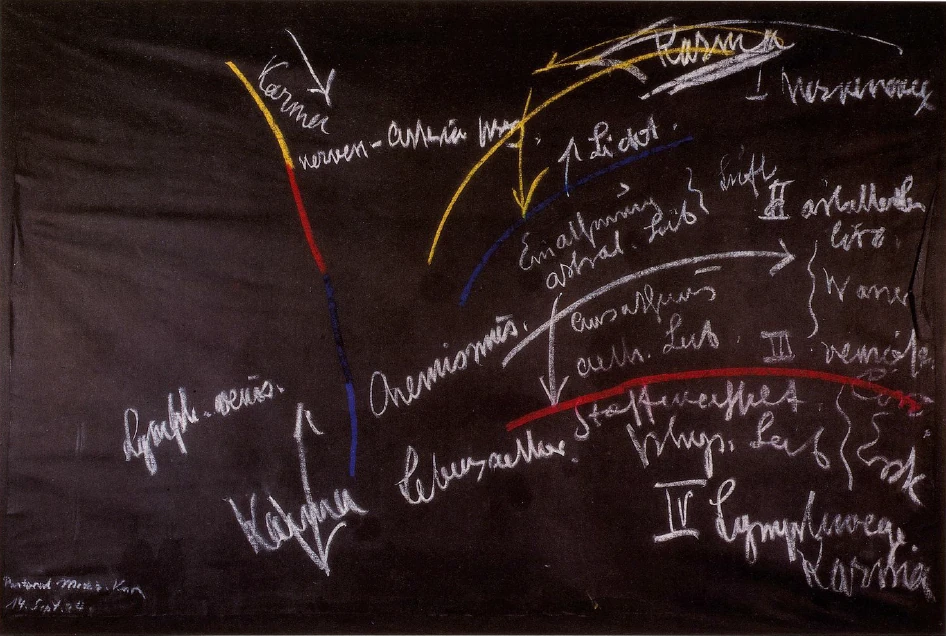
[ 3 ] Sehen Sie, Sie dürfen mir glauben, durch meine ganze Entwickelung hindurch ging ein Zug, der nur so bezeichnet werden kann - Sie sehen es aus der Beschreibung meines «Lebensganges» —: alleräußerster Respekt vor der Naturwissenschaft der Gegenwart! Dieser Respekt war immer da. Nirgends, in keinem Punkte konnte ich mich entschließen, eine ablehnende Kritik im trivialen Sinne, wie es leicht vorkommt, aufzuwenden gegen dasjenige, was als Naturwissenschaft, sei es auf dem Gebiete des äußeren Chemisch-Mechanisch-Physikalischen, sei es auf dem Gebiete des Medizinischen aufzubringen. Aber dabei stand mir doch die Evolution auch als geistiges Bild vor Augen, war da. Nun hatte man das Bestreben, dasjenige, was sich geistig eröffnet, sagen wir für so etwas wie die atlantische Zeit oder die lemurische Zeit oder noch weiter zurück oder vorwärts, mit demjenigen in Einklang zu bringen, was die Naturwissenschaft gibt. Das geht für dasjenige, was die Naturwissenschaft für die unmittelbare Gegenwart sagt, in leidlicher Weise. In dem Augenblick, wo die Naturwissenschaft anfängt, wild zu werden und Hypothesen aufzustellen, die über die Gegenwart in eine Zeit weit zurückliegender Vergangenheit gehen, bekommt man die allerschwersten Konflikte, wenn man das geistig Geschaute mit dem in Einklang bringen soll, was die Naturwissenschaft sagt. Daher kommt man in Konflikte, gerade wenn man im Einklang mit der Naturwissenschaft leben will, dieser Naturwissenschaft, gegen die die Geisteswissenschaft nie etwas haben will; denn man wird doch nicht so unvernünftig sein, gegen Tatsachen etwas einzuwenden. Aber um so mehr kommt man in Konflikt mit den Anschauungen. Sobald der Naturforscher redet: gut - sobald er anfängt zu schreiben, so wird er eigentlich schon wild, und dann kann man nicht mehr mit. Das ist dasjenige, was da als ein schwerer Konflikt vorliegt, der auch eingesehen werden muß von demjenigen, der irgendwie in Berührung kommt mit dem, was die heutige Wissenschaft geben kann.
[ 3 ] You see, you may believe me when I say that throughout my entire development there was a thread that can only be described—as you can see from the description of my “life’s journey”—as the utmost respect for contemporary natural science! This respect was always there. Nowhere, on any point, could I bring myself to level a dismissive criticism—in the trivial sense, as so often happens—against what is regarded as natural science, whether in the realm of external chemistry, mechanics, and physics, or in the realm of medicine. But at the same time, evolution was also present before my eyes as a spiritual image. Now there was an effort to bring what opens up spiritually—let us say, for something like the Atlantean era or the Lemurian era, or even further back or forward—into harmony with what natural science provides. This works reasonably well for what natural science says about the immediate present. The moment natural science begins to run wild and put forward hypotheses that extend beyond the present into a time far in the past, one encounters the most severe conflicts when trying to reconcile what is spiritually perceived with what natural science says. This is why conflicts arise, precisely when one wants to live in harmony with natural science—a natural science against which Spiritual Science never intends to take a stand; for one would not be so unreasonable as to object to facts. But this leads all the more to conflict with their views. As soon as the natural scientist speaks—fine—but as soon as he begins to write, he actually becomes quite frenzied, and then one can no longer keep up. This is the very thing that presents itself as a serious conflict, one that must also be recognized by anyone who comes into contact in any way with what modern science has to offer.
[ 4 ] Denn sehen Sie, diese Wissenschaft kommt eben einfach nicht an den Menschen heran, weil der Mensch eben auch nach dem Seelischen und nach dem Geistigen hin in die Welt hereingestellt ist, und in seinen Prozessen lebt sich nicht nur aus dasjenige, was man äußerlich erforscht, bis zu den Erscheinungen der Aerodynamik oder der Aeromechanik herauf oder der Kalorik, sondern in seinen Erscheinungen lebt sich zum Beispiel auch dasjenige aus, was aus früheren Erdenleben in sein Karma hereinkommt. Wir sahen gestern, daß man es förmlich mit Händen greifen konnte bei einem Menschen wie Ferdinand Raimund. Dazu fehlt jede Möglichkeit des Überganges, wenn man nur die Mittel der heutigen Naturwissenschaft in Betracht zieht. Aber nun sehen Sie, man muß eben aufsteigen dazu, dasjenige, was äußerlich am Menschen sich als Vorgänge darstellt, gewissermaßen von dem Geistigen abfangen zu lassen, ins Geistige einzugliedern. Dann kommt man doch gut zurecht, gerade wenn man ganz fest steht in der Physiologie des Atmungsvorganges, in der Physiologie des Zirkulationsvorganges, in bezug auf dasjenige, was man schon wissen kann auch durch die Mittel der heutigen Naturwissenschaft, wenn man versucht, gerade vom Atmungs- und Zirkulationsvorgange aus zu begreifen, wie das physische Leben mit dem Geistigen zusammenhängt.
[ 4 ] For you see, this science simply cannot reach human beings, because human beings are placed in the world with a spiritual and soul-life as well, and in their inner processes, it is not only what is externally investigated—up to the phenomena of aerodynamics, aeromechanics, or thermodynamics—that manifests, but also, for example, what enters their karma from previous earthly lives. We saw yesterday that this was practically tangible in a person like Ferdinand Raimund. There is no possibility of transition to this if one considers only the methods of modern natural science. But now you see, one must rise to the point where what manifests externally in a human being as processes is, so to speak, intercepted by the spiritual and integrated into the spiritual. Then one can indeed make good progress, especially when one is firmly grounded in the physiology of the respiratory process and the physiology of the circulatory process—in relation to what can already be known through the methods of modern natural science—and when one attempts, precisely on the basis of the respiratory and circulatory processes, to understand how physical life is connected to the spiritual.
[ 5 ] Denn sehen Sie, wenn wir zunächst den Prozeß der Einatmung des Menschen ins Auge fassen: dieser Prozeß der Einatmung im Menschen, er besteht darin, daß äußeres Luftförmiges aufgenommen wird von dem Menschen. Dieses äußere Luftförmige ist aber nicht eben ein bloß Passives, das von der fertigen Menschennatur aufgenommen wird und darinnen weiter so verarbeitet wird, daß sich der Sauerstoffaufnahmeprozeß in einen Kohlensäurebildenden Prozeß verwandelt und so einfach die Einatmung in die Ausatmung übergeht, sondern dieser Einatmungsprozeß stellt sich in Wirklichkeit als ein fortwährender Erzeuger der menschlichen Wesenheit dar. Er arbeitet fortwährend an dem Aufbau der menschlichen Wesenheit von außen herein mit. Von der Welt herein wird im Einatmungsprozeß der Mensch fortwährend aufgebaut, und der Mensch nimmt wirklich nicht bloß den amorphen Sauerstoff auf, sondern in dem Sauerstoff, den er irrtümlich als amorph ansieht, in dem nimmt er auf Gestaltungskräfte, die seinem eigenen Wesen entsprechen. Wenn wir Atemnot haben, so sitzt wirklich in den Atmungswegen eine fremde elementarische Wesenheit drinnen. Aber das ist in dem abnorm gestalteten Atmungsprozeß. In dem normal gestalteten Atmungsprozeß, meine lieben Freunde, sitzt fortwährend ein entstehender Mensch. Fortdauernd geht aus dem Makrokosmos eine werdende Menschengeburt, eine Luftmenschengeburt in den Menschen hinein. Der ganze Prozeß, der sich da abspielt, der steht unter der Aktivität des astralischen Leibes, so daß man sich die Sache so vorstellen muß (Tafel 8): Wir atmen ein; die Einatmungstätigkeit ist aktiviert durch den astralischen Leib. Der ganze Prozeß, der sich da abspielt, der fortdauernd eine Menschenwerdung ist, dieser Prozeß spielt sich im Element der Luft ab, in alledem, was im Menschen luftförmig mitarbeitet, spielt sich dieser Prozeß ab, so daß wir da ein fortwährendes Menschwerden haben im Einatmungsprozeß in dem Element des Luftförmigen.
[ 5 ] For you see, if we first consider the process of human inhalation: this process of inhalation in humans consists in the human being taking in external air. However, this external air-like substance is not merely a passive entity that is taken in by the fully formed human nature and processed within it in such a way that the oxygen uptake process is transformed into a carbon dioxide-forming process, and inhalation simply gives way to exhalation; but rather this process of inhalation actually manifests itself as a continuous generator of human being. It continually contributes to the building up of the human being from the outside in. From the world around us, the human being is continually built up through the process of inhalation, and the human being does not merely take in amorphous oxygen; rather, in the oxygen that he mistakenly regards as amorphous, he takes in formative forces that correspond to his own being. When we experience shortness of breath, there is indeed a foreign elemental entity sitting within the respiratory tract. But this occurs in the abnormally structured breathing process. In the normally structured breathing process, my dear friends, a human being in the process of becoming is constantly present. Continuously, a human birth in the making—an air-human birth—flows from the macrocosm into the human being. The entire process taking place there is governed by the activity of the astral body, so that one must create a mental image of it as follows (Plate 8): We inhale; the act of inhalation is activated by the astral body. The entire process taking place here—which is a continuous becoming of the human being—unfolds in the element of air; it unfolds in all that works within the human being in an air-like form, so that we have a continuous becoming of the human being in the process of inhalation within the element of the air-like.
[ 6 ] Aber sehen Sie, nun atmen wir wieder aus. Wir atmen aus und atmen ja im wesentlichen Kohlensäure aus. Es wird im Anschluß an andere organische Vorgänge der Kohlenstoff gewissermaßen für die Ausatmung gesammelt. Man stellt sich das vor nun wiederum als eine Art passiven Reaktionsprozesses oder so etwas Ähnlichem. Man hat überhaupt keine klare Vorstellung über diese Dinge. Man untersucht eben einfach dasjenige, was man mit physischen Mitteln nach dieser Richtung untersuchen kann, aber man macht sich keine klaren Vorstellungen. Nun sehen Sie, diese Ausatmung aber ist wieder aktiviert, in ihr ist nicht bloß ein passiver Prozeß enthalten in bezug auf den Menschen, sondern es ist Aktivität darinnen, eine Aktivität, die ja die Aktivität des Ätherleibes ist. Das ganze geht in dem Elemente des Flüssigen vor sich, in demjenigen Elemente, das man früher eben Wasser genannt hat, wo alles Flüssige Wasser war. Wir können den Ausdruck weiter gebrauchen. Das geht im Elemente des Wassers vor sich.
[ 6 ] But you see, now we exhale again. We exhale, and essentially we’re exhaling carbon dioxide. Following other organic processes, the carbon is, so to speak, gathered together for exhalation. One can imagine this, in turn, as a kind of passive reaction process or something similar. We have absolutely no clear mental image of these things. We simply investigate what we can examine in this regard using physical means, but we do not form any clear mental images. Now, you see, this exhalation is, however, activated again; it contains not merely a passive process with regard to the human being, but there is activity within it—an activity that is, in fact, the activity of the etheric body. All of this takes place in the element of the liquid, in that element which used to be called water, when everything liquid was considered water. We can continue to use that term. This takes place in the element of water.
[ 7 ] Nun entsteht da eine wichtige Frage, die Ihnen natürlich allen auf der Zunge liegen muß. Die Frage: Ja, wie ist es nun im Schlaf? Denn im Schlaf ist zunächst der Ätherleib drinnen, für die Ausatmung gibt uns das also keine Skrupel. Aber wie können wir im Schlaf einatmen, da doch der astralische Leib draußen ist? — Ja, sehen Sie, da ist es eben so, daß in der Tat im Schlafe nur der mikrokosmische Teil des astralischen Leibes herausgeht und um so tätiger wird das astralische des Makrokosmos während des Schlafes. Da tritt die ganze Astralität des Makrokosmos ein während des Schlafes, da wird die Atmungstätigkeit, die ja gerade dadurch etwas Verschiedenes ist von der wachenden Atmungstätigkeit, geregelt durch die Tätigkeit des Makrokosmos. Sie sehen also hier einen bedeutenden Unterschied auftreten zwischen der Einatmung im Wachen und der im Schlaf. Die Einatmung im Schlafen wird geregelt von außen her im Menschen. Die Einatmung im Wachen regelt er selber von innen heraus mit seinem astralischen Leib, während die Astralität des Kosmos für ihn eintritt im Schlaf. Da haben Sie schon einen bedeutsamen Anhaltspunkt, um in die Einsicht des Pathologischen zu kommen. Der Kosmos hat die Merkwürdigkeit, daß er mit Bezug auf irdische Verhältnisse, so wie wir über die Erde eine Strecke weit hinauskommen, gesund ist. In der Nähe der Erde sind allerlei sich durch Klimatisches und sonstiges ausdrückende Prozesse, die die Astralität des Kosmos abnorm machen können. Ebenso kann durch andere Prozesse, die wir noch kennenlernen werden, die innere Astralität des Menschen abnorm sein. Hier haben wir die Quelle des Pathologischen auf einem bestimmten Gebiete, aber wir sehen die Quelle des Pathologischen bis hinein ins Geistig-Seelische gehen, und das ist das Wesentliche.
[ 7 ] Now an important question arises that must, of course, be on all of your minds. The question is: Yes, what actually happens during sleep? For during sleep, the etheric body is still inside us, so we have no qualms about exhaling. But how can we breathe in while we sleep, since the astral body is outside? — Well, you see, the fact is that during sleep only the microcosmic part of the astral body leaves the body, and the astral aspect of the macrocosm becomes all the more active during sleep. The entire astral nature of the macrocosm enters during sleep; the act of breathing—which is, in fact, somewhat different from the act of breathing while awake—is regulated by the activity of the macrocosm. So you can see here a significant difference between inhalation while awake and inhalation during sleep. Inhalation during sleep is regulated from outside the human being. In the waking state, the human being regulates inhalation from within using his astral body, whereas the astral nature of the cosmos enters into him during sleep. Here you already have a significant point of reference for gaining insight into pathology. The cosmos has the peculiarity that, in relation to earthly conditions—as soon as we go a certain distance beyond the Earth—it is healthy. Near the Earth, there are all kinds of processes—manifested through climatic and other factors—that can render the astral nature of the cosmos abnormal. Similarly, the human being’s inner astral nature can be abnormal due to other processes that we will yet come to know. Here we have the source of pathology in a specific area, but we see the source of pathology extending all the way into the spiritual-soul realm, and that is the essential point.
[ 8 ] Nun gehen wir weiter. Sehen Sie, der Atmungsprozeß ist ein verhältnismäßig, relativ also, grober. Wir atmen Luftförmiges ein, atmen Luftförmiges aus. Der ganze Atmungsprozeß hat etwas Grobes, wenn wir ihn vergleichen mit all den Vorgängen, die ja sowohl in uns fluten, wie im äußeren Makrokosmos fluten, wenn wir ihn vergleichen mit den Vorgängen in der Fluktuation der Wärme, im Wärmeelemente innen und außer dem Menschen. Im Inneren des Menschen sind ja Wärmedifferenzierungen, außen sind Wärmedifferenzierungen. Wir können uns wegdenken Luft, Wasser, Erde, wir können vor uns hinstellen nur diese Wärmedifferenzen. Für den Physiker hat das keinen Sinn, weil er die Wärmedifferenzen nur für Zustände der Materie ansieht. Die Geisteswissenschaft weiß, daß man es bei der Wärme mit einem Element zu tun hat. Wir dürfen also von einem Element sprechen, es als selbständig und aktiv ansprechen, das, was im Wärmeelement enthalten ist. Nun liegt dem ganzen menschlichen Leben gegenüber dem Atmungsprozeß ein feinerer Prozeß der Aufnahmen durch den Wärmeprozeß zugrunde. Und wir können sprechen: Kommen wir hinauf bis in die Lungengegend des Menschen - fassen Sie aber das, was ich grob äußerlich sage, recht innerlich auf -, kommen wir hinauf bis zur Lungenorganisation, so haben wir es mit dem groben Atmungsprozeß in der Luft zu tun. Kommen wir aber hinauf in die Regionen, die vorzugsweise vom Haupt geregelt werden, aber im ganzen Menschen in Abschwächung vorhanden sind, haben wir einen verfeinerten Atmungsprozeß, der sich aber nicht im Luftelement, sondern im Wärmeelement abspielt. So daß wir sagen können: Wir kommen hinauf zu einem verfeinerten Prozeß, der besteht in einer außerordentlich feinen Aufnahme von Wärme aus dem Makrokosmos, Einatmung von Wärme und Ausatmung von Wärme. — Aber die Sache ist jetzt so, wenn wir die grobe Ein- und Ausatmung verfolgen, dann steht der Mensch mit der Außenwelt in Wechselwirkung: Einatmung-Ausatmung, Einatmung-Ausatmung, herein-heraus, herein-heraus, so ist der Prozeß. Hier ist es nicht so; hier ist zwar herein, aber jetzt nicht in demselben Sinne heraus wie bei der gewöhnlichen Atmung, sondern die Ausatmung geht in den Menschen selber hinein, wird zum innerlichen Prozeß. Dasjenige, was nun vom Nerven-Sinnessystem ausgeatmet wird, verbindet sich dem Prozeß der Einatmung, der durch die Lunge vermittelten Einatmung. So daß wir haben nach dem Sinnes-Nervensystem hin einen Prozeß, den wir als einen verfeinerten Atmungsprozeß bezeichnen können, und der in seiner Einatmung richtig eine Aufnahme von außen ist; aber abgegeben wird dasjenige, was da hereinkommt, nicht wieder nach außen, sondern es wird übertragen an den gröberen Atmungsprozef, geht an die Einatmung über, geht auf dem Einatmungsweg weiter in den Organismus hinein.
[ 8 ] Now let’s move on. You see, the process of breathing is, relatively speaking, a rather coarse one. We inhale air and exhale air. The entire breathing process has a certain coarseness to it when we compare it to all the processes that flow both within us and in the outer macrocosm, when we compare it to the processes involved in the fluctuation of heat, in the thermal elements both inside and outside the human being. There are, after all, thermal differentiations within the human being, and there are thermal differentiations outside. We can set aside air, water, and earth; we can focus solely on these thermal differences. For the physicist, this makes no sense, because he regards thermal differences merely as states of matter. Spiritual Science knows that, when it comes to heat, we are dealing with an element. We may therefore speak of an element—and address what is contained within the heat element as independent and active. Now, underlying the entire human life, in contrast to the respiratory process, is a more subtle process of absorption through the heat process. And we can say: If we ascend to the region of the human lungs—but please take what I am saying in rough, external terms quite deeply to heart—if we ascend to the lung structure, we are dealing with the gross respiratory process in the air. But if we ascend to the regions that are primarily regulated by the head—though they are present in a diminished form throughout the entire human being—we encounter a refined respiratory process that takes place not in the element of air but in the element of heat. So we can say: We ascend to a refined process that consists of an extraordinarily subtle absorption of warmth from the macrocosm—inhaling warmth and exhaling warmth. — But the situation is this: when we observe the gross inhalation and exhalation, the human being interacts with the external world: inhalation-exhalation, inhalation-exhalation, in-out, in-out—that is the process. Here it is not like that; here there is indeed an “in,” but not an “out” in the same sense as in ordinary breathing; rather, the exhalation goes into the human being itself, becoming an inner process. That which is now exhaled by the nervous-sensory system joins the process of inhalation—the inhalation mediated by the lungs. Thus, with regard to the sensory-nervous system, we have a process that we can describe as a refined respiratory process, and whose inhalation is truly a reception from the outside; but what enters there is not expelled back out again; rather, it is transferred to the coarser respiratory process, passes into inhalation, and continues along the inhalation pathway into the organism.
[ 9 ] Aber Sie haben jetzt das, daß Sie sagen können: Die Wärme des Makrokosmos geht auf diesem Wege durch die Atmung in den menschlichen Organismus hinein, aber nicht bloß die Wärme, sondern die Wärme trägt mit: Licht, makrokosmischen Chemismus, makrokosmische Vitalität, makrokosmisches Leben. — Lichtäther, chemischer Äther des Makrokosmos, Lebensäther des Makrokosmos wird auf dem Wege der Wärmeeinatmung hineingetragen, geht über in den menschlichen Organismus. Das Wärmeelement trägt das Licht verankert, trägt das chemische Element, trägt das vitale Element in den Menschen hinein, gibt es an den Einatmungsprozeß ab. Das ganze, was da oberhalb des Atmungsprozesses liegt, was sich da darstellt als ein verfeinerter Atmungsprozeß, aber auch als ein metamorphosierter Atmungsprozeß, das studiert man ja nicht im eigentlichen Sinne heute, das fällt ganz aus der Physiologie heraus, nur fällt dadurch etwas in die Physiologie hinein, was dann in ihr wie ein Fremdkörper wirkt. Das ist ein Punkt, wo man absolut nicht zurechtkommt, wenn man auf der einen Seite vom Geistigen, auf der anderen Seite von der Natur ausgeht. Da fällt wie ein Fremdkörper hinein die Sinnesphysiologie, was sich differenziert in Sehen, Hören, Wärmeempfindung abspielt. Es sind wie Glieder, äußere Ranken dieses Prozesses, der anfänglich Aufnahme von Wärme ist, beladen mit Licht, Chemismus, Vitalität. Das differenziert sich mit dem Sinnesprozeß hinaus. Aber nun kennt der Mensch im Sinnesvorgang nur das Peripherische, nicht das Zentrale, daher ist ihm die Sinnesphysiologie etwas wie ein völliger Fremdkörper. Da plätschert in den einzelnen Sinnen der Physiologe herum, dann dilettiert der Psychologe. Da wird Hypothese über Hypothese geschmiedet. Natürlich muß das sein, weil man die einzelnen ganz spezifischen Prozesse des Sehens, des Hörens vor sich hat, aber ihren Zusammenfluß, ihren Zusammenlauf nach dem Inneren gar nicht überschaut. Man sieht nicht, wie das alles zusammenfließt in der Wärmeaufnahme, die in sich trägt Licht, Chemismus, Vitalität aus dem Makrokosmos herein, da kommt man dann an die Atmung heran, und erst dann wird es eine wirkliche Sinnesphysiologie geben, wenn der Sinnesphysiologe wird sagen können: Ach, da gehe ich von den Vorgängen, von den physiologisch-physischen Vorgängen des Auges aus, gehe in den Nerven hinein, der das nach innen fortsetzt, komme allmählich in die Atmungswege hinein, aus den Sinneswegen, den Verstandeswegen in die Atmung hinein. - Da wird man begreifen, daß da einmal im Erdenleben das Joga hat entstehen können, wenn man das Sinnesleben, das an der Peripherie abläuft, ein wenig außer acht läßt. In die Jogapraxis geht man da, wo der ganze Prozeß übergeht in den Prozeß der Einatmung, und projiziert das, was dahinterliegt, in der Sinneswahrnehmung, und kommt in die Jogapraxis hinein. Sie sehen, daß praktisch instinktiv in ehemaligen Weltanschauungen so etwas gewußt worden ist. Aber die neuere Naturwissenschaft muß überall vor Rätseln stehen, weil sie nicht die Tatsachen schauen kann und nicht die Zusammenhänge schauen kann. Sie will wüst spekulieren. Sie beobachtet Auge und Ohr; dann fängt sie an, wüst zu spekulieren, was da im Inneren eigentlich vorgeht. Und wenn sie merkt, daß sie in eine Sackgasse kommt, daß das, was sie im Auge und Ohr ausspekuliert, wenn sie es nach innen verfolgt, in eine Sackgasse führt, weil man den verfeinerten Atmungsprozeß, den ich auseinandergesetzt habe, nicht als Tatsache ergreifen will, dann sagt sie: Nun ja, das, was im Inneren abläuft, das ist eben parallel dem, was im Äußeren abläuft. Parallelismus! — Die Prozesse laufen gleichzeitig ab, das ist natürlich der allerbequemste Ausweg.
[ 9 ] But now you can say this: The warmth of the macrocosm enters the human organism in this way through breathing, but not merely the warmth—the warmth carries with it light, macrocosmic chemistry, macrocosmic vitality, and macrocosmic life. — The light ether, the chemical ether of the macrocosm, and the life ether of the macrocosm are carried in through the inhalation of warmth and pass into the human organism. The element of warmth carries the light—anchored within it—carries the chemical element, and carries the vital element into the human being, transferring them to the process of inhalation. The whole realm that lies above the respiratory process—which manifests as a refined respiratory process, but also as a metamorphosed respiratory process—is not studied in the strict sense today; it falls entirely outside the scope of physiology. Yet as a result, something enters into physiology that then acts within it like a foreign body. This is a point where one is completely at a loss if one proceeds, on the one hand, from the spiritual and, on the other, from nature. Sensory physiology—which unfolds as differentiated processes of seeing, hearing, and the sensation of warmth—falls into this like a foreign body. These are like limbs, external tendrils of this process, which is initially the absorption of warmth, imbued with light, chemistry, and vitality. This differentiates itself outward through the sensory process. But in the sensory process, human beings are aware only of the peripheral aspects, not the central ones; therefore, sensory physiology is something of a complete foreign element to them. The physiologist dabbles in the individual senses, and then the psychologist dabbles as well. Hypothesis after hypothesis is formulated. Of course, this is inevitable, because one is faced with the individual, highly specific processes of seeing and hearing, but cannot grasp their convergence, their confluence toward the inner self. One does not see how it all converges in the absorption of warmth, which carries within itself light, chemistry, and vitality from the macrocosm; this leads one to respiration, and only then will there be a true physiology of the senses when the sensory physiologist will be able to say: Ah, I start with the processes—the physiological and physical processes of the eye—move into the nerves that carry this inward, and gradually enter the respiratory pathways, proceeding from the sensory pathways and the pathways of the intellect into respiration. - Then one will understand that yoga was able to arise in earthly life if one disregards, to some extent, the sensory life that takes place at the periphery. One enters into the practice of yoga at the point where the entire process merges into the process of inhalation, projecting what lies behind it into sensory perception, and thus enters into the practice of yoga. You can see that, practically and instinctively, such things were known in earlier worldviews. But modern science must face mysteries everywhere, because it cannot perceive the facts and cannot perceive the connections. It wants to speculate wildly. It observes the eye and the ear; then it begins to speculate wildly about what is actually going on inside. And when it realizes that it is reaching a dead end—that what it speculates about in the eye and ear, when traced inward, leads to a dead end because it refuses to accept the refined breathing process I have described as a fact—then it says: Well, what’s happening on the inside is simply parallel to what’s happening on the outside. Parallelism! — The processes occur simultaneously; that, of course, is the most convenient way out.
[ 10 ] Sehen Sie, das ist auch dasjenige, was sowohl dem Priester wie dem Arzt eine feste Stelle geben wird innerhalb des ganzen Betriebes des modernen Erkenntnislebens, denn er wird es nicht mehr abzulehnen brauchen dieses Erkenntnisleben. Ungeheure Schätze trägt die Sinnesphysiologie von allen Seiten herbei, nur ist es mit diesen Schätzen so, als ob man die wunderbarsten Baumaterialien zu einem schönen Hause von allen Seiten herbeiführen würde. Diese Materialien sind ausgezeichnet. Nun führt man sie herbei, schichtet sie auf zu einem großen Wall, aber man kann kein Haus bauen. Es ist unmöglich, das Haus zu bauen. Man trägt alles, was in den Sinnen vorgeht, herbei, schichtet es auf einen großen Wall und kommt nicht zu einer Verarbeitung, denn diese Verarbeitung müßte darin liegen, daß man nun das zusammenarbeitet im Inneren des Menschen mit dem, was man äußerlich erforscht hat, jetzt diesen ins Ätherische und Astralische verlaufenden Prozeß der feineren Atmung verfolgen würde; da würde man anfangen, das Haus zu bauen. Natürlich würde man ein Tropf sein, wenn man nun das Haus bauen könnte und sagt: man müsse anfangen damit, diesen Wall von besten Baumaterialien, der herbeigeschafft worden ist, wegzuschaffen. Das wird man doch nicht tun. Wenn er da ist, wird man anfangen, das Haus zu bauen.
[ 10 ] You see, this is also what will give both the priest and the doctor a firm place within the entire structure of modern intellectual life, for they will no longer need to reject this intellectual life. Sensory physiology brings immense treasures from all sides, but the situation with these treasures is as if one were bringing the most wonderful building materials from all directions to construct a beautiful house. These materials are excellent. Now one brings them in, piles them up into a great mound, but one cannot build a house. It is impossible to build the house. One gathers everything that takes place in the senses, piles it up into a great mound, and fails to put it to use; for this use would lie in working together, within the human being, what has been externally investigated—in tracing this process of finer respiration as it extends into the etheric and astral realms; that is where one would begin to build the house. Of course, one would be a fool if, now that one could build the house, one were to say: one must begin by clearing away this mound of the finest building materials that has been brought here. One would not do that, would one? Once it is there, one will begin to build the house.
[ 11 ] Ebenso wäre es unsinnig, wenn man das täte, was heute von vielen Leuten getan wird, die in dilettantischer Weise den Dingen gegenüberstehen, wenn die Naturwissenschaft in Grund und Boden kritisiert wird, abgelehnt wird. Sie braucht nicht abgelehnt zu werden, man soll die Baumaterialien Stück für Stück benützen, sie sind sehr brauchbar, man kriegt etwas sehr Schönes heraus, wenn man das benützt, was heute in der Sinnesphysiologie gegeben ist, die als solche ein Wall ist. Und so können Sie sagen: Wir schauen hinauf von dem, was da in der Atmung als fortwährend gegenwärtige Menschenbildung herantritt zu dem verfeinerten Atmungsprozeß, der sich im Wärmeelement abspielt, aber in den die ganze ätherische Welt des Makrokosmos hineinspielt. Da schauen wir hinauf, wenn wir zum oberen Menschen kommen.
[ 11 ] Likewise, it would be nonsensical to do what many people do today—those who approach things in an amateurish way—when they criticize and reject the natural sciences outright. It need not be rejected; one should use its building blocks piece by piece—they are very useful—and one can achieve something very beautiful by utilizing what is available today in sensory physiology, which in itself serves as a bulwark. And so you can say: We look up from what appears in breathing as the continually present formation of the human being to the refined breathing process that takes place in the element of warmth, but into which the entire etheric world of the macrocosm plays a part. There we look up as we come to the higher human being.
[ 12 ] Wir können aber auch hinunterschauen zum unteren Menschen, vom Atmungsprozeß aus. Da kommen wir dann, wie wir nach oben gegenüber dem Einatmungsprozeß zu einer Verfeinerung kommen, so kommen wir gegenüber dem Ausatmungsprozeß nach unten zu einer stärkeren Vergröberung, und wir treten allmählich von dem Prozeß, der sich innerlich abspielt in der Kohlensäurebildung, über, nach unten zu dem Prozeß, der sich abspielt in der Verdauung. So wie wir nach oben den Einatmungsprozeß verbinden müssen mit diesem feinen Nerven-Sinnesprozeß, der ins Geistige übergeht, müssen wir nach unten den Ausatmungsprozeß verbinden mit dem Prozeß der Verdauung, wo die menschliche Tätigkeit allmählich ins Physische übergeht, so daß wir nach unten kommen in dasjenige, wo durch den physischen Leib vollzogen wird Stoffwechseltätigkeit, modifizierte Ausatmung. Gewissermaßen was an Tätigkeit, an Aktivität die Ausatmung im Inneren zurückläßt, das macht den Stoffwechsel, so wie das, was die Atmung aufnimmt von der Nerven-Sinnes-Geistestätigkeit in innere Tätigkeit übergeht, so ist das, was von der Ausatmung an Aktivität im Inneren des Menschen zurückbleibt, die Summe der Kräfte, die den Stoffwechsel formen, der nun in dem Element vor sich geht, das früher Erde genannt wurde in alledem, was in dem menschlichen Organismus an die Festigkeit sich anlehnt (Tafel 8).
[ 12 ] But we can also look down at the lower human being, starting from the process of inhalation. Just as we move upward toward a refinement in relation to the inhalation process, so do we move downward toward a greater coarsening in relation to the exhalation process, and we gradually transition from the process taking place internally in the formation of carbon dioxide downward to the process taking place in digestion. Just as we must connect the inhalation process upward with this subtle nerve-sensory process that transitions into the spiritual realm, we must connect the exhalation process downward with the process of digestion, where human activity gradually transitions into the physical realm, so that we descend into that realm where metabolic activity is carried out through the physical body, modified exhalation. In a sense, the activity that exhalation leaves behind within the body constitutes metabolism, just as that which respiration takes up from the nervous-sensory-spiritual activity transitions into inner activity; so what remains of the exhalation’s activity within the human being is the sum of the forces that shape metabolism, which now takes place in the element formerly called earth in all that within the human organism is related to solidity (Plate 8).
[ 13 ] Nun, sehen Sie, betrachten wir den ganzen Prozeß noch etwas intimer, dann haben wir eigentlich einen vierfach geteilten Prozeß im Menschen. Wir haben den Prozeß, den wir da oben charakterisieren konnten, von dem wir sagen können, seine Ausatmung geht eigentlich in den Menschen hinein. Wenn wir nun den äußerlich zu erkennenden Prozeß der Einatmung nehmen, müssen wir in der Einatmung sehen zu gleicher Zeit eine Verbindung des Eingeatmeten mit dem, was von oben herunterkommt. Hier müssen wir das polarisch Entgegengesetzte sagen. Da läßt die Ausatmung die Kräfte für den Stoffwechsel zurück. Es wird nicht etwas aufgenommen von der Ausatmung, sondern es wird etwas abgegeben. Wir haben also innere Ausatmung und außerdem eine innere Einatmung, und dann die Verbindung dieser inneren Einatmung mit demjenigen, was der physische Leib tut, als den eigentlichen Stoffwechsel-Verdauungsprozeß.
[ 13 ] Well, you see, if we examine the entire process in a bit more detail, we actually find a fourfold process within the human being. We have the process we were able to characterize above, about which we can say that its exhalation actually enters the human being. If we now consider the externally observable process of inhalation, we must see in the inhalation, at the same time, a connection between what is inhaled and what comes down from above. Here we must state the polar opposite. Here, exhalation leaves behind the forces for metabolism. Nothing is taken in from exhalation; rather, something is given off. We thus have inner exhalation and, in addition, inner inhalation, and then the connection of this inner inhalation with what the physical body does, as the actual metabolic-digestive process.
[ 14 ] Nun, sehen Sie, wenn Sie diese vierfache Differenzierung ins Auge fassen, geht Ihnen ein Licht auf über den Menschen; denn außerdem zeigt sich das Folgende (Tafel 8): Hier, auf diesem Wege, geht das Wärmeelement, das trägt Licht, Chemismus, Vitalität, geht da herein, verbindet sich mit der Atmung, aber es gibt an die Atmung nicht das Licht ab, es behält es; es gibt an die Atmung nur den Chemismus ab und die Vitalität. Das Licht bleibt also hier schon zurück und füllt als inneres Licht den Menschen aus, wird zur Gedankentätigkeit.
[ 14 ] Well, you see, when you consider this fourfold differentiation, a light dawns on you regarding human beings; for, in addition, the following becomes apparent (Plate 8): Here, along this path, the heat element—which carries light, chemistry, and vitality—enters, connects with the breath, but does not transfer the light to the breath; it retains it. It transfers only the chemistry and vitality to the breath. The light thus remains here and, as an inner light, fills the human being, becoming thought activity.
[ 15 ] Beim weiteren Fortgang dieser Einatmung und Ausatmung wird der makrokosmische Chemismus abgegeben und wird im Menschen innerer Chemismus, der die äußere Laboratoriumschemie, die in den Prozessen ist, die wir im äußeren Laboratorium haben, ablöst. Im Menschen ist makrokosmischer Chemismus, der abgelagert wird in ihm, indem dieser innere Atmungsprozeß fortgesetzt wird, so daß wir sagen können: Hier wird Chemismus abgelagert. - Und bis herein in diese Wechselwirkung zwischen Ausatmung und Stoffwechsel geht der Lebensäther und wird vom Menschen aufgenommen. So daß Sie, wenn Sie den Prozeß von oben nach unten verfolgen, haben: Licht hereinkommen auf den Wegen des Wärmeäthers, stopp! Da, wo die Atmung eintritt, ist für das Licht stopp, es breitet sich das Licht aus, es wird nicht weiter aufgenommen von der Organisation des Menschen, kann sich als Licht ausbreiten. Wir tragen einen Lichtorganismus als reinen Lichtorganismus in uns, der denkt. Wir verfolgen den Prozeß bis dahin, wo Einatmung an Ausatmung grenzt, bis dahin trägt der durch den Nerven-Sinnesprozeß hineingetragene Chemismus. Jetzt Chemismus stopp! Innerer Chemismus, ein chemischer Organismus in uns, der fühlt.
[ 15 ] As this inhalation and exhalation continues, the macrocosmic chemism is released and becomes inner chemism within the human being, replacing the external laboratory chemistry found in the processes we observe in the external laboratory. Within the human being, macrocosmic chemism is deposited as this inner respiratory process continues, so that we can say: Here, chemism is deposited. — And right into this interaction between exhalation and metabolism, the life ether enters and is absorbed by the human being. So that when you trace the process from top to bottom, you have: light entering along the pathways of the warmth ether—stop! Where breathing begins, the light stops; the light spreads out; it is no longer absorbed by the human organism and can spread as light. We carry within us a light organism—a pure light organism—that thinks. We trace the process to the point where inhalation meets exhalation; up to that point, the chemism carried in through the nerve-sense process continues. Now, chemism—stop! Inner chemism—a chemical organism within us that feels.
[ 16 ] Jetzt gehen wir weiter hinunter, da wo die Ausatmung den Verdauungsprozeß zurückläßt, den Stoffwechselprozeß. Der geht nicht hinein bis zu dem äußeren Stoffwechselprozeß in der Nahrungsaufnahme, sondern nur bis zu den inneren Vorgängen des Stoffwechsels. Stopp mit dem Lebensäther. Der Lebensäther bildet wieder eine menschliche Organisation, die will. So kommt Denken, Fühlen und Wollen zustande.
[ 16 ] Now we continue downward, to where exhalation leaves behind the digestive process—the metabolic process. This does not extend all the way to the external metabolic process involved in food intake, but only as far as the internal processes of metabolism. Here the life ether ends. The life ether once again forms a human organism that wills. This is how thinking, feeling, and willing come about.
[ 17 ] Den ganzen Prozeß können wir nun in seinem physischen Abbild verfolgen. Nehmen wir alles dasjenige, was da oben ist: innerlich zeigt es sich im Denken. Aber das ist sehr verfeinert. Hinter ihm steht alles das, was ich Ihnen jetzt beschrieben habe. Das alles geht auf dem Nervenwege vor sich. Die Nervenwege sind die äußerlichen physischen Leiter für alles das.
[ 17 ] We can now trace the entire process in its physical manifestation. Let’s take everything that is up there: internally, it manifests itself in thought. But that is very subtle. Behind it lies everything I have just described to you. All of this takes place via the nerve pathways. The nerve pathways are the external physical conduits for all of this.
[ 18 ] Jetzt gehen Sie zu dem nächsten Prozeß. Da haben Sie im nächsten Prozeß: Aufnahme dieses obersten Prozesses im Menschen durch den Atmungsprozeß, und das spielt sich ab in einer physisch-sinnlichen Projektion im arteriellen Zirkulationsprozeß. Die arteriellen Zirkulationswege sind die zweiten Wege.
[ 18 ] Now move on to the next process. In the next process, you have: the absorption of this highest process into the human being through the respiratory process, and this takes place as a physical-sensory projection within the arterial circulatory process. The arterial circulatory pathways are the second pathways.
[ 19 ] Wir kommen zum dritten Prozeß, der sich abspielt zwischen Ausatmung und Verdauung-Stoffwechsel. Der hat wieder seine Wege, das sind die venösen Zirkulationswege. Wir kommen zum dritten, zu den venösen Zirkulationswegen.
[ 19 ] We now come to the third process, which takes place between exhalation and digestion/metabolism. This process, too, has its own pathways—the venous circulation pathways. We now come to the third—the venous circulation pathways.
[ 20 ] Und wir gehen weiter. Wir kommen noch weiter in den Menschen hinein und müssen suchen, wo da die Wege sind, wie sich der Prozeß, dem nun genommen ist von der Seite des Hereinkommens selbst die Vitalität, der sich seine eigene Vitalität von außen versorgen muß, von unten, von außen versorgen muß. Wir haben da seine physische Projektion im Lymphprozeß und in den Lymphwegen (Tafel 8).
[ 20 ] And we continue. We delve even deeper into the human being and must seek out where the pathways lie—how the process, which has now been deprived of its vitality from the very source of its entry, must draw its own vitality from outside, from below, from the outside. We find its physical projection in the lymphatic process and in the lymphatic pathways (Plate 8).
[ 21 ] Sehen Sie, meine lieben Freunde, jetzt haben Sie die Relation zwischen Äußerem und Innerem. Da liegt vieles hinter dem, was SinnesEinatmungsprozeß ist, im Hineinkommen, da liegt es dahinten. Aber in dem, was dahinten liegt, wirkt manches, was dem Menschen heute unbekannt bleibt. Da wirkt mit das Karma, das aus dem früheren Erdenleben kommt. Das strahlt da herein, verschwindet für das Wahrnehmen. Da strahlt das Karma herein. Derjenige, der mit geistigem Auge untersucht die Nervenwege, wie sie sich auf den Sinneswegen hineinbilden, der findet auf diesen Wegen das Karma. Das strömt da ein. Ebenso aber findet man auf der anderen Seite in der Lymphbildung nicht bloß einen physischen Prozeß, sondern indem auf den Lymphwegen die Lymphe in den Organismus hineingeht, sieht man Johannes Müller, der berühmte Physiologe, hat schon gesagt: Was ist Lymphe? Blut ohne rote Blutkörperchen -; Blut ist Lymphe mit roten Blutkörperchen. Es ist allgemein gesprochen, aber es hat eine gewisse Richtigkeit; man sieht, wie Lymphe ins Blut geht und den gegenwärtigen Menschen dadurch versorgt. Wir sehen aber in der Lymphe alles das, was noch nicht Blut geworden ist, sehen auch noch das Weben und Leben des werdenden Karmas. Da drinnen im Lymphprozeß bildet sich wieder das Karma. Die Lymphwege sind zu gleicher Zeit die Anfänge der Karmawege für die Zukunft (Tafel 8, rechts).
[ 21 ] You see, my dear friends, now you understand the relationship between the outer and the inner. There is much behind what is the process of sensory inhalation—in the act of taking in—it lies there in the background. But within what lies in the background, there are many forces at work that remain unknown to people today. Karma from previous earthly lives is at work there. It radiates in, yet remains hidden from perception. Karma radiates in. Anyone who examines the nerve pathways with the spiritual eye—as they form along the sensory pathways—will find karma along these pathways. It flows in there. Likewise, however, on the other side, in the formation of lymph, one finds not merely a physical process; rather, as the lymph enters the organism via the lymphatic pathways, one sees—as Johannes Müller, the famous physiologist, has already said: “What is lymph? Blood without red blood cells”—blood is lymph with red blood cells. This is a generalization, but it contains a certain truth; we see how lymph enters the blood and thereby nourishes the present human being. But in the lymph we see everything that has not yet become blood; we also see the weaving and life of karma in the making. There, within the lymphatic process, karma is formed once again. The lymphatic pathways are at the same time the beginnings of the karmic pathways for the future (Plate 8, right).
[ 22 ] So kommen Sie vom Geistigen in den Menschen herein, da, wo Sie das verspüren, daß sich auf Wärmewegen Licht, Chemismus, Vitalität des Makrokosmos hereinziehen, da verspüren Sie immer mehr, je mehr Sie vom Licht herauskommen zu den vitalen Wegen und dann das allgemeine Weltenleben hineinfließen sehen, da verspüren Sie das Hereinfließen des Karmas, das sich nun im menschlichen Erdenleben zwischen Geburt und Tod auslebt. Aber es lebt sich aus, indem es durch die Nerven, auch noch durch den abgeschwächten arteriellen Prozeß geht, zurückgestaut wird vom venösen Prozeß. Da schieben sich auch, wenn es an den venösen Prozeß herankommt, da schieben sich auch die Nebelwellen des Karmas herein. Und indem der Mensch das venöse Blut bildet, bekommt er in sich zu gleicher Zeit diese Aufstopfungen des Karmas und handelt im Sinne des Karmas.
[ 22 ] This is how you enter into human beings from the spiritual realm—where you sense that light, chemistry, vitality of the macrocosm are drawing in—there you sense this more and more as you move out from the light toward the vital pathways and then see the general life of the worlds flowing in; there you sense the inflow of karma, which now plays out in human earthly life between birth and death. But it plays itself out by passing through the nerves—and even through the weakened arterial process—and is held back by the venous process. And when it approaches the venous process, the misty waves of karma also push their way in. And as the human being forms venous blood, he simultaneously takes in these accumulations of karma and acts in accordance with karma.
[ 23 ] Umänderung des Blutes kann bloß Zorn andeuten. Das, was sich da aufstopft, weil das Vergangene nicht hinuntergelassen wird in den venösen Prozeß, das führt zum Handeln, das geht in die Ausgestaltung des Karmas über.
[ 23 ] A change in the blood can only indicate anger. What builds up there—because the past is not allowed to flow into the venous process—leads to action, which in turn shapes karma.
[ 24 ] Das, was von der Lymphe nicht heraufgelassen wird, was nicht ins Blut übergeht, das sammelt sich tief im Unterbewußtsein an, das bildet tief im Unterbewußtsein einen Kern, das trägt der Mensch, wenn er den materiellen Prozeß abstößt, hinaus durch die Todespforte. Es ist das werdende Karma.
[ 24 ] That which is not allowed to rise by the lymph, that which does not pass into the blood, accumulates deep in the subconscious; it forms a core deep in the subconscious; and when a person sheds the material process, they carry this core out through the gate of death. This is karma in the making.
[ 25 ] Oberhalb der Atmung schaut man das Karma, das aus der Vergangenheit kommt, unterhalb der Ausatmung, mit der Zirkulation unterhalb der Ausatmung, da, wo die Lymphe noch nicht zu Blut geworden ist, da schaut man das werdende Karma. Das steckt da drinnen, und so kann man sagen: Karma (Tafel 8, links, gelb), es läuft ein in den arteriellen Prozeß, bleibt im Menschen zurück; es bildet sich der venöse Prozeß, Karma entsteht wiederum. Wir haben hier oben die Grenze, wo Karma anfängt sich zu stauen in dem Nerven-Sinnesarteriellen Prozeß.
[ 25 ] Above the inhalation, one observes the karma that comes from the past; below the exhalation, with the circulation below the exhalation—where the lymph has not yet become blood—one observes the karma in the making. It is contained there, and so one can say: Karma (Plate 8, left, yellow) flows into the arterial process and remains within the human being; the venous process forms, and karma arises once again. Here at the top is the boundary where karma begins to accumulate in the nervous-sensory-arterial process.
[ 26 ] Wir haben hier unten entsprechend dem Prozeß, der von dem Lymphmäßigen in das Venöse übergeht: wir haben hier das hereinkommende Karma, hier haben wir das herauskommende Karma, wenn wir die noch nicht zu Blut gewordene Lymphe mit dem geistigen Auge betrachten. So haben wir den Zusammenschluß des Physischen und des Geistigen. Oben grenzt der Mensch an das Geistige qualitativ an. Wir sehen ihn angrenzen an sein Karma. Zwischendrinnen staut sich das gegenwärtige Leben. Unten sehen wir, wenn wir die noch nicht zu Blut gewordene Lymphe betrachten, das entstehende Karma. Zwischen vergangenem Karma und werdendem Karma mittendrinnen steht das menschliche Erdenleben, das eine Stauung zwischen beiden darstellt, von diesem Gesichtspunkt aus betrachtet. Aber wir können die Sache hineinverfolgen bis zum physischen Prozeß.
[ 26 ] Here below, in accordance with the process that transitions from the lymphatic to the venous: here we have the incoming karma, and here we have the outgoing karma, when we observe the lymph—which has not yet become blood—with the spiritual eye. Thus we have the union of the physical and the spiritual. Above, the human being qualitatively borders on the spiritual. We see him bordering on his karma. In between, the present life accumulates. Below, when we observe the lymph that has not yet become blood, we see the karma that is emerging. Between past karma and emerging karma, right in the middle, stands the human earthly life, which, viewed from this perspective, represents a congestion between the two. But we can trace the matter all the way down to the physical process.
[ 27 ] Davon wollen wir dann morgen weitersprechen. Sie sehen, wir kommen immer mehr und mehr hinein, das Geistige auch im Physischen zu sehen, das aber wird erst die praktische Anwendung vollkommen machen.
[ 27 ] We’ll continue discussing this tomorrow. As you can see, we are increasingly able to perceive the spiritual within the physical, but it is only this that will make the practical application complete.