

Naturalistic Observation, Experimentation, Mathematics
and the Stages of Knowledge in Spiritual Science
GA 324
18 March 1921, Stuttgart
Translate the original German text into any language:
Versions Available:
Naturalistic Observation, Experimentation, Mathematics, tr. SOL
Dritter Vortrag
Third Lecture
[ 1 ] Ich habe gestern versucht, zunächst einiges von dem zu betrachten, was zum Ursprung der Vorstellung des Dimensionalen innerhalb der menschlichen Wesenheit führen kann. Ich will nun zunächst dasjenige, was ich mir da erlaubte vor Sie hinzustellen, einmal stehen lassen. Denn bei geisteswissenschaftlichen Betrachtungen handelt es sich namentlich dann, wenn sie gewissermaßen von der anderen Seite her, von der physisch-empirischen Seite her, beleuchtet werden sollen, darum, daß man sich von verschiedenen Seiten ihnen nähert, und das will ich denn auch in diesen Vorträgen tun, will heute aber zu dem, was ich gestern gesagt habe von einer anderen Seite, einiges hinzufügen, damit wir dann die einzelnen Betrachtungen zuletzt zu einem Ganzen zusammenfassen und zu dem Niveau geisteswissenschaftlicher Betrachtungen emporheben können.
[ 1 ] Yesterday I attempted, as a starting point, to consider some of the factors that may lead to the origin of the mental image of dimensionality within the human being. I would now like to set aside for the moment what I took the liberty of presenting to you yesterday. For in Spiritual Science considerations, it is particularly important—when they are to be illuminated, so to speak, from the other side, from the physical-empirical side— it is essential to approach them from various angles, and that is what I intend to do in these lectures; however, today I would like to add a few points to what I said yesterday from a different perspective, so that we may ultimately synthesize the individual considerations into a whole and elevate them to the level of Spiritual Science reflections.
[ 2 ] Es wird sehr häufig gesagt, geisteswissenschaftliche Betrachtungen gingen eigentlich nur denjenigen etwas an, der selber irgendwie etwas anfangen könne mit der besonderen Anschauungsform, welche der Darstellung solcher geisteswissenschaftlicher Ergebnisse zugrunde gelegt wird. Man kann in einem gewissen eingeschränkten Sinne, aber nur in einem sehr eingeschränkten Sinne zugeben, daß jemand diese Empfindung haben könne. Allein es wird sich immer darum handeln, ob dasjenige, was auf Grund geisteswissenschaftlicher Untersuchungen vorgelegt wird, in seinem Inhalt allgemein, ohne daß man sich zu einem besonderen Schauen erhebt, verstanden werden könne oder nicht, und das ist es, was ich gerade in diesen Vorträgen bis zu einem gewissen Grade begreiflich machen möchte, daß das Ergebnis geisteswissenschaftlicher Untersuchungen dem gesunden Menschenverstand durchaus begreiflich werden kann. Aber dazu ist notwendig, daß man sich wirklich auf dasjenige einläßt, was Geisteswissenschaft zu ihrer Rechtfertigung von den verschiedensten Seiten her zu sagen hat. Und zu denjenigen Dingen, welche angeführt werden können, um gewissermaßen Geisteswissenschaft zurückzuweisen, gehört der Einwand nicht, der etwa darin bestünde, daß man sagt: Wenn wir die uns umgebende Natur, wie sie uns zunächst in der äußeren Erfahrung gegeben ist, betrachten, dann ist sie aus sich selbst erklärbar, und man hat keine Möglichkeit, von dieser Erklärbarkeit aufzusteigen zu irgendwelchen anderen wesenhaften Voraussetzungen, die erst völlig dasjenige, was uns auch in der Sinnenwelt umgibt, verständlich machen sollen. — Denn ich selbst werde immer der erste sein, welcher betont, daß von einem gewissen Gesichtspunkt aus die uns umgebende Sinneswelt aus sich selbst erklärbar ist. Ich habe einmal in einem, ich gestehe es selbst, etwas wenig über das Triviale hinausliegenden Vergleich klargemacht, wie ich dieses meine. Ich sagte einmal: Wenn jemand den Mechanismus einer Uhr überschaut, so hat er nicht nötig, irgendwelche Erklärungsgründe aus der Welt, die außerhalb der Uhr liegt, zu Hilfe zu nehmen, wenn er den Mechanismus der Uhr aus sich selbst erklären will. Die Uhr ist von einem gewissen Gesichtspunkt aus durchaus aus sich selbst erklärbar. Aber das hindert nicht, daß man von einem gewissen anderen Gesichtspunkt aus zur völligen Aufhellung desjenigen, was man eigentlich mit der Uhr in der Hand hat, doch den Verstand des Uhrmachers und dergleichen mehr nötig hat, also etwas, was durchaus außerhalb der Uhr ist. Man kann eben gewisse Dinge nicht so schnell abmachen, wie man gewöhnlich meint, und deshalb ist es schon notwendig, daß man, wenn man das ganze Gefüge, das eigentliche Wesen geisteswissenschaftlicher Untersuchungen beurteilen will, sich da auch einläßt auf Einzelheiten der Darstellung, daß man sich darauf einläßt, wie diese Geisteswissenschaft selbst dasjenige, was sie auf ihrem übersinnlichen Gebiete zutage zu fördern denkt, nun anwendet im gewöhnlichen sinnlichen, empirisch gegebenen Beobachtungsfelde. Über dieses Thema möchte ich heute einiges zu Ihnen sprechen.
[ 2 ] It is very often said that considerations in Spiritual Science are really only of concern to those who can themselves, in some way, relate to the particular form of perception that underlies the presentation of such findings in Spiritual Science. One can admit, in a certain limited sense—but only in a very limited sense—that someone might have this feeling. However, the question will always be whether what is presented on the basis of research in Spiritual Science can be understood in its general content—without one having to rise to a particular level of perception—or not; and that is precisely what I would like to make comprehensible to a certain degree in these lectures: that the results of research in Spiritual Science can indeed be understood by common sense. But for this to happen, it is necessary to truly engage with what Spiritual Science has to say in its own defense from a wide variety of perspectives. And among the arguments that might be cited to reject Spiritual Science, so to speak, does not belong the objection that would consist, for example, in saying: “If we consider the nature that surrounds us, as it is initially given to us in external experience, then it is self-explanatory, and there is no way to ascend from this self-explanatory nature to any other essential presuppositions that are supposed to make fully understandable what also surrounds us in the sensory world.” — For I myself will always be the first to emphasize that, from a certain point of view, the sensory world around us is self-explanatory. I once made this clear in a comparison—which, I admit, went only slightly beyond the trivial—to illustrate what I mean. I once said: If someone examines the mechanism of a watch, he has no need to resort to any explanatory reasons from the world outside the watch if he wishes to explain the watch’s mechanism on its own terms. From a certain point of view, the clock is entirely self-explanatory. But that does not prevent the fact that, from a certain other point of view, in order to fully understand what one actually has in one’s hand when holding the clock, one still needs the watchmaker’s understanding and the like—that is, something that is entirely outside the clock. Certain things simply cannot be figured out as quickly as one usually thinks, and that is why it is necessary that, if one wishes to assess the entire structure—the very essence—of spiritual scientific investigations, one must also engage with the details of the presentation; one must consider how this Spiritual Science itself applies what it intends to bring to light in its supersensible realm to the ordinary sensory, empirically given field of observation. Today I would like to speak to you a bit about this topic.
[ 3 ] Ich muß da zunächst etwas voraussetzen, was ich in den nächsten Tagen in seiner Entstehungsweise genauer erklären werde. Ich muß zunächst voraussetzen, daß die eigentliche Untersuchung des geisteswissenschaftlichen Feldes zunächst zu einer anderen Erkenntnisweise, ich könnte auch sagen, zu einer anderen Seelenverfassung gegenüber der Wirklichkeit führt, als sie im gewöhnlichen Tagesleben oder in der gewöhnlichen Wissenschaft vorhanden ist. Ich habe die erste Stufe dieses — wenn man will, kann man es so nennen - übersinnlichen Erkennens die imaginative Stufe genannt. Nun möchte ich erst später darauf eingehen, wie aus gewissen Verrichtungen der menschlichen Seele heraus diese imaginative Erkenntnisstufe erreicht wird. Ich möchte aber heute dasjenige auseinandersetzen, was diese imaginative Erkenntnisstufe eigentlich ihrem Wesen nach ist, und dazu müssen wir noch einmal zurückblicken auf dasjenige, was ich hier als Betrachtung angestellt habe über das Wesen nicht so sehr der Mathematik als des Mathematisierens.
[ 3 ] I must first make a certain assumption, which I will explain in more detail over the next few days, including how it came about. I must first assume that the actual investigation of the field of Spiritual Science initially leads to a different mode of cognition—I might also say, to a different state of mind toward reality—than is present in ordinary daily life or in ordinary science. I have called the first stage of this—if you will, one might call it that—supersensible cognition the imaginative stage. I will return later to how this imaginative stage of cognition is attained through certain activities of the human soul. Today, however, I would like to explore what this imaginative stage of cognition actually is in its very essence, and to do so, we must once again look back at the reflection I have offered here—not so much on the nature of mathematics as on the nature of “mathematizing.”
[ 4 ] Ich habe versucht, den Unterschied zu charakterisieren, der besteht für unseren Bewußtseinsinhalt, wenn wir uns einerseits versenken in irgend etwas, was uns die äußere Sinneswelt darbietet, und was wir dann innerlich mit unseren Verstandesoperationen durchsetzen, meinetwegen auch — der Vollständigkeit halber sage ich es - mit Gemüts- und Willensimpulsen durchsetzen, und dem mathematischen Erkennen andererseits. Und wir können ja leicht einsehen, daß dasjenige, was sich beim ersteren in der Seele des Menschen abspielt, rein äußerlich ausgedrückt eine Art Wechselwirkung ist, eine unmittelbare Wechselwirkung zwischen dem Menschen und einer irgendwie gearteten Außenwelt. Bitte, nehmen Sie dasjenige, was ich so sage, nur seinem wirklichen Inhalte nach. Ich will damit keine Hypothesen aufstellen. Ich will damit nicht irgend etwas aussagen über eine hinter der Sache stehende Realität, sondern ich will damit nur zunächst dasjenige angeben, was in unserem ganz gewöhnlichen Bewußtseinsinhalt eben vorhanden ist, wenn wir in dieser Weise erkennend der Außenwelt gegenüberstehen. Es hätte diese Erkenntnis gar keinen Sinn, wenn wir nicht voraussetzen würden, daß wir in einer unmittelbaren Wechselwirkung stehen mit irgendeiner Außenwelt.
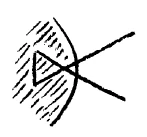
[ 4 ] I have attempted to characterize the difference that exists in the content of our consciousness when, on the one hand, we immerse ourselves in something presented to us by the external sensory world—which we then process internally through our intellectual operations, and, for the sake of completeness, I will add, through emotional and volitional impulses as well— and, on the other hand, with mathematical cognition. And we can easily see that what takes place in the human soul in the former case is, expressed purely in external terms, a kind of interaction—an immediate interaction between the human being and an external world of some sort. Please take what I am saying here only for its actual content. I do not intend to put forward any hypotheses. I do not intend to say anything about a reality lying behind the matter, but I merely wish to indicate, for the time being, what is present in the very ordinary content of our consciousness when we face the external world in this cognitive manner. This insight would have no meaning at all if we did not assume that we are in direct interaction with some external world.
[ 5 ] Im mathematischen Erkennen, ich möchte sagen, in dem mathematischen Erkennen erster Ordnung, das heißt in dem reinen Mathematisieren, liegt die Sache anders. Ich meine dieses Anderssein für den Fall, wenn wir, ohne auf irgendeinen äußerlichen, sinnlichen, konkreten Inhalt einzugehen, rein leben und ableiten innerhalb des geometrischen oder innerhalb des arithmetisch-algebraischen Feldes. Dasjenige, was wir da innerhalb des arithmetisch-algebraisch-geometrischen Feldes in innerer Anschaulichkeit uns vor die Seele stellen — ganz gleichgültig, ob es auf elementarem Gebiete der pythagoreische Lehrsatz oder ob es irgend etwas aus der höheren Funktionentheorie ist —, das ist etwas, das zunächst ganz und gar lebt innerhalb des, wenn ich mich so ausdrücken darf, seelischen Konstruierens, was also erfahren wird im fortwährenden Tätigsein und im Anschauen der eigenen Tätigkeit. Dieses Mathematisieren — wie gesagt, wenn ich mich so ausdrücken darf - erster Ordnung, das ganz innerhalb des seelischen Erlebens verläuft, wenden wir dann in der mathematisierenden Naturwissenschaft oder vielleicht auch auf anderen Gebieten des Daseins auf die äußere Welt an, und wir finden einfach innerhalb des Arbeitens, daß dasjenige, was wir zuerst rein innerlich erlebt haben, auf diese unsere sinnliche Außenwelt anwendbar ist. Schon daraus, daß es auf die sinnliche Außenwelt anwendbar ist, geht hervor, daß es einen reinen Bildcharakter haben muß, einen Charakter, der dadurch gekennzeichnet werden kann, daß man sagt: Dasjenige, was wir mathematisch erleben, hat als solches noch nicht irgendeinen Inhalt, nicht irgend etwas von dem Inhalt, den wir draußen innerhalb unserer Umgebung finden. Es ist in dieser Beziehung das im Mathematisieren Enthaltene durchaus inhaltslos, das heißt, es ist bloßes Bild. - Inwiefern sich das Räumliche, das im Mathematischen bloß Bild ist, dennoch einer Realität einordnet, habe ich gestern gezeigt mit Beziehung auf die Auffassung des Dimensionalen. Aber innerhalb des Mathematischen ist dasjenige, was wir entwickeln, durchaus bloßes Bild. Wäre es nicht Bild, dann könnten wir diejenige Behandlungsweise, die wir vollziehen, wenn wir mathematische Naturwissenschaft zum Beispiel treiben, nicht ausführen. Denn es würde eine Wirklichkeit und nicht bloß ein Bildliches zusammenzufließen haben innerhalb des Erkenntnisaktes. Daß ein Wirkliches aber nicht zusammenfließt mit dem Erkenntnisakt, das wird uns eben bewußt, wenn wir diesen Erkenntnisakt wirklich arbeitend vollziehen.
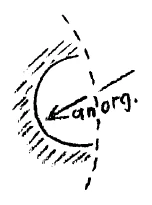
[ 5 ] In mathematical cognition—or rather, in first-order mathematical cognition, that is, in pure mathematization—the situation is different. I mean this difference in the case where, without addressing any external, sensory, concrete content, we live and deduce purely within the geometric or within the arithmetic-algebraic realm. That which we present to our minds in inner visual clarity within the arithmetic-algebraic-geometric realm—whether it be the Pythagorean theorem in the elementary realm or something from higher function theory— is something that, at first, lives entirely within what I might call “soul-construction”—that is, it is experienced through continuous activity and the contemplation of one’s own activity. This “mathematizing”—as I said, if I may put it that way—of the first order, which takes place entirely within the inner experience, we then apply to the external world in the mathematical natural sciences or perhaps also in other areas of life, and we simply find, in the course of our work, that what we first experienced purely inwardly is applicable to our sensory external world. The very fact that it is applicable to the external sensory world shows that it must have a purely pictorial character—a character that can be described as follows: what we experience mathematically has, as such, no content yet—not any of the content we find outside within our surroundings. In this respect, what is contained in mathematical thinking is entirely devoid of content; that is to say, it is a mere image. — To what extent the spatial, which is merely an image in mathematics, nevertheless relates to reality, I demonstrated yesterday in connection with the concept of dimensionality. But within mathematics itself, what we develop is entirely a mere image. If it were not an image, then we could not carry out the method of treatment we employ when, for example, we engage in mathematical natural science. For then a reality—and not merely an image—would have to converge within the act of cognition. But the fact that a reality does not converge with the act of cognition becomes clear to us precisely when we actually carry out this act of cognition.
[ 6 ] Nun, wenn wir diesen Bildcharakter des Mathematischen auf der einen Seite erkennen, auf der anderen Seite aber uns klar sind, daß wir diese mathematischen Bilder erleben, dann haben wir, zunächst zwar ohne einen bestimmten realen Inhalt, aber doch einen Bewußtseinsinhalt, der von uns durchaus in seiner Bildhaftigkeit erlebt werden kann, ja, der gerade dadurch in seiner Bildhaftigkeit erlebt werden kann, daß wir ganz und gar durchschauen, wie, ich möchte sagen, verborgen bleiben gewisse Dinge, die wir doch vermuten müssen in demjenigen, was sich unseren Sinnen darbietet, gegenüber dem, was wir mathematisierend erleben. Im Mathematisieren stehen wir ganz drinnen in demjenigen, was sich eigentlich abspielt. Im Mathematisieren können wir sagen, daß wir durchaus verbunden sind restlos mit demjenigen, was sich abspielt. Das, in Verbindung mit dem Bildcharakter des Mathematischen, gestattet uns, innerhalb unseres Bewußtseins eine recht klare Vorstellung von dem zu bekommen, was wir eigentlich im Mathematisieren erleben, und darauf beruht es, daß man innerhalb des Mathematiktreibens eine so außerordentlich große Sicherheit hat, daß man tatsächlich weiß, indem man Mathematik treibt, man bewegt sich in einem Felde, in dem Erkenntnissicherheiten walten. Es wird vielleicht manchem, der sich mit diesen Dingen befaßt, doch so gegangen sein, daß er den Unterschied gemerkt hat, der im Studium besteht zwischen dem Befassen mit äußeren sinnlichen Realitäten und dem Befassen mit demjenigen, was im Felde der reinen Mathematik liegt. Vor allen Dingen, man kann sicher sein, wenn man mathematisiert, daß man fortdauernd alles dasjenige, was man tut, mit vollem, lichtem, klarem Bewußtsein verfolgt, und ich glaube, es ist nicht zuviel behauptet, wenn man sogar sagt, daß man die Bewußtseinsklarheit ermessen kann dadurch, daß man das Mathematische als dasjenige nimmt, an dem sich diese Bewußtseinsklarheit am deutlichsten ausspricht. Wir können eigentlich nicht irgendwie daran zweifeln, daß jede einzelne Handhabung, wenn ich mich dieses Ausdrucks bildlich bedienen darf, die wir vollziehen, wenn wir mathematisieren, zu gleicher Zeit, indem sie innerlich anschaulich ist, auch von unserer innerlichen willkürlichen Tätigkeit begleitet ist. Wir haben uns gewissermaßen ganz in der Hand, wenn wir mathematisieren.
[ 6 ] Now, if we recognize this pictorial character of mathematics on the one hand, but on the other hand are aware that we experience these mathematical images, then we have—admittedly, at first without any specific real content—a content of consciousness that we can certainly experience in its pictorial nature; indeed, it can be experienced in its pictorial nature precisely because we fully understand how, I might say, certain things remain hidden—things we must nevertheless suspect exist in what presents itself to our senses—in contrast to what we experience when doing mathematics. When doing mathematics, we are completely immersed in what is actually taking place. When doing mathematics, we can say that we are utterly and completely connected to what is taking place. This, in conjunction with the pictorial nature of mathematics, allows us to form a quite clear mental image within our consciousness of what we actually experience when doing mathematics; and it is on this basis that one has such extraordinary certainty when engaging in mathematics—that one actually knows, by doing mathematics, that one is moving within a field where certainties of knowledge prevail. Perhaps some who have engaged with these matters have noticed the difference that exists in one’s studies between dealing with external, sensory realities and dealing with what lies within the field of pure mathematics. Above all, when one engages in mathematics, one can be certain that one is constantly following everything one does with full, lucid, and clear consciousness, and I believe it is no exaggeration to say that one can even gauge the clarity of consciousness by taking mathematics as that in which this clarity of consciousness is most clearly expressed. We cannot really doubt in any way that every single operation—if I may use this expression figuratively—that we perform when we engage in mathematics is, at the same time as being internally vivid, also accompanied by our inner voluntary activity. We are, so to speak, completely in control of ourselves when we engage in mathematics.
[ 7 ] Sehen Sie, was da in der Bewußstseinsverfassung vorliegt im Mathematischen, das strebt derjenige an, welcher sich hinaufringen will zu dem, was ich nenne imaginatives Vorstellen. Wenn wir mathematisieren, so haben wir zum Seeleninhalt das Zahlenmäßige, über das ich noch sprechen werde, und das Räumliche und ähnliches. Wir haben also ein gewisses Feld eines ganz bestimmten Bildinhalts innerhalb unserer Seele. In einer ganz ähnlichen Seelenverfassung einen anderen Bildinhalt anzustreben, das ist dasjenige, was vorschwebt der Entwickelung zum imaginativen Erkennen, und da komme ich nun zu folgendem.
[ 7 ] See what is present in the state of consciousness in mathematics; this is what the person who wants to strive upward toward what I call “imaginative mental images” is aiming for. When we engage in mathematics, the content of our soul consists of the numerical—which I will discuss later—as well as the spatial and similar elements. We thus have a certain field of very specific imagery within our soul. To strive for a different kind of imagery within a very similar state of mind—that is what lies at the heart of the development toward imaginative cognition, and this brings me to the following.
[ 8 ] Wenn wir das Mathematische auf die äußere Natur anwenden, können wir doch nicht anders — namentlich werden wir das tun, wenn wir viel nach dieser Richtung gearbeitet haben -, als dieses mathematische Behandeln der äußeren Natur zunächst nur anwenden auf dasjenige, was wir innerhalb der äußeren Natur die mineralische Welt nennen. Die mineralische Welt bietet uns dasjenige dar, was in einer gewissen Weise der rein mathematischen Behandlungsweise durchaus fähig ist. In dem Augenblick, wo wir heraufsteigen von dem bloß Mineralischen zum Vegetabilischen, zu den anderen Naturreichen, läßt uns die mathematische Behandlungsweise so, wie wir sie gewöhnt sind, im Stich. Nun möchte derjenige, der sich zur imaginativen Vorstellungsart emporheben will, etwas in seinem Seelenleben gewinnen, das nun nicht bloß geometrische Gebilde oder Zahlenzusammenhänge umfaßt, sondern er möchte Gebilde gewinnen, welche ganz in gleicher Art in der Seele leben wie diese mathematischen Gebilde, aber in ihrem Inhalte über das Mathematische hinausgehen. Er möchte Gebilde gewinnen, die er dann auf das Vegetabilische ebenso anwenden kann, wie er die mathematischen Gebilde auf das Mineralische anwendet. Deshalb muß zuerst — wie gesagt, über die einzelnen Methoden, die zum imaginativen Erkennen führen, möchte ich später noch sprechen — angestrebt werden, daß alles dasjenige, was zu einem imaginativen Erkennen führt, durchaus in einer solchen Seelenverfassung sich vollziehe, daß diese dem mathematischen Erkennen völlig gleichwertig ist. Es handelt sich darum, daß die beste Art der Vorbereitung für die Heranbildung des imaginativen Erkennens die ist, sich möglichst viel mit Mathematisieren befaßt zu haben, nicht so sehr, um zu mathematischen Einzelerkenntnissen zu kommen, sondern um ein deutliches Erleben von dem zu bekommen, was eigentlich die Menschenseele tut, indem sie in mathematischen Gebilden sich bewegt. Dieses Tun der Menschenseele, dieses vollbewußte Tun der Menschenseele soll nun angewendet werden auf ein anderes Gebiet, das soll angewendet werden so, daß wir ebenso, wie wir es in der Mathematik machen, aus unseren inneren Gebilden, wenn ich jetzt des Ausdrucks in erweitertem Sinne mich bedienen darf, weitere Gebilde konstruieren, durch die wir ebenso in das vegetabilische Leben eindringen können oder das vegetabilische Leben so durchsetzen können, wie wir durchsetzen können das mineralische Wesen, das chemisch-physikalische Wesen und so weiter mit den mathematischen Gebilden.
[ 8 ] When we apply mathematics to the external natural world, we cannot help but—especially if we have worked extensively in this direction—apply this mathematical treatment of the external natural world, at first, only to what we call the mineral world within that external natural world. The mineral world presents us with that which, in a certain sense, is entirely amenable to a purely mathematical approach. The moment we ascend from the purely mineral realm to the vegetable realm, and to the other kingdoms of nature, the mathematical approach, as we are accustomed to it, fails us. Now, anyone who wishes to rise to the imaginative mode of perception seeks to gain something in their inner life that encompasses not merely geometric forms or numerical relationships, but rather forms that live in the soul in exactly the same way as these mathematical forms, yet whose content goes beyond the mathematical. They wish to gain forms that they can then apply to the plant kingdom just as they apply mathematical forms to the mineral kingdom. Therefore—as I said, I would like to speak later about the individual methods that lead to imaginative cognition—the first aim must be that everything leading to imaginative cognition take place in a state of mind that is entirely equivalent to that of mathematical cognition. The point is that the best way to prepare for the development of imaginative cognition is to have engaged as much as possible with mathematics—not so much to arrive at specific mathematical insights, but to gain a clear experience of what the human soul actually does when it moves within mathematical structures. This activity of the human soul—this fully conscious activity of the human soul—is now to be applied to another realm; it is to be applied in such a way that, just as we do in mathematics, we construct—from our inner structures, if I may now use the term in a broader sense— construct further structures through which we can penetrate plant life or permeate plant life in the same way that we can permeate the mineral realm, the chemical-physical realm, and so on with mathematical structures.
[ 9 ] Dies muß ich aus dem Grund besonders scharf hervorheben, weil ja, indem man einfach im Trivialsinn den Ausdruck «Hellsehen» gebraucht für dasjenige, was als übersinnliches Schauen in der Geisteswissenschaft angewendet wird, unter diesem Ausdruck «Hellsehen» eigentlich ziemlich viel Konfuses verstanden wird, und weil namentlich sehr häufig dasjenige, was man ja — auf Worte kommt es nicht an - gewiß als Hellsehen bezeichnen kann, sehr leicht verwechselt wird mit all demjenigen, was sich in der menschlichen Konstitution herausstellt, wenn die Bewußtseinsfunktionen herabgestimmt werden, so daß sie gewissermaßen unter die Fläche desjenigen fallen, was das Alltagsbewußtsein ist, wie in der Hypnose, unter dem Einfluß von suggestiven Vorstellungen und dergleichen. Mit diesem Herabstimmen, mit diesem Eindringen in ein Unterbewußtes, mit diesem Herabdämpfen des Bewußtseins hat dasjenige, was hier gemeint ist als ein Erreichen des imaginativen Lebens, absolut nichts zu tun, sondern es handelt sich bei diesem um ein Heraufheben des Bewußtseins, um ein Sich-Bewegen mit dem Bewußtsein gerade in der entgegengesetzten Richtung als der, die angestrebt wird bei dem, was man im Trivialsinne Hellsehen nennt. Es handelt sich eigentlich bei dem, was man im Trivialsinne Hellsehen nennt, immer um ein Dunkelsehen, und es wäre schon recht, wenn man sagen könnte, ohne mißverstanden zu werden, daß das Hinaufstreben zum imaginativen Erkennen ein wirkliches Erstreben eines Hellsehens ist. Sie brauchen ja nur das, was ich eben Dunkelsehen genannt habe, zu vergleichen mit dem, was ich Ihnen hier mit wenigen Worten charakterisiert habe. Bei alldem, was Ihnen entgegentritt bei einer mehr oder weniger medial gearteten Seelenstimmung, sehen Sie Herabdämpfen des Bewußtseins, sei es dadurch, daß künstlich das Bewußtsein herabgedämpft ist, oder daß derjenige Mensch, welchen man als Medium gebraucht, schon von vornherein etwas schwachsinnig ist, und daß man sehr leicht sein Bewußtsein etwas herabstimmen kann. Es handelt sich immer um etwas, was Sie ganz gewiß nicht vergleichen können mit einer Seelenverfassung, die in so heller Klarheit verläuft, wie nur irgend die mathematisch gestimmte Seelenverfassung verlaufen kann. Dasjenige, was man heute vielfach Hellseherei nennt — Sie werden das erfahren haben -, hat außerordentlich wenig zu tun mit dem Anstreben einer Seelenstimmung in mathematischer Klarheit, sondern im Gegenteil, da liegt gewöhnlich das Bestreben vor, soviel als möglich in die Finsternis des Konfusen hinunterzutauchen. Auf entgegengesetzte Art will sich eben dasjenige betätigen, was ich Ihnen nun aufeinanderfolgend schildern werde als imaginatives Schauen.
[ 9 ] I must emphasize this particularly strongly for the following reason: because when the term “clairvoyance” is used in a trivial sense to refer to what is termed “super-sensory perception” in Spiritual Science, this term “clairvoyance” actually encompasses quite a lot of confusion; and because, in particular, what is — words are not important here — can certainly be described as clairvoyance is very easily confused with everything that arises in the human constitution when the functions of consciousness are lowered, so that they fall, as it were, below the surface of what constitutes everyday consciousness, as in hypnosis, under the influence of suggestive mental images, and the like. This dimming, this penetration into the subconscious, this dampening of consciousness has absolutely nothing to do; rather, it involves an elevation of consciousness, a moving with consciousness in precisely the opposite direction from that sought in what is commonly called “clairvoyance.” What is commonly called “clairvoyance” in the trivial sense is actually always “dark-seeing,” and it would indeed be accurate to say, without being misunderstood, that the striving toward imaginative cognition is a true striving for clairvoyance. You need only compare what I have just called “dark-seeing” with what I have characterized for you here in a few words. In everything you encounter during a more or less mediumistic state of mind, you see a dimming of consciousness—whether because consciousness is artificially dimmed, or because the person being used as a medium is, from the outset, somewhat mentally deficient, and that their consciousness can very easily be lowered somewhat. It always involves something that you certainly cannot compare to a state of mind that proceeds with such luminous clarity as only a mathematically attuned state of mind can. What is often called clairvoyance today—as you will have experienced—has extraordinarily little to do with striving for a state of mind characterized by mathematical clarity; on the contrary, the aim is usually to plunge as deeply as possible into the darkness of confusion. In a completely opposite way, what I am now going to describe to you step by step as “imaginative vision” seeks to manifest itself.
[ 10 ] Nun, dieses imaginative Schauen ist ja gewiß zunächst etwas, was in der Seele lebt so, daß es nur dadurch in dieser Seele gegenwärtig werden kann, daß es entwickelt wird. Schließlich ist ja das fünfjährige Kind auch noch kein Mathematiker. Es muß die mathematische Bildhaftigkeit auch erst entwickelt werden, und es ist nicht weiter wunderbar, daß dasjenige, was vom vormathematischen Zustand zu dem Zustand der Seele hinläuft, der sich im Mathematischen auslebt, in einer gewissen Weise fortgesetzt werden kann, daß man also dasjenige, was ich im Mathematischen schon zu einer gewissen lichten Klarheit des inneren Erlebens gebracht habe, auch noch weiter fortsetzen kann. Nun handelt es sich aber darum, ob derjenige, welcher nun sagt: ja, aber die Beziehungen müssen hergestellt werden zu demjenigen, was gewöhnliche sinnliche Beobachtung ist —, recht hat. Er hat in einer Weise durchaus recht, und es handelt sich darum, diese Beziehungen auch wirklich in den Einzelheiten zu verfolgen.
[ 10 ] Well, this imaginative perception is certainly, at first, something that lives within the soul in such a way that it can only become present in that soul by being developed. After all, a five-year-old child is not yet a mathematician. Mathematical imagery must first be developed, and it is not at all surprising that what progresses from the pre-mathematical state to the state of the soul that finds its expression in mathematics can, in a certain sense, be continued—that is, that what I have already brought to a certain luminous clarity of inner experience in mathematics can be carried even further. The question now is whether the person who says, “Yes, but connections must be established with what constitutes ordinary sensory observation,” is correct. In a certain sense, he is absolutely right, and the task is to actually trace these connections in detail.
[ 11 ] Betrachten wir zu diesem Ende noch einmal dasjenige, was ich gestern die Nerven-Sinnesorganisation des Menschen genannt habe. Diese Nerven-Sinnesorganisation des Menschen ist vorzugsweise konzentriert im menschlichen Haupte, obwohl ich schon gestern sagte, dasjenige, was nur der Hauptsache nach im menschlichen Haupte sitzt, verbreite sich doch wiederum über die gesamte menschliche Organisation. Allein man kann nun diese Hauptesorganisation auch in folgender Art betrachten. Da wollen wir einmal ausgehen von etwas, was ja durch lange Zeiten hindurch in der neueren Wissenschaft gewisse Schwierigkeiten gemacht hat. Ich habe diese Schwierigkeiten behandelt in meinem Buche «Die Rätsel der Philosophie» in dem Kapitel, das ich überschrieben habe «Die Welt als Illusion». Es besteht ja für die moderne Denkweise durchaus eine große Schwierigkeit in dem Herstellen einer Beziehung zwischen dem Eindrucke, der von der sinnlichen Außenwelt auf den Menschen gemacht wird, und demjenigen, was eigentlich im Inneren des Menschen dann erlebt wird in der Vorstellung oder, sagen wir, schon einfach in dem Empfindungsinhalte. Diese Schwierigkeit hat ja dazu geführt, daß man sagte: Dasjenige, was sich da draußen außer uns abspielt, kann überhaupt nicht zum Inhalte unseres Bewußtseins werden, sondern dasjenige, was Inhalt unseres Bewußtseins wird, ist im Grunde genommen hervorgebracht aus dem Seelischen als eine Reaktion auf den Eindruck von der Außenwelt. Denn der Eindruck von der Außenwelt bleibt im Grunde genommen jenseits des Wahrnehmbaren. Innerhalb des Feldes des Wahrnehmbaren ist eigentlich nur dasjenige enthalten, was als Reaktion aus der Seele auf das Wahrnehmbare herauskommt. — Man hat sich ja eine Zeitlang in einer etwas groben Weise die Sache so vorgestellt, daß man sagte — und viele sagen noch heute so-: Draußen in der Welt sind Schwingungen irgendeines Mediums vorhanden, Schwingungen von sehr großer Schnelligkeit, und dasjenige, was da draußen als Schwingungen vorhanden ist, macht in einer gewissen Weise einen Eindruck auf uns, die Seele reagiert darauf, und wir zaubern aus der Seele die ganze farbige Welt hervor, die ganze Welt, die wir die Welt unserer Augen nennen können. Dasjenige, was wir da ausgebreitet haben um uns herum für unser Bewußtsein, die ganze farbige Welt, sie stellt eigentlich nur die Reaktion der Seele dar auf dasjenige, was durchaus im Unbekannten liegend draußen als irgendwelche Schwingungen eines Mediums, das den Raum ausfüllt, existiert. — Ich führe das nur an als ein Beispiel, wie man sich solche Sachen vorstellt, und möchte nun auf dasjenige eingehen, was Ihnen zunächst nur darstellen soll eine andere Art, die Sache anzusehen.
[ 11 ] To this end, let us once again consider what I referred to yesterday as the human nervous-sensory system. This human nervous-sensory system is primarily concentrated in the human head, although, as I already mentioned yesterday, what is located in the human head only in the main extends throughout the entire human organism. However, one can also view this organization of the head in the following way. Let us begin with something that has, over a long period of time, posed certain difficulties for modern science. I have addressed these difficulties in my book The Riddles of Philosophy in the chapter I titled “The World as Illusion.” For modern thinking, there is indeed a major difficulty in establishing a relationship between the impressions made on a person by the external sensory world and what is actually experienced within the person in the realm of a mental image or, let us say, simply in the content of sensation. This difficulty has led to the assertion that what takes place out there, outside of us, cannot at all become the content of our consciousness; rather, what becomes the content of our consciousness is, in essence, produced by the soul as a reaction to the impression from the external world. For the impression from the external world essentially remains beyond the realm of the perceptible. Within the realm of the perceptible, there is actually only that which emerges from the soul as a reaction to the perceptible. — For a time, people had a mental image of the matter in a somewhat crude way, saying—and many still say this today—: Out there in the world there are vibrations of some medium, vibrations of very great speed, and what exists out there as vibrations makes an impression on us in a certain way; the soul reacts to them, and we conjure up from the soul the entire colorful world—the whole world that we might call the world of our eyes. What we have spread out around us for our consciousness—the entire world of color—actually represents nothing more than the soul’s reaction to what lies entirely in the unknown out there as some kind of vibrations of a medium that fills space. — I am citing this merely as an example of how one might create a mental image of such things, and I would now like to address what is intended, for the time being, merely to illustrate another way of looking at the matter.
[ 12 ] Wenn Sie wiederum zunächst nehmen dasjenige, wovon ich gestern ausgegangen bin, die Betrachtung des totalen Sehaktes, des Sehaktes überhaupt, so werden Sie eine Grundlage haben, um auch denselben Vorgang für die anderen Sinne zu betrachten. Was liegt denn eigentlich vor, wenn wir hinschauen auf dasjenige, was äußere Sinneswahrnehmung für den Menschen darstellt? Denken wir, um uns das zu verdeutlichen, zunächst an die Welt des Auges. Man wird nicht verkennen können - ich gehe jetzt nur deskriptiv vor -, daß wir, wenn wir das Auge betrachten, trotz des Umstandes, daß wir dieses Auge anzusehen haben als ein lebendiges Glied in unserem ganzen lebendigen Organismus, doch innerhalb dieses Auges beim Sehakt zu verzeichnen haben Vorgänge, die wir ebenso verfolgen können wie die Vorgänge in der äußeren, im weitesten Sinne so zu nennenden mineralischen Wirklichkeit. "Trotzdem das Auge ein Lebendiges ist, können wir uns konstruieren, wie das Licht in das Auge einfällt, wie durch eine gewisse Art der Einrichtung des Auges etwas Ähnliches hervorgerufen wird, wie wenn wir das Licht einfallen lassen durch irgendeinen Spalt auf eine Wand und ein Bild erzeugen. Kurz, man kann bis zu einem hohen Grade innerhalb des Auges weiter konstruieren dasjenige, was man sich zu konstruieren für befugt hält innerhalb der äußeren mechanischen, mineralischen Welt. Man kann gewissermaßen fortsetzen in den menschlichen Organismus hinein dieses Konstruieren im äußeren mechanisch-mineralischen Feld. Wenn die Sache auch für die anderen Sinne etwas anderes ist als für das Auge, wir können doch das Auge als einen Repräsentanten für eine entsprechende Tatsachenreihe, die hier in Betracht kommt, ansehen. Sehen Sie, dasjenige, was sich da vollzieht und was wir verfolgen mit unseren Konstruktionen, vollzieht sich ja durchaus innerhalb des Auges und damit innerhalb unseres Organismus, und es handelt sich nun darum, ob wir irgendwie beikommen können demjenigen, was sich da innerhalb unseres Organismus eigentlich vollzieht. Wenn man bei einer ganz äußerlichen Betrachtungsweise stehenbleibt, so wird man etwa so sagen: Nun ja, irgendeine unbekannte Außenwelt übt einen Eindruck auf das Auge aus. Innerhalb des Auges geschieht irgend etwas, das übt wiederum seine Wirkung zurück auf den Sehnerv und so weiter bis zu unseren Zentralorganen. Dann kommt auf irgendeine uns unbekannte Weise die Reaktion der Seele zustande. Wir zaubern aus der Seele hervor die ganze bunte Farbenwelt als eine Reaktion auf diesen Eindruck.
[ 12 ] If, on the other hand, you start with what I took as my point of departure yesterday—the consideration of the total act of seeing, the act of seeing in general—then you will have a foundation from which to consider the same process for the other senses as well. What, then, is actually at work when we look at what external sensory perception represents for human beings? To illustrate this, let us first consider the world of the eye. It cannot be overlooked—I am proceeding purely descriptively here—that when we observe the eye, despite the fact that we must regard this eye as a living part of our entire living organism, we nevertheless observe processes within the eye during the act of seeing that we can track just as we can track the processes in the external, so-called “mineral” reality in the broadest sense. “Even though the eye is a living entity, we can conceptualize how light enters the eye, how a certain arrangement of the eye’s structure produces something similar to what happens when we allow light to enter through a slit onto a wall and create an image. In short, one can, to a high degree, extend within the eye the very process that one feels entitled to construct within the external mechanical, mineral world. One can, so to speak, extend this process of conceptualization from the external mechanical-mineral realm into the human organism. Even though the situation is somewhat different for the other senses than it is for the eye, we can still regard the eye as a representative of a corresponding series of facts that is relevant here. You see, what is taking place there—and what we are tracing through our reconstructions—actually takes place entirely within the eye and thus within our organism; and the question now is whether we can somehow gain access to what is actually taking place within our organism. If one remains at a purely external level of observation, one might say something like this: Well, some unknown external world exerts an impression on the eye. Something happens within the eye, which in turn exerts its effect back on the optic nerve and so on, all the way to our central organs. Then, in some way unknown to us, the soul’s reaction comes about. We conjure up from the soul the entire colorful world of colors as a reaction to this impression.
[ 13 ] Das alles ist eigentlich durchaus eine Betrachtungsweise, die in einen Abgrund hineinführt, und es wird ja von zahlreichen Forschern eben durchaus heute schon zugegeben, daß wir mit einer solchen Untersuchungsmethode, indem wir einfach äußerlich zunächst dasjenige betrachten, was vor dem Auge steht, dann die Vorgänge im Auge, die Vorgänge, soweit das heute möglich ist, weiter zurückliegend im Gehirn und so weiter, daß wir da eigentlich, auch wenn wir bis zum Letzten kommen könnten, doch nur zu materiellen Vorgängen oder Anschauungen kommen, und daß der Punkt auf diesem Wege nie gefunden werden könnte, an dem die Reaktion eines Seelischen auf diesen äußeren Eindruck eigentlich geschieht, so daß wir durch diese Betrachtungsweise niemals demjenigen beikommen, was wir eigentlich an der Außenwelt erleben. Wir können in dieser Weise die Betrachtung anstellen, aber wir kommen niemals dem bei, was wir an der Außenwelt erleben.
[ 13 ] All of this is, in fact, a line of reasoning that leads into an abyss, and indeed, numerous researchers today already admit that with such a method of investigation—in which we first simply observe externally what is before the eye, then the processes within the eye, and the processes, as far as is possible today, further back in the brain and so on—that even if we could go all the way to the very end, we would still arrive only at material processes or perceptions, and that the point at which the soul’s reaction to this external impression actually occurs could never be found by this method, so that through this approach we will never get to the heart of what we actually experience in the external world. We can approach the matter in this way, but we will never come close to what we actually experience in the external world.
[ 14 ] Wenn nun der Geistesforscher in sich dasjenige entwickelt, was ich imaginatives Erkennen nenne, dann verwandelt sich für ihn das ganze Problem in ein anderes. Dann kommt er dazu, innerhalb des Auges nicht mehr bloß dasjenige sehen zu müssen, was der äußeren physisch-mineralischen Welt nachkonstruiert ist, sondern er kommt dazu, tatsächlich im Auge etwas zu erfassen, was von ihm durchdrungen werden kann, wenn er das Imaginieren ausgebildet hat. Nicht wahr, auf der einen Seite machen wir es im mathematischen Imaginieren gegenüber der physikalisch-mineralischen Außenwelt so, daß wir diese Außenwelt durchdringen mit dem, was geometrisch, was arithmetisch ist, und wir fühlen, wie zusammenwächst in der Betrachtungsweise dasjenige, was wir erst im Mathematisieren innerhalb unseres Bewußtseinsfeldes ausgearbeitet haben, mit demjenigen, was äußere Vorgänge sind. Aber mit demjenigen, was im Auge Vorgang ist, fällt für den, der die Imagination ausgebildet hat, nicht nur unmittelbar zusammen dasjenige, was er mathematisiert, sondern auch noch dasjenige, was er nach dem Muster des Mathematisierens in den Bildern des imaginativen Vorstellens sich vorlegt. Mit anderen Worten: Beim Anschauen des Auges hat der Imaginierende den weiteren Inhalt, und dieser Inhalt ist so, daß der Betreffende jetzt auch weiß: ich erfasse eine Realität mit meinem Imaginieren, wie ich sonst der äußeren physisch-mineralischen Natur gegegenüber eine Realität erfasse mit meinem Mathematisieren.
[ 14 ] When the researcher of the spirit develops within himself what I call imaginative cognition, the entire problem takes on a different character for him. Then he comes to the point where he no longer has to see within the eye merely what is modeled after the external physical-mineral world, but rather he comes to actually perceive within the eye something that can be penetrated by him once he has developed the power of imagination. Isn’t it true that, on the one hand, in mathematical imagination as it relates to the physical-mineral external world, we penetrate this external world with what is geometric and what is arithmetic, and we feel how, in our mode of observation, what we have first worked out within our field of consciousness through mathematical thinking merges with external processes? But for the person who has developed imagination, what takes place in the eye not only immediately coincides with what he mathematizes, but also with the mental images he creates, following the pattern of mathematizing. In other words: When observing with the eye, the person using imagination has this additional content, and this content is such that the individual now also knows: I perceive a reality through my imagination, just as I otherwise perceive a reality through my mathematizing when confronted with external physical-mineral nature.
[ 15 ] Also, wir wollen uns gut verstehen: Man wendet zunächst in der Geistesforschung jene Methoden, die man sonst äußerlich mit Hilfe der Mathematik anwendet im Naturforschen, auf die Welt des Auges an. Man sieht aber, wenn man erst das imaginative Vorstellen ausgebildet hat, daß man dem Auge gegenüber eine Realität hat, die man nicht hat, wenn man sich nur der äußeren physisch-mineralischen Welt gegegenüber befindet. Für denjenigen, der zu imaginativen Vorstellungen vorgeschritten ist, wird nämlich die äußere physische Materie zunächst nichts anderes, als was sie ist für das gewöhnliche Bewußtsein. Halten wir das ganz fest: Sie können noch so scharf in sich entwickelt haben das imaginative Vorstellen, Sie werden, wenn Sie es richtig entwickelt haben und wenn Sie wissen, welches die richtige Seelenverfassung im imaginativen Vorstellen ist, nicht zugeben können, daß Sie in dem, was Sie als einen physikalischen Prozeß, was Sie als einen chemischen Prozeß übersehen oder gar als irgend etwas, was im rein mechanischen Felde abläuft, daß Sie darin mehr sehen zunächst, als derjenige sieht, der seine gesunden Sinne und seinen gesunden Verstand hat. Und derjenige, der eben für den nächsten Anblick behauptet, daß er innerhalb des anorganischen Feldes etwas anderes sieht als der Nichtschauende, der ist auf einem abschüssigen Wege in der Geisteserkenntnis, nicht auf dem richtigen Wege in der Geisteserkenntnis. Der mag allerlei Gespenster sehen, aber die geistigen Entitäten der Welt werden sich ihm in ihrer wahren Gestalt nicht enthüllen. Dagegen in dem Augenblick, wo man in sein Beobachtungsfeld einbezieht das menschliche Auge, da hat man genau dieselbe Erfahrung mit seiner Imagination, die man sonst hat mit dem Mathematisieren gegenüber der äußeren Natur. Mit anderen Worten: Wenn wir das lebendige menschliche Auge anschauen, wenn wir es zur Beobachtung machen, in unsere Beobachtung hereinnehmen, dann ist das so, daß wir, erst wenn wir die Imagination entwickelt haben, wissen, daß wir einer vollen Wirklichkeit gegenüberstehen, wenn wir nicht nur mathematisches Konstruieren auf das Auge ausdehnen können, sondern wenn wir auch auf dieses Auge ausdehnen können das Konstruieren im Imaginativen.
[ 15 ] So, let’s be clear: In spiritual research, one first applies to the world of the eye those methods that are otherwise used externally in natural science with the aid of mathematics. But once one has developed imaginative mental images, one sees that one faces a reality with the eye that one does not have when one is confronted only with the external physical-mineral world. For those who have progressed to imaginative mental images, external physical matter is, at first, nothing other than what it is for ordinary consciousness. Let us bear this firmly in mind: No matter how keenly you may have developed mental images within yourself, if you have developed them correctly and if you know what the proper state of mind is for mental images, you will not be able to admit that in what you perceive as a physical process, as a chemical process, or even as something taking place in the purely mechanical realm, you initially see more in it than someone with sound senses and sound reason does. And anyone who claims, with regard to the next vision, that they see something different within the inorganic realm than the one who does not see—such a person is on a slippery slope in spiritual knowledge, not on the right path in spiritual knowledge. Such a person may see all manner of ghosts, but the spiritual entities of the world will not reveal themselves to him in their true form. In contrast, the moment one includes the human eye in one’s field of observation, one has exactly the same experience with one’s imagination as one otherwise has with mathematical reasoning in relation to external nature. In other words: When we look at the living human eye, when we make it an object of observation, when we include it in our observation, it is only once we have developed our imagination that we know we are facing a full reality—not merely when we can extend mathematical construction to the eye, but when we can also extend imaginative construction to this eye.
[ 16 ] Was folgt daraus? Daraus folgt, daß ich also im Auge meinerwegen konstruieren kann einen Vorgang ganz nach dem Muster von mathematischen Konstruktionen innerhalb des empirischen materiellen Feldes. Ich weiß, daß dieser Vorgang im Auge durchaus so zu konstruieren ist, wie irgend etwas in einer Dunkelkammer oder dergleichen, in der äußeren mineralisch-mechanischen Welt. Aber ich weiß auch, daß dieses ganze Feld, in dem ich da konstruiere, noch etwas anderes enthält, was ich, wenn ich ebenso vorgehen will wie sonst mit dem Mathematischen gegenüber der anorganischen Natur, nur mit dem imaginativen Erkennen durchdringen kann. Was heißt das aber? Es ist im menschlichen Auge etwas, was in der anorganischen Natur nicht darinnen ist, und das, was da im menschlichen Auge darinnen ist, was in der anorganischen Natur nicht vorhanden ist, das wird erst als eine Realität erkannt, wenn man sich ebenso mit ihm zusammenschließt, wie man sich in dem Mathematischen zusammenschließt mit dem Anorganischen. Wenn man diesen Akt vollzogen hat, dann sagt man: man ist vorgedrungen bis zum menschlichen Ätherleib. Man hat durch das Imaginieren ergriffen die ätherische Natur des Menschen so, wie man sonst durch das Mathematische ergreift die anorganische Natur draußen.
[ 16 ] What follows from this? It follows that I can, for my own purposes, construct in my mind a process entirely modeled on mathematical constructions within the empirical material realm. I know that this process in the eye can certainly be constructed in the same way as anything in a darkroom or the like, in the external mineral-mechanical world. But I also know that this entire field in which I am constructing contains something else as well, which—if I wish to proceed in the same way as I usually do with mathematics in relation to inorganic nature—I can penetrate only through imaginative cognition. But what does that mean? There is something in the human eye that is not present in inorganic nature, and what is present in the human eye—that which is absent in inorganic nature—is recognized as a reality only when one unites with it in the same way that one unites with the inorganic through mathematics. Once this act has been accomplished, one says: one has penetrated as far as the human etheric body. Through imagination, one has grasped the etheric nature of the human being in the same way that one otherwise grasps the inorganic nature outside through mathematics.
[ 17 ] Also man kann in ganz bestimmter Weise angeben, wie man sich verhält, um in einem Sinnesorgan das Ätherische durch Imagination zu entdecken. Es ist durchaus nicht der Fall, daß man in irgendeiner konfusen, phantastischen Weise zu der Vorstellung eines menschlichen Ätherleibes kommt, sondern man kommt zu dieser Vorstellung dadurch, daß man zunächst die Imagination ausbildet und dann an einem Objekt, das dazu geeignet ist, zeigt, zunächst für sich selbst zeigt, daß der Inhalt des imaginativen Vorstellens so zusammenwachsen kann mit dem Objektiven, wie sonst das Mathematische mit seinem Objektiven zusammenwächst.
[ 17 ] So one can specify in a very precise way how to behave in order to discover the etheric through imagination in a sense organ. It is by no means the case that one arrives at the mental image of a human etheric body in some confused, fanciful way; rather, one arrives at this mental image by first developing the power of imagination and then, using an object suitable for this purpose, demonstrating—first to oneself—that the content of imaginative conception can fuse with the objective just as mathematics otherwise fuses with its object.
[ 18 ] Was aber folgt jetzt für die menschliche Konstitution daraus? Es folgt für die menschliche Konstitution daraus, daß wir etwas, was in uns lebt, was in uns vorhanden ist, den menschlichen Ätherleib, vorrücken lassen in einer gewissen Weise, so daß er zusammenfällt mit demjenigen, was äußerliche anorganische Natur ist. Und dasjenige, was wir für das Auge behaupten können, das gilt auch, wenn auch in abgeänderter Form, für die übrigen Sinne. Wir können also sagen: Eigentlich haben wir bei einem unserer Sinne das vorliegend, daß wir zunächst zu rechnen haben gewissermaßen mit einer Aushöhlung, wenn ich mich grob ausdrücken darf, in unserem Organismus. —- Da wäre der Organismus also beim Auge dasjenige, was sich im Gehirn, in den Gesichtspartien dem Auge anschließt. — In diesen Organismus sind eingegliedert gewissermaßen von der Außenwelt Golfe, wenn ich mich so ausdrücken darf. Wie das Meer Golfe hineinträgt in das Land, so trägt die Außenwelt solche Golfe in unseren Organismus hinein, und diese Außenwelt setzt ihre Vorgänge, die Vorgänge des Anorganischen, in diese Golfe einfach fort. Wir können dort das nachkonstruieren, was sich als Anorganisches abspielt. Wir konstruieren das Anorganische nicht nur draußen außerhalb des Auges, wir konstruieren es mit Recht hinein in das Auge. Es spaltet sich also innerhalb unseres Auges etwas ab, das wir durchaus ebenso konstruieren können, wie wir im Anorganischen mathematisierend konstruieren. Aber dasjenige, was man jetzt durch Imagination erfaßt, deckt sich in der Tat damit bis zur äußeren Grenze des Auges und noch darüber hinaus — davon will ich heute nicht sprechen. So daß also dasjenige, was hereinströmt wie in einen Golf von der wahren Natur der Außenwelt, hier zusammenkommt mit einem Glied der menschlichen Organisation, das zwar nicht Fleisch und Blut zunächst enthält, das aber durchaus zum menschlichen Organismus gehört und durch imaginative Auffassung erkannt, angeschaut werden kann. Im Auge und den übrigen Sinnen durchsetzt unsere Ätherorganisation dasjenige, was in diese Golfe hineinströmt von der Außenwelt. - Es ist tatsächlich eine Begegnung vorhanden zwischen einem höheren Übersinnlichen - ich will einstweilen den Ausdruck gebrauchen, ich werde das alles noch genauer erklären —, und dem, was von der Außenwelt in uns hereinkommt; es ist ein Zusammenfluß zwischen dem, was man ätherische Organisation nennen kann, und dem, was äußerlich in uns hereinkommt, wirklich vorhanden. Wir werden eins mit diesem Geschehen in unserem Auge, das wir rein geometrisch nachkonstruieren können. Wir erleben das Anorganische im Felde unserer Sinne wirklich in uns.
[ 18 ] But what does this imply for the human constitution? It implies that we must allow something that lives within us—the human etheric body—to move forward in a certain way, so that it coincides with what constitutes external, inorganic nature. And what we can say about the eye also applies, albeit in a modified form, to the other senses. We can therefore say: In fact, with one of our senses, we are dealing with a situation where we must first, so to speak, reckon with a kind of cavity—if I may put it crudely—within our organism. —- So, in the case of the eye, the organism would be that which is connected to the eye in the brain and in the facial regions. — Into this organism are incorporated, so to speak, inlets from the external world, if I may put it that way. Just as the sea carries inlets into the land, so the external world carries such inlets into our organism, and this external world simply continues its processes—the processes of the inorganic—within these inlets. There we can reconstruct what takes place as the inorganic. We do not merely construct the inorganic outside the eye; we rightly construct it within the eye. Thus, something splits off within our eye that we can construct in exactly the same way as we construct mathematically in the inorganic realm. But what is now grasped through imagination does indeed coincide with this up to the outer limit of the eye and even beyond—I do not wish to speak of that today. So what flows in, as it were, in a wave from the true nature of the external world, converges here with a component of the human organization that, while not initially composed of flesh and blood, certainly belongs to the human organism and can be recognized and perceived through imaginative perception. In the eye and the other senses, our etheric organization permeates that which flows into these waves from the external world. - There is indeed an encounter between a higher supersensible realm—I will use this term for now; I will explain all of this in greater detail later—and what enters us from the external world; there is truly a confluence between what one might call the etheric organization and what enters us from the outside. We become one with this process in our eye, which we can reconstruct purely geometrically. We truly experience the inorganic within the realm of our senses.
[ 19 ] Das ist das Bedeutsame, zu dem zunächst das imaginative Erkennen führt. Es führt durchaus dazu, ein Problem zu lösen, das eine Crux ist für die moderne Physiologie und für dasjenige, was man gerne auch Erkenntnistheorie nennt, deshalb, weil man innerhalb der physiologischen und sonstigen Untersuchungen nicht weiß, daß noch ein ätherischer Organismus, der aber nur erfaßt werden kann im imaginativen Erkennen, im Menschen vorhanden ist, und daß dieser Organismus entgegenkommt dem, was in uns wirklich die Außenwelt hineinschiebt und ganz durchdringt das, was da hineingeschoben wird. Dadurch wird das ganze Problem ein anderes Gesicht bekommen. Denken Sie sich einmal, der Mensch wäre ebenso imstande, durch einen photographischen Apparat seinen ätherischen Leib leiten zu können, so würde er dasjenige, was im photographischen Apparat sich abspielt, in einer ähnlichen Weise in Verbindung mit seinem eigenen Wesen anschauen, wie er dasjenige, was sich im Auge abspielt, in Verbindung mit seinem eigenen Wesen anschaut.
[ 19 ] This is the significant insight to which imaginative cognition initially leads. It certainly leads to the resolution of a problem that is a crux for modern physiology and for what is often referred to as the theory of knowledge, because within physiological and other investigations, one is unaware that there is still an etheric organism present in the human being—one that can only be grasped through imaginative cognition—and that this organism interacts with what the external world actually imposes upon us and completely permeates whatever is imposed upon us. As a result, the entire problem will take on a different aspect. Just imagine if a person were equally capable of projecting their etheric body through a photographic camera; they would then view what takes place in the camera in relation to their own being in much the same way as they view what takes place in the eye in relation to their own being.
[ 20 ] Es sind wahrhaftig nicht phantastische Probleme, mit denen sich ernst gemeinte anthroposophisch orientierte Geisteswissenschaft befaßt, sondern es sind gerade diejenigen Probleme, an denen man, wenn ich den Ausdruck gebrauchen darf, in einer gewissen Weise innerlich verbluten kann, wenn man nur angewiesen ist auf dasjenige, was moderne Wissenschaft in diesem Feld zu bieten in der Lage ist. Wer jemals wirklich im inneren Erleben dasjenige mitgemacht hat, was eben durchgemacht werden kann, wenn man das Illusionärwerden der Außenwelt im Erkenntnisakt sich wirklich vor die Seele hinstellt, wer gelitten hat unter der Unsicherheit, die sich sofort einstellt, wenn man vom rein physischen Erkennen aus dasjenige begreifen will, was im Sinnesauffassungsvorgang sich abspielt, wer jemals diese Erkenntnisfrage durchlebt hat, der allein weiß, welche starken Kräfte einen hinziehen zu dem, was ich nennen möchte und was ich in den nächsten Vorträgen genauer auseinandersetzen werde: das Anstreben einer höheren Entwickelung des Erkenntnisvermögens.
[ 20 ] The problems with which serious, anthroposophically oriented Spiritual Science deals are truly not fanciful ones; rather, they are precisely those problems that, if I may use the expression, can cause one to, in a certain sense, bleed to death inwardly if one relies solely on what modern science is able to offer in this field. Anyone who has ever truly experienced in their inner life what one can go through when one truly confronts the soul with the fact that the external world becomes illusory in the act of cognition; anyone who has suffered from the uncertainty that immediately sets in when one attempts, from a purely physical perspective, to comprehend what takes place in the process of sensory perception, anyone who has ever lived through this question of knowledge—only such a person knows what powerful forces draw one toward what I would like to call, and what I will discuss in more detail in the following lectures: the striving for a higher development of the faculty of knowledge.
[ 21 ] Ich habe heute von der ersten Stufe dieses Imaginierens gesprochen und auch von dem nur insoweit, als ich es charakterisieren wollte in seiner Ähnlichkeit und doch wiederum Verschiedenheit mit dem Mathematisieren. Aber dasjenige, was in dieser Weise erlebt wird, prägt sich deutlich ab in denjenigen Dingen, welche uns als Erkenntnisgrenzen in der heute üblichen Wissenschaft entgegentreten. Wenn wir wirklich mit innerer Gewissenhaftigkeit an das Dasein und an die gesamte Welt, insofern sie uns Rätsel aufgibt, herantreten, wenn man erkannt hat, wie hilflos eigentlich doch dasjenige, was die gewöhnliche Logik, was die gewöhnliche Mathematik ist, steht gegenüber dem, was sich abspielt in uns selbst in jedem Augenblick, wo wir sehen, hören und so weiter, wenn wir sehen, wie hilflos man bleibt mit diesem gewöhnlichen Erkennen gegenüber demjenigen, was eigentlich immer da ist in unserem wachen Bewußtsein, dann kann schon die tiefe Sehnsucht entstehen nach einer Erweiterung und Vertiefung unseres Erkennens. Und ebensowenig wie ja schließlich innerhalb unserer modernen Kultur jeder den Anspruch erhebt, ein Forscher zu sein auf irgendeinem anderen Gebiet als auf seinem eigenen, und dasjenige entgegennimmt, was ihm der geschulte Forscher darbietet, so könnte es ja für eine Zeitlang auch — das gilt nur in eingeschränktem Sinne — gegenüber dem Geistesforscher gelten.
[ 21 ] Today I spoke of the first stage of this process of imagination, and I did so only to the extent that I wanted to characterize its similarity to—and yet also its difference from—mathematical reasoning. But what is experienced in this way is clearly reflected in those things that confront us as the limits of knowledge in today’s mainstream science. If we truly approach existence and the entire world—insofar as it presents us with mysteries—with inner conscientiousness, if we have recognized just how helpless ordinary logic and ordinary mathematics actually are in the face of what is taking place within us at every moment—when we see, hear, and so on—when we see how helpless we remain with this ordinary cognition in the face of what is actually always present in our waking consciousness—then a deep longing can arise for an expansion and deepening of our cognition. And just as, after all, within our modern culture no one claims to be a researcher in any field other than their own, and simply accepts what the trained researcher presents to them, so too might this apply for a time—though only in a limited sense—to the researcher of the spirit.
[ 22 ] Aber immer wieder und wiederum muß gesagt werden, daß die Welt vor allen Dingen ein Recht hat, von dem Geistesforscher zu verlangen, daß er ihr sage, wie er zu seinen Resultaten kommt. Dieses, wie er zu seinen Resultaten kommt, kann er in allen Einzelheiten auseinandersetzen. Und wenn ich zurückschaue auf die Art und Weise, wie ich das versuchte der Welt auseinanderzusetzen seit jetzt wirklich mehr als zwanzig Jahren auch in einer rein anthroposophischen Sprache, dann darf ich wohl sagen: Wenn es meinerseits noch nicht mehr gelungen ist, Widerhall zu finden mit dieser anthroposophisch orientierten Geisteswissenschaft in der Welt, wenn es immer wieder und wiederum notwendig geworden ist, für diejenigen zu sprechen, die weniger auf die Einzelheiten eingehen können, weil sie nicht wissenschaftlich geschult sind, und wenn es wenig möglich gewesen ist, für die wissenschaftlich Geschulten zu sprechen, so liegt es, wie die Erfahrung gezeigt hat, im wesentlichen an diesen wissenschaftlich Geschulten. Sie haben bisher nur in sehr mäßiger Weise dasjenige hören wollen, was der Geistesforscher über seine Wege zu sagen hat. Hoffen wir, daß das für die Zukunft anders werden kann. Denn es ist durchaus notwendig, daß wir durch tiefere Kräfte zu einem Aufstiege kommen als durch diejenigen, die ja deutlich zeigen, daß sie das nicht vermögen, weil sie uns im Grunde genommen doch in einen Niedergang unserer Kultur hineingeführt haben. Davon dann morgen weiter.
[ 22 ] But it must be said again and again that the world has, above all, a right to demand that the spiritual researcher explain how he arrives at his conclusions. He can explain in full detail how he arrives at his conclusions. And when I look back on the way I have tried to explain this to the world—for more than twenty years now, even in purely anthroposophical language—then I think I can safely say: If, for my part, I have not yet succeeded in finding a wider resonance in the world for this anthroposophically oriented Spiritual Science; if it has repeatedly become necessary to speak to those who are less able to delve into the details because they lack scientific training; and if it has been difficult to speak to those with scientific training, then, as experience has shown, this is essentially due to those with scientific training. So far, they have been only very reluctant to listen to what the spiritual researcher has to say about his methods. Let us hope that this may change in the future. For it is absolutely necessary that we achieve an ascent through deeper forces rather than through those who clearly demonstrate that they are incapable of doing so, since they have, in essence, led us into a decline of our culture. More on this tomorrow.