

Anthroposophical Foundations
for a Renewed Christian-religious Work
GA 342
14 June 1921, Stuttgart
Translated by Steiner Online Library
Third Lecture
[ 1 ] My dear friends! Today, let us first continue our discussion from yesterday and then see how we can proceed with further consideration of the matters we touched on yesterday. Yesterday, I wanted to speak to you specifically about the inner aspect of community-building in the religious sphere. I would now like to move on to the second area, which you yourselves have identified as particularly important to you: worship.
[ 2 ] It is quite likely that without the establishment of a certain form of worship, with its so-called symbolism, the religious deepening of humanity cannot be achieved, and I would like to explain this to you briefly, because one can only be effective within a given field if one understands the conditions and forces involved.
[ 3 ] You see, in more recent times, the entire education of the civilized part of humanity has essentially taken on an intellectualistic form—a form that makes mere concepts, in their abstractness, the content of consciousness. And such a—I would say—deep-seated conviction has arisen that true knowledge can be attained only through this abstractness, that this conviction has led, in a certain sense, to valuing only the abstract content of consciousness. Now one can understand that this abstract content of consciousness had to be valued precisely at a time when the assertion of the individual, emerging from the whole human being, was increasingly seen as a demand of humanity. After all, the abstract content of consciousness presents us with something entirely universal. One has the feeling that through an abstract understanding of the world, one can instill in the individual human being a complete understanding of the world.
[ 4 ] How far should our concepts extend? They should, to begin with, be sufficient to comment in a wide variety of ways on that which presents itself to us in the sensory world as perception, and to discover laws there—the so-called laws of nature or historical laws. But then this intellectual content also sets out to form hypotheses about that which is not perceived—in part, hypotheses that extend to what is not perceptible in time and space, and in part, to what is not perceptible for fundamental reasons. For example, the beginning and end of the Earth are not perceptible in time and space. From modern intellectualism, we have derived hypotheses about the origin of the Earth and about the end of the Earth as implied by physical and geological relationships. With regard to spatial matters, we have hypotheses, for example, about the inner nature of the Sun or other celestial bodies, such as the so-called nebulae, and so on. People usually do not consider, when they say that the Sun is of such-and-such a nature, that this is nothing more than a hypothesis; indeed, they even believe that this hypothesis constitutes a physical fact. Physicists would be very astonished if they could perceive, if they could see, what actually exists at that point in outer space where they project a kind of very thin gas—as a solar sphere—out into the cosmos. In reality, at that location there is absolutely nothing comparable to our gases—not even to our ether; it is not merely empty space, but something we would describe as “negative” in comparison to the intensity of our empty space—it is a void in space at the very spot where we speak of the sun. There is not merely space emptied of matter there; indeed, there is not even that intensity of emptiness which is usually referred to as “space” in the abstract: there is less of it present at that point than there is space, and in this way one moves from the physical into the spiritual. One can only speak of the sun in a spiritual sense.
[ 5 ] I mention this today simply to draw your attention to the way in which intellectualism—which is, of course, entirely justified in the field of the natural sciences—has come to dominate all areas in recent times. It then extends even to what is, in principle, imperceptible—to the world of molecules and atoms, which, in principle, must be imperceptible for the simple reason that heat, light, and sound are supposed to arise from the motion of these molecular and atomic constituents, so that nothing perceptible is introduced into the atomic world. One hypothesizes the existence of something that is supposed to be present.
[ 6 ] Thus, intellectualism has spread to encompass the temporal and spatial aspects of the external world of space and time, as well as that which is, in principle, imperceptible; but it has also spread to encompass everything that is historical and everything pertaining to the history of religion. If you follow the entire body of Gospel literature and Gospel scholarship—indeed, 19th-century biblical scholarship as a whole—you will come to realize how this entire field of biblical scholarship gradually shifted from a completely different kind of spiritual content to an intellectualist approach to the Bible and the Gospels. One might say: By the end of the 19th century, things had reached the point where, due to intellectualism, nothing of the Gospel remained—not even for theologians. It is certainly characteristic that this intellectualism took on the forms evident, for example, in the work of the theologian Schmiedel, where we see that conclusions about the personality of Christ are no longer drawn from what is written in the Gospels; rather, a number of passages in the Gospel are sought out where something derogatory is said about Jesus Christ—where, for example, it is stated that he did not care for his mother and his siblings. And from this small number of disparaging remarks about the personality of Jesus Christ compiled from the Gospels, it is concluded that they must refer to something true, for if one wanted to invent something, one would not include such disparaging remarks, but would have invented hymns of praise.
[ 7 ] Well, you can see the nooks and crannies into which that which has asserted itself out of intellectualism has retreated in order to even approach the Gospels at all. I mention this because it originated from the theological side; for the extravagant things that have been done from the non-theological side—well, they’ve reached monstrous proportions, haven’t they? You need only consider that there is now widespread psychiatric research on the Gospels, and that we now have works of literature that clearly state that one cannot comprehend what the Gospels actually contain, and that they describe the accounts [in the Gospels] as abnormal phenomena, as one views such things from a psychiatric standpoint. In fact, the origin of Christianity is even attributed to a mental illness of Jesus Christ that had a contagious effect on all Christians. Thus, the origin of Christianity is traced back to the mental illness of Jesus Christ, to which he is said to have succumbed.
[ 8 ] One can hardly say that any description is too strong when pointing out that the entire so-called spiritual life of the present, which is steeped in intellectualism, must in fact lead to the erosion of the Christian-religious element itself—and at the greatest possible speed. The fact that this reality is not given sufficient attention is one of the great tragedies of our time. If one were to give it due consideration, one would come to the conclusion that, above all, those who take religious life seriously must ensure that this religious life is, in turn, rescued from intellectualism.
[ 9 ] I certainly do not wish to be critical of the fact that, over the past four centuries, Protestantism itself has done a great deal to foster this intellectualism even in the religious sphere. One finds more and more—perhaps even unconsciously—a pagan element in worship and symbolism. Well, what has prevented people from clinging more to worship and symbolism, however, does not lie in the feeling that there is something pagan in them, but rather in the fact that people no longer have a sense for those forms of expression that are inherent in worship and symbolism. Just consider this: through the intellectual comprehension of the world, people are led to believe that they can make sense of the entire world through the contents of their souls, that they can bring everything into intellectual concepts. Therefore, the intellectual person feels in possession of the whole world when they have their intellectual concepts. Precisely because human beings delude themselves into believing that they have grasped the entire content of the world—precisely through this universal element—they feel intellectually satisfied and believe they no longer need any other element to understand or perceive the world. It is understandable that intellectualism has been able to run rampant especially in our time, precisely because people believe they can encompass the world within intellectual concepts. But because people are satisfied in this way—by seemingly bringing the whole world into their ego—they lose their social connection with the rest of the world, and that which is meant to live as a social entity becomes atomized, atomized right down to the individual level. We have certainly seen this in the youth movement in recent times: simply because intellectualism has gained the upper hand, people are breaking apart into individual atoms, so that each person wants only to have their own religious creed. People go so far as to say that religion is, by its very nature, something that cannot extend beyond the human skin. This is what reveals the reasons why universalist intellectual life, in particular, fragments and atomizes religious life—why, in other words, the specific form of modern science inevitably leads to the undermining of religious life. And the strongest force leading to the downfall of religious life is actually found among those university and other educated theologians who have adopted the scientific thinking of our time in order to understand the religious and the facts of religion as such.
[ 10 ] Religious life is not even as much undermined by the secularism of our times as it is by modern theology; and it is actually a pity that such efforts have not gained stronger momentum, such as those of Overbeck, which were set forth in the extraordinarily significant book On the Christian Character of Our Contemporary Theology, in which the argument is made that the modern theologian is unchristian. Overbeck, the Basel church historian who was friends with Nietzsche and who made a very deep impression on him, sought to prove that modern theology is the most unchristian, has completely cast Christianity aside, and contributes most to the undermining of Christianity, because it has become purely intellectualistic due to the universal influence that intellectualism has exerted on the modern educated world. Unless you realize that modern theology, as it is practiced in modern faculties, leads to the undermining of Christianity, you will not find the right impetus for your endeavors.
[ 11 ] Well, what is absolutely essential is that we learn once again to move toward a form of experiencing the world other than the purely intellectual one, and that other form consists precisely in the pictorial—in that which can give rise to ritual and symbolism.
[ 12 ] You see, when we established the Waldorf School here—I’d like to show you things, so to speak, from the perspective of our immediate, present-day life—when we established the Waldorf School here, the primary concern was that this had to be done more out of a sense of the times and to make it clear to the world that our aim is not to establish a school based on a particular worldview with this Waldorf School. It is the worst slander against the Waldorf School when people in the outside world keep saying—and these ideas are already spreading as far as America—that it exists to teach children anthroposophy. That is not what it is for! It is not an ideological school. What can be gained through anthroposophy may flow into pedagogy and didactics. It is only in the pedagogical approach itself that what anthroposophy can explore should be found. That is why, from the very beginning—because it cannot be any other way as long as you have not yet taken up your duties—we have had Catholic children receive religious instruction from a Catholic priest and Protestant children from a Protestant pastor. Now, the Waldorf School was originally established for the children of Waldorf-Astoria workers; they formed the foundation. A great many children of Social Democrats and dissidents joined the school. We were faced with the question: Should these children grow up entirely without religion? No, that was not the case—it was a certain kind of concern. But there were also voices among the parents who said they did not want their children to grow up without any religious upbringing. So we were compelled—just as we had Catholic children receive Catholic instruction and Protestant children receive Protestant instruction—to also provide a kind of anthroposophical religious education—and that has probably been the case for most children, at least I believe so, isn’t that right?
[ 13 ] Ernst Uehli: By far the majority.
[ 14 ] Rudolf Steiner: Well, by far the majority of children. On the other hand, there are also relatively many children receiving Catholic instruction, and those receiving Protestant instruction are in the minority. Well, it wasn’t our fault; we certainly didn’t want to upstage the Protestant religion teacher, and at first we even found it regrettable for our school when the Protestant religion teacher once said he couldn’t really make any progress because the children were gradually switching over to anthroposophical religious education. It was up to him to keep them. It wasn’t our fault that they were switching over. We do not have anthroposophy as just another subject in the school curriculum; rather, just like Catholic and Protestant religious education, anthroposophical religious education is brought in from outside. We have tried to develop a methodology for it and so on. All of this is, of course, in its early stages, because things that work with reality cannot come about overnight; this is something that can come only from practical experience, from abundant experience, but a start must be made. It has emerged—and this is important for our discussion yesterday—from an unbiased observation: the need to add a ritual to religious instruction, namely our Sunday service, which two of your colleagues observed last Sunday. Of course, this, too, is something that is very much in its infancy. So far, there is a ritual for such a Sunday service—held every Sunday—and a ritual for children who have reached the age of fourteen, the completion of elementary school, and who, in this ritual, first experience what is thought to be the experience intended for confirmation or firment. However, you must view all of this as being in its early stages; yet the necessity of transitioning to a form of worship, to a form of action through ritual, has arisen entirely from the nature of the matter itself. And if you pursue your work with genuine inner participation, you will not be able to help but say to yourself: Worship, ritual, and symbolism must be added.
[ 15 ] For you see, the fact is that all religious life must disappear if it cannot represent reality, if religious life is to be merely something that can be discussed in such a way that everything can be expressed intellectually in thought. Then this religious life cannot be cultivated at all. Something must be able to happen through religious experience; there must be processes that, in a sense, as such—as processes—not only have eternal significance [for human beings] but are also a reality in world events.
[ 16 ] And that is where we must tell ourselves: Everything that we intellectually instill into our souls, everything that modern science recognizes as a scientific achievement—not what we form in our souls as living concepts, which we gradually acquire during our childhood and which then transforms over the course of our lives— but the intellectual content—even if it extends across the most intricate laws of nature—is mortal.
[ 17 ] Do not take this statement lightly. That which constitutes the intellectual content of the soul is, at best, merely an image of the spiritual; it is mortal, just like the human body. For it is precisely the intellectual that is conveyed entirely through the body. All soul life that is conveyed through intellectualism arises after birth and perishes with death. That which is eternal in the soul lies beyond the intellectual. Thus, no abstract concept passes through the gate of death with us—only that which we have experienced in life beyond abstract concepts. This is also why, among the current population, many souls must lead a long life of slumber after death—because they were engaged solely in intellectual activity, and because intellectual activity fades after death, leaving the human being to spend a long time acquiring a content that transcends the intellectual, which they can then process for their next earthly life. It is indeed the case that much of the present lifetime is lost to human beings in their overall development due to their intellectual life.
[ 18 ] This is regarded today as folly by our contemporaries—and certainly by our theologians as well—but it is a well-established finding in the humanities. Because our entire education today is based solely on intellectualism, and because we are so proud of this intellectualism, we deprive human beings of immortal content to the very same extent that we instill this mortal intellectualism in them from a wide variety of perspectives. You must take this deeply to heart.
[ 19 ] My dear friends, it is certainly appropriate to calculate, statistically, what percentage of a population is literate—that is, how many can read and write at a relatively early age. But if education is based solely on intellectualism, as is the case in today’s schools, this means the suppression of the soul-spiritual rather than its awakening. This is how it must be for the Earth. But on the other hand, a counterbalance must also be provided. That is why, in our pedagogy and didactics at the Waldorf School, we do not rely on intellectualism in the instruction of reading and writing. Here, too, the child learns through the visual and the artistic, precisely so as not to kill off everything that is immortal. The child learns by deriving the letter from the pictorial, the abstract—which today is our letter—from the concrete pictorial, so as not to deprive the child, at least, of what is still a genuine soul life. This pedagogy and didactics of the Waldorf School always spring from the anthroposophical understanding of the whole of human life. And the intense hatred directed against it already reveals how deeply people feel that here, once again, something is being addressed that has been eradicated from the outer world over the last three to four centuries—albeit to the [detriment] of modern humanity’s life. Nor should we be surprised that religious life has been stifled, for we have a science that is simply no longer capable of speaking of the immortal. And the broader culture that has emerged demonstrates this even more clearly: science has become nothing more than tinsel; a frothy tinsel of thought has come to the fore in the general culture of humanity.
[ 20 ] In modern languages, we do indeed have a word for “immortal”; but humans have this word only out of their own selfishness, out of their desire to exist eternally. We have a word for “immortal,” but we have no word for “being unborn”; we do not have a common word for “being unborn.” Yet we ought to have one, just as we have the word “immortal.” We look only at one end of life when we speak of the eternal in the soul. And parallel to this is precisely the atomization, the fragmentation, the weaving of the intellectual into individual lives—where today it is even sought out in the subconscious, as in the James School in America and so on. If one is serious about nurturing the religious, this must be countered by working through the image, through action, and through ritual in the best sense of the word. Just consider—I’ll illustrate this with an example—what this ritual, as such, actually means.
[ 21 ] I certainly do not wish—just as there have been iconoclasts who sought to eradicate images, and just as there have been those who sought to eradicate religious practices—to present the exact opposite to you today. However, I would like to use an example to illustrate what religious practice means.
[ 22 ] Consider the Mass. Strictly speaking, the Mass cannot be regarded as Roman Catholic. In fact, it must not be, for the Mass traces its origins back to ancient, pre-Christian times. One can say, however, that the Mass was shrouded in the mysteries of the ancient ritual practices of the Mysteries, and that it has been greatly transformed over the course of time; but as we have the Mass before us today in Roman Catholicism, it is, after all, merely something that has been partially transformed from the Egyptian and Near Eastern Mysteries.
[ 23 ] And what was it, then? What was that ritual act that eventually evolved into the Mass, the meaning of which, strictly speaking, is known only to the most devout Catholics, while the vast majority of Catholics view it merely as a symbol? What, then, was the foundation of the Mass?
[ 24 ] That was an outward representation of what is called initiation. This is certainly the case. If one traces the Mass sacrifice and sets aside those elements that—partly with good reason, partly due to misunderstanding—have become attached to its fundamental components, and if one looks only at these fundamental components, then the Mass sacrifice is an external, symbolic expression of initiation.
[ 25 ] The four parts are: the reading of the Gospel, the Offertory, the Consecration—the Transubstantiation—and Communion. The essence of the Mass lies in these four fundamental parts.
[ 26 ] Reading from the Gospels—what does that mean? It means the resounding of the Word, its revelation to the congregation. This is clearly based on the awareness that the Word has true meaning only when it is not explored by human beings through intellectual effort, but rather when human beings experience the inspired Word that resounds from the spiritual world. Without the awareness that the supersensible world is embodied in the Word—without this awareness—the reading of the Gospel would not be a true reading. We thus have before us the divinely transfigured proclamation of the teachings in the first part of the Mass. What the supersensible world gives to human beings living in the sensible world—this is what we first encounter in the reading of the Gospel.
[ 27 ] What, on the other hand, a person can offer of their own accord to the supersensible world—that which they attempt to give in the offering of a sacrifice, as it were, in return; true prayer—is symbolically presented to us in the Offertory. The Offertory, the act of offering, symbolically expresses what a person can feel in their soul as a sense of consecration to the supernatural. This is expressed, as it were, through the symbolic act of the Offertory as a response to the reading of the Gospel. This is the second part.
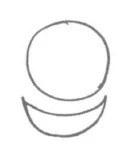
[ 28 ] The third part, transubstantiation—the transformation—consists in the symbolic representation of that consciousness which develops within a person when the divine substance is felt within them, when they sense the divine substance in their own soul. For the Christian, this transformation is nothing other than the expression of Paul’s words: “Not I, but Christ in me.” — He does not merely sacrifice himself; he becomes aware that the supernatural lives within him. This is what confronts us in the image of transubstantiation. And it always remains a beautiful, significant aspect of transubstantiation that, while the Most Holy is raised—lifted above the chalice—the faithful are actually to close their eyes, that is, to turn their awareness inward, so that they experience transubstantiation not through outward observation but in their innermost consciousness. It is also significant that the Most Holy actually consists of the bread and the bread holder, which has a crescent shape, so that in fact, in the sacramental symbol that envelops the Most Holy (see drawing $.100), the sun and the moon are present in the image, which clearly indicates that in the times when the Mass sacrifice was developed in its original form, there was an awareness of the connection between Christ and the sun and between Yahweh and the moon. That which the world has received through Christianity—and which is built upon the lunar religion of Yahweh—is fully expressed in this placement of the Host upon the lunar form, and it is truly a symbol of the convergence of the mortal in human beings with the immortal.
[ 29 ] And the fourth part of the Mass is Communion, which is meant to express nothing other than this: After the human being has become one with the supersensible, he allows his entire earthly being to pour itself into union with the supersensible. This fourth part symbolically represents what the initiate, the one to be initiated, was also to experience in both the ancient and modern mysteries.
[ 30 ] The first essential step is to learn to transform what one receives as knowledge of and perception of the world in the abstract, so that one can say with inner honesty: In the very beginning was the Word, and out of the Word all things came into being. — I ask you, my dear friends, to consider just how far modern Christianity has strayed from an understanding of the Gospel of John in particular. Bear in mind that today, the general perception is really only that God the Father is the Creator of the world. God the Father—who, moreover, is confused with the God of Yahweh, the God of the Jewish people—is regarded as the Creator God, whereas the Gospel states: “In the beginning was the Word, and all things came into being through it, and without this Word nothing that has come into being would have come into being.” — That which we possess within ourselves as what has come into being is the Creative Principle, the Word in the most orthodox sense, and one should actually conceive of the Father God as subsisting above all things; and in the Son of God, He has given the world that which constitutes the Creative Principle of the world.
[ 31 ] I say this only because the initiate’s understanding must be raised to such a level that the word that is proclaimed resounds entirely from the supersensible, whereas our common language today resounds from the intellectual, from the transitory. This is the first act of initiation: that one shapes the content of the soul into the Word as a supersensible revelation, as a real event—an event that emerges from the Angelion-All, from the sum total of the spiritual world. What emerges from the spiritual world and takes on the form of the Word within us—that is the first act of the Eucharistic sacrifice. In the very act of consciously speaking it aloud, one should become aware that this is a proclamation of the supersensible, and that it does not constitute a proclamation from the sensory world.
[ 32 ] The second point is that human beings enter into a real relationship with the supernatural through sacrifice. If we find a way to allude to sacrifice—that is, to allude, in a sense, to the reciprocal offering to the Divine—then we actually have before us, in all its diversity, that which must surely be there. You see, modern Catholicism has allowed this to be obscured. Modern Catholicism actually wants to take everything from the Divine and give nothing back to the Divine.
[ 33 ] Well, in our ritual [the Sunday ceremony at the Waldorf School], we didn’t want to go too far against the prevailing prejudices of our time. But we were nevertheless compelled, simply in the question posed to the child—who performs the sacrificial act—as to whether they wish to strive for the Spirit of God, and in the answer: “Yes, I want to seek it; I will seek the Spirit of God,” at least in words, to give a hint of the real relationship. Something is to take place; something is to happen through the fact that each child is asked whether they want to seek the Spirit of God. We had to include at least a hint of the Lord’s Supper [in our Sunday service], and the rest will simply have to emerge later.
[ 34 ] Well, you see, in the third act it becomes clear that the supersensible is not merely present, but that the human soul can connect with it. And in the fourth act of the Mass, during Communion, the fourth act of initiation is then represented, which consists in the human being becoming completely imbued with the supersensible, so that he feels himself to be nothing more than an outward sign, an outward symbol of the world, thereby fulfilling the saying: “Man is the image of the Deity.”
[ 35 ] In fact, awareness of these connections has been lost to such an extent that it is difficult to point them out today. One can therefore say that in the Mass—which, of course, cannot simply be adopted from Catholicism but must be shaped in a way that is appropriate for our time—we have before us that which so often presents to us, in symbolic form, the profoundly significant spiritual path of humankind. And so it should indeed be that we mark important milestones in life—such as the transition from school to life—with such ritual acts; but we should also work through the image in the lives of adults as well, for the image does not act merely on the intellectual; the image acts upon the whole human being. If I am to grasp anything intellectual, I grasp it entirely within myself alone. When I stand before a picture, it penetrates much deeper layers of my being than the intellectual realm. And when what takes place through the ritual enters the members of a community, they experience the supersensible together, and what is atomized by the body of teaching is synthesized in the ritual act. What is reproduced in the teachings—when expressed abstractly—through intellectualistic forms of thought, and what leads to fragmentation and analysis within the individual, is reunited and synthesized when one attempts to speak in images.
[ 36 ] You see, in more recent times, only one community has actually learned to speak in images, but it is a community that abuses this symbolic, imaginatively inspired speech—namely, the Jesuits. And you see, I must point out again and again how, in Jesuit educational institutions—but to the detriment of humanity—it is taught quite methodically to always summarize things in imagery once something has been taught to [people].
[ 37 ] I’d like to give you a very vivid example, because I myself once experienced—theoretically, I might say—the immense significance of this, since I wanted to see how it worked. It involved a famous Jesuit preacher—this was ten years ago now—who was preaching about the institution of Easter confession. He wanted to reduce to absurdity what the opponents of Catholicism say: that Easter confession, the requirement for Easter confession, is a papal institution rather than a supernatural one. So that is what he wanted to reduce to absurdity before his congregation. I observed this as well. If Klinckowström—that was the name of the Jesuit preacher—had tried to convey this to his congregation at the time in the abstract manner in which sermons are usually delivered, in the way one is accustomed to preaching in Protestant circles, he would have achieved absolutely nothing; he would not have achieved the slightest thing. He did it in the following way, summarizing as he said: “Yes, my dear Christians, you see, when people say that the Pope instituted Easter confession, it is really just as if one were to say the following: Imagine a cannon, and standing by the cannon is the gunner; the gunner holds the fuse in his hand, and then the officer stands a little further away. What happens? The gunner holds the fuse, the officer gives the command; and the moment the officer gives the command—the moment the command is sounded—the gunner pulls the fuse, the cannon fires, and the gunpowder inside the cannon brings about everything that happens as a result of the cannon shot.” — The entire congregation was as one when this image was vividly presented to them. — “Now,” he continued, “imagine if someone were to come along and say, for example, that the gunner did everything, that everything actually happened because of him. But he merely pulled the fuse at the officer’s command, and the officer could not have ordered the shot without the gunpowder either. Those who say that the Pope instituted Easter confession go even further, for that would be the same as if someone were to claim that the gunner—merely by pulling the fuse at the officer’s command—had invented the gunpowder! It is just as fundamentally wrong when people say that the Pope instituted Easter confession. He was merely present; as a representative of the supernatural world, he pulled the fuse.”
[ 38 ] Everything was, of course, permeated by the truth of what Father Klinckowström proclaimed there. It is not the case that this was due to some particularly fortunate disposition on the part of this priest. You can see for yourselves that it is very much part of the Jesuits’ methodical teaching to present everything in such imagery. There is even a book available today—why was it published? I haven’t examined it; the Catholic Church must have some purpose in mind there as well, for it always has purposes—in which it is described down to the finest details how one is to move one’s index finger when speaking this or that word, how one is to move one’s hand when saying this or that. There are even drawings of this; it is a methodical work that goes down to the smallest detail, a work that is woven into the image. And one simply has to ask: Why isn’t an attempt made to transform what is being shaped for the ruin of humanity, on the one hand, into something that brings salvation to humanity as well? For it can also be shaped for the good; it can and must be shaped for the good. The power to transform the abstract into the pictorial must spring from serious spiritual intentions, and this pictorial element must be experienced together with the congregation. This is what spiritually elevates a congregation; this is what truly establishes a sense of community, and worship is what will hold the congregation together; without worship, you can only fragment the congregation. If one opposes this on theoretical grounds, then one is acting out of prejudice.
[ 39 ] I would like to draw your attention to the fact that a friend of our cause, an Old Catholic priest—as such, he celebrates Mass in German, in the local language in general, and also performs other rituals in the local language—did not want to conduct the rituals in the peculiar translation in which they are often read today. He prompted me to restore some of the standard Catholic rituals to the form in which they originally existed. Only then can one see how the spiritual world comes alive in these matters, and one can see what has been distorted since the time of Jerome.
[ 40 ] You need not think, as has often been said, that I am in any way “tainted” by Catholicism when I speak this way about the worship of the Catholic Church. I merely wish to view matters objectively and draw your attention to the fact that it is quite impossible to truly cultivate religious life without making the transition to worship, to speaking in symbols. No matter how skilled you may be at persuading others or at making an impact through intellectual exposition—in the religious realm, you will achieve something only if, in appropriate settings, you can allow what you have presented theoretically in your speech to find its culmination in the symbolic. You must experience the symbolic as a truth yourself; therefore, you should consider only those symbolic representations that are truly connected to what is real in the world.
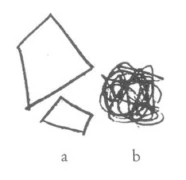
[ 41 ] But there are still many difficulties involved, and I certainly want to draw your attention to them. Consider, for example, the following scenario: Let someone today try to imagine how human beings came into being on Earth. Yes, if you turn to the natural sciences today with all the information they provide about the female egg cell, the male sperm cell, the growth of the fertilized egg, and so on, then, despite the achievements of natural science—and one must certainly admire what has been accomplished regarding such matters through a purely scientific way of thinking—you will not receive concepts that set you on the path to grasping the essence; rather, you will receive concepts that directly obscure the truth bit by bit. You see, the primary component of the human, the animal, and the organic in general is protein. Compare the structure of protein with that of any mineral substance in the world. It is so different that today, of course, the researcher says—and he is right to say so—that the structure of protein is extraordinarily complex; one cannot fathom it, and one cannot find a bridge between any crystallized, inorganic matter and the structure present in protein. But, you see, modern science does not realize that if we have any—let me illustrate this symbolically—inorganic form that we can, so to speak, simply trace in this way (a), and we compare it with the structure of protein (b), then at first glance we seem to have something immensely complex; in all the substances of our food, everywhere in the organic realm, this seemingly complicated constitution is integrated. People then say: The inorganic is constituted in a more complex way within the organic, and only then is the human body, for example, built up from this complexly constituted substance; this happens through cell division, through a specific configuration of the tissue, and so on. But the whole thing is, isn’t it, nothing but nonsense. For what really happens is the complete annihilation of all inorganic forms. The complexity of protein consists in the fact that everything inorganic descends into chaos. Protein is always on its way toward chaos, in order to dissolve the form corresponding to the inorganic and to transform matter into chaos; and the matter that is most thoroughly transformed into chaos is that which is present in the fertilized egg cell. This is simply matter driven into chaos. The entire system of earthly natural laws can no longer do anything with this chaos—it is rendered inoperative. To have become protein at any stage means: to be excluded from earthly natural laws. And what is the consequence? That extraterrestrial natural laws—the constellation of the planets, the entire extraterrestrial world—begin to act upon this chaos in order to give this chaos a constitution once again. Because matter enters a state of chaos during its transformation into protein, it becomes ready once more to receive—not only from the earthly realm, but from the entire universe, receiving its constitution from the cosmic realm. And therein lies the likeness of the human head, which, after all, mirrors the vault of heaven.
[ 42 ] Of course, true natural science will only be achieved once we move beyond these earthly things. The entire field of natural science has become accustomed to deriving everything purely from the inorganic. After all, what we face in natural science today is a process that leads to the withering away of everything, because natural science considers valid for the intellect only that which can be investigated in the abstract. The moment you have to contemplate the transition where that which can only be investigated in intellectual form gives way to chaos—that is when you must stop thinking, begin to look, and move on to a different kind of knowledge. And therein lies the difficulty. For you see, intellectualism not only turns us into people who reject the pictorial, it even prevents us from stepping outside the intellect and forming images ourselves. Once you have become completely intellectualistic and abstract, you can no longer manage it; you simply cannot manage it!
[ 43 ] The fact is that this intellectualistic culture of modern times exerts such a powerful hold over people that they all seem to me like someone who, as a little girl or even a little boy at a Waldorf school, wants to learn to embroider but manages only to run the various threads from top to bottom and from bottom to top; they can embroider, but they cannot produce real images. They are incapable of doing so. The entire spiritual activity of our modern culture, into which we have become entangled, exerts such pressure that no one has the spirit to be flexible enough to realize that, in the egg white, everything has simply been erased by these scientific findings, and thereby matter is opened up to conception on the part of the cosmos. This is precisely what points to the necessity of seeking religious renewal through anthroposophy. That is why I emphasized yesterday: It goes without saying that we must also draw upon those among today’s clergy who approach us with honest hearts as so-called Protestants and who therefore reject what I have just discussed today. But the active core upon which everything is to be built must, in fact, be the anthroposophists. For anthroposophy seeks precisely what one searches for in vain everywhere else: it seeks to lead us into a true grasp of reality. Unless we have gone through this process—this moving beyond the scientific grasp of the world, which has already taken hold of theologians today—we will not attain the ability to find symbolic images, so that we can truly express ourselves through such images before the believing congregation. And when one approaches this anthroposophical understanding of the world—you can follow it throughout my lecture cycles—at certain points one simply has to let it flow into an image. And if you read my Occult Science, in which I described the preliminary stages of the Earth as the Sun and the Moon, I was speaking only in images. When I say it looks a bit like a sensation of taste coming toward you, then a whole dozen natural scientists like Dessoir, Oesterreich, and so on cannot understand it; they don’t know what to make of it.
[ 44 ] In the practical exercise of the ministry, anthroposophy is what is meant to serve as the source of inspiration, so that one can even begin to engage with the symbolic, the ritual, and the liturgical—and thereby actually have the possibility of building a congregation. Otherwise, one will only be able to speak to individual people. Community-building can simply never be achieved through the abstract in life.
[ 45 ] I would like to present the matter up to this point for now, and I will continue presenting it tomorrow before moving on to the actual content of the sermon. We will be back tomorrow at 11 a.m., and I suggest that we continue today’s discussion on the other topics at 7 p.m. tonight.
[ 46 ] Now I would just like to say this: Yesterday I made a proposal to the gentlemen from Kommender Tag that Kommender Tag should serve as a kind of bridge to what is taking shape among you here. Isn’t that right? I emphasized that the most important thing is that this endeavor be financed, so to speak. However we conceive of our endeavor, it must, of course, be financed. It must lead directly to the formation of free communities, even if this must primarily be drawn from the existing church. I must say: I believe that if the work is carried out properly, it could be possible to reach a point within three months where the funding efforts will sustain themselves. So, I mean that there will then be at least enough to cover the costs of the funding efforts, and that a position can be fully staffed with someone to begin this work. “Der Kommende Tag” will agree to cover the costs for these three months; and I believe you have agreed to ask Dr. Heisler to take on this fundraising work. For starters, the project will perhaps be on solid ground once Dr. Heisler takes it on. I am firmly of the opinion that once one has reached the stage with such a project where one has begun—as far as we have now—one cannot afford to wait too long, for circumstances are pressing, and one often fails to realize how strong the forces of decline are today, and how easily one might simply miss the boat if one waits too long.
[ 47 ] We would be much further along with the threefold social order today if the matter had been properly understood back in the spring of 1919. At that time, a Cultural Council was established on the basis of my “Call for Culture.” It was rightly assumed that people in positions of authority would also make the cause their own. They even took people in positions of authority into consideration; they framed the matter in such a way that it wouldn’t give them too much of a chill, because they wanted to have a real impact, but of course those people couldn’t be kept on track. It’s true that they couldn’t be kept on board and that none of it amounted to anything. You will therefore be forced to rely on the youth, on the younger people who have sensed that the older generation has simply grown old and can no longer keep up. We must try not to waste any time. That is why I would also like to say this to you: we should try to bridge the gap, because I believe it is a justified feeling that, for this very purpose, the financing—if handled properly—cannot be too burdensome. We will find people who are open to this idea, and I believe that Dr. Heisler’s eloquence will find a receptive audience if, especially now in the coming months, he focuses on persuading individuals to open their wallets or write checks. Of course, you can’t win people over with lectures. That won’t get anything out of them. You have to approach individuals directly. He will have to see his task as devoting all his time to approaching individuals. The only unpleasant thing is that you might be shown the door with words—but only with words; other cases haven’t happened yet. There’s simply no other way; you have to accept that, and in the majority of cases, you aren’t actually shown the door with words. For example, regarding the fundraising campaign for the Swiss “Futurum AG,” I heard from all the gentlemen who were in charge of the campaign that there was only one instance where someone was turned away with words; otherwise, people limited themselves to being exceptionally friendly and gracious and finding the matter extremely interesting—but simply refusing to open their wallets. Some people write a letter afterward; of course, you don’t need to reply to that. You have to realize, of course, that you’ll only achieve something in a small percentage of cases, but you simply have to try. It’s just the way it is—you have to focus on making selections, and you have to try many times to succeed in just a few cases.
[ 48 ] Is there perhaps anything else we should discuss, or should we continue with this? — Maybe some of you have something to add. Tonight, we’ll expand the discussion to cover all three main points you mentioned yesterday.
[ 49 ] Gottfried Husemann: I think we would like to discuss the extent to which we need to prepare ourselves now for a career in preaching, for speaking in a figurative manner. We cannot expect this preparation from the university.
[ 50 ] Rudolf Steiner: Do you think, then, that something can be done along these lines? Something positive, right? In these sessions, I can only outline the general guidelines; of course, I can’t go into specific details. To go into details would require at least a two-week course. So, of course, one could certainly consider, along these lines, that if our circle has grown even larger over the next few months, we might then organize such a course, which would, over the course of two weeks, provide what is offered at educational institutions under the title “Symbolism”—though that is actually nothing. Only in the Catholic Faculty of Theology does “symbolism” still mean anything. Perhaps you do not yet fully grasp its inner structure.
[ 51 ] You see, this inner structure is best seen in the facts. I have observed that a large number of Catholic priests who held positions as high school teachers—which was still quite common in Austria at that time— or who, as university professors, had taught not only in the theology department but also in the philosophy and other departments—that such Catholic priests—most of whom were members of religious orders and were later called “modernists”—were reprimanded by Rome. Now, I once spoke with a man who was immensely significant in the field of exegesis, asking how he came to be reprimanded by Rome for the content of his speech, which, strictly speaking, did not at all warrant a reprimand, whereas — if one considers the perspective from which the rebuke was issued — one had to conclude that Professor Bickell, who belonged to the Jesuits, went far beyond what even an extreme liberal would do, yet was persona grata in Rome. I told him this, and he replied: “I am a Cistercian, and [in Rome] it is expected of the Cistercians that, the moment they no longer speak in accordance with the doctrine established by Rome, they will follow their convictions and could gradually stray from Catholicism.” — That is what is assumed of the Cistercians. With the Jesuits, as with Professor Bickell, one knows that no matter how liberal they may sound, they are faithful sons of Rome; they do not stray [from Rome]; one can be entirely certain of them; they are permitted liberalism; they are allowed to base their views on things entirely different from the body of doctrine.
[ 52 ] The Catholic Church does not suffer from this lack [of flexibility]; therefore, its approach is much more viable. For example, about 40 years ago, I once struck up a conversation with a Catholic theologian who was a professor at the Faculty of Theology in Vienna and was so learned that people said he knew the whole world and three villages to boot. He was a highly erudite Cistercian. Even a Cistercian was capable of speaking about doctrine in the following manner. In the course of our conversation, we came to discuss [the dogma] of the Immaculate Conception, and I said to him: “Yes, you see, if one remains within Catholic logic, one can acknowledge the Immaculate Conception, the conceptio immaculata Mariae.” — That is not the dogma of the Immaculate Conception of Jesus, which has, after all, always been present in the Church. But the Immaculate Conception, as claimed by Catholics regarding Saint Anne—that is, the progression from the Immaculate Conception of Mary to the Immaculate Conception of Saint Anne—? If one applies the same logic there, one must continue all the way back through all subsequent generations. — “Yes,” he said, “that doesn’t exist; we can’t do that; logic doesn’t require it.” We must stop at Saint Anne; if we were to go further, we’d end up at “Davidl,” and with Davidl, we’d run into trouble with the conceptio immaculata.—
[ 53 ] Such words do not at all reflect a pure sense of truth. When a man speaks from outside the Church, a completely different expression of the impulse toward truth comes through, and this is present everywhere [in the Catholic Church]. The concepts are shaped in such a way that they can take root among the masses—they are not shaped according to any kind of logic—and that is what makes Catholicism so great. This cannot under any circumstances be condoned, but one must be aware of it. One must know who one is dealing with.
[ 54 ] For example, it is the case that a genuine immersion in the world—such that one is immersed in the world through thought, not merely in an intellectualistic sense but insofar as it is pure thought—is sometimes present in a certain way among Catholic priests. Through the course of my life, I have come to know many Catholic priests. Among them was the church historian at the University of Vienna. The man was an extraordinarily interesting person, but thoroughly traditional Catholic—so Catholic to the extreme that he himself admitted he no longer went out on the street once it had grown dark in the evening and the streetlights were not yet fully lit. When I asked him why he no longer went out on the street, he said: “Out there, you only see people as vague silhouettes, and in Vienna you also come across Freemasons—and a Freemason must be seen only in sharp relief, because you can only pass him by if you can clearly distinguish yourself from him.” — You see, one can be highly educated and deeply versed in all of theology and yet still hold the opinion that, in the real world, it means something when one passes a Freemason without rejecting him through sharp contours. The auras blend into one another, and one cannot allow such a hodgepodge of Catholic priest and Freemason to come about.
[ 55 ] Ernst Uehli: The Catholic Church has indeed relied heavily on legends; and I think it is true that the Catholic movement has been greatly sustained by legend. It is quite conceivable that a new body of legends could emerge in a future church community.
[ 56 ] Rudolf Steiner: That is correct. And if you read, in particular, some of the lectures I gave in Dornach, you will even find that I attempted to express certain things—which can now be spoken of openly—in the form of legends. I have given entire lectures in the form of legends; and I would like to draw your attention to one thing. I once attempted to characterize the essence of the arts. One cannot penetrate the essence of the arts through concepts; everything one constructs abstractly remains external. If one wishes to depict such things, one must resort to imagery. The little book The Essence of the Arts is presented entirely through imagery. And there, one is immediately misunderstood again. When I had spoken about this matter entirely from the realm of imagination, a very old theosophist stepped forward and had nothing else to say but: “Yes, you’ve transformed the nine Muses.” — Isn’t that right? It was the furthest thing from my mind to think of the nine Muses; it all arose from the necessity of the matter. It was far from my intention to rehash old stories, but people could not imagine anything other than that this was an abstract approach.
[ 57 ] So it must be said that the need to resort to imagery is certainly present once again. For example, we still do not have an image for a very important concept. Consider the abundance of Taurus legends and tales at the beginning of the third millennium, when the vernal equinox entered the constellation of Taurus. Consider the legends of the Argonauts’ expedition, when, in the 8th century B.C., the sun entered the constellation of Aries. Now it is in the constellation of Pisces. This legend still needs to be created. We need to develop a visual legend. Although the subject is already alive, we do not yet have a legend for it. This imaginative aspect still needs to be developed. And so there are numerous other things that today exist only in the abstract, which should now be transformed from world events into visual imagery. We must work on this. Through this, we must once again find our connection to the world. Today, the world is, in fact, nothing more than what can be grasped intellectually. What is the world to people today? One could even say: For the intellectual person of the present, the entire cosmos is nothing more than frozen mathematics and mechanics. And we must once again learn to go beyond mere mathematics and mechanics; we must arrive at the imaginative, the pictorial, and also at legend.
[ 58 ] We simply need to realize that research such as that presented by my late friend Ludwig Laistner on myths, legends, and the formation of legends in the book The Riddle of the Sphinx can be of great help. I want to emphasize explicitly that Ludwig Laistner understood nothing about the spiritual sciences. I simply wish to say that the book can aid research, even though Laistner attributes all myths and legends to dreams. But it is interesting to explore how he does not seek the origins of legends along the delusional path taken by today’s Protestant and Catholic researchers, who tell themselves: “The indigenous peoples composed poetry; they placed the gods in thunderstorms, just as they did in the struggle between winter and summer.” — As if people had never encountered a peasant’s mindset; a peasant’s mindset never composes poetry. These people, to whom such poetic composition is attributed, are as far removed from poetry as peasants are. It was all a product of the imagination. Ludwig Laistner attributes everything to dreams; nevertheless, it is interesting [to read how he sees a connection between human inner experiences in the Slavic legend of the Noon Woman and the legend of the] Sphinx in Greece. That is why the book is titled The Riddle of the Sphinx. Legends must flow from life itself, now in full consciousness. This is immensely important.