

Man's Life on Earth and
the Essence of Christianity
GA 349
21 March 1923, Dornach
Translate the original German text into any language:
Versions Available:
Man's Life on Earth and the Essence of Christianity, tr. SOL
6. Das menschliche Leben in Schlaf und Tod
6. Human Life in Sleep and Death
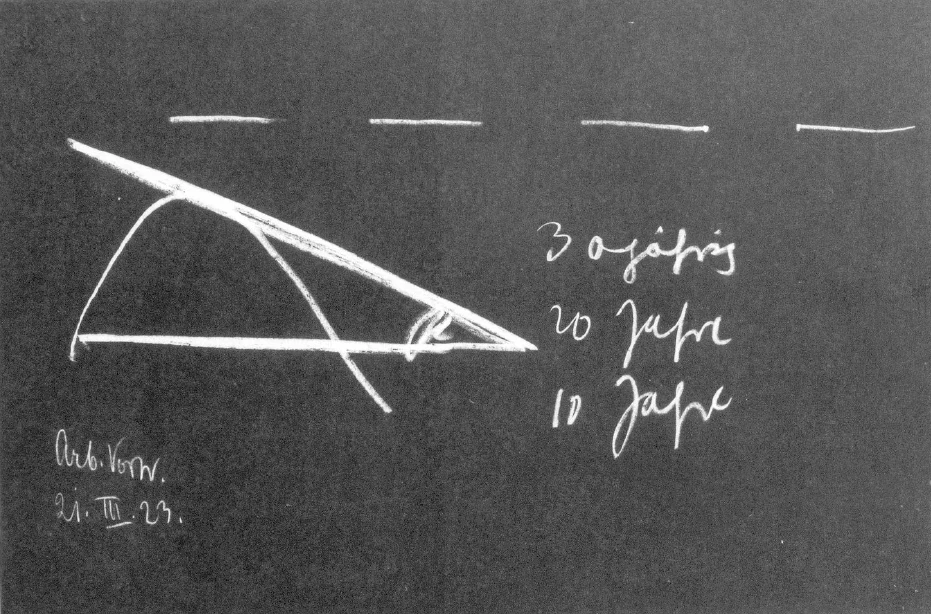
[ 1 ] Guten Morgen, meine Herren! Nun wollen wir einmal versuchen, wenigstens vorläufig das zu Ende zu führen, was wir angefangen haben zu betrachten. Sehen Sie, das Verstehen des Lebens kommt nur dadurch zustande, daß man, was ich Ihnen ja schon öfter erwähnt habe, anfängt, den Schlaf des Menschen zu betrachten. Wenn man nämlich so drinnensteht im Leben vom Morgen bis zum Abend, dann hat man ja gewöhnlich die Meinung, der Schlaf, der gibt einem wiederum Kraft, der bringt die Ermüdung fort und so weiter. Aber der Schlaf tut nämlich viel mehr. Sie brauchen sich das nur einmal zu überlegen. Denken Sie einmal daran, wenn Sie sich an Ihr Leben erinnern, die Träume, die Sie im Schlaf gehabt haben, die fallen Ihnen ja nicht immer ein. Träume sind etwas, was man bald vergißt, wie Sie alle wissen. Nur höchstens, daß man da oder dort einmal einen Traum gehabt hat, den man oft erzählt hat. Dann merkt man ihn sich durch das Erzählen. Aber die Träume, die man nicht erzählt, die schwinden sehr schnell dahin. Wenn Sie sich zurückerinnern an Ihr Leben bis in die Bubenzeit, so werden Ihnen aus der Bubenzeit manche Erinnerungen einfallen bis zum späteren Leben. Aber diese Erinnerung, die hat ja immer eine Unterbrechnung. Wenn Sie heute zurückdenken, so ist da die Zeit, während der Sie geschlafen haben. Das ist eine Pause, an die Sie sich nicht zurückerinnern. Die Erinnerung fängt erst gestern abend wiederum an und geht bis gestern früh. Dann ist wiederum eine Pause. So daß man eigentlich, wenn man sich zurückerinnert, nicht sein ganzes Leben hat, sondern bei diesem Zurückerinnern fällt ja eigentlich immer dasjenige, was in der Nacht ist, aus. Wenn man eine Linie der Rückerinnerung zieht, so verfließt eine Zeit vom Abend bis zum Morgen ohne Rückerinnerung, dann wiederum Erinnerung vom Morgen bis zum Abend, wiederum Pause vom Abend bis zum Morgen und so fort. An unser Leben erinnern wir uns eigentlich nur so, daß wir einen ganzen Teil unseres Lebens gar nicht zurückerinnern. Das ist ganz klar. Das ist diejenige Zeit, die wir verschlafen haben.
[ 1 ] Good morning, gentlemen! Now let’s try, at least for the time being, to bring to a conclusion what we have begun to examine. You see, understanding life comes about only by—as I have mentioned to you many times before—beginning to examine human sleep. For when one is so deeply immersed in life from morning till night, one usually believes that sleep restores one’s strength, dispels fatigue, and so on. But sleep actually does much more than that. You need only think about it for a moment. Think about it: when you recall your life, the dreams you’ve had while sleeping don’t always come to mind. Dreams are something we quickly forget, as you all know. At most, you might remember having had a particular dream here or there—one you’ve often told others about. Then you remember it through telling the story. But the dreams you don’t share fade away very quickly. If you look back on your life all the way to your childhood, certain memories from that time will come to mind, right up to your later life. But this memory always has a gap. When you think back today, there’s the time during which you were asleep. That’s a gap you don’t remember. The memory only starts again last night and goes up to yesterday morning. Then there’s another gap. So when you look back, you don’t actually have your entire life; rather, whatever happened during the night is always left out of this recollection. If you trace a line of memory, a period from evening to morning passes without recollection, then there’s memory from morning to evening, followed by another gap from evening to morning, and so on. We actually remember our lives only in such a way that we do not recall an entire part of our lives at all. That is quite clear. That is the time we have slept through.
[ 2 ] Nun wollen wir einmal einen Menschen ins Auge fassen, der nicht schlafen kann. Sie wissen ja, manche Leute klagen darüber, daß sie nicht schlafen können. Aber viele von diesen Klagen darf man nicht so ernsthaftig nehmen, denn manche Leute erzählen einem, sie schlafen überhaupt nie in der Nacht. Und wenn man sie dann frägt, wie lange sie schon nicht schlafen in der Nacht, dann sagen sie: Ja, schon zehn Jahre nicht. - Nun, derjenige, der so lange nicht schlafen könnte, der wäre ja schon längst tot. Die Leute schlafen zwar, aber weil sie so lebhafte Träume im Schlafe haben, kommt es ihnen vor, wie wenn sie wach gewesen wären. Man soll solch einem Menschen sagen: Lege dich nur einmal wirklich hin, du brauchst nicht zu schlafen; lege dich nur hin. — Er schläft nämlich dann schon, und wenn er es auch nicht weiß, so schläft er doch. Das wollte ich Ihnen nur sagen, damit Sie sehen, daß der Mensch einfach den Schlaf für das Leben wirklich braucht. Der Schlaf ist notwendiger für das Leben wie die Nahrung. Und derjenige, der nicht schlafen könnte, könnte nicht leben.
[ 2 ] Now let’s consider someone who can’t sleep. As you know, some people complain that they can’t sleep. But many of these complaints shouldn’t be taken too seriously, because some people tell you they never sleep at all at night. And when you ask them how long they’ve been unable to sleep at night, they say, “Well, for ten years now.”—Well, anyone who couldn’t sleep for that long would have been dead long ago. People do sleep, but because they have such vivid dreams while asleep, it seems to them as if they had been awake. You should say to such a person: “Just lie down for once—you don’t need to sleep; just lie down.”—For they are already asleep, and even if they don’t realize it, they are still asleep. I just wanted to tell you this so you can see that human beings truly need sleep for life. Sleep is as necessary for life as food. And anyone who couldn’t sleep couldn’t live.
[ 3 ] Nun, wieviel verschlafen wir denn während unseres ganzen Lebens zwischen Geburt und Tod? Ja, meine Herren, sehen Sie, dieses Verschlafen ist am längsten beim ganz kleinen Kinde. Wenn das Kind geboren wird, schläft es ja fast immer. Dann allmählich wird die Zeit des Schlafens kleiner, das Schlafen immer weniger. Und wenn man ein wenig alt geworden ist und rechnet zurück, so muß man sagen, ein Drittel seines Lebens hat man eigentlich verschlafen. Das ist auch gesund. Ein Drittel seines Lebens hat man eigentlich verschlafen.
[ 3 ] Well, how much time do we actually spend sleeping throughout our entire lives, from birth to death? Yes, gentlemen, you see, this sleeping lasts the longest in very young children. When a child is born, it sleeps almost all the time. Then, gradually, the time spent sleeping decreases, and the child sleeps less and less. And when you’ve gotten a little older and look back, you have to admit that you’ve actually spent a third of your life asleep. That’s healthy, too. You’ve actually spent a third of your life asleep.
[ 4 ] Diese Sache hat man ziemlich lange gewußt. Nur erinnern sich heute die Leute nicht gern an solche Dinge, die man lange gewußt hat. Noch im 19. Jahrhundert, ganz im Anfange, da haben Leute, die über diese Sache geschrieben haben, gesagt: Der Mensch soll 8 Stunden arbeiten, 8 Stunden für sich selber sein und 8 Stunden schlafen. Das gibt 16 Stunden Wachsein und 8 Stunden Schlaf, also 3 mal 8.= 24 Stunden.
[ 4 ] People have known this for quite some time. It’s just that today, people don’t like to remember things they’ve known for a long time. Even in the 19th century, right at the very beginning, people who wrote about this said: A person should work 8 hours, spend 8 hours on themselves, and sleep 8 hours. That adds up to 16 hours awake and 8 hours asleep—so 3 times 8 equals 24 hours.
[ 5 ] Das gibt also ein Drittel von 24 Stunden für die Zeit des Schlafens. Das war auch eine ganz richtige Beobachtung. Ein Drittel seines ganzen Lebens braucht der Mensch einmal zum Schlaf. Nun, nicht wahr, die Leute kümmern sich nicht darum, wie wichtig der Schlaf für das Leben ist, weil sie sich heute überhaupt nicht darum kümmern, was Seele und Geist ist. Sie kümmern sich nur darum, was der Mensch im Wachzustand für seinen Körper erlebt, aber nicht was Seele und Geist ist. Das ist eben so, wie die Leute heute oftmals auch im praktischen Leben sagen: Gott, ja, schlafen, das ist ja ganz schön, aber dazu braucht man nicht mehr als die nötige Bettschwere. Und da trinken sie so und so viel Bier am Abend, damit sie schlafen können. Aber darauf kommt es nicht an, daß man die nötige Bettschwere hat, sondern es kommt darauf an, daß man einsieht, was für eine große Bedeutung das Schlafen eigentlich hat.
[ 5 ] So that leaves one-third of 24 hours for sleep. That was a very accurate observation. A person spends one-third of their entire life sleeping. Well, isn’t it true that people don’t care about how important sleep is for life, because these days they don’t care at all about what the soul and spirit are? They are only concerned with what a person experiences physically while awake, but not with what the soul and spirit are. It’s just as people often say in everyday life today: “God, yes, sleeping—that’s all well and good, but you don’t need more than the necessary drowsiness to do it.” And so they drink this much or that much beer in the evening so they can sleep. But what matters is not having the necessary drowsiness, but realizing just how important sleep actually is.
[ 6 ] Und nun wollen wir uns einmal klarmachen, was eigentlich schlafen heißt. Sehen Sie, meine Herren, der Mensch hat sich im Grunde genommen recht gern. Das sieht man insbesondere bei Kranken. Kranke, die zeigen einem, wie gern sie sich haben, denn wenn ihnen etwas weh tut, dann geben sie furchtbar auf sich acht und so weiter. Das ist alles ganz richtig, aber es zeigt doch, daß der Mensch sich furchtbar gern hat. Was hat denn der Mensch eigentlich gern, wenn er sich selber gern hat? Ja, da hat er nämlich seinen Körper gern. Und das ist das große Geheimnis des Lebens, möchte ich sagen, daß der Mensch seinen Körper gern hat. Und die Liebe, die der Mensch zu seinem Körper hat, die zeigt sich dann, wenn dieser Körper nicht ganz in Ordnung ist.
[ 6 ] And now let’s take a moment to clarify what sleeping actually means. You see, gentlemen, people basically like themselves quite a lot. You can see this especially in sick people. Sick people show you just how much they like themselves, because when something hurts them, they take terrible care of themselves and so on. That’s all quite true, but it does show that people love themselves terribly much. What is it, actually, that people love when they love themselves? Well, it’s their bodies that they love. And that, I would say, is the great secret of life: that people love their bodies. And the love that people have for their bodies becomes evident when those bodies aren’t quite right.
[ 7 ] Aber mit diesem Gernhaben des Körpers hat es auch seine Haken. Der Körper, der bewegt sich den ganzen Tag. Der Körper schindet sich ab den ganzen Tag. Und das Seelisch-Geistige, das darinnen ist, bekommt dadurch im Laufe des Tages, ohne daß der Mensch es weiß, den Körper immer weniger lieb. Das ist das Merkwürdige, und das muß man wissen. Während der Mensch im Tage lebt und sich fortwährend regsam machen muß, bekommt das Seelisch-Geistige den Körper immer weniger lieb. Daher schläft das Kind so viel. Das hat seinen Körper sehr lieb, will immer den Körper genießen. Sie können, wenn Sie ein Kind sehen, immer sehen, wie das Kind seinen Körper genießt. Denken Sie nur einmal daran, wie es ist, wenn das Kind die Milch getrunken hat und einschläft. In diesem Schlaf hat das Kind das Wohlgefühl der Verdauung. Es genießt das, was in seinem Körper vorgeht. Und erst wiederum, wenn es hungrig wird, wacht es auf. Denn das, was da vorgeht, wenn es hungrig ist, das hat es weniger gern. Da wacht es wiederum auf. Also Sie sehen, das Kind, das will seinen Körper auch im Schlaf noch genießen. Sie können ja die schönsten Beobachtungen machen. Nur tun das die Gelehrten nicht, weil sie dazu nicht die Fähigkeit haben.
[ 7 ] But there are also some drawbacks to this fondness for the body. The body is in motion all day long. The body works itself to the bone all day long. And as a result, over the course of the day—without the person even realizing it—the soul-spirit within grows less and less fond of the body. That is the strange thing, and it is important to know this. While a person lives through the day and must constantly keep active, the soul and spirit grow less and less fond of the body. That is why a child sleeps so much. A child loves its body very much and always wants to enjoy it. Whenever you see a child, you can always see how the child is enjoying its body. Just think for a moment about what it’s like when a child has drunk its milk and falls asleep. In this sleep, the child experiences the pleasant sensation of digestion. It enjoys what is happening inside its body. And it only wakes up again when it becomes hungry. For what happens when it is hungry is something it likes less. That is why it wakes up again. So you see, the child wants to continue enjoying its body even while asleep. You can make the most wonderful observations. But scholars don’t do this because they lack the ability to do so.
[ 8 ] Beobachten Sie einmal, wenn eine Kuhherde auf einer Weide ist und frißt, und dann die Kühe sich so wohlbehaglich hinlegen und ihre Verdauung genießen. Da genießen sie dasjenige, was in ihrem Körper vorgeht.
[ 8 ] Just watch a herd of cows out in a pasture as they graze, and then as they lie down so comfortably and enjoy the process of digestion. That’s when they’re savoring what’s happening inside their bodies.
[ 9 ] Das ist das, was man wissen muß: daß der Mensch eigentlich seinen Körper genießen will. Aber beim Menschen ist es noch etwas anders als bei den Kühen, und beim erwachsenen Menschen ist es noch etwas anders als beim Kind. Das kleine Kind arbeitet noch nicht, daher genießt es im Schlaf seinen Körper. Die Kühe machen alles aus Instinkt, genießen daher auch im Schlaf ihre Verdauung. Der Mensch kommt gar nicht dazu, seine Verdauung zu genießen. Der Mensch wird eigentlich so, daß er, wenn er den ganzen Tag seinen Körper benützt, am Abend so weit ist, daß ihm sein Körper nicht mehr sympathisch ist. Er hat ihn nicht mehr lieb. Und sehen Sie, deshalb schläft er. Er schläft, weil ihm sein Körper nicht mehr sympathisch ist. Die Antipathie, die der Mensch den ganzen Tag hindurch zu seinem Körper entwickelt, die läßt ihn in der Nacht einschlafen, und er schläft so lange, bis er diese Antipathie in der Seele überwunden hat, und er wacht wiederum auf, wenn die Sympathie zu seinem Körper wieder vorhanden ist. Das muß man zuallererst verstehen, daß Aufwachen darauf beruht, daß der Mensch wiederum Sympathie zu seinem Körper entwickelt. Und diese Sympathie besteht zu allen einzelnen Organen des Körpers. Wenn der Mensch daher aufwacht, da rutscht er gewissermaßen in seine Organe hinein,
[ 9 ] Here’s what you need to know: that human beings actually want to enjoy their bodies. But with humans, it’s a little different than with cows, and with adults, it’s a little different than with children. A small child doesn’t work yet, so it enjoys its body while sleeping. Cows do everything by instinct; therefore, they enjoy their digestion even while sleeping. Human beings never get around to enjoying their digestion. Human beings are actually such that, when they use their bodies all day long, by evening they have reached the point where their bodies are no longer appealing to them. They no longer love them. And you see, that is why they sleep. They sleep because their bodies are no longer appealing to them. The antipathy that humans develop toward their bodies throughout the day causes them to fall asleep at night, and they sleep until they have overcome this antipathy in their souls; they wake up again when the affection for their bodies has returned. This is what one must understand first and foremost: that waking up is based on a person once again developing affection for their body. And this affection extends to every single organ of the body. Therefore, when a person wakes up, they slip, so to speak, into their organs,
[ 10 ] Denken Sie nur einmal, wie da die Träume sind im Aufwachen. Die Träume im Aufwachen sind so, daß man zum Beispiel von Schlangen träumt. Da rutscht man in seine Gedärme hinein und träumt von Schlangen. Die Schlangen, die stellen die Gedärme dar.
[ 10 ] Just think for a moment about what dreams are like when you’re waking up. Dreams when you’re waking up are such that, for example, you dream about snakes. You slip into your intestines and dream about snakes. The snakes represent the intestines.
[ 11 ] Also der Mensch schlüpft aus Sympathie mit seinem Körper mit seinem Geistig-Seelischen in seinen Körper hinein, wenn er aufwacht. Diese Sympathie muß der Mensch haben, sonst würde er immer seinen Körper verlassen wollen.
[ 11 ] So, out of a sense of affinity with his body, a person slips his spiritual-soul aspect back into his body when he wakes up. A person must have this sense of affinity; otherwise, he would always want to leave his body.
[ 12 ] Und nun stellen Sie sich vor: Der Mensch ist gestorben, er hat seinen Körper weggelegt; der Körper ist nicht mehr am Menschen. Das erste, was da eintritt, habe ich Ihnen gesagt, das ist, daß der Mensch seine Gedanken hat als Erinnerung an sein ganzes Leben. Und die gehen dann verloren nach ein paar Tagen schon. Die zerstreuen sich in der ganzen Welt. Aber dann bleibt ihm die Sympathie mit dem, was sein Körper erlebt hat. Und diese Sympathie mit dem, was sein Körper erlebt hat, die muß er jetzt allmählich verlieren. Das ist das, was wir nach dem Tode zunächst durchmachen, daß wir die Sympathie mit unserem Körper verlieren müssen.
[ 12 ] And now imagine this: The person has died; they have left their body behind; the body is no longer connected to the person. I have already told you that the first thing that happens is that the person retains their thoughts as memories of their entire life. And those memories are lost after just a few days. They scatter throughout the world. But then what remains is a sense of connection to what his body experienced. And this sense of connection to what his body experienced—he must now gradually lose it. That is what we go through first after death: we must lose our sense of connection to our body.
[ 13 ] Wie lange dauert es, bis diese Sympathie mit dem Körper wiederum hergestellt ist, wenn wir einen Tag leben? Das dauert ein Drittel des Tages. Deshalb dauert auch der Verlust der Sympathie nach dem Tode ein Drittel des ganzen Lebens. Wenn ein Mensch, sagen wir, dreißig Jahre alt geworden ist, so braucht er, um den ganzen Körper los zu werden, um gar keine Sympathien mit Welt und Leben mehr zu haben, ungefähr zehn Jahre - ungefähr ist das natürlich alles. So daß also der Mensch nach dem Tode zuerst ein paar Tage hat, wo er eine Rückerinnerung hat, und dann hat er dieses Abgewöhnen, möchte ich sagen, der Rückerinnerung, das ein Drittel des ganzen Lebens, das er auf der Erde zugebracht hat, dauert. Nun, das ist zwar für die einzelnen Menschen durchschnittlich richtig, aber es ist auch bei dem einen länger oder bei dem anderen kürzer, weil der eine mehr Sympathie zu seinem Körper hat, sich lieber hat, der andere sich weniger lieb hat und so weiter. Also wir machen nach dem Tode etwas durch, was man nennen könnte: Der Mensch gewöhnt sich ab alle Dinge, die ihn mit seinem Körper zusammenhalten.
[ 13 ] How long does it take for this sympathy with the body to be reestablished when we live for one day? It takes one-third of the day. That is why the loss of this connection after death also takes a third of one’s entire life. If a person has, say, lived to be thirty years old, it takes him about ten years to let go of his entire body—to no longer have any connection whatsoever with the world and life—though, of course, these are all rough estimates. So after death, a person first has a few days during which they have memories of the past, and then they go through this process of weaning themselves away from—as I would say—those memories, which takes a third of the entire life they spent on Earth. Now, while this is generally true on average for individual people, it can be longer for some and shorter for others, because one person has more affection for their body—loves themselves more—while another loves themselves less, and so on. So after death, we go through something that could be called: the person weans themselves off all the things that bind them to their body.
[ 14 ] Nun können Sie aber sagen: Das, was du uns da erzählst, ist eigentlich doch noch etwas theoretisch. Wie kann man wissen, daß der Mensch noch etwas an sich hat, wenn er seinen physischen Körper abgelegt hat? Wie kann man das wissen? — Ja, dazu, meine Herren, muß man eben studieren, wie sich der Mensch im Leben entwickelt.
[ 14 ] But now you might say: What you’re telling us here is actually still somewhat theoretical. How can we know that a person still has something within them after they have shed their physical body? How can one know that? — Well, gentlemen, to answer that, one simply has to study how a person develops throughout their life.
[ 15 ] Da ist die erste Periode des Lebens, in der sich der Mensch entwickelt, der erste Zeitabschnitt des Lebens; der ist der, bis der Mensch die zweiten Zähne bekommt. Er hat erst die Milchzähne, dann bekommt er die zweiten Zähne. Ja, sehen Sie, da kann man davon reden, daß der Mensch die Milchzähne von der Vererbung hat. Aber die zweiten Zähne, die hat er nicht mehr von der Vererbung. Die zweiten Zähne, die hat er von seinem Ätherleib. Der Ätherleib ist in ihm tätig und gibt ihm die zweiten Zähne. So daß wir also haben den physischen Leib, wie ich es Ihnen schon neulich aufgeschrieben habe; der gibt die ersten Zähne. Dann ist der Ätherleib da; der gibt dem Menschen die zweiten Zähne, die Zähne, die dann bleiben.
[ 15 ] There is the first period of life in which a person develops, the first stage of life; this lasts until the person gets their permanent teeth. First they have baby teeth, then they get their permanent teeth. Yes, you see, in this case we can say that a person’s baby teeth are inherited. But their permanent teeth—those are no longer inherited. The permanent teeth come from the etheric body. The etheric body is active within the person and provides the permanent teeth. So we have the physical body, as I wrote down for you the other day; it provides the first set of teeth. Then there is the etheric body; it gives the person the permanent teeth—the teeth that remain.
[ 16 ] Nun muß man sich eben die Fähigkeit aneignen, zu schauen — heute eignen sich die Menschen nur die Fähigkeit an, abstrakt zu denken, Theorien auszubilden, aber nicht zu schauen das, was ich eben beschrieben habe in meinem Buche «Wie erlangt man Erkenntnisse der höheren Welten?». Wenn man das Kind wirklich anschaut, wie es allmählich zu seinen zweiten Zähnen kommt, so sieht man dieses übersinnliche Arbeiten des Ätherleibes. Und das ist derselbe Leib, den der Mensch behält, wenn er stirbt, behält durch ein paar Tage, und der sich dann durch die ganze Welt zerstreut. Studiert man also richtig, was dem Menschen die zweiten Zähne gibt, dann bekommt man heraus, daß der Mensch nach dem Tode noch ein paar Tage seinen Ätherleib hat und ihn ein paar Tage hinterher wegwirft, das heißt, er zerstreut sich in der Welt.
[ 16 ] Now one must simply acquire the ability to see—today, people acquire only the ability to think abstractly and formulate theories, but not to see what I have just described in my book *How Does One Gain Knowledge of the Higher Worlds?*. If one truly observes a child as it gradually grows its second set of teeth, one can see this supersensory activity of the etheric body. And this is the same body that a person retains after death—retains for a few days—and which then disperses throughout the entire world. So if one studies properly what gives a person their second set of teeth, one discovers that after death a person retains their etheric body for a few more days and then sheds it a few days later—that is, it disperses throughout the world.
[ 17 ] Nun hat er dann noch seinen astralischen Leib und sein Ich. Dieser astralische Leib, der ist nun dasjenige, was immer nach dem physischen Leib verlangt. Mit dem Ich, das drinnensteckt, verlangt er immer nach dem physischen Leib. So daß wir also sagen können: Der Mensch entwickelt — ich habe Ihnen das neulich schon gesagt — das Bedürfnis in seinem astralischen Leib. Alle Bedürfnisse entwickelt der astralische Leib. Die Bedürfnisse sind nicht am physischen Leib. Wenn der physische Leib ein Leichnam ist, hat er keine Bedürfnisse mehr.
[ 17 ] Now he also has his astral body and his “I.” This astral body is what is always longing for the physical body. With the “I” residing within it, it always yearns for the physical body. So we can say: The human being develops—as I told you recently—needs within his astral body. All needs are developed by the astral body. The needs are not located in the physical body. When the physical body is a corpse, it no longer has any needs.
[ 18 ] Also wir können sagen: Dasjenige, was dem Menschen die zweiten Zähne gibt, das ist ein paar Tage nach dem Tode auch weg. Was bleibt nun? Da muß man wiederum studieren lernen, was nun im Menschen anfängt besonders tätig zu sein von dem Moment an, wo er die zweiten Zähne hat, bis zu dem Moment, wo er geschlechtsreif wird. Das ist wiederum eine wichtige Periode des menschlichen Lebens. Unsere heutige Wissenschaft kann solche Dinge nicht studieren, weil sie gar keine Aufmerksamkeit darauf verwendet.
[ 18 ] So we can say: That which gives a person their permanent teeth is also gone a few days after death. What remains, then? Here we must once again study what begins to be particularly active in a person from the moment they have their second set of teeth until the moment they reach sexual maturity. This, too, is an important period of human life. Modern science cannot study such things because it pays no attention to them at all.
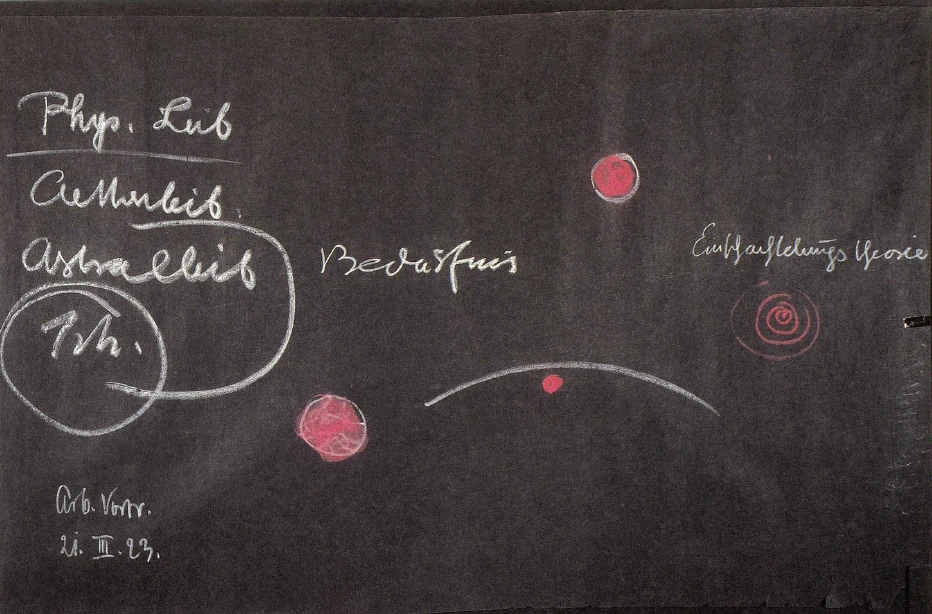
[ 19 ] Sehen Sie, vom Zweiten-Zähne-Kriegen bis zur Geschlechtsreife, da arbeitet beim Kinde etwas Übersinnliches drinnen. Und was will dieses Übersinnliche? Dieses Übersinnliche will den ganzen Körper allmählich ergreifen. Es ist noch nicht drinnen, wenn das Kind die zweiten Zähne hat und anfängt, diesen astralischen Leib in seinen ganzen Körper hereinzubekommen, so daß er ihn durchdringt. Dann wird das Kind immer reifer und reifer. Und ist der astralische Leib im Körper ganz drinnen, dann ist das Kind geschlechtsreif. Das ist eben das Wichtige, daß man weiß: Der astralische Leib, der ist dasjenige, was in das Kind die Geschlechtsreife erst hereinbringt.
[ 19 ] You see, from the time a child gets its second set of teeth until it reaches sexual maturity, something supernatural is at work within the child. And what does this supernatural force want? It wants to gradually take hold of the entire body. It is not yet fully present; when the child gets its second set of teeth, it begins to draw this astral body into its entire physical body, so that it permeates it. Then the child becomes more and more mature. And once the astral body is fully within the physical body, the child has reached sexual maturity. This is precisely the important point to understand: the astral body is what brings about sexual maturity in the child in the first place.
[ 20 ] Diese Dinge kann man natürlich nicht so studieren, wie die heutigen Gelehrten sie studieren möchten. Die heutigen Gelehrten möchten nur dasjenige, was handgreiflich ist, studieren. Die beobachten nicht das menschliche Leben. Derjenige, der aber einmal wirklich richtig beobachten gelernt hat, was es da ist, was von den zweiten Zähnen bis zur Geschlechtsreife sich in den Körper hineinarbeitet, der weiß, daß das eben der astralische Leib ist. Der bringt alle die Bedürfnisse hervor. Natürlich hat das Kind vor dem Zweiten-Zähne-Kriegen auch schon Bedürfnisse, weil der astralische Leib namentlich im Kopfe drinnensteckt; aber später breitet er sich durch den ganzen Leib aus. Sie können das beim Knaben sehr gut wahrnehmen, wie sich der astralische Leib ausbreitet. Der Knabe verändert die Stimme, und damit wird er auch geschlechtsreif. Das ist das Hineinfahren des astralischen Leibes in den ganzen physischen Leib. Bei der Frau können Sie es wahrnehmen dadurch, daß sich die Nebenorgane des Geschlechtslebens, die Brüste und so weiter entwickeln. Das ist das Hineinfahren des astralischen Leibes. Und diesen astralischen Leib behält der Mensch nun nach dem Tode, wenn er den Ätherleib schon weggeworfen hat.
[ 20 ] Of course, these things cannot be studied the way today’s scholars would like to study them. Today’s scholars want to study only what is tangible. They do not observe human life. But anyone who has truly learned to observe what it is that works its way into the body from the time of the second set of teeth until sexual maturity knows that this is precisely the astral body. It is this body that gives rise to all these needs. Of course, the child already has needs before getting its second set of teeth, because the astral body is located primarily in the head; but later it spreads throughout the entire body. You can perceive this very clearly in a boy as the astral body expands. The boy’s voice changes, and with that he also reaches sexual maturity. This is the astral body penetrating the entire physical body. In women, you can observe this through the development of the secondary sexual organs—the breasts and so on. This is the astral body penetrating the physical body. And the human being retains this astral body after death, once the etheric body has already been shed.
[ 21 ] Sehen Sie, dieser astralische Leib nun ist es, der jeden Morgen wiederum in den physischen Leib hineinwill. Denn während der Mensch schläft, hat er keine Bedürfnisse, weder geschlechtliche noch andere Bedürfnisse. Die treten im Wachen auf. Die treten dann auf, wenn der astralische Leib am Morgen in den physischen Leib hineinwill. Und dieser astralische Leib ist also im Leben ganz darauf aus, immer an jedem Morgen in den physischen Leib hineinzugehen. Das will er natürlich auch nach dem Tode, und das muß er sich erst abgewöhnen.
[ 21 ] You see, it is this astral body that seeks to re-enter the physical body every morning. For while a person sleeps, they have no needs—neither sexual nor any other. These arise when one is awake. They arise when the astral body seeks to enter the physical body in the morning. And so, throughout life, this astral body is entirely focused on entering the physical body every morning. Naturally, it also wants to do this after death, and it must first break this habit.
[ 22 ] Wenn einer dreißig Jahre alt ist, wie lange ist er da in seinem physischen Leib drinnen gewesen? Zwanzig Jahre war er drinnen, zehn Jahre war er nicht drinnen. Die zehn Jahre, die er nicht in seinem physischen Leib drinnen war, die er verschlafen hat, die will er nach dem Tode wieder drinnen sein. Und daher wirkt er nach dem Tode in seinem astralischen Leibe ein Drittel von seinem Leben, das er hier auf Erden durchgemacht hat. Nach dieser Zeit ist der astralische Leib befriedigt. Dann lebt der Mensch nur noch in seinem Ich. So daß also der Mensch, nachdem er etwa ein Drittel seiner Lebenszeit nach dem Tode zugebracht hat, nur noch in seinem Ich weiterlebt.
[ 22 ] If a person is thirty years old, how long has he been in his physical body? He was in it for twenty years; for ten years, he was not in it. Those ten years that he was not in his physical body—which he slept through—he wants to spend back in it after death. And so, after death, he spends a third of the life he lived here on Earth in his astral body. After this time, the astral body is satisfied. Then the person lives only in his or her “I.” Thus, after spending about a third of his or her lifetime after death, the person continues to live only in his or her “I.”
[ 23 ] Aber dieses Ich, dieses eigentliche Geistige im Menschen, das braucht jetzt, wenn es weiterleben soll, ungeheuer viel. Sehen Sie, ich habe Ihnen nicht ohne Grund immerfort erzählt, daß eigentlich die Vernunft, der Verstand, die Gedanken über die Welt ausgebreitet sind. Ich habe Ihnen gesagt, wie alles in der Welt, wenn man es richtig studiert, eigentlich verständig eingerichtet ist. Ich habe es Ihnen an der Tierwelt klargemacht. Diese ganze Welt ist ja so, daß wir nicht glauben sollen, unser Verstand ist das einzige, sondern der Verstand, den wir haben, der ist ja nur wie herausgeschöpft aus dem in der Welt ausgebreiteten Verstand. Verstand ist überall. Und derjenige, der glaubt, sein Verstand sei nur das einzige, der ist so töricht wie derjenige, der da glaubt: Ich habe hier ein Glas Wasser, dieses Glas Wasser war zuerst leer, dann ist es voll geworden, das heißt, es ist aus dem Glas das Wasser herausgewachsen. - Man muß das Wasser erst schöpfen aus dem Brunnen, aus dem ganzen Gewässer. Und so muß man auch den Verstand, den man hat, erst aus dem ganzen Weltverstand herausbringen.
[ 23 ] But this “I”—this very essence of the human spirit—now needs an immense amount if it is to continue living. You see, it is not without reason that I have been telling you all along that reason, intellect, and thought are actually spread throughout the world. I have told you how everything in the world, when studied properly, is actually arranged in a rational way. I have made this clear to you using the animal kingdom as an example. The whole world is such that we should not believe our intellect is the only one; rather, the intellect we possess is merely a portion drawn from the intellect that is spread throughout the world. Intellect is everywhere. And anyone who believes that his intellect is the only one is as foolish as someone who believes: “I have a glass of water here; this glass of water was empty at first, then it became full—that is, the water grew out of the glass.” - One must first draw the water from the well, from the entire body of water. And in the same way, one must first draw the intellect one possesses from the intellect of the entire world.
[ 24 ] Das merken wir nur alles nicht während des Lebens. Warum nicht? Weil das unser Leib tut. Meine Herren, wenn Sie einmal wissen sollten — ich habe Ihnen das einmal klargemacht —, was Ihr Leib tur mit einem ganz kleinen Stückchen Zucker, das Sie verschluckt haben, wie dieses kleine Stückchen Zucker im Leibe nicht nur aufgelöst wird, sondern sich in alle möglichen anderen Stoffe verwandelt, wenn Sie das wüßten, was da alles vorgeht, dann würden Sie erstaunen. Sie sind schon erstaunt nach dem, wenn ich Ihnen nur, ich möchte sagen, die Anfangsgründe dessen erzählt habe, was im menschlichen Leibe alles vorgeht. Aber wenn man noch so viel von dem betrachtet, was im menschlichen Leibe da vorgeht, so betrachtet man ja immer nur ein Stückchen. Sie atmen ein. Der Atem, den Sie einatmen, der muß in Ihrem ganzen Leib immer verwendet werden. Denken Sie doch nur einmal, Sie atmen achtzehnmal ungefähr in der Minute ein. Da muß immer fortwährend das, was Sie einatmen, im ganzen Leib verwendet werden. Dazu gehört eine riesige Vernunft, eine ganz riesige Vernunft.
[ 24 ] We just don’t notice any of this while we’re alive. Why not? Because that’s what our body does. Gentlemen, if you were to know—and I’ve explained this to you before—what your body does with a tiny piece of sugar that you’ve swallowed, how that tiny piece of sugar is not only dissolved in your body but transformed into all sorts of other substances—if you knew everything that goes on there, you’d be amazed. You’re already amazed after I’ve told you—I’d say—just the basics of everything that goes on in the human body. But no matter how much of what’s happening in the human body you consider, you’re always looking at just a small part of it. You breathe in. The air you inhale must constantly be utilized throughout your entire body. Just think about it: you breathe in about eighteen times a minute. What you breathe in must constantly be utilized throughout your entire body. This requires an immense intelligence—a truly immense intelligence.
[ 25 ] Nun, das tut alles unser Leib. Unser Leib, der arbeitet für uns ja wirklich mit einer ungeheuren Gescheitheit. Es ist ganz bewundernswert, was man empfinden muß, wenn man darauf kommt, was eigentlich der menschliche Leib alles an Gescheitheit leistet. Das ist ganz enorm. Nun, der nimmt uns also während des Lebens viel ab.
[ 25 ] Well, our body does all of that. Our body truly works for us with tremendous intelligence. It’s truly amazing what one must feel when one realizes just how much intelligence the human body actually possesses. It’s absolutely enormous. Well, it takes a lot off our hands throughout our lives.
[ 26 ] Aber jetzt nach dem Tode haben wir ihn nicht mehr. Jetzt haben wir nicht einmal mehr den Ätherleib. Wir haben nicht den astralischen Leib, nicht einmal eine Sehnsucht nach dem physischen Leib. Wir haben also überhaupt nur das Ich, und das Ich merkt jetzt, daß es ja den Leib nicht hat und fängt nun an, sich bekannt zu machen mit alledem, was für den Leib notwendig ist.
[ 26 ] But now, after death, we no longer have it. Now we no longer even have the etheric body. We do not have the astral body, nor even a longing for the physical body. So we have nothing at all but the “I,” and the “I” now realizes that it does not have a body and is beginning to familiarize itself with everything that is necessary for the body.
[ 27 ] Und da beginnt jetzt das Gewaltige, das man verstehen muß. Die heutige Wissenschaft macht sich das ganz besonders leicht. Die heutige Wissenschaft sagt: Woher kommt der Mensch? - Nun ja, der Mensch kommt aus dem, was als Befruchtung, als befruchteter Keim in der Mutter entstanden ist. Die Wissenschaft sagt also: Da ist der befruchtete Keim, und da drinnen, nun ja, da ist halt irgendwie der Mensch schon veranlagt. - Wenn man nichts weiß, sagt man: Es ist eine Anlage da; von daher kommt der ganze Mensch. — Ja, sehen Sie, das haben sich die Menschen seit langer Zeit schon recht klar gemacht, aber in ihrer Art, das heißt nämlich, unklar gemacht.
[ 27 ] And this is where the profound aspect comes in—the one we must understand. Modern science takes a particularly simplistic approach to this. Modern science says: Where does the human being come from? —Well, the human being comes from what arose in the mother as fertilization, as a fertilized embryo. So science says: There is the fertilized embryo, and inside it, well, somehow the human being is already predisposed. — If one knows nothing, one says: There is a predisposition there; that is where the whole human being comes from. — Yes, you see, people have understood this quite clearly for a long time, but in their own way—that is to say, they have made it unclear.
[ 28 ] Denken Sie einmal, das wäre das Mutterei (es wird gezeichnet), aus dem Sie selbst hervorgegangen sind. Da wären Sie also drinnengesteckt, wären gewissermaßen als ein kleines Menschlein da drinnen gewesen. Aber dieses Mutterei ist ja wiederum von einem Mutterei geboren. Da muß also das kleine Menschlein schon wiederum gesteckt haben im Mutterleibe, und das Mutterei, also die Mutter, die muß wiederum in der Großmutter gesteckt haben, und wieder weiter hinauf zur Urgroßmutter, Ururgroßmutter, bis zu der Eva. Und Sie kommen zu der Sonderbarkeit, daß in der Urmutter Eva die ganze Menschheit drinnengesteckt hat, aber so eingeschachtelt. Der Herr Müller, der steckte in dem Ei drinnen, das wiederum steckte in dem Ei drinnen mit allen anderen Menscheneiern zusammen, nur war das so eingeschachtelt. In der Urmutter Eva war das ganze Menschengeschlecht. Diese Theorie, die hat man ja auch dazumal Evolutionstheorie genannt, später spottweise Einschachtelungstheorie.
[ 28 ] Just imagine that this were the mother egg (it is drawn) from which you yourself emerged. So you would have been inside it, having been there, as it were, as a tiny little human being. But this mother egg, in turn, was born from a mother egg. So that little human must have been inside the womb as well, and that mother egg—that is, the mother—must have been inside the grandmother, and further back to the great-grandmother, great-great-grandmother, all the way back to Eve. And you come to the remarkable fact that the entire human race was contained within the primordial mother Eve, but nested in this way. Mr. Müller was inside that egg, which in turn was inside the egg along with all the other human eggs—only it was nested like that. The entire human race was contained within the primordial mother, Eve. This theory was originally called the theory of evolution, but later, mockingly, the “nesting theory.”
[ 29 ] So im Beginne des 19. Jahrhunderts haben die Leute gefunden: Die Geschichte geht doch nicht, sich da vorzustellen, daß in der Urmutter Eva das ganze Menschengeschlecht eingeschachtelt war, daß immer der eine in dem andern drinnengesteckt hat, und dann so furchtbar viele; das geht denn doch nicht. Und da haben sie eine andere Theorie angenommen. Da haben sie dann gesagt: Nein, in dem Ei steckt eigentlich noch nichts drinnen; aber an dieses Ei kommen heran, wenn es befruchtet wird, alle die äußeren Verhältnisse, Wind und Wetter und Sonne und Licht und alles mögliche. Und aus der Einwirkung der ganzen Natur auf dieses Ei kommt eben der Mensch zustande.
[ 29 ] So, at the beginning of the 19th century, people realized: It’s simply impossible to create a mental image of the entire human race being contained within the primordial mother Eve—that one person was always nested inside another, and in such vast numbers; that just doesn’t work. So they adopted a different theory. They said: No, there’s actually nothing inside the egg yet; but when it is fertilized, all the external conditions—wind and weather, sun and light, and everything else—come into play. And it is precisely from the influence of all of nature on this egg that a human being comes into being.
[ 30 ] Ja, meine Herren, das ist etwas, was dem Materialismus sehr wohl tut, wenn er sich so etwas vorstellen kann. Aber vor einer genaueren Betrachtung hält es nämlich nicht stand. Denn denken Sie einmal, was wir werden, wenn auf uns die ganze Natur fortwährend wirkt. Da werden wir nämlich das, was die Leute heute nervös nennen. Derjenige, der für jeden Luftzug und für jeden Lichtstrahl empfindlich ist, der wird nicht ein richtiger Mensch, sondern ein Zappelphilipp. Von der umgebenden Natur werden wir gerade Zappelphilippe. Also das kann es auch nicht sein.
[ 30 ] Yes, gentlemen, that is something that suits materialism very well, if it can create a mental image of such a thing. But it does not hold up to closer scrutiny. For just think what we will become if the whole of nature is constantly acting upon us. We will, in fact, become what people today nervously call a “fidget.” Anyone who is sensitive to every breeze and every ray of light will not become a real human being, but rather a fidget. The surrounding natural world turns us into fidgets. So that can’t be it either.
[ 31 ] Ein richtiges Studium zeigt uns nämlich ganz etwas anderes. Ein richtiges Studium zeigt, daß in diesem Ei überhaupt gar nichts drinnen ist. Bevor es befruchtet wird, da ist es noch, ich möchte sagen, halbwegs so, daß man allerlei drinnen bemerkt. Da hat es Gestalt. Also in dem unbefruchteten Ei, in dem kann man noch allerlei Fäden und so weiter wahrnehmen. Wenn aber das Ei befruchtet wird, dann werden diese Fäden zerstört, und das ganze Ei ist dann überhaupt nichts als ein richtiger «Knatsch», wenn ich mich so ausdrücken darf. Mehr gebildet ausgedrückt, ist es ein Chaos. Es ist ein ganz ungeordneter Stoff.
[ 31 ] A proper study actually shows us something quite different. A proper study shows that there is absolutely nothing inside this egg at all. Before it is fertilized, it is still—I would say—somewhat such that one can perceive all sorts of things inside it. It has form. In the unfertilized egg, you can still perceive all sorts of strands and so on. But when the egg is fertilized, these strands are destroyed, and the entire egg is then nothing but a real “mess,” if I may put it that way. To put it more elegantly, it is chaos. It is a completely disordered substance.
[ 32 ] Sehen Sie, solch einen Stoff, der ganz ungeordnet ist, den hat man nämlich sonst nirgends in der Welt. Alle Stoffe sind in einer gewissen Weise innerlich irgendwie geordnet, angeordnet. Wenn Sie den beliebigsten Stoff nehmen, wenn Sie nur ein Staubkörnlein nehmen und durch das Mikroskop anschauen, dann werden Sie sehen, wie fein und wie kunstvoll es im Innern aufgebaut ist. Das befruchtete Ei, das ist das einzige, was ganz wüst im Innern ist. Und ganz wüst muß erst der Stoff werden; er darf gar nichts mehr durch sich selber sein, wenn daraus ein Mensch werden soll. Die Menschen, die denken immer nach über das Eiweiß zum Beispiel. Sie wollen immer studieren, wie das Eiweiß innerlich gestaltet ist. Ja, das Eiweiß ist so lange innerlich gestaltet, als es nicht befruchtet ist. Wenn es befruchtet ist, ist es eben das, was ich einen «Knatsch» genannt habe, das heißt ein Chaos, ein ganz absolut ungeordneter Stoff. Und daraus entsteht der Mensch. Schon bei der Urmutter Eva, wenn sie überhaupt vorhanden war, war nicht das ganze Menschengeschlecht vorhanden, noch irgendwie in einem später befruchteten Eikeim, sondern der Eikeim ist ganz chaotisch, ungeordnet, und war bei der Urmutter Eva auch ungeordnet. Und wenn ein Mensch aus diesem Eikeim entstehen soll, dann muß das von außen bewirkt werden, das heißt, der Mensch muß in diesen Eikeim hineinfahren. Gerade ein richtiges naturwissenschaftliches Studium zeigt wiederum, daß der Mensch von außen in diesen Eikeim hineinfahren muß. Das heißt, der Mensch kommt aus der geistigen Welt. Er kommt nicht vom Stoff. Der Stoff muß nämlich zuerst zerstört werden.
[ 32 ] You see, a substance like this, which is completely disordered, simply doesn’t exist anywhere else in the world. All substances are, in a certain way, internally ordered and arranged. If you take any substance at all—even just a speck of dust—and look at it under a microscope, you’ll see how finely and artfully it’s structured on the inside. The fertilized egg is the only thing that’s completely chaotic on the inside. And the substance must first become completely chaotic; it must no longer retain anything of its own if it is to become a human being. People are always pondering egg white, for example. They are always eager to study how egg white is structured internally. Yes, egg white is structurally organized internally as long as it remains unfertilized. Once it is fertilized, it becomes precisely what I have called a “mess”—that is, chaos, a substance that is absolutely disordered. And from this, a human being emerges. Even in the case of the first mother, Eve—if she ever existed at all—the entire human race was not present, nor was it contained in any way within an egg cell that would later be fertilized; rather, the egg cell is completely chaotic and disordered, and it was also disordered in the case of the first mother, Eve. And if a human being is to emerge from this germ, then this must be brought about from the outside—that is, the human being must enter into this germ. A proper study of the natural sciences, in fact, shows that the human being must enter this germ from the outside. This means that the human being comes from the spiritual world. He does not come from matter. For matter must first be destroyed.
[ 33 ] So ist es nämlich bei den Pflanzen schon. Bei den Pflanzen haben Sie die Erde und in der Erde den Pflanzenkeim. Jetzt studieren schon wiederum die Menschen nicht ordentlich, wie es mit dem Pflanzenkeim in der Erde zugeht. Der muß nämlich zunächst zerstört werden, und dann bewirkt der neue Frühling, daß von außen hinein auf geistige Weise aus dem zerstörten Stoff die neue Pflanze entsteht. So ist es beim Tier, und so ist es namentlich beim Menschen. Nur ist es bei der Pflanze so, daß sie es leichter hat. Das ganze Weltenall bildet ihre Gestalt. Beim Menschen bildet das ganze Weltenall zunächst nicht seine Gestalt. Er muß sie sich nämlich selber bilden. Der Mensch muß tatsächlich selber in diesen zerstörten Stoff hinein, sonst würde kein Mensch entstehen können aus diesem zerstörten Stoff. Der Mensch muß also erst aus der geistigen Welt heraus und in diesen zerstörten Stoff hinein. Die ganze Befruchtung ist nur dazu da, daß man dem Menschen, der herein will in die Welt, einen zerstörten Stoff gegenüberstellt, daß er einen zerstörten Stoff hat. Mit einem nicht zerstörten Stoffe könnte er nichts anfangen. Er kann nicht so wie die Pflanze hereinkommen in die Welt, denn da könnte er eben nur Pflanze werden. Er muß wirklich das ganze Weltenall in sich bilden. Und er bildet es auch. Das ist nämlich ganz wunderbar, wie der Mensch das Weltenall nun in diesen zerstörten Stoff hineinbildet.
[ 33 ] That is exactly how it is with plants. With plants, you have the soil, and within the soil, the plant seed. Yet people still do not study properly what happens to the plant seed in the soil. For it must first be destroyed, and then the new spring causes the new plant to emerge from the destroyed matter—spiritually, from the outside in. This is how it is with animals, and this is especially true of human beings. The only difference is that it is easier for plants. The entire universe shapes their form. In the case of human beings, the entire universe does not initially shape their form. They must shape it themselves. Human beings must actually enter this destroyed substance themselves; otherwise, no human being could emerge from this destroyed substance. Human beings must therefore first emerge from the spiritual world and enter this destroyed substance. The entire process of conception serves only to present the human being who wishes to enter the world with a destroyed substance—so that they have a destroyed substance. He could do nothing with undestroyed matter. He cannot enter the world like a plant, for then he could only become a plant. He must truly form the entire universe within himself. And he does form it. It is truly marvelous how the human being now forms the entire universe within this destroyed matter.
[ 34 ] Ich will Ihnen an einem Beispiel zeigen, wie der Mensch nun in diesen zerstörten Stoff das Weltenall hineinbildet. Wenn Sie hier die Erdenoberfläche haben (es wird gezeichnet), so können wir sie eben darstellen, denn wenn man nur ein Stückchen Erde übersieht, schaut sie eben aus. Da kommt am Morgen die Sonne herauf, geht bis zu einer gewissen Höhe, dann geht sie wieder herunter. Das ist ein gewisser Winkel, bis zu dem sich die Sonne erhebt. Das ist sehr interessant, daß sich die Sonne bis zu einem gewissen Winkel immer erhebt und dann wieder hinuntergeht. Der Winkel ist natürlich im Sommer etwas höher als im Winter, aber bis zu einem gewissen Winkel erhebt sich die Sonne. Dieser Winkel ist also eine Neigung der Sonne zu der Erde.
[ 34 ] I want to show you with an example how human beings project the universe into this destroyed substance. If you have the Earth’s surface here (it is drawn), we can depict it as flat, because if you overlook even a small piece of the Earth, it looks flat. In the morning, the sun rises, climbs to a certain height, and then sets again. This is a certain angle up to which the sun rises. It is very interesting that the sun always rises to a certain angle and then sets again. The angle is, of course, slightly higher in summer than in winter, but the sun rises up to a certain angle. This angle, then, is the inclination of the sun relative to the Earth.
[ 35 ] Diesen Winkel finden wir nämlich noch woanders. Sehen Sie, wenn das Licht in unser Auge eindringt, so gibt es da, wo der Sehnerv vom Gehirn ins Auge hineinkommt - ich habe Ihnen das Auge gezeichnet -, den sogenannten Blinden Fleck. Da sieht man nämlich nicht. Man sieht am deutlichsten nur an Stellen, die etwas weg sind von diesem Blinden Fleck, wo der Sehnerv eintritt. Und da ist das Interessante: Dieselbe Neigung, die die Sonne zu der Erde hat in ihrer Bahn, dieselbe Neigung hat hier dieser Punkt, wo wir am hellsten wahrnehmen in unserem Inneren, zum Blinden Fleck.
[ 35 ] We actually find this angle elsewhere as well. You see, when light enters our eye, there is—where the optic nerve enters the eye from the brain—the so-called blind spot. That’s where you can’t actually see. We see most clearly only in areas that are somewhat removed from this blind spot, where the optic nerve enters. And here’s the interesting part: the same inclination that the Sun has toward the Earth in its orbit is the same inclination that this point—where we perceive the brightest light within ourselves—has toward the blind spot.
[ 36 ] Und etwas anderes noch. Wenn Sie das Herz nehmen, so ist das nämlich etwas geneigt. Das hat die gleiche Neigung, wie die Sonne zur Erde. Ich könnte Ihnen unzählige solche Dinge vorführen, woran Sie sehen würden: Alles das, was im Weltenall draußen ist, das tragen wir irgendwie in uns. Die Sonnenneigung tragen wir in der Neigung unseres Auges und in der Neigung unseres Herzens. Wir sind ganz aus der Vernunft des Weltenalls heraus gebildet.
[ 36 ] And one more thing. If you take the heart, you’ll see that it’s actually slightly tilted. It has the same tilt as the sun has toward the Earth. I could show you countless examples like this, from which you would see: Everything that exists out there in the universe, we somehow carry within us. We carry the sun’s inclination in the inclination of our eyes and in the inclination of our hearts. We are formed entirely from the rational order of the universe.
[ 37 ] Ach, meine Herren, das ist dasjenige, wo man anfängt, wenn man allmählich etwas Erkenntnis kriegt, wirklich sich zu sagen, wie eigentlich der Mensch eine ganze kleine Welt ist. Alles, was in der Welt draußen ist, ist im Menschen drinnen nachgebildet. Mitte Denken Sie einmal, wenn Ihnen nun dieser «Knatsch», diese zerstörte Materie gegeben würde, und Sie sollten da drinnen das nachbilden! Das würden Sie nicht können. Sehen Sie, wenn das Ich allein ist nach dem Tode, da muß es aus der ganzen Welt lernen, wie es die ganze Welt nachbilden kann. So daß der Mensch, nachdem er die Sympathie mit dem Körper abgestoßen hat während dieses Drittels des vorigen Lebens, nun anfängt, aus dem ganzen Weltenall zu lernen, wie man wiederum ein Mensch wird. Und das dauert länger, als auf Erden das Leben dauert, denn auf Erden, da geht es so zu, nun ja, daß man ja viel oder wenig lernen kann. Eigentlich lernen heute die meisten sehr wenig. Und so sonderbar es ist, die Gelehrten lernen am allerwenigsten, denn was sie lernen, das taugt alles nichts. Das taugt nur dazu, zu verstehen, wie ein Leichnam ausschaut, aber nicht, wie ein lebendiger Körper in sich bewirkt wird. Das aber muß das Ich nach dem Tode lernen. Es muß aus der ganzen Welt heraus die Geheimnisse lernen, wie ein Körper aufgebaut wird. Und da kann man hindeuten auf diese Zeit, die nun das Ich zubringt damit, aus der ganzen Welt heraus zu lernen, wie ein Mensch innerlich wirkt und lebt.
[ 37 ] Oh, gentlemen, this is where one begins—when one gradually gains some insight—to truly realize how a human being is, in fact, a whole little world. Everything that exists in the outside world is reproduced within the human being. Just think: if you were given this “rubbish”—this destroyed matter—and were asked to reproduce it inside yourself! You wouldn’t be able to do it. You see, when the “I” is alone after death, it must learn from the entire world how to reproduce the entire world. So, after having shed its attachment to the body during this third part of its previous life, the human being now begins to learn from the entire universe how to become a human being once again. And that takes longer than a lifetime on Earth, because on Earth—well, things are such that one can learn a great deal or very little. Actually, most people today learn very little. And as strange as it may seem, scholars learn the very least of all, for what they learn is all useless. It serves only to understand what a corpse looks like, but not how a living body functions internally. Yet this is precisely what the “I” must learn after death. It must learn from the whole world the secrets of how a body is constructed. And here one can point to this time that the “I” now spends learning from the whole world how a human being functions and lives internally.
[ 38 ] Sehen Sie, wenn der Mensch es dazu bringt durch die Übungen, die ich dargestellt habe in dem Buche «Wie erlangt man Erkenntnisse der höheren Welten?», sich zu erinnern an die Zeit, an die man sich sonst nicht erinnert, wo man ein ganz kleines Kind war, dann kommt man darauf, worin das eigentlich besteht, dieses Leben des Säuglings, der von der Welt noch nichts weiß, der nur seinen Körper gebraucht, nur zappelt, nur in die Augen hineinlebt, in die Ohren hineinlebt, aber noch nichts versteht von alledem. Der Mensch kommt ja im gewöhnlichen Leben nicht darauf, zurückzuschauen. Der sagt: Ach, was geht mich meine Kindheit an; ich bin nun einmal da. - Wenn man aber erkenntnismäßig in diese kurze Zeit, an die man sich sonst nicht erinnert, zurückschaut, so merkt man, was man da eigentlich getan hat. Ja, man bekommt eigentlich zuerst ein furchtbar unangenehmes Gefühl, wenn man darauf kommt. Denn dieses Zappeln des ganz kleinen Kindes besteht darin, daß man sich bemüht, dieses ganze Wissen vom Weltenall zu vergessen. Man gibt es an den Körper ab, und der weiß es nachher. Daher kann er es nachher während des Lebens übernehmen.
[ 38 ] You see, when a person manages—through the exercises I have described in the book *How Does One Gain Insight into the Higher Worlds?*— to remember a time one would otherwise not recall—when one was a very small child—then one comes to understand what this life of an infant actually consists of: an infant who knows nothing of the world yet, who uses only his body, who merely wriggles, who lives solely through his eyes and ears, but understands nothing of all this. In ordinary life, a person does not think to look back. They say: “Oh, what does my childhood have to do with me? I’m here now, that’s all.”—But when one looks back with insight into that brief period—which one otherwise doesn’t remember—one realizes what one was actually doing there. Yes, one actually gets a terribly unpleasant feeling at first when one realizes this. For this fidgeting of the very small child consists in striving to forget all this knowledge of the universe. One hands it over to the body, and the body knows it afterward. That is why it can take it on later in life.
[ 39 ] Das kleine Kind gibt an den Körper eine ganze Weltenweisheit ab. Es ist ja so furchtbar schmerzlich, so furchtbar traurig, daß die heutige Wissenschaft keine Ahnung hat von dem, was im Leben vorgeht, wie das kleine Kind eine Weltenweisheit, die es sich angeeignet hat, abgibt an den Körper, wie es allmählich hineinwächst in die Augen, in die Hände. Allmählich wächst es da hinein, gibt die ganze Weisheit des Ich an den Körper ab, während das Ich eigentlich früher die ganze Weltenweisheit besessen hat.
[ 39 ] The small child imparts a whole world of wisdom to the body. It is so terribly painful, so terribly sad, that modern science has no idea what is happening in life—how the small child imparts the wisdom of the world it has acquired to the body, how it gradually grows into the eyes, into the hands. Gradually it grows into them, imparting the entire wisdom of the “I” to the body, whereas the “I” actually once possessed the entire wisdom of the world.
[ 40 ] Es wird Ihnen vielleicht sonderbar erscheinen, aber es ist doch eigentlich wahr: Woher kann man, wenn man nun wirklich die Anthroposophie beherrscht, den Leuten etwas erzählen über das Weltenall? Man kann einfach aus dem Grunde etwas erzählen über das Weltenall, weil man sich zurückerinnert an die erste Kindheitszeit, Säuglingszeit, wo man noch das Ganze aus der Erfahrung vorher, bevor man in den Leib hineingekommen ist, gewußt hat, Und Anthroposophie besteht eigentlich darinnen, daß man diese ganze Weltenweisheit, die man an den Leib abgegeben hat, nach und nach wiederum aus dem Leib herausbekommt.
[ 40 ] It may seem strange to you, but it is actually true: If you truly have a firm grasp of anthroposophy, how can you tell people about the universe? One can speak about the universe simply because one recalls the earliest days of childhood, infancy, when one still knew the whole from prior experience, before one entered the physical body. And anthroposophy actually consists in gradually retrieving from the body all this cosmic wisdom that one had surrendered to it.
[ 41 ] Ja, meine Herren, dazu gibt heute die gewöhnliche Wissenschaft keine Anleitung. Die gibt gar keine Anleitung, wie man aus dem Leib wiederum das Wissen finden kann, das man erst selbst hineingetan hat. Die führt den Menschen ans Experiment, und er soll nur dasjenige lernen, was er da äußerlich erfährt; währenddem das Richtige wäre, daß man den Menschen in den lebendigen Leib hineinführte. Unsere Studenten, die werden an den toten Leib geführt, der schon ein Leichnam ist, lernen nichts kennen von dem lebendigen Menschen. Das wäre allerdings ein schwierigeres Studium, weil da der Mensch eben Selbsterkenntnis üben muß, in sich hineinschauen muß, weil da der Mensch vollkommener werden soll. Aber das ist ja gerade das, was der neuere Mensch nicht will: er will ja nicht vollkommener werden, er will, daß ihn die Schule ein bißchen eindressiert, und dann will er dabei stehenbleiben, will nicht vollkommener werden. Das will der Mensch nicht, weil er in der Erziehung, die er heute einmal genießt, ich möchte sagen, schon viel zu hochmütig dazu ist, um irgendwie zuzugeben, daß er sich vervollkommnen soll.
[ 41 ] Yes, gentlemen, conventional science offers no guidance on this today. It offers no guidance whatsoever on how to rediscover within the body the knowledge that one has oneself placed there in the first place. It leads people to experimentation, and they are supposed to learn only what they experience externally; whereas the correct approach would be to guide people into the living body. Our students are led to the dead body—which is already a corpse—and learn nothing about the living human being. That would indeed be a more difficult course of study, because there the person must practice self-knowledge, must look within themselves, since the person is meant to become more perfect. But that is precisely what modern people do not want: they do not want to become more perfect; they want school to drill them a little, and then they want to stop there—they do not want to become more perfect. People don’t want that because, in the education they enjoy today, I would say they are already far too arrogant to admit in any way that they should strive for perfection.
[ 42 ] Nun, damit habe ich Ihnen zunächst einmal, ich möchte sagen, ein klein bißchen von dem Ich gesagt. Wir werden aber in den nächsten Stunden noch mehr von den Sachen sprechen, so daß Sie viel mehr hören werden und allmählich alles begreiflicher finden werden.
[ 42 ] Well, with that, I have—I would say—told you a little bit about myself for now. But we’ll talk more about these things in the coming hours, so you’ll hear much more and gradually find everything easier to understand.
[ 43 ] Sehen Sie, ich habe Ihnen ein klein bißchen von dem gesagt, was das Ich zu tun hat in der Zeit, bis der Mensch wiederum zur Erde herunterkommt. Aber es gibt nun Leute, die sagen: Ach, was da das Ich zu tun hat nachher, das interessiert mich nicht! Man kann doch warten, bis man gestorben ist, dann wird man es schon sehen. — So sagen die Leute.
[ 43 ] You see, I’ve told you just a little bit about what the “I” has to do during the time until the human being comes back down to Earth. But there are people who say: “Oh, I don’t care what the ‘I’ has to do later on! You can just wait until you’ve died; then you’ll see.” — That’s what people say.
[ 44 ] Ja, meine Herren, das wäre geradeso, als wenn der Keim, nachdem er entstanden und befruchtet ist, und der Mensch hineingeschlüpft ist, im Leibe der Mutter sagen würde: Ach, das ist mir zu langweilig, im Leibe der Mutter zu leben, da gehe ich früher ab. — Ja, aber wenn er nicht seine richtigen neun Monate im Leibe der Mutter leben will, so kann er kein Mensch werden. Er muß das zuerst durchmachen. Ebensowenig kann das Ich etwas nach dem Tode erleben, wenn es nicht hier so lebt, daß es angeregt ist dazu. Daher ist das ganz falsch, wenn jemand sagt: Ich warte, bis der Tod eingetreten ist, dann werde ich schon sehen, ob ich was bin oder nichts bin und so weiter. Die Menschen sind ja nicht sehr logisch. Die Menschen sind eigentlich heute so logisch, wie derjenige war, der beteuert hat, geschworen hat, daß er keinen Gott anerkennt, und er hat geschworen: «So wahr ein Gott im Himmel ist, bin ich ein Atheist!» So ungefähr sind heute die Leute. Sie reden die alten Redensarten nach. Ganz unbewußt reden sie die Redensarten nach, selbst dann, wenn sie ihnen widersprechen. Und so glauben die Leute: Man kann ja warten, dann wird man sehen, ob ich noch was bin oder nichts bin. Nicht wahr, die Leute sagen sich: Glaube ich an eine Unsterblichkeit, oder glaube ich nicht an eine Unsterblichkeit? Ja, wenn ich an keine Unsterblichkeit glaube, und es gibt dann doch eine, dann könnte es mir schlecht gehen. Wenn ich aber an eine Unsterblichkeit glaube und es gibt keine, so schadet es nicht. Also ist es jedenfalls besser, wenn ich an eine Unsterblichkeit glaube.
[ 44 ] Yes, gentlemen, that would be just as if the embryo, after it has been conceived and fertilized, and the human being has taken shape within the mother’s womb, were to say: “Oh, it’s too boring for me to live in my mother’s womb; I’m going to leave early.” — Yes, but if it doesn’t want to live out its full nine months in the mother’s womb, it cannot become a human being. It must go through that first. Nor can the “I” experience anything after death if it does not live here in a way that prepares it for that. Therefore, it is completely wrong when someone says: “I’ll wait until death comes, and then I’ll see whether I’m something or nothing, and so on.” People aren’t very logical, after all. People today are actually just as logical as the person who asserted—who swore—that he didn’t acknowledge any God, and who swore: “As surely as there is a God in heaven, I am an atheist!” That’s pretty much how people are today. They parrot the old sayings. Completely unconsciously, they parrot these sayings, even when they contradict them. And so people believe: You can just wait, and then you’ll see whether I’m still something or nothing. Don’t people say to themselves: Do I believe in immortality, or do I not believe in immortality? Yes, if I don’t believe in immortality, and it turns out there is one after all, then I could be in trouble. But if I believe in immortality and there isn’t one, it doesn’t hurt. So in any case, it’s better if I believe in immortality.
[ 45 ] Aber, nicht wahr, so darf man mit dem Gedanken nicht Ball spielen, sondern es kommt darauf an, daß man sich über die Tatsachen wirklich klar wird. Und so muß man sagen: Hier auf Erden muß der Mensch die Anregung empfangen, daß sein Ich nach dem Tode wirklich in die Welt lebendig eindringen kann. Und diese Anregung, die vertreibt ihm die heutige Wissenschaft gründlich, wenn man überhaupt heute den Menschen nicht mehr darauf aufmerksam macht, wie die Tatsachen wirklich sind. Man gibt es nicht zu, aber man hat eigentlich heute ein Interesse daran, den Menschen möglichst dumm zu halten, so daß er nach dem Tode schläft und gar keine Ahnung hat, wie er eindringen soll in die Geheimnisse des ganzen Weltenalls, um wiederum richtig Mensch zu werden.
[ 45 ] But, you see, one must not play around with this idea; rather, what matters is that one truly comes to understand the facts. And so one must say: Here on Earth, human beings must receive the inspiration that their “I” can truly enter the world alive after death. And modern science thoroughly dispels this inspiration, especially since people today are no longer made aware of how the facts really are. No one admits it, but there is actually an interest today in keeping people as ignorant as possible, so that after death they remain asleep and have no idea how to penetrate the mysteries of the entire universe in order to become truly human once again.
[ 46 ] Sehen Sie, meine Herren, wenn die Menschheit so fortleben würde, wie sie heute lebt, bloß sich kümmern würde um dasjenige, was äußerlich ist, dann werden zukünftig einmal Menschen geboren werden, die überhaupt nicht mehr ihre Hände rühren können, weil sie nichts gelernt haben bis zum nächsten Leben.
[ 46 ] You see, gentlemen, if humanity were to continue living as it does today—concerned only with outward things—then one day in the future, people will be born who will no longer be able to lift a finger at all, because they will have learned nothing by the time of their next life.
[ 47 ] Wie die Leben sich wiederholen, darauf kommen wir dann noch zurück. Ich wollte Ihnen heute nur Begriffe geben, daß Sie sehen können, es ist nicht bloß eine leichtsinnige Behauptung, wie das Ich nach dem Tode ist, sondern man kann ja darauf hinweisen, aus dem Wissen selbst, daß der Mensch wiederum herunterkommt, sich selbst in dem verworrenen Stoff sein Leben bilden muß. Das wird wirklich auf Grund objektiver Tatsachen erkannt.
[ 47 ] We’ll come back to the idea of how lives repeat themselves later. Today I simply wanted to provide you with some concepts so that you can see that this is not merely a frivolous assertion about what the “I” is like after death, but rather that one can point to it based on the very knowledge that the human being descends once more and must shape his or her own life within the tangled substance. This is truly recognized on the basis of objective facts.
[ 48 ] Das ist dasjenige, um was es sich hier handelt. Nur geht es nicht so schnell, aber ich werde die Frage noch ganz beantworten, wenn man das zusammennimmt, was man weiß von dem Ende des menschlichen Lebens, wie der Mensch allmählich seinen Ätherleib und seinen astralischen Leib verliert, und wie dann das Ich herunterkommen muß, um sich seinen Astralleib und so weiter zu bilden. Dann kommt man darauf, wie der Mensch eben immer wieder herunterkommt. Und dann kommt man auch darauf im Laufe der Zeit, wann der Mensch befreit wird von seinem ganzen Erdenleben, wann er nicht mehr herunterkommen muß. Die Frage, wann hat er einmal angefangen? — werden wir dann auch noch beantworten. Er muß einmal angefangen haben als eine Art Pflanze. Dazu braucht er nicht Mensch zu sein. - Ich habe Ihnen aber auch einmal beschrieben, wie die Erde eine große Pflanze war, und wir werden sehen, wie die Erde wiederum einmal Pflanze sein wird, und der Mensch dann von seinem Menschsein befreit sein wird.
[ 48 ] That is what this is all about. It just doesn’t happen that quickly, but I will answer the question fully if we take into account what we know about the end of human life—how a person gradually loses their etheric body and astral body, and how the “I” must then descend to form its astral body and so on. Then one comes to understand how human beings descend again and again. And over time, one also comes to understand when human beings are liberated from their entire earthly existence—when they no longer have to descend. The question of when they first began—we will answer that as well. They must have begun at some point as a kind of plant. They do not need to be human to do so. - But I have also described to you once how the Earth was a great plant, and we will see how the Earth will once again become a plant, and how human beings will then be liberated from their human existence.
[ 49 ] Ich werde dann die ganze Frage noch einmal von einer anderen Seite auseinandersetzen. Sie werden natürlich die Geduld haben müssen, daß Sie nicht bei den ersten Stunden sagen: Ich kann da doch nicht mit. — Sie werden schon sehen, je ausführlicher es wird, desto mehr wird es Ihnen plausibel erscheinen.
[ 49 ] I will then examine the entire issue once again from a different angle. Of course, you’ll have to be patient and not say during the first few hours, “I just can’t keep up with this.” — You’ll see that the more detailed it gets, the more plausible it will seem to you.