Human History and the
World Views of Civilized Nations
GA 353
20 May 1924, Dornach
Translated by Steiner Online Library
15. Moses - Decadent Atlantic Culture in Tibet — The Dalai Lama — How Can Europe Spread Its Intellectual Culture in Asia? — The English and Germans as Colonizers
[ 1 ] Good morning, gentlemen! Perhaps someone has come up with an idea for today's class as well?
[ 2 ] Question: How should we understand the miracles described in the Bible in connection with Moses—the parting of the sea?
[ 3 ] Dr. Steiner: You see, this is based less on the idea that a sudden miracle took place, and more on the fact that Moses was very knowledgeable. He was not merely the figure portrayed in the Bible, but was in fact a student of the Egyptian high schools of the Mysteries. And in these schools, they taught not only about the spiritual world, but also, from a certain perspective, about the natural world. Now, in the sea there are tides—a rising and a receding— and the point was precisely this: Moses knew how to time the crossing of the Red Sea so that he and his people could cross at a time when the sea had receded and a sandbar—which had thereby become visible, that is, exposed—could be used to make the crossing. So the miracle does not lie in Moses having somehow held back or fought against the Red Sea, but in the fact that he actually knew more than the others—that he was able to choose the right time. The others did not know this. Moses had calculated the situation so that he arrived at exactly the right moment—he knew that it would take that long, or rather, that they had to move quickly so as not to be caught off guard by the sea again. Naturally, all of this seemed like a miracle to the others. In all such matters, one must recognize that knowledge is actually the foundation of these events—not some other factors, but knowledge.
[ 4 ] That’s how it is with most things reported from ancient times. People were puzzled by it because they didn’t understand it, didn’t know about it. But once you realize that there were very intelligent people even in ancient times, then you can explain these things to yourself. Otherwise, there isn’t much to explain about them.
[ 5 ] Does anyone else have a question?
[ 6 ] Question: Can the spiritual culture flowing from Tibet into the rest of Asia still satisfy these people, or is it falling completely into decadence?
[ 7 ] Dr. Steiner: Well, you see, the culture of Tibet is a very ancient culture—one that actually dates back to the ancient Atlantean era. Just create a mental image of a time when most of Europe was underwater, and the water only receded toward Asia. In contrast, there was land where the Atlantic Ocean is today. Where we now sail from Europe to America, there used to be land. So that was indeed a long time ago, when the ratio of land to water was very different from what it is today.
[ 8 ] But back then, some five, six, or seven millennia ago, there was the same culture over in Asia as on this Atlantic continent—which was located in the area that is now covered by the sea between Europe and America. Over there in Asia, there was a culture at that time that has been preserved in the crevices and underground caves of Tibet. This Atlantean culture was, of course, completely submerged when the sea came between Europe and America and Europe rose up; but over in Tibet, it has been preserved. But this culture was really only suited to those ancient times, when people lived under conditions very different from today’s. Just create a mental image of how things were back then: the air was not like it is today, people were not as heavy as they are today, but they weighed much less, and the air was much denser. In fact, back then the air was always permeated with a thick fog, which made it possible to live in a completely different way.
[ 9 ] Well, writing and reading—or anything like that—didn't exist back then; instead, people used symbols. These symbols weren't written on paper—after all, paper didn't exist. Nor were they written on parchment; instead, they were carved into rocks. These rocks had been hollowed out by the people, and inside these caves they then carved—as it was called—their secrets; so that one must actually understand these symbols they created if one wants to know what these people imagined.
[ 10 ] Now you might ask: How is it that these people kept this so secret? Well, you see, the oldest form of architecture did not consist at all of building on the surface; rather, people first dug into the rocks and created dwellings within them. That, then, is the oldest form of architecture. It should come as no surprise that the oldest form of architecture is the same in Tibet as well. But such a culture gradually falls into decadence and decline. And what later emerged in Tibet is such that it can no longer really be put to use in the present day, for Tibetan culture is older than Indian culture. Indian culture only emerged after the Earth had taken on the form it has today. Tibetan culture, therefore, is very ancient. And this Tibetan culture has preserved, in a poor form, what had previously existed in a relatively good form. Thus, the principle of rulership in Tibet, in particular, has developed in a rather unwelcome form. In Tibet, the one who is to become the ruler actually enjoys divine veneration; and this divine veneration is, in essence, prepared in advance. The selection there takes place, I would say, in a supernatural manner. The Dalai Lama, who is thus designated as ruler, comes into being in the following way: long beforehand, while the old Dalai Lama is still alive and it becomes apparent that he may soon die, a family is designated somewhere, and it is declared: “The new Dalai Lama must come from this family.” - That is how it was in Tibet in earlier times. It was not a hereditary rule. That was not the case; rather, a priesthood—which in reality actually holds power—designates a new family from which a Dalai Lama is to emerge.
[ 11 ] Well, isn’t it true that when a child was born into this family, they kept it until the old Dalai Lama died? You can imagine that this led to all sorts of nonsense. When the old Dalai Lama was no longer to their liking, they simply looked for a child and said: “The soul of the old Dalai Lama must now enter this child.” But for that to happen, he first had to die. The priesthood took care of that at the right time, and for the sake of the people’s faith, the soul of the old Dalai Lama was then believed to have entered the child. In this way, the people were led to believe—and indeed, the entire population came to believe—that the same soul residing in any given Dalai Lama had already been in the Dalai Lama many thousands of years ago. “It is always the same soul,” they thought. “For the people, it has actually always been the same Dalai Lama; he has merely changed his outer body.”
[ 12 ] That was not the case in the ancient culture that existed before; rather, what has developed is truly extraordinary nonsense. However, you can see from this that the priesthood gradually came to manage affairs in such a way as to secure its rule.
[ 13 ] However, this does not preclude the possibility that, if we succeed in deciphering these symbols carved into the rocks—to which Europeans have had access only in the rarest of cases—we might uncover great scientific mysteries that people in ancient times once possessed. So it is indeed true that one uncovers great scientific mysteries that people in ancient times possessed, and it would simply be a matter of finding this knowledge in a new form.
[ 14 ] Now, the fact is this: Isn’t it true that the very same knowledge that once existed—the knowledge that came to people as if through a dreamlike mist—is supposed to reach people once again through anthroposophy? But that cannot happen in the Orient. You see, in the East, new knowledge and new insights will never come about in the same way as they do here in Europe, because the Eastern constitution is not suited to it. The efforts one must make to arrive at such things as I am just describing to you are feasible only in the West and not in the East. But the Eastern person is conservative to a far greater degree than the European can ever be; he wants nothing new, and therefore what we do here in Europe naturally makes no particular impression on him. If, on the other hand, one can tell them: “From the ancient crypts—that is what these rock caverns are called—significant wisdom comes to light, and this is ancient”—then that makes a tremendous impression on them. Europeans have a bit of that, too: they need only look at the higher degrees of the Masonic lodges—if one can gain admission to them! As for anthroposophy, well, they’re somewhat interested in it because they, too, concern themselves with supersensible matters; but they don’t delve into the subject very deeply. If, on the other hand, you tell them: “This has been discovered; it was an ancient Egyptian wisdom or an ancient Hebrew wisdom”—then they’re delighted! They immediately take to it, because people are simply like that: what is newly discovered doesn’t make much of an impression on them; on the other hand, what is ancient—even if it isn’t understood—is what makes a truly considerable impression on people. Therefore, one can certainly assume that, precisely because these are ancient wisdoms that can be found in Tibet, this alone may be enough to bring about a certain revival. For many things have also been lost to the Asians, precisely because the most significant Asian culture—Indian culture—was established only later. So much of what Asians do not know could indeed be found in Tibet. Now, the people there do not really have the opportunity to disseminate this knowledge properly, because the old Tibetan priestly hierarchy did nothing to spread it; they simply wanted to retain their old rule for themselves. Knowledge is power, after all, when it is kept secret. And when the Europeans came to Tibet, they did not understand these things. So there isn’t much hope that the true Tibetan truths can be disseminated; they live on in ancient traditions. After all, the fact is that much of it has been passed down to posterity, and one can already get a mental image of what is actually hidden there. But it’s hard to imagine any real dissemination. As you say in your question, the whole matter is indeed decadent; but if one goes back to what is written in the crypts, rather than relying on what the priesthood says, then one will be able to uncover something extraordinary. It will, however, be extremely difficult to decipher. Without anthroposophy, this is hard to find. Anthroposophy can decipher it, but it does not need to, because it discovers the truth on its own.
[ 15 ] Question: What could Europe do to reverse this downward trend in Asia and turn it around?
[ 16 ] Dr. Steiner: That’s a very good question! Because, you see, if Europe doesn’t do something, then the world is bound to go downhill! For over in Asia—as is clear from what I just said—people cling to the old ways but know nothing of progress. You can see this in China. China is at the same stage it was at millennia ago. The Chinese had many things millennia ago that were not discovered in Europe until much later: paper, the art of printing, and so on—they already had those there. But they do not embrace progress; instead, they preserve things in their old form.
[ 17 ] The Europeans, on the other hand, when they come to Asia, what do they do? Isn’t it true that the English brought opium and such things to the Chinese in the first half of the 19th century! But the Europeans have actually done nothing worthwhile so far to spread any kind of genuine spiritual life in Asia. It’s also difficult because people simply won’t accept it.
[ 18 ] You see, here’s the interesting part: As you know, there are also European missionaries; they go over there with the European religion and European theology, and want to spread European culture in Asia. Well, that doesn’t make any impression on the Asians at all! Because these missionaries then describe to them a Jesus Christ as they have a mental image of him. Then the Asian says: “Yes, when I look at my Buddha, he has far more admirable qualities!”—So that doesn’t impress them at all. It would only impress them if Jesus Christ were portrayed as he was presented here in these lectures some time ago—also in response to questions from you. Then, of course, that would make an impression. But it would still be countered by the fact that Asians are, after all, conservative, reactionary, and initially suspicious.
[ 19 ] It is also very strange, gentlemen: You see, there are a few students of the ancient wisdom traditions. These students over in Asia have learned something from Tibetan scholars, sages, and Tibetan initiates. The initiates themselves do not concern themselves with Europeans; but disciples have, at any rate, engaged with them. Yes, one is sometimes quite extraordinarily astonished. I have already told you many things that must have surprised you, such as the influence of the universe on human beings. If one really wants to explore this, it takes a great deal of time. I can truly say: Some of what I am able to tell you today took forty years before I could speak of it! For one cannot discover such things overnight; rather, one must uncover them over the course of many years. Now, one does discover such things. For example, one discovers what I have told you about the Moon—that it has a population which is connected to the Earth’s population in such a way that reproduction is regulated by it. Yes, truly, gentlemen, this is not discovered through the methods of modern science; nor is it discovered overnight, but rather over the course of many years. That is how it is! Then one has it. Yes, but then, once you have it, a strange light suddenly dawns on you regarding what the disciples of the Eastern initiates say. Before that, you don’t understand it at all. People speak, let’s say, of spirits of the Moon and their influence on Earth. European scholars say: “That’s all nonsense, what they’re saying!” But when you come to this realization yourself, you no longer say it’s nonsense; instead, you’re simply amazed at what those ancient minds already knew many thousands of years ago—and what has since been lost to humanity! This can actually make a profound impression on you: You research these things yourself with tremendous effort, and then you realize that this was already known once before—and has come down to us from ancient times in a way that is incomprehensible today, sometimes not even understood by those who speak of it. So you can certainly develop a certain respect—a great respect, a deep reverence—for what once existed there.
[ 20 ] Now, if Europeans want to accomplish anything over in Asia, it would be necessary for them to first, of course, engage with anthroposophy! For otherwise, they will not be able to accomplish anything there at all. Modern European science and technology do not impress Asians, for they regard modern European science as childish, as something that remains merely superficial, and they have no need for superficial European technology. They say: Why should we stand in front of machines? That’s inhuman!”—That doesn’t impress them at all, and they regard it as an infringement of their rights when railroads and factories are built over there; that’s what Europeans do. But they actually hate that over there. So one cannot proceed that way either. One must also learn something from the olden days. And in the olden days, people actually had a certain spirit for how to proceed.
[ 21 ] Look, why shouldn’t today’s European culture be able to make an impact over in Asia? After all, one man succeeded in making an impact over in Asia with Greek culture! That was in the 4th century before the founding of Christianity: Alexander the Great succeeded. Alexander the Great did, after all, bring much of Greek culture over to Asia. It’s there now. What Alexander brought over to Asia even made its way back to Europe via a detour through Spain, via the Arabs and the Jews! But how did Alexander the Great manage to bring these things to Asia in the first place? Only because he didn’t proceed the way today’s Europeans do. Europeans consider themselves the smart people—the absolutely smart people. So when they go somewhere else, they say: “They’re all stupid; so we have to bring them our wisdom.”—Well, the others can’t make head or tail of that. Alexander didn’t do that; instead, he first fully engaged with what the people already had. He only very slowly, in small ways, allowed something of his own to flow into what the others had; he valued and respected what the others had.
[ 22 ] And that’s really the secret—to sneak something in somewhere! Even though there is so much to be said against the English—even though, for example, it is a sad chapter in English history that the English brought opium to China out of sheer selfishness in order to do business with it—and even though there is much else to be said against the English, one must still say this: Not exactly in the intellectual sphere—though even there, to some extent—but particularly in the economic sphere, the English always know how to respect what is customary among the peoples among whom they find themselves. They simply know how to respect that! The Germans, for example, are the least capable of respecting that. The Germans are therefore unsuccessful in all their colonizing endeavors because they give no thought whatsoever to how things appear to the very people among whom they wish to establish their colonies. They expect those people to accept, headlong, whatever the Germans themselves have in the heart of Europe! Of course, that doesn’t work. That is precisely why history has taken this course: England is successful in maintaining its colonies; even when the colonists revolt and cause all sorts of trouble, England still retains the upper hand economically. So the English, at least, know how to respond to the nature and character of foreign peoples. The English also wage war quite differently than, for example, the Germans do. How does a German imagine that a people somewhere should be waged war against? I don’t want to speak out against war now, but only to explain the German mental image: Well, you simply have to set out and defeat that people. - The English don’t do that; instead, they watch from the sidelines at first, often inciting one people against another and letting them tear each other apart, and they watch for as long as possible—that is, they let the people fight it out among themselves. That’s how history has always unfolded. It is precisely this approach that laid the foundation for the British Empire. The others, don’t you think, never really know how things work. The English have a certain instinct for respecting what makes foreign peoples unique. That is precisely how the English have managed to achieve such colossal economic supremacy. In England, it certainly would never have occurred to anyone to do what has now been done in Germany—namely, to introduce the Rentenmark. Of course, Germany is now facing a severe monetary crisis. No one has any money. But the way the Rentenmark was created—the so-called “stable currency”—people regarded it as something incredibly clever! It was, of course, the most foolish thing one could have done. For as long as every unit of paper money in England is backed by gold, there is no alternative but for the entire world to follow this economic principle: to have gold backing for every unit of paper money. If you create money for which there is no gold backing, then that money must either immediately lose value—that is, the exchange rate must fall—or, if you create it artificially, as is now being done with “stable-value money,” then goods simply become all the more expensive. Isn’t that right? Now we have a Rentenmark in Germany; it’s always worth one mark. Yes, but, gentlemen, you can only buy as much with it as you used to get for fifteen pfennigs, so in reality it is worth no more than fifteen pfennigs. The fact that it does not lose value—that it has “stability of value”—is merely an illusion. And that is how it is: People in Germany think, but they have no sense of paying attention to reality.
[ 23 ] You see, there’s a rather nice anecdote about how different peoples study natural history—let’s say, for example, that of a kangaroo, or of any other animal found in Africa. The Englishman takes a trip to Africa—just as Darwin himself undertook his round-the-world voyage to pursue natural science—and observes the animal in its natural habitat. There he can see how it lives and what its natural conditions are like. The Frenchman, on the other hand, takes this animal away from the desert and into the zoo. He studies it in the zoo; he doesn’t observe the animal in its natural environment, but rather in the zoo. But the German—what does he do? He doesn’t care at all about what the animal looks like; instead, he sits down in his study and starts to think. He isn’t interested in the thing in itself—according to Kantian philosophy, as I told you the other day—but only in what’s in his head. Then he thinks things through for a sufficiently long time. And after he’s thought about it long enough, he says something. But that doesn’t correspond to reality.
[ 24 ] But when it comes to the English, this is only relative. For no one in Europe today understands the methods used in ancient times to influence people—how Alexander the Great apparently left everything as it was and only very gradually, little by little, carried out what he had to bring from Greece to Asia. No one in Europe understands that anymore. But Europeans would have to get used to that again. Therefore, the first thing Europeans would have to learn is not merely to carry over to Asia what they already have, but above all, they should learn very attentively what the Asians know; then they would, for example, come to understand what Tibetan wisdom is. Then they would not tell people about it in the old way, but in the new way, while making use of what Tibetan wisdom is. And then, if they respected the culture of others, they would achieve something through that. That is precisely what Europe must learn. Europe is, in fact, a vast edifice of theory. Europe theorizes; it actually has no practical experience to speak of. That is simply the way it is! Europe also conducts business in a theoretical manner, merely by devising things. That works for a while. But it never works in the long run. But Europe is particularly ill-suited when it comes to the spread of spiritual culture, because it does not understand at all how to engage with others in any way. Here, too, Spiritual Science must bring about a change of heart. But how is that still possible today? You see, gentlemen, anthroposophy was precisely about acting entirely in the spirit of a way of life, a true practice. Well, one has to start somewhere. What have I done myself, gentlemen? I once wrote about Nietzsche—and people believed that I was now a follower of Nietzsche. If I had written the way people would have wanted me to, according to many of their views, I would have written: Nietzsche is a great fool; Nietzsche has asserted this and that folly; one must fight Nietzsche tooth and nail, and so on. I would have written a polemic against Nietzsche; I could have railed against him, almost as fiercely as Nietzsche himself did—but it would have been of no use at all, it would have had no value whatsoever!—I delved into Nietzsche’s teachings; I presented what Nietzsche himself said, and incorporated into it only what anthroposophy is. Today people come and say: He used to be a follower of Nietzsche; now he’s an anthroposophist. — Precisely because I am an anthroposophist is why I wrote about Nietzsche the way I did! Then I wrote about Haeckel in exactly the same way. Of course, I could have written: Haeckel is a blatant materialist who understands nothing at all about the spirit, and so on. Yes, gentlemen, that would have accomplished nothing; instead, I took Haeckel as he is—I did the same with everything—I did not deny the facts, but simply took things as they are. And with that, at least through anthroposophy, began what one would now have to do if one were to carry culture over to Asia! If one were to go to India, one would first and foremost have to know precisely: This is what the ancient Brahmins claimed—and this is what the Buddhists claim. One must then present Buddhism and Brahmanism to the people, but weave into them what one considers to be true. That is how, for example, the disciples of Buddha themselves did it. Shortly before Christianity emerged, the disciples of Buddha spread Buddhism over in Babylon, along the Euphrates and Tigris, but precisely as I have just described to you—by speaking to the people in a way that they could understand. In ancient times, after all, it was not at all a matter of forcing theories through or simply being stubborn. Asians do not understand European obstinacy at all. It is certainly true that, for example, the relationship between the Brahmins and the Buddhists is not like that between Catholics and Protestants. Catholics and Protestants today practice their doctrines in a purely theoretical way: one believes one thing, the other something else. The difference between the Brahmins and the Buddhists is hardly any greater than that the Brahmins do not revere the Buddha, whereas the Buddhists do. And so they actually get along with one another in a completely different way than Protestants and Catholics do in Europe.
[ 25 ] The fact is, one must have a sense of reality if one wants to spread culture! One could literally sweat blood, I’d say, when one realizes today how Europeans are conducting their affairs over in Asia. In the process, everything Asia has is being destroyed, and nothing good comes of it. Now, of course, the real tragedy of this is that Europe itself is in a state of misery, and it is very difficult to imagine how Europe is supposed to emerge from this misery. The great tragedy of this is that Europe is now itself in decline, that Europe cannot really extricate itself from all the cultural damage it is mired in unless people resolve to embrace a true spiritual culture. Many people still do not believe this today. And so it is today that all the people who have come to Europe from Asia, for example, have truly found that these Europeans are, in fact, all barbarians.
[ 26 ] You’ve probably heard, too, that all sorts of Asians—cultured Asians, intelligent Asians—are traveling around Europe; but they all believe that Europeans are actually barbarians. And the reason they think this is that so much of the ancient science of the spirit and the ancient knowledge of the spirit has been preserved in Asia that what Europeans know seems childish to them. Everything that is so admired in Europe seems terribly childish to people in Asia!
[ 27 ] You see, Europeans have developed in such a way that even their great technological advances are actually all terribly recent. It’s interesting, for example, that when you visit certain museums containing artifacts from ancient European times, you can sometimes be utterly amazed. You might be amazed, for instance, in Etruscan museums—which house the remains of Etruscan culture, a civilization that once existed in Europe—at how skilled the people were in dental care, for example. They treated teeth quite skillfully, inserting a kind of filling—and made of stone, no less! All of that was lost in Europe, and a period of barbarism truly set in. During the time referred to as the Migration Period—from the 3rd to the 7th century A.D.—Europe had, in fact, become completely barbarized. And it was only after this period that these things were reclaimed. Of course, today we are utterly amazed at all that has been achieved! But these things had already existed once before. Where did they come from back then? Back then, they came over more or less from Asia! The Asians then also lost the external technology they had possessed. The Chinese still have some of it. But in spiritual culture itself, the Asians are in fact still ahead of the Europeans even today. And if we in Europe can find nothing better than what the Asians have in spiritual culture, why should we even have missions and the like over in Asia? That’s not necessary at all!
[ 28 ] So the spread of culture in Asia will only make sense again when Europe itself has a Spiritual Science. If Europe can give the Asians a Spiritual Science, then perhaps the Asians will also be willing to accept European technology. But right now, don’t you see, they only perceive that Europeans know nothing at all besides this technology. And it is precisely among Asians that it makes a great impression on them when, for example, they come to Germany—when a true Asian, who is educated and learned, comes to modern-day Germany; one has seen this, for example, with well-educated Chinese scholars: When they come to Germany and people tell them about Goethe and Schiller—they really pay attention! The scholar will simply say: “Yes, Goethe and Schiller were certainly not as clever, not as wise, as the ancient Asian figures were, but at least there was a certain spiritual quality there.”—But in the 19th century, all of that rapidly declined; it all vanished quickly. And today, the Chinese scholar sees the German, for example, as a terrible barbarian. He says: “German culture went to ruin with Goethe and Schiller.”—The fact that the railroad was invented in the 19th century does not impress him. Goethe’s *Faust*, however, still impresses him somewhat, though he still maintains that his great Asian figures were far wiser. This is what the European must realize first and foremost. He must realize that the Asian cares absolutely nothing for concepts such as those held by the European; he cares not a whit for them, but rather the Asian wants images, just as the images are found in the monasteries of Tibet. Asians want images. These abstractions, these concepts that Europeans have—Asians do not want them; they cause pain in their minds, and they do not want them.
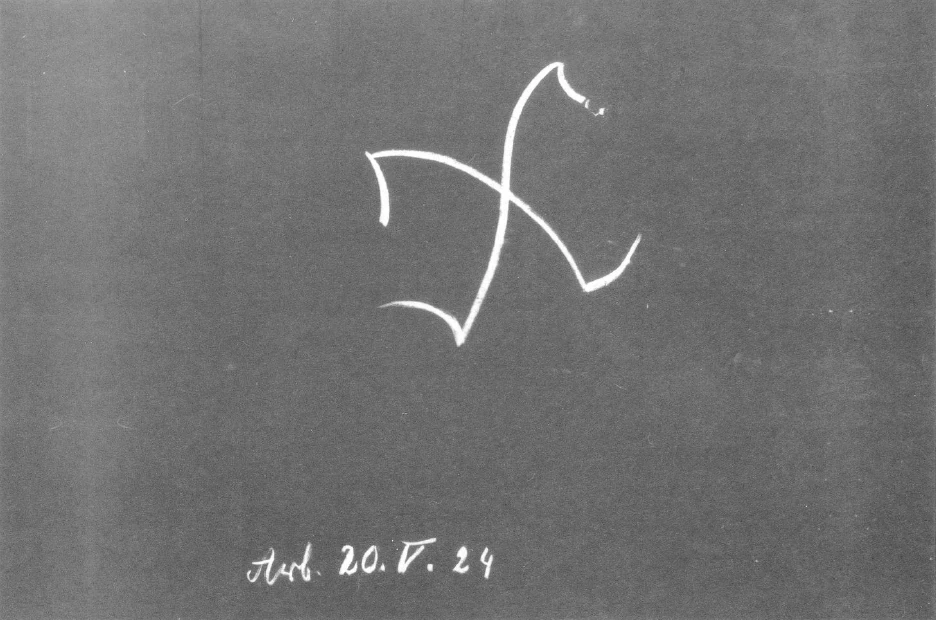
[ 29 ] And a symbol such as the swastika—which was an ancient symbol of the sun—was widespread throughout Asia. The ancient Asians still remember this. Certain Bolshevik government officials were wise enough—just like the German “Völkisch” movement—to adopt this ancient swastika as their symbol. That makes a much greater impression on Asians than anything Marxism has to offer. Marxism consists of concepts for thinking; that doesn’t impress people. But a symbol like that—that impresses people. And if one fails to understand how to connect with the people, but instead approaches them with something that is completely foreign to them, then one will achieve absolutely nothing among them.
[ 30 ] It is indeed true that here, too, it becomes evident that everything in Europe really depends on having, first and foremost, spiritual insight—Spiritual Science.
[ 31 ] You may also have heard that a large, two-volume book has been published by a certain Spengler—who, as I’ve heard, even gave a lecture in Basel once—a book by Oswald Spengler: *The Decline of the West*, that is, the decline of Europe and America. The man describes how everything that currently constitutes so-called European culture is bound to perish. That much is clear. He regards it as sick; it must perish. Well, gentlemen, what exists today as external culture must also perish. Something new must be built from within, from the spirit. But the external must perish. That is why the book deals with the Decline of the West. One can say almost nothing against the book, against what he says about the Decline of the West, about what is necessarily said with regard to external appearances. But now Spengler turns to what he views positively, to what appears to him as something new. And what does he present, gentlemen? What is it in Oswald Spengler’s work? It is Prussianism! Spengler believes that all of Europe must embrace Prussianism; that must be the future culture of Europe.
[ 32 ] Well, I don’t know how he spoke in Basel, for I can’t really imagine that it would have made a great impression on the Swiss if he had shown that Prussianism must emerge from this downfall! But you see that a very important person, an intelligent person like Spengler, can very well understand: Yes, what exists must perish; but the future must belong to brute force. He says this quite openly: In the future, there can only be the brutal, powerful conqueror—that is his view.
[ 33 ] Well, if, of course, a book like that is the most widely read today—for it is one of the most widely read books in Germany, the one by Oswald Spengler—and the Oriental, the Asian, compares what is written in it with his own intellectual culture, he must say to himself: “This is one of the smartest people in Europe!”—and drawing on his own advanced Spiritual Science, albeit in a dreamlike, old-fashioned way, he says: “Well, what kind of people are these, these ‘smartest’ people in Europe? They can’t offer us anything!”
[ 34 ] Gentlemen, that is precisely the point. And so when the question is raised: How could Europe do anything to counter such a downward trend over in Asia?—well, one simply has to say: The situation in Europe is such that Europeans themselves must first come to their senses, must first attain a spiritual mindset that was lost to them with the Migration Period. In the early Christian centuries, a genuine spiritual culture was actually lost. For what came to Europe was not, in reality, deep Christianity, but rather words—and they were correct words. This is best seen in how Luther then translated the Bible. What did he make of the Bible? An incomprehensible book! For, if one is honest, one cannot understand what the Lutheran Bible is. One can believe it; but in reality it cannot be understood, precisely because the time had already come in Europe when people knew nothing more of the spirit. There is spirit in the Bible! When translating the Bible, one must translate it spiritually. But what, for example, the German Lutheran Bible contains is incomprehensible if one takes it honestly. This is actually true in all areas, with the exception of purely external knowledge of nature—which, however, does not really lead one into the world at all. And if Europe wants to do anything at all over in Asia, I must answer this question: It will only be able to do something once it has come to its senses.
[ 35 ] Well, gentlemen, I must now make a trip to Paris; I will let you know when we will continue this matter.