Human-Becoming, World-Soul and World-Spirit I
Human Beings as Physical and Spiritual Entities
in Their Relationship to the World
GA 205
2 July 1921, Dornach
Translate the original German text into any language:
Versions Available:
Human-Becoming, World-Soul and World-Spirit I, tr. SOL
Sechster Vortrag
Sixth Lecture
[ 1 ] Ich werde heute einiges von dem weiter auszuführen haben, was ich gestern schon angeschlagen habe. Ich erinnere an etwas, das die meisten von Ihnen bereits von mir gehört haben. Wenn der Mensch durch den Tod geht, so bleibt ja der physische Leib in den Erdenkräften zurück; der ätherische Leib löst sich auf in die kosmischen Kräfte hinein und der Mensch findet weiter sein Leben, sein Dasein durch die Gebiete, die da liegen zwischen dem Tod und einer neuen Geburt. Nun sagte ich, daß wir am Menschen selbst die Formkräfte verfolgen können, die von einem Leben in das andere hinüberragen. Wir wissen ja, daß der Mensch im wesentlichen ein dreigliedriges Wesen ist mit drei selbständigen Gliedern. Ich meine zunächst in bezug auf die Formkräfte des physischen Leibes, der physischen Organisation. Wir haben die Nerven-Sinnesorganisation, die natürlich über den ganzen Leib sich ausbreitet, aber wesentlich im Haupte lokalisiert ist, wir haben die rhythmische Organisation, Atmungsrhythmus, Zirkulationsrhythmus und andere Rhythmen; dann haben wir die Stoffwechsel-Gliedmaßenorganisation, die wir als eine zusammenfassen, weil ja das Bewegen des Menschen organisch innig zusammenhängt mit dem Stoffwechsel. Sie wissen ja, jeder Mensch hat ein anders geformtes Haupt. Wenn wir nun diese Kräfte nehmen, die das Haupt des Menschen formen — Sie dürfen natürlich dabei nicht an die physischen Substanzen denken, sondern an die Formkräfte, an dasjenige, was dem Haupte seine Physiognomie, seinen ganzen Charakter, seinen phrenologischen Ausdruck gibt —, wenn wir diese Kräfte nehmen, so sind das die in die Form übergegangenen Kräfte aus dem Gliedmaßen-Stoffwechselorganismus der vorigen Inkarnation. Also wir haben im Haupte, im Kopfe, die metamorphosische Umbildung des Gliedmaßen-Stoffwechselmenschen der vorigen Inkarnation. Und wenn wir wiederum das nehmen, was wir als unsere Gliedmaßen, als unseren Gliedmaßen-Stoffwechselorganismus in dieser Inkarnation haben, so gehen diese Formkräfte eine Metamorphose ein und bilden unser Haupt für die nächste Inkarnation. Also wir können, wenn wir die menschliche Gestaltung verstehen, direkt durch eine entsprechende Ausbildung des metamorphosischen Gedankens gewissermaßen vom heutigen menschlichen Haupte zurückblicken auf die Gliedmaßen-Stoffwechselorganisation der vorigen Inkarnation, und wir können von der jetzigen Gliedmaßen-Stoffwechselorganisation blicken auf die Hauptesorganisation der nächsten Inkarnation.
[ 1 ] Today I will have to elaborate further on some of what I already touched upon yesterday. I would like to remind you of something most of you have already heard from me. When a human being passes through death, the physical body remains behind in the forces of the earth; the etheric body dissolves into the cosmic forces, and the human being continues their life, their existence, through the realms that lie between death and a new birth. Now, I said that we can trace the formative forces in the human being itself that extend from one life into the next. We know, of course, that the human being is essentially a threefold being with three independent members. I am referring first of all to the formative forces of the physical body, the physical organization. We have the nervous-sensory system, which naturally extends throughout the entire body but is essentially localized in the head; we have the rhythmic system—respiratory rhythm, circulatory rhythm, and other rhythms; then we have the metabolic-limb organization, which we group together because human movement is organically and intimately connected with metabolism. As you know, every person has a differently shaped head. If we now consider these forces that shape the human head—you must not, of course, think of physical substances here, but rather of the formative forces, of that which gives the head its physiognomy, its entire character, its phrenological expression—if we consider these forces, they are the forces from the limb-metabolic organism of the previous incarnation that have been transformed into form. So we have in the head the metamorphic transformation of the limb-metabolic human being from the previous incarnation. And if we, in turn, consider what we have as our limbs, as our limb-metabolic organism in this incarnation, then these formative forces undergo a metamorphosis and form our head for the next incarnation. So, if we understand the human form, we can—through appropriate training in metamorphic thinking—look back, as it were, from today’s human head to the limb-metabolic organization of the previous incarnation, and we can look from the current limb-metabolic organization to the head organization of the next incarnation.
[ 2 ] Diese Anschauung, die da in unserer Geisteswissenschaft und überhaupt in der Geisteswissenschaft aller Zeiten eine gewisse Rolle spielt, die Wahrheiten von den wiederholten Erdenleben, sie hängen keineswegs in der Luft, sondern wer die menschliche Organisation versteht, kann sie unmittelbar aus dieser menschlichen Organisation auch ablesen. Nur ist ja die heutige wissenschaftliche Richtung so weit als möglich davon entfernt, sich überhaupt auf solch eine Untersuchung, wie sie hier notwendig wäre, beim Menschen einzulassen. Man kann natürlich, wenn man durch bloße äußerliche Anatomie und Physiologie den Menschen studiert, unmöglich zu einer andern als zu der törichten Anschauung kommen, daß man die Leber ebenso untersuchen kann wie die Lunge. Man legt auf den Seziertisch die Leber neben die Lunge und betrachtet diese als gleichwertiges Organ, die in gleicher Weise aus Zellen bestehe und so weiter. Da kann man überhaupt nichts herausbekommen über diese Dinge, und zwei Organsysteme, die so voneinander verschieden sind wie Lunge und Leber, die kann man nicht bloß auf ihre Konfiguration aus Zellen heraus so äußerlich studieren, wie das notwendigerweise nach den heutigen Anschauungen geschehen muß.
[ 2 ] This view, which plays a certain role in our spiritual science and indeed in spiritual science throughout the ages—the truths about repeated earthly lives—are by no means mere speculation; rather, anyone who understands the human constitution can deduce them directly from that constitution. However, today’s scientific approach is as far removed as possible from even engaging in the kind of investigation of the human being that would be necessary here. Of course, if one studies the human being through mere external anatomy and physiology, it is impossible to arrive at any view other than the foolish one that the liver can be examined in the same way as the lungs. One places the liver next to the lungs on the dissection table and regards them as equivalent organs, both consisting of cells in the same way, and so on. One cannot learn anything at all about these matters in this way, and two organ systems as different from one another as the lungs and the liver cannot be studied merely from the external perspective of their cellular configuration, as is necessarily the case according to current views.
[ 3 ] Nun muß man, wenn man wirklich die einschlägigen Verhältnisse kennenlernen will, sich einlassen auf Methoden, durch die man eine Anschauung gewinnen kann über diese Dinge. Wenn die Methoden entsprechend ausgebildet werden, die ich beschrieben habe in «Wie erlangt man Erkenntnisse der höheren Welten?», so verstärkt sich, erkraftet sich die menschliche Erkenntnis — ich wiederhole hier einiges von dem, was ich ja auch schon in öffentlichen Vorträgen drüben im Bau im Herbste auseinandergesetzt habe —, es verstärkt sich die gewöhnliche Erkenntnis, die wir haben, durch die wir hinausschauen durch die Sinne in die Umwelt und durch die wir hineinblicken in unser Inneres, wo wir dann unser Denken, Fühlen, Wollen zunächst überblicken. Und wenn wir diese Erkenntnis erweitern, wenn wir sie so erweitern, wie das eben durch die Übungen möglich ist, die oftmals beschrieben worden sind, dann verändert sich zunächst unser Anblick gegenüber der äußeren Welt, und zwar so, daß sich uns als Nächstes dieses ergibt: Man sieht ein, es ist ein völliger Unsinn, so von Atomen zu reden, wie es die gegenwärtige Weltanschauung tut. Dasjenige, was da hinter den Sinnesanschauungen ist, hinter den Sinnesqualitäten, hinter Gelb, Rot, hinter Cis, hinter G und so weiter, das sind nicht Schwingungen, sondern das ist geistige Wesenhaftigkeit. Die Welt nach außen hin wird immer geistiger, je weiter wir in der Erkenntnis vordringen. So daß man wirklich aufhört, alle jene Konstruktionen ernst zu nehmen, welche aus chemischen oder sonstigen Vorstellungen geholt sind. Aller Atomismus wird einem gründlich ausgetrieben, wenn man die Erkenntnis nach außen erweitert. Hinter den Sinneserscheinungen ist geistige Welt. Wenn wir dagegen durch solch eine erweiterte Erkenntnis tiefer in das Innere hineinblicken, dann tritt — ich habe schon gestern darauf hingewiesen — nicht jenes verworrene mystische Schauen auf, das ja allerdings einen Übergang bildet, das seine gute Berechtigung hat, das aber so erklärt werden muß, wie ich das gestern getan habe, sondern es tritt auf, wenn die Erkenntnis nach dem Inneren hin sich entwickelt, eine psychische Erkenntnis der Organe. Wir lernen wirklich unser Inneres erkennen. Während nach außen unsere Erkenntnis sich immer mehr spiritualisiert, materialisiert sie sich zunächst nach dem Inneren zu. Nach dem Inneren zu wird nicht der nebulose Mystiker, sondern der wirkliche Geistesforscher eben die einzelnen Organe erkennen lernen; er lernt den differenzierten menschlichen Organismus kennen. Wir gelangen nicht anders in die geistige Welt als auf dem Umwege durch das Anschauen unserer inneren Materialität. Ohne daß man Lunge, Leber und so weiter kennenlernt, lernt man auch nicht auf dem Umwege durch das Innere irgendeinen geistigen Enthusiasmus kennen, der also aus der Verworrenheit der gewöhnlichen Mystik herausarbeitet und zu einer konkreten Erkenntnis der inneren Organe des Menschen hinarbeitet.
[ 3 ] Now, if one truly wishes to become acquainted with the relevant circumstances, one must engage with methods through which one can gain insight into these matters. If the methods I described in How Does One Gain Knowledge of the Higher Worlds? are practiced appropriately, human knowledge is strengthened and invigorated—I am repeating here some of what I have already discussed in public lectures over at the Bau last fall— our ordinary cognition—through which we look out into the world through our senses and into our inner being, where we first survey our thinking, feeling, and willing—is strengthened. And when we expand this understanding—when we expand it in the way made possible by the exercises that have often been described—then our perception of the external world changes first, in such a way that the following becomes clear to us: One realizes that it is utter nonsense to speak of atoms in the way the current worldview does. That which lies behind sensory perceptions, behind sensory qualities—behind yellow, red, behind C-sharp, behind G, and so on—is not vibrations, but spiritual essence. The external world becomes increasingly spiritual the further we advance in our understanding. So that one truly ceases to take seriously all those constructs derived from chemical or other concepts. All atomism is thoroughly dispelled when one expands one’s understanding outward. Behind sensory phenomena lies the spiritual world. When, on the other hand, we look deeper inward through such expanded knowledge—as I already pointed out yesterday—what emerges is not that confused mystical vision, which certainly constitutes a transitional stage and has its valid place, but which must be explained as I did yesterday; rather, what emerges as our knowledge develops inward is a psychic perception of the organs. We truly learn to recognize our inner being. While our knowledge of the external world becomes increasingly spiritualized, it initially becomes more concrete as we turn inward. It is not the nebulous mystic but the true spiritual researcher who will learn to recognize the individual organs; he comes to know the differentiated human organism. We can only enter the spiritual world by taking a detour through the observation of our inner materiality. Without getting to know the lungs, the liver, and so on, one cannot, even by taking a detour through the inner world, come to know any kind of spiritual enthusiasm—one that thus works its way out of the confusion of ordinary mysticism and toward a concrete understanding of the human internal organs.
[ 4 ] Da lernt man dann allerdings das Gefüge des Seelischen genauer kennen. Erstens lernt man aufgeben das Vorurteil, als ob unser Seelisches nur beigeordnet wäre dem Nerven-Sinnesapparat. Nur die Vorstellungswelt ist dem Nerven-Sinnesapparat beigeordnet, die Gefühlswelt schon nicht mehr. Die Gefühlswelt ist direkt dem rhythmischen Organismus beigeordnet, und die Willenswelt ist dem StoffwechselGliedmaßenorganismus beigeordnet. Wenn ich etwas will, so muß in meinem Stoffwechsel-Gliedmaßenorganismus etwas vor sich gehen. DasNervensystem ist nur dazu da,daß man Vorstellungen haben kann von dem, was im Willen eigentlich geschieht. Es gibt keine Willensnerven, ich habe das oftmals ausgesprochen; die Einteilung der Nerven in sensitive und in Willensnerven ist ein Unsinn. Die Nerven sind einerlei Art, und die sogenannten Willensnerven sind zu nichts anderem da, als die Vorgänge des Willens innerlich wahrzunehmen; sie sind auch sensitive Nerven.
[ 4 ] There, however, one comes to understand the structure of the psyche more precisely. First, one learns to let go of the prejudice that our psyche is merely subordinate to the nervous-sensory system. Only the world of imagination is subordinate to the nervous-sensory system; the world of emotion is no longer so. The emotional realm is directly linked to the rhythmic organism, and the volitional realm is linked to the metabolic-limb organism. When I will something, something must take place within my metabolic-limb organism. The nervous system exists solely to enable us to form mental images of what is actually happening in the will. There are no “volitional nerves”—I have stated this many times; the division of nerves into sensory and volitional nerves is nonsense. Nerves are all of the same kind, and the so-called volitional nerves serve no other purpose than to perceive the processes of the will internally; they are also sensory nerves.
[ 5 ] Wenn wir dies durchstudieren, so kommen wir zuletzt dazu, die menschliche Organisation in ihrer Ganzheit zu nehmen. Nehmen Sie die Lungenorganisation, Leberorganisation und so weiter, Sie kommen dazu, nach dem Inneren schauend, gewissermaßen die Oberfläche der einzelnen Organe zu überblicken, natürlich durch geistigen Blick nach innen. Was ist diese Oberfläche der Organe? Diese Oberfläche der Organe ist nämlich nichts anderes als ein Spiegelungsapparat für das seelische Leben. Was wir wahrnehmen und auch was wir gedanklich verarbeiten, das spiegelt sich an der Oberfläche unserer sämtlichen inneren Organe, und diese Spiegelung bedeutet unsere Erinnerungen, unser Gedächtnis während des Lebens. Also was sich da, nachdem wir es wahrgenommen und verarbeitet haben, an der Außenfläche unseres Herzens, unserer Lunge, unserer Milz und so weiter spiegelt, was da zurückgeworfen wird, das ist dasjenige, was die Erinnerungen abgibt. Und bei einer gar nicht sehr weitgehenden Trainierung können Sie schon bemerken, wie gewisse Gedanken auf den ganzen Organismus zurückstrahlen in der Erinnerung. Da sind die verschiedensten Organe beteiligt. Wenn es sich zum Beispiel handelt um die Erinnerung, sagen wir sehr abstrakter Gedanken, da ist außerordentlich stark beteiligt daran die Lunge, die Lungenoberfläche. Wenn es sich mehr um gefühlsgefärbte Gedanken handelt, um Gedanken also, die eine Gefühlsnuance haben, da ist sehr stark die Leberoberfläche daran beteiligt. So daß wir wirklich im einzelnen gut beschreiben können, wie die einzelnen Organe des Menschen beteiligt sind an dieser Rückstrahlung, die dann als Gedächtnis, als Erinnerungsvermögen auftritt. Wir dürfen nicht, wenn wir das Seelische ins Auge fassen, sagen: Im Nervensystem allein liegt der Parallelorganismus für das seelische Leben; im ganzen menschlichen Organismus liegt diese Parallelorganisation für das menschliche Seelenleben.
[ 5 ] As we study this, we ultimately come to view the human organism in its entirety. Take the structure of the lungs, the liver, and so on; by looking inward, you come to survey, as it were, the surface of the individual organs—naturally, through a spiritual gaze inward. What is this surface of the organs? This surface of the organs is, in fact, nothing other than a mirror for the life of the soul. What we perceive and also what we process mentally is reflected on the surface of all our internal organs, and this reflection constitutes our memories, our recollections throughout our lives. So what is reflected there—after we have perceived and processed it—on the outer surface of our heart, our lungs, our spleen, and so on; what is cast back there—that is what constitutes our memories. And even with just a little practice, you can already notice how certain thoughts radiate back through the entire organism into memory. A wide variety of organs are involved. For example, when it comes to the memory of—let’s say—very abstract thoughts, the lungs, specifically the surface of the lungs, are extremely strongly involved. When it comes more to emotionally tinged thoughts—that is, thoughts that have an emotional nuance—the surface of the liver is very strongly involved. Thus, we can describe in detail how the individual organs of the human being are involved in this reflection, which then manifests as memory, as the capacity to recall. When we consider the soul, we must not say: “The nervous system alone is the parallel organism for soul life”; rather, this parallel organization for human soul life is found throughout the entire human organism.
[ 6 ] In dieser Beziehung sind viele Erkenntnisse, die instinktiv einmal vorhanden waren, einfach verlorengegangen. Sie sind noch in gewissen Worten vorhanden, aber die Menschen spüren nicht mehr, wie in den Worten Weisheiten aufbewahrt sind. Zum Beispiel, wenn jemand dazu veranlagt ist, seine Erinnerungen immer in einem Depressionszustand heraufkommen zu sehen, so nannten das die Griechen Hypochondrie: Unterleibsknorpeligkeit, eine Verknöcherung im Unterleib, wo also die Spiegelung durch diese Verknöcherung in einer solchen Weise zustande kommt, daß der Betreffende in seinen Erinnerungen einen Quell der Hypochondrie hat. Es ist überall der ganze Organismus an diesen Dingen beteiligt. Das ist etwas, was durchaus ins Auge gefaßt werden muß.
[ 6 ] In this regard, many insights that were once instinctively present have simply been lost. They still exist in certain words, but people no longer sense how wisdom is preserved within those words. For example, if someone is predisposed to always see their memories surface in a state of depression, the Greeks called this hypochondria: abdominal cartilaginousness—a calcification in the abdomen—where the reflection caused by this calcification occurs in such a way that the person in question has a source of hypochondria in their memories. The entire organism is involved in these processes. This is something that must certainly be taken into account.
[ 7 ] Nun, ich sprach, indem ich vom Erinnerungsvermögen sprach, von der Oberfläche der Organe. Es schlägt gewissermaßen überall das, was wir erleben, an die Oberfläche, wird reflektiert, und das führt zu den Erinnerungen. Aber es geht auch etwas hinein in den Organismus. Im gewöhnlichen Leben setzt sich das um, macht eine Metamorphose durch, so daß das Organ eine Absonderung hat. Die Organe, die so etwas verrichten, sind ja meist Drüsenorgane; sie haben eine innere Absonderung, und da setzt sich während des Lebens zunächst dasjenige um, was an solchen Kräften hineingeht. Aber nicht alles wird in dieser Weise in organischen Stoffwechsel und dergeichen umgesetzt, sondern die Organe nehmen in sich etwas auf, was in ihnen dann latent wird, eine innere Kraft bildet. So zum Beispiel alle Gedanken, die wir aufnehmen von der Art, daß sie, ich will sagen, mehr an die Anschauung der Außenwelt anknüpfen, daß wir uns durch diese Gedanken Bilder der äußeren Gegenstände bilden: die Kräfte, die in diesen Gedanken entwickelt werden, werden gewissermaßen in der Lunge, im Inneren der Lunge aufgespeichert. Und nun wissen Sie, daß das Innere der Lunge ja in Regsamkeit kommt durch den Stoffwechsel, durch die Gliedmaßenbewegung, und da bilden sich diese Kräfte so um, daß während des Lebens zwischen Geburt und Tod unsere Lunge gewissermaßen ein Reservoir von Kräften ist, in das der Stoffwechsel-Gliedmaßenorganismus fortwährend hineinspielt. Wenn wir sterben, so sind ja solche Kräfte aufgespeichert. Selbstverständlich, der physische Stoff fällt ab, aber diese Kräfte, die gehen nicht verloren, die gehen mit uns durch den Tod und durch das ganze Leben zwischen Tod und neuer Geburt hindurch. Und wenn wir in eine neue Inkarnation eintreten, so sind es vorzugsweise diese Kräfte, die in der Lunge waren, welche unser Haupt äußerlich formieren, welche äußerlich uns die Physiognomie unseres Hauptes aufdrücken. Was der Phrenologe studieren will an der äußeren Hauptesform, das müßte man vorgebildet suchen im Inneren der Lunge in der vorigen Inkarnation.
[ 7 ] Well, I was speaking—when I spoke of memory—about the surface of the organs. In a sense, everything we experience comes to the surface there, is reflected, and this leads to memories. But something also enters the organism. In everyday life, this is transformed—it undergoes a metamorphosis—so that the organ produces a secretion. The organs that perform such functions are, after all, mostly glandular organs; they produce an internal secretion, and it is there that, over the course of life, what enters in the form of such forces is first transformed. But not everything is transformed in this way into organic metabolism and the like; rather, the organs take in something that then becomes latent within them, forming an inner force. For example, all the thoughts we take in that—so to speak—are more closely linked to our perception of the external world, through which we form images of external objects: the forces developed in these thoughts are, so to speak, stored in the lungs, within the lungs. And now you know that the interior of the lungs becomes active through metabolism and limb movement, and these forces are transformed in such a way that, during the course of life between birth and death, our lungs serve, so to speak, as a reservoir of forces into which the metabolic-limb organism continually feeds. When we die, such forces are stored there. Of course, the physical substance decays, but these forces are not lost; they accompany us through death and throughout the entire life between death and a new birth. And when we enter a new incarnation, it is primarily these forces—which were in the lungs—that externally shape our head, that externally imprint the physiognomy of our head upon us. What the phrenologist seeks to study in the external shape of the head must be sought, in a preformed state, within the lungs of the previous incarnation.
[ 8 ] So konkret kann man von Leben zu Leben hin die Umwandlung der Kräfte verfolgen. Dann bilden diese Dinge nicht mehr bloß abstrakte Wahrheiten, sondern sie werden konkret angeschaut, wie man auch die physischen Dinge konkret anschaut. Und die geistige Wissenschaft hat nur dann einen wirklichen Wert, wenn man so in die einzelnen Konkretheiten eindringt. Wenn man nur im allgemeinen redet von den wiederholten Erdenleben und so weiter, so sind das ja nur Worte. Eine Bedeutung hat das erst, wenn man auf die einzelnen Konkretheiten dabei eingehen kann.
[ 8 ] This is how concretely one can trace the transformation of forces from one life to the next. Then these things are no longer merely abstract truths, but are viewed concretely, just as one views physical things concretely. And spiritual science has real value only when one delves into the individual concrete details in this way. If one speaks only in general terms about repeated earthly lives and so on, these are, after all, just words. It only takes on meaning when one can delve into the individual concrete details.
[ 9 ] Wenn man nun dieses in der Lunge Aufgespeicherte nicht in der richtigen Weise beherrscht, dann wird es so ausgepreßt, wie ich gestern sagte, daß ein Schwamm ausgepreßt wird, und dann entstehen aus dem, was eigentlich erst in der nächsten Inkarnation kopfformend herauskommen sollte, vorzugsweise solche abnormen Erscheinungen, die man gewöhnlich als Zwangsgedanken bezeichnet oder auch in irgendeiner Weise als Illusionen. Es ist ein interessantes Kapitel einer höheren Physiologie, bei Lungenkranken zu studieren, welche merkwürdigen Vorstellungen da auftreten im Hochstadium der Lungenkrankheiten. Das hängt zusammen mit dem, was ich eben jetzt auseinandergesetzt habe, mit diesem Herauspressen der Gedanken. Die Gedanken, die da herausgepreßt werden, sind deshalb Zwangsgedanken, weil sie schon die formende Kraft in sich haben. Die Gedanken, die wir jetzt normal im Bewußtsein haben sollen, die dürfen nur Bilder sein, die dürfen nicht eine formende Kraft in sich haben, dürfen uns nicht zwingen. Durch die lange Zeit zwischen Tod und neuer Geburt, da zwingen sie, da sind sie Kausalitäten, da wirken sie dann formend. Jetzt dürfen sie uns nicht überwältigen, sie dürfen nur beim Übergang von einem Leben ins andere ihre Kraft ausüben. Das ist dasjenige, was da in Betracht kommt.
[ 9 ] If one does not control what is stored in the lungs in the proper way, then it is squeezed out, as I said yesterday, just as a sponge is squeezed out, and then, from what was actually meant to emerge in a head-forming way only in the next incarnation, there arise—primarily—those abnormal phenomena that are usually referred to as obsessive thoughts or, in some way, as illusions. It is an interesting chapter in higher physiology to study, in patients with lung disease, the strange mental images that arise in the advanced stages of lung disease. This is connected to what I have just explained—this squeezing out of thoughts. The thoughts that are squeezed out in this way are obsessive thoughts because they already possess a formative power within them. The thoughts that we are supposed to have in our consciousness under normal circumstances may only be images; they must not possess a formative power within them, nor must they compel us. During the long period between death and rebirth, they do compel us; there they are causal forces, and there they exert a formative influence. Now, however, they must not overwhelm us; they may exercise their power only during the transition from one life to another. That is what is at stake here.
[ 10 ] Wenn Sie nun in derselben Weise, wie ich es jetzt für die Lunge auseinandergesetzt habe, die Leber studieren, dann finden Sie: Da wird ebenso im Inneren der Leber konzentriert an Kräften alles dasjenige, was in der nächsten Inkarnation sich hinüberleitet in die inneren Dispositionen des Gehirnes. Also wiederum auf dem Umwege des Stoffwechselorganismus des jetzigen Lebens gehen die inneren Kräfte der Leber hinüber, aber jetzt nicht in die Form des Kopfes wie die Lunge, sondern in die innere Disposition des Gehirnes. Ob jemand ein scharfer Denker ist in der nächsten Inkarnation, hängt davon ab, wie er sich in der gegenwärtigen Inkarnation benimmt. So daß also auf dem Umweg durch den Stoffwechsel in der Leber bestimmte Kräfte auftreten; wenn diese Kräfte aber ausgepreßt werden in der gegenwärtigen Inkarnation, dann führen sie zu Halluzinationen oder starken Visionen.
[ 10 ] If you now study the liver in the same way that I have just explained for the lungs, you will find that everything which, in the next incarnation, will be carried over into the inner dispositions of the brain is likewise concentrated within the liver in the form of forces. So once again, via the metabolic processes of the present life, the inner forces of the liver are carried over—but now not into the form of the head, as with the lungs, but into the inner disposition of the brain. Whether someone will be a sharp thinker in the next incarnation depends on how they behave in the present incarnation. Thus, certain forces arise via the detour through the liver’s metabolism; but if these forces are forced out in the present incarnation, they lead to hallucinations or intense visions.
[ 11 ] Sie sehen also jetzt im Konkreten, was ich gestern mehr im Abstrakten andeutete, wie durch Auspressen aus den Organen diese Dinge herauskommen, die dann ins Bewußtsein eindringen und aus dem allgemeinen halluzinatorischen Leben, das hinüberspielen soll von Inkarnation zu Inkarnation, sich in der einen Inkarnation geltend machen und dadurch eben in dieser Weise zum Vorschein kommen.
[ 11 ] So now you can see in concrete terms what I hinted at yesterday in more abstract terms: how these things emerge from the organs as if squeezed out, then penetrate into consciousness, and—from the general hallucinatory life that is meant to carry over from incarnation to incarnation—make themselves felt in a single incarnation and thereby come to light in precisely this way.
[ 12 ] Studieren wir in derselben Weise alles das, was mit dem Nierenabscheidungssystem zusammenhängt, dann sehen wir, wie sich darinnen diejenigen Kräfte konzentrieren, welche in der nächsten Inkarnation mehr nach der emotionellen Seite hin dieKopforganisation beeinflussen, veranlagen. Die Nierenorgane, die Abscheidungsorgane, die bringen im wesentlichen dasjenige hervor, was mit der Temperamentsanlage im weitesten Sinne, aber auf dem Umwege durch die Kopforganisation, für die nächste Inkarnation vorbereitet wird. Wenn diese Dinge in der gegenwärtigen Inkarnation ausgepreßt werden, dann zeigen sie all die nervösen Zustände, all die Zustände, die mit Erregungen des Menschen zusammenhängen, namentlich aber innere Erregungen, Gemütserregungen, eben hypochondrische Zustände, Depressionszustände und so weiter, alle die Zustände, die mit dieser Seite des Stoffwechsels besonders zusammenhängen. In der Tat, alles, was mehr, ich möchte sagen, nach der Gefühls- und Emotionsseite hin gedächtnismäßig ist, das hängt auch zusammen mit dem, was reflektiert wird an den Nierenorganen. Wenn wir Lungenreflexionen, Leberreflexionen nehmen, so sind das mehr die Gedächtnisvorstellungen, die eigentlichen Gedächtnisvorstellungen. Gehen wir zum Nierensystem, so haben wir das, was wir als bleibende Gewohnheiten dieser Inkarnation haben, und das Innere des Nierensystems bereitet eben, wie gesagt, auf dem Umweg durch die Kopforganisation die Temperamentsanlagen im weiteren Sinne für die nächste Inkarnation vor.
[ 12 ] If we study in the same way everything related to the renal excretory system, we see how the forces that will influence and predispose the head organization more toward the emotional side in the next incarnation are concentrated there. The kidneys—the excretory organs—essentially bring forth what is prepared for the next incarnation in connection with the temperamental disposition in the broadest sense, though indirectly through the organization of the head. When these elements are brought to the surface in the present incarnation, they manifest as all the nervous states, all the conditions related to human agitation—namely, inner agitation, emotional agitation, hypochondriacal states, depressive states, and so on—all the states particularly associated with this aspect of metabolism. In fact, everything that is—I would say—more memory-related on the side of feelings and emotions is also connected to what is reflected in the kidneys. When we consider lung reflections and liver reflections, these are more the memory images, the actual memory images. When we turn to the kidney system, we find what we might call the enduring habits of this incarnation, and the inner workings of the kidney system—as I said—prepare, via the head’s organization, the temperamental predispositions in the broader sense for the next incarnation.
[ 13 ] Studieren wir in eben demselben Sinne das Herz. Das Herz ist auch in bezug auf die geisteswissenschaftlichen Untersuchungen ein außerordentlich interessantes Organ. Sie wissen ja, daß unsere triviale Wissenschaft die Herzerkenntnis sich ungeheuer leicht macht. Sie sieht das Herz als eine Pumpe an, eine Pumpe, die das Blut durch den Körper pumpt. Nun, man kann nichts Unsinnigeres meinen als dieses, denn das Herz hat überhaupt nichts zu tun mit irgendeinem Pumpen des Blutes, sondern das Blut wird durch die ganze Regsamkeit des astralischen Leibes, des Ich, in Tätigkeit versetzt, und das Herz ist nur der Reflex dieser Bewegungen. Die Bewegung des Blutes ist eine Eigenbewegung, und das Herz bringt nur zum Ausdruck, was die Bewegung des Blutes, die Kräfte verursachen. Das Herz ist tatsächlich nur das Organ, das ausdrückt die Blutsbewegung; das Herz hat gar keine Aktivität in bezug auf die Blutsbewegung. Die gegenwärtigen Naturwissenschafter werden ganz fuchswild, wenn man von dieser Sache spricht. Ich habe einmal vor vielen Jahren, ich glaube 1904 oder 1905, auf einer Reise nach Stockholm einem Naturforscher, einem Mediziner, diese Sache auseinandergesetzt, und er wurde fast tobsüchtig darüber, daß man das Herz nicht mehr als Pumpe ansehen soll, sondern daß es das Blut selber ist, das durch seine Vitalität in Bewegung kommt und daß das Herz eben nur eingefügt ist in die allgemeine Blutsbewegung und sie mitmacht im Schlage und so weiter.
[ 13 ] Let us study the heart in precisely the same sense. The heart is also an extraordinarily interesting organ from the perspective of spiritual science. As you know, our conventional science takes a terribly simplistic view of the heart. It regards the heart as a pump—a pump that pumps blood through the body. Well, nothing could be more nonsensical than this, for the heart has absolutely nothing to do with any kind of pumping of the blood; rather, the blood is set in motion by the entire activity of the astral body and the “I,” and the heart is merely a reflection of these movements. The movement of the blood is an autonomous movement, and the heart merely expresses what the movement of the blood—the forces—brings about. The heart is, in fact, merely the organ that expresses the movement of the blood; the heart has no activity whatsoever in relation to the movement of the blood. Today’s natural scientists get absolutely furious when this subject is brought up. Many years ago—I believe in 1904 or 1905— on a trip to Stockholm, I explained this matter to a natural scientist, a physician, and he became almost frenzied at the idea that the heart should no longer be regarded as a pump, but that it is the blood itself that is set in motion by its own vitality, and that the heart is merely integrated into the general movement of the blood and participates in its beating and so on.
[ 14 ] Nun, an dem Herzen wird allerdings etwas reflektiert, was schon nicht mehr bloß eigentlich Gedächtnis- oder Gewohnheitssache ist, sondern es spiritualisiert sich da schon, wenn es an die Außenwand des Herzens kommt, das Leben. Denn was da zurückgeworfen wird vom Herzen, das sind die Gewissensbisse. Das ist einfach, ich möchte sagen, ganz physischerseits zu nehmen: die Gewissensbisse, die in unser Bewußtsein hereinstrahlen, sie sind dasjenige, was von unseren Erlebnissen durch das Herz reflektiert wird. So lehrt es einen die spirituelle Erkenntnis des Herzens. Wenn wir aber in das Innere des Herzens hineinschauen, so sammeln sich da auch Kräfte durch den ganzen Stoffwechsel- und Gliedmaßenorganismus. Und weil das spiritualisiert ist, was mit dem Herzen, mit den Herzkräften zusammenhängt, spiritualisiert sich da hinein auch dasjenige, was mit unserem äußeren Leben, mit unseren Handlungen zusammenhängt. Und so paradox, so sonderbar es klingt für einen Menschen, der sehr gescheit ist im Sinne der Gegenwart, es ist einmal so: Was da im Herzen an Kräften zubereitet wird, das sind die karmischen Anlagen, das sind die Anlagen des Karma. Es ist geradezu empörend töricht, vom Herzen zu sprechen als einem bloßen Pumpwerk, denn das Herz ist dasjenige Organ, das aus dem Gliedmaßen-Stoffwechselorganismus, durch die Vermittelung des Gliedmaßen-Stoffwechselorganismus hineinträgt in die nächste Inkarnation, was wir gerade als Karma auffassen.
[ 14 ] Well, something is indeed reflected in the heart that is no longer merely a matter of memory or habit, but rather—when it reaches the outer wall of the heart—life itself becomes spiritualized. For what is reflected back from the heart are pangs of conscience. This can simply—I would say—be understood from a purely physical perspective: the pangs of conscience that shine into our consciousness are what is reflected by the heart from our experiences. This is what the spiritual insight of the heart teaches us. But when we look into the innermost part of the heart, forces also gather there through the entire metabolic and limb system. And because everything connected with the heart—with the heart’s forces—is spiritualized, that which is connected with our outer life and our actions is also spiritualized within it. And as paradoxical, as strange as it may sound to a person who is very intelligent in the modern sense, it is indeed true: what is prepared there in the heart in terms of forces are the karmic predispositions—these are the predispositions of karma. It is downright outrageously foolish to speak of the heart as a mere pumping mechanism, for the heart is the organ that, through the mediation of the limb-metabolic organism, carries into the next incarnation what we understand as karma.
[ 15 ] Sie sehen, lernt man diese Organisation kennen, dann lernt man sie differenzieren und sie erscheint einem dann im Zusammenhange mit dem ganzen Leben, das über Geburt und Tod hinausgeht; man sieht dann hinein in dieses ganze Gefüge des Menschen. Von dem Haupt konnten wir nicht reden, indem wir von Umformungen sprachen, denn das Haupt wird einfach abgeworfen; diese Kräfte sind mit dieser Inkarnation erfüllt, sie sind eben umgewandelt von der vorigen Inkarnation her. Dasjenige aber, was wir in diesen vier Hauptsystemen, im Lungen-, Nieren-, Leber- und Herzsystem haben, das geht auf dem Umwege durch den Stoffwechsel-Gliedmaßenorganismus formbildend hinüber und bildet unser Haupt in allen seinen Anlagen in der nächsten Inkarnation. Und wir müssen innerhalb der Organe die Kräfte suchen, welche dasjenige, was wir jetzt durchmachen, hinübertragen in die nächstfolgende Inkarnation.
[ 15 ] You see, once you become familiar with this organization, you learn to distinguish its various aspects, and it then appears to you in the context of the whole of life, which extends beyond birth and death; you then gain insight into this entire structure of the human being. We could not speak of the head when discussing transformations, because the head is simply cast off; these forces are filled with this incarnation; they have been transformed from the previous incarnation. But what we have in these four main systems—the lung, kidney, liver, and heart systems—passes, in a roundabout way, through the metabolic-limb organism, shaping our head and forming all its faculties in the next incarnation. And we must seek within the organs the forces that carry what we are now experiencing over into the next incarnation.
[ 16 ] Der Stoffwechsel des Menschen, der ist keineswegs jenes bloße retortuale Brodeln und Kochen, von dem die heutige Physiologie spricht. Sie brauchen ja nur einen Schritt zu machen, so wird ein Stoffwechsel vollführt. Dieser Stoffwechsel, der da vollführt wird, der ist nicht bloß der chemische Vorgang, den man untersuchen kann mit den Mitteln der Physiologie, der Chemie, sondern der ist zugleich moralisch gefärbt, der trägt eine moralische Nuance. Und diese moralische Nuance wird tatsächlich aufgespeichert im Herzen und als karmische Kraft hinübergetragen in die nächste Inkarnation. Und den ganzen Menschen studieren, heißt, in ihm die Kräfte finden, die durchaus über das Erdenleben hinausreichen. Unser Haupt selbst ist ja eine Kugel. Nur dadurch, daß der übrige Organismus daran hängt, ist die Kugelgestalt beeinträchtigt. Unser Haupt wird ganz aus dem Kosmos herausgebildet. Wir müssen ja, wenn wir durch den Tod durchgehen, in unserer Organisation, wie sie uns dann geistig-seelisch bleibt, eigentlich uns anpassen dem ganzen Kosmos. Der ganze Kosmos nimmt uns dann auf. Und ungefähr bis zu dem Zeitpunkte, der in der Mitte drinnen liegt zwischen zwei Inkarnationen — ich habe ihn in einem meiner Mysteriendramen die Mitternachtsstunde des Daseins genannt —, bis zu diesem Zeitpunkt, wenn ich mich so ausdrücken darf, vergrößern wir uns immer in die Umwelt hinein. Wir werden nach und nach ganz identisch mit der Umwelt. Und was da von uns in die Umwelt hinausgeht, das gibt die Konfiguration für das Astralische und das Ätherische der nächsten Inkarnation.
[ 16 ] Human metabolism is by no means merely that retort-like bubbling and boiling that modern physiology speaks of. You need only take a single step, and metabolism is set in motion. This metabolism that is taking place is not merely the chemical process that can be examined using the methods of physiology and chemistry; rather, it is also imbued with moral significance—it carries a moral nuance. And this moral nuance is in fact stored in the heart and carried over as karmic force into the next incarnation. And to study the whole human being means to find within them the forces that extend far beyond earthly life. Our head itself is, after all, a sphere. It is only because the rest of the organism is attached to it that the spherical form is compromised. Our head is formed entirely from the cosmos. When we pass through death, in our organization—as it then remains to us in a spiritual-soul aspect—we must, in fact, adapt ourselves to the entire cosmos. The entire cosmos then takes us in. And roughly up to the point that lies midway between two incarnations—I have called it in one of my Mystery Dramas the “midnight hour of existence”—up to this point, if I may put it that way, we continually expand into our surroundings. We gradually become completely one with our surroundings. And what emanates from us into our surroundings determines the configuration of the astral and etheric bodies of the next incarnation.
[ 17 ] Das ist dasjenige, was im wesentlichen aus dem Kosmos herein die Mutter bestimmt. Durch den Vater und die Befruchtung kommt dasjenige, was im physischen Leibe konfiguriert ist und was im Ich ist. Dieses Ich geht, so wie es dann ist, nach der Mitternachtsstunde des Daseins eigentlich in eine ganz andere Welt über. Es geht in diejenige Welt über, durch die es dann diesen Weg nehmen kann durch die väterliche Natur. Das ist ein außerordentlich bedeutsamer Vorgang. Es ist wirklich so, daß die Zeit bis zur Mitternachtsstunde und von der Mitternachtsstunde an — beide Teile sind ja zwischen Tod und neuer Geburt — eigentlich sehr verschieden sind voneinander. Ich habe diese Erlebnisse in meinem Wiener Vortragszyklus von 1914 von innen aus geschildert. Wenn wir sie mehr von außen anschauen, müssen wir eben sagen: Das Ich wird in der ersten Hälfte, bis zur Mitternachtsstunde, mehr kosmisch und bereitet dasjenige vor im Kosmos, was dann auf dem Umwege durch die Mutter in die nächste Inkarnation hineingeht. Und von der Mitternachtsstunde des Daseins bis zur nächsten Geburt geht das Ich in dasjenige über, was eigentlich in den alten Mysterien Unterwelt genannt wurde, und auf dem Umwege durch diese Unterwelt nimmt es den Weg durch die Befruchtung. Und da kommen im Grunde genommen die zwei Pole des Menschen zusammen durch die Mutter und den Vater, von der Oberwelt und von der Unterwelt. Dieses, was ich jetzt sage, war aus der instinktiven älteren Erkenntnis heraus, wenigstens soviel mir bekannt ist, ein wesentlicher Inhalt der ägyptischen Mysterien. Die ägyptischen Mysterien führten ja ganz besonders die Menschen zu der Erkenntnis gerade dessen, was sie damals die oberen und die unteren Götter nannten, die obere und die untere Götterwelt. Und man kann schon sagen, in dem Befruchtungsakte vollzieht sich ein polarischer Ausgleich der oberen und der unteren Götterwelt, und das Ich geht zwischen dem Tod und einer neuen Geburt zuerst durch diese obere Welt und dann durch die untere Welt. Es ist durchaus in älteren Zeiten nicht diese eigentümliche Nuance schon dagewesen, die heute manche verbinden mit Ober- und Unterwelt. Die obere ist bei den heutigen Menschen immer die gute, und die untere ist immer die schlechte. Diese Nuance war ursprünglich nicht damit verbunden, sondern es waren eben nur die zwei Polaritäten, die an der Gesamtweltbildung teilnehmen mußten. So daß man in der unmittelbaren Erfahrung die Oberwelt mehr als die Lichtwelt wahrnahm, schaute, die untere Welt mehr als die Welt der Schwere: Schwere und Licht als die beiden Polaritäten, mehr nach außen die Sache ausgedrückt. So sehen Sie, daß man im Konkreten die Dinge schildern kann.,/p>
[ 17 ] This is essentially what the Mother determines from the cosmos. Through the Father and fertilization comes that which is configured in the physical body and that which is in the “I.” This “I,” just as it is, actually passes into a completely different world after the midnight hour of existence. It passes into that world through which it can then take this path through the paternal nature. This is an extraordinarily significant process. It is truly the case that the time up to the midnight hour and from the midnight hour onward—both of which lie, after all, between death and new birth—are actually very different from one another. I described these experiences from within in my 1914 lecture series in Vienna. If we look at them more from the outside, we must simply say: In the first half, up to the midnight hour, the “I” becomes more cosmic and prepares within the cosmos that which then enters the next incarnation via the detour through the mother. And from the midnight hour of existence until the next birth, the “I” passes into what was actually called the underworld in the ancient mysteries, and, taking a detour through this underworld, it follows the path of fertilization. And there, essentially, the two poles of the human being come together through the mother and the father—from the upper world and from the underworld. What I am saying now was, as far as I know, an essential part of the Egyptian mysteries, stemming from an instinctive, ancient understanding. The Egyptian mysteries, after all, led people in particular to an understanding of precisely what they called at that time the upper and lower gods—the upper and lower divine realms. And one can certainly say that in the act of conception, a polar balance between the upper and lower realms of the gods is brought about, and the “I,” between death and a new birth, first passes through this upper world and then through the lower world. In earlier times, this peculiar connotation—which some today associate with the upper and lower worlds—did not yet exist. For people today, the upper world is always the good one, and the lower world is always the bad one. This nuance was not originally associated with it; rather, there were simply the two polarities that had to participate in the formation of the entire world. Thus, in immediate experience, the upper world was perceived and viewed more as the world of light, and the lower world more as the world of heaviness: heaviness and light as the two polarities, expressed more in external terms. So you see that one can describe things in concrete terms.,/p>
[ 18 ] Ich habe Ihnen für die andern Organe gesagt, daß das Ausfließen halluzinatorisches Leben werden kann, insbesondere was aus dem Lebersystem herausgepreßt wird. Wenn aber das Herz seinen Inhalt auspreßt, dann ist es also eigentlich das System von Kräften, herausgedrängt und ins Bewußtsein gebracht, das in der nächsten Inkarnation jene eigentümliche Veranlagung, sein Karma auszuleben, hervorruft. Wenn man beobachtet, wie das Karma sich auswirkt, so kann man ja sagen: Es läßt sich eigentlich dieses Ausleben des Karma von der Seite der Menschen nur schildern wie eine Art von Hunger und Sättigung. — Das muß man so auffassen. Gehen wir zunächst vom Standpunkt der gewöhnlichen Lebensanschauung aus, nehmen wir ein markantes Ereignis: Eine Frau begegnet einem Mann und fängt an, ihn zu lieben. — Nun ja, das ist wirklich ungefähr so angesehen, wie wenn Sie aus der Sixtinischen Madonna ein Stückchen herausschneiden würden, zum Beispiel gerade ein Fingerchen vom Jesusknaben herausschneiden und das anschauen würden. Sie haben natürlich ein Stück von der Sixtinischen Madonna, aber Sie sehen nichts. So sehen Sie auch nichts, wenn Sie anschauen: Eine Frau begegnet einem Mann und fängt an, ihn zu lieben. — Denn so ist es nicht, das muß man nach vorne zurückverfolgen. Bevor die Frau an den Mann herangekommen ist, ist sie an andere Orte der Welt gegangen, ist früher woanders gewesen, noch früher wieder woanders gewesen. Sie können überall Gründe finden, warum die Frau von dem einen Ort zu dem andern gegangen ist. Das verbirgt sich natürlich im Unterbewußten, aber es ist Vernunft darinnen, es ist durchaus Zusammenhang darinnen, und man kann, wenn man zurückgeht bis in die Kindheit, den Weg zurückverfolgen. Die betreffende Frau — dabei soll niemandem etwas aufgemutzt werden —, die geht durchaus die Wege vom Anfange an, die dann landen in dem betreffenden Ereignis. Der Mensch, wenn er geboren wird, hat Hunger, das zu tun, was er tut, und er läßt nicht früher nach, bis die Sättigung kommt. Das Hindrängen zum karmischen Ereignis ist eine Folge eines solchen allgemeinen spirituellen Hungergefühles; man wird hingetrieben. Das ist einmal der ganze Mensch: er hat solche Kräfte in sich zu späteren Ereignissen trotz der Freiheit, die trotzdem vorhanden ist, aber die spielt ja auf einem andern Gebiete. Der Mensch trägt diese Kräfte in sich. Nun, diese Kräfte, die da als ein solcher Hunger sich äußern, der dann zur karmischen Erfüllung führt, diese Kräfte, die so sich ausleben, die werden im Herzen konzentriert. Und wenn sie ausgepreßt werden und also in der jetzigen Inkarnation ins Bewußtsein kommen: sie bleiben deshalb im Herzen doch vorhanden, aber sie kommen ins Bewußtsein herein, es bilden sich Bilder von ihnen, die dann Anregungen bilden; dann gibt das die Tobsucht. Tobsucht ist im Grunde genommen nichts anderes — man kann das in der Realität studieren — als das in dieser Inkarnation verfrühte Ausleben einer Karmakraft für die folgende Inkarnation. Bedenken Sie, wie anders man sich angewöhnen muß, die Weltereignisse anzusehen, wenn man diese Zusammenhänge erfaßt. Natürlich, wenn man ein tobsüchtiger Mensch ist in seiner gegenwärtigen Inkarnation, oder wenn man gar jener König gewesen wäre, der einmal in Spanien regiert hat, so sagt man: Wenn ihm Gott die Welt zu schaffen überlassen haben würde, so würde er es besser gemacht haben. — Und so stellen ja die Leute Fragen, wie: Warum hat Gott die Tobsucht erschaffen? — Es hat die Tobsucht schon ihre ganz guten Gründe, aber alles, was in der Welt wirkt, kann eben auch deplaciert zum Vorschein kommen. Und dieses deplacierte ZumVorschein-Kommen, das in diesem Falle namentlich durch luziferische Kräfte bewirkt wird — alles, was verfrüht bewirkt wird in der Welt, wird durch luziferische Kräfte bewirkt —, dieses Zum-Vorschein-Kommen der karmischen Kräfte der nächsten Inkarnation in einer früheren Inkarnation bildet die Tobsucht. Sie sehen, man kann förmlich in den Abnormitäten eines gegenwärtigen Lebens dasjenige studieren, was sich in die andern Leben hinüber fortsetzen soll.
[ 18 ] I have told you, with regard to the other organs, that this outflow can become a hallucinatory life, especially what is forced out of the liver system. But when the heart expels its contents, it is actually the system of forces—forced out and brought into consciousness—that gives rise in the next incarnation to that peculiar predisposition to live out one’s karma. If one observes how karma plays out, one can indeed say: From the human perspective, this living out of karma can really only be described as a kind of hunger and satiation. — That is how one must understand it. Let us first start from the standpoint of the ordinary view of life and take a striking example: A woman meets a man and begins to love him. — Well, that’s really viewed in much the same way as if you were to cut out a small piece of the Sistine Madonna—for example, cutting out just a little finger from the infant Jesus and looking at it. You would, of course, have a piece of the Sistine Madonna, but you wouldn’t see anything. In the same way, you don’t see anything when you look at: “A woman meets a man and begins to love him.” — Because that’s not how it is; you have to trace it back to the beginning. Before the woman approached the man, she had gone to other places in the world; she had been somewhere else before that, and even earlier, somewhere else again. You can find reasons everywhere for why the woman went from one place to another. This is, of course, hidden in the subconscious, but there is logic to it, there is definitely a connection, and if you go back as far as childhood, you can trace the path. The woman in question—and I don’t mean to imply anything about anyone in particular—definitely follows paths from the very beginning that ultimately lead to the event in question. When a person is born, they have a hunger to do what they do, and they do not let up until that hunger is satisfied. The drive toward the karmic event is a consequence of such a general spiritual hunger; one is driven toward it. That is the whole human being: they possess such forces within themselves that lead to future events, despite the freedom that nevertheless exists—though that freedom operates in a different realm. Human beings carry these forces within themselves. Now, these forces, which manifest as a kind of hunger that then leads to karmic fulfillment—these forces that play out in this way—are concentrated in the heart. And when they are squeezed out and thus enter consciousness in the present incarnation—they remain present in the heart, but they enter consciousness; images of them form, which then become impulses; this gives rise to rage. Rage is, in essence, nothing other—and this can be studied in reality—than the premature outworking in this incarnation of a karmic force intended for the next incarnation. Consider how differently one must learn to view world events once one grasps these connections. Of course, if one is a person suffering from rabies in one’s present incarnation—or if one had even been that king who once ruled in Spain—one might say: If God had left it up to him to create the world, he would have done a better job. — And so people ask questions like: Why did God create epilepsy? — Epilepsy does have its very good reasons, but everything that operates in the world can also manifest in an inappropriate way. And this misplaced manifestation—which in this case is brought about specifically by Luciferic forces (for everything that occurs prematurely in the world is brought about by Luciferic forces)—this manifestation in an earlier incarnation of the karmic forces of the next incarnation constitutes rabies. You see, one can literally study in the abnormalities of a present life what is to continue into future lives.
[ 19 ] Sie können sich doch denken, was für ein gewaltiger Unterschied ist zwischen dem, was jetzt durch unsere ganze Inkarnation im Herzen ruht, und dem Zustand, in dem dasselbe sein wird, wenn es die ganze lange Entwickelung durchgemacht hat zwischen dem Tode und einer neuen Geburt und dann in einem neuen Leben im äußeren Verhalten des Menschen zum Vorschein kommt. Dennoch, wenn Sie in das Innere Ihres Herzen hineinschauen, so können Sie — allerdings jetzt in Latenz, nicht in einem voll ausgeführten Bilde — ziemlich gut wahrnehmen, was Sie im nächsten Leben treiben werden. Man kann also nicht nur im allgemeinen, in abstracto sagen: Es bereitet sich im gegenwärtigen Leben vor, was im nächsten Leben sich karmisch auswirkt —, sondern man kann geradezu, ich möchte sagen, die Kassette aufweisen, worin das Karma der folgenden Zeiten ruht. Das sind die Dinge, die ganz im Konkreten durchschaut werden müssen, wenn man wirkliche Geisteswissenschaft treiben will.
[ 19 ] You can surely imagine what an enormous difference there is between what now rests in our hearts throughout our entire incarnation and the state in which it will be once it has undergone the entire long process of development between death and a new birth, and then manifests itself in a new life through a person’s outward behavior. Nevertheless, if you look into the depths of your heart, you can—albeit now in a latent form, not as a fully realized image—perceive quite clearly what you will be doing in your next life. So one cannot merely say in general, in the abstract: “What will have karmic effects in the next life is being prepared in the present life”—but one can, I would say, point directly to the ‘container’ in which the karma of future lives rests. These are the things that must be understood in very concrete terms if one wishes to pursue true spiritual science.
[ 20 ] Nun können Sie sich doch denken, was für eine ungeheure Bedeutung diese Dinge einmal gewinnen werden, wenn man sie studieren wird und zur allgemeinen Bildung machen wird. Was weiß denn die heutige Medizin von der Möglichkeit einer Leberkrankheit, von der Möglichkeit einer Herzkrankheit, da sie ja das Allerwichtigste nicht kennt: wozu diese Organe da sind! Das kennt sie ja doch nicht. Sie findet nicht einmal einen richtigen Zusammenhang zwischen Erregungshalluzinationen und, sagen wir, dem Nierensystem, währenddem die ruhigen Halluzinationen, die Halluzinationen, die bloß auftreten und da sind, wie ich gerade vorhin ausgeführt habe, sozusagen Leberhalluzinationen sind. Solche Halluzinationen, die so auftreten, daß sie am Menschen herumkriechen, möchte ich sagen, die dazu führen, daß der Betreffende die Dinge so abstreifen möchte, die kommen aus dem Nierensystem. Das sind die Erregungshalluzinationen, die mit dem emotionellen System, mit dem Temperamentssystem zu tun haben. Man kann aus diesen Dingen heraus, aus solchen Symptomen heraus viel sicherer diagnostizieren als aus den diagnostischen Mitteln, die heute vielfach angewendet werden. Und sehr unsicher sind rein äußerliche diagnostische Mittel gegenüber dem, was solche Diagnosen ergeben würden, wenn man diese Dinge studieren würde.
[ 20 ] Now you can surely imagine what immense significance these things will one day take on once they are studied and incorporated into general education. What does modern medicine really know about the possibility of liver disease or heart disease, since it is unaware of the most important thing of all: the purpose of these organs! It doesn’t know that, after all. It doesn’t even find a proper connection between excitement-induced hallucinations and, let’s say, the renal system, whereas the calm hallucinations—the ones that simply occur and are there, as I just explained—are, so to speak, liver hallucinations. Such hallucinations, which occur in such a way that they, so to speak, crawl all over a person—causing the individual to want to shake things off—originate in the renal system. These are the excitement hallucinations that have to do with the emotional system, with the temperamental system. One can diagnose much more reliably based on these things—on such symptoms—than on the diagnostic methods that are widely used today. And purely external diagnostic methods are very unreliable compared to what such diagnoses would reveal if one were to study these things.
[ 21 ] Nun hängen aber alle diese Dinge mit der Außenwelt zusammen. Ich sagte, die Lunge als innerliches Organ, als Organsystem, sie enthält eigentlich zusammengepreßt die Zwangsgedanken und alles das, was wir aufnehmen, indem wir die äußeren Dinge wahrnehmen und diese in der Lunge eben konzentrieren. In ganz anderer Weise verhält sich dann die Leber zur Außenwelt. Dadurch, daß die Lunge gerade, ich möchte sagen, das Gedankenmaterial bewahrt, dadurch ist die Lunge ganz anders konfiguriert. Sie hängt mehr zusammen mit dem irdischen Elemente, mit dem Erdenelemente; die Leber, die das Halluzinieren im besonderen birgt, das ruhige Halluzinieren, das erscheinende Halluzinieren, die hängt zusammen mit dem Wassersystem, mit dem Wasser also. Und das Nierensystem, es klingt paradox, hängt mit dem Luftelement zusammen. Man meint natürlich, das müsse die Lunge sein, aber die Lunge hängt mit dem Erdenelemente zusammen als Organ, allerdings nicht nur mit ihm. Dagegen mit dem Luftelemente hängt als Organ zusammen gerade das Nierensystem, und das Herzsystem hängt mit dem Wärmeelemente zusammen als Organ; es ist ganz aus dem Wärmeelemente herausgebildet. Also dieses Element, das das geistigste ist, das ist auch dasjenige, was dann aufnimmt in diese ungemein feinen Wärmestrukturen, die wir ja auch, ich möchte sagen, im Wärmeorganismus haben, die Anlage für das Karma.
[ 21 ] But all these things are connected to the outside world. I said that the lungs, as an internal organ—as an organ system—actually contain, compressed within them, the obsessive thoughts and everything we take in by perceiving external things and concentrating them in the lungs. The liver, on the other hand, relates to the outside world in a completely different way. Because the lungs, so to speak, preserve the material of thought, they are configured quite differently. It is more closely connected to the earth element; the liver, which in particular harbors hallucinations—the quiet hallucinations, the apparitional hallucinations—is connected to the water system, that is, to water. And the kidney system—though it sounds paradoxical—is connected to the air element. Of course, one might think it must be the lungs, but the lungs, as an organ, are connected to the earth element—though not exclusively to it. In contrast, it is precisely the kidney system that, as an organ, is connected to the air element, and the heart system is connected to the heat element as an organ; it is entirely formed from the heat element. So this element, which is the most spiritual, is also the one that then absorbs into these exceedingly fine heat structures—which we also have, I would say, in the heat organism—the predisposition for karma.
[ 22 ] Da nun wiederum der ganze Mensch mit der Außenwelt in Beziehung steht, so können Sie sich sagen: Also Lunge wird mit der Außenwelt eine besondere Beziehung haben in bezug auf das erdige Element, Leber in bezug auf das wässerige Element. — Sehen Sie nun auf die erdigen Qualitäten der Pflanzen hin, so haben Sie in diesen die Heilmittel zu suchen für alles das — aber allerdings ist das im weitesten Umkreise dann aufzufassen —, was mit Erkrankungen zusammenhängt, die in der Lunge ihren Ursprung haben. Nehmen Sie dasjenige, was in der Pflanze zirkuliert, was mehr die Säftezirkulation der Pflanzen ausmacht, so haben Sie darinnen das Heilmittel zu suchen für alles, was mit der Leberorganisation zusammenhängt. Und so ergibt ein Studium des Wechselverhältnisses der Organe mit der Umwelt tatsächlich auch die Grundlage für eine rationelle Therapie.
[ 22 ] Since the whole human being is in relationship with the outside world, you can say to yourself: Thus, the lungs have a special relationship with the outside world in terms of the earth element, and the liver in terms of the water element. — If you now look to the earthy qualities of plants, you will find in them the remedies for all that—though this must be understood in the broadest sense—which is related to diseases that originate in the lungs. If you consider what circulates within the plant—that is, the plant’s sap circulation—then you must look there for the remedy for everything related to the liver system. And so, a study of the interrelationship between the organs and the environment does indeed provide the foundation for rational therapy.
[ 23 ] Unsere gegenwärtige Therapie ist ein Sammelsurium von empirischen Notizen. Zu einer wirklichen rationellen Therapie kann man erst kommen, wenn man auf diese Weise die Wechselbeziehungen zwischen der Organwelt im menschlichen Inneren und der Außenwelt studiert. Allerdings muß man dann überwinden die wollüstige Sehnsucht nach der subjektiven Mystik. Wenn man durchaus nicht weiterkommen will als bis zu dem bekannten Gottesflämmchen des Meister Eckhart und so weiter, wenn man bloß Wollust im Inneren ausgießen, schöne Bilder haben will und nicht durchdringen will durch dieses ganze Element zu der konkreten Konfiguration der inneren Organe, dann kann man auch nicht zu wirklich bedeutsamen therapeutischen Erkenntnissen durchdringen. Denn diese therapeutischen Erkenntnisse ergeben sich auf dem Wege echter Mystik, die also zum Konkreten des Inneren des Menschen aufrückt. Ebenso wie wir da in das Innere des Menschen hineindringen und auf dem Umwege durch dieses Innere kennenlernen das Herübergehen durch die Inkarnationen, ebenso wie wir also dieses innere Leben des Menschen kennenlernen, gelangen wir, wenn wir das Äußere betrachten, durch die Sinneswelt, durch den Sinnesteppich hindurch ins Geistige. Da kommen wir in die Welt der geistigen Hierarchien hinauf, die wir nicht auf dem Umwege durch innere Mystik gefunden haben, sondern die werden auf dem Wege durch eine tiefere Anschauung der äußeren Welt gefunden. Und auf diesem Wege ergibt sich auch dasjenige, was man ja dann zuerst in Analogien ausdrücken kann. Aber es sind nicht bloße Analogien, sondern es sind da durchaus tiefere Beziehungen vorhanden.
[ 23 ] Our current therapy is a hodgepodge of empirical notes. A truly rational therapy can only be achieved by studying, in this way, the interrelationships between the internal world of human organs and the external world. However, one must then overcome the sensual longing for subjective mysticism. If one has no intention of going beyond Meister Eckhart’s well-known “flame of God” and so on—if one merely wishes to indulge in inner sensuality, to have beautiful images, and does not wish to penetrate through this entire element to the concrete configuration of the inner organs—then one cannot arrive at truly significant therapeutic insights. For these therapeutic insights arise through the path of genuine mysticism, which thus advances toward the concrete reality of the human interior. Just as we penetrate into the inner being of the human being and, by way of this inner realm, come to know the passage through incarnations—just as we thus come to know this inner life of the human being—so too, when we observe the outer world, we pass through the sensory world, through the tapestry of the senses, into the spiritual realm. There we ascend into the world of spiritual hierarchies, which we have not found by the roundabout way of inner mysticism, but which are found through a deeper contemplation of the outer world. And in this way, what can initially be expressed in analogies also emerges. But these are not mere analogies; rather, there are indeed deeper connections at work.
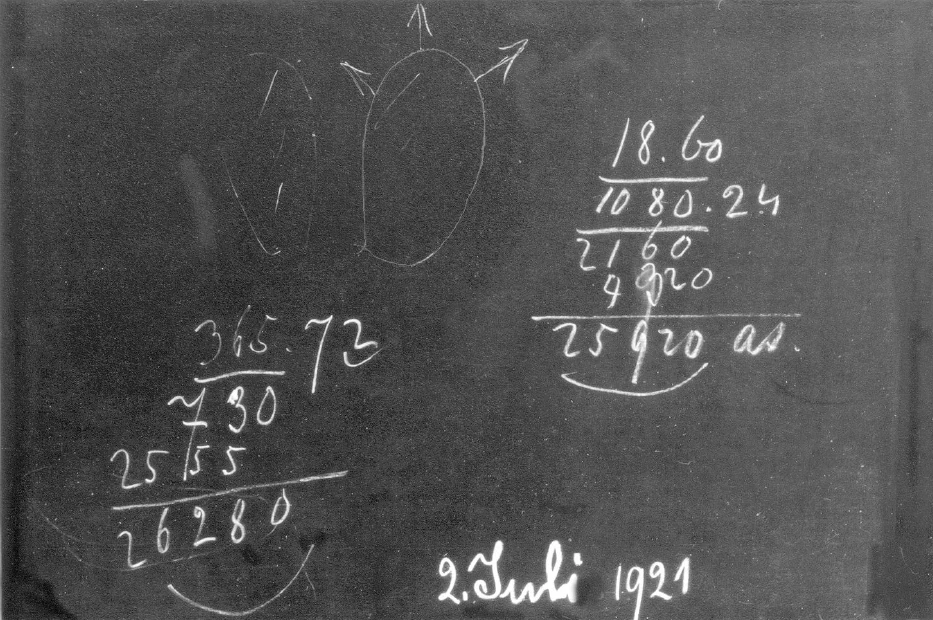
[ 24 ] Wir atmen, nicht wahr, und ich habe Ihnen das letzte Mal die Atemzüge ausgerechnet für vierundzwanzig Stunden. Rechnen wir achtzehn Atemzüge auf die Minute, so haben wir in der Stunde sechzig mal achtzehn, und in vierundzwanzig Stunden 25920 Atemzüge in Tag und Nacht. Wenn Sie nun einen andern Rhythmus im Menschen nehmen, so ist es der Rhythmus von Tag und Nacht selber. Am Morgen beim Aufwachen saugen Sie in Ihren physischen Leib und Ätherleib hinein den Astralleib und das Ich. Es ist auch ein Atmen. Sie atmen morgens herein, und Sie atmen am Abend beim Einschlafen den astralischen Leib und das Ich wieder aus, also ein Atemzug in vierundzwanzig Stunden, in einem Tag. Das sind dreihundertfünfundsechzig solche Atemzüge im Jahr. Und nehmen Sie das Durchschnittsalter eines Menschen, zweiundsiebzig Jahre, so haben Sie ungefähr dieselbe Zahl; würde ich nicht zweiundsiebzig genommen haben, sondern etwas darunter, so würde ich dieselbe Zahl bekommen haben. Das heißt, wenn Sie das gesamte irdische Leben des Menschen nehmen und Sie sehen in einem Tag im Einschlafen und Aufwachen einen Atemzug, so haben Sie in einem Leben auch so viel solches Ein- und Ausatmen des astralischen Leibes und des Ich, wie Sie in vierundzwanzig Stunden Atemzüge haben. Sie machen während eines Lebens auch so viel solche Atemzüge, die im Ausatmen und Einatmen des Ich und des astralischen Leibes bestehen. Diese Rhythmen entsprechen sich durchaus, und wir sehen, wie da der Mensch in die Welt eingefügt ist. Das Leben des Tages, Sonnenauf- und -untergang, also das einmalige Herumgehen entspricht einem inneren Sonnenauf- und -untergang, der von der Geburt bis zum Tode dauert.
[ 24 ] We breathe, don’t we, and last time I calculated the number of breaths for twenty-four hours. If we assume eighteen breaths per minute, that makes sixty times eighteen per hour, and 25,920 breaths in twenty-four hours—day and night. If you now consider another rhythm in human beings, it is the rhythm of day and night itself. In the morning when you wake up, you draw the astral body and the “I” into your physical body and etheric body. This, too, is a form of breathing. You breathe them in in the morning, and in the evening as you fall asleep, you breathe the astral body and the “I” out again—that is, one breath in twenty-four hours, in one day. That amounts to three hundred sixty-five such breaths in a year. And if you take the average human lifespan—seventy-two years—you get roughly the same number; if I hadn’t used seventy-two but a slightly lower figure, I would have arrived at the same number. This means that if you consider a person’s entire earthly life and count one breath per day—one when falling asleep and one upon waking—then over the course of a lifetime, there are just as many such inhalations and exhalations of the astral body and the “I” as there are breaths in twenty-four hours. Over the course of a lifetime, you also take just as many such breaths, which consist of the exhalation and inhalation of the “I” and the astral body. These rhythms correspond perfectly, and we see how the human being is integrated into the world. The life of the day—sunrise and sunset, that is, the single cycle of the day—corresponds to an inner sunrise and sunset that lasts from birth to death.
[ 25 ] Sie sehen, der Mensch gliedert sich da in die ganze Welt hinein. Und ich möchte heute diese Betrachtung damit abschließen, daß ich Sie auf eine Idee hinweise, die ich Sie bitte, ein bißchen durchzudenken, durchzumeditieren. Die heutige Wissenschaft stellt sich vor: Das ist das Weltgeschehen. In diesem Weltgeschehen ist einmal die Erde entstanden. Dann wird wiederum die Erde, wenn die Entropie erfüllt ist, in den Wärmetod aufgehen und so weiter. — Wenn man heute sich so eine Anschauung bildet wie die Kopernikanische oder irgendeinen modifizierten Kopernikanismus, dann nimmt man eigentlich nur Rücksicht auf die Kräfte, die den Urnebel gebildet haben und so weiter, und das Menschenleben ist dabei im Grunde genommen das fünfte Rad am Wagen. Denn der Geologe, der Astronom sieht ja gar nicht hin auf den Menschen. Es fällt ihm gar nicht ein, die Ursache für eine künftige Weltgestaltung im Menschen irgendwie zu suchen. Der Mensch ist überall dadrinnen in diesem Weltgeschehen, aber er ist das fünfte Rad am Wagen. Das Weltgeschehen läuft ab, er hat nichts damit zu tun. Stellen Sie sich aber das so vor: Dieses ganze Weltgeschehen nimmt ein Ende, hört da auf, verliert sich im Raume. Es hört auf, und für das, was dann da weiter draußen geschieht, liegen die Ursachen immer innerhalb der menschlichen Haut, im Menschen; die setzen sich fort. Und dasjenige, was hier Welt ist, das ist nur innerhalb des Menschen veranlagt in der Vorzeit. — So ist es nämlich in Wirklichkeit. Und wie uns Weisheitsbücher solche Dinge überhaupt in ihrer Sprache sagen, so weist auf diese Dinge hin das Wort des Christus Jesus: «Himmel und Erde werden vergehen, aber meine Worte werden nicht vergehen.» Alles, was materielle Welt ist, sinkt hin, aber dasjenige, was aus dem Geiste und der Seele kommt und in Worten sich ausspricht, das überlebt den Niedergang der Welt und lebt sich in die Zukunft hinein. Die Ursachen für die Zukunft liegen nicht außerhalb unserer Haut, die haben nicht die Geologen zu untersuchen, sondern die haben wir im Inneren zu suchen, in den nach inwärts liegenden Kräften unserer Organisation, die zunächst in unser nächstes Erdenleben hinübergehen, aber dann weitergehen in andere Metamorphosen. So daß, wenn Sie die Zukunft der Welt suchen, Sie in den Menschen hineinschauen müssen. Das was äußerlich ist, das vergeht ganz.
[ 25 ] As you can see, human beings are integrated into the whole world. And I would like to conclude this reflection today by pointing out an idea that I ask you to think through a little and meditate on. Modern science conceives of the world as follows: This is the course of world events. Within this course of world events, the Earth first came into being. Then, once entropy has reached its limit, the Earth will in turn succumb to heat death, and so on. — If one adopts a view today such as the Copernican one or some modified form of Copernicanism, then one is actually only taking into account the forces that formed the primordial nebula and so on, and human life is, in essence, the fifth wheel on the wagon. For the geologist and the astronomer do not look at human beings at all. It doesn’t even occur to them to look to human beings in any way as the cause of a future world order. Human beings are right in the midst of these world events, but they are the fifth wheel on the wagon. World events unfold; they have nothing to do with it. But imagine it this way: All of this world history comes to an end, stops there, and fades into space. It stops, and the causes of what then happens out there always lie within the human skin, within human beings; they continue on. And what is the world here is merely something predisposed within human beings in prehistory. — That is indeed how it is in reality. And just as books of wisdom tell us such things in their own language, so too do the words of Jesus Christ point to these things: “Heaven and earth will pass away, but my words will not pass away.” Everything that is part of the material world will fade away, but that which comes from the spirit and the soul and is expressed in words will survive the decline of the world and live on into the future. The causes of the future do not lie outside our skin; they are not for geologists to investigate, but we must seek them within—in the inward-directed forces of our being, which first pass over into our next earthly life but then continue on into other metamorphoses. So that, if you seek the future of the world, you must look within human beings. That which is external passes away completely.
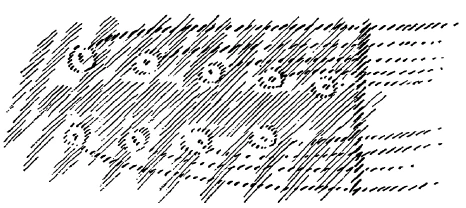
[ 26 ] Das 19. Jahrhundert hat eine Barriere aufgerichtet gegen diese Erkenntnis, und diese Barriere heißt das Gesetz von der Erhaltung der Energie. Das Gesetz von der Erhaltung der Energie setzt eben die um den Menschen herumliegenden Kräfte fort. Das wird aber alles vergehen, verschwinden. Und dasjenige, was im Menschen erst entsteht, das bildet Zukunft. Das Gesetz von der Erhaltung der Energie ist das Falscheste, das man sich denken kann. In Wirklichkeit aufgefaßt heißt das nichts anderes, als eben den Menschen zum fünften Rad im Weltgeschehen zu machen. Aber nicht das Wort von der Erhaltung der Energie ist richtig, sondern das andere Wort: «Himmel und Erde werden vergehen, aber meine Worte werden nicht vergehen.» Das ist das richtige Wort. Nur stehen diese zwei Worte in diametralem Gegensatz. Und nichts weiter als Gedankenlosigkeit ist es, daß heute gewisse Anhänger von diesen oder jenen positiven Bekenntnissen Bibelgläubige und zugleich Anhänger der theoretischen Physik sein wollen. Das ist nichts als eine Unehrlichkeit, die aber heute kulturschöpferisch auftritt, und diese Unehrlichkeit muß aus dem Kulturschöpferischen was aber eigentlich ein Antischöpferisches ist — heraus, wenn wir aus Niedergangskräften in Aufgangskräfte hineinkommen wollen.
[ 26 ] The 19th century erected a barrier against this insight, and that barrier is called the law of conservation of energy. The law of conservation of energy simply perpetuates the forces surrounding human beings. But all of that will pass away, disappear. And what first arises within human beings—that is what shapes the future. The law of conservation of energy is the most false thing one can imagine. Taken literally, it means nothing other than making human beings the fifth wheel in world events. But it is not the concept of conservation of energy that is correct, but rather the other saying: “Heaven and earth will pass away, but my words will not pass away.” That is the correct saying. Yet these two sayings stand in diametrical opposition to one another. And it is nothing but thoughtlessness that certain adherents of this or that positive creed today wish to be both believers in the Bible and adherents of theoretical physics. This is nothing but dishonesty, which today, however, presents itself as a creative force in culture; and this dishonesty—which is actually an anti-creative force—must be removed from the cultural-creative sphere if we are to move from forces of decline to forces of ascent.