Human-Becoming, World-Soul and World-Spirit I
Human Beings as Physical and Spiritual Entities
in Their Relationship to the World
GA 205
2 July 1921, Dornach
Translated by Steiner Online Library
Sixth Lecture
[ 1 ] Today I will have to elaborate further on some of what I already touched upon yesterday. I would like to remind you of something most of you have already heard from me. When a human being passes through death, the physical body remains behind in the forces of the earth; the etheric body dissolves into the cosmic forces, and the human being continues their life, their existence, through the realms that lie between death and a new birth. Now, I said that we can trace the formative forces in the human being itself that extend from one life into the next. We know, of course, that the human being is essentially a threefold being with three independent members. I am referring first of all to the formative forces of the physical body, the physical organization. We have the nervous-sensory system, which naturally extends throughout the entire body but is essentially localized in the head; we have the rhythmic system—respiratory rhythm, circulatory rhythm, and other rhythms; then we have the metabolic-limb organization, which we group together because human movement is organically and intimately connected with metabolism. As you know, every person has a differently shaped head. If we now consider these forces that shape the human head—you must not, of course, think of physical substances here, but rather of the formative forces, of that which gives the head its physiognomy, its entire character, its phrenological expression—if we consider these forces, they are the forces from the limb-metabolic organism of the previous incarnation that have been transformed into form. So we have in the head the metamorphic transformation of the limb-metabolic human being from the previous incarnation. And if we, in turn, consider what we have as our limbs, as our limb-metabolic organism in this incarnation, then these formative forces undergo a metamorphosis and form our head for the next incarnation. So, if we understand the human form, we can—through appropriate training in metamorphic thinking—look back, as it were, from today’s human head to the limb-metabolic organization of the previous incarnation, and we can look from the current limb-metabolic organization to the head organization of the next incarnation.
[ 2 ] This view, which plays a certain role in our spiritual science and indeed in spiritual science throughout the ages—the truths about repeated earthly lives—are by no means mere speculation; rather, anyone who understands the human constitution can deduce them directly from that constitution. However, today’s scientific approach is as far removed as possible from even engaging in the kind of investigation of the human being that would be necessary here. Of course, if one studies the human being through mere external anatomy and physiology, it is impossible to arrive at any view other than the foolish one that the liver can be examined in the same way as the lungs. One places the liver next to the lungs on the dissection table and regards them as equivalent organs, both consisting of cells in the same way, and so on. One cannot learn anything at all about these matters in this way, and two organ systems as different from one another as the lungs and the liver cannot be studied merely from the external perspective of their cellular configuration, as is necessarily the case according to current views.
[ 3 ] Now, if one truly wishes to become acquainted with the relevant circumstances, one must engage with methods through which one can gain insight into these matters. If the methods I described in How Does One Gain Knowledge of the Higher Worlds? are practiced appropriately, human knowledge is strengthened and invigorated—I am repeating here some of what I have already discussed in public lectures over at the Bau last fall— our ordinary cognition—through which we look out into the world through our senses and into our inner being, where we first survey our thinking, feeling, and willing—is strengthened. And when we expand this understanding—when we expand it in the way made possible by the exercises that have often been described—then our perception of the external world changes first, in such a way that the following becomes clear to us: One realizes that it is utter nonsense to speak of atoms in the way the current worldview does. That which lies behind sensory perceptions, behind sensory qualities—behind yellow, red, behind C-sharp, behind G, and so on—is not vibrations, but spiritual essence. The external world becomes increasingly spiritual the further we advance in our understanding. So that one truly ceases to take seriously all those constructs derived from chemical or other concepts. All atomism is thoroughly dispelled when one expands one’s understanding outward. Behind sensory phenomena lies the spiritual world. When, on the other hand, we look deeper inward through such expanded knowledge—as I already pointed out yesterday—what emerges is not that confused mystical vision, which certainly constitutes a transitional stage and has its valid place, but which must be explained as I did yesterday; rather, what emerges as our knowledge develops inward is a psychic perception of the organs. We truly learn to recognize our inner being. While our knowledge of the external world becomes increasingly spiritualized, it initially becomes more concrete as we turn inward. It is not the nebulous mystic but the true spiritual researcher who will learn to recognize the individual organs; he comes to know the differentiated human organism. We can only enter the spiritual world by taking a detour through the observation of our inner materiality. Without getting to know the lungs, the liver, and so on, one cannot, even by taking a detour through the inner world, come to know any kind of spiritual enthusiasm—one that thus works its way out of the confusion of ordinary mysticism and toward a concrete understanding of the human internal organs.
[ 4 ] There, however, one comes to understand the structure of the psyche more precisely. First, one learns to let go of the prejudice that our psyche is merely subordinate to the nervous-sensory system. Only the world of imagination is subordinate to the nervous-sensory system; the world of emotion is no longer so. The emotional realm is directly linked to the rhythmic organism, and the volitional realm is linked to the metabolic-limb organism. When I will something, something must take place within my metabolic-limb organism. The nervous system exists solely to enable us to form mental images of what is actually happening in the will. There are no “volitional nerves”—I have stated this many times; the division of nerves into sensory and volitional nerves is nonsense. Nerves are all of the same kind, and the so-called volitional nerves serve no other purpose than to perceive the processes of the will internally; they are also sensory nerves.
[ 5 ] As we study this, we ultimately come to view the human organism in its entirety. Take the structure of the lungs, the liver, and so on; by looking inward, you come to survey, as it were, the surface of the individual organs—naturally, through a spiritual gaze inward. What is this surface of the organs? This surface of the organs is, in fact, nothing other than a mirror for the life of the soul. What we perceive and also what we process mentally is reflected on the surface of all our internal organs, and this reflection constitutes our memories, our recollections throughout our lives. So what is reflected there—after we have perceived and processed it—on the outer surface of our heart, our lungs, our spleen, and so on; what is cast back there—that is what constitutes our memories. And even with just a little practice, you can already notice how certain thoughts radiate back through the entire organism into memory. A wide variety of organs are involved. For example, when it comes to the memory of—let’s say—very abstract thoughts, the lungs, specifically the surface of the lungs, are extremely strongly involved. When it comes more to emotionally tinged thoughts—that is, thoughts that have an emotional nuance—the surface of the liver is very strongly involved. Thus, we can describe in detail how the individual organs of the human being are involved in this reflection, which then manifests as memory, as the capacity to recall. When we consider the soul, we must not say: “The nervous system alone is the parallel organism for soul life”; rather, this parallel organization for human soul life is found throughout the entire human organism.
[ 6 ] In this regard, many insights that were once instinctively present have simply been lost. They still exist in certain words, but people no longer sense how wisdom is preserved within those words. For example, if someone is predisposed to always see their memories surface in a state of depression, the Greeks called this hypochondria: abdominal cartilaginousness—a calcification in the abdomen—where the reflection caused by this calcification occurs in such a way that the person in question has a source of hypochondria in their memories. The entire organism is involved in these processes. This is something that must certainly be taken into account.
[ 7 ] Well, I was speaking—when I spoke of memory—about the surface of the organs. In a sense, everything we experience comes to the surface there, is reflected, and this leads to memories. But something also enters the organism. In everyday life, this is transformed—it undergoes a metamorphosis—so that the organ produces a secretion. The organs that perform such functions are, after all, mostly glandular organs; they produce an internal secretion, and it is there that, over the course of life, what enters in the form of such forces is first transformed. But not everything is transformed in this way into organic metabolism and the like; rather, the organs take in something that then becomes latent within them, forming an inner force. For example, all the thoughts we take in that—so to speak—are more closely linked to our perception of the external world, through which we form images of external objects: the forces developed in these thoughts are, so to speak, stored in the lungs, within the lungs. And now you know that the interior of the lungs becomes active through metabolism and limb movement, and these forces are transformed in such a way that, during the course of life between birth and death, our lungs serve, so to speak, as a reservoir of forces into which the metabolic-limb organism continually feeds. When we die, such forces are stored there. Of course, the physical substance decays, but these forces are not lost; they accompany us through death and throughout the entire life between death and a new birth. And when we enter a new incarnation, it is primarily these forces—which were in the lungs—that externally shape our head, that externally imprint the physiognomy of our head upon us. What the phrenologist seeks to study in the external shape of the head must be sought, in a preformed state, within the lungs of the previous incarnation.
[ 8 ] This is how concretely one can trace the transformation of forces from one life to the next. Then these things are no longer merely abstract truths, but are viewed concretely, just as one views physical things concretely. And spiritual science has real value only when one delves into the individual concrete details in this way. If one speaks only in general terms about repeated earthly lives and so on, these are, after all, just words. It only takes on meaning when one can delve into the individual concrete details.
[ 9 ] If one does not control what is stored in the lungs in the proper way, then it is squeezed out, as I said yesterday, just as a sponge is squeezed out, and then, from what was actually meant to emerge in a head-forming way only in the next incarnation, there arise—primarily—those abnormal phenomena that are usually referred to as obsessive thoughts or, in some way, as illusions. It is an interesting chapter in higher physiology to study, in patients with lung disease, the strange mental images that arise in the advanced stages of lung disease. This is connected to what I have just explained—this squeezing out of thoughts. The thoughts that are squeezed out in this way are obsessive thoughts because they already possess a formative power within them. The thoughts that we are supposed to have in our consciousness under normal circumstances may only be images; they must not possess a formative power within them, nor must they compel us. During the long period between death and rebirth, they do compel us; there they are causal forces, and there they exert a formative influence. Now, however, they must not overwhelm us; they may exercise their power only during the transition from one life to another. That is what is at stake here.
[ 10 ] If you now study the liver in the same way that I have just explained for the lungs, you will find that everything which, in the next incarnation, will be carried over into the inner dispositions of the brain is likewise concentrated within the liver in the form of forces. So once again, via the metabolic processes of the present life, the inner forces of the liver are carried over—but now not into the form of the head, as with the lungs, but into the inner disposition of the brain. Whether someone will be a sharp thinker in the next incarnation depends on how they behave in the present incarnation. Thus, certain forces arise via the detour through the liver’s metabolism; but if these forces are forced out in the present incarnation, they lead to hallucinations or intense visions.
[ 11 ] So now you can see in concrete terms what I hinted at yesterday in more abstract terms: how these things emerge from the organs as if squeezed out, then penetrate into consciousness, and—from the general hallucinatory life that is meant to carry over from incarnation to incarnation—make themselves felt in a single incarnation and thereby come to light in precisely this way.
[ 12 ] If we study in the same way everything related to the renal excretory system, we see how the forces that will influence and predispose the head organization more toward the emotional side in the next incarnation are concentrated there. The kidneys—the excretory organs—essentially bring forth what is prepared for the next incarnation in connection with the temperamental disposition in the broadest sense, though indirectly through the organization of the head. When these elements are brought to the surface in the present incarnation, they manifest as all the nervous states, all the conditions related to human agitation—namely, inner agitation, emotional agitation, hypochondriacal states, depressive states, and so on—all the states particularly associated with this aspect of metabolism. In fact, everything that is—I would say—more memory-related on the side of feelings and emotions is also connected to what is reflected in the kidneys. When we consider lung reflections and liver reflections, these are more the memory images, the actual memory images. When we turn to the kidney system, we find what we might call the enduring habits of this incarnation, and the inner workings of the kidney system—as I said—prepare, via the head’s organization, the temperamental predispositions in the broader sense for the next incarnation.
[ 13 ] Let us study the heart in precisely the same sense. The heart is also an extraordinarily interesting organ from the perspective of spiritual science. As you know, our conventional science takes a terribly simplistic view of the heart. It regards the heart as a pump—a pump that pumps blood through the body. Well, nothing could be more nonsensical than this, for the heart has absolutely nothing to do with any kind of pumping of the blood; rather, the blood is set in motion by the entire activity of the astral body and the “I,” and the heart is merely a reflection of these movements. The movement of the blood is an autonomous movement, and the heart merely expresses what the movement of the blood—the forces—brings about. The heart is, in fact, merely the organ that expresses the movement of the blood; the heart has no activity whatsoever in relation to the movement of the blood. Today’s natural scientists get absolutely furious when this subject is brought up. Many years ago—I believe in 1904 or 1905— on a trip to Stockholm, I explained this matter to a natural scientist, a physician, and he became almost frenzied at the idea that the heart should no longer be regarded as a pump, but that it is the blood itself that is set in motion by its own vitality, and that the heart is merely integrated into the general movement of the blood and participates in its beating and so on.
[ 14 ] Well, something is indeed reflected in the heart that is no longer merely a matter of memory or habit, but rather—when it reaches the outer wall of the heart—life itself becomes spiritualized. For what is reflected back from the heart are pangs of conscience. This can simply—I would say—be understood from a purely physical perspective: the pangs of conscience that shine into our consciousness are what is reflected by the heart from our experiences. This is what the spiritual insight of the heart teaches us. But when we look into the innermost part of the heart, forces also gather there through the entire metabolic and limb system. And because everything connected with the heart—with the heart’s forces—is spiritualized, that which is connected with our outer life and our actions is also spiritualized within it. And as paradoxical, as strange as it may sound to a person who is very intelligent in the modern sense, it is indeed true: what is prepared there in the heart in terms of forces are the karmic predispositions—these are the predispositions of karma. It is downright outrageously foolish to speak of the heart as a mere pumping mechanism, for the heart is the organ that, through the mediation of the limb-metabolic organism, carries into the next incarnation what we understand as karma.
[ 15 ] You see, once you become familiar with this organization, you learn to distinguish its various aspects, and it then appears to you in the context of the whole of life, which extends beyond birth and death; you then gain insight into this entire structure of the human being. We could not speak of the head when discussing transformations, because the head is simply cast off; these forces are filled with this incarnation; they have been transformed from the previous incarnation. But what we have in these four main systems—the lung, kidney, liver, and heart systems—passes, in a roundabout way, through the metabolic-limb organism, shaping our head and forming all its faculties in the next incarnation. And we must seek within the organs the forces that carry what we are now experiencing over into the next incarnation.
[ 16 ] Human metabolism is by no means merely that retort-like bubbling and boiling that modern physiology speaks of. You need only take a single step, and metabolism is set in motion. This metabolism that is taking place is not merely the chemical process that can be examined using the methods of physiology and chemistry; rather, it is also imbued with moral significance—it carries a moral nuance. And this moral nuance is in fact stored in the heart and carried over as karmic force into the next incarnation. And to study the whole human being means to find within them the forces that extend far beyond earthly life. Our head itself is, after all, a sphere. It is only because the rest of the organism is attached to it that the spherical form is compromised. Our head is formed entirely from the cosmos. When we pass through death, in our organization—as it then remains to us in a spiritual-soul aspect—we must, in fact, adapt ourselves to the entire cosmos. The entire cosmos then takes us in. And roughly up to the point that lies midway between two incarnations—I have called it in one of my Mystery Dramas the “midnight hour of existence”—up to this point, if I may put it that way, we continually expand into our surroundings. We gradually become completely one with our surroundings. And what emanates from us into our surroundings determines the configuration of the astral and etheric bodies of the next incarnation.
[ 17 ] This is essentially what the Mother determines from the cosmos. Through the Father and fertilization comes that which is configured in the physical body and that which is in the “I.” This “I,” just as it is, actually passes into a completely different world after the midnight hour of existence. It passes into that world through which it can then take this path through the paternal nature. This is an extraordinarily significant process. It is truly the case that the time up to the midnight hour and from the midnight hour onward—both of which lie, after all, between death and new birth—are actually very different from one another. I described these experiences from within in my 1914 lecture series in Vienna. If we look at them more from the outside, we must simply say: In the first half, up to the midnight hour, the “I” becomes more cosmic and prepares within the cosmos that which then enters the next incarnation via the detour through the mother. And from the midnight hour of existence until the next birth, the “I” passes into what was actually called the underworld in the ancient mysteries, and, taking a detour through this underworld, it follows the path of fertilization. And there, essentially, the two poles of the human being come together through the mother and the father—from the upper world and from the underworld. What I am saying now was, as far as I know, an essential part of the Egyptian mysteries, stemming from an instinctive, ancient understanding. The Egyptian mysteries, after all, led people in particular to an understanding of precisely what they called at that time the upper and lower gods—the upper and lower divine realms. And one can certainly say that in the act of conception, a polar balance between the upper and lower realms of the gods is brought about, and the “I,” between death and a new birth, first passes through this upper world and then through the lower world. In earlier times, this peculiar connotation—which some today associate with the upper and lower worlds—did not yet exist. For people today, the upper world is always the good one, and the lower world is always the bad one. This nuance was not originally associated with it; rather, there were simply the two polarities that had to participate in the formation of the entire world. Thus, in immediate experience, the upper world was perceived and viewed more as the world of light, and the lower world more as the world of heaviness: heaviness and light as the two polarities, expressed more in external terms. So you see that one can describe things in concrete terms.,/p>
[ 18 ] I have told you, with regard to the other organs, that this outflow can become a hallucinatory life, especially what is forced out of the liver system. But when the heart expels its contents, it is actually the system of forces—forced out and brought into consciousness—that gives rise in the next incarnation to that peculiar predisposition to live out one’s karma. If one observes how karma plays out, one can indeed say: From the human perspective, this living out of karma can really only be described as a kind of hunger and satiation. — That is how one must understand it. Let us first start from the standpoint of the ordinary view of life and take a striking example: A woman meets a man and begins to love him. — Well, that’s really viewed in much the same way as if you were to cut out a small piece of the Sistine Madonna—for example, cutting out just a little finger from the infant Jesus and looking at it. You would, of course, have a piece of the Sistine Madonna, but you wouldn’t see anything. In the same way, you don’t see anything when you look at: “A woman meets a man and begins to love him.” — Because that’s not how it is; you have to trace it back to the beginning. Before the woman approached the man, she had gone to other places in the world; she had been somewhere else before that, and even earlier, somewhere else again. You can find reasons everywhere for why the woman went from one place to another. This is, of course, hidden in the subconscious, but there is logic to it, there is definitely a connection, and if you go back as far as childhood, you can trace the path. The woman in question—and I don’t mean to imply anything about anyone in particular—definitely follows paths from the very beginning that ultimately lead to the event in question. When a person is born, they have a hunger to do what they do, and they do not let up until that hunger is satisfied. The drive toward the karmic event is a consequence of such a general spiritual hunger; one is driven toward it. That is the whole human being: they possess such forces within themselves that lead to future events, despite the freedom that nevertheless exists—though that freedom operates in a different realm. Human beings carry these forces within themselves. Now, these forces, which manifest as a kind of hunger that then leads to karmic fulfillment—these forces that play out in this way—are concentrated in the heart. And when they are squeezed out and thus enter consciousness in the present incarnation—they remain present in the heart, but they enter consciousness; images of them form, which then become impulses; this gives rise to rage. Rage is, in essence, nothing other—and this can be studied in reality—than the premature outworking in this incarnation of a karmic force intended for the next incarnation. Consider how differently one must learn to view world events once one grasps these connections. Of course, if one is a person suffering from rabies in one’s present incarnation—or if one had even been that king who once ruled in Spain—one might say: If God had left it up to him to create the world, he would have done a better job. — And so people ask questions like: Why did God create epilepsy? — Epilepsy does have its very good reasons, but everything that operates in the world can also manifest in an inappropriate way. And this misplaced manifestation—which in this case is brought about specifically by Luciferic forces (for everything that occurs prematurely in the world is brought about by Luciferic forces)—this manifestation in an earlier incarnation of the karmic forces of the next incarnation constitutes rabies. You see, one can literally study in the abnormalities of a present life what is to continue into future lives.
[ 19 ] You can surely imagine what an enormous difference there is between what now rests in our hearts throughout our entire incarnation and the state in which it will be once it has undergone the entire long process of development between death and a new birth, and then manifests itself in a new life through a person’s outward behavior. Nevertheless, if you look into the depths of your heart, you can—albeit now in a latent form, not as a fully realized image—perceive quite clearly what you will be doing in your next life. So one cannot merely say in general, in the abstract: “What will have karmic effects in the next life is being prepared in the present life”—but one can, I would say, point directly to the ‘container’ in which the karma of future lives rests. These are the things that must be understood in very concrete terms if one wishes to pursue true spiritual science.
[ 20 ] Now you can surely imagine what immense significance these things will one day take on once they are studied and incorporated into general education. What does modern medicine really know about the possibility of liver disease or heart disease, since it is unaware of the most important thing of all: the purpose of these organs! It doesn’t know that, after all. It doesn’t even find a proper connection between excitement-induced hallucinations and, let’s say, the renal system, whereas the calm hallucinations—the ones that simply occur and are there, as I just explained—are, so to speak, liver hallucinations. Such hallucinations, which occur in such a way that they, so to speak, crawl all over a person—causing the individual to want to shake things off—originate in the renal system. These are the excitement hallucinations that have to do with the emotional system, with the temperamental system. One can diagnose much more reliably based on these things—on such symptoms—than on the diagnostic methods that are widely used today. And purely external diagnostic methods are very unreliable compared to what such diagnoses would reveal if one were to study these things.
[ 21 ] But all these things are connected to the outside world. I said that the lungs, as an internal organ—as an organ system—actually contain, compressed within them, the obsessive thoughts and everything we take in by perceiving external things and concentrating them in the lungs. The liver, on the other hand, relates to the outside world in a completely different way. Because the lungs, so to speak, preserve the material of thought, they are configured quite differently. It is more closely connected to the earth element; the liver, which in particular harbors hallucinations—the quiet hallucinations, the apparitional hallucinations—is connected to the water system, that is, to water. And the kidney system—though it sounds paradoxical—is connected to the air element. Of course, one might think it must be the lungs, but the lungs, as an organ, are connected to the earth element—though not exclusively to it. In contrast, it is precisely the kidney system that, as an organ, is connected to the air element, and the heart system is connected to the heat element as an organ; it is entirely formed from the heat element. So this element, which is the most spiritual, is also the one that then absorbs into these exceedingly fine heat structures—which we also have, I would say, in the heat organism—the predisposition for karma.
[ 22 ] Since the whole human being is in relationship with the outside world, you can say to yourself: Thus, the lungs have a special relationship with the outside world in terms of the earth element, and the liver in terms of the water element. — If you now look to the earthy qualities of plants, you will find in them the remedies for all that—though this must be understood in the broadest sense—which is related to diseases that originate in the lungs. If you consider what circulates within the plant—that is, the plant’s sap circulation—then you must look there for the remedy for everything related to the liver system. And so, a study of the interrelationship between the organs and the environment does indeed provide the foundation for rational therapy.
[ 23 ] Our current therapy is a hodgepodge of empirical notes. A truly rational therapy can only be achieved by studying, in this way, the interrelationships between the internal world of human organs and the external world. However, one must then overcome the sensual longing for subjective mysticism. If one has no intention of going beyond Meister Eckhart’s well-known “flame of God” and so on—if one merely wishes to indulge in inner sensuality, to have beautiful images, and does not wish to penetrate through this entire element to the concrete configuration of the inner organs—then one cannot arrive at truly significant therapeutic insights. For these therapeutic insights arise through the path of genuine mysticism, which thus advances toward the concrete reality of the human interior. Just as we penetrate into the inner being of the human being and, by way of this inner realm, come to know the passage through incarnations—just as we thus come to know this inner life of the human being—so too, when we observe the outer world, we pass through the sensory world, through the tapestry of the senses, into the spiritual realm. There we ascend into the world of spiritual hierarchies, which we have not found by the roundabout way of inner mysticism, but which are found through a deeper contemplation of the outer world. And in this way, what can initially be expressed in analogies also emerges. But these are not mere analogies; rather, there are indeed deeper connections at work.
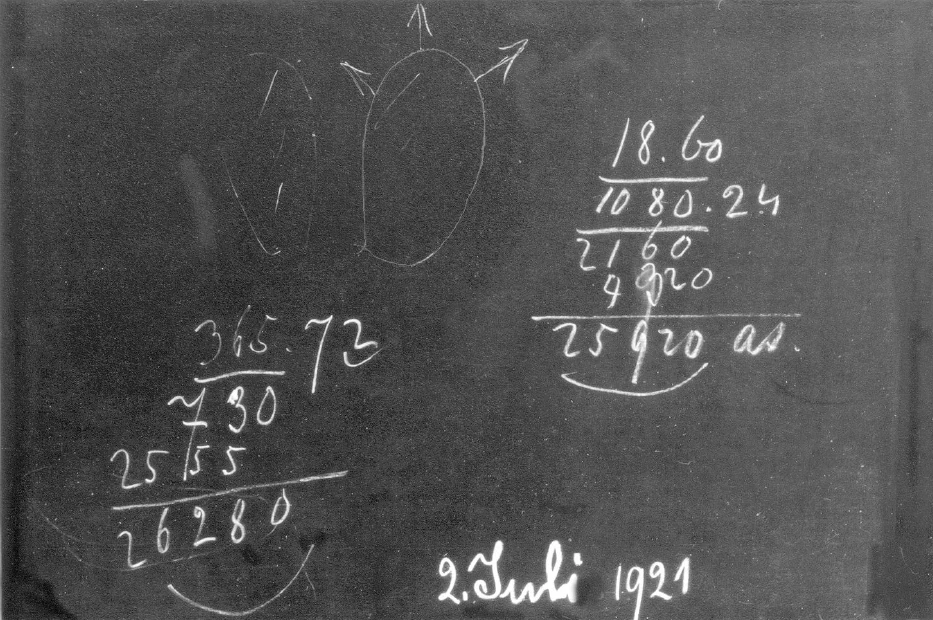
[ 24 ] We breathe, don’t we, and last time I calculated the number of breaths for twenty-four hours. If we assume eighteen breaths per minute, that makes sixty times eighteen per hour, and 25,920 breaths in twenty-four hours—day and night. If you now consider another rhythm in human beings, it is the rhythm of day and night itself. In the morning when you wake up, you draw the astral body and the “I” into your physical body and etheric body. This, too, is a form of breathing. You breathe them in in the morning, and in the evening as you fall asleep, you breathe the astral body and the “I” out again—that is, one breath in twenty-four hours, in one day. That amounts to three hundred sixty-five such breaths in a year. And if you take the average human lifespan—seventy-two years—you get roughly the same number; if I hadn’t used seventy-two but a slightly lower figure, I would have arrived at the same number. This means that if you consider a person’s entire earthly life and count one breath per day—one when falling asleep and one upon waking—then over the course of a lifetime, there are just as many such inhalations and exhalations of the astral body and the “I” as there are breaths in twenty-four hours. Over the course of a lifetime, you also take just as many such breaths, which consist of the exhalation and inhalation of the “I” and the astral body. These rhythms correspond perfectly, and we see how the human being is integrated into the world. The life of the day—sunrise and sunset, that is, the single cycle of the day—corresponds to an inner sunrise and sunset that lasts from birth to death.
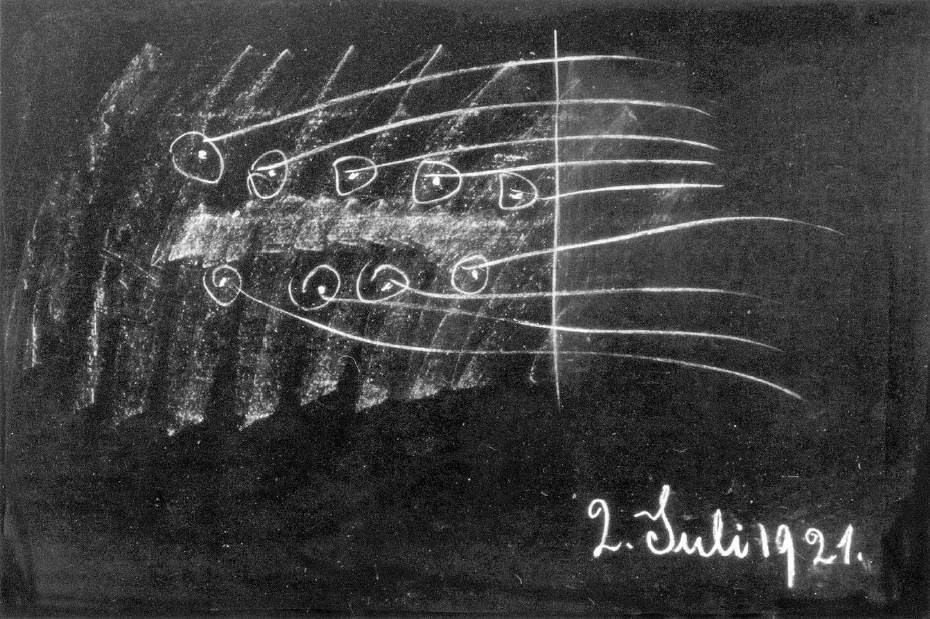
[ 25 ] As you can see, human beings are integrated into the whole world. And I would like to conclude this reflection today by pointing out an idea that I ask you to think through a little and meditate on. Modern science conceives of the world as follows: This is the course of world events. Within this course of world events, the Earth first came into being. Then, once entropy has reached its limit, the Earth will in turn succumb to heat death, and so on. — If one adopts a view today such as the Copernican one or some modified form of Copernicanism, then one is actually only taking into account the forces that formed the primordial nebula and so on, and human life is, in essence, the fifth wheel on the wagon. For the geologist and the astronomer do not look at human beings at all. It doesn’t even occur to them to look to human beings in any way as the cause of a future world order. Human beings are right in the midst of these world events, but they are the fifth wheel on the wagon. World events unfold; they have nothing to do with it. But imagine it this way: All of this world history comes to an end, stops there, and fades into space. It stops, and the causes of what then happens out there always lie within the human skin, within human beings; they continue on. And what is the world here is merely something predisposed within human beings in prehistory. — That is indeed how it is in reality. And just as books of wisdom tell us such things in their own language, so too do the words of Jesus Christ point to these things: “Heaven and earth will pass away, but my words will not pass away.” Everything that is part of the material world will fade away, but that which comes from the spirit and the soul and is expressed in words will survive the decline of the world and live on into the future. The causes of the future do not lie outside our skin; they are not for geologists to investigate, but we must seek them within—in the inward-directed forces of our being, which first pass over into our next earthly life but then continue on into other metamorphoses. So that, if you seek the future of the world, you must look within human beings. That which is external passes away completely.
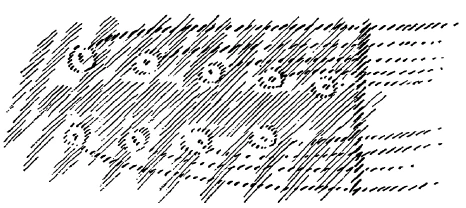
[ 26 ] The 19th century erected a barrier against this insight, and that barrier is called the law of conservation of energy. The law of conservation of energy simply perpetuates the forces surrounding human beings. But all of that will pass away, disappear. And what first arises within human beings—that is what shapes the future. The law of conservation of energy is the most false thing one can imagine. Taken literally, it means nothing other than making human beings the fifth wheel in world events. But it is not the concept of conservation of energy that is correct, but rather the other saying: “Heaven and earth will pass away, but my words will not pass away.” That is the correct saying. Yet these two sayings stand in diametrical opposition to one another. And it is nothing but thoughtlessness that certain adherents of this or that positive creed today wish to be both believers in the Bible and adherents of theoretical physics. This is nothing but dishonesty, which today, however, presents itself as a creative force in culture; and this dishonesty—which is actually an anti-creative force—must be removed from the cultural-creative sphere if we are to move from forces of decline to forces of ascent.