

Anthroposophy as Cosmosophy I
Human Traits in the Earthly and Cosmic Realms
GA 207
7 October 1921, Dornach
Translated by Steiner Online Library
Sixth Lecture
[ 1 ] We have seen how the consideration of the soul’s conditions in the human being has, so to speak, led us into the spaces between the physical body, the etheric body, the astral body, and the I; but how the consideration of the spiritual conditions in the human being leads us, so to speak, out of the human being’s appearance here—as it is experienced in life between birth and death—and into the vast spiritual universe. Insofar as the human being—one might say—is spirit, he is certainly connected to the entire spiritual universe. And therefore, what unfolds within the human being as spiritual events can only be properly considered in this context of the entire universe. The soul, after all, is, so to speak, the human being’s intimate inner life. It unfolds in a threefold form, such that the mental aspect is situated between the physical body and the etheric body, the emotional aspect between the etheric body and the astral body, and the volitional aspect between the astral body and the “I.” Thus, in our consideration of the soul, we remain entirely within the human being. But as soon as we approach actual spiritual events, we must step outside of the human being, as he initially stands before us as a closed entity in the world between birth and death.
[ 2 ] Now we know—and we discussed this again just eight days ago from a certain perspective—that when we first ascend into the spiritual realm, we encounter beings that are arranged above humanity in much the same way as the animal, plant, and mineral kingdoms are arranged below humanity. So as we ascend—names are irrelevant—we encounter the beings known as Angeloi, angelic beings; Archangeloi, archangelic beings; and Archai, primordial beings, or spirits of the ages. We have, after all, already characterized these beings—which, in a sense, constitute the realms we encounter when we view humanity’s position in relation to the spiritual world—from a wide variety of perspectives. Those beings designated as Angeloi, or angels, are the ones who have the strongest connection to the individual, to the single human being. The individual human being does indeed have such a relationship to the first hierarchy above him that he, in a sense—though this is not entirely accurate, one might say, as is often expressed in popular terms—develops a certain relationship to such an angelic being.
[ 3] Those who constitute the second hierarchy above him are the Archangeloi. We can speak of them in such a way that we first assign to them, in terms of their functions, what acts as national spirits—that is, what encompasses groups of people who belong together as a nation, although there are all kinds of gradations within this.
[ 4 ] When we finally ascend to the higher Archai, we encounter, so to speak, the guiding entities that have existed throughout certain epochs, transcending the distinctions of the national. This is certainly not the only—let us say—function of these entities, but we gain some initial insight by focusing on this function, which is indeed present in them as well.
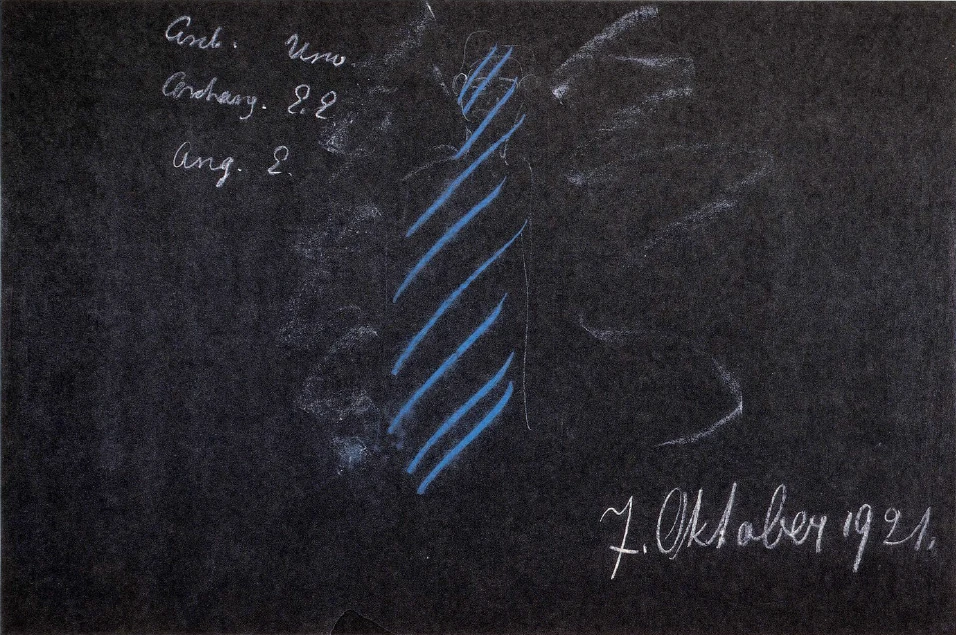
Archaic Beings, Primordial Beings, Spirits of the Age
Archangeloi, Archangels
Angeloi, Angels.
[ 5 ] Just as we can gain an understanding of human physical life on Earth by asking ourselves: What are its relationships to the animal, plant, and mineral kingdoms? — so too must we ask ourselves: What are its relationships to these levels of being that extend into the spiritual realm? — in order to come to know the human being as a spiritual being.
[ 6 ] To do this, we must proceed as follows. Let us imagine, from certain perspectives, how a human being passes through the gate of death. We know that just as we now live as human beings during this period of Earth’s evolution—which spans many years—the laws underlying the mineral kingdom become present to our ordinary consciousness. From birth to death, so to speak, a human being absorbs everything that, in a certain sense, makes the mineral kingdom comprehensible to them, and they have a sense that they can understand the mineral kingdom using the concepts and ideas at their disposal.
[ 7 ] This is not the case with the plant kingdom. As you know, science stops short of the plant kingdom; at most, it posits the ideal that the complex composition of plant cells—of living cells in general—will one day be explained in terms of their structure, which, as I have explained to you, is a completely mistaken starting point, because the structure of the plant—or of living cells in general—is not characterized by a particularly complex structure, but rather by the chemical structure’s descent into chaos. Yet human beings simply cannot move beyond these concepts of the mineral realm. Even less can he, with his—if I may say so—mineral concepts, enter into the animal realm, let alone attain self-knowledge. All of this must, of course, be provided through spiritual scientific research. Human beings thus acquire a—let us call it—mineral consciousness, that is, a consciousness suited to the mineral realm.
[ 8 ] This consciousness, which is woven between birth and death, he carries with him through death. And so, with whatever may become of this consciousness when he passes through the gate of death and lives in the spiritual realm itself, he must then journey through his future existence.
[ 9 ] But something quite different also makes its way into this consciousness. What extends into this mineral consciousness—even though it does not belong to it at all—and what colors it is moral consciousness; this is what arises from all the processes of consciousness that are connected to our impulses of will and our actions. What we experience there as our satisfaction with this or that, what we experience as our pangs of conscience, as our self-reproach and the like—all of this, in a sense, colors our mineral consciousness, and this is something that a person also takes with them through the gate of death. One can therefore say: With a mineral consciousness tinged by moral experience, the human being passes through the gate of death; and with whatever may result from this, he then lives on in the spiritual realm.
[ 10 ] The fact is that through this mineral consciousness, a person not only comes to understand the mineral world here, but also develops, through this very mineral consciousness, a relationship with the being from the hierarchy of the Angeloi—that is, with the being to whom he wishes to turn as the one closest to his individual development. And once a person has passed through the gate of death, the question is to what extent they can, so to speak, maintain this relationship with this angelic being through the effects of their mineral consciousness. They can do so only to the extent that this mineral consciousness has been colored by moral factors. For after death, this mineral consciousness strives, as it were, to expand into the world. It strives to become cosmic, to adapt to the universe; it strives beyond the individual.
[ 11 ] We can also say that in the life between birth and death, the human being is closest to the angelic realm when he lives in the state from which dreams arise—dreams that certainly have something to do with his individual being, and which, on the one hand, deny the mineral-mental nature, yet on the other hand, hold fast to it. Human beings would also be unable to find that subconscious relationship to the hierarchy of the Angeloi if their mineral consciousness were not tinged by the states that they, in a certain sense, sleep through—yet which are precisely those that protrude from the state of sleep and then play out in the dream worlds. The dream itself—with the exception that its contours do not conform to external sensory reality, and that it often denies contact with external sensory reality—is nevertheless woven from the same substance from which the world of thought is woven between birth and death. Thus, as a human being passes through the gate of death, they take with them what they have developed within their mineral consciousness in order to maintain the connection with their angelic being.
[ 12 ] Now, as we live today in our present epoch of human history, human beings—especially those who consider themselves fully enlightened—hardly integrate what they possess as mineral consciousness into their moral experience. On the contrary, they strive as much as possible to keep this mineral consciousness separate from the moral realm. They wish to establish at least these two worlds within themselves: on the one hand, they wish to contemplate everything that can ultimately be grasped in the realm of mineral nature—and to the extent that mineral nature extends into the plant, animal, and human realms—and then to regard the moral as something that simply wells up from within. It goes against the spirit of our times to conceive of what lives in nature as simultaneously imbued with moral impulses. There is a gulf between the moral and the mineral. It is not easy for human beings to find the bridge to integrate the moral into the mineral. I have, after all, often pointed out how human beings conceive of the Earth’s development in purely mineral terms—from the content of the Kant–Laplace theory right up to what is currently conceived of as mineral in modern times—and how, in doing so, they exclude everything that constitutes moral feeling. This is why human beings are able to develop only an extremely limited relationship to the nature of the angels; why, in the course of our present age—to put it in layman’s terms—they are unable to form a close connection with their angelic being.
[ 13 ] If mineral consciousness were completely separated from moral influences, then human beings would even run the risk of completely losing the necessary connection with the angelic beings at what I call the “midnight hour of existence.” I say: be in danger. Very few people today are in this danger; but unless there is a spiritual deepening of the entire development of humanity on Earth—of human thought, feeling, and will—across the entire Earth, then what currently exists as a danger will indeed be able to materialize, and there would be numerous people who, between death and a new birth—even as they approach the midnight hour of existence—would have to sever their connections with their angelic beings. The angelic being would, to be sure, still maintain connections; but these would remain one-sided, flowing from the angelic being to the human being. The human being would not be able to reciprocate them sufficiently between death and a new birth. We must be perfectly clear that modern culture, which is drifting toward materialism, has the effect on the human spirit of impairing the relationship to one’s angelic being, causing this relationship to become increasingly tenuous. Yet it is precisely as a person approaches the midnight hour of existence that they must reestablish the connection to the archangelic being through the angelic being. If this relationship—as it certainly can be when a person lives within the spiritual world—is to be such that it does not merely flow one-sidedly from the angelic being toward humanity, but can also be reciprocated by the human being, then the human being must take on a spiritual content; that is, he must imbue his moral impulses with a religious character.
[ 14 ] Human beings today therefore face the danger that, if this same development continues, they will develop a tenuous connection to their angelic being and, as a result, will be unable to establish an inner connection to the archangelic being. But the archangelic being is already involved in bringing them back into physical life. In particular, the Archangelic Being is involved in developing the forces that bring them back into a certain national community.
[ 15 ] When people, as has been the case for centuries, live an inner life devoid of spirituality, then the relationship between the archangels and human beings becomes one-sided, and then the human being does not grow into the national character through his or her inner soul nature, but is, so to speak, placed from the outside—let us say, by the world order—into the national character that the archangel is assigned to guide. One cannot come to an understanding of our present age—which is characterized precisely by the fact that national cultures are cultivated in such a one-sided manner—until one realizes that this stems from the fact that the souls who have descended into earthly existence in recent times have only a loose connection to their angelic being and, consequently, no inner connection to the archangelic being; that they thereby, so to speak, grow into their national identity only from the outside; that the national identity is then, in a sense, a soulless impulse within them, and people are immersed in their national identity solely through external impulses—through linguistic ties and all manner of impulses tending toward chauvinism. Whoever is spiritually rooted in their national identity—and that is certainly the case for very few people today—will by no means be able to develop into chauvinism or one-sided nationalism; rather, they will develop the fruitful forces inherent in their national identity, and they will do so individually. But they will not insist on their national character in a certain one-sided way. They will, so to speak, allow it to flow everywhere as the color of their being into their human expressions, but they will not emphasize it in an outward way—namely, in an outward way that is hostile toward others.
[ 16 ] The fact that this is the case today—that it sets the very tone for world politics, that all conditions based on ethnicity pose such difficulties for human development—is entirely due to what I have just indicated. For the connection that arises at the midnight hour of existence—before and after, throughout long ages — cannot be imbued with spirit by taking with one through the gate of death the corresponding religious intimacy—which is, however, spiritual and not merely a matter of religious words—then the Archangel can only act upon that which is plant-like in the cosmos and is sent into human beings as the plant-like element. The human being is then guided—or rather, can only be guided—by his Archangel through very subconscious forces associated with his plant nature—that is, with that which places him within the conditions of breathing, which are, of course, modified by the conditions of language—through all that which, in a plant-like manner, penetrates the human organism via language. It is then the case that, more or less, once a person is born and grows up as a child, they grow into language in an external way. If he were able to find the relationship—the inner, soul-level relationship—to his archangel through the angel, then it would be the case that he would also grow into the realm of language on a soul level, that he would, so to speak, perceive the genius of language, not merely the external, mechanical aspects of language.
[ 17 ] But we can see today just how true this is, how strongly people today, in many respects, are a reflection of the mechanical in their language, so that in their entire being they not only carry the linguistic as a fundamental tone, but actually appear to be a reflection of the linguistic; that one can clearly see how facial expression itself becomes an expression of the linguistic. What we encounter as folk customs—the distinctive folk-like physiognomies as they appear to us today—have indeed come to humanity in an external way from the Archangels.
[ 18 ] What takes place externally within humanity—insofar as it affects the human spirit—can really only be explained through the kind of analysis we now undertake from the perspective of anthroposophical spiritual science, and all of today’s anthropology or similar disciplines is, I would say, merely a playing around with terminology. In many respects, what anthropologists and similar scholars write today about the configuration of humanity on Earth and the differentiation of humanity lacks any guiding principles, because the concepts they use are grouped according to external characteristics. Of course, one could regroup the whole thing. True substance only flows into the matter when one considers it spiritually. But then one must not shy away from rising to the contemplation of real, concrete spiritual beings.
[ 19 ] It is clear from this that only spiritual deepening can heal the ills of our time. These ills of our time, insofar as they confront us in public life, are often rooted in the fact that the relationship between human beings and their angel—and thus their connection to the archangels—has become tenuous, to the point that it can only exert an influence from the outside.
[ 20 ] When a human being undergoes further development between death and a new birth—a process that, starting from the midnight hour of existence, leads back into physical life on Earth—he enters, so to speak, the realm of the Archai, the primordial principles. These Archai, these primordial principles, play a role in the current cosmic evolution by, so to speak, leading the human being back into the earthly limits of his being.
[ 21 ] The situation is as follows: When a person passes through the gate of death, he continues to live in such a way that he first experiences the consequences of his mineral consciousness tinged with morality, thereby expanding, as it were, beyond the world. Then, from the midnight hour of existence, he withdraws back into himself. First, they are transferred into the plant realm, which becomes part of them. And the closer they come to earthly life, the more they contract, so to speak, so that they can be reborn as a being enclosed within their skin.
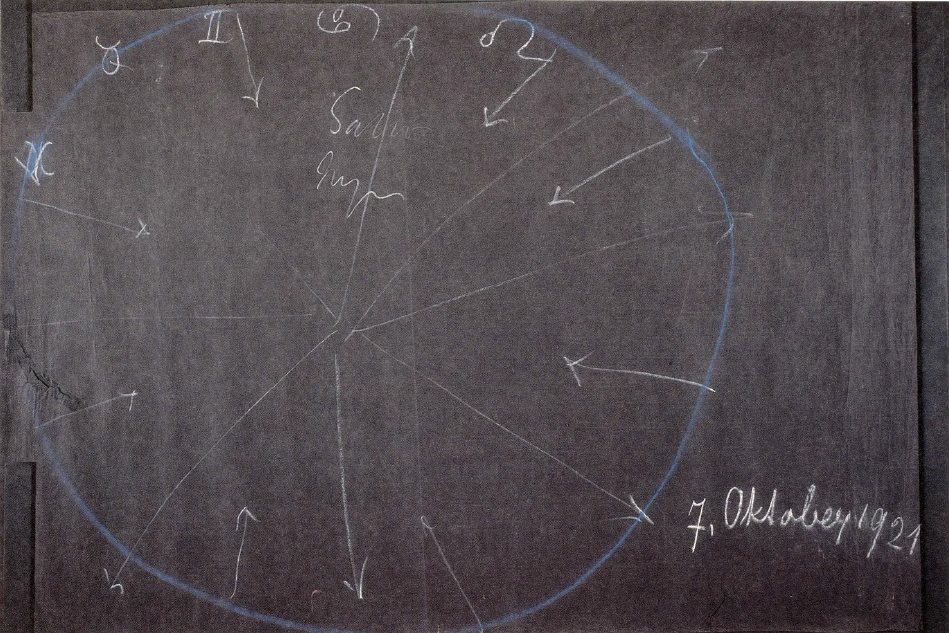
[ 22 ] What is to happen to the human being when he enters the realm of the Archai is what structures and condenses the plant-like into the animal-like. As human beings pass the midnight hour of existence, they first possess within themselves the forces—not the organs, of course, but the forces—that thus determine their breathing, including differentiated breathing. But the fact that these forces then concentrate into organ forces occurs only after the midnight hour of existence; it occurs only within the realm of the Archai. Human beings, so to speak, become more and more human. Yet it is true that this cosmic influence exerted upon human beings—in the sense of the forces emanating from the Archai—actually organizes them in such a way that their organs strive toward animal formation. When we consider human beings in their relationship to the cosmos, it is the case that, as they strive outward from the midnight hour of existence toward a new earthly life—since they are subject to cosmic laws just as they are subject to earthly laws here on Earth— And we can say the following: From the immeasurable expanses of the universe, human beings are shaped as they contract more and more. It is, so to speak, an expansion of the human being through mineral consciousness out into the expanses of the universe up to the midnight hour of existence (see diagram, arrows), out into the immeasurable expanses of the universe. When the midnight hour of existence then arrives (blue), the forces that subsequently act within the human being as plant-like forces become integrated into him. From this midnight hour of existence, the human being returns once more, only to limit himself, as it were, to earthly life (arrows pointing inward). This midnight hour of existence is, in fact, an immensely significant turning point in human development.
[ 23 ] As a human being lives his way out of death and into the cosmic realm, he becomes more and more one with the world. There, he differs little from the world. To put it figuratively—of course, one cannot speak of physical organs out there, but you will understand me if I explain this using images drawn from physical existence—he learns, as it were, how the eye grows together with the light, and he no longer distinguishes between light and eye, nor between sound and ear. He grows by expanding outward into the vastness, becoming one with the universe.
[ 24 ] As he then passes through what is the midnight hour of existence, when he begins to contract once more in order to become a finite being again, a kind of objective conception dawns within him: This is not the world now, but rather it is the human being. And a consciousness grows ever stronger within the human being, a consciousness that is actually at its strongest when the human being returns to earthly life. But just as here on Earth the content of our consciousness consists of minerals, plants, animals, mountains, rivers, clouds, stars, the sun, and the moon, so too, during this return to Earth, the primary concepts become those of the human being.
[ 25 ] It really is true: If we take, on the one hand, the seemingly quite complicated world that lies outside our skin, with everything that is in it—if we take the world with its psychological and spiritual aspects—it is certainly very complicated; but what lies within our skin is just as complicated; it differs only in size, but size is not what matters. Our world is what lies outside our skin while we live between birth and death; what lies within, we infer only from what a human being is not in reality during life—namely, the physical body. But in the time from the midnight hour of existence until the next life on Earth, the human world is the inner being of the human being—comprising body, soul, and spirit (see illustration on page 110, blue). In a sense, the human being is the world. Gradually, up to the midnight hour of existence, we lose the world as a result of mineral consciousness—though we do become attuned to it as if it were our self, our entire, all-encompassing self—so that we no longer distinguish between our self and the world. And as we return, our world becomes the human being. We do not look at the stars; we look at the structure of the human limbs; we do not look at what is otherwise contained in the universe—let us say, between the stars and the Earth—but we look at the inner workings of the human organism, insofar as it takes shape out of spirit and soul. We look at the human being. What we are looking at there is that which leads us to a renewed existence on Earth. We look at this human being as it takes shape.
[ 26 ] We live in the period around the midnight hour of existence within the human being as he is taking shape from the plant realm. And when we enter the realm of the Archai, we live within the process by which the human organs take shape in accordance with animal forces. I said: Just as we are dependent, between birth and death, on what acts upon us from the Earth, so too, when we are out there in the universe—it is not merely a matter of space, though of course one can only describe it in spatial terms—are we dependent on that which is extraterrestrial. And at the moment when we pass through the Archai, we can express the laws that operate within us in terms of the universe—just as we examine the laws of the Earth here during our earthly communal life through the laws of modern physics— we can express these laws by referring to Aries, Taurus, Gemini, Cancer, Leo, Virgo, Libra, and so on.
[ 27 ] And by relating the positions of what is the Sun to these stars—indeed, to the fixed-star sky as a whole—we find in the Sun’s constellations, in relation to this fixed-star sky, the laws that govern the realm of the Archai’s will. The will that reigns there, that permeates these laws—that is the will of the Archai.
[ 28 ] But if we were to look for natural laws out there that correspond to our natural laws in the same way that the natural laws on Earth correspond to us during our earthly existence, then we would have to look to these constellations. And we do, after all, spend a long time in the realm where we are thus dependent on the constellations—but no more so than we are here on Earth dependent on the laws of nature, where our will, which is something higher than the laws of nature, also comes into play. We must not speak of the cosmos there in the sense of a cosmic regularity operating with mechanical necessity. But what we find in the constellations is, in a sense, the expression, the image of these laws that act upon us there. And just as in the past, when we were solely in the realm of the Archangels and the laws of the plant kingdom acted upon us, so now the laws of the animal kingdom act upon us.
[ 29 ] When one rediscovers these things through spiritual science, one arrives at the immensely significant fact that the ancients—who, through certain dreamlike visions of the universe, possessed knowledge that was later lost—actually named this constellation, which represented the fixed-star sky to them, the zodiac, with what one might call an atavistic genius. I cannot help but feel that modern spiritual science, which reveals these things to us anew, leads us—from entirely different foundations—to an understanding of what was once perceived through an intuitive insight. One is, I would say, profoundly moved when the teaching of the zodiac and its effect on human beings has been preserved from ancient times, and when—quite apart from what has been preserved—one then, through the methods of modern spiritual science, once again comes to connect insights with the constellations of the Sun and the zodiacal images, that is, with the fixed-star sky. This is what so closely unites modern spiritual science with the wisdom of the ancients. And between us, who seek spiritual science, and that period when the wisdom of the ancients reigned, there lies something that, while necessary for the attainment of human freedom, nevertheless represents, in essence, an age of darkness.
[ 30 ] So we enter the realm of the Archai and are integrated there into what constitutes our animal nature. What is our animal nature?
[ 31 ] Well, our animal nature is what our organs initially provide us with; in terms of number, these organs are in many ways similar to those of higher animals. But even before we reach the moment of birth, we are released from the realm of the zodiac—if I may put it that way—and enter the realm of the planets: Saturn, Jupiter, and so on. As we enter the realm of the planets—that is, as we draw closer to the Earth, so to speak, and closer to the point in time when we once again assume our human form—what has become integrated within us as the animal nature through cosmic laws is, if I may put it that way, directed. Before we have been immersed in the planetary system—that is, in the forces of the planetary system—we do not, for example, have our spine pointing away from the Earth with our head directed upward. Rather, we possess what characterizes the animal in terms of its orienting forces. Everything that shapes our hands, for example, as organs of our soul—that which does not make them mere grasping or hearing organs, but rather organs that can act freely out of the impulses of the soul—we owe to this influence of the planetary system. And everything that helps us, as human beings, to remain human even down to the lowest level of animal organization—we owe that to the Moon’s constellation in relation to the other planets.
[ 32 ] We are thus literally humanized by the planetary system as we return. I told you: Human beings themselves—human beings in the process of becoming—are the world that lives in our consciousness during this return from the midnight hour of existence. We also see how, at first, everything that ultimately pulsates toward the animal forces is present. We experience this in such a way that we actually live through it as a kind of downfall, as a kind of icy process. But the whole thing is, I would say, loosened as we enter the planetary realm, and only then does the cosmic world—which we thus see as the human world—become the world represented by the earthly human being who tears himself away from the animal realm, who grows out of it. This now fills us. This becomes the content of our consciousness. We carry within us what the cosmos has given us as a system of forces.
[ 33 ] This is how we descend from the spiritual worlds in spirit and soul. We have lived through the worlds in which we were in direct contact with the Angeloi, Archangeloi, and Archai. We descend in this way as human beings. However, if we have not established intimate relationships with our angelic beings in the sense just described, then we encounter difficulties when we enter the planetary region, because we were already unable to establish divine-spiritual relationships even with the world of the Archai. Outwardly, we have been integrated into a national community. The Archai, in turn, are then compelled, so to speak, to work upon us only from the outside. We are placed upon the Earth in such a way that all the forces emanating from the Archai tend toward a specific place on Earth. The Archangel or Archangels guide us into a national community. Our specific place within the national community is then determined by the Archai. We grow into this environment in a soulless and unspiritual way, in an outwardly mechanical manner.
[ 34 ] It is, after all, a defining characteristic of our times that people no longer have the inner connection—the intimate inner connection—that they once had in earlier times with their immediate surroundings, into which they also grew emotionally. In a caricatured way, this growing into one’s surroundings is preserved at most—as I said, in a caricatured way—when, for example, children today grow into a particular castle after having been drawn to their ancestors, though even this is already coming to an end. There is still such a relationship, which in earlier times was a spiritual one. Today, people are thrust into their surroundings, so that, fundamentally speaking, they have little inner connection; they find themselves placed in a purely external way at the place to which karma carries them; indeed, they perceive this entire process of being placed into physical existence as something external.
[ 35 ] If a person’s nature is shaped through education and life in such a way that they become imbued with soul and spirit, and arrive at a spiritual worldview, then they will carry this through the period between death and a new birth, that they do not sever their intimate relationship with their angel, that they are carried into their national life in a soul-like manner through the archangel, that they are not merely placed externally into immediate existence through the world of the Archai, but that they can already take something into their animal organization—which they then perceive in such a way that they say to themselves: It has a deep significance that it is precisely from this place—where my consciousness first gradually awakens, where my education is guided—that I unfold my activity out into the world. This is indeed something we must bring about by reforming education in such a way that the human being once again feels: From the place of his education, he takes something with him that then gives him his mission in the world. Then, when this is the case, the individual will also, in a sense, grow out of the merely external realm of the Archai. He will experience the human guiding forces in a way that is imbued with soul and spirit, and he will grow into the new life in a different way than is often the case today.
[ 36 ] So, what is it actually like when a person arrives at a new earthly life? Their consciousness is filled with the way they shape their humanity from within. It is filled with a world they perceive—a world of action, not merely a world of thought. As I have explained, since the midnight hour of existence, this world has gradually taken on the tendency of the will toward humanity, and the human being immerses himself in what is offered to him through the inheritance of the generations, through the substance he receives from his ancestors. He immerses himself in it. He envelops himself in the physical body. He enters the physical world. Indeed, when we consider the human being spiritually, we can discern the nature of the soul’s content as it immerses itself in physical existence to begin a new life.
[ 37 ] Of course, throughout the entire realm that a human being passes through between death and a new birth, the human being enters into close relationships with angels, archangels, and archai; these, in turn, are connected to the higher hierarchies. And so, between death and a new birth, a human being passes through a realm in which what he carries through the gate of death is absolutely decisive for his relationship to this realm. For just as he has succeeded in permeating with mineral consciousness that which seeks to rise from the depths of his being as the spiritual, so intimately can he become with his angelic being. But because they can become so intimate with their angelic being, they grow into the world of the Archangels, so that they can, as it were, recognize, feel, and consciously respond to its power of their own accord, enabling them to move forward and become the individualized being they must gradually become if the world is to move toward an ascent rather than a decline.
[ 38 ] It is entirely possible to describe this life between death and a new birth quite succinctly from a wide variety of perspectives. You will find one such perspective in the series of lectures I gave in Vienna in 1914; today I have presented another perspective to you. All of these perspectives are suitable for getting to know the human being more and more from the spiritual side as well. But anyone who is not willing to venture out in this way into a whole spiritual world will never be able to comprehend the spiritual aspect within the human being itself. Just as we must enter the spaces between the physical body, the etheric body, the astral body, and the I in order to perceive the soul in its objectivity, so too must we step out of the human being into the spiritual world to study their relationships to that spiritual world. Then we will find what actually weaves and lives within the human being as the spiritual. It is merely a convenience of our time that we speak of the spirit only in general terms. We must come to be able to speak of the spirit in all its details, just as we speak of nature in all its details. Then true knowledge of the human being will arise; then, in the sense that humanity needs it, the ancient truth—which has shone forth since the time of Greece but whose fulfillment must still be strived for by humanity—will be fulfilled: “Know thyself!”
[ 39 ] Self-knowledge is knowledge of the world, and knowledge of the world is self-knowledge. For as we live between birth and death, the stars and the sun and the moon and the mountains and the valleys and the rivers and the plants and the animals and the minerals are our world, and that which lives within our human boundaries—that is us. If we live between death and a new birth, then what lies hidden as the spiritual behind the sun, the moon, the stars, the mountains, and the rivers—that is us, and our world is then the inner being of the human being. The world and the human being alternate rhythmically as the human being lives physically and spiritually. For the human being here on Earth, the world is the one out there. For the human being between death and a new birth, the world is what lies within. Therefore, it is merely a matter of the alternation of times that allows the human being to say: knowledge of the human being is knowledge of the world, and knowledge of the world is knowledge of the human being in the truest sense.