Anthroposophy as Cosmosophy I
Human Traits in the Earthly and Cosmic Realms
GA 205
6 November 1921, Dornach
Translated by Steiner Online Library
Twentieth Lecture
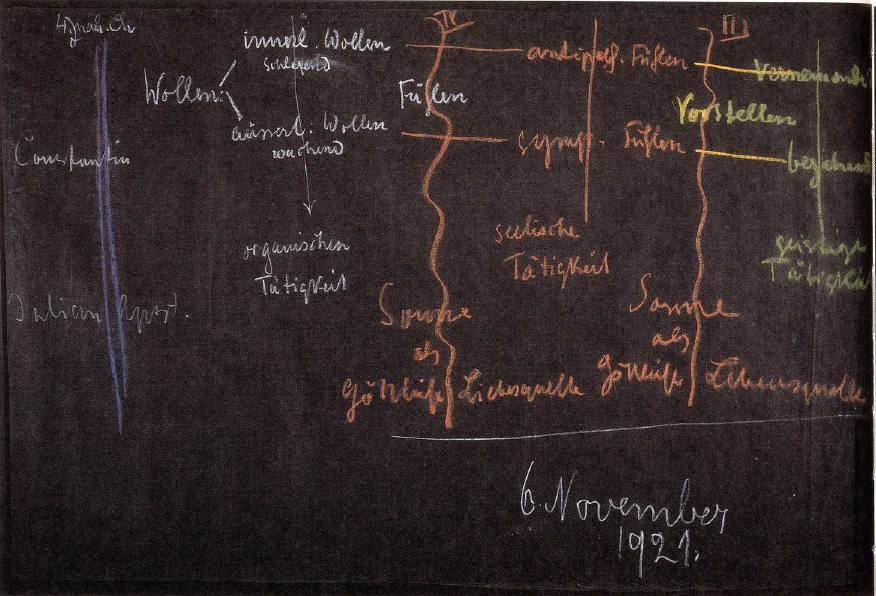
[ 1 ] We have traced how the human constitution—how the structure of life, the soul, and the spirit—relates to the cosmos. And when we look back on the various parts of our recent reflections, we can, in a sense, present the following to our souls today as a kind of distillation of it all. We can say: In the deepest recesses of the human being lies, first and foremost, the will. The will (see diagram on page 166) is, in many respects—if I may put it that way—the most mysterious element of the human being. When we consider morality, we cannot help but notice how our life’s missteps—our inclinations, which are often thoroughly hostile to the world—arise from morality, yet as if from unfathomable depths; how everything that can appear before our soul in the form of pangs of conscience or self-reproach flows up from the depths of volition.
[ 2 ] We also know that this volition is fundamentally mysterious because, in many respects, there is a highly indeterminate element at work in our volition over which we have little control—an instinctive element, an element that drives us back and forth on the waves of life, without us always being able to say that our conscious impulses are also involved in this back-and-forth drift. In another respect—that of cognition—we have always had to emphasize how the very essence of the impulse of will essentially lies as far outside human consciousness as what a person experiences in deep, dreamless sleep. Thus, in this respect as well, the will is infused into our human being as an indeterminate, mysterious element.
[ 3 ] But when we consider human beings in terms of their spirituality, we cannot, of course, understand this spirituality as something in which human beings participate only while awake or in conscious imagination; rather, they also participate in it spirituality, during sleep and also in that part of their being into which the will is infused—where, if I may put it that way, things proceed just as they do with regard to the experiences of deep sleep. We can therefore imagine that the spirit is present even in the sleeping being.
[ 4 ] And precisely with regard to volition, we can distinguish between two aspects. First, we can consider the kind of volition that drives us to act, propelling us from the moment we wake up until we fall asleep—unless, of course, we are simply lazy. We certainly cannot look into the nature of this volition, but its effects enter our consciousness because we can imagine them. We do not know how our volitional impulse works when we walk, but we see ourselves moving forward as we walk. We imagine the effect of our volition and therefore, while awake, have a consciousness of the effects of our volition that corresponds to our imagination. This is one aspect of volition.
[ 5 ] There is another side to volition. Volition is also at work within us while we sleep. After all, inner processes do take place while we sleep, and these inner processes are certainly also an effect of the will; we simply do not perceive them because we are in a state of sleep. But just as the sun shines during the night—namely, for the other half of the Earth that we do not inhabit—so, too, is our human being permeated by the will while we sleep, only that this will eludes our consciousness.
[ 6 ] So that we can distinguish, in our human existence, between two kinds of will: an inner will and an outer will. And we can say: The outer will manifests itself to us through its effects when we are awake. The inner will manifests itself through its effects when we are asleep. — It does not actually appear to us, but we can still say: It reveals itself, or it appears to us afterward, when we look back, in relation to the sleeping state.
[ 7 ] Now, in a sense, the will exists in the oceanic depths of the soul. It surges upward in waves. But simply because we must acknowledge the presence of volition during sleep—that is, during the state in which our physical body is engaged in mere organic activity, neither permeated by the soul nor illuminated by the spirit—we must say: Volition as such is connected to organic activity. Sleeping volition is connected to organic activity in that organic—that is, life processes—take place within us that are essentially related to volition. But even when we are awake and active—that is, when our volition is in flux—such life processes take place. Volition manifests itself, after all, in internal metabolic processes, so that we can point to organic activity there as well.
[ 8 ] Now, I would say, from this oceanic depth of human will, what reveals itself in feeling surges up in waves. We know, of course, that feeling (see diagram on page 166) is still a very dull activity of the human being, that in a certain sense feeling has for consciousness only the intensity of a dream. But still, it is brighter than volition. What lies in the oceanic depths of the human being surges up into the light. Human beings illuminate themselves through their feeling. And as they illuminate themselves, the two poles of volition rise into a more intense consciousness, and both inner volition and outer volition express themselves, as both are able to surge up into consciousness.
[ 9 ] And so we also distinguish between two kinds of feeling. Just as we distinguish between two kinds of volition—an inner volition in the sleeping state and an outer volition in the waking state—so we distinguish a feeling that arises from volition and is akin to the human sleeping state. This is the kind of feeling that finds its primary expression in the antipathies that human beings develop to the greatest extent; thus, it is in antipathies—in the antipathetic—that the feeling inclined toward antipathy manifests itself (see diagram on page 166), whereas the will that acts outwardly—that is, the will that leads the human being into the external world—when it surges up into feeling, brings us together with the external world in a sympathetic way, expressing itself in all those emotional experiences that are sympathetic: the sympathizing feeling, the feeling that sympathizes with the world (see diagram on page 166). And as we bring this realm before our soul, we find, in this dreamlike experience of feeling—which expresses itself in sympathy and antipathy—in those sympathies and antipathies that rise up to the beautiful, up to the sympathies and antipathies we have toward the forms of life, toward artistic forms, or even toward natural forms, from these sympathies and antipathies to the sympathies and antipathies we experience in a more organic way—say, through our sense of smell or taste, in the form of olfactory or gustatory aversion, or in the perception, well-being, and pleasure derived from smell or taste—in all this interplay we now find the actual activity of the soul. Will, then, reveals itself in organic activity; feeling reveals itself in mental activity (see diagram on page 166).
[ 10 ] We can study the life of the soul from this perspective and gain extraordinarily insightful knowledge. We see that wakefulness calls us to feel sympathy for our surroundings. Our antipathies actually stem from more unconscious states. They well up from the sleeping will. It is as if our sympathies were closer to the surface, while our antipathies penetrate them from indeterminate depths. Antipathies are repellent. Through antipathies, we distance ourselves from our surroundings, isolate ourselves, and shut ourselves off within. The egoism that a person develops is based, in particular, on antipathies rising from within. The more egoistic a person is, the more the element of antipathy is at work within them. They want to shut themselves off. They want to feel as much as possible within themselves.
[ 11 ] In everyday life, we do not notice how sympathies and antipathies interact in our inner psychological life. However, we do notice this interplay of sympathies and antipathies when our connection to the outside world becomes abnormal and when we also develop an abnormal form of defense—antipathy—that originates in sleep. This is the case, for example, when breathing does not adjust properly during sleep and we suffer from nightmares. Psychologically, this nightmare pressure is essentially experienced as a repulsive defense against whatever seeks to penetrate us, which allows us to experience our sense of self only in a deficient way.
[ 12 ] Here we are looking into the deep mysteries of human experience. When a person develops feelings of antipathy—that antipathetic nature—with particular intensity, to the point that it also influences their waking life, it happens that they become completely permeated with antipathy, and that this antipathetic nature then takes hold of their astral body. Then their astral body is permeated by this antipathetic nature. It radiates outward from them—I would say, like an abnormal aura, the antipathy radiates outward from them. And then it can happen that they feel antipathy toward people toward whom they would otherwise be neutral, indeed even toward people they would otherwise love—people with whom they were acquainted in life. All kinds of persecutory delusions arise from these conditions. When one experiences feelings of antipathy that cannot be explained by external circumstances, this stems from the overflowing antipathies in the soul—that is, from an abnormal development of one pole in the soul’s life that surges up from sleep.
[ 13 ] So when this antagonistic nature gets out of hand, a person becomes a hater of the world. This hatred of the world can intensify greatly, very greatly. All education and social interaction should be aimed at preventing people from becoming such misanthropes. But just imagine: if even that which surges up from the ocean depths of the human being—when it gets out of hand—can lead a person into intense egotism—and all forms of persecution mania are, after all, an overflowing egotism, an overflowing selfishness—if even that which surges up can be like that: how much more so must the inner, dormant will be—that very will which a benevolent creation conceals from us through sleep! We do not even learn to recognize how our entire organism, how our limbs, are permeated by this inner, sleeping will. At most, in some people, something of what lives in that will—which shapes our organism when we are asleep—occasionally breaks through into consciousness through very peculiar dreams. What lives within this will—I have already characterized it from another perspective in earlier lectures—is something that rightly lies beyond the threshold of ordinary consciousness. Whoever comes to know it comes to know everything in the human being that can, to the utmost degree, lead the human being to wickedness. And it is the deep mystery of life that our organic activity is balanced by those forces which, if they were to dominate the human being in conscious life, would turn him into a criminal and a villain.
[ 14 ] Nothing in the world is inherently evil or good. That which, when it enters conscious life, is radically evil—when used in the right place, namely during our sleeping state to regulate organic activity—is, in fact, the compensation for the expended life forces. If you ask about the nature of those forces that act to compensate for the expended life forces, then you must say: It is evil. Evil has its purpose. Here it has its purpose. And when people come to see this through spiritual training—I have, as I said, already characterized it from another perspective here recently—then it is that which even earlier spiritual researchers have said: It must not be described in its true essence, for sinful is the mouth that utters it, sinful is the ear that hears it.—But human beings must know that life is a dangerous process for them, and that in the depths of life, as a force that is absolutely necessary, evil is indeed present.
[ 15 ] But now the waves continue to surge upward into the realm of imagination as well (see diagram on page 166). And when the will, which lies dormant within, brightens in feeling and surges upward into the realm of imagination, it does indeed become bright, but at the same time it becomes qualitatively dulled; it is abstracted. Antipathic feeling still possesses a certain vivid intensity in human experience. When it surges up into the imagination, it lives on in everything that constitutes negative judgments in human beings—rejecting, negative judgments (see diagram on page 166). Everything we negate in life through judgment—everything the logician calls negative judgments—is the emergence of antipathetic feeling, or rather of the dormant will, into the life of the imagination.
[ 16 ] And when sympathetic feeling—which arises from external volition, from active volition—when this sympathetic feeling surges into the imagination, we arrive at affirmative judgments. We arrive at what, as you can see, exists in human beings only as abstract imagery. In feeling, we still have something—in that we develop antipathies and sympathies—that is intense life. In judgment, which takes place in the imagination, we are, so to speak, stationary, calm observers of the world. We affirm and deny. We do not go as far as intense antipathy; we merely deny. It is an abstract process. We do not get worked up to the point of antipathy; we merely say: No. — Likewise, we do not get worked up to the point of sympathy; we say: Yes. — What remains is in contemplative calm. We are elevated above our relationship to the outside world, elevated to the level of abstract judgment.
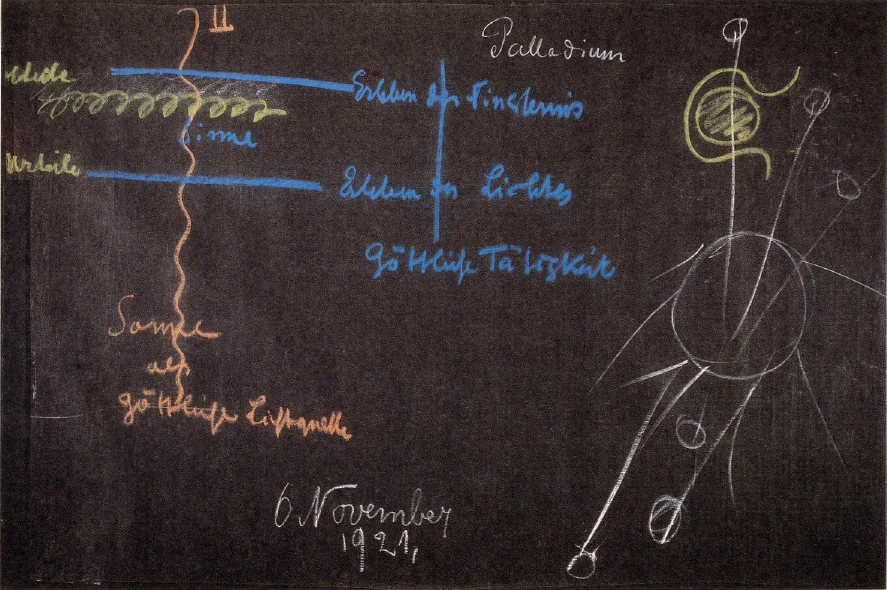
[ 17 ] So this is merely a figurative activity. We can say, precisely in the sense of what we learned yesterday: Here (see diagram on page 166) is our mental activity, but it extends further upward—into the sphere of the senses—as will, feeling, judgment, and imagination. And as this extends into the sensory sphere—that is, as the negative judgment extends all the way up into the senses—what does it become there? It becomes that state where one perceives nothing; thus—if we represent it through the most striking form of perception, namely seeing—we can say that where we see nothing, where we experience darkness—it becomes the experience of darkness. The affirmative judgment, on the other hand, is the experience of light (see diagram). Of course, we could just as easily speak of the experience of silence, of the experience of tone, or of sound. For all twelve senses, we could express what we characterize here through light and darkness.
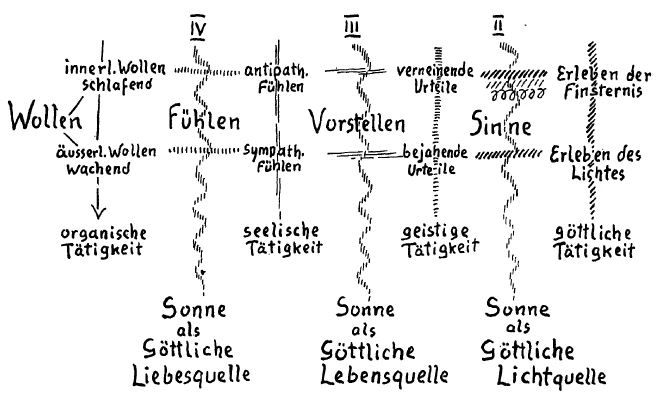
[ 18 ] And if we now ask ourselves: What kind of activity corresponds to this sphere of the senses? We have identified the activity of the organs, the activity of the soul, and the activity of the spirit. The activity of the spirit is already an entirely pictorial activity, but within that pictorial nature, it is still our own activity. What takes place, on the other hand, between the senses and the external world is, in fact, no longer our own activity; there, the world plays a role within us. We can, in fact, schematically draw the eye in such a way that we conceive of it, in a certain sense, as an independent entity, and what takes place within the eye is the penetration of the external world into the organism, as if through a gulf. There we are no longer standing within the world through our own activity; rather, we stand within the world in such a way that we can say: It is divine activity. This divine activity permeates our environment, which, as darkness, tends toward a negative judgment, and as light, tends toward an affirmative judgment. This divine activity, in its effect on human beings in their relationship to the world, was felt particularly strongly by the wisdom of the second post-Atlantean epoch; it was experienced very intensely: God in the light, God in the darkness. God in the light: the divine with a Luciferic hue; God in the darkness: the divine with an Ahrimanic hue. This is how Persian culture experienced the outer world. And the sun was the representative of this outer world—the sun as the divine source of light: the second post-Atlantean epoch.

[ 19 ] In contrast, the third post-Atlantean culture—the Egyptian-Chaldean culture—was characterized by an experience of the sphere that lies between judgment and feeling. There, people did not experience the divine as something external, manifested in light and darkness; rather, they experienced the divine in the clash between imagination and feeling. For this is precisely how the gods’ influence worked among the Egyptians and Chaldeans: people poured into their judgments—into negation, something of their antipathies; into affirmation, something of their sympathies. And only when we can interpret the pictorial and other documents from the Egyptian-Chaldean period do we come to understand how everything was shaped by sympathetic affirmation and antipathetic negation. You can still sense in the Egyptian tomb figures and other sculptures that there is something within them that has been artistically shaped through sympathetic affirmation and antipathetic negation. One cannot create sphinxes without incorporating what constitutes a life of sympathetic and antipathetic ideas. There, people perceived not merely light and darkness; they perceived something that has something of the living quality found in sympathy and antipathy. They perceived the sun as a divine source of life.
[ 19 ] And when we come to the Greco-Roman period, human beings had already lost, to a great extent, their direct connection with the outside world. In my Riddles of Philosophy, I have described how human beings still felt their thoughts in the same way that we today feel our sensory perceptions, but were already approaching the state in which we live today—where, due to the development of the “I,” we essentially no longer have a true connection with the external world; where, with the “I,” we are actually already sleeping within our bodies; where we are leaning toward the sleeping state. This was not yet so pronounced among the Greeks, but it was already present to a certain extent. The Greek nature can only be understood if one is clear about the fact that the Greeks had already become very deeply attuned to their physicality—not yet as strongly as we have, but they had already become very deeply attuned to it. The ancient Persians had not become deeply rooted in their physicality. They did not really believe that they lived fully within their physicality, within their skin—especially if they were sages—but rather they believed that, riding the waves of light, they actually interwove and permeated the entire universe. The Greek, on the other hand, was such that he actually slept within his body, united with this cosmic being. When we are in actual sleep, our ego and our astral body are outside; but our waking state is, in comparison to the Persian state of waking, a form of sleep. Persian wakefulness—let us call it Persian awakening—the primordial Persian state, of course, which I characterize in my Outline of Esoteric Science—was like a stepping into the human senses, but at the same time like a penetration of light itself.
[ 21 ] We no longer feel that we bring the light into our eyes when we awaken. For us, the light is a shadowy presence outside. All of this meant that the Greeks could no longer perceive the sun as the actual source of life, but rather perceived it as something that permeates them from within. And they sensed that element within which the sun lives inwardly in human beings; they sensed it as the element of Eros, as the element of love. Eros, the solar aspect within human beings—that was what lay at the heart of the true Greek inner experience; hence: the sun as the divine source of love.
[ 22 ] And then, beginning around the 4th century A.D.—which I have characterized in its unique nature from a wide variety of perspectives—the era dawned in which the sun is no longer perceived in any other way than as a physical ball of mist out there in space, an era in which the sun is, in a sense, eclipsed for human beings. The Persians truly perceived the sun as the reflector of the light that rippled and pulsed through space. The Egyptians and Chaldeans perceived the sun as the life that rippled and pulsed through the universe. The Greeks perceived the sun as that which instilled love into the organic being, that which guides Eros through the waves of feeling. As this experience of the sun penetrated ever deeper and deeper into human beings, it vanished into their depths, into the oceanic depths of the soul. Today, human beings carry the solar essence within the oceanic depths of the soul. They are not to reach it, because the Guardian of the Threshold stands in the way, because it lies down below in those depths of which the ancient mystery teachings said one must not speak—for the very mouth that utters it is sinful, just as the ear that hears it is sinful. And so, in the 4th century, there were schools that taught primarily for the further spread of Christianity: The mystery of the Sun must not be spoken of; a civilization must arise that does not know the mystery of the Sun.
[ 23 ] Behind everything that happens outwardly in the world lie the inner forces—I would say, the forces that teach from within the universe. The Roman Emperor Constantine was an instrument of such teaching forces. Under him, Christianity took on the form that denies the sun.
[ 24 ] Then there was another who, however, took less account of the course of history than of his enthusiasm for what he had learned from his mystery teachers as the last remnant of the ancient, instinctive wisdom: that was Julian the Apostate. And Julian the Apostate fell at the hands of a murderer precisely because he sought to pass on the triple mystery of the sun as an ancient tradition. The world was not willing to go along with that.
[ 25 ] Today, however, we must recognize that the old instinctive wisdom must be revived in conscious wisdom; that everything which has sunk down into the subconscious, into mere organic activity, or even into sub-organic activity, must be brought back up from the conscious. We must rediscover the mystery of the sun.
[ 26 ] But just as the loss of the mystery of the Sun brought about the most terrible enemies for Julian the Apostate—who still wanted to proclaim it to the world—enemies who ultimately killed him, so too are these enemies now present in relation to the new mystery of the Sun, which must now enter the world through spiritual science. We are now living at the other pole of historical development. Back then, in the 4th century A.D., there was decline. Now we need a new dawn.
[ 27 ] In this regard, Constantine and Julian the Apostate are two symbols of historical development. Julian the Apostate stands, as it were, on the ruins of the ancient world, yet he wishes to rebuild the forms of ancient wisdom from these very ruins. Julian the Apostate wishes to preserve those ancient monuments of humanity that were destroyed by Christianity—which initially took on a materialistic form and, during the Constantinian era, assumed a materialistic form. Countless things were destroyed—countless works of art, countless monuments to wisdom, and countless writings. It was precisely everything that was in any way capable of allowing people to discern the ancient mystery of the sun that was destroyed.
[ 28 ] It is true that people had to go through this to attain freedom—through the belief that a ball of gas was wandering through the world out there—while physicists would be very astonished if they could travel there and find not a ball of gas at all, but on the contrary a void, indeed less than a void, and would discover what the Sun really is: that the Sun is not a luminous ball of gas out there that emits light—that’s nonsense!—but that it is, first and foremost, merely a reflector that cannot emit light, but at most reflect it. But then, in reality, we have Saturn, Jupiter, Mars, Mercury, Venus, and the Moon, all radiating spiritual light. And while physically it appears as if the Sun were giving light to all of them, in reality they are all radiating light toward the Sun, and the Sun is the reflector. That is how it is physically. Through instinctive insight, the ancients—the ancient Persians—had already recognized this and, in this sense, acknowledged the Sun as the earthly source of light, though not actually as the source of light itself, but as the reflector of light. Then it became the reflecting mirror of life and the reflecting mirror of love.
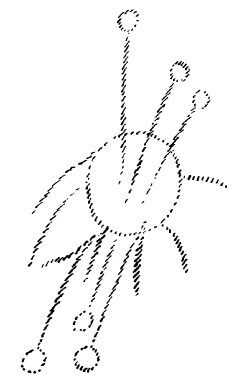
[ 29 ] Julian the Apostate sought to assert this view, and he was removed from the picture. People simply had to go through this process to attain freedom—through the superstition about a ball of gas in space that emits light, a superstition that we find presented today in all physics textbooks as an absolute truth. We must once again penetrate to the heart of what is true in this matter.
[ 30 ] In this regard, Constantine and Julian the Apostate are indeed like two symbols. Julian the Apostate wished to preserve the ancient monuments of the world, through which, in a sense, the true mystery of the sun could still reach humanity. In the early centuries, Christ was still an Apollo-like, sun-like figure.
[ 31 ] This mystery of the sun was regarded as humanity’s greatest spiritual treasure. And it was symbolized by what was called the Palladium. It is said to have once been in Troy, and the mystery priests in Troy are said to have seen in this Palladium that through which they revealed to the people—in a sacramental, cultural, and ritualistic sense—what the solar being is. Then it was brought to Rome, and it was a secret known only to the initiates in Rome that Rome preserved the Palladium. Rome preserved the Palladium. And essentially, the initiated priests of Rome—and even the first Roman emperors, notably Augustus—acted in the world, working from this consciousness, to ensure that Rome represented the greatest treasure in the world, at least outwardly and symbolically, in that the Palladium lay beneath the foundation of the most revered Roman temple—a fact known only to those who were privy to the greatest mysteries of Roman existence. But in a spiritual sense, it had become known to those who were to bring Christianity to the world. And it was from the realization that Rome safeguarded the treasure of the Palladium that the first Christians made their way to Rome. There was certainly something spiritual in it.
[ 32 ] But when Christianity became secularized under Constantine, the Palladium was taken from Rome. Constantine founded Constantinople, and beneath the column he had erected there for himself, he had the Palladium sunk into the ground. And Roman Christianity developed in such a way that knowledge of the mystery of the sun was taken away from it precisely by the very emperor who had externally established Christianity in Rome in its forms and rigid mechanisms. In the outward, worldly consolidation of Christianity by Constantine, Christianity lost the wisdom of the world, which is also outwardly expressed in the transfer of the Palladium to Constantinople.
[ 33 ] Particularly in certain parts of the Slavic world—where people tend to interpret everything in their own way—the belief prevailed, right up until the beginning of the 20th century, that the Palladium of Constantinople would be moved in the not-too-distant future to another city—and, as was believed in the Slavic world, to a Slavic city.
[ 34 ] In any case, the Palladium is waiting—consider the process symbolically from an external perspective for now, though what is more important is the inner aspect—for the location to emerge from Constantinople, which is already having an eclipsing effect on this Palladium, or for the Palladium to migrate to the location that would completely eclipse it. Yes, the Palladium is being taken to the East, where the decadence of ancient wisdom lives on, yet lives in opposition to this eclipse. And everything in the further development of the world depends on the fact that, just as the sun is a reflector of the light given to it from the universe, the Palladium treasure will be illuminated by a wisdom found in the West’s storehouse of knowledge. The Palladium, the ancient heirloom that was brought from Troy to Rome, from Rome to Constantinople, and is to be carried even further into the darkness of the East—the Palladium, the sun-like gem—must wait until it is spiritually redeemed in the West from the dark, gloomy treasure of mere knowledge of nature. Thus, what stands as a task for the future is actually connected to the most sacred traditions of European development.
[ 35 ] Thus, legends that are still alive today—and which can be found among those initiated into such matters (who are sometimes quite simple, unassuming people going about their lives in the world)—thus, legends such as this one about the transfer of the Trojan Palladium to Rome, of the transfer of the Palladium, the jewel of wisdom, to Constantinople at the time when Roman Christianity became outwardly secularized, and of its future transfer to the East, when the East will have been completely stripped of the ancient wisdom, will have fallen entirely into decadence, and when it will be necessary for this jewel of the sun to receive a new light from the West.
[ 36 ] The sun has vanished into the depths of humanity. We must rediscover the sun through spiritual scientific development. Humanity must rediscover this sun; otherwise, the Palladium will vanish into the darkness of the East. Today it is a sin to utter something so untrue; it is a sin to speak the words: Ex oriente lux. — The light can no longer come from the East. The East is in decline. But it waits—for it will possess the treasure, the treasure of the sun, even if in darkness—it waits for the light of the West. Today, people still wander deep in darkness, arrange gatherings in darkness, and look—toward Washington. But only those in Washington who speak from the tone of the spiritual world in such a way that they seek not merely the open doors of the free market for China, nor merely the darkness that surrounds the palladium, will bring salvation. Only those conferences held in the West that aim to carry light from there, so that the palladium may shine again, will bring salvation. For like a fluorescent body, the Palladium is dark in itself; when light flows through it, it glows. So it will be with the wisdom of the East: dark in itself, it will glow, it will fluoresce, when it is permeated by the wisdom of the West, by the spiritual light of the West.
[ 37 ] But today, the West still fails to recognize this. Only when the legend of the Palladium is brought into the bright light of consciousness, only when we once again feel true compassion for someone like Julian the Apostate—who sought to overlook the age in which the light of freedom could sprout in darkness, who wanted to preserve the ancient instinctive wisdom and therefore had to perish— only when people come to realize that Constantine, by giving the Romans outward Christianity, took away their wisdom and their light and cast Christianity into darkness; only when people realize that the light that will make the Palladium shine once more must be sought through modern scientific understanding of nature—only then will an important chapter of world history be fulfilled. Only then will that which became Western at the moment the Greeks “burned Troy”—the Palladium, in which the light that blazed from Troy still exists today—once again become both Western and Eastern. But it is in darkness. It must be brought forth. The Palladium must be illuminated.
[ 38 ] We can draw enthusiasm from the course of history if we have our hearts in the right place. And if we have our hearts in the right place in the sense I have described today, then we will also be able to find the right feelings toward those impulses that are meant to be the true impulses of spiritual science.
[ 39 ] On Friday, I'll give the next lecture here and continue talking about these kinds of things.