Old and New Initiation Methods
Drama and Poetry in the Shift
of Consciousness in the Modern Era
GA 210
8 January 1922, Dornach
Translated by Steiner Online Library
3. The Development of Religious Life in Post-Atlantic Cultures
[ 1 ] Today we want to examine the differentiation within humanity from a different perspective than we did yesterday—specifically, from a historical perspective. With the express aim of fostering an understanding of the present, let us examine human development beginning immediately after the Atlantean catastrophe had passed. When we speak of the development of civilization within human evolution, we must look to the ancient Indian cultural epoch for the first significant period of development of this kind. And there, in my Outline of Esoteric Science, you will find—from a certain perspective—a characterization of this particular cultural form, which was that of ancient India, the cultural form of which only echoes remain in the rightly admired Vedas and in the rightly admired ancient Indian philosophy, for there are no written records from what is referred to in this context as Indian culture. If we use our modern terminology, we must describe this ancient Indian culture as a religious culture in the most eminent sense. But we will still only be accurate with this designation if we elaborate further on what is actually meant.
[ 2 ] The religious element of this ancient Indian culture was such that it simultaneously encompassed everything we recognize today, from our current perspective, in science and art. The entire spiritual life of the whole human being was encompassed by this culture, which we must describe as a religious culture—because, despite everything, it is the most accurate term. This religious culture instills in people the feeling that they are connected, in the depths of their being, to a divine-spiritual world. And this feeling was developed so intensely that it actually permeated their entire lives, so that the brighter states of human consciousness—which prepared us for our waking states— as well as their dreamlike states—which were later lost in our chaotic dream or sleep life as evolution progressed—were permeated by this intense awareness of the connection between the human and the divine-spiritual.
[ 3 ] But we must limit ourselves to this general characterization of the religious in our concepts. For our concepts are too strong a temptation to view the religious as something general, as something that is, in a certain sense, abstractly removed from the rest of life. For the people we are discussing here, the religious was such that, in the concepts they associated with it, they simultaneously possessed very specific images—that is, an imagery-based knowledge—of the nature of human beings, and they possessed an extensive imagery-based knowledge of the structure of the universe.
[ 4 ] We must, however, realize that the pictorial knowledge of the structure of the universe that existed in these people’s worldview cannot in any way be compared to what we have today in our astronomical or astrophysical knowledge. In this astronomical and astrophysical knowledge, we have a kind of mechanism of the universe. The ancient Indian people had a universe that, in their imaginative conceptions, was inhabited by divine-spiritual beings. There could not yet really be any talk of relationships between celestial bodies or their movements—as we understand them—that could be expressed in external, purely mechanical formulas. When these people looked up at the starry sky, they saw in the external constellations and movements of the stars only what was well known to them in their pictorial consciousness—what they were actually observing. It was something that could be characterized in the following way:
[ 5 ] Let’s suppose we’ve seen a bustling scene somewhere, where people were milling about and doing all sorts of things. We were, for example, participants in some kind of festival where all manner of activities took place. We go home. The next day, we pick up a newspaper with a report on this festival that we ourselves witnessed. We let our gaze fall upon the lifeless letters, whose meaning we do know, and which, when we connect them as we read, give us a faint, pale notion of what we experienced in all its liveliness the day before. That is roughly what people in those ancient Indian times perceived through their instinctive vision, and, in relation to that, what they saw in the constellations and the movements of the stars. These constellations and movements of the stars were merely written characters—one might say, pale written characters. And if they had, say, merely copied these symbols and had them on paper, they would certainly have perceived them as nothing more than a mere written record of reality.
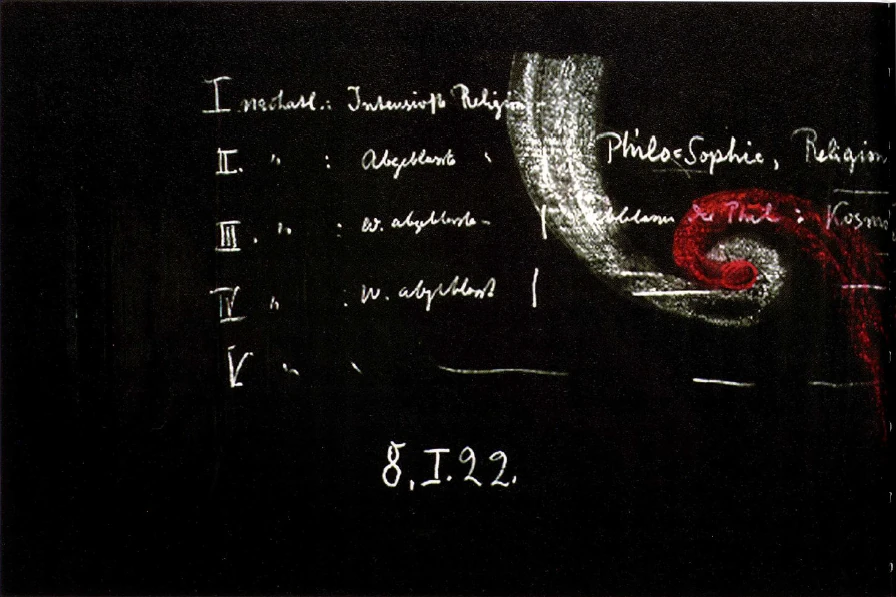
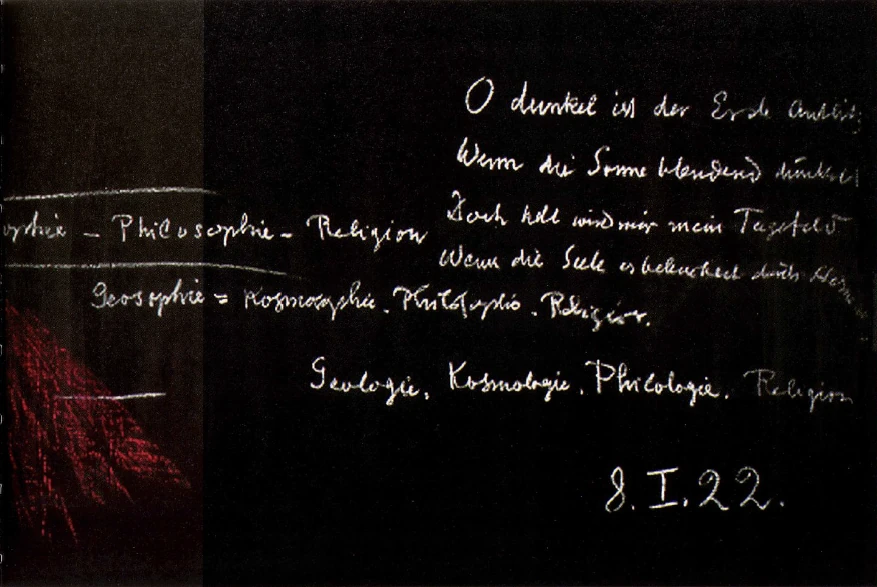
[ 6 ] As for what these people saw behind these written symbols, they developed not only an intellectual understanding but, at the same time, a loving feeling. They were not able to take in what they perceived there in images of the universe merely with indifferent ideas, but instead developed a living feeling for it. And at the same time, they developed what one might call a constant sense that everything they did—even the most complex actions—was an expression of the cosmos filled with the divine-spiritual being. Human beings felt their limbs permeated by this divine-spiritual cosmic being. They felt their intellect permeated by this divine-spiritual being, as well as their courage and their will. So that when speaking of their own actions, human beings could indeed say: Divine-spiritual beings are doing this. - And since in those ancient times people knew very well that among these divine-spiritual beings were also Lucifer and Ahriman, they were likewise aware that, because the divine-spiritual reigned within them, they could also do evil alongside good. [During the following pages, notes are written on the blackboard. See the diagram at the end of the lecture.]
[ 7 ] With this discussion, I would like to convey an idea of how this cosmic religion—which was a cosmic wisdom, but at the same time a wisdom revealed to humankind—was capable of fulfilling the whole person and connecting the whole person to the fullness of the cosmos. And it is precisely in this that the progress in human development lies: that, first and foremost, the most intense religious feeling began to fade. Certainly, religion remained for all subsequent ages, but the intensity of religious life, as it existed in those early Indian times, began to fade. Above all, the feeling of being intimately connected—through one’s actions and impulses of will—with the realm of the divine-spiritual beings began to fade. Not that human beings in the Proto-Persian era—that is, in the second post-Atlantean cultural period—no longer had this feeling of connection at all. They did have it; it had simply faded. In the early period of post-Atlantean cultural development, this sense was something taken for granted. In the second post-Atlantean cultural flowering—the ancient Persian period—it was precisely the deepest, most intense form of religiosity that faded, and human beings had to begin developing something from within themselves in order to grasp their connection with the cosmic divine-spiritual in a more active way than had initially been the case. So one could say: In the first post-Atlantean period, religion was at its most intense, and in the second post-Atlantean period, religion had faded, but human beings had to actively develop something within themselves that would reconnect them with the cosmic, spiritual, and soul-related beings.
[ 8 ] If we want to use a word for this today, we can choose one from the range of words familiar to us—a word that was, however, coined only later. But we are still drawing it from a time when people still had an awareness of what actually existed in the primeval ages of human development. When the primordial human looked up at the sky, he perceived individual beings everywhere—this or that divine-spiritual being side by side—a population of divine-spiritual beings, so to speak. This had faded, and—one might say—what had been individualized, what had existed as individual divine-spiritual beings, had faded to such an extent that, in general, it appeared as a spiritual cosmos. One could also imagine it using the following image: Imagine, for my sake, that you see a flock of birds very close by. You see individual birds. These move farther and farther away, and it becomes a black mass, a unified entity. In this way, as people distanced themselves spiritually from it, the divine-spiritual cosmos became a unified, internally blurred entity.
[ 9 ] Even the Greeks still had, in a sense, a lingering sense that something like this had once indeed formed the basis of human perception. That is why they incorporated the word “Sophia” into their language. What existed as a divine-spiritual cosmos once flowed into human beings as a matter of course; human beings accepted it as a matter of course. To what was now—one might say—perceived as a spiritual distance within this unification, one had to respond with something from within. And the Greeks, who still had a sense of this, expressed it as: I love = philo. — So one can say that in this second post-Atlantean period, the primordial Persian period, a duality existed among the initiates in place of the old, undivided religious life: philosophy and religion. Philosophy had been earned. Religion was what had been handed down, but it had become diluted in the process of transmission.
[ 10 ] As we move on to the third post-Atlantean period, we see a further waning of religious sentiment. But we also encounter a waning of philosophy, and we must imagine the concrete, real process in the following way: While in the primordial Persian era this unified structure of cosmic entities certainly existed and was perceived as the light permeating the cosmos—the primordial light, the primordial aura— Ahura Mazdao, as people moved even further away from this view, they began, in a certain sense, to take the course of the stars and the constellations into account more, no longer perceiving first and foremost the essential divine-spiritual reality behind them, but rather perceiving the written word. And from this arose something that we find in two different forms in Chaldean wisdom and Egyptian wisdom. What emerged encompassed a knowledge of the constellations and the movements of the stars. But the inner activity of the human being had become even more significant. Human beings now had to connect not only their love with this divine Sophia, who shone through the world as the primal light, but they also had to connect their own destiny, their own place in the world, with what could be seen within the cosmos as a “world script” through the constellations and the movements of the stars. And what was now newly attained was therefore a Cosmo-Sophia. This Cosmosophy certainly still contained references to the divine-spiritual beings, but people already saw more of what is merely the cosmic expression of the deeds of these beings. And alongside this, what was philosophy and what was religion once again paled in comparison.
[ 11 ] If we want to understand this, we must be clear that what we still call philosophy today is, of course, only a very faint, faded shadow of what was still experienced as something more alive in the mysteries of the third post-Atlantean epoch—something that the Greeks, in a further fading, called philosophy. But when we look at the third post-Atlantean epoch, we see these three aspects of the human spiritual being clearly expressed throughout its culture: a cosmosophy, a philosophy, and a religion. And we can only form the right ideas about this if we realize that, up until this point in time, people lived in such a way that, with their souls, they actually lived more outside the earthly realm than within it. If we view Egyptian culture, for example, from this perspective—and this was even more pronounced in Chaldean culture—we can only understand it correctly if we say to ourselves: Yes, those people who were at all involved in this culture followed the constellations with deep interest as evening approached. For example, they awaited certain appearances of Sirius; they observed the planetary constellations; and they related what they could observe there to how the Nile provided them with what they needed for their earthly life. But they did not, in fact, speak primarily of earthly matters. The earthly realm was for them a field of work. But when they spoke of the field they were cultivating, they actually spoke of it in such a way that they viewed it as related to the non-earthly realm. And they named the various forms that the patch of earth they inhabited took on over the course of the seasons according to how the stars revealed themselves in these successive seasons. They judged the earth by the heavens. To them, the day was something that, from a spiritual standpoint, actually brought darkness. And light entered this darkness when they were able to interpret what the day brought based on what they could see in the starry sky at night.
[ 12 ] What people felt at that time could be expressed something like this:
Oh, how dark is the face of the earth
When the sun is blindingly dark:
Yet my day becomes bright
When the soul illuminates it with the wisdom of the stars
[ 13 ] When one writes down a sentence like this, one can sense in it what the emotional world of this third post-Atlantean period was actually like. And perhaps it is precisely from such a perspective that one can get a sense of how those people, who were still immersed in the lingering echoes of such a sensibility, could say to the later Greeks, to the members of the fourth post-Atlantean cultural period: “Your view of the world, your whole life, is childish, for you really know nothing but the earth. Your ancestors in ancient times knew how to illuminate the earth with the light of the heavens, but you live in the darkness of the earth.
[ 14 ] However, the Greeks already perceived this darkness of the earth as light. The Greeks already had a definite tendency to gradually transcend cosmosophy and transform it. And as everything that looked in from the vastness of the heavens was further dimmed, they had already transformed cosmosophy into geosophy. And for them, cosmosophy was really just a tradition. For them, it was something they could learn by looking back to those who had bequeathed it to them.
[ 15 ] Pythagoras, one might say, stood on the threshold of the fourth post-Atlantean epoch as he traveled among the Egyptians, the Chaldeans, and further into Asia to absorb what these people could still pass on to him of the wisdom that their forefathers had held in the mysteries as their cosmosophy, as their philosophy, as their religion. And what could still be understood at that time was precisely cosmosophy, philosophy, and religion.
[ 16 ] However—and this is something we pay far too little attention to today—the Greeks’ geosophy was, with regard to the earthly realm, such knowledge and such wisdom that human beings truly felt connected to the earth, and that this connection to the earth had a thoroughly spiritual character. For the educated Greek, this connection to the earth had a spiritual character. The unique way in which the Greeks animated springs with nymphs and Mount Olympus with the gods—in short, to develop all of this into a worldview that does not point to a geology in which the Earth is merely encompassed by concepts, but rather to a geosophy in which the essential nature of the Earth is both experienced and recognized—this was something that modern humanity knows only in the abstract, but which was still very much alive well into the fourth century A.D.
[ 17 ] Well into the fourth century A.D., traces of such a geosophy could still be found. And some elements of this geosophy were also preserved in tradition. What we find in Scotus Eriugena, for example—who brought back from the island of Ireland and its mysteries what he then expressed in his treatise On the Division of Nature—can only be understood if one interprets what emerges as the result of such a tradition from the perspective of geosophy. For in the fifth post-Atlantean period, which was then in preparation and which dawned with the 15th century, this geosophy also faded away, and what followed was that human beings had, in effect, lost their inner experience of the universe. Geosophy, one might say, transformed into geology. This is to be understood in the broadest sense, not merely as today’s academic philosophy intends it. Cosmosophy transformed into cosmology; philosophy was retained, but turned into an abstract entity that, in truth, ought to be called philology, were it not for the fact that the name is already claimed by something far more abhorrent than one would wish to find in philosophy.
[ 18 ] What remained was that which constitutes religion—something that stands entirely apart from true knowledge, something that, in essence, is accepted by people solely on the basis of tradition. For in this fifth post-Atlantean period, those with a nature capable of creating religion no longer appear in the general life of civilization. Consider everything that has come to pass: religiously creative personalities in the true sense of the word were no longer present. But there is, of course, a reason for this. In the preceding periods—the first, second, third, and fourth post-Atlantean periods—there were always religiously creative individuals, religiously creative personalities, for it was still possible to draw something in from the cosmos, or at least to draw something up from the earth. And in the Greek mysteries—those mysteries which, in contrast to the celestial mysteries, are called the chthonic mysteries, which drew their inspiration from the depths of the earth in the most varied ways—it was in these mysteries that geosophy came into being above all.
[ 19 ] As humanity entered the fifth post-Atlantean period and then found itself within this era, it was cast back upon itself. It brought “logic”—that which now emerges from within itself—to light, to revelation. And so the understanding of the world becomes a world of abstract, logical concepts—a world of abstract ideas. Human beings have lived in this world of abstract ideas since the 15th century. Through this world of abstract ideas, which they then synthesize into the laws of nature, they now seek of their own accord to grasp what had previously been revealed to earlier generations. The fact that there are no longer any religiously creative personalities in this period is to some extent justified, for the Mystery of Golgotha falls within the fourth post-Atlantean epoch, and this Mystery of Golgotha provides the final synthesis of religious life. It provides the religion that was to be the culmination of earthly religious currents and aspirations. And in religious terms, all subsequent eras can, in fact, only point back to this Mystery of Golgotha.
[ 20 ] Thus, when it is said that, since the fifth post-Atlantean cultural epoch, truly religiously productive personalities can no longer emerge, this is not meant as a reproach or a criticism of historical development; rather, it is a statement that is, in fact, positive, because it can be justified by the emergence of the Mystery of Golgotha.
[ 21 ] In this way, we can visualize the course of human development in terms of spiritual currents and spiritual aspirations. In this way, we can see how it has come to be that today we find ourselves immersed in something that, fundamentally speaking, no longer has any connection to the external world, but is rather something spun out of the human being—yet something in which the human being is nevertheless productive and must become ever more productive. For as the human being continues to develop this abstract realm, he will, through imagination, advance once more toward a kind of geosophy and cosmosophy. Through inspiration, humanity will deepen cosmosophy and advance toward a true philosophy, and through intuition, humanity will then deepen philosophy and advance toward a truly religious worldview that can now once again be one with knowledge.
[ 22 ] One might say that today we are actually still only at the very most elementary stage of this progress. Even with what we can already grasp today as a rendering of spiritual revelations—which, after all, have been shining into the earthly world from the spiritual world since the last third of the 19th century and have been able to be conceived and received in this way— even with that, we are actually only at the very beginning—a beginning that conjures up an image that may be characteristic of the attitude with which today’s external, entirely abstract culture meets the first concrete expressions and communications from the spiritual world. When people speak of the spiritual world today—and mainstream scholarship, as expressed by its representatives, hears this—these discussions about the spiritual world are met with a kind of understanding that one must naturally call a lack of understanding. For what is expressed in response can be compared to the following:
[ 23 ] Let’s suppose I were to write a sentence here, and the person who then received that piece of paper would analyze the ink in order to understand what had been given to them. That is roughly what happens when our contemporaries write about anthroposophy—it is as if someone who receives a letter were to analyze the ink. One always gets this impression. This image may well come to mind if one starts from the observation that even the constellations and the movements of the stars were, for the early development of humanity in the post-Atlantean period, merely something like a written expression of what they experienced as, I would say, the spiritual population of the cosmos.
[ 24 ] Today, such things are presented to a certain number of people in order to evoke a sense that what appears as anthroposophy is not drawn from some fantastical sources, but rather from real sources of knowledge, and therefore proves capable of recognizing humanity on Earth according to its true nature. Anthroposophy is capable of shedding light on the differentiation of humanity in our present time—from the West through the center to the East—as we attempted to do yesterday. But it is also capable of shedding light on those differentiations that have arisen in the course of human evolution over the ages. And it is only by connecting everything we can know about the differentiation of the Earth’s regions in the present with what we can know about how all this came to be—only through this—that we gain an understanding of what lives in people today here on the Earth.
[ 25 ] The traditions of antiquity have always been preserved, to a greater extent in some parts of the world and to a lesser extent in others. The peoples of the globe also differ according to these traditions. When we look toward the East, we find—as has been recorded in later times—that which existed unrecorded in the first post-Atlantean cultural epoch, as it shines forth before us in the Vedas, in Vedanta philosophy, and as its depth touches us in authentic yoga philosophy. And when we allow all of this to sink in from the perspective of our present consciousness, we gain a sense that we must delve into these things—delve deeper and deeper—so that we ourselves can feel, even in the written texts, something still alive from what existed in primeval times. But one might say: the fact that the Eastern world still lives within this living echo of its primordial wisdom also makes this Eastern world unsuited to receiving new approaches.
[ 26 ] The Western world has fewer traditions. At most, in the records of certain secret orders, it has traditions from the third post-Atlantean cultural epoch, from the time of cosmosophy—but these are traditions that are no longer understood, instead being presented to humanity in the form of symbols that are not comprehended. Yet at the same time, there exists in the West an elemental force capable of bringing new impulses of development to fruition.
[ 27 ] So one could say: The primordial impulses once existed. They evolved as they grew weaker and weaker, until around the fourth post-Atlantean epoch, when they were, so to speak, lost within themselves in the distinctive Greek cultural life. And out of this, pointing toward something new, emerged the abstract, prosaic sobriety of Roman culture (it is depicted). But this, in turn, must take up spirituality again and, as it becomes more and more powerful, must be permeated by inner spirituality. And in this way we then obtain, I would say, symbolically, what we can describe as the swirling movement of humanity’s impulses through the succession of ages.
[ 28 ] Such a figure has always been a kind of symbol for what is most important in the universe; and that is indeed what it is. Even when speaking of an atomistic world, one need not conceive of it as abstractly as is often the case today, but rather in terms of this vortex—as has often been done. But even on the grandest scale, one must perceive this vortex-like movement. And today, I believe, we have derived it in a quite natural and elementary way from a concrete examination of the course of humanity’s spiritual development.
[ 29 ] That is what I wanted to share with you today.
[ 30 ] Since I am about to go on another trip, there will be no lectures here for quite some time. I will let you, my dear friends, know when the next lectures will be held.