Living Knowledge of Nature,
Intellectual Fall from Grace
and Spiritual Elevation from Sin
GA 220
27 January 1923, Dornach
Translated by Steiner Online Library
Eleventh Lecture
[ 1 ] Medieval intellectual life, from which modern intellectual life originated, is essentially embodied in Europe in what is known as Scholasticism—the Scholasticism I have already discussed repeatedly here. Now, at the height of Scholasticism, there were two distinct schools of thought, one referred to as Realism and the other as Nominalism.
[ 2 ] If one takes the meaning of the word “realism” as it is often understood today, one does not immediately arrive at what is meant by medieval scholastic realism. This realism did not bear its name because it merely accepted the external, sensory reality and regarded everything else as illusion, but quite the opposite. This medieval realism bore this name because it regarded the concepts that humans formed about things and events in the world as something real, whereas nominalism regarded these concepts merely as names that did not actually signify anything real.
[ 3 ] Let’s take a moment to clarify this distinction. In the past, I have referred to a statement by my old friend Vincenz Knauer regarding the concept of realism. According to Vincenz Knauer, anyone who accepts only the external and sensory—that which can be found as material in the world—will not be able to imagine what actually happens to a wolf when it is confined and fed only lamb for a long time. After a reasonable amount of time, once the wolf has replaced its old physical substance, it would, in terms of physical matter, consist solely of lamb meat; and one would actually expect that, if the wolf consisted only of this physical matter, it would become a lamb entirely. But that is not what happens; instead, it simply remains a wolf. This means that what matters is not the material substance itself, but the form that the same material substance takes—sometimes in the lamb, sometimes in the wolf. But we humans arrive at the distinction between the lamb and the wolf precisely because we form a concept, an idea, of the lamb, and likewise form a concept, an idea, of the wolf.
[ 4 ] But if someone says: Concepts and ideas are nothing; only the material is something—then the material, which has passed entirely from the lamb into the wolf, is no different in the lamb than in the wolf; if the concept is nothing, then the wolf must become a lamb if it eats nothing but lamb meat. From this, Vincenz Knauer—who was a realist in the medieval scholastic sense—developed the view that what matters is the form in which matter is arranged, and this form is precisely the concept, the idea. And this was the view held by the medieval Scholastic realists. They said: Concepts and ideas are something real. That is why they called themselves realists. In contrast, the nominalists were their radical opponents. They said: There is nothing other than what is externally and sensually real. Concepts and ideas are mere names through which we summarize externally and sensually real things. — One could say that if you take nominalism and then realism—as found, for example, in Thomas Aquinas or other scholastics—and if you consider these two intellectual currents in a completely abstract way, then there isn’t much of a difference between them. One could say: They are two different human perspectives.
[ 5 ] These days, people are content with such things because they don’t get particularly worked up about what is expressed in such intellectual currents. But there is something very important at stake here. Let us take, for example, the realists who said: Ideas, concepts—that is, the forms in which the sensory-material world is organized—are realities. For the Scholastics, these ideas and concepts were indeed already abstractions, but they called these abstractions “real” because their abstractions were the descendants of earlier, much more concrete and essential perceptions. In earlier times, people looked not merely at the concept of “wolf,” but at the real “wolf group soul” existing in the spiritual world. That was a real entity. This real entity from an earlier time had, for the Scholastics, evaporated into the abstract concept. But at least the realist Scholastics still had the sense that the concept did not contain nothing, but rather contained something real.
[ 6 ] This “Real” was, however, the descendant of earlier, entirely real beings, but one could still sense this descent, just as Plato’s Ideas—which are, in turn, far more vibrant and essential than the medieval scholastic ideas—were descendants of the ancient Persian archangelic beings who acted and lived in the universe as Amshaspands. These were very real beings. In Plato’s thought, they were already veiled, and in that of the medieval scholastics, they had been abstracted. This was the final stage that ancient clairvoyance had reached. Certainly, medieval realist scholasticism was no longer based on clairvoyance, but what it had traditionally preserved—its real concepts and ideas, which lived everywhere in stones, plants, animals, and physical human beings—were still regarded as spiritual, albeit as a very subtle form of the spiritual. The nominalists had by then—since the age of abstraction and intellectualism was approaching—come to realize that they were no longer capable of linking the idea or the concept to anything real. For them, a concept and an idea were merely names for the convenience of human categorization.
[ 7 ] Medieval scholastic realism, as exemplified by Thomas Aquinas, has found no continuation in the modern worldview, because people today no longer regard concepts and ideas as something real. If one were to ask people whether they regard concepts and ideas as something real, one could only receive an answer by rephrasing the question somewhat—for example, by asking someone thoroughly steeped in modern education: “Would you be satisfied if, after your death, you were to live on merely as a concept, as an idea?” — They would feel utterly unreal after death. That was not quite the case with the realist scholastics. For them, concepts and ideas were still real enough that they would not have felt, so to speak, completely lost in the vastness of the universe if they had been merely concepts or ideas after death. This medieval scholastic realism, as I said, has not been continued. In the modern worldview, everything is nominalism. More and more, everything has become nominalism. And modern man—though he does not realize it, because he no longer concerns himself with such concepts—is, to the greatest extent, a nominalist.
[ 8 ] But this has a certain, deeper meaning. One could say: It is precisely the transition from realism to nominalism—or, I would say, the triumph of nominalism in modern civilization—that means humanity has become completely powerless when it comes to grasping the spiritual. For, of course, just as the name “Schmidt” has nothing to do with the person standing before us who was once somehow given the name “Schmidt,” so too, if one conceives of a concept or an idea—such as “wolf” or “lion”—as mere names, this has no significance whatsoever for reality. The entire de-spiritualization of modern civilization is expressed in the transition from realism to nominalism. For you see, a question has lost all its meaning if realism has lost its meaning. If I still find real ideas in the stone, in the plants, in the animals, in the physical human being—or rather, if I find ideas as realities—then I can raise the question of whether these thoughts that live in the stones, that live in the plants, were once the thoughts of the divine being who is the creator of the stones and the plants. But if I see in ideas and concepts only names that humans give to stones and plants, then I am cut off from any connection with the divine being; I can no longer speak of entering into a relationship with a divine being in any way through my act of recognition.
[ 9 ] If I am a scholastic realist, I say: I immerse myself in the world of stones, I immerse myself in the world of plants, I immerse myself in the world of animals. I reflect on quartz, cinnabar, and malachite; I reflect on lilies and tulips; I reflect on wolves, hyenas, and lions. I draw these thoughts from what I perceive through my senses. If these thoughts are what a deity originally imbued into the stones, the plants, and the animals, then I am indeed reflecting the deity’s thoughts—that is, I am establishing a connection in my thinking with the deity.
[ 10 ] When I stand on Earth as a lost human being, and because I perhaps—let’s say—mimic the lion’s roar a little with the word “lion,” and have given this name to the lion itself, then in my understanding I have no sense of a connection to a divine-spiritual creator of beings. In other words, modern humanity has lost the ability to find the spiritual in nature, and the last trace of it was lost with scholastic realism.
[ 11 ] If we now go back to those times when people, through ancient clairvoyance, had insight into the true nature of such things, we will find that the ancient mystery view was roughly as follows. The ancient mystery tradition saw in all things a creative, generative principle, which it recognized as the Father principle. And in moving from the sensibly perceptible to the supersensible, one actually felt that one was moving toward the divine Father Principle. Thus, the scholastic realist ideas and concepts were the last thing humanity sought as the Father Principle in the things of nature.
[ 12 ] It was only after scholastic realism had lost its meaning that it actually became possible to speak of atheism within European civilization. For as long as people still found real ideas in things, they could not speak of atheism. The fact that there were already atheists among the Greeks should be understood, first of all, to mean that these were not true atheists like those of later times; they were not quite so clear-cut in their atheism. But it must also be said that in Greece, in many cases, an initial glimmer—as if arising from a fundamental human emotion—began to take shape regarding things that would only later find their true foundation in the development of humanity. And true theoretical atheism did not actually emerge until the decline of realism, of scholastic realism.
[ 13 ] But in reality, this scholastic realism still existed solely within the divine Father principle, even though the Mystery of Golgotha had already taken place thirteen or fourteen centuries earlier. The Mystery of Golgotha—as I have often said—was, in essence, understood only through the insights of an ancient age. And that is why those who sought to understand this Mystery of Golgotha through the remnants of the ancient mystery wisdom concerning the Father God actually recognized in Christ merely the Son of the Father.
[ 14 ] Please give careful consideration to the ideas we are about to develop. Imagine this: You are told something about a person named Müller, and essentially all you are told is: “He is the son of old Müller.” You don’t know much more about Müller than that he is the son of old Müller. You want to learn more from the person giving you this information. But he really only ever tells you: “Yes, old Müller—that’s so-and-so.” And then he lists all sorts of characteristics, and finally says: “Well, and young Müller is simply his son.” That’s roughly how it was back when people still spoke of the Mystery of Golgotha in terms of the old Father principle. Nature was characterized in such a way that people said: “The divine, creative Father Principle lives within it, and Christ is the Son.” — Essentially, even the most staunch realists arrived at no other characterization of Christ than that he is the Son of the Father. That is the essential point.
[ 15 ] And then, as a sort of reaction to all these conceptualizations—which, while remaining faithful to the current that emanated from the Mystery of Golgotha, still understood it according to the Father-principle— there emerged, as a sort of countercurrent, everything that subsequently asserted itself—in the course of the transition from medieval life to the new life—as the evangelical principle, as Protestantism, and so on. For alongside all the other characteristics inherent in this evangelization, in this Protestantism, one of the main ones is that greater emphasis was placed on visualizing Christ Himself in His very essence. People did not turn to the old theology, which, following the Father principle, saw in Christ only the Son of the Father; rather, they turned to the Gospels themselves in order to come to know Christ as an independent being through the accounts of his deeds and the records of his words. This is fundamentally at the root of Wycliffism, of the Comenius movement, and also of German Protestantism: to present Christ as an independent, self-contained being.
[ 16 ] But the time for spiritual understanding was now over. Nominalism had, in essence, taken hold of everyone’s minds, and so the divine-spiritual aspect of Christ was no longer found in the Gospels. And in modern theology, this divine-spiritual aspect was then lost more and more completely. Christ became, as I have often mentioned, even for theologians, the simple man from Nazareth.
[ 17 ] Yes, if you take Harnack’s book The Essence of Christianity, you will even see in it a significant regression, for there Christ is once again conceived by a modern theologian—now more than ever—according to the principle of the Father. And in Harnack’s book The Essence of Christianity, one could replace “Christ” with “God the Father” wherever it appears, and the difference would be negligible.
[ 18 ] So as long as traditional wisdom portrayed Christ as the Son of God, people held a view that, in a certain sense, was moving toward reality. But when they then sought to grasp Christ himself in his divine-spiritual essence, they had already lost that spiritual perspective; they could not approach Christ. And it was very interesting, for example—I don’t know if many people noticed—when one of those figures who initially wanted to participate in the movement for religious renewal but ultimately did not, the chief pastor of Nuremberg, Geyer, once gave a lecture in Basel; there he openly admitted: “We modern Protestant theologians don’t have a Christ at all; we only have the general God.” — That is what Geyer said, because he honestly admitted that although everyone speaks of Christ, in reality only the Father principle remains. This is connected to the fact that a person who still looks into nature with the spirit—just as they are born—can actually find only the Father principle in nature; though since the decline of scholastic realism, not even that remains. Consequently, the Father principle is not found, and atheistic views have emerged.
[ 19 ] But if one does not wish to stop at characterizing Christ merely as the Son of God, but rather wishes to grasp this Son in his own essence, then one must not merely accept oneself as a human being as one was born, but must experience a kind of inner awakening—however faint it may be—during one’s earthly life itself. One must first pass through the following facts of consciousness. One must say to oneself: If you simply remain as a human being just as you were born—as your eyes and your other senses show you nature—and if you then examine this aspect of nature with your intellect, then you are not yet fully human today. You cannot feel completely human; you must first awaken something within yourself that lies deeper. You cannot be satisfied with what is merely innate within you. You must, with full consciousness, give birth anew to something that lies deeper within you.
[ 20 ] One might say: If, today, one educates a person solely according to his or her innate dispositions, one is not actually educating him or her to become a fully developed human being; rather, this is achieved only when one is able to teach him or her to seek something in the depths of his or her being—something to be drawn up from those depths, something like an inner light that is kindled during earthly life.
[ 21 ] Why is this so? Because Christ passed through the Mystery of Golgotha and is connected to earthly life, living in the depths of human beings. And when one undertakes this reawakening within oneself, one finds the living Christ, who does not enter into ordinary consciousness—neither the innate consciousness nor the consciousness developed from the innate—but must be drawn forth from the depths of the soul. Christ-consciousness must arise within the soul’s inner life. So that one can truly say what I have often stated: Whoever does not find the Father is, in some way, born with deficient faculties; that person is not healthy. To be an atheist means, in a certain sense, to be physically ill, and all atheists are, in a certain sense, physically ill. Failing to find Christ is a fate, not an illness, because finding Christ is an experience, not a mere observation. One finds the Father principle by observing what one should actually see in nature. One finds Christ only by having an experience of rebirth. In this experience of rebirth, Christ appears as an independent being, not merely as the Son of the Father. For then one comes to realize: If, as a modern person, one clings solely to the Father, one cannot feel fully human. That is why the Father sent the Son, so that the Son might complete His work on earth. Do you sense how, in the completion of the Father’s work, Christ becomes an independent being?
[ 22 ] But fundamentally, in the present day, it is only through spiritual science that we are able to understand the entire process of reawakening—to understand it practically, to understand it through lived experience. For spiritual science seeks precisely to bring such experiences up from the depths of the soul into conscious knowledge, experiences that shed light on the experience of Christ. And so one can say: With the course of scholastic realism, the possibility of the principle of the knowledge of the Father has been exhausted. With that realism which, in turn, recognizes the spirit as something real—and which is anthroposophical realism—with this
[ 23 ] It is only now that the Son will finally be recognized in his independent essence, and only then will Christ become a complete being. Through this, one will rediscover the divine-spiritual in Christ in an independent way.
[ 24 ] In earlier times, this principle of the Father truly played the most significant role imaginable. In fact, the theology that developed out of the ancient wisdom of the mysteries was concerned solely with the principle of the Father. What, then, were people pondering? Whether the Son has existed from eternity alongside the Father, or whether he came into being in time, was born in time. People were simply reflecting on the descent from the Father. Look at the history of early dogma: everywhere, the main emphasis is on the question of Christ’s descent. And when the third Person, the Holy Spirit, was introduced, people then pondered whether the Spirit proceeded from the Father at the same time as the Son, or through the Son, and so on. It is always, in fact, a matter of the genealogy of these three divine persons—that is, of what constitutes descent, which is to be understood within the principle of the Father.
[ 25 ] During the period of conflict between Scholastic Realism and Scholastic Nominalism, people could no longer make sense of these old concepts regarding the Son’s descent from the Father and the Spirit’s descent from the Father and the Son. . For you see, there were now three entities. These three entities, representing the divine Persons, were supposed to “constitute” a single Godhead. The realists subsumed the three divine Persons into a single idea; for them, the idea was a reality. Therefore, the one God was, for them, a reality within their cognition. The nominalists, however, could not come to terms with the three Persons of the one God, for now they had the Father, the Son, and the Holy Spirit; but when they summarized them together, it was merely a word, a noun, and thus the three divine Persons fell apart for them. And so the era in which Scholastic Realism was locked in conflict with Scholastic Nominalism was also the era in which people no longer knew how to associate any proper concept with the Holy Trinity. Thus, a vibrant understanding of this Holy Trinity was lost.
[ 26 ] When nominalism eventually prevailed, people no longer knew what to make of such concepts at all. Depending on whether one leaned toward this or that traditional creed, people simply adopted the old concepts, but they could not really make sense of them. And when Christ was brought more to the forefront in the Protestant confession—though, because people were still entrenched in nominalism, his divine-spiritual essence could no longer be grasped—people were actually no longer able to form any concept at all of the three Persons. Thus, the old dogma of the Trinity crumbled.
[ 27 ] These things—which, in an era when spiritual sensibilities still held great significance for people, played a major role in the inner happiness and unhappiness of the human soul—have been completely pushed into the background by the age of modern philistinism. After all, what does the modern person care—unless he is specifically drawn into theological disputes—about the relationship between the Father, the Son, and the Holy Spirit? He believes himself to be a good Christian, but it doesn’t really bother him what the situation is regarding the Father, the Son, and the Holy Spirit. He cannot even imagine that these were once burning questions of the human soul. He has simply become a philistine. That is why the age of nominalism can indeed be called the age of philistinism for European civilization. For the philistine is, after all, the person who has no real sensitivity to the ever-awakening spiritual realm, who actually lives entirely within habits. Yet human life cannot exist entirely without the spirit. The philistine would prefer to be entirely without spirit—to get up without spirit, have breakfast without spirit, go to the office without spirit, have lunch without spirit, play billiards in the afternoon without spirit, and so on; he wants to do everything without spirit. But unconsciously, the spirit permeates all of life. It’s just that the philistine doesn’t care about it; it doesn’t interest him in the least.
[ 28 ] Thus, one can say that, in this regard, anthroposophy must have the ideal of not losing sight of the universal-divine. It does not do so, for it finds the divine-spiritual in the Father-God and, separately, the divine-spiritual in the Son-God. It is, so to speak, in the following position when we compare its views with the earlier understanding of the Father: I would like to say—please do not take offense at this somewhat trivial expression—that the understanding of the Father asked, above all else, regarding Christ: Who is his Father? — If we demonstrate who his Father is, then we have knowledge of him. If we know his Father, then we have knowledge of him. — Anthroposophy is, of course, rooted in modern life. By developing an understanding of nature, it naturally had to carry on the knowledge of the Father. But by developing an understanding of Christ, it initially proceeds solely from Christ. It studies, if I may put it that way, history; it finds a descending development in history, finds the Mystery of Golgotha, and from there onward an ascending development; it finds in the Mystery of Golgotha the center and the meaning of the entire history of humanity on Earth. Thus, by studying nature, anthroposophy brings the ancient Father principle to life anew. But as it studies history, it finds Christ. Now it has come to know two things. And it is as if I were to travel to City A and meet an older man there, then travel to City B and meet a younger man there. I get to know the older man; I get to know the younger man—each in his own right. At first, they interest me entirely in their own right. Later, I notice a certain similarity. I investigate the similarity and realize that the younger man is the son of the older one. So it is with anthroposophy. It comes to know Christ, it comes to know the Father, and it only comes to know the relationship between the two later on; whereas the old wisdom of the Father originated precisely from the Father and came to know the relationship as the primal reality.
[ 29 ] You see, when it comes to all things, anthroposophy must actually strike out on a new path, and it is indeed necessary to learn to rethink and re-feel most things if one truly wants to enter into the world of anthroposophy. It is not really enough for anthroposophy that, on the one hand, anthroposophists view the worldview as more or less materialistic or more or less rooted in old traditional creeds, and that one then turns to something else—namely, to anthroposophy—because it appeals to one, so to speak, more than another doctrine. But that is not how it is. One must not merely move from one picture to another—from the materialistic, monistic picture to the anthroposophical picture—and say to oneself: “Well, the anthroposophical picture appeals to me more.” Rather, one must admit to oneself: “What enables you to view the monistic-materialistic picture does not enable you to view the anthroposophical picture.”
[ 30 ] The Theosophists believed that merely contemplating the materialistic-monistic view would enable them to perceive the spiritual. Hence this peculiar phenomenon: within the monistic-materialistic worldview, people say, “Everything is matter; human beings, too, consist solely of matter; there is nervous matter, blood matter, and so on—all matter.” The Theosophists—I mean the members of the Theosophical Society—say: No, that is a materialistic view; there is a spirit. —But now they begin to describe human beings in terms of the spirit: the physical body—dense; then the etheric body—thinner, but a mist, a thin mist—in reality, still entirely material concepts. Now the astral body—that is even thinner, but it is still only thinner matter, and so on. You climb up a ladder, but it is always thinner matter. Yes, that, too, is materialism, for you always end up with matter, even if it is increasingly thinner matter. It is materialism; they just call it spirit. Materialism is at least honest and calls it matter, whereas there, what is conceived as material is given the name “spirit.” One must simply admit that one needs to rethink things; one must learn to view the concept of the spiritual in a different way than one has viewed the concept of the material. In the Theosophical Society, the story became particularly interesting at one point. Materialism speaks of atoms. These atoms have been conceived of in a wide variety of ways, and staunch materialists, who have taken into account the material properties of bodies, have ultimately formed all sorts of conceptions of atoms. Among other things, one person once proposed an atomic theory in which the atom is depicted as being in a kind of vibrational state, as if there were extremely fine material within it oscillating in a spiral. And if you look up atoms in Leadbeater’s work, you will find that they look exactly like that. Recently, an article in an English journal even raised the question of whether this “Leadbeaterian” atom has actually been “seen,” or whether Leadbeater’s clairvoyance was merely limited to having read this book and interpreted it in spiritualistic terms.
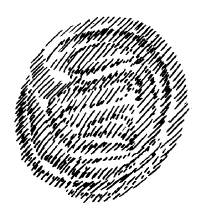
[ 31 ] These matters must indeed be taken seriously. It is absolutely essential to examine oneself to see whether one is not, after all, clinging to materialism and merely attaching all sorts of spiritual labels to material things. A change in thinking and feeling—that is what is required if one wishes to arrive at a truly spiritual worldview. Only then is a vision, a perspective, gained into the practical application of what must be strived for in the redemption from sin as opposed to the Fall.