

Mystery Sites of the Middle Ages
Rosicrucianism and the Modern Principle of Initiation
GA 233a
5 January 1924, Dornach
Translated by Steiner Online Library
Second Lecture
[ 1 ] Yesterday I began to speak to you about the spiritual-scientific endeavors of the 9th and 10th centuries A.D., up to the time when such spiritual-scientific endeavors were still being pursued in earnest—which actually lasted until the end of the 18th century and the beginning of the 19th century—and yesterday I tried to speak to you about some of the content of those endeavors. Today I would like to focus more on the historical aspect. The point is that, through the ancient, authentic mystery tradition in the mystery sites—as I explained during the Christmas Conference in the evening lectures—a genuine encounter between human beings—the initiates and those to be initiated—and the gods could indeed take place; that, so to speak, within the initiation sites there existed the possibility—if I may use this pedantic term— to find “official places” that were specifically designed, by virtue of their location, to bring about such an encounter.
[ 2 ] These institutions, which served as the actual driving forces behind all ancient civilizations, gradually faded away, and it can be said that they had essentially ceased to exist in their original form since the 4th century A.D. Here and there, a few stragglers remained, but they no longer existed in that strict, ancient form. On the other hand, initiation has, in essence, never ceased; it was the forms through which those to be initiated found their way that changed. And I have already pointed out how things were in the Middle Ages: there were here and there individual, unassuming people living in all modesty who did not exactly gather official circles of students around themselves in specific places, but who, as dictated by human and national karma, had their students here and there. I have, in fact, described such a case in my discussion of Johannes Tauler in *Mysticism at the Dawn of Modern Spiritual Life*. I need not speak of him here. Instead, I would like to discuss another case today—one that I would describe as a characteristic, typical case, a case that exerted a great influence and, from the 12th and 13th centuries through the 15th century, shaped much of what existed in spiritual currents up to the 15th century. I would like to sketch out the characteristics of this case.
[ 3 ] The period in which this took place was around the year 1200. At that time, there really was a large number of people—young people—who felt within themselves a longing for higher knowledge, for a connection with the spiritual world; one might even say, for an encounter with the gods. And given the circumstances of the time, it was indeed often the case that it seemed almost coincidental when such an aspiring person found his teacher—something that could not happen through books back then, but could only take place in a very personal way. There was, of course, a profound twist of fate involved, and it only appeared to be a coincidence on the surface. I would like to speak about such a student.
[ 4 ] Through such an apparent coincidence, he found a teacher in a town in Central Europe. He met an older man toward whom he immediately felt could guide him in the quest that constituted the deepest longing of his soul. And I would like to begin by outlining a conversation, so to speak. Of course, more than one such conversation took place between the teacher and the student, but I am summarizing several conversations into one.
[ 5 ] The student said to the teacher that he was striving to be able to glimpse into the spiritual world, but it seemed to him as if human nature—as it was at that time—roughly the 12th century, which is what I am referring to—as if human nature could not penetrate the spiritual worlds. One must surely, said the student, see in nature something that is the work, the creation, of divine-spiritual beings. One must be able to recognize, from the way natural things are in their deeper sense and from the way natural processes unfold, how the activity of divine-spiritual beings lies behind these natural things and natural creations. But it was as if human nature, in the present, could not break through. And already, a strong feeling had taken shape within the student, within the young person—I mean, young people aged twenty-five or twenty-eight—that present-day humanity, the physical body in its particular connection with the soul, could not penetrate, that it had obstacles within itself.
[ 6 ] At first, the teacher said to him, to put him to the test: “Well, you have your eyes, you have your ears; look with your eyes at the things of nature, listen with your ears to what is happening, and through color and sound—in which the spiritual reveals itself—you will surely feel the spiritual revealing itself through them. — Then the student said: “Yes, when I use my eyes, when I look out into the world, which is full of color, it seems to me as if my eye were holding the color back, as if the color were solidifying before my eyes.” And when I listen with my ears to the sounds, it is as if the sounds were ossifying in my ears, and as if the frozen colors and the ossified sounds were preventing the spirit of nature from passing through my senses. — Then the teacher said: “But look, there is also revelation; there is the revelation of religious life. There you are told how the gods shaped the world, how Christ entered the course of history and became human. So, in addition to nature, there is also revelation. What nature cannot give you—can’t revelation give it to you?” — Then the student said: “Revelation does speak very powerfully to my heart, but actually I cannot grasp it; in fact, it is impossible for me to connect what is out there in nature with what revelation tells me. And so, because I do not understand nature, because nature reveals nothing to me, I also do not understand religious revelation.”
[ 7 ] Then the teacher said: “Very well, given your current state of mind—if you feel compelled to speak this way, if your heart and soul are in such a state that you must speak this way—you will indeed be unable to understand either nature or revelation. For you live in a human body that is afflicted by sin—as the saying went back then—and this human body, afflicted by sin, does not really fit into the earthly environment in which you live. Your earthly surroundings do not provide the conditions for you to use your senses and your mind in such a way that you could regard nature and revelation as enlightenment coming from the gods. If you wish, I will lead you away from the nature of your earthly surroundings—which are simply not suited to your being—and give you the opportunity to better understand revelation and nature.
[ 8 ] And they agreed on when the teacher would guide the student. And one day he first led him up a high mountain, a very high mountain, a mountain from which one could no longer see the ordinary surface of the earth with its trees, fields, and so on; but when the student stood at the top with his teacher, one could see only—as you are no doubt familiar with from the mountains—something like a sea of fog below, covering the ordinary earth, and up above one was, at least to some extent, as if symbolically removed from earthly goings-on. Looking out, one saw only the expanse of the universe with its cloud formations and, below, something like a sea—a surging sea—consisting entirely of clouds; morning mist, the atmosphere of dawn. The teacher spoke on various topics. He spoke of the vastness of the universe, of cosmic distances; he spoke of how the expanse toward which one’s gaze is directed allows the stars to shine forth from within it at night; he spoke on various topics, through which the student’s mind became wholly absorbed in the uniqueness of natural existence, as it were, detached from the earth.
[ 9 ] And the preparation lasted until, in fact, a certain state of mind had taken hold of the student—one that could be compared to the student perceiving—not for a moment, but for a longer period of time—everything he had ever experienced during his earthly life in this incarnation on Earth, as if he had dreamed it. And as little variety as there actually was in what he surveyed there—the billowing, undulating sea of mist, a sea of clouds, a few nearby peaks, the vastness of the cosmos—at most dotted here and there with cloud formations, but scarcely so, only at the very edge—however meager in content compared to the diversity of what he had always been able to experience down on the earth’s surface, all of this was to him like the content of his waking consciousness. And everything he had ever experienced on Earth seemed to him as if he were recalling it in the afterglow of a dream. He felt as if he had just awakened. And as he thus awoke more and more in this situation, a young boy of about ten or eleven years old emerged from a crevice in the rock—one he had not noticed before—and approached him, making a strange impression on him; for he immediately recognized in this boy himself at the age of ten or eleven. What had appeared to him there was the spirit of his youth. And you can probably guess, my dear friends, that this scene was one of the inspirations that led me to introduce the figure of John’s youth into one of the Mystery Dramas. The motif is simply there; you need not think of it as a photograph. Nor are the Mysteries an occult roman à clef.
[ 10 ] And he stood face to face with the spirit of his boyhood—himself. And he was there, too; at the age of twenty-five to twenty-eight, he was there, alongside the spirit of his youth. And a conversation could take place—one led by the teacher, but which actually took place between the student and his own younger self. Such a conversation unfolds—as you can see from the Mystery Drama, from the style observed there—in a rather peculiar way. For when one encounters—as can always happen—the spirit of one’s youth, one imparts something of one’s mature intellect to the childlike ideas held by the spirit of youth, and the spirit of youth imparts something of its freshness, of its childlikeness, to who one has become in later years. And it is precisely because such an exchange takes place that such a conversation becomes particularly fruitful. And this conversation led the student to understand revelation—religious revelation.
[ 11 ] The discussion focused primarily on Genesis, the beginning of the Old Testament, and on the Incarnation of Christ. Under the teacher’s guidance and thanks to the special spirit of fruitfulness that prevailed during this discussion, the student concluded by saying: “Now I understand what spirit prevails in Revelation. Only when one is able to be transported far from the earthly realm, as if to the etheric heights, and to grasp those etheric heights ideationally with the power of childhood that reaches up into later life—only then does one truly understand Revelation.” And now I understand that the gods gave Revelation to humankind because, in their earthly condition, people cannot fathom the works of the gods through the works of nature. And so they gave them Revelation, which, of course, cannot be understood at all in mature adulthood, but which can be understood when childhood becomes truly alive in mature adulthood. So, actually, it is something abnormal to understand revelation. — This made a tremendous impression on the student. The impression remained. It remained unforgettable to him. The spirit of youth vanished once again. That was the first phase of the instruction.
[ 12 ] A second one was to follow. The second one went something like this. Once again, the teacher led the student along a path. Now he did not lead him up a mountain, but rather to a mountain to which the teacher knew the entrance through a cave, into deep inner mountain crevices, far down into mine shafts, so that the student was with the teacher in the depths of the earth—now not in the ethereal heights high above the earth’s surface, but in the depths of the earth, as if submerged relative to the earth’s surface.
[ 13 ] Once again, it seemed to the student’s consciousness as if everything he had ever experienced on Earth was passing before him like dreams. For he lived down below in an environment where his consciousness was now particularly awakened. He became attuned to the depths of the Earth. You see, something was taking place there that later formed the basis for legends such as those about the life of Emperor Barbarossa in the Kyffhäuser Mountains or that of Emperor Charlemagne in the Untersberg near Salzburg. Such a life in the depths of the earth, far removed from human life on the surface, really did take place—albeit for a short time. And once again, through his special way of speaking, the teacher was able to bring this connection with the depths of the earth into the student’s consciousness. An old man now emerged from a wall toward the student; though less familiar to him than the spirit of his own youth, the student sensed him as the person he himself would become decades later. He felt himself in his future old age.
[ 14 ] And now a similar conversation unfolded between the student and his own older self—his aged self—again under the guidance of the teacher. But this conversation yielded something entirely different from the first, for now an awareness of his own physical constitution began to arise within the student. He felt his blood circulating within him; every single particle of blood—so it seemed to him—he felt circulating within himself; he followed the tiny blood vessels and the nerve tracts, and he sensed the individual organs of the human organism in their meaningful significance for the entire organism. And he felt within himself the influence of that which exists out there in the cosmos and is related to humankind. He felt within himself the influence of the flowering aspect of plants, the root-like aspect of plants, and the mineral aspect of the earth—and their effects within the human organism. He felt there, in the depths of the earth, the forces of the earth itself—organized and circulating within his own being—creating, transforming, destroying, and shaping substances. He felt the creative power, the weaving, and the very essence of the earth within himself. And the result of this conversation was that the student, after the old man—who was himself—had vanished, was able to say: Now the Earth in which I am incarnated has truly spoken to me through its very essence; now I have had a moment in which I have seen through the things and processes of nature to that which is the work of the gods behind these earthly things and behind these earthly processes.
[ 15 ] The teacher led the student back outside, and before saying goodbye for now, he told him: “Look, modern man and the modern world are so out of step with one another that you must receive the revelation of religion from the spirit of your own youth high up on the mountain above the earth, and you must receive the revelation of nature deep beneath the earth, in the crevices of the earth beneath its surface. And if you succeed in using the light that your soul has brought down from the mountain to illuminate what your soul has sensed in the earth’s caves and crevices, then you will attain wisdom.
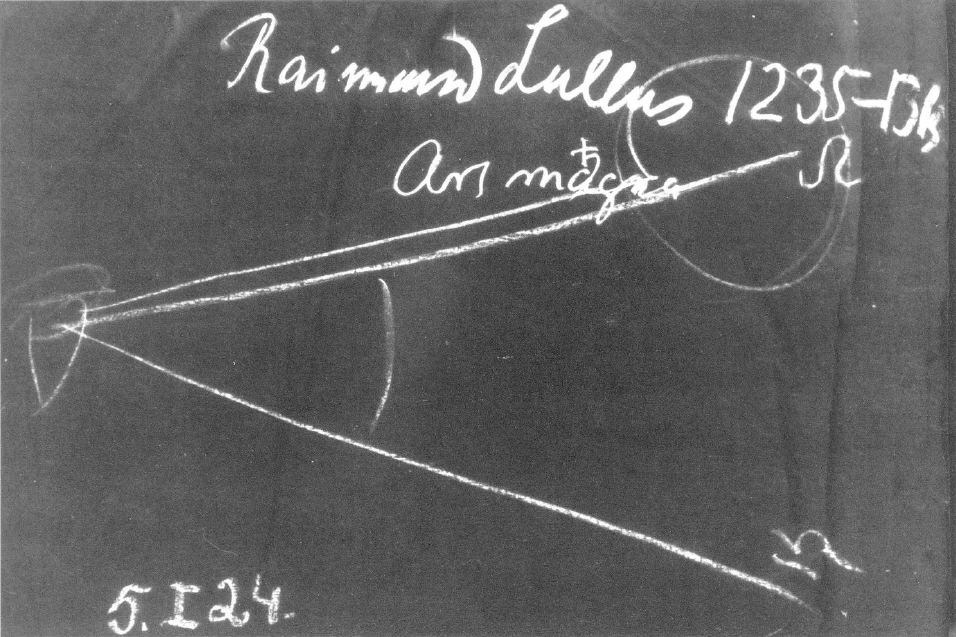
[ 16 ] You see, back then—around the year 1200, which is what I am referring to—this was the way in which the deepening and the filling with wisdom of the human soul were brought about. Through this, the student was indeed brought into the initiation, and he now knew what power he had to apply within his soul to awaken the light of the heights and the feeling of the depths. And the teacher gave him some further instructions, which essentially consisted of telling the student: Self-knowledge actually always consists in perceiving within one’s own inner being, on the one hand, that which lies high above the earthly human being, and, on the other hand, that which lies deep below the earthly human being. These must meet within the human being. Then the human being finds within himself the power of the creative God.
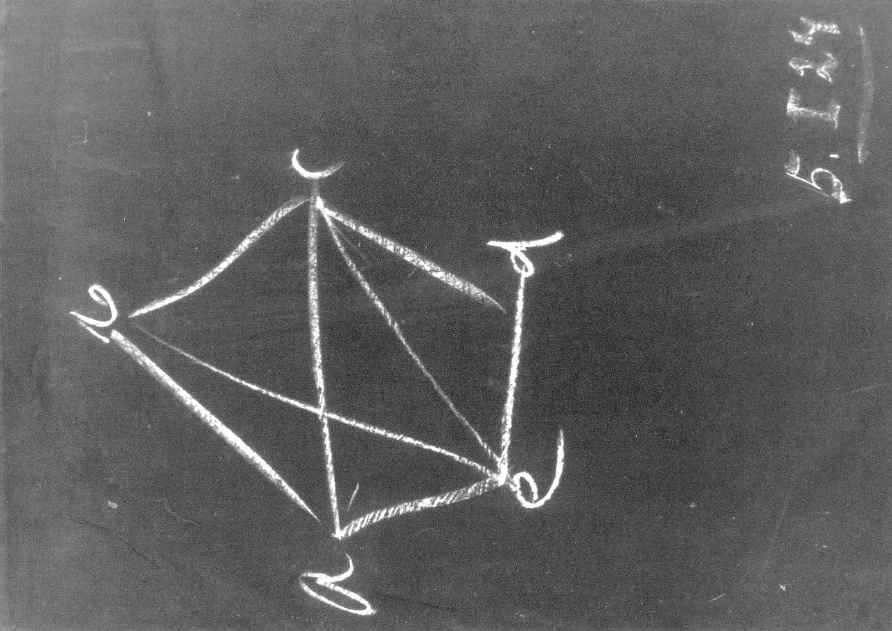
[ 17 ] It was from initiations such as the one I have described here—a characteristic and typical example—that the aspiration arose which, in later times, came to be called medieval mysticism; this aspiration sought self-knowledge, but with the aim of finding the path to the Divine within one’s own self. It is only that this mysticism later became abstract. That concrete connection with the external world—as it existed for these disciples in their rapture in the heights of the ether and the depths of the earth—was no longer sought. Consequently, the inner tremor, the full intensity of the inner experience, was no longer attained. Yet a search continued, inspired by such inner stirrings and impulses. Within, they sought God, the divine creative act. And fundamentally, everything that was sought by Meister Eckhart, Johannes Tauler, and the later mystics whom I have described in my book *Mysticism at the Dawn of Modern Spiritual Life* was inspired by such genuine medieval initiations. But those who truly worked in the spirit of such medieval initiations were often misunderstood. And it is actually very difficult to grasp what these disciples of the medieval initiates really were.
[ 18 ] One can indeed go quite far in pursuing the paths into the spiritual world. And those who truly follow such practices with great dedication—as described in my book *How Does One Gain Insight into the Higher Worlds?*—will indeed find their way into the spiritual worlds. Everything that was physically real in the past can, of course, only be found today through the spiritual world—including scenes such as those I have just described—since there are no physical documents that would report on such scenes. But there are indeed certain realms that are difficult to access, even for a spiritual faculty that is already highly advanced. To explore these realms, one must truly have reached the point where one interacts with the beings of the spiritual world as naturally as one does with human beings. Then, however, the connection also becomes clear between these initiates, of whom I have just told you, and their students—for example, a student who, based on what has been historically recorded, does indeed seem quite questionable: Raimundus Lullus, who lived from 1234 to 1315.
[ 19 ] What you can learn about Raimundus Lullus from historical documents is, of course, very little. But what one can learn about him—forgive me for using this paradoxical expression, but after what I have presented here over the past few days and for the past two weeks, you will no longer find the expression paradoxical—if, so to speak, one develops a personal relationship with Raimundus Lullus, then he reveals himself to be something other than what the historical documents make of him. He presents himself in the following way. He is, in the most eminent sense, a personality who, inspired precisely by that initiate of whom I have spoken here as the disciple of the other, came to desire with all his might to renew in his own time something akin to what the mysteries of the Word, the Logos, were in antiquity. He wanted to renew the mysteries of the Logos. And he wanted to revive them through self-knowledge, which, as I have told you, was so powerfully inspired in the 12th and 13th centuries. And it is from this perspective that the so-called “Ars Magna” of Raimundus Lullus must be assessed. He reasoned: When a person speaks, speech itself actually constitutes a microcosm. What a person speaks is, in fact, the whole person, concentrated in the organs of speech. But the mystery of every word lies in the whole person, and in turn, because it lies in the whole person, it actually lies in the world.
[ 20 ] And so he came to the conclusion that the secret of language must actually be sought first within the human being—by delving deeply from the mere speech organs to the overall organization of the human being—and then in the cosmos, by understanding the overall organization of the human being from the perspective of the cosmos. For example, let’s say someone wants to understand the sound A in its true meaning. The point here is that the human being comes to realize that the sound A, which emerges in the shaped exhalation, is based on a certain inner attitude of the etheric body—an attitude of the etheric body that you can become acquainted with today. Through eurythmy, we see on which attitude of the etheric body the sound A is based, for this attitude is transferred to the physical body and is then regarded as the eurythmic gesture for the sound A.
[ 21 ] This was not entirely clear to Raimundus Lullus; for him, it all remained a hunch. But his hunch went so far that he, in a sense, extended the inner attitude, the inner gesture of the human being, out into the cosmos—for example, when he said: If you direct your gaze toward Leo, toward the constellation of Leo, and if you direct your gaze toward Libra, then the connection between these two directions of gaze gives you the A. If you direct your gaze toward Saturn, then Saturn holds your direction of gaze in place. And if, for example, Saturn is positioned in front of Aries, then you must turn around Aries along with Saturn. This gives you, from the cosmos, the sensation of O.
[ 22 ] And based on such intuitions, Raimundus Lullus devised certain figures on whose corners and sides he wrote letters. And now it was clear to him: If, based on his intuitions, one draws lines within the figures—connecting them somehow via diagonals or the like, say, in a pentagon a b c d e—this is merely a schematic representation—then one must see sound combinations within them, and these sound combinations express certain mysteries of the universe, of the cosmos.
[ 23 ] Thus, Raimundus Lullus sought a kind of renaissance of the mysteries of the Logos, as was customary in the ancient mysteries. This matter is, of course, misrepresented in historical documents. But as one gradually develops, so to speak, a personal relationship with Raimundus Lullus, one comes to realize that Raimundus Lullus sought, through such endeavors, to unravel the Word of the World once again. And it was through these endeavors that the disciples of the medieval initiates actually continued to live on for several more centuries. It was a very intense endeavor: first to immerse oneself within humanity, and then, through that immersion, to emerge beyond humanity and into the mysteries of the cosmos.
[ 24 ] In this way, these—one might call them sages—these sages sought to connect revelation with nature. And they believed that in this way—and much of their belief was, after all, deeply grounded—they believed that in this way they could get to the heart of the revelation of the religious and the revelation of nature. For they were well aware that it was precisely the human being, as he happened to live on Earth in their time, was actually destined to become the fourth hierarchy; but that he had suffered a fall through which he had descended below his true nature and was more deeply entrenched in physical existence than he ought to be; yet, despite this deep entrenchment, he lacked the strength to develop his spiritual-soul aspect in a correspondingly spiritual way. And it was out of such aspirations that the Rosicrucian movement arose.
[ 25 ] It was at a teaching center of the Rosicrucians—the first, original Rosicrucians—that the very scenes I have described to you today—the scene high up on the mountain between the teacher and the student, and down deep in the earth’s crevices—appeared as if in a kind of temporal mirage, one might say, as if they had returned as ghosts, reflecting themselves as a vision within a Rosicrucian school. And from this, it was recognized that through inner striving, a person must achieve two things in order to attain true self-knowledge, to once again find their place on Earth, and to become a true member of the fourth hierarchy. For from all that was now possible within the Rosicrucian school, one came to understand what had happened to the student when he saw the spirit of his own youth standing before him in the flesh. What had occurred was a detachment of the astral body that is stronger than it is in any other way in human life. And in this detachment of the astral body, he recognized the meaning of the revelation. And once again, within this Rosicrucian School, it became clear what had happened to the student in the depths of the Earth. There, the astral body had been completely withdrawn into the innermost being. There, it had been entirely contracted, so that the student perceived the mysteries of his own inner being. And now, within the Rosicrucian Order, spiritual exercises were developed that were relatively simple, consisting of symbolic figures to which one devoted one’s mind and upon which one meditated. And through the power that entered the human soul through devotion to such figures, one achieved, on the one hand, the detachment of the astral body and became like the student on a mountain peak, in the heights of the ether; and on the other hand, as the astral body contracted and drew in upon itself, one became like the student in the crevices of the earth. And then, by focusing not on the external environment but on intense inner practice, one could enter the innermost depths of the human being.
[ 26 ] You see, I am describing to you something that I only hinted at very briefly in the new preface to the latest edition of my *Mysticism at the Dawn of Modern Spiritual Life*. There I stated that what emerged in Meister Eckhart, Johannes Tauler, Cardinal Nicholas of Cusa, Valentin Weigel, and the others was the late manifestation of a colossal, primordial human striving that had preceded them. And this primordial human striving, which preceded the striving of Meister Eckhart and that of Johannes Tauler—this concrete striving in the spirit, this search for self-knowledge in human beings in connection with revelation and the enlightenment of nature— this is what I wanted to describe to you today as one of the currents that flowed during the so-called Dark Ages, where, however, even in the darkness that modern people today imagine, there were truly enlightened spirits—spirits so enlightened that even the most enlightened minds of today simply do not understand the light of these enlightened ones and therefore remain in darkness. But this, after all, is in many ways the defining characteristic of our time: that people find light to be dark and darkness to be light.
[ 27 ] But a strange, powerful impression lingers when one looks into the background of what has lived on in literature as a reflection of that era. I wanted to describe some of that to you today; tomorrow I will describe some of what will then complete the picture and round it out into a whole.