

Esoteric Considerations of Karmic Connections
Volume I
GA 235
17 February 1924, Dornach
Translated by Steiner Online Library
Second Lecture
[ 1 ] As we move forward from the contemplation that was intended to prepare us for an examination of human destiny and karma, as we move from the abstract and conceptual to life itself, we gradually come to first present before our soul the various spheres of life in which human beings are placed, in order to then derive from these elements of life the basis for a characterization of karma and human destiny.
[ 2 ] In a much broader sense, human beings belong to the whole world more than is usually thought. Human beings are simply a part of the world, and without the world, they are actually nothing. I have often used the analogy of a human limb, for example, a finger: a finger is a finger precisely because it is part of the human organism. The moment it is severed from the human organism, it is no longer a finger. Externally and physically, it remains the same as a finger, but it is simply no longer a finger once it is severed from the human organism.
[ 3 ] Thus, a human being is no longer truly human once removed from the general existence of the world. Human beings are part of the general existence of the world, and without it, they cannot truly be regarded as human beings, nor can they be understood.
[ 4 ] But as we saw yesterday, the human world is divided into different realms. First, there is the inanimate realm, which we commonly refer to as the mineral realm. We only begin to resemble this mineral realm—as an inanimate realm—in regard to this physical body once we have shed our body, once we have passed through the gate of death. With our true being, we never actually become like this inanimate realm. It is the shed physical form that becomes like this inanimate realm. And so, on the one hand, there is what the human being leaves behind as a physical corpse in the realm of the lifeless, and on the other hand, there is the vast, lifeless, crystallized and non-crystallized mineral nature and world. As long as we live on Earth, we humans are actually quite unlike this mineral world; I have already drawn attention to this. We are immediately destroyed in our form when we are handed over to the mineral world as a corpse. We dissolve into the mineral realm; that is to say, that which holds our form together has nothing in common with the mineral realm. And from this alone it follows that human beings, as they live in the physical world, cannot actually be influenced by the mineral realm itself.
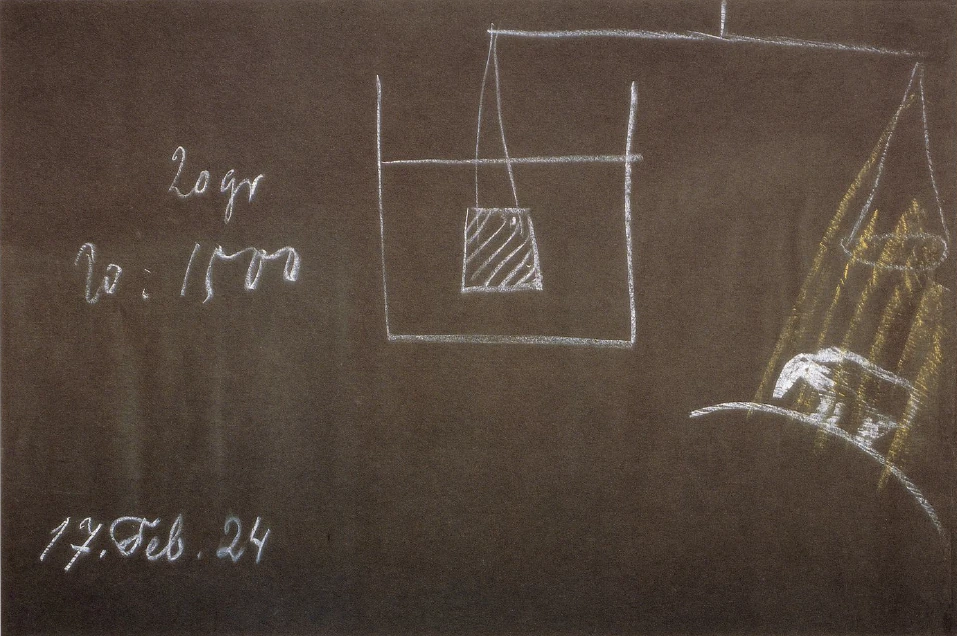
[ 5 ] The most significant—and by far the most comprehensive—influences that humans receive from the mineral realm come to us indirectly through the senses. We see the mineral realm, we hear the mineral realm, we perceive its warmth; in short, we perceive the mineral realm through our senses. Our other connections to the mineral realm are, after all, extraordinarily limited. Just consider how little of the mineral realm actually comes into contact with us in our earthly lives. The salt with which we season our food is mineral, and a few other things we consume with our food are mineral; but by far the greatest portion of the food humans consume comes from the plant and animal kingdoms. And what human beings take in from the mineral kingdom relates in a very peculiar way to what they receive through their senses merely as soul impressions—as sensory perceptions of the mineral realm. And I ask you to pay very close attention to one thing here that is important—I have also mentioned this here on several occasions: The human brain weighs, on average, 1,500 grams. That is quite a weight. It would exert such intense pressure that the vessels beneath it would be completely crushed by the brain if it were to press down with a force equal to its weight. It does not exert that much pressure, but rather is subject to a specific law. This law—which I even described here once recently—states that when we place a body into a liquid, it loses some of its weight.
[ 6 ] You can investigate this as follows: If you have a scale, first imagine that the container of water is not there and weigh this object—it has a certain weight. Then place the container underneath so that the object on the scale pan is submerged in the water: Immediately, the scale is no longer in balance; the scale beam drops, and the object becomes lighter. If you then determine by how much the object becomes lighter, it turns out that it becomes exactly as much lighter as the weight of the liquid it displaces. So if the liquid is water, the object, when submerged in water, becomes as much lighter as the weight of the volume of water it displaces. This is the so-called Archimedes’ principle. Archimedes discovered it—as I’ve mentioned before—while taking a bath. He simply sat in the bath and noticed that his leg became lighter or heavier depending on whether he stuck it out or pulled it back in, and he exclaimed: “I’ve found it—eureka!”
[ 7 ] Yes, my dear friends, this is an extraordinarily important matter; it’s just that important matters are sometimes forgotten. And if the field of engineering had not forgotten this Archimedean principle, one of the greatest disasters of recent times in Italy probably would not have happened. These are precisely the things that, even in everyday life, arise from the complexity of today’s knowledge.
[ 8 ] But in any case, the body loses as much of its weight as the weight of the displaced fluid. Now, the brain is completely immersed in cerebrospinal fluid. It floats in the cerebrospinal fluid. Today, one occasionally comes across the insight that, in essence—insofar as it is solid—the human being is actually a fish. In reality, humans are already fish, for they consist of ninety percent water, and the solid parts float within it just as a fish floats in water.
[ 9 ] So, the brain floats in cerebrospinal fluid, becoming so much lighter that it weighs only twenty grams. The brain, which actually weighs about one thousand five hundred grams, exerts a pressure of only twenty grams on the surface it rests on. Now just imagine how strongly we humans—because our brain floats in cerebrospinal fluid—have a tendency, in such a vital organ, to be freed from Earth’s gravity. After all, we think with an organ that is not subject to Earth’s gravity at all; rather, we think in opposition to Earth’s gravity. Earth’s gravity is first removed from the organ.
[ 10 ] If you consider the immensely broad significance of the impressions you receive through the senses—and which you confront with your free will—and compare that with the minor influences that come from salt and similar substances taken as food or as food additives, you will arrive at the following conclusion: That which exerts a direct influence on human beings from the mineral kingdom is to it as twenty grams are to one thousand five hundred grams. So much does what we take in through mere sensory impressions outweigh the rest—and through these we are independent of external stimuli, for they do not tear us apart. And that part of us which is already truly subject to earthly gravity—like the mineral additives in our food—consists mostly of things that preserve us internally; for salt possesses at the same time a preserving, a sustaining, and a refreshing power. Human beings are thus, for the most part, independent of the surrounding mineral world. They take into themselves from the mineral world only that which has no direct influence on their being. They move freely and independently within the mineral world.
[ 11 ] My dear friends, if this freedom and independence of movement in the mineral world did not exist, then what we call human freedom would not exist at all. And it is very significant that we must say: The mineral world actually exists as the necessary counterpart to human freedom. — If there were no mineral world, we simply would not be free beings. For the moment we ascend into the plant world, we are no longer independent of the plant world; it only seems as though we direct our gaze toward the plant world just as we direct our gaze toward the crystals, toward the vast mineral kingdom. But that is not the case. There, the plant world spreads out. And we humans—we are born into the world as breathing beings, as living beings, as beings with a certain metabolism. Yes, this is far more dependent on the environment than our eyes, our ears, or anything else that conveys sensory impressions. The plant world—the vastness of the plant world—draws its life from the ether that flows into the earth from all sides. Human beings, too, are subject to this ether.
[ 12 ] When we are born as small children and grow, when the forces of growth are at work within us, these are the etheric forces. The very same forces that cause plants to grow live within us as etheric forces. We carry the etheric body within us; the physical body contains our eyes and our ears. The physical body has nothing in common with the rest of the physical world, as I have just explained, and this is evident in the fact that it decays as a corpse in the physical world.
[ 13 ] The situation is quite different with our etheric body. With our etheric body, we are, through it, related to the plant world. But as we grow—just consider this, my dear friends—something develops within us that, in a certain sense, is quite deeply connected to our destiny. We can grow—to take some grotesque, extreme examples—by remaining small and stout or becoming tall and slender; we can grow by having this or that shape of nose. In short, the way we grow already has a certain influence on our outward appearance. And this, in turn, is connected—albeit only loosely at first—to our destiny. But growth is not expressed solely in these coarse terms. If the instruments people use for their investigations were precise enough, one would find that every human being actually has a different composition of the liver, a different composition of the spleen, and a different composition of the brain. The liver is not simply the liver. In every human being, it is—naturally with subtle nuances—something different. All of this is connected to the same forces that cause plants to grow. And we must always look at the Earth’s vegetation, and as we look at the Earth’s vegetation, we must become aware that: That which causes plants to grow from the etheric realms also works within us; it brings about within us the original human constitution, which has a great deal to do with our destiny. For whether a person has this or that liver, lung, or brain composition originating from the etheric world is deeply connected to their destiny.
[ 14 ] However, human beings see only the outer aspect of all these things. Of course, when we look out at the mineral world, we see in it roughly what is inside; that is why people today are so fond of the mineral world from a scientific standpoint—if one can even speak of a scientific hobby today—because it contains everything people want to find.
[ 15 ] This is no longer the case with the forces that sustain the plant kingdom. For the moment one arrives at an imaginative understanding—as I have already mentioned—one immediately sees that minerals are such that they are confined to the mineral kingdom. That which sustains the plant kingdom does not appear at all to ordinary consciousness. One must delve deeper into the world. And when we ask ourselves the question: What is actually at work in the plant kingdom? What is it that allows forces to enter from the expanses of the ether—forces that cause plants to sprout and grow out of the earth, but which also bring about growth within us and shape the finer composition of our entire body—what is it that is at work there? — This brings us to the beings of the so-called third hierarchy: Angeloi, Archangeloi, Archai. They are, first and foremost, invisible, but without them there would be no ebb and flow of the etheric forces that cause plants to grow, and which work within us because we carry within ourselves the very same forces that bring about plant growth. If we wish to approach the plant world and its forces, we can no longer—unless we wish to remain obtuse to this knowledge—stop at the merely visible. And we must become aware that it is with these beings—Angels, Archangels, and Archai—that we develop our relationships and connections in the bodiless state between death and a new birth. And depending on how we develop these relationships and connections with these beings of the third hierarchy, our inner—I would say—our “being karma” takes shape—that karma which depends on how our etheric body composes our vital fluids, how it causes us to grow large or small, and so on.
[ 16 ] But the beings of the third hierarchy possess only this power. The fact that plants can grow does not stem from their power alone. In this regard, these beings of the third hierarchy—Angels, Archangels, and Archai—are in the service of higher beings. That balancing of the forces of plant growth in the world ether is, admittedly, initially carried out by these beings of the third hierarchy. But in this regard, these beings of the third hierarchy are in the service of higher beings. However, what we experience before we descend from the spiritual world into our physical body—that which is connected to our finer constitution and to everything I have just described—is brought about by our conscious encounter with these beings of the third hierarchy. And with the guidance we can receive from them—depending on how well we have prepared ourselves in our previous earthly life—this guidance in forming our etheric body from the etheric realms takes place in the final period before we descend from the supersensible existence into physical existence.
[ 17 ] So our attention must first turn to that which, arising from our inner nature, influences our destiny, our karma. I would like to say that for this aspect of karma, we may use the term “well-being”—the well-being and discomfort of life. The well-being and discomfort of life are connected to our inner quality, which arises from our etheric body.
[ 18 ] A second factor, which is part of our karma, depends on the fact that not only the plant kingdom but also the animal kingdom inhabits the Earth. Now consider this, my dear friends: the various regions of the Earth are home to a wide variety of animals. The “animal atmosphere,” so to speak, differs in the various regions of the Earth.
[ 19 ] But you must admit: humans also live in this same atmosphere where animals live. That sounds grotesque today because people simply aren’t used to paying attention to such things. But there are, for example, regions where elephants live. Yes, the regions where elephants live are precisely those where the cosmos exerts its influence on Earth in such a way that elephant life can come into being. Yes, do you believe, my dear friends, that if there is a patch of earth here, and elephants live on this patch of earth, and the elephant-forming forces are working in from the cosmos—that these very same forces are not present when a human being happens to be in that very same spot? Of course they are there as well when a human being is in that same spot. And so it is with the entire animal kingdom. Just as the plant-forming forces from the distant realms of the ether are present where we live—wooden walls, brick walls, and even concrete do not keep them at bay, we do, after all, live here in Dornach amidst the forces that form the plants in the Jura Alps—so when one is standing on the very ground where an elephant could be, given the nature of the earth, one lives, as a human being, amidst the forces that shape elephants. Yes, I can well imagine that much now lives in our souls from the large and small animals that populate the earth, and that you are now becoming aware that human beings, after all, live in the same atmosphere!
[ 20 ] But all of this really does have an effect on people. Of course, it affects humans differently than it does animals, because humans possess qualities and constitutional elements that animals do not. It affects humans differently; otherwise, a human in the realm of elephants would simply become an elephant. But that is not the case. Furthermore, humans continually rise above what influences them, yet they live within this atmosphere.
[ 21 ] You see, everything that exists within a person’s astral body depends on this world in which the person lives. And while we can say that a person’s well-being or discomfort depends on the plant life of the Earth, the sympathies and antipathies that we as human beings develop during our earthly existence—and that we bring with us from our pre-earthly existence—depend on what constitutes, so to speak, the animal atmosphere.
[ 22 ] The elephant has a trunk and thick, column-like legs; the deer has antlers, and so on; this is where the forces that form and shape animals reside. In human beings, these forces manifest only through their effect on the astral body. And through this effect on the astral body, they give rise to the sympathies and antipathies that the individual human being brings with them from the spiritual world.
[ 23 ] Just pay attention, my dear friends, to these sympathies and antipathies. Notice how strongly these sympathies and antipathies guide us throughout our entire lives. Certainly, we humans are, in a certain sense, rightly taught to rise above these strong sympathies and antipathies. But for the time being, these sympathies and antipathies are still there. For the time being, we live our lives through sympathies and antipathies. One person has a sympathy for this, another for that. One person has an affinity for sculpture, another for music; one has an affinity for blond people, another for black people. These are strong, radical affinities. But life as a whole is permeated by such affinities and aversions. They exist in dependence on what the manifold animal forms do.
[ 24 ] And ask yourselves, my dear friends, what is it that we, as human beings, carry within us—what within our own inner selves corresponds to the manifold animal forms that exist outside? These animal forms are countless—a hundredfold, a thousandfold! The manifestations of our sympathies and antipathies are a hundredfold, a thousandfold, yet most of them remain in the unconscious or subconscious.
[ 25 ] This is yet another Third World.
[ 26 ] The first world was the world where we actually feel no dependence: the mineral world. The second world is the one in which the Angeloi, Archangeloi, and Archai dwell—those who cause the plant world to spring forth from within themselves, who give us our inner quality, in which we bring well-being or unease into life, feel utterly miserable because of ourselves, or feel happy because of ourselves. It is from this world that our destiny is drawn, through our inner constitution, through our entire ethereal humanity. Now we come to what further profoundly determines our destiny: our sympathies and antipathies. And these sympathies and antipathies ultimately bring us that which belongs to our destiny to a much greater extent than merely the forces of growth.
[ 27 ] For some, their likes and dislikes carry them to distant lands. They live here and there because their likes have led them there, and it is in these distant lands that the details of their fate then unfold.
[ 28 ] These sympathies and antipathies are deeply intertwined with our entire human destiny. They exist in the world inhabited not by the third hierarchy, but by the second: Exusiai, Dynamis, and Kyriotetes. That which is the earthly reflection of the lofty, glorious forms of this second hierarchy lives in the animal kingdom. But that which these beings implant within us when we interact with them between death and a new birth lives in what we bring with us from the spiritual world into the physical world as our innate sympathies and antipathies.
[ 29 ] When one sees through these things, concepts such as those of ordinary heredity really do become childish—truly childish. For in order for me to possess any inherited trait from my father or mother, I must first develop sympathies or antipathies toward that trait in my father and mother. It does not, therefore, depend on my having inherited these traits merely through some lifeless natural causality, but rather on whether I have felt sympathy for these traits.
[ 30 ] Why I have felt such sympathy for these qualities will be discussed in the coming hours; after all, the discussion of karma will take us many hours. But really, to speak of heredity in the way it is commonly discussed today—especially in science, which considers itself particularly clever—is childish.
[ 31 ] Even today, it is claimed that specific mental and emotional traits are inherited. Geniuses are said to be inherited from ancestors, and whenever a genius appears in the world, people search among the ancestors for the individual traits that are supposed to account for that genius. Yes, that is a strange line of reasoning. A line of reasoning that would be reasonable would be that if a genius exists, it would in turn produce a genius through heredity. But if one were to search for such evidence—well, Goethe also had a son, and other geniuses have had sons as well—one would come across some strange things. That would be proof, though! But the fact that a genius exists and that certain characteristics of this genius can be found in his ancestors is no more significant than the fact that if I fall into water and am pulled out, I am wet. Therefore, the water that then trickles down from me has little to do with my very being. Of course, since I am born into the current of heredity through my affinities with the relevant traits, I bear these inherited traits within me, just as I bear the water on me when I fall into water and am pulled out wet. But the ideas people have in this regard are grotesquely childish. For already in the human being’s pre-earthly existence, sympathies and antipathies arise, and these give the human being his or her innermost structure. With these, the human being then enters earthly existence; with these, he or she crafts his or her destiny out of pre-earthly existence.
[ 32 ] And we can easily imagine this now: We were together with a person in a previous earthly life; many things unfolded as we lived together. This continues in the life between death and a new birth. There, under the influence of the forces of the higher hierarchies, that which is to be carried over from the experiences of previous earthly lives into the next earthly life—to be lived out further—is shaped within the living thoughts and the living impulses of the world.
[ 33 ] To do this, one must cultivate the impulses that guide one through life—one’s likes and dislikes.
[ 34 ] And these affinities and aversions are formed under the influence of exusiai, dynamis, and kyriotetes during the life between death and a new birth. These affinities and aversions then lead us to encounter the people in life with whom we must continue to live, in accordance with our previous earthly lives. This arises from the structure of our inner being.
[ 35 ] Of course, the most diverse deviations occur in this development of sympathies and antipathies; yet these, in turn, balance each other out over the course of destiny through the many earthly lives. — So here we have a second component of our destiny, a second component of karma: sympathies and antipathies.
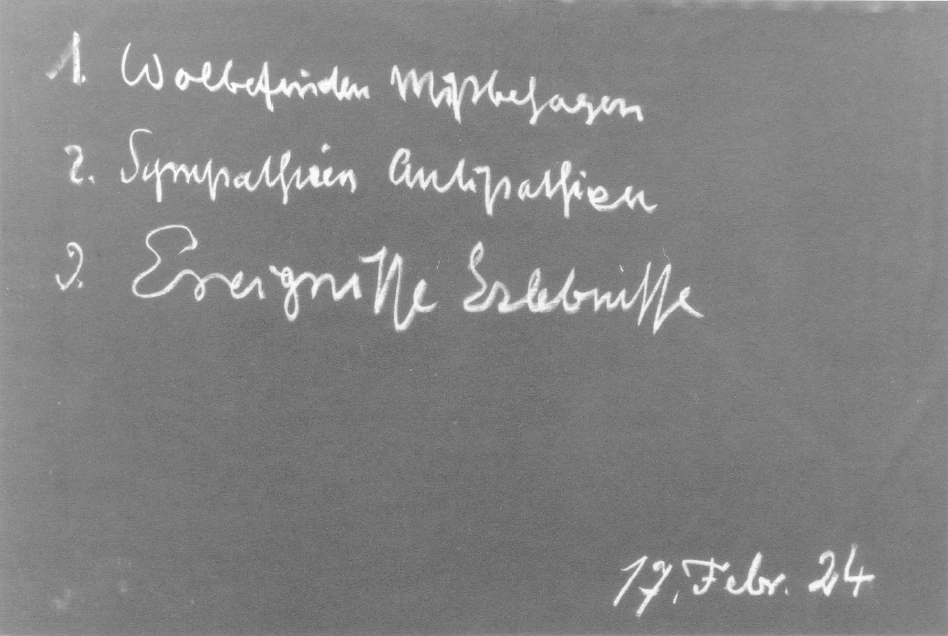
[ 36 ] We can say that the first component of karma is well-being, inner well-being, or discomfort. The second is sympathies and antipathies (see diagram on page 44). In Table 4, we have ascended to the sphere where the forces responsible for the formation of the animal kingdom lie, as we come to the sympathies and antipathies in human destiny.
[ 37 ] Now we ascend into the realm of humanity proper. We do not merely live alongside the plant world and the animal world; rather, we live together with other human beings in the world, and this coexistence is particularly decisive for our destiny. This is a different kind of coexistence than that with plants or animals. It is a form of coexistence through which the very essence of our destiny is shaped. The impulses that cause the Earth to be populated by human beings act exclusively upon humanity. And this raises the question: What are these impulses that act exclusively upon humanity?
[ 38 ] We can offer a purely external perspective here, one that I have taken on several occasions.
[ 39 ] Our lives are truly—I would say—guided from the other side with far greater wisdom than we guide them here from this side. We often meet someone later in life who is extraordinarily important to our lives. When we look back on how we lived up until the moment we met this person, it seems to us—as I have said many times before—that our entire life was a path leading to meeting this person. It is as if every step we took was meant to ensure that we would find this person at exactly the right moment, or indeed find them at a specific moment at all.
[ 40 ] One need only reflect on the following for a moment. Just imagine what it means, with complete clarity of mind, to find a certain person at any stage of life, and from that point on to share experiences with them, to work together, and to make a difference together. Just consider what that means. Consider what, with full awareness, emerges as the impulse that led us to this. Perhaps, when we reflect on how it came to be that we found this person, it might occur to us: First, we had to experience an event connected to many other people; otherwise, there would have been no possibility at all of finding this person in life. And for that event to occur, yet another had to be experienced. We find ourselves caught up in complex interconnections—all of which had to take place, and into which we had to enter—in order to arrive at some decisive experience. And then we might reflect on this: If, at—I won’t say one year of age, but let’s say fourteen—one had been given the task of consciously solving this riddle: how, in one’s fiftieth year of life, to bring about a decisive encounter with another person—if one imagines that one would have had to consciously solve this like a math problem—I ask you, what would all that require! We humans are, after all, consciously so terribly stupid, and what happens to us in the world is, when you consider such things, so infinitely clever and wise.
[ 41 ] When we consider such things, we are reminded of the immensely intricate and significant workings of our destiny, of our karma. And all of this takes place within the realm of the human.
[ 42 ] Now I ask you to consider: This is, in fact, what is happening to us—lying in the unconscious. Until the moment when a decisive event comes upon us, it remains in the unconscious. Everything unfolds as if governed by the laws of nature. But how could the laws of nature ever have the power to bring about something like this? What happens in this realm can contradict all natural laws and everything we derive from the external laws of nature—it can even mock them. I have also drawn attention to this repeatedly. The outward aspects of human life can even be subjected to calculated laws.
[ 43 ] Take the life insurance industry. The life insurance industry can only thrive if it is possible to calculate the life expectancy of, say, a nineteen- or twenty-five-year-old person. If someone wants to insure their life, the policy is issued based on their life expectancy. So, according to these calculations, a person who is nineteen today will live for such-and-such a period of time. That can be determined. But imagine that this period has elapsed: you won’t feel obligated to die just because of it! Two people may have long since died according to this probable lifespan. But only after they have long since “died” according to this probable lifespan do they come together in the way I have described! All of this takes place beyond what we calculate for human life based on external natural facts. And yet it happens with the same inner necessity as natural facts. One cannot help but say: With the same necessity with which any natural event—an earthquake or a volcanic eruption, or whatever it may be, a minor or major natural event—occurs, with that same necessity do two people meet in earthly life according to the paths they have just taken.
[ 44 ] So that we truly see a new realm established here within the physical realm, and we live within this realm—not merely in comfort or discomfort, in sympathies and antipathies—but we live within it as we do within our events and experiences. We are completely immersed in the realm of events and experiences that fatefully determine our lives.
Archai, Archangeloi, Angeloi
1. Component of karma: well-being, comfort, discomfort.Dynamis, Exusiai, Kyriotetes
2. Components of karma: sympathies, antipathies.Seraphim, Cherubim, Thrones
3. Component of karma: events, experiences.
[ 45 ] In this realm, the beings of the first hierarchy—Seraphim, Cherubim, and Thrones—are at work. For guiding what is at work there—every human step, every stirring of the soul, everything that is within us—in such a way that human destinies may unfold, requires a greater power than that which is at work in the plant kingdom, than that possessed by the hierarchy of the Angeloi, Archangeloi, and Archai, and than that possessed by the hierarchy of the Exusiai, Kyriotetes, and Dynamis. This requires a power that belongs to the first hierarchy—the Seraphim, Cherubim, and Thrones—which is reserved for the most exalted beings. For what unfolds there lives within our true “I,” within our “I”-organization, and carries over into an earthly life from a previous earthly life.
[ 46 ] And now consider this: You are living an earthly life; you bring about this or that—whether out of instinct, passion, impulse, or out of wise or foolish thoughts—and all of these truly exist as impulses. Consider this: when you live an earthly life, what you do out of your drives leads to one thing or another—it leads to the happiness or the harm of another person. You then pass through life between death and a new birth, and in this life between death and a new birth, you have the strong awareness: If I have caused harm to another person, I am more imperfect than if I had not caused that harm; I must make amends for this harm. An urge and an impulse arise within you to make amends for this harm. If you have done anything for a person that contributes to their advancement, then you view what contributes to that person’s advancement in such a way that you say: “This must serve as the foundation for the general advancement of the world; this must lead to further consequences in the world.”
[ 47 ] You can develop all of this within yourself. All of this can bring about a sense of well-being or discomfort, depending on how you shape the inner essence of your body during the life between death and a new birth. All of this can lead you to feelings of sympathy and antipathy as you shape your astral body accordingly with the help of the beings known as the Exusiai, Dynamis, and Kyriotetes. But none of this yet gives you the power to transform what was merely a human fact in a previous life into a cosmic act. You may have helped a person, or you may have harmed a person. This must have the effect that the person confronts you in a subsequent life, and in that confrontation you find the impulse to achieve balance. That which has merely moral significance must become an external fact; it must become an external world event.
[ 48 ] This requires those beings who transform and metamorphose moral deeds into worldly deeds. These are the beings of the first hierarchy: Seraphim, Cherubim, and Thrones. They transform what emanates from us during one earthly life into our experiences in the next earthly lives. They are at work in what constitutes events and experiences in human life.
[ 49 ] Here we have the three fundamental elements of our karma: That which constitutes our inner composition, our inner humanity, is subject to the third hierarchy; our sympathies and antipathies—which are already, in a certain sense, related to our surroundings—are the concern of the second hierarchy; and finally, that which confronts us as our outer life is the concern of the first, the most exalted hierarchy of beings superior to humankind.
[ 50 ] In this way, we examine the relationship between human beings and the world, and now turn to the big questions: How does everything that constitutes the details of a person’s destiny develop from these three elements of the human being?
[ 51 ] A person is born into a family. A person is born in a certain place on Earth. They are born into a people. They are born into a context of facts. But everything that occurs when a person is born into a family, when they are entrusted to their caregivers, when they are born into a people, and when they are placed in a certain spot on Earth at birth, all that which, so profoundly and fatedly—despite all human freedom—intervenes in human life—all of that is ultimately dependent in some way on these three elements that constitute human destiny.
[ 52 ] All individual questions will reveal their answers to us accordingly if we properly consider this foundation. Let us ask why a person in his twenty-fifth year contracts smallpox, perhaps in order to pass through the most extreme danger to life; let us ask how any other illness or event might intervene in his life, how the support of this or that older personality, the support of this or that people, or the support resulting from this or that external event might intervene in his life — in every case we will have to go back to what constitutes human destiny in threefold terms and what places the human being within the totality of the world hierarchies. Only in the realm of the mineral world does the human being move freely. That is the realm of his freedom.
[ 53 ] As people become aware of this, they also learn to pose the question of freedom in the right way. Please refer to my Philosophy of Freedom to see how much importance I attached to the fact that one should not ask about the freedom of the will. That lies deep down in the unconscious, and it is nonsense to ask about the freedom of the will; rather, one can only speak of the freedom of thought. I have made this distinction quite clear in my Philosophy of Freedom. Free thoughts must then impel the will; only then is a person free. But with their thoughts, people live in the mineral world. And in everything else—in what constitutes his life in the plant world, the animal world, and the purely human world—he is subject to fate. And freedom is something about which one can actually say: Human beings step out of the realms governed by the higher hierarchies and into the realm that is, in a certain sense, free from the higher hierarchies—the mineral realm—in order to become free themselves. It is, after all, the same realm—this mineral realm—to which a human being becomes similar only in terms of his physical body once he has shed that body after passing through the gate of death. In his earthly life, a human being is independent of that realm, which can only work toward his destruction. No wonder he is free in this realm, since this realm has no other interest in him than to destroy him once it has him. He does not belong to this realm at all. Man must first die so that, as a corpse, he may be in the realm where he is free even in terms of his natural manifestation. This is how things are connected.
[ 54 ] One grows older and older. Unless other events—which we will also come to know through karma—occur, when a person dies as an old person, their corpse becomes similar to that of the mineral kingdom. As one grows older, one enters the realm of the inanimate. There, one sheds one’s physical body. It is no longer human—naturally, it is no longer human. Let us look at the mineral kingdom: it is no longer God. Just as the physical body is no longer human, so the mineral kingdom is no longer God. What, then, is it? Divinity is found in the plant, animal, and human kingdoms; there we have found it in its three hierarchies. In the mineral kingdom, it is as little present as the human corpse is human. The mineral kingdom is the divine corpse. However, as we proceed further, we will encounter the remarkable fact—which I merely wish to point out today—that humans grow older in order to become corpses, while the gods grow younger in order to become corpses. For the gods, in fact, traverse the opposite path that we undergo after our death. And the mineral kingdom is therefore the youngest kingdom. Yet it is still the one that is separated from the gods. And because it is separated from the gods, human beings can live within it as in the realm of their freedom. This is how these things are connected. And in fact, human beings learn to feel more and more at home in the world by learning in this way to place their sensations, thoughts, feelings, and impulses of the will in the proper relationship to the world. But only in this way can one also see how one is fatefully placed within the world and in relation to other human beings.