

Esoteric Considerations of Karmic Connections
Volume II
GA 236
10 May 1924, Dornach
Translated by Steiner Online Library
Eighth Lecture
[ 1 ] Today we will undertake a kind of examination that looks at the development of human karma from the outside. From the outside, I say—that is, from the perspective of the human being’s external form, as it appears to us in human physiognomy, in gestures, and in everything that constitutes the external manifestation of the human being and the physical world. For I have already pointed out, in my consideration of individual karmic connections, how it is precisely through the observation of seemingly trivial details in a person that one can discern karmic connections. And so it is also true that a person’s outward appearance often provides a picture of what that person was like in terms of moral and spiritual behavior in a previous earthly life or in a series of previous earthly lives. One can indeed examine certain types of people in this regard, and by observing these types, one will discover how a particular type can be traced back to a very specific behavior in one of their previous earthly lives.
[ 2 ] To avoid getting bogged down in abstractions, let’s look at some examples. Let’s say, for example, that someone spent an earthly life engaging quite closely with the things in life that came their way, that they had a deep and genuine interest in many things, and that they did not overlook anything—neither people, nor things, nor phenomena. You will, after all, have the opportunity to observe this in people in your present life.
[ 3 ] You can meet people who, let’s say, for example, know the ancient Greek statesmen better than today’s statesmen. If you ask them about someone like Pericles, Alcibiades, Miltiades, and so on, they know the answers because they learned about them in school. But if you ask them about anything similar happening today, they hardly know anything about it.
[ 4 ] But this can also be found in the most ordinary observations of life. I have, after all, already cited quite a few examples in this regard that certainly seem strange to those who often believe themselves to be standing at the very pinnacle of idealism. For example, I have pointed out that there are people—men—who, if you speak with them in the afternoon, will tell you that they saw a lady on the street that morning. If you ask them what kind of dress she was wearing, they don’t know! It is, after all, unbelievable, but it is true: such people exist.
[ 5 ] Well, isn’t it true that one can interpret such a thing in all sorts of ways? One might say: Human beings are of such a high spiritual nature that, when they find themselves in this situation, paying attention to such a thing simply seems far too insignificant to them. But that does not stem from a truly penetrating spirituality. It may be a matter of high spirituality, but it is not the height alone that matters; rather, it depends on the depth or superficiality of that spirituality. It is simply not a sign of penetrating spirituality, because what a person uses to cover themselves is, in fact, quite significant, and in a certain sense, it is just as significant as, for example, the shape of their nose or the shape of their mouth. There are simply people who pay attention to everything in life. They judge the world based on what they experience of it. Other people go through the world as if nothing interested them at all. They take in everything that comes their way merely as a kind of dream that immediately fades away.
[ 6 ] These are, I would say, two polar opposites of people. But however you may judge this, my dear friends—whether you consider a person who does not know what kind of dress the lady he saw this morning was wearing to be of high or low character—that is not the point. Rather, today we want to discuss what kind of influence this has on a person’s karma. And it makes a great difference whether a person is attentive to the things of life, takes an interest in every detail, or is inattentive to the things of life. Details, in particular, are immensely significant for the entire structure of spiritual life—not because of the details themselves, but because such a detail points to a very specific state of the soul.
[ 7 ] Just think of the professor who always lectured so beautifully, yet always focused on one specific spot—namely, the upper half of a student’s chest, staring intently at it the whole time. He never lost his composure, but was always able to lecture quite beautifully. One day he lost his train of thought: he looked over, he had to look away again and again—and afterward he went over to the student and asked, “Why did you sew on that button that was always torn off? That completely threw me off!” — He had always looked at the missing button; that had helped him concentrate. It’s insignificant, isn’t it, whether one looks at a torn-off button or not; but for one’s entire state of mind, it’s significant whether one does so or not. And if one wants to observe the karmic lines, then this has an extraordinarily great significance.
[ 8 ] So let’s first consider these two types of people I’ve been talking about. You need only recall what I have often said about the human being’s transition from one earthly life to the next: The fact is that in one earthly life, a human being has a head, then the rest of the physical form, and that which constitutes the rest of the physical form—apart from the head—possesses a certain interplay of forces. The human being’s physical body is surrendered to the elements. Of course, a human being does not carry the physical substance over from one earthly life to the next. But the interplay of forces that a human being possesses in their organism apart from the head—that is carried through the life between death and a new birth, and it becomes the head of the next earthly life, whereas the head of the present earthly life was formed from the limb system and the rest of the organism of the previous earthly life. Thus, if I may use the expression, the non-head aspect of one earthly life is always transformed into the head of the next earthly life. And the head is always the result of the non-head aspect of the previous earthly life. This applies to the entire interplay of forces in the structure of the human being.
[ 9 ] If someone lived their life with great attentiveness and did not lead an exclusively sedentary lifestyle—and such people are very difficult to observe karmically today, because they did not exist at all in earlier times; as for how people with an exclusively sedentary lifestyle will fare in their next earthly life, we’ll have to wait and see, since such earthly lives—where one does nothing but sit—have really only existed in the present—well, if a person became attentive to the things around them, they always had to go to those things; they had to make their limbs active, to set their limbs in motion. The entire body became active—not just the senses belonging to the head system, but the entire body became animated. What the whole body undergoes when a person is attentive carries over into the formation of the head in the next earthly life, and this has a very specific effect. In the next earthly life, the person’s head will then be such that they have a very strong urge to send such forces into the rest of the organism—which will then become integrated into the next earthly life—so that the forces of the Earth act very strongly upon this organism.
[ 10 ] And now you must consider: If this, drawn schematically, is the human head, and that is the rest of the body, then during the first seven years of life, everything in the rest of the body—muscles, bones, and so on—is formed by the head. The head sends these forces into the body. Each bone is formed exactly as the head intends it to be. Now, if the head—due to the nature of earthly life as I have described it—tends to develop a strong affinity with the forces of the earth, what happens then? Then, I would say, through the head’s favor, the forces of the earth are given greater prominence in the development of the human being as early as the embryonic stage, but especially during the period leading up to the change of teeth. The forces of the earth are very, very strongly favored by the head, and the result is that such a person receives special development in everything that depends on the forces of the earth. That is to say, they develop large bones, strong bones; for example, they have exceptionally broad shoulder blades, and their ribs are well-developed. Everything bears the character of being well-developed. But in all of this you can see how the focus from the previous earthly life is carried over into the present one, and how the organism is formed. All of this does indeed emanate spatially from the head, but in reality it originates from the soul and the spirit. For the soul and the spirit are involved in all these formative forces, and we can therefore always trace such things back to the soul-spiritual realm. That is why we see in such people that the head has become earth-related through the circumstances of the previous earthly life, as I have described them. We can see this in the forehead; it is not particularly high—for high foreheads are not earth-related—but it is sharply defined and strongly developed, and there are other such characteristics as well.
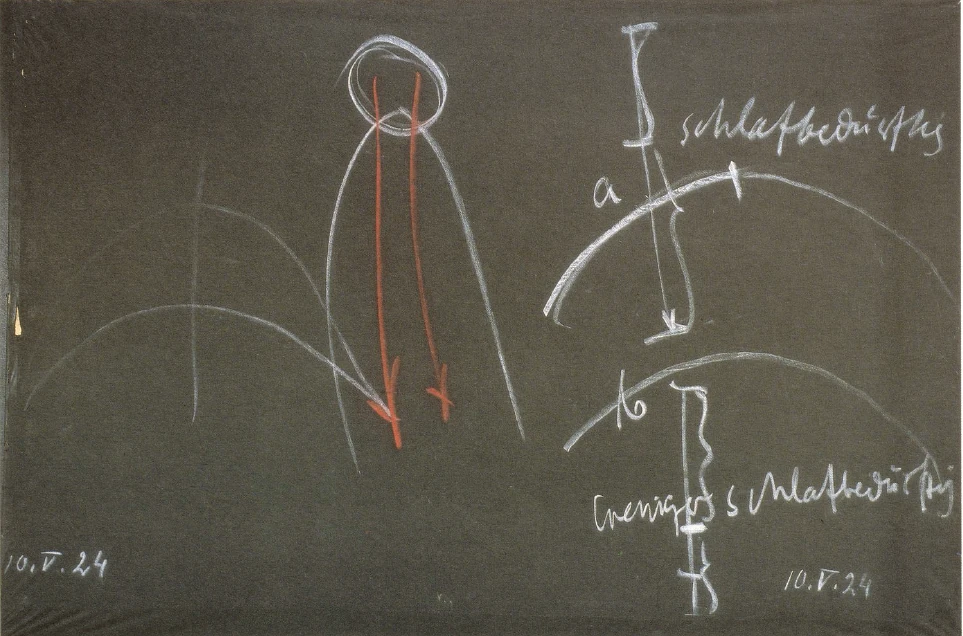
[ 11 ] So we see that human beings develop in such a way that their bones become strong. And what is peculiar is this: when such earth-related forces from a previous earthly life exert a strong influence, the hair grows very quickly. So with children whose hair grows very quickly, we must always connect this to their life of attention in their previous earthly existence. It is indeed true that human beings shape their bodies in their next earthly life based on their moral and spiritual behavior in some previous earthly life.
[ 12 ] On the other hand, we will always find confirmation of how the spiritual-soul aspect is involved in this formation of the human being. In such a person, whose karma is as I have described—that is, who, through a particularly strong inclination toward attentiveness to life in the next earthly existence, develops strong bones and well-developed muscles—we will see that this person goes through life courageously. Through this, he has also, at the same time—I would say—acquired the natural strength of a courageous life.
[ 13 ] Now, it is certainly true that during the period when people moved away from describing successive earthly lives, they still possessed the knowledge that one actually has only when looking toward repeated earthly lives—which was still the case, for example, in Aristotle’s time. In his Physiognomy, Aristotle was still able to describe wonderfully how the external configuration of the face is related to a person’s moral attitude and moral disposition.
[ 14 ] In contrast, let us consider cowards, fearful people. These are individuals who, in their previous earthly life, were not interested in anything. You see, considering karma also has a certain significance for one’s attitude toward life with regard to the future. After all, it satisfies our thirst for knowledge—but not just that—when we trace our present earthly life back to our previous ones. For if we approach our present earthly life with some self-awareness, we can prepare ourselves for the next one. If we rush so superficially through life, with nothing to interest us, then we can be certain that in our next earthly life we will become a timid hare. But this, in turn, comes about because the unengaged being of the inattentive person connects only minimally with its surroundings, so that in the next life the head organization develops no affinity with the forces of the Earth. The bones remain underdeveloped, the hair grows slowly; the person very often has bowlegs or knock-knees.
[ 15 ] These are the kinds of things that clearly reveal the very intimate connection between the spiritual-soul aspect on the one hand and the natural-physical aspect on the other. Yes, my dear friends, one can look beyond the entire human being—right down to the details of the head’s structure—and into past earthly lives.
[ 16 ] But one does not say these things in order to make observations specifically about them. All the observations I have shared with you in preparation for the reflections on karma were not arrived at through external means, but rather entirely through internal means using spiritual scientific methods. But it is precisely these spiritual-scientific methods that show how, externally speaking, the human being should not actually be understood in the way that modern physiology and anatomy conceive of him. Simply getting to know the organs and their interrelationships makes no sense at all, fundamentally speaking. For the human being is an image. In part, he is an image of the forces that exist between death and a new birth; in part, an image of his previous earthly life; and it makes no sense at all to practice physiology or anatomy the way they are currently practiced—that is, to simply take the human being as he stands and then examine, one by one, the parts that make him up. For the head, for example, is much more closely connected to the previous earthly life than it is to the body that the human being receives in this earthly life.
[ 17 ] So one can say: Certain physical processes can only be understood by looking back on previous earthly lives. A person who has come to know the world in a previous earthly life—well, that person simply has hair that grows quickly. A person who has experienced little of the world in a previous earthly life—you can observe this—develops hair that grows very slowly. This hair lies flat against the surface of the body, whereas those who took the most intense interest in a previous earthly life—who were overly curious, who stuck their noses into everything—have shaggy hair. This is a very real connection. In this way, we can trace the most diverse physical configurations back to experiences in one of the previous earthly lives. This really extends down to the details of one’s constitution. Take, for example, a person who reflects a great deal, who ponders deeply, in one earthly life. Yes, you see, in the next earthly life that person will be a slight, thin person. Anyone who, in any earthly life, reflects little but instead lives more in the perception of the external world is predisposed in their next earthly life to put on a lot of fat. This, in turn, has significance for the future. One cannot effectively carry out spiritual weight-loss regimens for a single earthly life; in such cases, physical treatments may need to be employed if they are helpful. But for the next earthly life, one can most certainly undertake a “weight-loss regimen” by thinking deeply—that is, by reflecting a great deal, particularly on matters that cause one distress, of the kind I described yesterday. It need not be meditation, but it simply requires a great deal of deep reflection and a strong will to make inner decisions. There truly is such a connection between the spiritual-moral way in which a person lives during one earthly life and their physical constitution in their next earthly life. This cannot be emphasized enough.
[ 18 ] Consider other cases. Take, for example, the case where a person lives a life on Earth—let’s say—as a thinker. By this I do not mean a professor—and I am not joking at all—but rather a person who, for my sake, could walk behind a plow and still think deeply. It does not matter at all in what circumstances one thinks; one can truly be a thinker even while walking behind a plow or engaged in any other kind of manual labor. But such a thinker—by focusing his thoughts primarily on that which is left behind in earthly life, and by neglecting that which carries the forces over into the next incarnation and contributes to the development of the mind—such a person will appear in a new earthly life with soft flesh, with delicate, soft flesh. But the peculiar thing is this: If they think a great deal, their skin in their next earthly life will be very well-formed; the entire surface of the body—the skin—will be very well-formed. And conversely, if you find people whose skin, for example, shows blemishes—people with blemished skin—you can always infer from this—though, of course, other factors must be taken into account, one cannot draw an absolute conclusion based on a single characteristic alone, but in general the observations I am making today regarding the connection between the soul-spiritual and the physical are correct—that these are people who thought little in a previous earthly life. Thus, people with many freckles were certainly not thinkers in a previous earthly life.
[ 19 ] These are the things that show how the spiritual sciences, in particular, are concerned not only with the abstract spiritual realm, but also with the influence of the spiritual on the physical. As I have often emphasized, it is not so much a pity that materialism focuses solely on matter; rather, the tragedy of materialism is that it cannot know anything about matter because it fails to recognize the spiritual influence within it. When considering human beings, one should look all the more closely at matter, for it is in matter—especially in the human form, in the entire human being—that the workings of the spiritual are expressed. Matter is the outward manifestation of the spiritual.
[ 20 ] You can already see in the “Guiding Principles,” which were most recently published in the newsletter enclosed with the “Goetheanum,” that the human head can only be properly understood when one applies imaginative insight to its external form; for the human head, in its form—in the shape of the ears, but especially also in the shape of the nose and eyes—is actually formed according to the pattern of the imagination. It consists of externally visible imaginations.
[ 21 ] This also applies to the way the human body is built. There are people whose lower torso is longer than their upper torso—that is, the section from the lower end of the torso to the chest is longer—and whose upper torso, from the center of the chest to the neck, is shorter.
[ 22 ] If this section—from the center of the chest to the neck—is shorter than the lower part of the torso, then we are dealing with a person who, in the period between death and a new birth, has undergone such a spiritual life that he has very quickly ascended through the life between death and a new birth up to the middle. They have moved very quickly. Then they descend slowly and comfortably into their new earthly life.
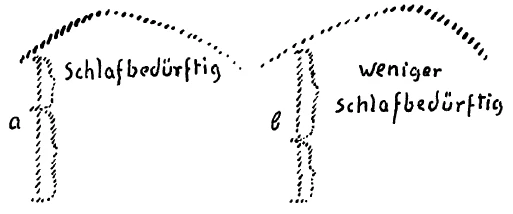
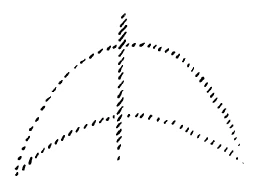
[ 23 ] But if one is dealing with a person whose upper part—from the neck to the center of the chest—is longer than the lower part—from the center of the chest to the end of the torso—then one is dealing with a person who has moved slowly and deliberately toward the middle in the life between death and a new birth, and who then descends more quickly into earthly life. Thus, in physiognomy—indeed, in the proportions of the human torso—one can see the aftereffects of the way in which the person experienced the first half of the passage from death to a new birth, as compared to the second half.
[ 24 ] What is physically present in a human being is, in fact, a reflection of what underlies the human being spiritually. And this has consequences for life. For if you take, on the one hand, people with a short upper torso and a long lower torso, and, on the other hand, people with a long upper torso and a short lower torso—this is, of course, an extreme example—then the situation is as follows: These people here with a long lower torso and a short upper torso are those who, from the very beginning, show that they have a great need for sleep. This is not the case with the others; they require less sleep. So you can tell from a person—depending on whether they require a lot of sleep or not, which in turn is expressed in the proportions of their midsection—whether they passed through the first half of life between death and a new birth more quickly or more slowly, or whether they passed through the second half more quickly or more slowly.
[ 25 ] But that, in turn, is connected to one’s previous earthly life. A person who, in a previous earthly life—not by nature, but rather through upbringing and the course of his life—was indifferent to life—not so much that he lacked interest, but who was nonetheless indifferent—could not really do anything properly; he did not seek to understand things correctly, he might even have been attentive, sticking his nose into everything, but it remained at the level of curiosity and a superficial grasp; he remained dull—such a person then has no interest in the first half of life between death and a new birth. He only becomes interested once life has passed the midnight point and he begins his descent.
[ 26 ] In contrast, a person who gets into the habit of penetrating everything with their intellect—and also with their emotions—develops a keen interest in the first half, in the ascent, and quickly goes through the descent. So that one can say again: If one encounters a person in life who is a sleepyhead, this can be traced back to such a dull life in a previous earthly existence. A person who is active, who is not a “sleep rat,” who—for my sake—even needs to do something first in order to fall asleep—after all, there are books, aren’t there, that can be used as sleep aids—so a person who needs that was not dull, but active; they were intensely active with their intellect and with their emotions.
[ 27 ] We can take this further. There are people—well, what should I call them? Let’s say they are food lovers; they enjoy eating; others don’t enjoy eating as much. I don’t want to say “gluttonous people” and “non-gluttonous people”—that wouldn’t be appropriate in a serious discussion—but what I mean is, there are people who enjoy eating, and those who enjoy it less.
[ 28 ] This, too, is connected in a certain way to what a person experiences during the passage through life—between death and a new birth—before and after the midnight peak of existence. The midpoint is the midnight peak of existence.
[ 29 ] There are people who, I would say, ascend very high into the spiritual realm, and people who do not ascend very high—for whom the “midnight height” is not so high. Those who ascend very high will eat to live. Those who do not ascend very high live to eat.
[ 30 ] This already points to differences in life. And one can say that the way a person behaves, especially in such activities that are connected with the promotion or non-promotion of their physical existence, reveals how their karmic life carries over from a previous earthly existence.
[ 31 ] Anyone who has developed this kind of observational skill can easily see, in the way someone takes food at the table—that is, in the way they reach for it—a gesture that points particularly strongly back to the way in which their previous earthly life shines through.
[ 32 ] Today I am speaking about the physical aspect; tomorrow I will discuss the moral aspects in greater detail, but one must certainly also take the physical aspect into account, otherwise the opposite will be less understandable. People who eat with tremendous vigor—those who, even when simply picking up a pear while eating, do so with enthusiasm —such people are those who, in their previous earthly life, clung more to the trivialities of life, who could not rise above the triviality of life, who were held fast in that which does not ascend to a moral understanding of life, which remains stuck in habit and convention, and so on. This, too, has great significance for the practice of life itself. After all, because we are unaccustomed to such reflections, these things often seem strange to us today, and we laugh at them. But they must be regarded with the utmost seriousness, for, as you can see, there are certain social classes today that are completely absorbed in the trivial habits of life; they are actually reluctant to adopt anything that goes beyond the ordinary, customary habits of life.
[ 33 ] Incidentally, my dear friends, this should not be applied merely to one’s manner of behavior; it can also be applied, for example, to language. There are languages in which one cannot say anything arbitrarily, because everything is strictly prescribed in the sentence structure; one cannot move the subject to a different position, and so on. There are languages in which you can place the subject wherever you want, and the predicate as well; these languages inherently have the potential to allow people to develop individually within them.
[ 34 ] Well, this is just one example of how deeply trivial habits become ingrained and how people cannot escape this triviality. A life on Earth spent in such triviality leads into the next one, in which one is gluttonous. One then does not rise high enough in the life between death and rebirth—one becomes gluttonous.
[ 35 ] Now that the time is to dawn when people truly do not merely expect to live a single earthly life—as is the case in the materialistic epoch of human development—but when people look toward the entire course of earthly development and know that what a person does and accomplishes in one earthly life is carried over into the next earthly life—that human beings themselves carry these events from one epoch into the next—it is already necessary, where this awareness is to arise, that such considerations be incorporated even into the educational principles for both growing children and adults.
[ 36 ] Now I would like to draw attention to two types of people. There is a type of person who can take everything seriously, and by that I don’t mean merely appearing serious on the outside. One can certainly imagine serious people who even have a great deal of tragedy in their inner state and who can still laugh; for if one cannot laugh at all—and there are, after all, ridiculous things in life—if everything passes one by in such a way that one cannot laugh, then one must also be numb. So, one can certainly laugh. But even though one is a person who can laugh heartily at the ridiculous, one can still be a serious person at the core of one’s soul.
[ 37 ] But then there is another type of person who does nothing but laugh, who finds everything amusing, who laughs while telling a story, regardless of whether it’s funny or not. You can meet people who, as soon as they start telling a story, contort their faces into a smile and turn even the most serious subject into a kind of grin, a kind of laugh. These are the extremes I’m describing, but they do exist, these extremes.
[ 38 ] You see, this is a fundamental trait of the soul. Tomorrow we will see how this relates to its moral aspect. Today I want to focus primarily on the physical aspect. This, in turn, leads back to the karmic current of development. A person who has a serious streak in their life—even if they can laugh—is influenced by strong forces, solid forces, I would say, carrying over from their previous earthly life into this one. When one encounters such a serious person—a person who has a sense for the serious aspects of life, who pauses to contemplate them, and who reflects on them—then one can say: One can sense that this person, so to speak, carries his or her previous earthly lives within his or her very being. One’s outlook on life becomes serious as a result of the lingering effects—the true lingering effects—of one’s past earthly lives. One becomes an eternal chatterbox, always prattling away, who laughs even when recounting the most serious matters, if the past earthly lives do not continue to exert their influence. If a person has gone through a series of earthly lives—or at least one earthly life—in which they lived as if half-asleep, then in their next earthly life they will become someone who cannot maintain a sense of seriousness, who cannot approach the matters of life with the necessary seriousness. Thus, from the way a person behaves, one can see whether they have made good use of their previous earthly lives, or whether they have more or less slept through them in a daze.
[ 39 ] All of this, however, leads us to conclude that we must not view human beings—as they appear to us as human beings—mechanically or even merely according to the model of an ordinary organism. We must not do that; rather, we must view human beings in their form and down to their very possibilities of movement as an image of the spiritual world.
[ 40 ] First, there is the organization of the head. This organization of the head is essentially shaped by one’s previous earthly lives. And we can already say: We view the human head most accurately when we learn everything there is to learn about imaginative visualization. Nowhere else but in relation to the human head can one apply imaginative visualization in the sensory world—that very imaginative visualization one otherwise always needs to look into the spiritual world. One must indeed begin with imagination if one wishes to look into the spiritual world; there, the spiritual-etheric images of spiritual beings first appear to us. In the physical world, there is nothing besides the human head that resembles imaginations, but in the human head—down to its inner organization, down to the marvelous structure of the brain—everything is actually a physical-sensory reflection of the imaginative.
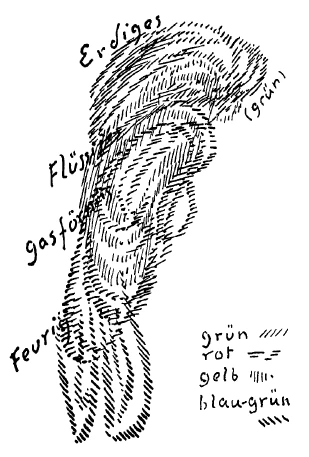
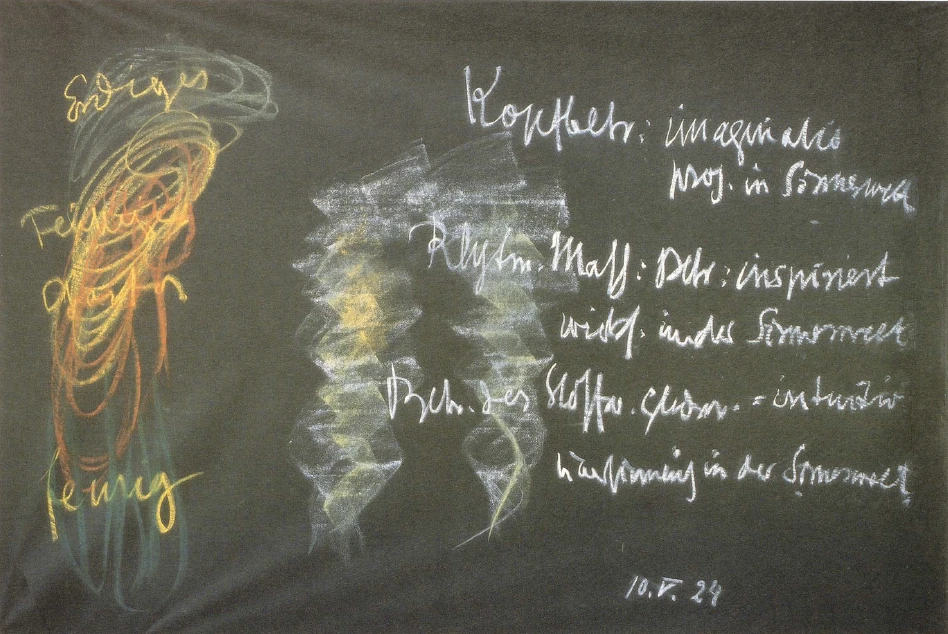
[ 41 ] If you go further, you will come to observe something about the human being that is actually much more difficult to observe—we usually just make it easy for ourselves—namely, to gain an understanding of how a person takes in their breath, how they set their rhythmic system in motion, and how they then transfer the breath into the blood circulation. This incredibly vibrant interplay, which permeates the entire body, is actually much more complex than one might think, for at first glance it seems this way, doesn’t it: a person inhales (drawing, yellow), the breath is transformed into the blood circulation (red), but on the other hand, the breath flows back into the head, and it stands in a certain relationship to the entire activity of the brain (green). Thinking is simply a refined form of breathing. And in turn, the blood circulation gives rise to the impulses that govern the movements of the limbs (blue-green).
[ 42 ] When considering this rhythmic system of the human being—which is expressed not in a state of rest but in a state of constant movement—one must pay close attention to this distinction. After all, the best way to observe the human head is to view it as a self-contained, tranquil form, and to examine its inner parts—such as the brain—in sections, seeing how one section rests beside the next. One learns nothing about the head, for example, by studying the blood circulation in the head through anatomy or physiology; for what the blood circulation accomplishes in the head does not pertain to the head at all—it pertains solely to what the head requires in terms of rhythm. In this respect, the head is exactly like the blood circulation. What one can see when one lifts a part of the skull’s bony structure and observes the circulation there has nothing to do with the head at all; the head must be regarded as a resting organ, where one part lies next to another.
[ 43 ] This is not possible when one shifts to the rhythmic system, which is primarily located in the chest. There, one must consider everything in terms of activity—the activity of blood circulation, breathing, thinking, and movement. This process must be considered even further, extending into the physical realm.
[ 44 ] Consider the respiratory process. As it transitions into the circulatory process and then extends to the brain, carbon dioxide—that is, an acid—forms in the human organism. However, as the respiratory process extends into the brain and the nervous system as a whole, salts are formed from the acids; these salts are then deposited.
[ 45 ] So one can say: As human beings think, the earthy element is set apart. The liquid element lives within the cycle itself. The gaseous element lives in the breath. And in movement—when that transitions into movements—the fiery element lives. The elements are contained in all of this, but they are elements in motion, in a state of constant becoming and passing away. This process cannot actually be grasped through sensory observation. Those who seek to comprehend it in anatomy through sensory observation will never truly understand it. One must be able to draw deeply upon the inner creative power of the spirit to understand this process. When one hears the discussions relating to the rhythmic process in ordinary anatomy and physiology lectures, it is truly the case that, based on the lifeless description given there—those who have gone through this will be able to attest to it—one actually has the feeling that it is far removed from reality. Indeed, anyone who listens to this with an open mind and then looks into the eyes of the audience actually gets the feeling that these listeners, as a result of the “ode” they are receiving, should all be dying, should remain seated on the benches, unable to go any further, unable even to crawl. For it is precisely this circulatory system that must be depicted in all its directions with the liveliest vitality, so that the listener constantly moves from the sensory to the supersensory, returns from the supersensory to the sensory, and enters into a kind of musical mood through this depiction.
[ 46 ] Then, when one has something like that, one also enters into inner spiritual habits through which karma can be understood. We will discuss this tomorrow. But what one has there is a sensory reflection of inspiration.
[ 47 ] Just as one has a sensory image of the imagination in the primary contemplation, so too, when this contemplation is carried out properly, one has an image of inspiration in the contemplation of the human rhythmic system.
[ 48 ] And if we turn to the metabolic-limb system—indeed, what is currently considered in anatomy and physiology as part of the metabolic-limb system does not represent the actual forces of this system, but only what is excreted, what is cast off. Everything that constitutes the metabolic-limb system in today’s scientific view does not at all belong to the structure and organization of the human being, but is expelled—the intestinal contents are merely the most extreme example—but in general, everything that is physically perceptible in the metabolic-limb system does not belong to the human being, but is separated from the human being, except that one remains for a longer time and the other for a shorter time. Intestinal contents remain for a shorter time; what is excreted in muscles, nerves, and so on remains for a longer time. But what can be physically and sensually detected within the metabolic-limb system does not belong to the human being; rather, it is excretion, a deposit. In contrast, everything that belongs to the metabolic-limb system is of a supersensible nature. Thus, when considering the metabolic-limb system in the context of a study of the human being, one must turn to that which lives purely supersensibly within the sensible realm.
[ 49 ] One must therefore conceive of the human metabolic-limb system in such a way that physical arms and so on are in reality spiritual, and it is within this spiritual aspect that the “I” develops. When I move my arms and legs, secretions are constantly being produced, and these secretions are visible. But these are not the essential aspect. If you want to explain the grasping action of the arm or the hand, you cannot refer to the physical aspect; rather, you must refer to the spiritual aspect—to that which is spiritual along the length of the arm; that is what matters in human beings. What you see is merely a secretion in relation to the metabolic-limb system (see drawing, dark hatching: the visible; light hatching: the “spiritual”).
[ 50 ] Yes, how is one even supposed to make a karmic assessment if one believes that what one sees in the metabolic-limb system is the human being? That is not the human being at all. One can only make a karmic assessment once one knows what a human being is. And what one must have in mind in this assessment is an image of intuition—one that, while situated in the sensory world at present, is nonetheless still supersensory.
[ 51 ] So that you, my dear friends, can say: Intellectual contemplation is, in fact, imaginatively projected into the sensory world. Rhythmic contemplation of the human being must, in fact, be inspired, effective within sensory observation, effective in the sensory world. Contemplation of the metabolic-limb human must be intuitive and supersensory within the sensory world.
[ 52 ] This is very interesting, because in the study of the human being, we have images for intuition, inspiration, and imagination. And through a proper examination of the metabolic-limb human, one can learn what intuition actually is in the supersensible realm. Through a proper contemplation of the rhythmic human being, one can learn what inspiration actually is in the supersensible realm. Through a proper contemplation of the head, one can learn what an imaginative contemplation is in the supersensible realm.
Contemplation of the head: imaginative, projected into the sensory world. Rhythmic contemplation: inspired, effective in the sensory world. Contemplation of the metabolic-limb human: intuitive, supersensory in the sensory world.
[ 53 ] This is what is hinted at in the “Guiding Principles” of the last newsletter, and it is something that anyone who really takes a close look at the cycles so far can actually discover for themselves.
[ 54 ] Today, my dear friends, we have attempted to examine the karmic connections as they relate to the physical realm. Tomorrow, we will move on to taking a closer look at the karmic connections as they relate to the moral and spiritual aspects of human beings.