

Esoteric Considerations of Karmic Connections
Volume II
GA 237
3 August 1924, Dornach
Translated by Steiner Online Library
Ninth Lecture
[ 1 ] You have probably seen from the previous lectures how souls who feel, from the depths of their subconscious, a pull toward the anthroposophical movement carry this within themselves through their special connection to the Michael forces. And so we have examined the workings of these Michael forces throughout the various centuries to see what influence these Michael impulses can have on the lives of those who are connected to them in any way.
[ 2 ] Now, and this is of great significance for the karma of every single anthroposophist, the Michael impulses are of such a nature that they have a deep and intense effect on the whole human being. We know from the preceding descriptions that the reign of Michael—if we may call it that—which began for earthly life at the end of the 1870s, was preceded by the reign of Gabriel, and I have already explained how this reign of Gabriel is connected to forces that operate through physical procreation, to forces related to physical heredity.
[ 3 ] The forces of Michael are the exact opposite of this. Under Gabriel’s dominion, his impulses exert a strong influence on the physical body of the human being. Michael, on the other hand, exerts a strong influence on the human being’s spiritual nature. You can already infer this from the fact that he is the steward of the world’s intelligence. But Michael’s impulses are strong and powerful, and they work from the spiritual realm through the whole human being; they work into the spiritual realm, from there into the soul, and from there into the physical body of the human being. And in karmic contexts, these superterrestrial forces are always at work: beings of the higher hierarchies work with and upon the human being; through this, karma is shaped. And so, because they act upon the whole human being, the Michael forces are also forces that initially exert a particularly strong influence on human karma. Gabriel forces exert very little influence—not none at all, but very little—on the actual karma of the human being; Michael forces exert a strong influence on human karma.
[ 4 ] Therefore, if certain people—and that is, in essence, all of you, my dear friends—are particularly connected to this Michael current, then the karma of these individual people can really only be understood when considered in connection with the Michael current. And if one regards Michael as a spirit who stands in a special connection with the sun and all solar impulses, then one will become even more aware of the immensely profound significance these Michael impulses have precisely for those people who are particularly exposed to them; the spiritual permeates right down into the physical organism. And one simply must, more so than is usually the case, relate physical manifestations of health and illness—let us say, to use an expression, among the Michael-type people—to karma in a higher sense than is the case with Gabriel-type people or Raphael-type people or the like. Although Raphael is indeed the spirit most intimately connected with the art of healing—things are intertwined throughout the cosmos—Michael is nevertheless the spirit who brings human karma closest to health and illness.
[ 5 ] This, in turn, is related to the fact that the Michael forces operate in such a way that they not only have a cosmopolitan effect, but also tear people away from narrow earthly contexts and lift them up to a spiritual height where they feel earthly connections less strongly than other people; at least, they are predestined to do so by their karma—which, in turn, already exerts a profound influence on the karma of every individual who belongs to the Michael current.
[ 6 ] You see, it was indeed the case in the last third of the 19th century that—not nervous people, but those who were spiritually and emotionally sensitive—were able to keenly sense the influx of the Michael forces into the world. This influx of Michael forces into the world manifested itself in the true Michael people in such a way that they perceived many things—which others would simply pass by—as deeply meaningful and profoundly impactful in their lives.
[ 7 ] Above all, the karma of such people was such that, even if they were not fully aware of it, they nevertheless felt the struggle that I described the day before yesterday as the struggle between Michael and Ahriman. After all, in the present age, Ahriman exerts a strong influence on people only when there is some form of distraction of consciousness. The most extreme manifestation is, let us say, a loss of consciousness or a clouding of consciousness that lasts for some time. In such moments, when a person succumbs to a clouding of consciousness, the forces of Ahriman can approach the person with particular intensity. Then they work within him; he is exposed to them. But it was precisely in this last third of the 19th century—namely, in the period that was already approaching the end of the Kali Yuga, that is, in the final years of the previous century—that it was truly unsettling to look behind the scenes of the outer, physical-sensory world that spreads out before the human senses. Immediately adjacent to this, of course, is that which reveals much to us about these historical events in which the higher, supersensible beings intervene.
[ 8 ] Now, in this last third of the 19th century—and especially in the last decade—what constitutes Michael’s dominion, his entire struggle, and the whole context of events was concealed only by a thin veil. Since then, Michael has, so to speak, been fighting alongside us in the outer world. The point is that one needs a much stronger power to perceive what exists in the supersensible realm than was the case before the end of the Kali Yuga—that is, in the previous century—when, as I said, the adjacent world was hidden by a thin veil, and Michael was still fighting more from behind the scenes. But Michael insists, as I have told you, that his rule must permeate everything. Michael is a powerful spirit, and Michael can only fully make use of courageous people—people who are courageous within.
[ 9 ] And within all these contexts that I have described to you—in this supersensible school of the 15th, 16th, and 17th centuries, in that supersensible cult at the beginning of the 19th century—numerous hosts of Luciferic beings, who are essential to the entire context, continually play a role among the spirits involved. Michael needs Luciferic figures to cooperate in order to overcome the polar opposition, to overcome Ahriman. Thus, the Michael-people are already placed within—one might not call it a struggle, but rather a surging interplay between Luciferic impulses and Ahrimanic impulses. These things manifested themselves with great clarity precisely toward the end of the previous century. At that time, it was not uncommon to be able to see through this veil, as I have called it. Then one could see how hard Michael has to fight against Ahriman, and how easily one’s consciousness could be diverted by all manner of Luciferic influences.
[ 10 ] You might say: Distractions of consciousness and fainting spells are, after all, nothing particularly remarkable. Certainly, viewed from the outside, they are nothing special; but they become significant because of what follows them—what happens when the distraction or clouding of consciousness is present. Let me give you an example.
[ 11 ] The goal was to help someone become more intimately acquainted with a historical figure. She was simply supposed to familiarize herself with a historical figure from the Renaissance and Reformation periods. So please understand me clearly: The point was that all the preparations were in place so that a person—this was at the end of the 1890s—could become acquainted, through historical study, with a historical figure from the Renaissance and Reformation. Yes, it was actually impossible to imagine how things could have turned out any other way, given all that had just taken place, other than that this person was supposed to become acquainted with that historical figure in a manner that was, I would say, pedantic and philistine. But lo and behold, through the most intricate workings of karma, this person became incapable of using his consciousness precisely at the time when he was supposed to experience it. He fell into a kind of sleep from which he could not awaken. He was prevented from doing so.
[ 12 ] Of course, one does not pay much attention to such things in everyday life. But it is precisely these things that allow one to look directly into the spiritual world from the earthly realm. And if one seeks an explanation for this fact, one must say: That individual, who was to become acquainted with a figure from the time of the Renaissance and the Reformation, would undoubtedly have been profoundly and personally moved had she actually experienced what I am describing. She did not experience it; she passed it by. But during that time, this individual had the experience of transforming what they would have received as an impression there into a particularly strong impression of the Michaelic element. They gained a genuine understanding—albeit unconsciously—of the Michaelic element.
[ 13 ] I am citing this somewhat paradoxical example to show you how the Michaelic element reached people. And one could cite many, many such examples. People today would be quite different if such things had not happened to so many of them. For these things can occur in hundreds of different ways. In the case I have described to you, the person in question actually fell into a kind of sleep-like state. In other cases, the situation was such that some event that would have led away from Michael was prevented by a friend or someone else coming and leading the person in question elsewhere, and the person’s consciousness was enveloped in the most natural, mundane way, thereby preventing him from participating in what was actually karmically predestined for him at first. The most drastic interventions in the usual smooth course of karma occurred precisely during these years.
[ 14 ] And as a rule, it has become apparent just how deeply these Michael influences extend. In numerous cases, it turned out that such people—who had experienced such a jolt in their karma as a result of Michael’s necessity to enter the earthly, sensory world through the gates of human consciousness—were affected not only spiritually but also physically.
[ 15 ] It is extremely interesting to see how, in the 1890s, people were drawn into events that represent nothing other than Michael’s paths from the spiritual world into the physical world. For you must bear in mind: What took place in the last third of the 19th century as Michael’s entry into the physical world had, in fact, been in preparation in the spiritual world for a long time—ever since the early 1840s. I would like to say that Michael and his followers were drawing ever closer, and it became increasingly clear that people would come down who, in their earthly destinies, were connected to Michael’s mission: to take over intelligence here on Earth once again, after it had been lost to the Michaelic hosts in the supersensible realm.
[ 16 ] The anthroposophical movement is, after all, situated within all of this—as you can already see from the descriptions so far. For it is connected to this entire Michael current, as is evident from the description I have provided thus far.
[ 17 ] Now, in this light, just consider the karmic connections of individual personalities who are drawn to the anthroposophical movement by an inner urge. They come, first of all, from the world. They are, after all, embedded in worldly contexts within it. There have indeed been many communities in the world that have united people, but never has the unifying force stemmed from that particular quality brought about by the Michaelic forces. This creates a special situation for those who, emerging from the context of the world, find their way into the Anthroposophical Society. One can join other associations—and has always been able to do so—without one’s destiny being particularly deeply affected. One cannot join the Anthroposophical Society—at least not in such a way that this joining is entirely sincere and deeply moving to the soul—without one’s destiny being profoundly affected in its very essence. And this becomes particularly clear when one, I would say, views things from the correct perspective.
[ 18 ] Consider a person who has just joined the Anthroposophical Society or movement, someone who previously had some connections with non-anthroposophists, or who maintains such connections. This distinction between those who are inside and those who are outside—or who remain outside—is far more significant here than it is in any other community. There are two kinds of relationships at play here. Precisely because everything I have described is fulfilled, we are living in a time of immensely important decisions, so that this coexistence of anthroposophical and non-anthroposophical people today is a decisive factor. Either it involves the resolution of old karma for those who are members of the Anthroposophical Society, or it involves the beginning of new karma for those who are not members. And these are major differences.
[ 19 ] Let us suppose that an anthroposophist is close to a non-anthroposophist. In that case, it may be that the anthroposophist must first resolve old karmic ties with the non-anthroposophist, or it may be the other way around—that the non-anthroposophist must establish karmic ties with the anthroposophist for the future. At least these two cases—of a different nature, of course—are the only ones I have been able to observe; there is nothing in between; nothing exists apart from these cases. But this shows that we are truly in a time of great decisions: that, so to speak, either an influence is exerted on non-anthroposophists in the sense that they join the Michael Community, or else an influence is exerted such that those who do not belong to the Michael Community are shunned by it. This is the time of great decisions, that great crisis of which the sacred books of all ages actually speak and which is essentially meant for our age. For this is precisely what is characteristic of the Michael impulses: that they are decisive and that they become decisive precisely in our age. Those who, in their present incarnation, take in the Michael impulses through anthroposophy—by doing so, they prepare their entire being in such a way that this preparation penetrates deeply into those forces that are otherwise determined solely by racial and national connections.
[ 20 ] Just think about how strongly one can speak of this: There is someone who is part of a national community. You can tell by looking at him that he is Russian, French, English, or German. You can tell by looking at a person, and you categorize people this way—you place them in a category by thinking, when you see them, where they might belong. People will consider it significant if you can tell by looking at someone that he is a Turk, a Russian, and so on. For those who today embrace anthroposophy as their deepest life force with genuine inner spiritual strength and heartfelt impulsiveness, such distinctions will no longer make any sense when they descend back to earth. People will say: Where is he from, anyway? He is not of any one people; he is not of any one race; he is as if he had grown out of all races and peoples.
[ 21 ] You see, during the last reign of Michael, in the time of Alexander, the aim was to spread Greek culture cosmopolitanly, to carry it everywhere. Enormous things happened through Alexander’s campaign to bring balance among people and to spread something in common. But that could not yet take root so deeply, because Michael was still administering the cosmic intelligence. Now intelligence is on Earth. Now it is becoming profound; now it is also penetrating into the earthly nature of human beings. The spiritual realm is preparing to shape the races for the first time. And the time will come when one will no longer be able to say: “This person looks like this, so he belongs there; he is a Turk or an Arab or an Englishman or a Russian or a German”; rather, one will have to say: “In a previous earthly life, this person was impelled to turn toward the spiritual in the Michaelic sense.” Thus, that which is influenced by Michael manifests itself directly in a physically creative and physically formative way.
[ 22 ] But that is precisely what becomes deeply, deeply ingrained in the individual’s karma. Hence the fate of those who are sincere anthroposophists: not being able to quite come to terms with the world, and yet feeling the need to approach the world seriously, with the utmost seriousness.
[ 23 ] I have hinted at how those people who are fully immersed in the anthroposophical movement will return at the end of the century, and that others will then join them, because it is precisely through this that the salvation of the Earth and of earthly civilization from decay must ultimately be decided. This is, I would say, the mission of the anthroposophical movement—one that is, on the one hand, heart-wrenching, and on the other, deeply moving and inspiring. We must keep our eyes fixed on this mission.
[ 24 ] It is therefore absolutely necessary for an anthroposophist to know that, in this situation, karma is more difficult to experience for an anthroposophist than for other people. To begin with, those who join the Anthroposophical Society are, so to speak, predestined to experience karma more intensely than other people. And if one ignores this intense experience—if one wants to experience one’s karma in a comfortable way—then this will inevitably lead to repercussions in one way or another. One must also be able to be an anthroposophist in the experience of karma; one must be able to observe the experience of karma attentively in order to be a true anthroposophist. The comfortable experience of karma—the desire to experience karma comfortably—leads precisely to its repercussions in the form of physical illness, physical accidents, and the like.
[ 25 ] One must look closely at these finer interconnections of life; then, through these more intimate interconnections, one sees many other things. And looking closely at these more intimate interconnections of life is the best preparation for truly seeing spiritually. It is not a sound principle to seek to develop all sorts of abnormal, visionary states in a nebulous manner. But it is immensely important to engage with what is happening more intimately within the interconnections of destiny that one can observe.
[ 26 ] Do we not see, my dear friends, that it is becoming our karma to live—or to have lived—alongside people who are inwardly utterly incapable of approaching anthroposophy, inwardly incapable, despite everything and all that we might offer them in terms of anthroposophy—I do not mean to say that we actually offer it to them, but that we could offer it to them if only they were willing to accept it? We do see that, don’t we? This is something that is very much part of the great decision of our present life. And what takes place there will be karmically significant both for the one who then joins the anthroposophical movement and for the one who remains outside; it will be extraordinarily significant.
[ 27 ] For let us now imagine that these people meet again in a future incarnation—after all, what happens to us in future incarnations is already being prepared in this one—: then this encounter, precisely with people toward whom we feel the way I have just described, will essentially intensify the alienation that otherwise exists between people. For Michael also influences physical sympathies and antipathies. But all of this is already taking place in a preparatory sense; it is already unfolding in a preparatory way for every single anthroposophist. Therefore, it is immensely significant for the anthroposophist to take a close look at precisely these karmic relationships that play out between him and non-anthroposophists. For things are taking place there that extend up into the next hierarchical realm. You see, there is a counterpart to what I have described—namely, that Michaelic impulses even manifest in the formation of races; there is a counterpart to this.
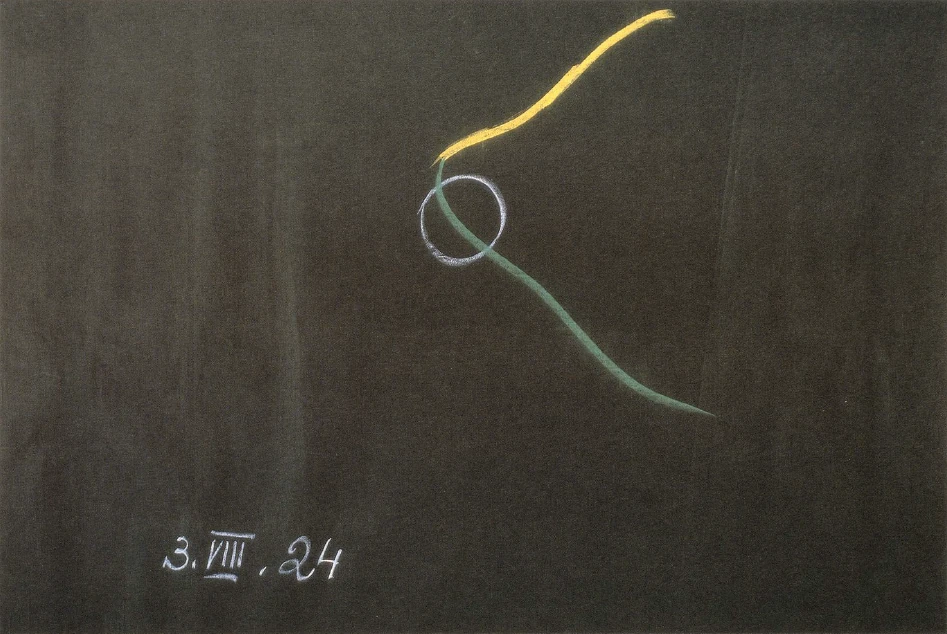
[ 28 ] Let us consider the case where karma is such that a certain individual is now, in the most eminent sense, seized by the anthroposophical impulses—seized with heart and mind; I would say, seized with spirit and soul. Then—yes, then—something is necessary that sounds decidedly strange, even paradoxical; but it is necessary: then his angel must learn something. And that, you see, is something of immense significance. The destiny of anthroposophy, which plays out between anthroposophists and non-anthroposophists, sends its ripples into the world of the Angeloi. This leads to a parting of the ways in the world of the Angeloi. The Angelos who accompanies the anthroposophist to their next incarnations learns to penetrate even more deeply into the spiritual realms than he was able to before. And the Angelos who belongs to the other—who cannot penetrate at all—sinks downward. And it is first evident in the fate of the Angeloi how this great division takes place. It is now the case—and this, my dear friends, is something I would like to draw your attention to—that out of a relatively unified realm of the Angeloi, a two-part realm of the Angeloi is emerging: a realm of the Angeloi with one strand ascending into higher worlds and another descending into deeper worlds. While the formation of the Michael Community is taking place here on Earth, we can look beyond what is unfolding here as the Michael Community and see ascending Angeloi (see drawing, yellow) and descending Angeloi (green). In fact, if one looks more deeply into the world today, one can continuously observe these currents, which have something so heart-wrenching about them.
[ 29 ] Now I said: Those who come to anthroposophy essentially fall into two groups. One group consists of those who still carry knowledge from the old pagan traditions and, coming from that pagan background—without having much experience of the Christian development that took place during the Kali Yuga—have continued to evolve and are now growing into that Christianity which is meant to be a cosmic Christianity once again; that is, souls predestined for paganism who are actually only now growing into Christianity. The other group consists of souls who are more weary of Christianity [or of paganism?], but do not admit it to themselves; they grow into the anthroposophical movement from the outset because of its Christian character, though they do not delve deeply into what anthroposophical cosmology, anthroposophical anthropology, and so on entail, but rather grow more into the abstractly religious aspect. These two groups are, of course, clearly distinct from one another.
[ 30 ] The group that is, in a sense, still predestined to be pagan has a special need to grasp the fundamental forces of anthroposophy with all its inner intensity and to move in the direction of these fundamental anthroposophical forces, so to speak, without allowing itself to be distracted by any considerations.
[ 31 ] All of these are, after all, things that must—more than anything else—find their way into people’s hearts; but they must find their way into the hearts of anthroposophists. Only then will genuine community life within the Anthroposophical Society be possible on the basis of concrete anthroposophy. For when the more pagan-minded souls—who are already present in this incarnation on the basis of their souls, and whose forces are so often difficult to bring forth, though they are present in so many—when they bring these forces to the fore, then an atmosphere of forward momentum, entirely in the Michaelic sense, will spread throughout the entire Anthroposophical Society.
[ 32 ] But then one must have the courage to look directly into this intense struggle that is now taking place between what Michael must undertake to accomplish his great task and what Ahriman continually opposes. Ahriman has, after all, initially seized upon certain tendencies in the development of civilization and put them to work for himself. Just consider that it is only since the fifteenth century—since the conscious soul has taken its place within the human being—that the human being has truly been able to grasp intelligence; for the conscious soul is a human possession, and it is through this that intelligence can be acquired. It is only since that time that what leads people to place such immense emphasis on this personally active intelligence has come to them.
[ 33 ] Try doing a little calculation—one that actually encompasses something terribly vast, though only in spatial terms—try doing a little calculation, my dear friends. Mentally add up everything that is thought today, in a single day, by all newspaper writers across the entire globe in order to produce the newspapers. Please, take a moment to consider this. Consider this sum of intelligence that is churned out by pens, put down on paper, then printed, and so on. Consider the sheer volume of personal intelligence flooding through the world!
[ 34 ] Now go back a few centuries—go back to the 13th century—and see if anything like that even exists there. It isn’t there at all. There’s no mention whatsoever that it exists.
[ 35 ] But I would like to give you another task. Imagine in your mind—since today is Sunday, a special occasion for this—how many gatherings are being held from west to east on political matters, on Europe, to put it simply, and how much personal intelligence is pouring into the Earth’s atmosphere as a result. Imagine the 13th century: people got by without newspapers, without these gatherings; none of that existed. If you transport yourself to the 13th century and look out over the world, you have a completely unobstructed view. There are no newspaper offices, there are no political gatherings. None of that is there; you can see right through it.
[ 36 ] Look around today—waves of personal intelligence are surging up everywhere. They’re there. You can’t even get through; the atmosphere is thick enough to cut with a knife, in the spiritual realm. Just as in some halls, where everyone is puffing on their pipes or cigars and the air is thick enough to cut with a knife, so it is with the atmosphere in the spiritual realm.
[ 37 ] One must take such differences into account if one wishes to assess the succession of historical eras in any meaningful way. When you read historians like Ranke, you don’t notice at all that this is the case; but these are the real facts.
[ 38 ] But what exactly is all that has been drawn in there? All of it is spiritual nourishment for the Ahrimanic forces. They now have the opportunity to strike precisely in this area. That is why Ahriman’s ability to intervene in civilization has become ever more powerful. Spirits such as Ahriman are, of course, not meant to incarnate in a physical body on Earth, but they can still work on Earth; they can work on Earth not by incarnating, but by incorporating themselves for certain periods of time. Then, when what I have spoken of occurs—a clouding of consciousness in this or that person, or a temporary distraction of consciousness—the person forms a shell: Ahriman has the opportunity, not to incarnate, but to incorporate himself, to work through the person’s abilities from within the person.
[ 39 ] It will be my task to speak specifically about this influence of the Ahrimanic forces. And I would then like to show to what extent, for example, Ahriman has even appeared as a writer in recent times, in order to point out what must be observed by those who wish to observe realities today.