

The Art of Education
GA 295
2 September 1919, Stuttgart
Translated by Steiner Online Library
Eleventh Seminar Discussion
[ 1 ] Rudolf Steiner: The speech exercise we are doing here is primarily about making the speech organs more supple.
[ 2 ] Speaking exercises:
Heretics are now whining pitifully
Ultimately, a bit skeptical
[ 3 ] You should get used to letting your tongue say it naturally.
Though they force themselves against their will
Dual-purpose Zwackers are too few
Twenty dwarves
The sinewy crabs
Feast, searching for safety
So that the smacking, yearning ones
Cuddle up as quickly as possible
And purr with delight
[ 4 ] These last points are only completely accurate when recited from memory, just like the previous one.
[ 5 ] From “We Found a Path” by Christian Morgenstern:
Whoever does not know the destination,
Cannot find the path,
Will trot in the same circle
All his life;
Arrives in the end
Where he started,
Having only further fragmented
The meaning of the whole.
Rudolf Steiner: Now let’s get to the task we’ve been mulling over for quite some time.
Rudolf Meyer provides a list of states of mind and the plants that correspond to them.
| Mood of the Soul: | Plant: |
|---|---|
| Meditative mood pious devotion purity pure love |
Carthusian carnation bellflower, lily of the valley wild rose Rosa centifolia |
(Continuing such a long series.)
[ 6 ] Rudolf Steiner: You see, all these things that have been brought up are such that they remind one of the era of phrenology, when people arbitrarily compiled a list of human soul qualities, then looked for all sorts of protrusions on the head, and correlated these with human soul qualities. Isn’t that right? But that’s not how things are, even though the human head can certainly be understood as an expression of the soul’s development. One might say that if someone has a very prominent forehead, they might be a philosopher, whereas someone with a receding forehead [Figure 2], if they are gifted, might become an artist. One cannot say that the artist “resides” anywhere, but one can intuitively discern what flows into one or the other. The point is to view the soul in this way: the intellectual drives into the forehead; what is more artistic causes the forehead to recede. - The same is true of this search among plants. I mean, one should not search so superficially, but rather penetrate deeper into the inner nature and describe the actual conditions.
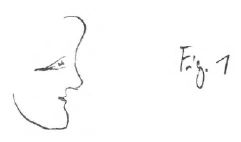
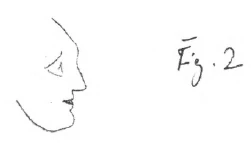
Walter Johannes Stein discusses this topic [The Senses of the Earth—Plants, Especially the Sensory Senses].
[ 7 ] Rudolf Steiner: Isn’t it true that if you rely too much on the senses alone, you will shift your perspective somewhat? The senses are relevant insofar as, from each sense, something lives within our soul that is perceived by that sense. For example, we owe a number of soul experiences to the sense of sight; we owe other soul experiences—which originate in the senses—to the other senses. We can then trace these experiences in our soul back to these senses. In this way, the sense becomes connected to the soul. But one should not directly claim that plants express the senses of the earth. They do not.
Hermann Heisler: [Ivy—perseverance, Christmas rose—plant of old age, ...] cites examples from the writings of Emil Schlegel, the homeopathic physician in Tübingen.
[ 8 ] Rudolf Steiner: Even Schlegel still makes comparisons that are too superficial. In doing so, he draws on what is found among the mystics—such as Jakob Böhme and others—namely the so-called “signatures.” The medieval mystics were aware of certain connections to the spiritual world and, based on this, also developed deeper medical insights. If one finds that a certain group of plants is related to a spiritual quality—for example, mushrooms have a special relationship to the spiritual quality of deep reflection, of much contemplation, of a way of living so deeply rooted in the soul that one does not need much from the external world for this spiritual experience, but rather draws everything more from within oneself— then one will in turn find that this soul quality, which essentially points to mushrooms, has very intimate connections to all headache-like ailments. From this, one will arrive at connections between mushrooms and headache-like ailments. In zoology, one cannot make such comparisons.
[ 9 ] There is still no proper order among plants today. You must try to bring order into plant life itself precisely through the relationships between the human soul and the plants. We want to have an order in the plant kingdom.
[ 10 ] You must first distinguish the parts of the plant that are essential: the root, the stem (which can grow into a trunk), the leaves, the flowers, and the fruits. Plants are classified in such a way that in one genus, the root is more developed, while in another, it is stunted. In others, the leaves are more developed; in still others, the flowers are more prominent—they consist almost entirely of flowers. These characteristics must be considered in proportion. We arrive at a classification of plants by observing which organ systems—root, stem, leaf, and so on—predominate; this is how plants differ from one another in a certain respect. If you now recognize everything that is flower-like as belonging to a certain soul quality, then you will also have to assign the other organ systems to other soul qualities. Thus, it is one and the same thing to attribute individual parts to soul qualities and to include the entire plant kingdom in this. The entire plant kingdom is, in fact, a single plant.
[ 11 ] What exactly is going on with the Earth’s sleeping and waking cycles? Right now, the Earth is sleeping here, but it is waking up for those on the opposite side of the globe. It carries sleep to the other side. Of course, the plant world also participates in this, and this also accounts for differences in vegetation. This gives you the opportunity to discern a structure, a classification of plants, based on this spatial distribution of sleep and wakefulness on Earth—that is, based on summer and winter. After all, our vegetation is not the same as that of the “opposite-footed ones.” Here we will consider only the sleeping and waking soul as we know it. In plants, everything belongs to the leaves; everything about them is a transformed leaf.
Rudolf Treichler compares groups of plants to temperaments.
| Sanguine Melancholic Phlegmatic Choleric |
- Flowers, not trees. - Bellflower, - Trees - |
It seems someone else is putting this together:
| Sanguine Melancholic Phlegmatic Choleric |
- Herbs - Aquatic plants - Dwarf plants - Trees] |
[ 12 ] Rudolf Steiner: One ends up on a slippery slope when one applies the temperaments directly to the plant kingdom.
[ 13 ] Let’s put it this way: according to our curriculum, we begin teaching the plant kingdom when the children are around the age of eleven. We say: “Children! You weren’t always as big as you are now. You’ve learned a great deal that you couldn’t do before. When your lives began, you were small and clumsy and couldn’t yet manage on your own. Back then, when you were still very small, you couldn’t even speak. You couldn’t walk yet either. There were many things you couldn’t do that you can do now. Let’s all take a moment to reflect—let’s think back to the traits you had when you were very little children. Can you remember the traits you had back then? Can you remember? Can you remember what you used to do?” You keep asking questions like this until everyone realizes it and says “no.”
[ 14 ] “So none of you remember anything about what you did when you were just little toddlers. — Yes, dear children, isn’t there something else inside you that you don’t remember doing afterward either?” The children think for a moment. Perhaps one of them will come up with an answer; if not, guide them toward it. One of them might then reply: “How I slept.” — “Yes, so when you’re little, it’s just like when you’re lying in bed and sleeping. You sleep then as tiny little ones, and you sleep when you’re lying in bed.
[ 15 ] Now let’s go out into nature and look for something out there that sleeps just the way you used to when you were a tiny little Sputzi. Of course, you can’t figure this out on your own, but those who know such things know that everything you find in the forest—like mushrooms and sponges—sleeps just as soundly as you do when you’re a tiny little Sputzi. Mushrooms and sponges are souls that sleep like children.
[ 16 ] Now came the time when you learned to speak and walk. You know from your younger siblings that you learn to speak and walk first. Speaking first and then walking, or walking first and then speaking. There is a quality that your soul acquires—one you didn’t have from the beginning. You’ve learned something new; you’re capable of more once you can walk and speak.
[ 17 ] Now let’s go out into nature and look for something else that can do more than just sponges and mushrooms. “Those are algae”—I have to show the child something about algae now—“those are mosses”—I have to show the child some mosses.—“What’s inside algae and mosses can do much more than what’s inside mushrooms.”
[ 18 ] Then I show the child a fern and say, “Look, this fern can do so much more than mosses. This fern can already do so much that you have to say it looks as if it already has leaves. It already has leaf-like parts.” Yes, you don’t remember what you did when you were learning to speak and walk. Back then, you were always pretty sleepy. But when you look at your siblings or other little children, you know that later on they don’t sleep as long as they did in the beginning. But there came a point—one you can recall—when your soul awoke. Just think about it! That moment that existed within your soul can be compared to ferns. But you can remember your soul life better and better, better and better. Let’s be very clear about how you came to say “I.” It’s roughly the point in time as far back as you can remember. But the “I” came gradually. At first, you always said “Wilhelm” when you meant yourself.” Now you let the child tell you something about what he knows of his childhood. Then you say to him: “Look, before, it really was like that in your soul—as if everything were asleep; it was truly night in your soul. But now it has awakened. Now more has awakened within you than before; otherwise, you wouldn’t be any smarter. But you still have to go back to sleep again and again. Not everything within you has awakened; much of it is still asleep. Only a part has awakened.
[ 19 ] “Your spiritual qualities, as you were around four or five years old—yes, those are quite close to what I’m showing you now.” We will show the child some plants from the gymnosperm family—the conifers—which are only slightly more fully developed than ferns, and then you will say to the child: “Look, then there is this in your later soul life—once you’ve turned six or seven—that you were able to go to school, and all the joys that school brought you blossomed in your soul.” - You make this clear to the child by showing him a plant from the family of conifers, the gymnosperms: “Look, these don’t have any flowers yet. That’s how it was with your soul before you started school.
[ 20 ] But now that you’ve started school, something has entered your soul that can only be compared to a blossoming plant. But look, at first you learned very little, when you were about eight or nine years old. Now you’re already quite a clever child, already eleven years old, and you’ve already learned quite a lot.
[ 21 ] Look, here’s a plant with leaves like this—they have simple, parallel veins (Figure 1). And here’s another plant with leaves like this—more complex leaves with reticulate veins (Figure 2). And if you look at the flowers—the ones in (Figure 1)—they’re different from those of the plants with leaves like this (Figure 2). Their flowers are more complex, and everything is more complex in the plants with reticulate leaves (Figure 2) than in those with parallel-veined leaves (Figure 1.”

[ 22 ] Now the child is introduced to things like autumn crocuses and monocotyledons. With them, everything is simple. This is compared to the seventh, eighth, and ninth years.
[ 23 ] And then you move on to showing the child plants whose flowers are still in their early stages, so that they do not yet have fully formed petals. You say: “Here are plants where you can’t yet tell the difference between the green petals and the colored petals on the flower; ones where you can’t yet tell the petals at the bottom of the flower from those at the top. That’s you! That’s you now!
[ 24 ] And later, you’ll get even older! When you’re twelve, thirteen, or fourteen years old, you’ll be able to compare yourself to plants that have sepals and petals. Then, in your soul, you’ll be able to distinguish between green leaves—called sepals—and colored leaves—called petals. But you have to become that first!” — This is how plants are distinguished: those with a simple perianth = eleven-year-old children, and those with a double perianth = thirteen- to fourteen-year-old children. “You’ll become that someday!”
[ 25 ] And now you can delightfully show the child two or three specimens of mosses, ferns, gymnosperms, monocots, and dicots. Now you can delight in helping the child remember. You can have the child tell the story of little four-year-old Wilhelm, show the fern, have the child tell the story of seven-year-old Fritz and show the corresponding plant, have the child tell the story of eleven-year-old Ernst and show the other plant. You guide the child to reflect on the soul qualities of the child-to-be. And then you transfer the entire growth of the developing soul to the plant, drawing on what I said yesterday about the tree; in this way, you establish a parallel between the qualities of the soul and the corresponding plants.
[ 26 ] There is a principle at work here! It’s not a matter of arbitrarily drawing parallels between one thing and another, just as one might happen to come across them. There is a principle in it, a structure! That must be in it! You can derive the entire plant kingdom from it, with the exception of what arises within the plant when the flower bears fruit. You point out to the child that the higher plants, however, produce fruit from their flowers: “You can only compare that to your soul once you have left school.” — Everything up to the point of flowering can only be compared to what happens up to sexual maturity. The process of fertilization—that’s left out for children; it cannot be included here.
[ 27 ] Now I might say something like: “Look, dear children, when you were very small, you really only had something like a sleeping soul.” - Well, depending on the situation, you remind the child: “Now, look—what was your greatest joy as a little child? You’ve forgotten it now because you’ve slept through it, but you can see it now in Annchen or Mariechen, in your little sister. What brings her the greatest joy? First, the pacifier or the bottle. Isn’t that right? Even the soul still finds its greatest joy in the pacifier or the bottle. Then comes the time with the older little brother or sister, when one doesn’t just find joy in the bottle, but finds joy in being allowed to play. — Yes, see, that’s why I first spoke to you about the mushrooms, the algae, and the mosses. They get almost everything they have from the earth. We have to go into the forest if we want to get to know them. They grow where it’s damp, where it’s shady. They don’t really dare to venture out into the sun. That’s just like your soul was when you didn’t yet dare to go out and play, but were content with milk and a bottle. As for the rest of the plant world, leaves and flowers develop not when the plant has only what it gets from the earth and the shady forest, but when it emerges into the sun, air, and light. These are the spiritual qualities that thrive on light and air.” — Thus, one should show the child the difference between what lives below—like mushrooms or roots—and needs what is below: water, earth, and shade; and what needs air and light, such as blossoms and leaves. - “That is why the plants that bear flowers and leaves—because they love air and light—are the so-called ‘higher’ plants, just as you, when you are five or six years old, are at a higher stage of life than you were back when you had a pacifier.”
[ 28 ] If one increasingly shifts one’s thoughts from the psychological qualities that develop in childhood to plants, one gains the ability to classify everything accordingly. Therefore, one can say:
| Infantile Joys of the Soul | Mushrooms, Sponges |
| A child’s first joys, sorrows, and emotions: | Algae, mosses |
| Experiences during the development of self-awareness: | Ferns |
| Experiences in later childhood up to school age, from four to five years old: | Gymnosperms, conifers |
| Early school experiences, from the seventh, eighth, and ninth years through the eleventh year: | Plants with parallel veins, monocots; plants with a simple perianth |
| Experiences of eleven-year-olds: | Simple dicots |
| School experiences from the twelfth to the fifteenth year: | Plants with reticulate venation, dicotyledons; plants that have a green calyx and colored petals, |
[ 29 ] “So, experiences of what you’re still too young to understand, what you don’t yet know, what you’ll only come to know when you’re thirteen or fourteen: of what has a green calyx and a colorful blossom. Rejoice! One day you will be so rich in spirit that you will be like the rose with its colorful petals and green calyx. This is something that is yet to come, but rejoice! It is beautiful to be able to look forward to what you will one day become.” — Finding joy in the future! What matters is that it brings you joy.
[ 30 ] So the successive psychological characteristics leading up to sexual maturity can be compared to the plant kingdom. Beyond that point, the comparison breaks down, because the child develops the astral body, which the plant no longer possesses. But when the plant grows beyond itself into the process of fertilization, this can be compared to the psychological characteristics of the sixteenth and seventeenth years. However, there is no need to draw attention to the process of fertilization itself, but rather to the process of growth, because that corresponds to reality. Children have no understanding of the process of fertilization, but they do of the process of growth, because it can be compared to the growth process of the soul. Just as the child’s soul differs in the various years of life, so do plants differ—from fungi all the way to the buttercup, which is usually counted among the most highly developed, the Ranunculaceae. It is truly the case that when the yellow buttercups emerge in the spring on the lush meadows, it is reminiscent of the spiritual state, the spiritual mood, of fourteen- and fifteen-year-old boys and girls.
[ 31 ] If a truly systematic botanist were to proceed in this way, he would also arrive at a plant classification system that corresponds to the facts. But for children, one can truly present the entire external plant world as a reflection of the developing child’s soul. There is an immense amount that can be done in this regard.
[ 32 ] One should not make distinctions in this isolated manner, as the old phrenologists did, but rather one should have a practical perspective in mind. You will find that it is not entirely correct to simply and automatically equate everything rooted with thinking. In a child, the spiritual aspect of the mind is still dormant. So it is not thinking in general, but rather the childlike thinking—which is still dormant—that should be oriented toward the root-like. In this way, you gain a picture from the dormant thinking in both the mushrooms and the child of how the childlike thinking, which is still dormant, is directed more toward the root-like.
[Caroline von Heydebrand, Hannah Lang, Paul Baumann, and Rudolf Treichler are asked to summarize this tomorrow.]
Rudolf Treichler discusses the task at hand: how a teacher should respond when a student falls behind in a subject.
[How should a teacher respond when a number of students aged seven to ten fall behind in class?
The question is broken down into two separate questions in the various answers:
I. What is generally considered to be the cause of falling behind, and how can it be remedied?
II. How will this affect treatment in particular, or in cases where a student falls behind in individual subjects?
The participants commented on Question I as follows: With regard to the different temperaments of students, falling behind can be attributed to laziness and dullness (in the phlegmatic), to misguided ambition and impulsiveness (in the choleric), to superficiality and inattention (in the sanguine), and to an excess of self-absorption (in the melancholic). Other general causes mentioned include: absent-mindedness, forgetfulness, a genuine lack of talent, family circumstances, physical illness, inadequate or improper nutrition, a general lack of interest, and, finally, the teacher’s inadequate, lifeless teaching style.] [...]
[The discussion continues on displacement/non-displacement; minerals.]
Rudolf Steiner then sets the following tasks:
[ 33 ] First: Caroline von Heydebrand, Hannah Lang, Paul Baumann, and Rudolf Treichler are to prepare a summary of the history of plants to date and present it in a concise form tomorrow.
[ 34 ] Second: Rudolf Meyer, Leonie von Mirbach, and Elfriede Hermann should try to cover the Rhine region [starting roughly at the Lahn] (Lahn, Sieg, Ruhr, Lippe) in the manner I discussed today regarding geography lessons: [mountains, rivers, cities, culture, and the economy].
[ 35 ] Third: Friedrich Oehlschlegel is to prepare the same for the Mississippi region.
[ 36 ] Fourth: Hermann Heisler, Karl Stockmeyer, Herbert Hahn, Johannes Geyer, and Hertha Koegel are to address the following question: What is the best way to teach how to calculate the area and perimeter of shapes?
[ 37 ] In addition, Leonie von Mirbach is to bring her work with her.
[ 38 ] The other course participants should also add to the notes on the temperaments.