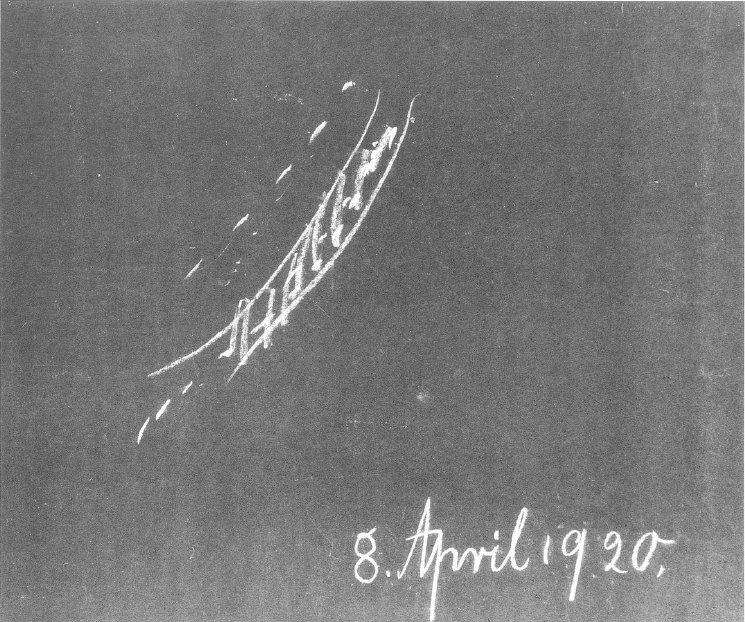
Spiritual Science and Medicine
GA 312
8 April 1920, Dornach
Translate the original German text into any language:
Versions Available:
Spiritual Science and Medicine, tr. SOL
Neunzehnter Vortrag
Nineteenth Lecture
[ 1 ] Ich werde suchen so viel wie möglich heute und morgen aufzuarbeiten. Es handelt sich ja bei einer solchen allerersten Anregung — und es ist ja eine erste Anregung, wie sie in diesem Kursus hat gegeben werden können — hauptsächlich darum, den Weg kennenzulernen im Genaueren, wie ihn die Geisteswissenschaft geben kann, den die außermenschlichen Substanzen im menschlichen Organismus nehmen, und wiederum um ihre Gegenwirkungen. Hat man nämlich eine vollständige Übersicht über die Art der Wirkung irgendeiner Substanz, dann hat man ja eine Wegleitung zur Anwendung derselben als Heilmittel, und man kann selbst urteilen. Und das ist viel besser, als wenn man Vorschriften beobachtet, dahingehend, das eine ist für das, das andere ist für jenes. Nun werde ich heute wiederum von etwas scheinbar sehr Entlegenem ausgehen müssen, um zu etwas sehr Naheliegendem zu kommen. Unter den Fragen, die gestellt worden sind, tauchte ja immer eine auf, die Sie selbstverständlich alle interessieren muß, das ist die Frage nach der Erblichkeit, nach der Vererbung. Sie spielt bei der Beurteilung sowohl des gesunden, oder wenigstens relativ gesunden, und des kranken Menschen eine außerordentlich große Rolle.
[ 1 ] I will try to catch up as much as possible today and tomorrow. After all, such an initial suggestion—and it is indeed an initial suggestion, as has been given in this course—is primarily about gaining a more precise understanding, as Spiritual Science can provide it, of the path that non-human substances take within the human organism, and, in turn, of their effects. For if one has a complete overview of the nature of a substance’s effect, then one has a guide for its application as a remedy, and one can judge for oneself. And that is much better than simply following prescriptions that say, “This is for that, and that is for this.” Now, today I will once again have to start with something that seems very remote in order to arrive at something very close at hand. Among the questions that have been asked, one has always come up that must naturally interest all of you: the question of heredity. It plays an extraordinarily important role in the assessment of both healthy—or at least relatively healthy—and sick people.
[ 2 ] Nun muß man sagen, diese Erblichkeit, diese Vererbung wird eigentlich in der gegenwärtigen materialistischen Naturwissenschaft nur sehr abstrakt studiert, sie wird durchaus nicht so studiert, daß sich für das Leben viel Praktisches daraus ergeben kann. Man findet aber gerade, wenn man im Ernste daran geht, so etwas zu studieren wie die Vererbung, daß es doch höchst merkwürdig ist — mehr für den Exoteriker, während es für den Esoteriker eine ihm anschauliche Gesetzmäßigkeit ist —, daß alles dasjenige, was dem Menschen wichtig ist über Weltzusammenhänge zu wissen, an irgendeiner Stelle ziemlich äußerlich sichtbar zur Offenbarung kommt. Irgend etwas zeigt durch eine äußere Offenbarung immer, welche verborgenen, aber im Menschen sehr wirksamen Kräfte in der Natur vorhanden sind. An diese muß man sich ganz besonders bei dem Studium der Vererbung halten. Denn auf der anderen Seite wird alles dasjenige, was mit der Vererbung zusammenhängt, fortwährend beeinträchtigt, mit Illusionen umkleidet, so daß man es nicht richtig beurteilen kann. Man kann sich einmal ein Urteil bilden über die Vererbung, dann stimmt es wiederum nicht mit anderen Erscheinungen. Das rührt eben davon her, daß gerade die Vererbungstatsachen außerordentlich stark in Illusionen gekleidet sind, und das hängt damit zusammen, daß an der Vererbung beteiligt ist in einer ganz gesetzmäßigen, aber schwer regulierbaren Weise das Männliche und das Weibliche. Gesetzmäßig ist die Sache, aber so wie das Gesetz auftritt, ist es nicht immer möglich, daß eine anschauliche Regulierung auch da ist. Die Vererbungserscheinungen sind also gesetzmäßig, aber schwer regulierbar. So wie das Waagrechthalten des Waagebalkens auf einer Gesetzmäßigkeit beruht, aber, wenn man links und rechts immer auflegt, nach der einen oder der anderen Seite ein Ausschlag kommt, ist dadurch die strenge Gesetzmäßigkeit schwer regulierbar. So ist es ungefähr auch mit den Vererbungserscheinungen. Sie haben eine ähnliche Gesetzmäßigkeit wie die, die den Waagebalken horizontal drängt. Aber diese Gesetzmäßigkeit zeigt sich in einer starken Variabilität ihres Auftretens, und das rührt davon her, weil an der Vererbung immer beteiligt sind das Männliche und das Weibliche, und zwar das Männliche und das Weibliche so, daß das Männliche in dem Vererbungsvorgang gerade immer dasjenige überträgt, was der Mensch dem irdischen Dasein verdankt, was er Erdenkräften verdankt, während der weibliche Organismus mehr darauf hin orientiert ist, dasjenige zu übertragen, was aus dem außerirdischen Kosmos kommt. Man könnte sagen: auf den Mann macht fortwährend die Erde ihre Ansprüche, sie organisiert ihn durch ihre Kräfte. Sie ist ja auch die Ursache der Entstehung der männlichen Sexualität. Auf die Frau macht fortwährend, wenn wir so sagen dürfen, der Himmel seine Ansprüche. Er bewirkt fortwährend ihre Gestaltung. Er ist es, der in allen inneren Organisationsprozessen den überwiegenden Einfluß hat. Das deutet ja wiederum zurück auf etwas, was ich schon gesagt habe. Dadurch entsteht aber das Folgende. Denken Sie sich, es entwickelt sich durch die Konzeption ein weibliches Wesen, so neigt dieses weibliche Wesen dahin, immer mehr und mehr sich einzugliedern in die außerirdischen Prozesse. Es neigt immer mehr und mehr dazu, wenn ich mich so ausdrücken darf, vom Himmel aufgenommen zu werden. Wenn sich ein männliches Wesen entwickelt, so neigt es immer mehr und mehr dazu, von der Erde in Anspruch genommen zu werden. Also es wirken tatsächlich Himmel und Erde zusammen. Denn das, was ich sage, ist nicht so, daß man es etwa wiederum interpretieren darf: auf das Weib wirkt der Himmel und auf den Mann wirkt die Erde, sondern beide wirken auf beide, und bei dem Weibe schlägt der Waagebalken nach dem Himmel aus, beim Manne schlägt der Waagebalken nach dem Irdischen aus. Es ist eine strenge Gesetzmäßigkeit; die ist aber variabel. Dadurch tritt aber eine gewisse Folge ein. Durch dasjenige, was die Frau in ihrem Organismus birgt, wird in ihr fortwährend bekämpft dasjenige, was irdisch ist. Aber das Eigentümliche besteht: es wird nur bekämpft in ihrem ihr zu eigen gehörigen Organismus, nicht in ihrem Keime, nicht in dem Samen. Also dieser Kampf des Himmels mit der Erde, der beschränkt sich beim weiblichen Organismus auf alle Organisationsprozesse, die außerhalb der Samenbildung liegen, also außerhalb der Eibildung, außerhalb desjenigen, was sich gerade in die Fortpflanzungsvorgänge eingliedert, so daß sich das Weib fortwährend den dem Fortpflanzungsprozesse eingeborenen Kräften mit seiner Organisation entzieht. Mit dem um die Fortpflanzung Herumgelagerten, da entzieht es sich fortwährend, so daß man sagen kann: Es besteht die Tendenz, durch den Mann dasjenige, was in den Fortpflanzungskräften liegt, was also vererbt werden kann, zu vererben. Bei der Frau besteht die Tendenz, sich selbst dieser Vererbung zu entziehen. Aber sie hat dafür die stärkere Vererbungstendenz in ihren eibildenden Kräften.
[ 2 ] Now, it must be said that this heredity, this process of inheritance, is actually studied only in a very abstract way in contemporary materialistic natural science; it is by no means studied in a way that could yield much of practical value for life. However, when one seriously sets out to study a subject such as heredity, one finds that it is indeed highly remarkable—more so for the exotericist, whereas for the esotericist it is a law that is vividly apparent—that everything a person needs to know about the interconnections of the world is revealed in some way that is quite outwardly visible. Something always reveals, through an external manifestation, which hidden forces—yet very potent within the human being—exist in nature. One must pay particular attention to these forces when studying heredity. For, on the other hand, everything related to heredity is constantly distorted and cloaked in illusions, so that it cannot be properly assessed. One might form a judgment about heredity, only to find that it does not align with other phenomena. This stems precisely from the fact that the facts of heredity are exceptionally heavily shrouded in illusions, and this is connected to the fact that the masculine and the feminine are involved in heredity in a completely lawful, yet difficult-to-regulate manner. The process is lawful, but given the way the law manifests, it is not always possible to achieve a clear-cut regulation in this context either. Phenomena of heredity are thus governed by laws, but are difficult to regulate. Just as keeping the balance beam level is based on a law, but when weight is placed on the left and right sides, the balance tips to one side or the other, this makes the strict law difficult to regulate. It is roughly the same with hereditary phenomena. They follow a law similar to the one that keeps the balance beam horizontal. But this law manifests itself in a high degree of variability in its occurrence, and this stems from the fact that both the masculine and the feminine are always involved in heredity, and specifically in such a way that, in the process of heredity, the male always transmits precisely that which the human being owes to earthly existence—that which he owes to earthly forces—while the female organism is more oriented toward transmitting that which comes from the extraterrestrial cosmos. One could say: the Earth continually makes its claims on the man; it organizes him through its forces. After all, it is also the cause of the emergence of male sexuality. The heavens, if we may put it that way, constantly make their demands on the woman. They continually shape her. It is the heavens that exert the predominant influence in all inner organizational processes. This, in turn, points back to something I have already said. But this gives rise to the following. Imagine that a female being develops through conception; this female being tends more and more to integrate itself into the extraterrestrial processes. It tends more and more—if I may put it that way—to be taken up by Heaven. When a male being develops, it tends more and more to be claimed by Earth. So heaven and earth do indeed interact. For what I am saying is not to be interpreted as meaning that heaven acts upon the woman and earth acts upon the man; rather, both act upon both, and in the woman the balance tilts toward heaven, while in the man the balance tilts toward the earthly. It is a strict law; yet it is variable. This, however, gives rise to a certain consequence. Because of what the woman harbors within her organism, that which is earthly is continually combated within her. But the peculiarity lies in this: it is combated only within her own organism, not in her germ, not in the seed. Thus, this struggle between heaven and earth is limited, in the female organism, to all organizational processes that lie outside of sperm formation—that is, outside of egg formation, outside of that which is directly integrated into the processes of reproduction—so that the woman continually withdraws her organism from the forces inherent in the reproductive process. With regard to everything surrounding reproduction, she continually withdraws from it, so that one can say: There is a tendency, through the man, to pass on what lies in the reproductive forces—that which can therefore be inherited. In the woman, there is a tendency to withdraw herself from this inheritance. But in return, she has a stronger tendency toward inheritance in her egg-forming powers.
[ 3 ] Man wird daher die Frage stellen können: Wie wird man in der menschlichen Gesellschaft entgegenwirken können den verheerenden Kräften der Vererbung? — Nicht wahr, daß die Vererbungskräfte nicht haltmachen vor dem sogenannten Geistigen und vor dem sogenannten Physischen, das zeigt sich ja einfach in einer Erscheinung, wie die ist, daß in Familien, in denen Geisteskrankheiten herrschen, in der Generationenfolge sehr leicht die Zuckerkrankheit auftreten kann, so daß also die Metamorphose von der einen Seite nach der andern Seite hinüberschlägt. Also es ist schon eine außerordentlich wichtige Frage: Wie entzieht man den Menschen den verheerenden Wirkungen der Vererbung? — Gegen diese gibt es kein anderes Mittel, als erstens dafür zu sorgen, daß die Frauenwelt möglichst gesund erhalten wird, denn dann wird durch die Frauenwelt der außerirdische Einfluß in unseren Erdenprozeß hereingezogen, und es wird auch das eintreten, daß fortdauernd diejenigen Prozesse, die dahin wirken, durch den Keim die Schädigungen der Vererbung zu übertragen, vom Frauenorganismus aus bekämpft werden. Also in einer Gesellschaft, in der gut darauf gesehen wird, daß die Frauen gesund sind, kämpft man gegen den schädigenden Einfluß, der von den Erdenkräften ausgeht mit Bezug auf die Vererbungsprozesse, weil man eben einen Appell richtet an die Wirksamkeit der vom Außerirdischen hereinwirkenden ausgleichenden Kräfte, die gewissermaßen ihren irdischen Akkumulator nur in der Frauenorganisation haben. Das ist etwas, was außerordentlich wichtig ist zu berücksichtigen.
[ 3 ] One might therefore ask: How can human society counteract the devastating forces of heredity? — Is it not true that the forces of heredity do not stop at what is called the “spiritual” or the “physical”? This is clearly evident in a phenomenon such as the fact that in families where mental illness is prevalent, diabetes can very easily occur across generations, so that the metamorphosis spreads from one side to the other. So this is indeed an extraordinarily important question: How can we protect people from the devastating effects of heredity? — There is no other remedy for this than, first, to ensure that the female population is kept as healthy as possible; for then, through the female population, the extraterrestrial influence is drawn into our earthly processes, and it will also come to pass that those processes which work to transmit the harmful effects of heredity through the germ will be continually counteracted by the female organism. Thus, in a society where great care is taken to ensure that women are healthy, one combats the harmful influence emanating from earthly forces with regard to hereditary processes, because one is, in effect, appealing to the efficacy of the balancing forces acting from the extraterrestrial realm, which, so to speak, have their earthly accumulator only in the female organism. This is something that is extremely important to take into account.
[ 4 ] Dasjenige, was ich jetzt gesagt habe, ist etwas, was für alle irdischen und außerirdischen Kräfte gilt, das ist etwas sehr Universelles. Aber es tritt augenscheinlich zutage dann, wenn man es zu tun hat mit Hämophilen, mit Bluter-Erkrankungen. Es muß eben darauf hingewiesen werden, daß man über die Vererbungserscheinungen nicht so im allgemeinen herumreden soll, sondern daß man da studieren soll, wo die konkreten Tatsachen handgreiflich auf die Vererbung weisen. Studieren Sie einmal diese Vererbungserscheinungen bei den Blutern. Da finden Sie eine höchst eigentümliche Erscheinung, die Ihnen ja allen bekannt ist und die nur ein äußerer Ausdruck dessen ist, was ich jetzt eben auseinandergesetzt habe: Sie finden, daß im Blut der Familie die Übertragung des Bluters nur vorkommt bei männlichen Individuen, daß sie dagegen nur übertragen wird durch die weiblichen Individuen, daß also ein Weib, das Tochter eines Bluters ist, dazu neigt, auf ihre männlichen Nachkommen die Bluterkrankheit zu übertragen, auch wenn sie sie selber gar nicht hat; sie bekommt sie ja natürlich dadurch, daß sie in der Familie ist. Dagegen werden die Männer Bluter. Wenn sie aber Frauen heiraten, die nachweislich nicht aus Bluterfamilien stammen, so wird die Bluterkrankheit nicht übertragen.
[ 4 ] What I have just said applies to all earthly and extraterrestrial forces; it is something very universal. But it becomes particularly evident when dealing with hemophiliacs and bleeding disorders. It must be pointed out that one should not speak in general terms about hereditary phenomena, but rather study cases where concrete facts clearly point to heredity. Take a look at these hereditary manifestations among people with hemophilia. There you will find a highly peculiar phenomenon, one that is familiar to all of you and which is merely an outward expression of what I have just explained: You will find that, within the family, the hemophilia trait is transmitted only to male individuals, whereas it is passed on only by female individuals; thus, a woman who is the daughter of a hemophiliac tends to pass the disease on to her male offspring, even if she herself does not have it at all—she naturally acquires it simply by being part of the family. In contrast, the men become hemophiliacs. However, if they marry women who are demonstrably not from families with hemophilia, the condition is not transmitted.
[ 5 ] Da haben Sie dasjenige, wenn Sie es analysieren, was Ihnen ein deutlicher äußerer Ausdruck dessen ist, was ich jetzt gesagt habe, und die Erscheinungen bei Hämophilen zeigen viel deutlicher als alle Versuche von Weismann, die vor kurzer Zeit gemacht worden sind, wie eigentlich die Dinge laufen in bezug auf die Vererbung. Das ist dasjenige, was man nun aber auch wichtig finden muß für eine Gesamtbeurteilung der menschlichen Organisation, und danach müssen wir ja die menschliche Organisation beurteilen, was auf sie einen Einfluß ausüben kann.
[ 5 ] There you have it—if you analyze it—a clear external manifestation of what I have just said, and the phenomena observed in hemophiliacs demonstrate much more clearly than any of Weismann’s recent experiments how things actually work with regard to heredity. This is precisely what we must now recognize as important for a comprehensive assessment of the human organism, and it is on this basis that we must evaluate the human organism—that is, what factors can influence it.
[ 6 ] Worauf beruht denn eigentlich die Bluterkrankheit? Es zeigt sich ja schließlich bei der oberflächlichen Betrachtung, worauf sie beruht. Es ist die Gerinnungsfähigkeit des Blutes nicht vorhanden, so daß also bei der geringsten Öffnung nach außen der Mensch verbluten kann, durch bloßes Nasenbluten, bei irgendeiner Zahnoperation, daß solche Dinge, die sonst einfach beim Menschen zur Gerinnung des Blutes an der Wundstelle führen, bei Blutern nicht dazu führen. Darauf beruht ja eigentlich die ganze Wirkung, auf der mangelnden Gerinnungsfähigkeit des Blutes. Es muß also das Blut etwas in sich haben, was entgegenwirkt der Gerinnungsfähigkeit, und wenn das, was es da in sich hat, zu stark wirkt, so wird es eben durch diejenigen Kräfte nicht aufgehoben, die von außen dann beginnen einzuwirken, wenn das Blut gerinnt. Wenn das Blut gerinnt, haben wir es zu tun mit Kräften, die von außen einwirken. Ist im Blute etwas, was diese Kräfte gegen sich nicht aufkommen laßt, so ist eben eine zu starke Verflüssigung des Blutes, eine zu starke Verflüssigungstendenz des Blutes vorhanden.
[ 6 ] What, then, is the actual cause of hemophilia? After all, a superficial examination reveals its cause. The blood lacks the ability to clot, so that even the slightest external wound—such as a simple nosebleed or dental surgery—can cause a person to bleed to death; things that would normally cause the blood to clot at the site of the wound simply do not result in clotting in people with hemophilia. The entire condition is actually based on this lack of the blood’s ability to clot. So the blood must contain something that counteracts its ability to clot, and if whatever it contains has too strong an effect, it is not counteracted by those forces that begin to act from the outside when the blood clots. When the blood coagulates, we are dealing with forces acting from the outside. If there is something in the blood that prevents these forces from taking effect, then there is simply excessive liquefaction of the blood, an excessive tendency of the blood to liquefy.
[ 7 ] Sie werden leicht finden, daß eine solche starke Tendenz zur Verflüssigung des Blutes zusammenhängt mit der ganzen menschlichen Ich-Bildung. Aber sie hängt nicht so ganz oberflächlich wiederum zusammen mit der menschlichen Ich-Bildung; sie hängt zusammen mit dem, was im menschlichen Ich als Wille wirksam ist, nicht mit dem, was im menschlichen Ich als Vorstellung wirksam ist. Also mit all dem, was im Menschen den Willen stärkt oder schwächt, mit all dem hängt jene Organisation zusammen, die also beim Blute die zu starke Verflüssigungsfähigkeit hervorruft. Ich möchte sagen, da hat die Geschichte einen schönen Fall hingestellt, welcher wiederum zeigt, wie man bei richtiger Interpretation auf gewisse Geheimnisse der Natur kommt. Nicht jetzt die Natur allein, sondern die Geschichte hat ja den berühmten Engadiner Fall hingestellt, der Ihnen ja bekannt sein kann, der berühmte Fall der Engadiner Jungfrauen. Jene zwei Engadiner Jungfrauen haben geradezu etwas hingestellt, welches, ich möchte sagen, gründlich aufklärend wirken kann auf die Menschenerkenntnis, wie sie die Medizin braucht. Diese Engadiner Jungfrauen stammten aus Bluterfamilien, und sie haben den starksinnigen Entschluß gefaßt, nicht zu heiraten, so daß also diese Engadiner Jungfrauen in der Geschichte dastehen als persönliche Bekämpfer des Übertragens der Bluterkranklheit.
[ 7 ] You will easily find that such a strong tendency toward blood liquefaction is connected with the entire process of human ego formation. But this connection is not merely superficial; it is connected with what acts within the human ego as will, not with what acts within the human ego as a mental image. So that organization—which causes the blood to have an excessive capacity for liquefaction—is connected to everything in the human being that strengthens or weakens the will. I would like to say that history has provided a beautiful example here, which in turn shows how, through proper interpretation, one can uncover certain mysteries of nature. It is not nature alone, but history that has presented the famous Engadin case—which you may be familiar with—the famous case of the Engadin maidens. Those two Engadin maidens have, in a sense, presented something that, I would say, can have a profoundly enlightening effect on the understanding of human nature as medicine requires it. These Engadine maidens came from families with a history of hemophilia, and they made the resolute decision not to marry, so that these Engadine maidens stand in history as personal champions against the transmission of hemophilia.
[ 8 ] Nun muß man in einem solchen Falle eben auf das Rechte hinschauen. Es ist ganz gewiß nicht die Eigentümlichkeit aller aus Bluterfamilien stammenden Mädchen, in dieser Weise sich dem Fortpflanzungstrieb zu entziehen. Dazu gehört die Ausbildung eines starken subjektiven Willens, gerade jenes starken subjektiven Willens, der im Ich wirkt, der nicht im astralischen Leib wirkt. Der muß also bei ihnen vorhanden gewesen sein. Das heißt, die Sache ist so, daß das, was diese Frauen in ihrem Ich, in ihrem Willen gehabt haben, in einer gewissen Weise zusammenhängt mit denjenigen Kräften, die in einer gewissen Weise wirksam sind gerade bei den Blutern. Wenn sie in bewußter Weise gestärkt werden, so können sie leichter gestärkt werden, als sie bei Nichtblutern gestärkt werden können. Das ist nun etwas, was, in der richtigen Weise erkannt, darauf führt, etwas in die Kräfte hineinzuschauen, die nun eigentlich dem Blute eigen sind, zu erkennen, wie da eine Wechselwirkung mit dem Außermenschlichen stattfindet. Man kann, indem man so hinschaut auf diejenigen Kräfte im Blute, die mit dem bewußten Willen zusammenhängen, finden, wie überhaupt der Zusammenhang des menschlichen Willens ist mit außermenschlichen Kräften. Nun ist ja die Sache so, daß gewisse außermenschliche Kräfte diejenige innere Verwandtschaft haben mit den menschlichen Willenskräften, welche darauf beruht, daß im Laufe der Entwickelung in dem Naturreiche ausgeschieden worden ist zuletzt dasjenige, was gerade mit dem bewußten menschlichen Willen zu tun hat, mit dem menschlichen Willen überhaupt zu tun hat. Das ist zuletzt in dem Naturreiche ausgeschieden worden.
[ 8 ] In such a case, one must simply focus on what is right. It is certainly not a characteristic of all girls from families with a history of hemophilia to withdraw from the reproductive instinct in this way. This requires the development of a strong subjective will—precisely that strong subjective will that acts within the “I,” not within the astral body. So this must have been present in them. That is to say, the situation is such that what these women possessed in their “I,” in their will, is in a certain way connected to those forces that are active in a specific way precisely among the “Bluters.” When these forces are consciously strengthened, they can be strengthened more easily than they can be in non-“Bluters.” This is something which, when properly understood, leads one to look into the forces that are actually inherent in the blood and to recognize how an interaction with the extra-human takes place there. By looking in this way at those forces in the blood that are connected to the conscious will, one can discover the nature of the connection between the human will and extra-human forces in general. Now the fact is that certain non-human forces have an inner kinship with the human forces of will, which is based on the fact that, in the course of evolution within the natural kingdom, what has to do specifically with the conscious human will—and with the human will in general—was ultimately separated out. This was ultimately separated out in the natural kingdom.
[ 9 ] Nun handelt es sich darum, so etwas zu studieren, was unter den Ausscheidungen des menschenbildenden Prozesses in der Natur draußen ist und was durch seine eigenen Qualitäten zeigt, wie es mit dem menschenbildenden Prozeß in einem Zusammenhang stehen kann. So etwas ist eigentlich in der Natur lange studiert worden, und wie es ist, ist es außerordentlich schwer zu übersehen, weil es schwer ist, die Kräfte, die die atavistische Medizin selbst noch bis ins siebzehnte, achtzehnte Jahrhundert herein bewahrt hat, wieder in dem heutigen intellektuellen Menschen regsam zu machen. Das, was da studiert worden ist, ist nämlich alles, was mit dem Antimon zusammenhängt.
[ 9 ] The task now is to study those elements found in nature that are byproducts of the human-forming process and that, through their own qualities, reveal how they may be connected to that process. Such things have actually been studied in nature for a long time, and as it stands, they are extremely difficult to overlook, because it is hard to reawaken in today’s intellectual human being the forces that atavistic medicine itself preserved well into the seventeenth and eighteenth centuries. What has been studied there is, in fact, everything related to antimony.
[ 10 ] Das Antimon ist nämlich ein höchst merkwürdiger Körper. Deshalb haben wohl diejenigen, die soviel mit dem Antimon zu tun gehabt haben, wie auch der sagenhafte Basilius Valentinus, so stark das Antimon studiert. Sie brauchen nur auf gewisse Eigenschaften des Antimons hinzuschauen, dann werden Sie, ich möchte sagen, erkennen, in welch eigentümlicher Weise das Antimon eingespannt ist in den ganzen Naturprozeß. Es ist auf eine eigentümliche Weise eingespannt in den ganzen Naturprozeß. Denken Sie einmal, daß das Antimon in den Naturprozeß so eingespannt ist, daß es erstens — das ist vielleicht noch seine geringfügigste Eigenschaft — eine außerordentliche Verwandtschaft zu anderen Metallen und anderen Körpern hat, daß es also mit diesen anderen Körpern viel zusammen erscheint, namentlich mit Schwefelverbindungen anderer Stoffe. Der Schwefel hat ja diese spezifische Wirkung in der Natur, die wir wenigstens andeutungsweise schon besprochen haben. Die Neigung, die das Antimon hat zu Schwefelverbindungen anderer Stoffe, die zeigt, wie es in den Naturprozeß eingespannt ist. Aber noch mehr zeigt eine andere Eigenschaft des Antimons, wie es in den Naturprozeß eingespannt ist. Das ist nämlich die, daß es, wo es nur in die Möglichkeit versetzt ist, in büschelförmiger Kristallisation auftritt, das heißt in die Linie strebt, weg von der Erde. Da wo das Antimon, ich möchte sagen, sich anhäuft in Linienbildung, da sieht man gewissermaßen äußerlich mit Augen die Kristallisationskräfte, die vom Außerirdischen in das Irdische hereinkommen. Denn die Kräfte, die sonst in einer größeren Regelmäßigkeit auftreten und die kristallbildend sind, die wirken in diesen spießigen und büschelförmigen Bildungen des Antimons. Da verrät geradezu die Antimonsubstanz, wie sie eingespannt ist in den ganzen Naturprozeß. Ebenso weist dasjenige, was im Saigerprozeß vor sich geht, sehr stark darauf hin, wie das Antimon geradezu der Verräter der Kristallisationskräfte ist. Durch den Saigerprozeß bekommt man ja das Antimon in einer solchen Form, dab es feinfaserig ist.
[ 10 ] Antimony is, in fact, a most remarkable substance. That is likely why those who have had so much to do with antimony—such as the legendary Basilius Valentinus—have studied it so intensively. You need only look at certain properties of antimony, and then you will, I would say, recognize the unique way in which antimony is integrated into the entire natural process. It is integrated into the entire natural process in a unique way. Consider for a moment that antimony is so integrated into the natural process that, first of all—and this is perhaps its least significant property—it has an extraordinary affinity for other metals and other substances, meaning that it frequently appears in combination with these other substances, particularly with sulfur compounds of other materials. Sulfur, after all, has this specific effect in nature, which we have already discussed, at least in part. Antimony’s tendency toward sulfur compounds of other substances shows how it is integrated into the natural process. But another property of antimony shows even more clearly how it is integrated into natural processes. Namely, wherever it is given the opportunity, it crystallizes in tuft-like formations—that is, it strives toward the line, away from the earth. Where antimony, so to speak, accumulates in linear formations, one can, as it were, see with one’s own eyes the crystallizing forces entering the earthly realm from the extraterrestrial. For the forces that otherwise occur with greater regularity and are responsible for crystallization are at work in these spiky and tuft-like formations of antimony. Here, the antimony substance itself reveals how it is embedded in the entire natural process. Likewise, what takes place in the Saiger process strongly indicates how antimony is, in a sense, the betrayer of the crystallizing forces. Through the Saiger process, one obtains antimony in a form that is fine-fibrous.
[ 11 ] Eine weitere Eigenschaft des Antimons ist dann ja diese, daß es, wenn es geglüht wird, oxydieren kann, verbrennen kann in einer gewissen Weise. Der weiße Rauch, der sich da bildet, zeigt die Eigentümlichkeit einer gewissen Verwandtschaft mit kalten Körpern, wo er sich anklebt und die berühmten Antimonblumen erzeugt — wiederum etwas, wo gewissermaßen in Anlehnung an andere Körper die Kristallisationskraft sich entlädt.
[ 11 ] Another property of antimony is that, when it is heated to incandescence, it can oxidize—it can burn, in a certain sense. The white smoke that forms there reveals a peculiar affinity with cold bodies, to which it adheres and produces the famous antimony flowers—again, something in which, so to speak, the crystallizing force discharges itself in response to other bodies.
[ 12 ] Das Allermerkwürdigste aber ist jene eigentümliche Abwehrkraft, welche das Antimon hat gegen diejenigen Kräfte, die ich ja im Laufe der Tage, in denen Sie hier sind, bezeichnet habe als gewissermaßen unterirdische Kräfte, die Kräfte, die in der Elektrizität und dem Magnetismus spielen. Wenn man durch Elektrolyse Antimon in einer gewissen Weise behandelt und es dann an die Kathode bringt und den Niederschlag des Antimons an der Kathode mit einer Metallspitze berührt, dann explodiert das Antimon, ruft kleine Explosionen hervor. Dieses Wehren des Antimons gegen das Elektrische, wenn man ihm nur etwas zu Hilfe kommt, das ist so außerordentlich bezeichnend für das Antimon. Da sehen wir wirklich hinein beim Antimon, wie ein Körper in den ganzen Naturprozeß sich hineinstellt. Andere Substanzen zeigen das nicht in einer so, ich möchte sagen, aufdringlichen Weise.
[ 12 ] But the most remarkable thing of all is that peculiar resistance antimony exhibits against those forces which, over the course of the days you have been here, I have described as, so to speak, subterranean forces—the forces at work in electricity and magnetism. If one treats antimony in a certain way through electrolysis, then brings it to the cathode, and touches the antimony deposit on the cathode with a metal tip, the antimony explodes, causing small explosions. This resistance of antimony to electricity—when one merely gives it a little assistance—is so extraordinarily characteristic of antimony. Here we truly gain insight into antimony, seeing how a substance positions itself within the entire natural process. Other substances do not exhibit this in such a—I would say—obtrusive manner.
[ 13 ] Nun kann man nur verstehen, was sich da wiederum an einem anschaulichen Fall in der Natur zeigen will, wenn man davon ausgeht, daß die Kräfte, die in der Natur vorhanden sind, überall wirken; nur, wenn Substanzen sie in besonderem Maße zeigen, so sind eben in diesen Substanzen diese Kräfte besonders konzentriert lokalisiert. Aber was im Antimon wirkt, ist eigentlich überall vorhanden. Überall wirkt, wenn ich den Ausdruck bilden darf, die antimonisierende Kraft. Diese antimonisierende Kraft ist nun dasjenige, was im Menschen auch regulierend wirkt, aber so, daß der Mensch diese antimonisierende Kraft in seinem Normalzustande vom Außerirdischen her bezieht. Gewissermaßen vom Außerirdischen her bezieht er dasjenige, was das Antimon konzentriert herstellt. In normalem Zustande wendet er sich nicht an die antimonisierende Kraft im Irdischen und das, was im Antimon konzentriert ist, sondern er wendet sich an die äußere, außerirdische Kraft des Antimons. Und da liegt es natürlich nahe, jetzt zu fragen: Was ist denn im Außerirdischen diese antimonisierende Kraft?
[ 13 ] Now, one can only understand what is being demonstrated here through a concrete example in nature if one assumes that the forces present in nature are at work everywhere; however, when substances manifest these forces to a particular degree, it is precisely in these substances that these forces are concentrated and localized. But what is at work in antimony is actually present everywhere. Everywhere, if I may coin the term, the “antimonizing force” is at work. This antimonizing force is precisely what also acts as a regulating force in human beings, but in such a way that, in their normal state, human beings derive this antimonizing force from the extraterrestrial realm. In a sense, they derive from the extraterrestrial realm that which antimony produces in concentrated form. In their normal state, they do not turn to the antimony-regulating force in the earthly realm or to what is concentrated in antimony, but rather to the external, extraterrestrial force of antimony. And so it is only natural to ask now: What, then, is this antimony-regulating force in the extraterrestrial realm?
[ 14 ] Sie ist das Zusammenwirken, planetarisch gesprochen, von Merkur, Venus und Mond. Wenn diese nicht jedes einzeln wirken, sondern zusammen wirken, dann wirken sie nicht merkurialisch, nicht silberig, nicht kupferig, dann wirken sie, wie eben in der Erde das Antimon wirkt. Das ist etwas, was ja natürlich einfach dadurch untersucht werden muß, daß man solche Konstellationen in ihrer Wirkung auf den Menschen aufsucht, wo sich die drei Kräfte, die Mondenkraft, die Merkurkraft und die Venuskraft, wo sich diese neutralisieren durch entsprechende Oppositions- und Quadrantenstellung. Wenn sie sich neutralisieren, wenn sie alle drei so zueinander wirken, daß sie sich eben neutralisieren, dann findet dieselbe Wechselwirkung statt, die mit der Antimonwirkung etwas zu tun hat, die im Antimon von der Erde in Anspruch genommen wird. In allem, was Antimon auf der Erde ist, wirkt von der Erde aus dieselbe Kraft, die von diesen drei planetarischen Körpern vom Außerirdischen aus auf die Erde wirkt.
[ 14 ] It is the interaction, in planetary terms, of Mercury, Venus, and the Moon. When these do not act individually but work together, they do not act in a Mercurial, silvery, or coppery way; rather, they act just as antimony does within the Earth. This is something that, of course, must simply be investigated by examining such constellations in their effect on human beings—where the three forces, the lunar force, the Mercurial force, and the Venusian force, neutralize one another through corresponding opposition and quadrant positions. When they neutralize one another—when all three interact in such a way that they cancel each other out—then the same interaction takes place that is related to the effect of antimony, which is drawn upon by the Earth from antimony. In everything that is antimony on Earth, the same force acts from the Earth as that which acts upon the Earth from these three planetary bodies, from the outer space.
[ 15 ] Da komme ich auf etwas, was ich doch erwähnen muß. Nämlich bei der Erdenkonstitution ist es so, daß man eigentlich unrichtig redet, wenn man bei so etwas wie dem Antimon von dem einzelnen Stück bloß redet. Es ist alles Antimon in der Erdenorganisation eine Einheit, wie alles Silber und alles Gold der Erde eine Einheit ist. Es kommt gar nicht so sehr auf das einzelne Stück an. Wenn Sie das einzelne Stück Antimon aus der Erde wegnehmen, so wühlen Sie einfach in dem Gesamtantimonleib der Erde, der ihr eingegliedert ist. Also das gehört dazu zu dem gesamten Antimonleib. Da haben wir also geschildert auf der einen Seite alles dasjenige, was gewissermaßen durch die Antimonwirkung anschaulich wird. Allem Wirken stehen nun in der Natur Gegenwirkungen gegenüber. Gerade durch das Hin- und Herpendeln von Wirkung und Gegenwirkung entstehen immer die gestalteten Körper.
[ 15 ] This brings me to something I really must mention. Namely, when it comes to the constitution of the Earth, it is actually incorrect to speak only of an individual piece of antimony. All antimony in the Earth’s organization forms a single unity, just as all the silver and all the gold on Earth form a single unity. The individual piece is not really what matters. When you remove a single piece of antimony from the earth, you are simply digging into the earth’s entire antimony body, which is integrated into it. So that is part of the entire antimony body. We have thus described, on the one hand, everything that becomes manifest, so to speak, through the action of antimony. Every action in nature is counteracted by a reaction. It is precisely through the back-and-forth oscillation of action and reaction that formed bodies always come into being.
[ 16 ] Nun sehen Sie, diese gegenwirkenden Kräfte müssen wir nun aufsuchen. Diese gegenwirkenden Kräfte zeigen sich uns dann, wenn wir erkennen können, durchschauen können, daß ja die Antimonkräfte in dem Augenblick auf den Menschen wirken, wo irgend etwas, was eigentlich im Innern des Menschen geregelt ist, nach außen drängt. Diese Antimonkräfte sind es nämlich gerade, die in der Gerinnung des Blutes wirken. Da drinnen wirkt das Antimonisierende. Überall wo das Blut in seinem Bestande, in seiner Strömung die Tendenz zum Gerinnen zeigt, da ist antimonisierende Kraft. Überall da, wo das Blut sich entziehen will dieser gerinnenden Kraft, da sind die Gegenwirkungen da. So daß wir da, wo uns die Bluter entgegentreten, kurioserweise finden die antiantimonisierenden Kräfte. Da haben Sie die anti-antimonisierenden Kräfte. Diese anti-antimonisierenden Kräfte sind aber identisch mit dem, was ich nennen möchte — wenn ich das Wort bilden darf — die albuminisierenden Kräfte, die eiweißstoffbildenden Kräfte, die so organisierend wirken, daß sie die Bildung des Eiweißes fördern. Denn wiederum dasjenige, was das Blut am Gerinnen verhindert, sind die eiweißbildenden Kräfte.
[ 16 ] Now you see, we must seek out these counteracting forces. These counteracting forces reveal themselves to us when we can recognize—when we can see through the fact—that the antimony forces act upon a person at the very moment when something that is actually regulated within the person pushes outward. For it is precisely these antimony forces that are at work in the coagulation of the blood. The antimonizing force is at work there within. Wherever the blood shows a tendency to clot in its composition or flow, there is an antimoniating force. Wherever the blood seeks to resist this clotting force, there are counteracting forces at work. So, curiously enough, where we encounter blood clots, we find the anti-antimoniating forces. There you have the anti-antimonizing forces. These anti-antimonizing forces, however, are identical to what I would like to call—if I may coin the term—the albuminizing forces, the protein-forming forces, which act in such an organizing way that they promote the formation of protein. For, once again, what prevents the blood from clotting are the protein-forming forces.
[ 17 ] Auf diese Weise kommen wir zu einer Erkenntnis der Beziehungen des Antimonisierenden und des Albuminisierenden im menschlichen Organismus. Ich muß schon sagen, ich glaube, wenn man dieses Wechselspiel des Antimonisierenden und des Albuminisierenden studieren würde, dann würde man gründliche Erkenntnisse im Erkrankungs- und Heilungsprozesse gewinnen. Denn was sind albuminisierende Prozesse? Es sind diejenigen Prozesse, durch welche alles Plastische, alles Gestaltende in der Natur dem menschlichen und auch dem tierischen Organismus für seine Substanzbildung einverleibt wird. Die antimonisierenden Kräfte sind diejenigen, welche gewissermaßen von außen hereinwirkend die plastischen Künstler sind, die der organbildenden Substanz die Form geben. So haben zu den inneren organisierenden Kräften der Organe die Antimonkräfte eine gewisse Beziehung.
[ 17 ] In this way, we gain an understanding of the relationship between the antimonizing and albuminizing forces in the human organism. I must say, I believe that if one were to study this interplay between the antimonizing and albuminizing forces, one would gain profound insights into the processes of disease and healing. For what are albuminizing processes? They are the processes through which everything plastic, everything formative in nature, is incorporated into the human and also the animal organism for the formation of its substance. The antimonizing forces are those which, acting from the outside, so to speak, are the plastic artists who give form to the organ-forming substance. Thus, the antimonizing forces have a certain relationship to the internal organizing forces of the organs.
[ 18 ] Also, bitte, unterscheiden Sie jetzt die beiden Prozesse — das ist eine wichtige Unterscheidung — bei einem Organ, ich will sagen etwa bei der Speiseröhre. Diese ist ja innerlich organisiert. Sie können gewissermaßen ihre innere Struktur verfolgen, ohne daß Sie zunächst eine Rücksicht darauf nehmen, was für ein Vorgang sich abspielt, wie längs der Speiseröhre der Speisebrei verläuft und so weiter. Dann kommt die Speiseröhre und wirkt zusammen mit dem, was in den menschlichen Organismus hereinkommt. Man kann also trennen im Abstrakten die inneren Vorgänge im Organ und dasjenige, was im Organ geschieht, wenn es zusammenarbeitet mit dem, was dem Menschen von außen zugeführt wird. Das sind zwei verschiedene Prozesse. Da drinnen im Organ selber, da wirkt die antimonisierende Kraft im Menschen. Der Mensch ist eigentlich Antimon, wenn man sich herausdenkt alles dasjenige, was in ihn von außen eingeführt wird. Er ist selbst Antimon. Es handelt sich darum, daß man nicht überladen darf die innere organ bildende Kraft im normalen Lebensprozesse mit dieser antimonbildenden Kraft. Man darf diese im normalen Lebensprozesse nicht zuführen, sonst vergiftet man den Organismus, man regt ihn zu stark an. Aber wenn es nötig ist, ihn stärker anzuregen, dann muß man ihm das zuführen, was man ihm normal nicht zuführen darf. Hier kommen Sie zu der Antimonwirkung, die gerade durch die geschilderten Eigentümlichkeiten des Antimons eine spezifisch verschiedene ist, ob Sie das Antimon von außen anwenden oder ob Sie es von innen anwenden. Wenn Sie es von innen anwenden, so müssen Sie versuchen, das Antimon in einer so großen Verdünnung zu bekommen, daß Sie es hineinkriegen in den oberen Menschen. Wenn Sie es hineinkriegen in den oberen Menschen, dann wird das Antimon außerordentlich anregend wirken auf gestörte Organbildungen, innere Organprozesse. Es wird daher schon bei gewissen Formen der Typhusbildung fein potenziertes Antimon eine große Rolle spielen können.
[ 18 ] So, please, distinguish between the two processes—this is an important distinction—in an organ; let’s say, for example, the esophagus. It is, after all, internally organized. You can, so to speak, trace its internal structure without initially taking into account what kind of process is taking place—how the chyme travels along the esophagus and so on. Then the esophagus comes into play and interacts with what enters the human organism. So, in the abstract, one can distinguish between the internal processes within the organ and what happens in the organ when it interacts with what is supplied to the human being from the outside. These are two different processes. Inside the organ itself, the antimony-forming force in the human being is at work. The human being is, in fact, antimony, if one thinks through everything that is introduced into him from the outside. He is antimony himself. The point is that one must not overload the inner organ-forming force in the normal life process with this antimony-forming force. One must not introduce this into the normal life process; otherwise, one poisons the organism and stimulates it too strongly. But when it is necessary to stimulate it more strongly, then one must supply it with what one normally must not supply. This brings us to the effect of antimony, which—precisely because of the characteristics of antimony described above—is specifically different depending on whether you administer it externally or internally. If you administer it internally, you must try to obtain antimony in such a high dilution that you can introduce it into the upper human being. If you can get it into the upper human being, then antimony will have an extraordinarily stimulating effect on disturbed organ formations and internal organ processes. Therefore, in certain forms of typhoid fever, finely potentized antimony can play a major role.
[ 19 ] Dagegen ist die Wirkung etwas anders und wird erreicht, wenn man das Antimon in weniger hoher Potenzierung nimmt, wenn es äußerlich geschieht durch Salben und dergleichen. Natürlich kann es sich da auch herausstellen, daß man auch für das Äußere unter Umständen an die Kraft des verfeinerten Antimons appellieren muß. Aber im wesentlichen wird die Wirkung von außen dadurch herbeigeführt werden, daß man die niederen Potenzierungen im allgemeinen nimmt.
[ 19 ] In contrast, the effect is somewhat different and is achieved when antimony is taken in a lower potency, particularly when applied externally via ointments and the like. Of course, it may also turn out that, under certain circumstances, one must rely on the power of refined antimony for external use as well. But essentially, the external effect will be brought about by generally using the lower potencies.
[ 20 ] Sie sehen daraus, daß ein solches Heilmittel, das zu gleicher Zeit ein wirklich außerordentlich brauchbares Heilmittel ist, sich hineinstellt in das, was ich gesagt habe, in diesen gesetzmäßigen Gang, der aber zu gleicher Zeit immerfort seine Schwingungen zeigt. Und man wird sich daher daran halten müssen, daß man innerlich Antimon vorzugsweise dann anwendet, wenn man es mit sehr willensstarken Menschen zu tun hat, und daß man äußerlich Antimon anwendet, wenn man es mit mehr willensschwachen Menschen zu tun hat. Nach dieser Weise muß man schon spezialisieren. Sie sehen daraus, daß man im Antimon innerhalb des mineralischen Reiches etwas gegeben hat, was eine innere Verwandtschaft mit dem menschlichen Willen hat insofern, als der menschliche Wille, je bewußter er ist, desto mehr sich veranlaßt fühlt, die Gegenwirkung gegen die Wirkung des Antimons hervorzubringen. Der menschliche Wille wirkt zerstörend auf alle diejenigen Kräfte, die ich Ihnen vorhin geschildert habe und die das eigentümliche Verhalten des Antimons bilden. Während alles das, was im Menschen organisierend wirkt, unter dem Einfluß der Gedankenkräfte, aber namentlich der unbewußten Gedankenkräfte, der Gedankenkräfte auch, die im Kinde zum Beispiel noch unbewußt wirken, eigentlich unterstützt wird durch die Antimonkräfte, mit dem wirken die Antimonkräfte zusammen. So daß, wenn ich das Antimon in den menschlichen Organismus in einer beliebigen Weise hineinbringe und es zunächst stark durch seine eigenen Eigenschaften wirken kann, es ein starkes Phantom im Menschen bildet. Es werden gleich die inneren Organkräfte angeregt, und es bleibt nichts mehr übrig für diese Arbeit zusammen mit dem in den menschlichen Organismus Eingefügten: Brechen, Durchfall — was darauf beruht, daß die Wirkung zurückgeht auf die Organe und sich nicht erstreckt auf die Nachbarschaft der Organe. Auch mit der Gegenwirkung zeigt sich das.
[ 20 ] You can see from this that such a remedy—which is, at the same time, a truly extraordinarily useful remedy—fits into what I have said, into this lawful course, which, however, constantly exhibits its fluctuations. And one will therefore have to adhere to the principle that antimony is used internally, preferably when dealing with people of very strong will, and that it is used externally when dealing with people of weaker will. One must specialize in this way. You can see from this that antimony, within the mineral kingdom, possesses something that has an inner kinship with the human will, insofar as the human will—the more conscious it is—feels all the more compelled to produce a counteraction to the effect of antimony. The human will has a destructive effect on all those forces I described to you earlier, which constitute the distinctive behavior of antimony. Whereas everything that has an organizing effect in the human being—under the influence of the powers of thought, but especially the unconscious powers of thought, including those that, for example, still act unconsciously in a child—is actually supported by the forces of antimony; the forces of antimony work in conjunction with these. So that when I introduce antimony into the human organism in any way and it is initially able to exert a strong effect through its own properties, it creates a powerful phantom within the human being. The inner organ forces are immediately stimulated, and nothing remains for this work in conjunction with what has been introduced into the human organism: vomiting, diarrhea—which is due to the fact that the effect is directed back toward the organs and does not extend to the areas surrounding the organs. This is also evident in the counteraction.
[ 21 ] Sie können ja, wenn Sie gerade günstig dazu organisiert sind, mit demjenigen Mittel die schädliche Wirkung des Antimons bekämpfen, das sonst auch diejenigen Menschen aus einem gewissen Instinkt heraus bei sich gerne anwenden, denen durch irgend etwas die geregelte Unterhaltung aller ihrer Zirkulations-, ihrer rhythmischen Prozesse sympathisch sein muß. Auf diese rhythmischen Prozesse wirkt ausgleichend der Kaffeegenuß — ich schildere nur die Tatsachen, ich will selbstverständlich nichts anempfehlen, denn es kann ja in einer anderen Beziehung sehr schädlich sein, wenn man dem Ich selber die Regulierung dieser rhythmischen Prozesse abnimmt, aber ich will davon nicht sprechen, ich will nur über die Tatsache sprechen. Der Kaffeegenuß bringt rhythmische Prozesse, wenn der Mensch seelisch nicht stark genug ist, sie zu regulieren, in eine gewisse Regulierung hinein. Daher bei den Vergiftungsprozessen durch das Antimon der Kaffee ein gewisses Gegenmittel ist, weil er den Rhythmus wiederum herstellt zwischen der inneren organischen Wirkung und dem, was äußerlich liegt. Das wird auch unterhalten durch einen bestimmten Rhythmus. Kaffee trinken wir eigentlich aus dem Grunde, damit eine fortwährende Rhythmisierung zustande kommt zwischen unseren inneren Organen und zwischen dem, was also in der Nachbarschaft der Organe geschieht mit den aufgenommenen Nahrungsmitteln.
[ 21 ] If you happen to be in a position to do so, you can counteract the harmful effects of antimony using the very remedy that people—driven by a certain instinct—tend to use themselves, particularly those for whom the regular functioning of all their circulatory and rhythmic processes must be of particular importance. Coffee consumption has a balancing effect on these rhythmic processes—I am merely describing the facts; I certainly do not intend to make any recommendations, for it can, in another respect, be very harmful to relieve the ego itself of the task of regulating these rhythmic processes, but I do not wish to speak of that; I wish only to speak of the fact. Coffee consumption brings rhythmic processes—when a person is not mentally strong enough to regulate them—into a certain state of regulation. This is why coffee serves as a certain antidote in cases of antimony poisoning, because it restores the rhythm between the internal organic processes and what occurs externally. This is also sustained by a specific rhythm. We actually drink coffee so that a continuous rhythmic balance is established between our internal organs and what happens in the vicinity of the organs with the food we have consumed.
[ 22 ] Das alles führt uns wiederum dazu, auf etwas anderes das Augenmerk hinzulenken, nämlich auf die albuminisierenden Prozesse. Diese werden verstärkt, das heißt alle diejenigen Prozesse werden verstärkt, die nun auf der anderen Seite liegen, auf der Seite, wo die Organe nicht ihre eigene innere Organisationskraft haben, sondern wo verdaut wird durch die äußere Wirkung der Organe, also alles das, was mechanisch in der Bewegung der Gedärme geschieht und was auch sonst geschieht in der Verdauung, das steht wiederum in inniger Wechselwirkung eben mit den albuminisierenden Kräften, den Kräften, die sich wenden an dasjenige, was zu gleicher Zeit die eiweißbildenden Kräfte eben sind, also die entgegengesetzten Kräfte der antimonisierenden Kräfte.
[ 22 ] All of this, in turn, leads us to focus our attention on something else, namely the albuminizing processes. These are intensified—that is, all those processes are intensified that now lie on the other side, the side where the organs do not possess their own inner organizing power, but where digestion occurs through the external action of the organs, that is, everything that occurs mechanically in the movement of the intestines and everything else that takes place in digestion is, in turn, in close interaction with the albuminizing forces—the forces that act upon what are, at the same time, the protein-forming forces, that is, the forces opposite to the antimonizing forces.
[ 23 ] Nun muß ich noch einmal auf etwas hinweisen, auf das ich schon hingewiesen habe. Ein sehr lehrreiches Objekt, meinetwillen auch Subjekt, ist die Auster mit ihrer Schalenbildung. In einem eben geringen Maße ist dasselbe schon vorhanden bei den Kalkabsonderungen der Eier, der Schalbildung der Eier. Was liegt denn da eigentlich zugrunde? Was ist denn das, eine Schale wie die Austernschale oder wie die gewöhnliche Schale der Eier? Das ist ein Produkt, dessen sich die Eisubstanz oder die Auster entledigen muß, das sie nach außen befördern muß, und zwar aus dem Grunde, weil, wenn sie es in sich behalten würde, sie dadurch getötet werden würde. Es beruht einfach diese Schalbildung darauf, die Lebenstätigkeit zu erhalten. Wenn man also Austern ißt, dann ißt man mit — ich darf ja wohl zu Ihnen das so aussprechen, ich müßte natürlich, wenn man, um der heutigen Wissenschaft zu gefallen, sprechen wollte, es in etwas gewähltere Formen kleiden — denjenigen Lebensprozeß, der in der Auster sich gerade in der Schalbildung nach außen zeigt. Diesen Lebensprozeß ißt man mit. Man ißt also mit einen albuminisierenden Prozeß, einen Prozeß, der dem Antimonisierenden entgegengesetzt ist; den ißt man mit. Damit fördert man all das im Menschen, was zu typhösen Erscheinungen hinführt. Es ist dieses Austernessen ein außerordentlich interessanter Vorgang. Dieses Austernessen, das fördert die Gestaltungskraft, die albuminisierende Kraft im menschlichen Unterleibe. Dadurch aber entlastet es, zieht gewisse Kräfte weg vom Kopfe, und der Mensch fühlt sich dann subjektiv, wenn er Austern gegessen hat, nicht so beschwert von den Kräften, die in seinem Kopfe arbeiten wollen. Er macht in einer gewissen Weise den Kopf leer. Wir müssen ja diese albuminisierenden Kräfte fortwährend entwickeln, weil wir den Kopf nicht so beladen lassen können mit gestaltenbildenden Kräften. Aber der Austernesser übertreibt das, er strebt mit aller Leidenschaftlichkeit nach einem leeren Kopfe. Daher vergrößert er auch die Möglichkeit des Durchbruches gewisser Kräfte nach den Uhnterleibsorganen, die ich gestern charakterisiert habe, fördert also die Neigung zum Typhus. Und daher können Sie denken, wie wiederum mit dieser Neigung, wenn sie da ist, die Antimonbehandlung herausgefordert wird. Man würde daher gute Resultate erzielen, wenn man dasjenige, was da hervorgerufen werden muß, um die Neigung zum Typhus innerlichst zu bekämpfen, dadurch erreichen würde, daß man eine gleichzeitige Innen- und Außenbehandlung mit Antimon einführen würde, vor allen Dingen Einreibungen mit Antimonsalben und zu gleicher Zeit hochpotenziertes Antimon im Innern. Das würde wiederum regulierend zurückwirken, weil es gegenseitig sich regulieren würde auf die Typhusneigung.
[ 23 ] Now I must once again point out something I have already mentioned. A very instructive object—or, if you will, subject—is the oyster and the formation of its shell. To a much lesser extent, the same process is already present in the calcium secretions of eggs and the formation of eggshells. What, then, is the underlying principle here? What exactly is a shell like that of an oyster or the ordinary eggshell? It is a product that the egg substance—or the oyster—must rid itself of, must expel outward, for the simple reason that if it were to retain it within itself, it would be killed as a result. This shell formation is based simply on the need to sustain life. So when you eat oysters, you are eating—I hope you’ll allow me to put it this way; of course, if one wanted to speak in a manner pleasing to modern science, one would have to phrase it in somewhat more refined terms—that very life process which manifests itself outwardly in the oyster precisely through the formation of the shell. You are eating this life process along with the oyster. So one consumes an albuminizing process—a process that is the opposite of the antimonizing one; that is what one consumes. In doing so, one promotes within the human being everything that leads to typhoid-like symptoms. Eating oysters is an extraordinarily interesting process. Eating oysters promotes the formative power, the albuminizing power, in the human abdomen. As a result, however, it relieves pressure, drawing certain forces away from the head, and after eating oysters, a person subjectively feels less burdened by the forces that seek to work within their head. In a certain sense, they clear their head. We must, after all, continually develop these albuminizing forces, because we cannot allow the head to become so overloaded with formative forces. But the oyster-eater takes this too far; he strives with all his passion for an empty head. Consequently, he also increases the likelihood of certain forces breaking through to the lower abdominal organs—which I described yesterday—and thus promotes a predisposition to typhoid fever. And so you can imagine how, in turn, this predisposition, once it exists, calls for treatment with antimony. One would therefore achieve good results if one were to bring about what is necessary to combat the predisposition to typhoid from within by introducing simultaneous internal and external treatment with antimony—above all, rubs with antimony ointments and, at the same time, highly potentized antimony taken internally. This, in turn, would have a regulating effect, as it would mutually regulate the predisposition to typhoid.
[ 24 ] Sie sehen, wie man da versucht, den Menschen immerfort in seine ganze universelle Umgebung hineinzustellen. Die Bedeutung von dem zeigt sich dann, wenn Sie die Beziehung des Menschen untersuchen zu so etwas in der Natur, was dadurch entsteht, daß es sich in einer gewissen Weise wehrt gegen die unmittelbaren Erdenkräfte. Pflanzen können sich wehren gegen die unmittelbaren Erdenkräfte. Dann sparen sie viel auf von ihren Bildungskräften für die Zeit, in der es zur Blüten- und Samenbildung kommt. Unsere gewöhnliche Pflanzenbildung, die den eßbaren Pflanzen zugrunde liegt, die beruht ja gerade darauf, daß eine ganz bestimmte Summe von Erdkräften zur Bildung der Pflanze verwendet wird. Wehrt sich die Pflanze gegen diese Erdkräfte, dann ist sie ausgesetzt den außerirdischen Kräften, wenn es zum letzten Abschlusse der Samenbildung, der Fruchtbildung kommt, und dann wird sie zu einer solchen Pflanze, die eigentlich möchte in die Welt so hinausschauen, wie die höheren, über dem Pflanzenreich liegenden Wesen in die Welt hinausschauen. Dann zeigt sie die Begierde zum Wahrnehmen. Nur hat sie keine Organisation dafür, wahrzunehmen, sie ist Pflanze geblieben und will entwickeln so etwas, wie es im menschlichen Auge liegt. Aber sie kann kein Auge entwickeln, weil sie eben einen Pflanzenkörper, nicht einen Menschen- oder Tierkörper hat. Deshalb wird sie eine Tollkirsche, wird eine Atropa Belladonna. Ich versuchte, Ihnen etwas anschaulich und bildlich diesen Prozeß zu schildern, der da beim Tollkirschenwerden vor sich geht. Sie wird eine Tollkirsche, und sie wird, indem sie zu einer Tollkirsche wird, indem aber schon in ihren Wurzeln diese Kräfte darinnen liegen, die sie dann zuletzt zu der schwarzen Beerenbildung bringen, verwandt mit all dem, was gerade im menschlichen Organismus so wirkt, daß es nach der Gestaltenbildung treibt, daß es nach dem treibt, was eigentlich nur in der Sphäre der Sinne vor sich gehen kann, daß es also den Menschen heraushebt aus der Sphäre seiner Organisation in die Sphäre seiner Sinne. Der Prozeß, der vor sich geht beim Aufnehmen kleiner potenzierter Quantitäten von Tollkirsche, der ist außerordentlich interessant, denn er ist furchtbar ähnlich dem Prozeß des Aufwachens, das mit Träumen durchmischt ist. Da geht gewissermaßen normalisiert dieser Prozeß vor sich. Beim Aufwachen, wenn man gerade noch nicht sinnlich wahrnimmt, sondern wenn die sinnliche Wahrnehmung noch innerlich disponiert ist zum Durchsetztsein des Bewußtseins mit Träumen, da ist eigentlich immer so eine Art Tollkirschenwirkung im Menschen. Und die Vergiftungen durch die Tollkirsche beruhen darauf, daß derselbe Prozeß, der sonst im Menschen verrichtet wird beim Aufwachen, wenn das Aufwachen von Träumen durchsetzt ist, im Menschen hervorgerufen wird durch das Tollkirschengift, aber dauernd gemacht wird, nicht vom Bewußtsein wiederum übernommen wird, sondern diese Übergangserscheinungen bleibend werden. Das ist das Interessante, daß man sieht: Die Prozesse, die auch durch die Vergiftungserscheinungen hervorgerufen werden, sind so, daß, wenn sie mit dem richtigen Zeitmaß im Menschen hervorgerufen werden, sie dann zu der ganzen menschlichen Organisation dazugehören.
[ 24 ] You can see how there is a constant effort to place human beings within their entire universal environment. The significance of this becomes apparent when you examine the relationship between human beings and those aspects of nature that arise because they resist the immediate forces of the Earth in a certain way. Plants can resist the direct forces of the earth. In doing so, they conserve much of their formative energy for the time when flowering and seed formation occur. Our ordinary plant growth—which underlies edible plants—is based precisely on the fact that a very specific amount of earthly forces is used for the plant’s formation. If the plant resists these earthly forces, it is then exposed to the extraterrestrial forces when the final stage of seed formation—fruit formation—occurs, and it becomes a plant that would actually like to look out into the world in the same way that the higher beings, who stand above the plant kingdom, look out into the world. Then it displays a desire to perceive. But it lacks the organization to do so; it has remained a plant and seeks to develop something akin to what lies within the human eye. Yet it cannot develop an eye, precisely because it possesses a plant body, not a human or animal body. That is why it becomes a belladonna, an Atropa belladonna. I have tried to describe to you, in a vivid and figurative way, this process that takes place as it becomes a belladonna. It becomes a belladonna, and in becoming a belladonna—yet with these forces already lying within its roots, which ultimately lead to the formation of the black berries— is akin to everything that acts within the human organism in such a way that it drives toward the formation of shapes, that it drives toward what can actually only take place in the sphere of the senses—that is, it lifts the human being out of the sphere of his organization into the sphere of his senses. The process that takes place when ingesting small, potentized quantities of belladonna is extraordinarily interesting, for it is strikingly similar to the process of waking up, which is interwoven with dreams. In a sense, this process occurs in a normalized form. Upon waking, when one is not yet perceiving through the senses but when sensory perception is still internally predisposed to the intermingling of consciousness with dreams, there is actually always a kind of belladonna effect in the human being. And belladonna poisoning is based on the fact that the same process that normally takes place in a person upon waking—when waking is interwoven with dreams—is induced in the person by the belladonna toxin, but it is sustained continuously; it is not taken over again by consciousness, but rather these transitional phenomena become permanent. This is what is interesting: one sees that the processes, which are also brought about by the symptoms of poisoning, are such that, when they are induced in a person at the right time, they then become part of the entire human organism.
[ 25 ] Wie ich vorhin charakterisiert habe: das Tollkirschenwerden ist ein tolles Hinstreben zum Menschenwerden. So könnte man sagen: Das Aufwachen des Menschen hat etwas in sich vom Tollkirschenwerden, es ist nur ein abgemildertes Tollkirschenwerden, ein Maßhalten des Tollkirschenwerdens, ein solches, das sich eben auf den Moment des Aufwachens beschränkt. Wollen Sie daher den Körper entlasten von den inneren Albuminisierungsprozessen, wollen Sie ihn so beeinflussen, daß Sie die zu stark wirkenden Albuminisierungsprozesse zurücknehmen, gewissermaßen das Körperliche in das Seelische ableiten, so daß dasjenige, was sonst in den körperlichen Substanzen wirkt, als Halluzinationen wirkt, dann geben Sie potenziert Belladonna. Da legen Sie etwas in die Seele hinein, wovon Sie den Körper entlasten wollen. Das ist dasjenige, was nun ja auch wiederum, allerdings verwirrend und mit Illusionen eben durchdrungen — wie ich am Anfange des Vortrages sagte —, bei der gewöhnlichen makroskopischen Wirkung der Belladonna einem entgegentritt. Natürlich, wenn Sie den Menschen stoßen, daß er nicht aus dem Aufwachezustand in den Wachzustand übergeht, sondern beim Aufwachezustand bleibt, töten Sie ihn gerade. Der Mensch ist immer in Lebensgefahr, wenn er aufwacht. Nur wacht er so schnell auf, daß er diese Lebensgefahr überwindet. Das sind die interessanten Zusammenhänge zwischen demjenigen, was sozusagen normal ist, aber auf das richtige Maß zurückgeführt ist, und was in dem Augenblicke, wenn es über das richtige Mal3 hinausgeführt wird, antinormal ist.
[ 25 ] As I described earlier: becoming mad is a mad striving toward becoming human. One could say, then, that human awakening has something of becoming belladonna about it; it is merely a tempered form of becoming belladonna, a moderation of that process—one that is limited precisely to the moment of awakening. If, therefore, you wish to relieve the body of its internal albuminization processes—if you wish to influence it in such a way as to counteract the overly active albuminization processes, to channel the physical into the spiritual, so that what otherwise acts within the bodily substances manifests as hallucinations—then you administer potentized Belladonna. In doing so, you place something into the soul from which you wish to relieve the body. This is precisely what one encounters—albeit in a confusing manner and permeated with illusions, as I mentioned at the beginning of the lecture—in the ordinary macroscopic effects of Belladonna. Of course, if you cause a person not to transition from the waking state to the alert state, but to remain in the waking state, you will kill him outright. A person is always in mortal danger when he wakes up. But they wake up so quickly that they overcome this mortal danger. These are the interesting connections between what is, so to speak, normal—but reduced to the proper measure—and what becomes anti-normal the moment it is taken beyond the proper limit.³
[ 26 ] Das sind die Prozesse, die, wie mir scheint, die alten Ärzte immer wieder und wiederum zu verfolgen suchten. Und wenn die alten Ärzte sprachen von der Erzeugung des Homunkulus, so ist das im Grunde genommen so, daß sie in ihrem noch vorhandenen Hellsehen so etwas schauen konnten, wie es das Phantom des Antimons ist. Da erschien ihnen in dem Bildeprozeß, den sie äußerlich in ihrem Laboratorium vollführten, während das Antimon seine Kräfte entfaltete, hineinprojiziert aus ihrem eigenen Wesen dasjenige, was diese Antimonkräfte als albuminisierende Kräfte bekämpft. Das erschien ihnen gerade als eine Kraft. Dasjenige, was sonst zurückbleibt im menschlichen Organismus, das projizierten sie hinaus, und da sahen sie den Homunkulus, der da erschien, während sich der Prozeß abspielte, in welchem das Antimon seine verschiedenen Formen annimmt. Was da in diesem Abspielungsprozesse erscheint, das sahen sie als den Homunkulus.
[ 26 ] These are the processes that, it seems to me, the ancient physicians sought to pursue time and again. And when the ancient physicians spoke of the creation of the homunculus, what they were essentially doing was using their remaining clairvoyance to perceive something akin to the phantom of antimony. In the process of visualization they carried out externally in their laboratory—while antimony was unfolding its powers—what emerged, projected from their own being, was that which counteracts these antimony forces as albuminizing forces. This appeared to them precisely as a force. They projected outward that which normally remains within the human organism, and there they saw the homunculus that appeared as the process unfolded in which antimony assumes its various forms. What appeared in this unfolding process, they saw as the homunculus.