

Physiological Therapeutics
based on Spiritual Science
GA 314
8 October 1920, Dornach
Translated by Steiner Online Library
Physiological Therapy Based on the Spiritual Science II
[ 1 ] I would like to pick up where I left off yesterday at the end of these reflections. The point was that reference was made to a figure who, driven, as it were, by his philosophical instincts, moved from an understanding of the spiritual-soul aspect to a sense of the connection between this spiritual-soul aspect and the physical-bodily existence of the human being. I am referring to Schelling, and I said that, driven by these instincts, Schelling was active not only in theoretical medicine but also in all kinds of practical therapeutic treatments. I do not know whether this was done with greater or lesser satisfaction than is the case with some well-trained physicians. For this question—to what extent a healing process contributes to a person’s recovery—is, in most cases, a very problematic one anyway, unless one looks at it from an inner perspective. But Schelling, drawing from this entire state of mind—from which this instinct arose in him—derived a principle of which one can certainly say that it would be good if it became a kind of inner principle for every physician, such that the physician would, so to speak, base his entire practical understanding of the nature of the healthy and sick human being on this principle. And I have just quoted Schelling’s own words. They are a kind of audacity. He simply said: To know nature is to create nature. — Well, isn’t it true that the very first thing that must strike one when a person of genius makes such a statement is the utterly obvious absurdity of that statement? For no one would seriously presume that, as an earthly human being in a physical body, they are capable of creating anything from nature through the act of recognizing nature. Of course, creation takes place constantly in technology, but there it is not a matter of truly creating something in the sense that Schelling means, but rather of giving nature the opportunity—through a combination or composition of natural forces—to create in its own way, through a specific arrangement, and so on. So, fundamentally, we are dealing with an absurdity that a genius actually lays at the foundation of his entire thinking. And yesterday I cited another statement that can be set against the one: “To know nature is to create nature”—and which would then read: “To know the spirit is to destroy the spirit.”—Schelling probably did not express this latter statement in such a fundamental way. But anyone who, in more recent times, approaches Spiritual Science anew and develops their own spiritual research will see that, fundamentally, both statements point back to ancient sources of insight. Certainly, Schelling—who was not an initiate in any sense, but simply a genius—coined that one statement out of his instincts. This one proposition immediately reminds one—when engaging in studies that were not undertaken in Schelling’s time—that it resonates with ancient wisdom. Then one is led to the other proposition, which similarly resonates with ancient wisdom. Neither of these statements can be understood in any way through the ordinary intellectual understanding we apply in our sciences today. Viewed side by side or considered in isolation, both are actually absurd. Yet they point to what is most important in the organization of humanity, both in its healthy and in its diseased states.
[ 2 ] When we observe the external world, we can say nothing more about the completed processes of nature than this: To understand nature means, at most, to recreate it in thought. So what we call our thoughts—which amount to nothing more than a re-creation of nature, lacking inner creative power—is what we actually develop in our thinking, in the life of the soul imbued with mental images. But it has already been pointed out how this inner life of the soul, imbued with mental images, is essentially nothing other than that which emancipates itself from the physical-etheric organism around the time of tooth replacement—that which, until tooth replacement, is contained within the human physical-etheric organism. So that what is at work within the physical-etheric human being during childhood—what truly exerts a creative activity—is then weakened and tempered in the life of the soul as a world of images, or a world of thoughts, or a world of ideas; in short, I would say, as a world force diluted from its creative substance, within our thoughts and mental images. So what we begin to recognize from the age of seven onward is simply present within our organism; it is simply at work, organizing within our organism. There it is at work. It does not work in such a way that we can see it creating in the external natural world, but we do see it creating within our own organism. So that if the child could already be a sage and could speak—not about external nature, but about what is taking place within—if the child could look into its inner self and see through nature there, then it would say, as Schelling said: To recognize this nature is to create this nature—for there the child would simply become imbued with the creative forces, would become one with these creative forces. And Schelling, in his medical instinct, in his physiological instinct, did nothing other than bring forth from childhood—something that is an absurdity for the rest of one’s life—and thrust it forth by saying, as it were: All this cognition in adulthood is, after all, nothing more than a powerless web of images; if one could cognize as a child, then one would have to say: Cognition actually means creating, means developing creative activity. But we can only observe this creative activity within ourselves.
[ 3 ] So what, then, is it that we encounter within ourselves as creative activity—what a genius like Schelling expresses in the way I have indicated? After all, genius is based entirely on a person retaining a certain childlike quality in later life. Those people are never truly brilliant—those who inevitably grow old, who simply accept aging in a certain normal way when the corresponding age approaches—but rather, the truly brilliant are those who carry into later life something positively creative and childlike. It is this childlike quality, this positive creativity, this creative insight, which—if I may put it foolishly—has no time, so to speak, to perceive the external world, because it turns its powers of perception inward and creates. This is the inheritance we bring with us when we enter physical existence through birth. We bring organizational forces with us, and through Spiritual Science we can, in a sense, perceive them. And a person like Schelling instinctively sensed them.
[ 4 ] Now, anyone who cultivates this kind of insight knows that things are not such that these spiritual-soul forces—which permeate the organism in an organizing manner during early childhood—cease completely with the change of teeth. They are merely passing through a stage. They are, so to speak, reduced to a lesser degree of activity, so that we still possess organizing forces within us later on. But we have acquired the capacity for memory, which enters consciousness with the change of teeth and thereby detaches itself from the organism. We have brought memory out of its latent state into its free existence; we have, as a soul power of perception, our power of growth, our power of movement, and our power of balance, which then act to a correspondingly greater degree during early childhood. But you can see from this that in normal human development, to a certain extent, this organizing force—this growth force—must, so to speak, be transformed into a spiritual-psychic force, let us say, into the power of memory, into the power to form thoughts. But let us suppose that, through some process, too much of this organizing force—which is active in early childhood—is held back; or if development is simply structured in such a way that not enough of the organizing forces are transformed into memory-forming power, then they remain stuck in the lower parts of the organism; they are not, so to speak, properly carried into sleep each time one falls asleep, but continue to act within the organism from the moment of falling asleep until waking, churning through the organism.
[ 5 ] When one conducts medical, physiological, and phenomenological research in the direction that I can only hint at here during these brief lectures, one comes to realize that it is possible within the human organism for forces that should actually enter the spiritual-soul realm at the appropriate stages of life to remain within the physical organism. Then what I spoke to you about yesterday comes to pass: when the normal measure of the organizing forces is transformed during the change of teeth, we have a sufficient measure of these forces in the organism in later life to organize the organism according to its normal form and structure. But if we do not have this—if we transform too little—then organizing forces remain down there, manifest themselves somewhere, and we end up with those neoplasms, those carcinomatous neoplasms, that I spoke of yesterday; and in this way we can trace the process of falling ill or becoming ailing—as the physician Troxler put it in the first half of the 19th century—of becoming ailing in later life. And we can then compare this to childhood illnesses, for of course childhood illnesses cannot have the same origin, since they occur during childhood, when absolutely nothing has yet been transformed. But once one has learned about the causes of disease that arise in later life, one has also acquired the ability to observe the causes of disease in childhood. There, one finds, in a certain sense, the same thing, only from a different perspective. One finds that even when childhood illnesses occur, there is an excess of spiritual-soul organizing power in the human organism. For those who have developed an intuitive understanding in this direction, these things stand out particularly powerfully when they observe the phenomena of scarlet fever and measles during childhood, where they can see how, in the child’s organism, that which would otherwise function normally—the spiritual-soul aspect—begins to stir, acting to a greater degree than it actually should. The entire course of these diseases becomes understandable the moment one can truly perceive this turmoil of the spiritual-soul aspect within the organism as the basis of the illness. And then one is not far off—I ask you to consider my statement very carefully, for I never go a step further than is justified by the preceding considerations, even if some things can only be outlined in broad strokes; but I indicate everywhere just how far one can go— I am not saying that a conclusion is drawn here, but only that one is not far from acknowledging something that is extraordinarily important to acknowledge for true knowledge. Once we have come to recognize how, in the human organism, a disease in later life that proceeds in the direction of new formation involves an excess of organizing power—which thus results, so to speak, in a surplus within an “island of organization”—then we are not far from saying to ourselves: Just as later life points back to early childhood, so too does what manifests in childhood ultimately point back to the time before birth—or, let us say, before conception; it points back to the spiritual-soul existence that the human being went through before being clothed in a physical body. Such a person has simply brought too much of the spiritual-soul aspect with them from their pre-human, pre-earthly life, and this excess manifests itself in childhood illnesses. In the future, there will be no other way but to allow ourselves to be drawn out of the barren materialistic perspectives in which we are currently mired—particularly in the field of physiology and therapy—and into a spiritual-soul perspective. And it will become clear that what occurs in Spiritual Science does not occur because the spiritual researcher is not sufficiently immersed in physical research, or because he is, so to speak, a dilettante in physical research—though I should note in parentheses that many who call themselves spiritual researchers are indeed such dilettantes—but that is not the point. The spiritual researcher does not need to be insufficiently immersed in physical research in order to become a spiritual researcher; rather, he becomes a spiritual researcher precisely because he is more deeply immersed in it than the ordinary natural scientist. When he penetrates the phenomena more deeply, the phenomena themselves drive him into the spiritual-psychic realm, especially when we are speaking of illness.
[ 6 ] And on the other hand, the statement: “To recognize the spirit is to destroy the spirit”—yes, that is actually just as absurd. But this statement, too, points to something that must be recognized, that must be seen through. Namely, just as the statement: “To recognize nature is to create nature” points to the earliest stage of childhood—indeed, even to the prenatal stage, if we expand its meaning by contemplating it in the right way—so too does the statement “To recognize the spirit is to destroy the spirit” point to the end of human life, to that which is deadly within the human being. You need only, I might say, adhere to this statement in a paradoxical way: “To recognize the spirit is to destroy the spirit”—then you will already find how one must not follow it, yet how it nevertheless exists in life as something to which one continually approaches asymptotically. To recognize the spirit—for those who do not simply, I might say, recognize it aimlessly, but who develop self-observation in the right way—means seeing, observing, the continuous processes of breakdown, the continuous processes of destruction within the human organism. Just as, when we look into the age of childlike creativity, we see continuous processes of building up—processes that, however, have a peculiar quality that actually clouds our consciousness. That is why we dream, why we sleep half-awake in childhood; that is why consciousness is not fully awakened. This growth activity—which is part of our own earthly spirituality and which suppresses conscious spirituality—is what actually organizes us throughout our being; and the moment this force enters our consciousness, it ceases to organize us to the same extent that it did before. Just as one observes—by looking into childhood—the constructive forces that nonetheless paralyze consciousness, so too does one observe—by devoting oneself to the developed thought processes—the processes of dissolution, which, precisely as processes of dissolution, are suited to making our consciousness bright and clear.
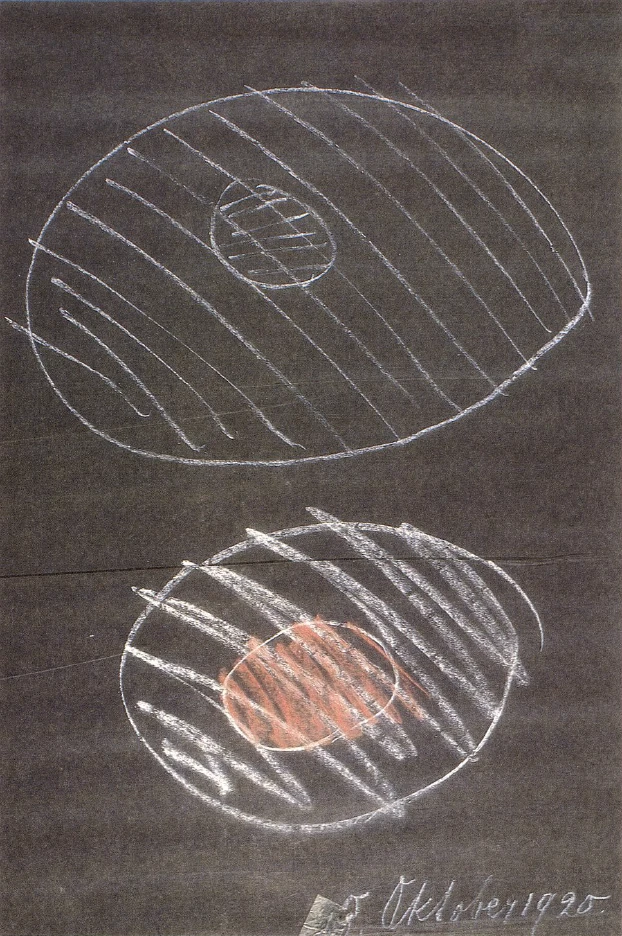
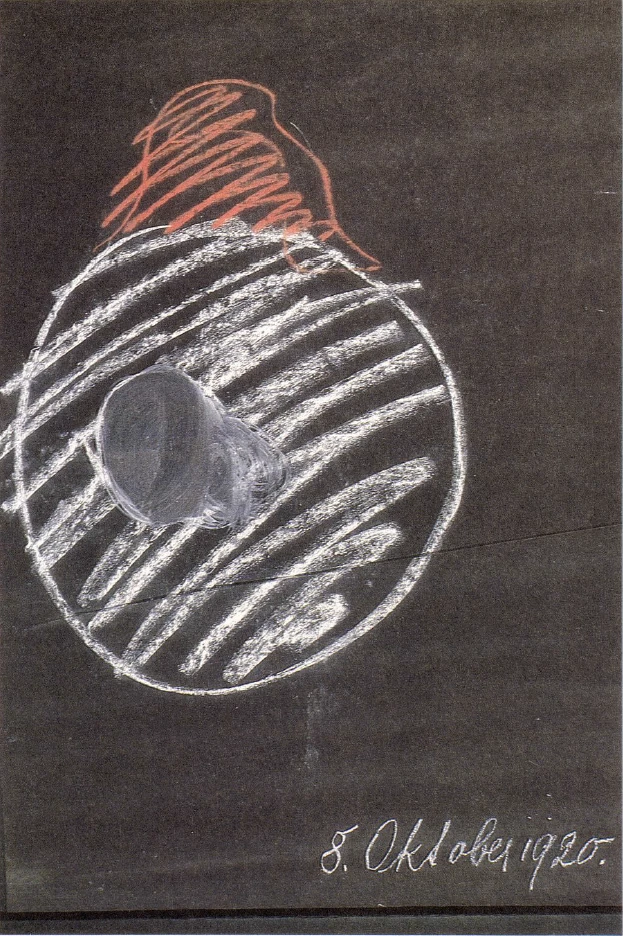
[ 7 ] This is precisely what modern physiological science takes far too little into account, even though it is actually as plain to see in its phenomena as anything can possibly be. Take a look at the actual phenomena of modern physiology, and you will see that nothing can be more clearly demonstrated from all that is known about brain physiology and the like, namely that in the truly psychological and spiritual processes that occur consciously, we are not dealing with any growth forces or any forces of nutrition, but rather with excretory processes, with processes of breakdown mediated by the nervous system—that we are dealing with a continuous, slow dying off. It is death that works within us as we surrender to that which actually works spiritually in our consciousness. And just as we look toward the beginning of life through the unconsciously creative forces, so do we look—through the consciously imaginative forces, in that they reveal themselves to us as destructive forces—toward that which, as we grow into earthly life, begins more and more to take hold of us, to break us down, and ultimately to lead us toward earthly death; it is precisely through these forces that we look toward the other end of life, toward death. And one cannot understand birth and death—or, let us say, conception, birth, and death—in any other way than by taking the spiritual into account. And in the statement: “To recognize the spirit is to destroy the spirit”—what is actually meant is this: if one were to look toward the spirit, if one were to take it in more or less naively, if one were to take it in just as one takes in external nature, then one would have to hold back that which is at work in this conscious activity of thought, mental images, sensation, and feeling; one would have to prevent this process of decline. That is to say, at that moment one would have to subdue and paralyze the spiritual—that which is inwardly conscious—reducing it to unconsciousness, to a spiritual activity operating in the unconscious. One would end up forming a spiritual element out of oneself, expelling a spiritual element from oneself, so to speak. But one could not do so with consciousness, because one cannot carry the organization into this process of breakdown, into this spiritual process. And so we can say: While the organizational processes consist in the fact that we have, so to speak—of course, this is an abstract consideration now—the structural framework of the human organism (see drawing a), into which the organizing force (see drawing b, red) enters as a spiritual-soul element, in the other case— — in the second case I have described — that we have here the structural framework of the human organism, but we do not want it to be permeated by the organizing force—which, to a certain degree, paralyzes our consciousness—but rather we want to drive out the organizing force, which we now wish to recognize as spirit (see drawing c). But we cannot do this with our “I,” because it is bound to the organism. We have the other side—the side where the human being begins to develop the spiritual, specifically volitional activity within the spiritual realm. It is through this interpenetration with volitional activity—which remains unconscious, so to speak, dormant, dreamlike—that we actually bring forth a spiritual-soul aspect from our organism without conscious awareness. Then there is the other, the manic side, the raging side, where the human being goes mad, and the various forms of so-called mental illnesses—which, however, consist of nothing other than the fact that, in the case of physical illnesses, we have a spiritual-psychic element that does not belong within the physical organism (see drawing b), whereas in so-called mental illnesses we expel from the psychically-soul-related realm—out of the physical-etheric—something that should actually be inside and that we expel from the organism (see drawing c). Today we are examining from another perspective what we arrived at yesterday. And the fact is that it is precisely this point of view that guides us more; tomorrow we will see what fruitful therapeutic consequences arise precisely from these points of view, which are then thoroughly confirmed in life, which prove to be the very essence of practical medicine, as therapeutic practice.
[ 8 ] When we ask about the cause of a physical illness, we must ultimately seek it in a disturbance of the spiritual within the organism. Certainly, one must not approach this abstractly. Anyone who understands nothing of the connection between the soul-spiritual and the physical organism should really not weigh in on these matters. For one can only recognize the specific condition—where, somewhere in an organ, there is an excessive organizational force, a— I would say, hypertrophic organizing force—only recognize it if one knows the concrete spiritual-psychic aspect—which is just as concretely embodied in itself as the physical-bodily aspect is embodied in the liver, the stomach, and so on—if one knows this spiritual-psychic aspect, of which psychology has no idea, with its components and its parts just as well as one knows the physical-sensory aspect. And when one understands the relationships between the two, one can point to the often even spiritual-soul-related symptoms that occur in a person when there is a kind of over-organization in some organ. In all cases that are not due to external insults, one will be able to point to such an origin.
[ 9 ] Conversely, when dealing with mental illnesses—so-called mental illnesses—one will remain stuck in abstraction if one believes one can gain anything from a half-baked phenomenology, or if one believes that simply describing mental and emotional abnormalities—which is, of course, very useful—will yield any insight. Of course, these descriptions are very effective at arousing sensation among laypeople, for it is always interesting to see how someone who is mad deviates from the normal course of life. For what is rare is interesting, and in our time it is still the case that what deviates from normal life in this way appears, at least, as a rarity. But we must never stop there. In particular, we must not be led to the layman’s amateurish judgment that the mind and soul are diseased, and that the mind and soul can somehow be cured through “spiritual-soul” measures, as the abstract thinkers dream. No, precisely in the case of so-called mental illnesses, it is of the utmost importance to be able to point out where the under-organization of any organ is located. Anyone who truly wishes to recognize a melancholy or hypochondria that has been driven to the point of mental illness should not wade around in the realm of the soul, but should try to discern, from the condition of the patient’s lower abdomen, how the under-organization is affecting the lower abdominal structure of the person; how an organizing force operating below the normal level, so to speak, causes something to “fall out”—as one says in chemistry; just as something precipitates out of a solution and the like, forming a sediment—so that an insufficient organizing force causes physical-bodily matter, which would otherwise be permeated by that organizing force, to precipitate out; how this physical-bodily matter is then present in the organism; how it is deposited; what occurs in the liver, the gallbladder, the stomach, the heart, and the lungs. These are processes that, however, are not as easy to investigate as one might wish in our present age, which tends toward the coarse—for histology, too, is a coarse discipline. Psychological insights are necessary for such an investigation, but everywhere it is necessary that so-called mental illnesses be traced back to physical conditions.
[ 10 ] Admittedly, this makes them less interesting. But that is the way it is. It is, of course, more interesting when a hypochondriac can say that, in this or that way, his psyche is engaged with the spiritual-psychic cosmos, than when one can prove to him that there is a disorganizing force in his liver. Or it is more interesting to seek the cause of hysteria in the spiritual-soul realm, so to speak, than to simply point to the metabolic processes of the sexual organs when speaking of hysterical symptoms or of other metabolic irregularities spreading throughout the organism. But one will not come to understand these things unless one approaches them in this way.
[ 11 ] Spiritual Science is by no means limited to constantly seeking the spirit. It can happily leave that to the spiritualists and other interesting—because they are also rare—people; unfortunately, they are far from rare enough!—but it does not constantly talk about spirit, spirit, spirit; rather, it attempts to truly grasp the spirit, and it attempts to trace its effects, thereby arriving precisely at the right point in an understanding of the material. It does not presume to explain mental illnesses in an abstract, spiritual way, but rather leads us—precisely in the case of mental illnesses—to a material understanding of them.
[ 12 ] So one can say: She points out, by way of explanation, the interesting phenomenon that—if one looks back just a short time—can perhaps still be found in the work of Griesinger or others, or in the pre-Griesinger era of psychiatry, showing that, until relatively recently, psychiatrists still included at least the physical aspects in their diagnoses. What has become more and more common today? That psychiatrists overwhelm us in their literature with clinical pictures that are merely descriptions of mental and emotional abnormalities. Thus, materialism has led us right into an abstract realm of the mental and emotional. That is its tragedy. It has led us away from the material realm. This is what is peculiar about materialism: that in certain respects it leads precisely to a lack of understanding, to a failure to grasp the material, whereas the one who pursues the spirit as a real fact pursues it even where it influences the material, and where it then withdraws from the material, so that the material precipitates itself, as in so-called mental illnesses.
[ 13 ] I had to take these things as a starting point if I am now to suggest to you a few things regarding therapeutic guidelines for tomorrow. But what we discover through this cross-fertilization of the physiological-therapeutic with the Spiritual Science also has its social aspect. And it is a peculiar feature of life that, wherever we seek the scientific—not in an abstract retreat into a scholarly existence hostile to life, but in a life-affirming understanding of human existence and human togetherness—we are driven into the social realm precisely through a truly living science. For we have before us, for example, an extraordinarily interesting social phenomenon in the most modern development. We see how, through the division of humanity—on the one hand upward into a bourgeois-aristocratic nature, and on the other hand downward into a proletarian nature—the one-sidedly aristocratic nature is seized by a false quest for the spiritual, by materialism in the spiritual realm, and how the proletarian nature is seized by a certain spiritualism in the material realm. What does “spiritualism in the material realm” mean? It means coming to a standstill when seeking the causes of existence. The proletariat has therefore developed scientific materialism as a worldview, at the very same time that the aristocratic element has developed the doctrine of spirits in a materialistic manner. While the proletarians have become materialists, the aristocrats have become spiritualists. For if you find spiritualists among the proletariat, this does not stem from their own proletarian roots, but is “mimicry”—it is imitated; it is merely something that has seeped over—through contagion—from the aristocratic-bourgeois element. And if, on the other hand, you see materialism taking shape among the aristocrats—that is, through the practice of viewing spirits as material objects, just as one views flames—so that materialism is introduced into the most spiritual of realms and one seeks to perceive the spiritual as material, then this grows out of that original decadent one-sidedness that, turning away from the totality of humanity, turns on the one hand toward the aristocratic element and, on the other, toward the bourgeois element, which has been tainted by the aristocratic element. When that which, upon applying itself to the spirit, feels compelled to remain within matter—because it has not been drawn out through appropriate schooling and the like—when the proletariat is compelled to remain within matter in its search for the spirit, then materialism develops as a worldview. Materialism was developed by the proletariat as a worldview, for example, in the materialist conception of history. Materialism was developed by the more aristocratic people as spiritualism, for spiritualism is materialism—materialism in disguise—which does not even have the decency to honestly admit it, but instead lies and claims that its material adherents are spiritual beings. Following this reminiscence, we will then continue our reflections tomorrow.